
You’re usually asking this question at the worst point in a building matter. The relationship has broken down, defects are being argued item by item, someone has mentioned NCAT, and now a Scott Schedule is on the table. At that point, the practical question isn’t only whether a builder can type one up. It’s whether that document will help the case or damage it.
A lot of people treat a Scott Schedule like paperwork. It isn’t. In a defects dispute, it becomes the working map of the argument. If it’s poorly structured, slanted, vague, or unsupported, the problem isn’t cosmetic. It affects how the Tribunal sees the issues, how the other side responds, and how much time and money get lost fixing a document that should have been right the first time.
The short answer to can a builder provide scott schedule is yes, in some circumstances a builder can provide input and can be required to complete parts of it. But that’s very different from saying a builder should prepare the whole thing alone and expect it to carry weight.
The Scott Schedule Question in Your Building Dispute
Most disputes don’t begin with the words “Scott Schedule”. They begin with a leaking shower, cracked tiling, out-of-plumb walls, incomplete work, or arguments about what was promised compared with what was built. Then the defect list grows. So do the emails, photos, quotes, and opinions.
That’s when the question becomes urgent. Can the builder just prepare the Scott Schedule and file it?
Legally and procedurally, the answer needs care. A builder may have a role in the schedule. In some matters, the builder will need to respond line by line. But the main issue is risk, compliance, and credibility. A schedule prepared as a self-serving document often causes more trouble than it solves.
Why this question matters early
The Scott Schedule shapes the dispute in a practical way. It forces each item into a fixed format. That sounds simple, but it changes everything. Vague complaints have to become identified defects. Broad denials have to become specific responses. Cost arguments have to attach to actual rectification positions.
If that framework is handled badly at the start, the dispute gets harder to manage later. Lawyers spend time correcting the structure. Experts have to untangle unclear items. Hearings get delayed because the document isn’t fit for purpose.
Practical rule: Don’t treat the Scott Schedule as an administrative task. Treat it as evidence management.
The real decision
The key decision isn’t “can the builder touch the document”. The key decision is who should prepare the technical foundation behind it, and who should frame the defects, rectification method, and cost in a way that will stand up under scrutiny.
A builder knows the job. That’s useful. A builder also has a direct interest in the outcome. That’s where problems start. NCAT disputes turn on detail, structure, and neutrality. If those elements are missing, the schedule can become a liability.
What Is a Scott Schedule in a Building Dispute
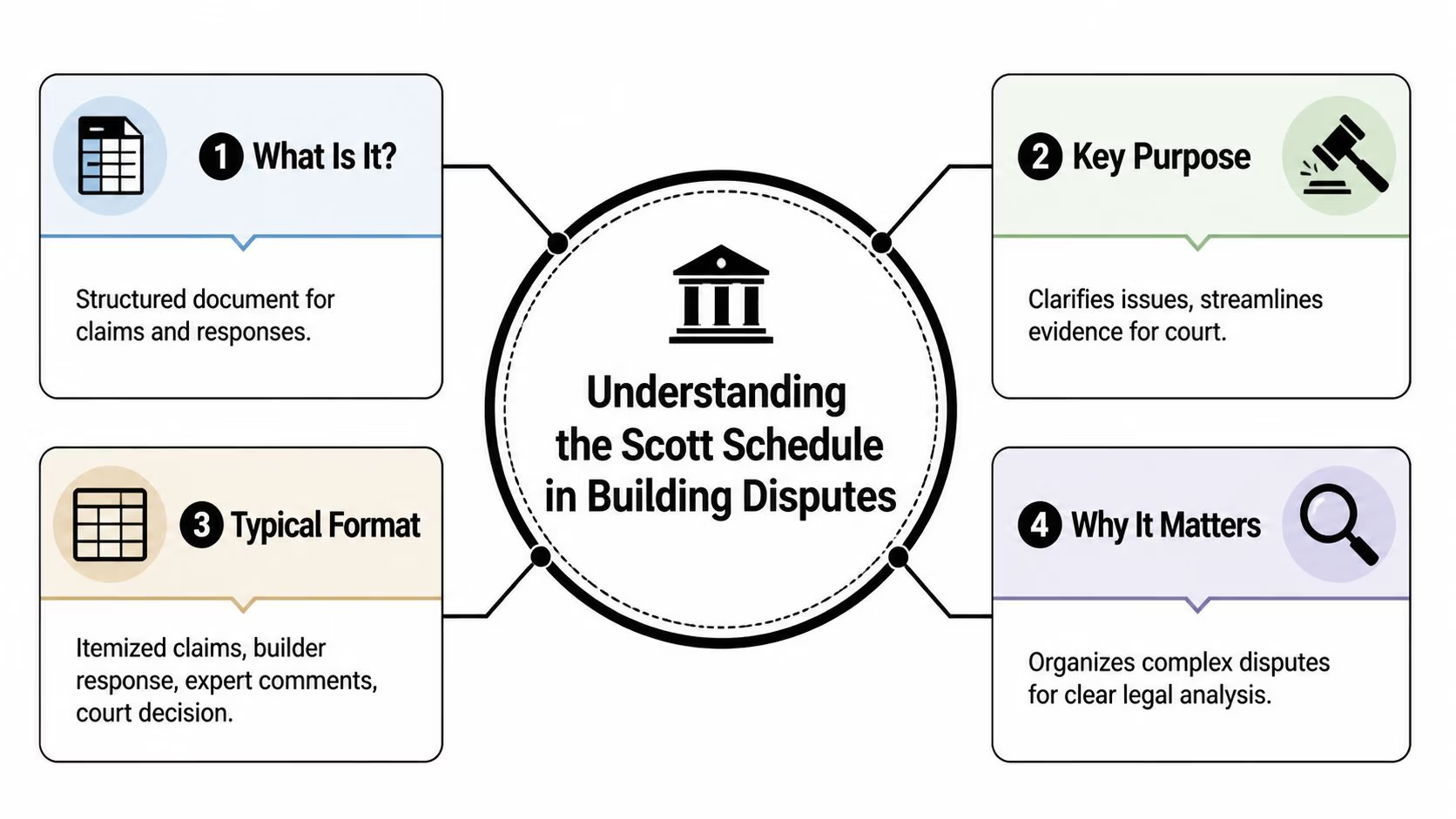
A Scott Schedule is a specialised legal document used to organise multiple disputed items into one structured format. It began in the United Kingdom, where George Alexander Scott, an Official Referee, developed it as a practical way to deal with cases involving many separate claims. In Australia, particularly in NCAT, it has become a standard tool in building disputes. Awesim’s explanation of what a Scott Schedule is notes that NCAT Procedural Direction 3 frequently requires parties to use one to set out alleged defects, proposed fixes, and costs.
Think of it as a dispute spreadsheet
The easiest way to understand it is to picture a spreadsheet built for a legal argument.
Each row deals with one item only. One cracked slab area. One defective waterproofing claim. One door set that doesn’t operate properly. One incomplete stormwater connection. The columns then force the parties to answer the same questions against the same item.
Typical entries deal with:
The alleged defect
What is wrong, and where is it?The proposed rectification
What work is said to be required?The cost position
What amount is claimed to fix it?The response
Does the other side admit it, deny it, or partly accept it?
That structure is why the document matters. It strips away broad statements and pushes both sides into a disciplined format.
Why NCAT relies on it
Building disputes often become messy because people talk across each other. One side describes symptoms. The other side answers with excuses. A quote appears without a proper scope. Photos are produced without clear item references. A Scott Schedule brings those moving parts into one document.
A good Scott Schedule doesn’t win the case by itself. It gives the Tribunal a clear path through the evidence.
That’s why it’s so useful in disputes with multiple defects. Instead of hearing a running argument about everything at once, the Tribunal can work item by item. The result is a cleaner process and a better chance that underlying issues are identified early.
What it is not
It isn’t just a list of complaints. It isn’t a builder’s rebuttal letter. It isn’t a generic defect report copied into a table. If it’s done properly, the schedule ties each item to evidence, a technical position, and a cost position that another party can answer directly.
That’s the point. Precision.
The Builder’s Official Role in a Scott Schedule Process
A builder often has an important role in the Scott Schedule process. But that role is usually responsive, not unilateral.
In Australian tribunal matters, the process is generally structured so the claimant completes their columns first, then the schedule goes to the respondent builder to complete the response columns by the deadline set by the tribunal. The builder is expected to address each item by admitting or denying the claim and putting forward their own evidence and quantum position, often with legal input, as outlined in practical guidance on how Scott Schedules are used in Australian tribunals.
Responding is not the same as originating
This distinction matters. A builder who receives a Scott Schedule isn’t being asked to create a fresh document from scratch in whatever format they prefer. They are usually being asked to respond within a framework that already exists.
That response should be disciplined. For each item, the builder should make a clear position. In practice, that usually means one of these:
Admit the item
The defect is accepted, and the builder states the proposed method and cost position.Deny the item
The builder says the alleged defect isn’t made out and points to the basis for that denial.Partially admit the item
The builder accepts part of the complaint but disputes scope, cause, standard, or cost.
What a proper builder response looks like
A useful response isn’t emotional and it isn’t argumentative for the sake of it. It should be item-specific and supported by material that can be relied on.
That often includes:
Technical position
Why the builder says the work complies, or what part is in issue.Rectification view
If work is needed, what is the appropriate method.Quantum assessment
The builder’s position on cost, tied to the scope they say is justified.
Builders help their case when they answer the exact allegation in the exact row. They weaken their case when they use broad denials and generic remarks.
Where builders go wrong
The common mistake is to assume practical site knowledge is enough by itself. It isn’t. Tribunal documents need proper structure, consistent wording, and evidence that matches the item being addressed. A builder may know perfectly well what happened on site, but if the response doesn’t fit the schedule properly, that knowledge doesn’t land well in the process.
So yes, a builder can provide a Scott Schedule response. In many matters, they must. But that doesn’t mean a solo builder-prepared schedule is the best way to run a disputed defects case.
The Critical Risks of a Builder Preparing Their Own Schedule
The biggest problem with a builder preparing their own Scott Schedule is bias. Not because every builder acts in bad faith, but because the document asks for neutral defect identification, suitable rectification methodology, and realistic cost assessment. A party defending their own work is rarely viewed as independent on those points.
That bias shows up in familiar ways. Defects get reframed as maintenance issues. Scope gets narrowed. Rectification methods are reduced to patchwork solutions. Costings are trimmed to figures that suit the defence rather than the actual work required. Once that happens, the schedule stops being a clear dispute tool and starts looking like advocacy disguised as technical evidence.

Compliance risk is real
The legal risk isn’t theoretical. Kerin Benson Lawyers’ article on Scott Schedules refers to anecdotal lawyer forum data suggesting 15-20% of Scott Schedules self-prepared by builders are treated as non-compliant in NCAT hearings. The same source notes that for disputes over $30,000, NSW Fair Trading guidelines require neutral expert input, and non-compliance can lead to adjournment costs averaging $5,200 per case.
Even if you leave the anecdotal nature of part of that material to one side, the practical lesson is obvious. Self-preparation creates a procedural target. If the schedule is challenged for bias, missing detail, poor structure, or unsupported costing, time gets lost and money goes with it.
What non-compliance usually looks like
The failed schedules tend to share the same weaknesses:
Unclear defect wording
The row describes a complaint in broad language without enough detail to identify the actual issue.Unsupported costing
A figure is inserted without a proper scope, quotation basis, or expert reasoning.Argument instead of response
The document turns into submissions and opinion rather than a structured item-by-item answer.No independent technical foundation
The schedule relies on the builder’s say-so without neutral expert support.
Why Tribunal credibility matters
A Scott Schedule is read for clarity. Tribunal members want to see whether each party has engaged properly with the issue. If a builder-prepared document reads like a defence letter cut into table cells, credibility suffers.
That matters even before a formal ruling on compliance. The schedule sets the tone. If one side appears organised, neutral, and evidence-based while the other side appears evasive or self-serving, that affects how the dispute is managed.
A biased Scott Schedule is a false economy. The upfront saving often turns into delay, challenge, and extra cost.
The practical trade-off
Builders often self-prepare because they think it saves fees and keeps control. In reality, it can create two rounds of work. First, the builder drafts a weak document. Then solicitors or experts have to repair it, reframe it, or replace it.
That’s not efficiency. It’s duplication.
If the dispute is serious, the safer course is to separate technical evidence from party interest. The builder’s knowledge still matters. It just needs to be channelled through a compliant, properly supported process.
The Superior Alternative Independent Expert Witness Reports
The stronger approach is to build the Scott Schedule on an independent Expert Witness Report. That report becomes the technical backbone of the claim or response. It gives each item a proper description, identifies the relevant workmanship issue, explains the rectification pathway, and supports the cost position in a form that can be tested.
An independent expert serves a different function from a party to the dispute. The expert’s job isn’t to win an argument for the person paying them. The expert’s job is to assist the Tribunal with an objective opinion grounded in inspection, experience, standards, and evidence. That difference is critical.

Why the expert report matters first
A compliant schedule is easier to prepare when the hard technical work has already been done. That means the site has been inspected properly. The defects have been isolated and described carefully. Photographs, measurements, and relevant construction references have been reviewed. The proposed rectification scope is reasoned, not guessed.
Without that foundation, the schedule becomes a table full of opinions.
A proper expert framework usually covers:
Item identification
Each defect is separated and located clearly.Technical reasoning
The report explains why the item is defective, incomplete, or non-compliant.Rectification method
The recommended repair is practical and tied to the issue identified.Cost support
The amount claimed or disputed has a rational basis.
The duty that changes the quality of the document
The key advantage of an expert is independence. In NCAT matters, that duty matters more than advocacy. If you want a useful overview of that obligation, see the NCAT expert witness code of conduct guide.
That duty improves the Scott Schedule in a very practical way. It removes loaded language. It narrows overreach. It helps identify where a claim is sound, where it is overstated, and where a genuine partial agreement should be recorded. That makes the final document more believable.
Independent evidence gives the schedule weight. Party opinion gives it vulnerability.
What works better in practice
The best schedules are rarely written from scratch in a rush after pleadings have already become messy. They are assembled from organised technical material prepared by someone who understands defects, rectification, and tribunal use.
That doesn’t sideline the builder. The builder can still explain sequence, methodology, access issues, and practical alternatives. But those points sit inside a disciplined evidentiary structure rather than replacing it.
That is the professional standard. A schedule should be a clear record of disputed items, not a battleground for unsupported assertions.
A Practical Guide to Compliant Scott Schedules
A compliant Scott Schedule is clear, itemised, and disciplined. Every row should deal with one issue. Every entry should be capable of being answered directly. If a reader can’t tell what the defect is, what work is proposed, and what the response says, the schedule needs more work.
What the document needs to do
At a minimum, the schedule should let the Tribunal move from item to item without having to search through emails, quotes, and photos just to understand the dispute. That means plain language, consistent terminology, and direct references to the material supporting each position.
Useful drafting habits include:
Keep one defect per row
Don’t bundle waterproofing, tiling, substrate preparation, and drainage into one line item.Describe location clearly
Identify the room, elevation, area, or building element so there’s no argument about what is being discussed.State the rectification scope properly
“Repair as necessary” is weak. The work should be described in a way that can be costed and answered.Match the response to the claim
The respondent’s column should answer the actual allegation, not a different version of it.
For parties wanting help with formal preparation, a consultant to prepare and submit a Scott Schedule can make the difference between a workable document and one that has to be redone.
Simplified NCAT Scott Schedule Example
| Item | Defect Description (Claimant) | Claimant’s Proposed Rectification & Cost | Respondent’s Position | Respondent’s Proposed Rectification & Cost |
|---|---|---|---|---|
| 1 | Shower waterproofing failure to ensuite causing leakage to adjoining area | Remove affected finishes, rectify waterproofing system, reinstate finishes, claimed cost inserted here | Admit, deny, or partially admit with explanation | Respondent method and cost position inserted here |
| 2 | Rear external door out of plumb and not latching correctly | Remove and refit or replace door set, adjust frame and hardware, claimed cost inserted here | Admit, deny, or partially admit with explanation | Respondent method and cost position inserted here |
| 3 | Incomplete site drainage works leading to ponding | Complete drainage works to affected area, claimed cost inserted here | Admit, deny, or partially admit with explanation | Respondent method and cost position inserted here |
A quick quality check
Before filing or serving a schedule, ask these questions:
- Can each item be identified without outside guesswork?
- Is the proposed rectification specific enough to be priced and assessed?
- Does the response answer the exact item rather than arguing generally?
- Is the costing tied to an actual scope rather than a bare figure?
If the answer to any of those is no, the document isn’t ready.
Your Next Steps for Homeowners Builders and Solicitors
Different parties need different tactics, but the same principle applies. Get the technical foundation right before the dispute hardens around a weak document.
For homeowners
If the defect list is growing and the builder is disputing scope or responsibility, get independent advice early. Don’t rely on a bundle of photos and text messages to carry a technical case. The stronger position is a properly investigated defect report that can support a schedule later if the matter goes to NCAT.
For builders
If you’ve been served with a Scott Schedule, respond to each item carefully and stay inside the structure of the document. Don’t treat it like a chance to vent frustration or rewrite the whole dispute narrative. If an item should be admitted, admit it. If it should be denied, deny it with a proper technical basis. If the issue is really about scope or cost, say that clearly.
The worst move is to assume your own experience on site is enough to replace independent support where the matter calls for it. Your knowledge is important, but it needs to be presented in a format that will survive scrutiny.
For solicitors
The schedule is often where good matters become efficient and weak matters become expensive. Early engagement with a competent building consultant helps isolate the actual defects, narrow overstated claims, and create a document that can be worked through item by item at hearing.
The best litigation support in building disputes is practical, neutral, and organised before the hearing date arrives.
The central point is simple. Yes, a builder can have a role in a Scott Schedule. But a builder acting alone is rarely the safest path where compliance, objectivity, and Tribunal credibility matter. In serious disputes, independent expertise isn’t an optional extra. It’s the basis for a document that can do its job.
For a compliant Scott Schedule, independent building inspection, or expert witness support, contact Awesim Building Consultants. With 35+ years in Building & Construction and 15+ years providing litigation support to homeowners, builders, and lawyers, they assist with site investigations, Expert Witness Reports, and Scott Schedules across NSW. Email admin@awesim.com.au or call 1800 293 746.