

That small, discoloured patch on your ceiling or that musty smell you can’t quite place? It’s not just a minor nuisance; it’s a warning flare. Your search for a “waterproofing expert near me” is the first critical step toward stopping a small problem from snowballing into a structural and financial nightmare for your NSW home.
The Hidden Risks of a Simple Leak in Your NSW Home
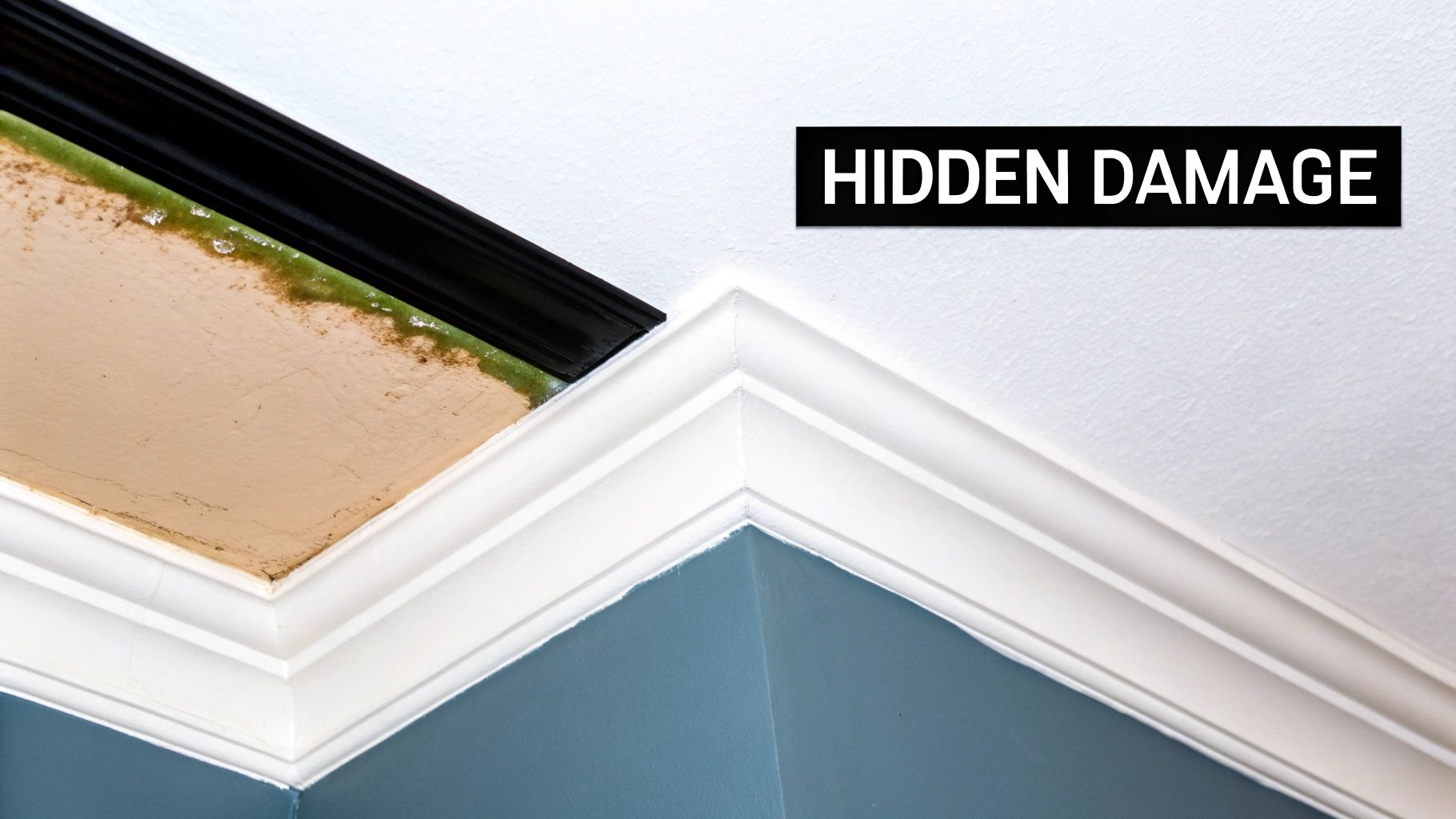
It's tempting to just paint over a water stain and hope for the best. We’ve all been there. But these are just symptoms of a much bigger, hidden problem.
Water is a sneaky traveller. A leak that shows up in your living room ceiling could be starting from a failed seal in a bathroom two rooms away. If you leave it, even a tiny bit of water ingress will eventually lead to serious, expensive consequences.
Think of it like an iceberg. What you can see is only a tiny fraction of the damage lurking behind your walls, under your floors, or in your ceiling cavity. That small stain could be masking rotted timber framing, compromised concrete, or even dangerous electrical hazards.
From Minor Annoyance to Major Defect
A persistent leak is a ticking clock. Over time, that constant moisture will eat away at the structural integrity of your property, causing everything from sagging floors and cracked walls to weakened foundations. These aren't simple cosmetic fixes; they are significant defects in building that can easily cost tens of thousands to rectify properly.
What starts as a simple leak can escalate into a whole host of issues:
- Structural Damage: Water corrodes the steel reinforcements in concrete and rots out timber joists, fundamentally weakening the skeleton of your home.
- Mould and Mildew Growth: Damp, dark spaces are a five-star resort for mould, and it’s crucial to understand the hidden dangers of mould for your family’s health.
- Pest Infestations: Termites and other destructive pests absolutely love moist timber. A water problem can quickly turn into a full-blown pest control nightmare.
- Legal Disputes: In strata properties or new builds, unresolved water issues are one of the most common sources of complex and costly disputes with builders, neighbours, or the owners corporation.
The Growing Need for Waterproofing Expertise
With Australia's construction sector humming along, effective waterproofing is no longer a "nice-to-have"—it's an absolute must. This is especially true here in NSW, where we battle everything from coastal humidity to intense downpours.
The numbers don't lie. The waterproofing membrane market in Australia was valued at US$1,044.6 million in 2024 and is tipped to hit US$2,294.9 million by 2031. This huge growth is fuelled by new construction and the urgent need for homeowners to protect their biggest investment from water damage.
Hiring the right professional isn't just about patching a leak. It’s about safeguarding your property's value and your family's health. A true expert gets to the root cause, making sure a minor headache today doesn’t become a financial disaster tomorrow.
Alright, let's get down to business. Finding a genuine waterproofing expert isn't just about a quick search for "waterproofer near me." It’s about doing your homework to avoid the all-too-common nightmare of shoddy work, surprise costs, and months of stress.
Before you even think about inviting someone over for a quote, a few minutes of online sleuthing can save you a world of pain. Don't just take a tradie's word for it—verify everything.
The Non-Negotiable Licence Check
First things first. In NSW, any contractor doing residential building work worth more than $5,000 (that includes labour and materials) must be licenced. This is not optional.
But here’s the crucial part: you’re not looking for any old builder's licence. You need to see a Contractor Licence with the specific category of 'Waterproofing'. A general builder might be great at many things, but a dedicated waterproofer has proven qualifications and experience in this highly specialised field.
You can check any licence in about 30 seconds using the free online tool from Service NSW. It’s dead simple and gives you instant answers.
When you run the check, keep an eye out for these details:
- Licence Status: Is it current? Or is it expired, suspended, or even cancelled?
- Matching Names: Does the name on the licence match the person or business you're talking to? A mismatch is a massive red flag.
- Disciplinary History: The register will show any public warnings or disciplinary actions filed against the licence holder. You definitely want to know about that.
Insurance: Your Financial Safety Net
Next up is insurance. This is what protects you if something goes sideways. A professional, legitimate waterproofer will have zero problem showing you their Certificate of Currency for Public Liability Insurance. In fact, they should have it ready to go.
This insurance is designed to cover property damage or injury. Say the contractor accidentally causes a leak that floods your neighbour's apartment below—their insurance should foot the bill for the repairs. The industry standard is a minimum of $5 million in cover, but you’ll find that the more established and reputable pros carry $10 million or even $20 million.
If a contractor gets cagey about showing you their insurance certificate or mumbles something about "sending it later," just walk away. It's a basic, fundamental part of running a professional trade business. No excuses.
Industry Memberships: A Sign of a True Pro
While a licence is a legal must-have, memberships in professional bodies like the Master Builders Association (MBA) or the Housing Industry Association (HIA) are a strong sign of quality.
These organisations hold their members to a code of ethics and require them to stay current with Australian Standards and industry best practices. Seeing those logos on a van or website isn't just marketing fluff; it signals a real commitment to their craft.
To help you keep track, here's a quick checklist for vetting any waterproofer in NSW.
Essential Credentials for Your Waterproofing Expert
Use this checklist to quickly verify the qualifications of any waterproofing professional you're considering for your NSW property.
| Credential | What to Look For | Why It Matters |
|---|---|---|
| Contractor Licence | A current licence under the 'Waterproofing' category on the Service NSW public register. | This is a legal requirement in NSW for any work over $5,000. It proves they have the required qualifications and experience. |
| Public Liability Insurance | A valid Certificate of Currency showing at least $5 million in cover. | Protects you from financial liability if the contractor causes accidental damage to your property or a neighbour's. |
| Disciplinary Record | A clean record on the public register with no current warnings or suspensions. | A history of disciplinary action is a major red flag indicating past issues with workmanship, conduct, or compliance. |
| Industry Memberships | Affiliation with respected bodies like the MBA or HIA. | Shows a commitment to professional standards, ongoing training, and a code of ethics beyond the bare minimum legal requirements. |
Having this checklist handy ensures you're not just hiring a tradie, but a qualified, insured, and reputable specialist.
The demand for genuinely skilled waterproofers is huge, especially as building defect disputes continue to rise—with water leaks being one of the most frequent complaints. Verifying credentials is your best defence against becoming another statistic. You can get a sense of the industry's scale from this in-depth analysis of the Waterproofing Contractors industry in Australia on ibisworld.com.
If your waterproofing issue has already escalated into a full-blown dispute, hiring another contractor might not be enough. You often need an unbiased, expert assessment to build a strong case. This is where you might need to find experienced independent building consultants near me in our guide. An independent expert can produce the kind of watertight reports needed for NCAT or court proceedings.
What a Thorough On-Site Assessment Looks Like
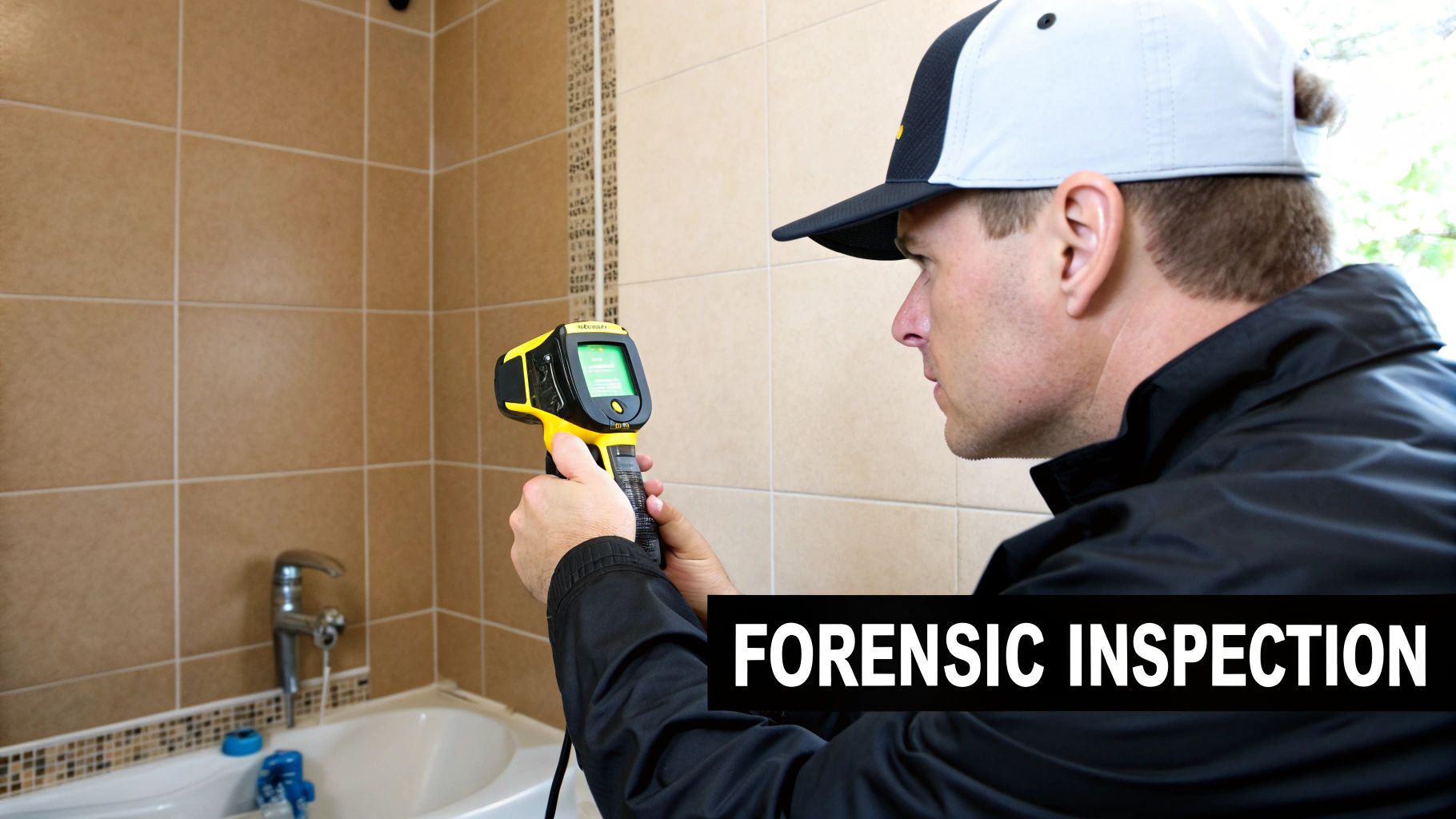
The first face-to-face meeting is your best chance to see a contractor’s real expertise in action. A true professional isn’t just going to give your leaking shower a quick glance from the doorway. They should show up ready to conduct a proper, forensic-style investigation to get to the bottom of the water ingress.
Think of it less as a sales pitch and more as a diagnostic consultation. Anyone can quote to slap on a new membrane, but a genuine expert will first want to understand why the old one failed. This initial assessment is what separates the quick-fix merchants from the technical specialists who are committed to a permanent solution.
You should expect them to get their hands dirty. This is more than a visual check; it involves using specialised tools and a methodical process to gather actual evidence. Your job is to watch, listen, and ask the right questions to gauge their depth of knowledge.
Beyond a Visual Inspection: The Tools of the Trade
When a potential waterproofing expert near me arrives on site, take note of what they bring with them. A professional armed with more than just a clipboard and a tape measure is always a good sign. Their diagnostic kit should have instruments designed to see what the naked eye can’t.
Common diagnostic tools include:
- Moisture Meters: These are non-negotiable for finding elevated moisture levels within plasterboard, timber framing, and concrete. They provide hard data, not just a hunch.
- Thermal Imaging Cameras: An infrared camera can spot temperature differences behind walls and floors. Wet areas are often cooler, letting an expert map out how far the moisture has spread without having to start ripping things apart.
- Borescopes: This is a tiny camera on a flexible cord that can be fed into wall cavities or under floors with minimal fuss, helping to pinpoint a leak’s origin.
This gear isn't just for show. It provides objective data that forms the basis of a solid repair strategy. A contractor who relies only on a visual inspection is basically guessing, which often leads to a failed repair and the same problem popping up again down the track.
The Diagnostic Process: Uncovering the Root Cause
A meticulous assessment follows a logical path. The expert should be trying to map the entire water journey, from where it gets in to the damage you can see. The whole process is about asking "why" at every step.
First, they should listen. A good waterproofer will want to hear your side of the story. When did you first see the issue? Does it only happen after a big storm or every single time the shower is used? Your observations are valuable clues.
Then comes the physical investigation. For a leaking balcony, for example, they won’t just look at the water stain on the ceiling below. A proper assessment will involve checking:
- The Substrate: What’s the balcony floor made of? Concrete? Timber? Compressed fibre cement? The substrate dictates the correct membrane system.
- The Falls: Does the floor have enough of a slope to guide water towards the drain? Poor falls are a classic cause of "ponding" water and, eventually, leaks.
- Junctions and Penetrations: They'll meticulously check all wall-to-floor junctions, balustrade fixings, and drainage outlets. These are the high-risk spots where failures almost always start.
- Existing Membrane: If they can get to it, they’ll assess the state of the current waterproofing for any signs of blistering, breakdown, or physical damage.
A contractor who immediately recommends ripping everything up without a thorough investigation might be selling you the most expensive solution, not necessarily the most effective one. The goal of the assessment is diagnosis first, prescription second.
Key Questions to Ask Your Waterproofing Expert
This is your chance to interview them for the job. How they answer will tell you everything about their technical skills and professionalism. Don’t be shy about getting into the details.
Here are a few sharp questions to have ready:
- "Can you walk me through the membrane system you're proposing and explain why it's the right choice for this specific substrate?"
- "Which Australian Standards will you be following for this job—for example, AS 3740 for the bathroom or AS 4654.2 for the balcony?"
- "What's your process for preparing the surface before applying the membrane? How do you make sure it's completely free of bond-breakers?"
- "What is the manufacturer's required curing time for the system, and what's the plan to protect it while it cures?"
- "Can you detail the warranty you provide? Does it cover both your workmanship and the materials themselves?"
A genuine expert will welcome these questions and give you clear, confident answers. If you get vague responses or a lot of technical jargon without any real explanation, consider it a red flag. They should be able to educate you on the process, proving their mastery and building your confidence that they can deliver a result that lasts.
Decoding Quotes and Spotting Potential Red Flags
Once you have a few quotes in hand, the real work begins. It’s tempting to just grab the cheapest one, but that’s often a fast track to a failed repair and much bigger headaches down the line. A professional quote is more than just a price; it’s a detailed project blueprint and your first line of defence against shoddy work.
Comparing quotes effectively means you have to read between the lines. A vague, one-line description like "Waterproof bathroom – $2,500" is a massive red flag. You need to know exactly what you’re paying for, step by step.
Demand an Itemised Breakdown
Any reputable waterproofing expert near me will provide a quote that breaks down the job into clear, understandable parts. This kind of transparency isn't just good practice; it's the hallmark of a true professional and protects both you and them. If a contractor gets cagey or refuses to provide this detail, walk away.
Your quote should clearly spell out:
- Scope of Work: A detailed list of every single task, from demolition and removing old materials right through to the final clean-up.
- Surface Preparation: This is arguably the most critical step. The quote has to outline the methods, whether it's concrete grinding, high-pressure cleaning, or specific priming.
- Materials Used: It should name the specific brand and product for the primer, membrane, and sealants. "High-quality membrane" is a meaningless sales pitch, not a specification.
- Warranty Details: A clear explanation of what the warranty covers (workmanship, materials, or both), for how long, and any conditions or exclusions that apply.
This level of detail is the only way you can compare quotes on a true apples-for-apples basis. It also becomes a crucial part of your contract, leaving no grey areas for disputes about what was or wasn't included.
Red Flags to Watch Out For
I've seen countless quotes over the years, and certain warning signs pop up time and time again. These red flags often signal a contractor who is cutting corners, lacks genuine experience, or is trying to lock you into a deal that only benefits them.
The Suspiciously Low Price
Everyone loves a bargain, but in waterproofing, an unusually low price should set off alarm bells. Quality materials, proper surface prep, and skilled labour all have a real cost. A rock-bottom quote almost always means something essential is being skipped. This could be anything from using cheap, non-compliant materials to rushing the crucial surface preparation, which all but guarantees the membrane will fail.
Vague or Ambiguous Scope of Work
A quote filled with fuzzy terms like "rectify leak" or "apply waterproofing as needed" leaves you completely exposed. This ambiguity gives a contractor the wiggle room to do the bare minimum and then hit you with extra charges for anything they decide is a "variation." The scope must be precise, detailing the exact areas to be treated and the specific methods they'll use.
The "Cash Deal" Discount
A contractor offering a big discount for cash is a gigantic red flag. This isn't just about them avoiding tax; it means you'll get no invoice, no paper trail, and likely no formal contract. When the work fails—and it often does—you will have zero recourse. You can't make a warranty claim or even prove the work was done.
Always insist on a formal invoice and pay through a traceable method like a bank transfer or credit card. A professional business will never pressure you into an under-the-table cash deal. The risk is simply not worth it.
For complex issues, especially below-ground problems, it's essential to consult a specialist. Understanding the unique challenges involved can help you better assess the quotes you receive. To learn more, see our detailed guide on what to look for in a basement waterproofing expert. A comprehensive quote from a professional who understands these specific systems is non-negotiable. It is your ultimate protection against disputes and ensures the job is done right, the first time.
When You Need an Independent Building Consultant
Sometimes, a simple leak spirals into something much bigger. It stops being about a straightforward repair and becomes a complex, high-stakes building dispute.
Maybe you’re clashing with your builder over defects in a new build. Or perhaps you're deadlocked with your strata committee over who's responsible for a leak from common property. In these situations, the person quoting the repair work can't also be your objective, impartial advocate. You have a conflict of interest.
This is precisely when you need an independent building consultant. Their job isn’t to sell you a repair service; it’s to provide an unbiased, evidence-based assessment of what’s gone wrong. This distinction is crucial when you need to build a rock-solid case for negotiation, mediation, or legal action.
The Difference Between a Contractor and a Consultant
Think of it this way: a waterproofing contractor is the hands-on practitioner. Their expertise is in applying membranes, sealants, and repair systems. They diagnose a problem with the goal of physically carrying out the work to fix it. Their quote is essentially a proposal to do that job.
An independent building consultant, however, is an investigator. They approach the problem with a forensic mindset, often backed by decades of experience in construction and dispute resolution. Their primary role is to analyse the defect, pinpoint its root cause, identify breaches of Australian Standards or the National Construction Code, and document everything in a formal report.
You hire a contractor to do the work. You hire a consultant to prove the case. They are two distinct and vital roles, and confusing them can seriously weaken your position in a dispute.
A consultant's expert analysis is what you need when things have soured. Their findings are impartial, giving them real credibility with builders, strata managers, mediators, and tribunals.
When to Call in an Independent Expert
Not every leaky shower needs a full-blown expert witness report. But if you find yourself in any of the following scenarios, bringing in an independent consultant early is a smart, strategic move. It can save you a world of stress, time, and money down the track.
- Disputes with a Builder or Developer: Your builder is denying responsibility for a leak in your new home. A consultant’s report provides the technical evidence to prove the defect stems from poor workmanship or non-compliant practices.
- Strata and Owners Corporation Conflicts: Water ingress from common property is a classic strata headache. An expert report can definitively identify the source and clarify whether the repairs fall to the lot owner or the owners corporation.
- Preparing for a Tribunal Hearing: If you’re heading to the NSW Civil and Administrative Tribunal (NCAT), you can't just show up with a contractor's quote. You need a formal, compliant report from a qualified expert to have any real standing.
- Insurance Claims: An insurer is pushing back or denying your claim. An independent report can deliver the detailed analysis required to validate the cause and full extent of the damage.
In these cases, your goal isn't just fixing the leak anymore—it's about establishing liability and forcing a fair resolution based on facts, not opinions.
The Power of an NCAT-Compliant Expert Witness Report
When a dispute lands in NCAT, the quality of your evidence is everything. This is where a building consultant's work truly proves its worth. They don't just write a letter; they produce a detailed Expert Witness Report specifically structured to comply with the tribunal's strict rules and procedures.
This isn't a simple inspection summary. A compliant report will:
- Acknowledge the Expert's Duty: It starts by stating that the expert's primary duty is to the tribunal itself, not the person paying the bill. This immediately establishes their impartiality.
- Detail Qualifications: It will list the consultant’s qualifications, extensive industry experience (like our 35 years in the field), and specific expertise relevant to the waterproofing issues at hand.
- Provide Factual Evidence: The report meticulously documents all observations, measurements, moisture readings, and photographic evidence from the site inspection. Nothing is left to chance.
- Reference Australian Standards: It will pinpoint the exact clauses from relevant standards (like AS 3740 for internal wet areas) that have been breached.
- Formulate an Expert Opinion: Based on all the evidence, the consultant provides a clear, professional opinion on the cause of the defect and the correct method of rectification.
Navigating quotes can be tricky, and this decision tree helps you identify common red flags that signal you might need a second opinion.
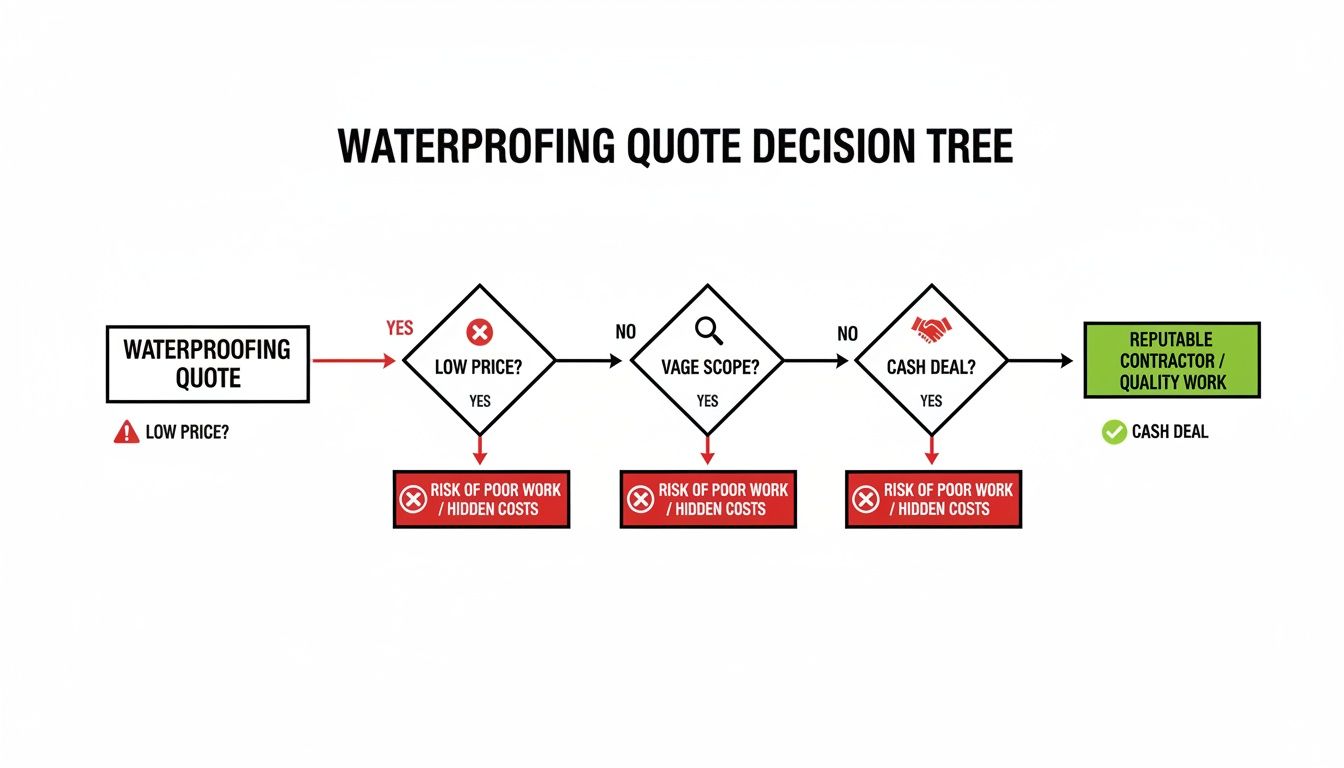
The flowchart shows how suspiciously low prices, vague scopes of work, or pressure for cash-only deals are all warning signs of a potentially dodgy quote.
Understanding the Scott Schedule
In addition to the main report, a consultant will often prepare a Scott Schedule. This is a specialised document used in building disputes, laid out in a simple table format. It’s designed to clearly list each alleged defect, the claimant's position, the respondent's reply, and finally, the expert's independent opinion on that specific item.
This structured format is incredibly powerful in an NCAT setting. It streamlines the whole dispute, allowing the tribunal member to easily compare the arguments side-by-side and see an impartial assessment for each point of contention. A well-prepared Scott Schedule can be the key to resolving a complex case efficiently and fairly.
Your Top Questions About Hiring a Waterproofing Pro Answered

Dealing with a water leak is stressful enough without having to navigate a sea of confusing information. When you’re searching for a waterproofing expert near me, you're bound to have questions. Let's tackle some of the most common ones we hear from NSW homeowners.
How Much Should Waterproofing Cost?
That's the million-dollar question, isn't it? The honest answer is: it depends entirely on the job. There's simply no one-size-fits-all price. The cost is a mix of the area's size, how complex the fix is, the state of the surface underneath (the substrate), and the specific products needed.
A quick bathroom reseal might only set you back a few hundred dollars. But a complete balcony overhaul—stripping it back, applying a new membrane system, and retiling—can easily climb into the many thousands.
Any true professional will insist on an on-site inspection before giving you a detailed, itemised quote. Be very cautious of anyone offering a firm price over the phone, sight unseen.
The most expensive waterproofing job is the one you have to pay for twice. Prioritising quality workmanship over the cheapest quote is the smartest financial decision you can make to protect your property in the long term.
What Is the Difference Between Positive and Negative Waterproofing?
Getting your head around this concept is key to understanding what your expert is proposing. It all comes down to which side of the wall or floor the waterproofing is applied to.
-
Positive-side waterproofing goes on the "wet face" of a structure—the side that water hits first. Think of the outside of a basement wall or the tiled surface of a balcony. This is always the best approach because it stops water from getting into the structure to begin with.
-
Negative-side waterproofing is applied to the interior, or "dry face." This is a reactive solution used when you can't access the positive side, like in an existing, leaky basement. It’s designed to stop water that has already soaked into the concrete from pushing through into your internal space.
Why Did My New Waterproofing Fail?
It’s incredibly frustrating when a brand-new membrane fails within a few years. In my experience, it almost always boils down to one of two culprits: poor surface preparation or incorrect application.
A waterproofing membrane is only as good as the surface it sticks to. If the substrate wasn't meticulously cleaned, dried, and primed, the membrane simply won't bond properly. Over time, it will peel, blister, or delaminate.
The other common pitfall is failing to follow the manufacturer's strict application guidelines. Applying layers too thin, not waiting long enough between coats, or not allowing for proper curing time is a guaranteed recipe for failure. It's why getting a basic grasp of the products being used is a good idea; for example, it's worth understanding advanced waterproofing materials like elastomeric coatings to know what a quality material looks like.
When a simple repair turns into a complex dispute, you need more than a contractor—you need an independent expert. At Awesim Building Consultants, we provide NCAT-compliant Expert Witness Reports backed by 35 years of hands-on construction experience. Get the evidence-based clarity you need to resolve your building issue. https://www.awesim.com.au
