
When a building dispute reaches the point where emails, photos, quotes and opinions are all pulling in different directions, a common feeling emerges. They’re no longer arguing about one defect. They’re trying to prove what went wrong, who’s responsible, and what it will cost to fix.
That’s usually where the Scott Schedule becomes the turning point.
A lot of parties assume the hard part is getting a Scott Schedule done at all. In practice, that’s only half the issue. The key difference comes from how well it’s prepared. A weak schedule can make a serious claim look vague. A strong one can bring order, credibility and commercial pressure to a dispute that’s otherwise drifting.
Navigating Your Building Dispute Starts Here
If you’re reading this, there’s a fair chance the dispute has already moved past informal discussions. The owner says the work is defective. The builder says the complaint is overstated, outside scope, or caused by something else. The solicitor wants a defect list that lines up with evidence. Everyone has documents, but nobody has one working document that puts the dispute in a form NCAT can use.

That’s the practical role of a Scott Schedule. It takes a messy dispute and turns it into itemised issues that can be tested properly. According to the NCAT annual report 2024 to 2025, the New South Wales Civil and Administrative Tribunal finalises over 4,500 building dispute applications annually. In those matters, a clear and compliant Scott Schedule under Procedural Direction 3 isn’t a nice extra. It’s fundamental.
What clients are usually dealing with
By the time a Scott Schedule is needed, the file often looks like this:
- Conflicting descriptions: one side calls it a defect, the other calls it maintenance or settlement.
- Fragmented evidence: photos sit in one folder, quotes in another, and the contract documents somewhere else again.
- No agreed scope: even when both parties accept there’s a problem, they don’t agree on the rectification method.
- Money without method: cost claims are thrown around before anyone has properly defined the actual work.
For a broader overview of how building disputes tend to unfold before they become formal proceedings, Templeton Built’s guide to construction resolution is a useful general reference.
A dispute usually improves when the paperwork stops sounding like argument and starts reading like evidence.
Why the preparer matters so much
People begin asking the right question. Not just “do I need a Scott Schedule?” but “who should prepare it?”
That question matters because NCAT doesn’t decide defect claims by volume of complaint. It decides them by clarity, technical accuracy and whether the evidence can survive scrutiny. A schedule prepared by someone who understands how buildings are constructed, how defects are diagnosed on site, and how rectification is costed in practice will read very differently from a generic list assembled from emails and builder quotes.
What Exactly is a Scott Schedule
A Scott Schedule is a structured dispute document. The easiest way to think of it is as a building dispute ledger. Each defect or claim item gets its own row, and each party’s position is set out side by side so the Tribunal can compare them directly.
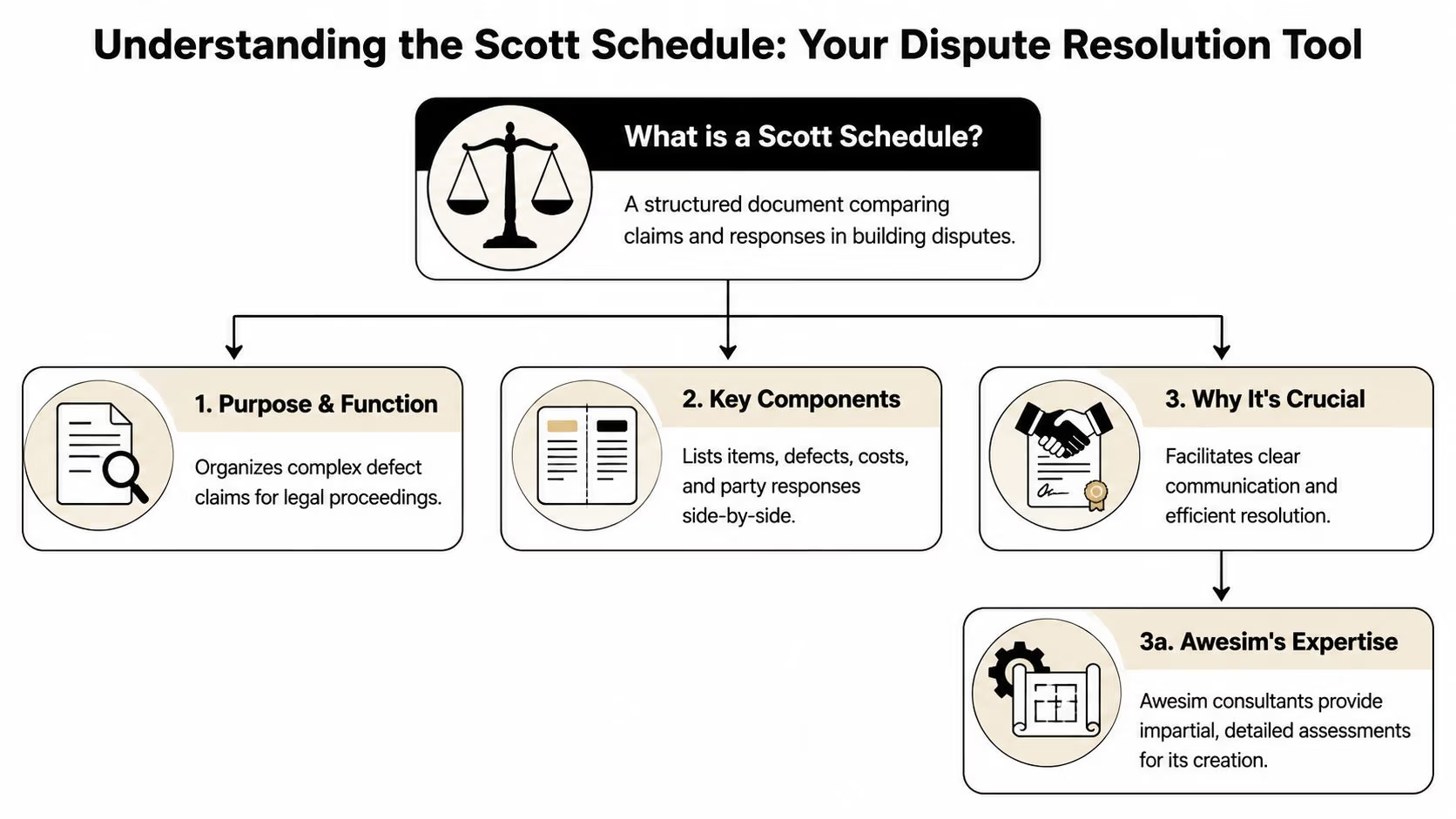
It’s not the same as a standard defects report. A report explains. A Scott Schedule organises. In disputed matters, that distinction is critical.
What goes into it
A proper schedule usually includes columns for:
| Item | What it does |
|---|---|
| Defect item | Identifies the alleged issue clearly and separately |
| Claimant’s position | States what is said to be wrong |
| Respondent’s reply | Records whether the item is admitted, denied, or partly accepted |
| Expert comment | Adds the independent technical view where required |
| Rectification cost | Quantifies the reasonable cost of fixing the item |
That format forces precision. It stops broad statements like “poor workmanship throughout” from floating around without detail.
What NCAT expects
Under Awesim’s NSW guide to what a Scott Schedule is in a building dispute, NCAT Procedural Direction 3 (2025) requires a compliant schedule to itemise each defect, identify the relevant Australian Standard breached, such as AS 3740 for waterproofing, and include a quantified rectification cost.
That level of detail has practical consequences. The same verified material states that schedules meeting this standard can see respondent concession rates as high as 70% and can reduce hearing times by an average of 20%.
Practical rule: If a defect can’t be described as a specific item with a location, technical basis and rectification cost, it usually isn’t ready for a Scott Schedule.
A visual explanation can help if you’re seeing the format for the first time:
Why it works better than a narrative report alone
A narrative report can be detailed and still be hard to use in a hearing. It might explain the chronology well, but it doesn’t always isolate the exact points in dispute. The Scott Schedule does.
That matters for all sides:
- Homeowners get a claim broken into decision-ready parts.
- Builders can answer each allegation directly instead of responding to broad accusations.
- Solicitors get a document that aligns technical evidence with the issues NCAT needs determined.
A good Scott Schedule narrows the case. A poor one spreads confusion across a table.
The Awesim Advantage 35+ Years of Field Experience
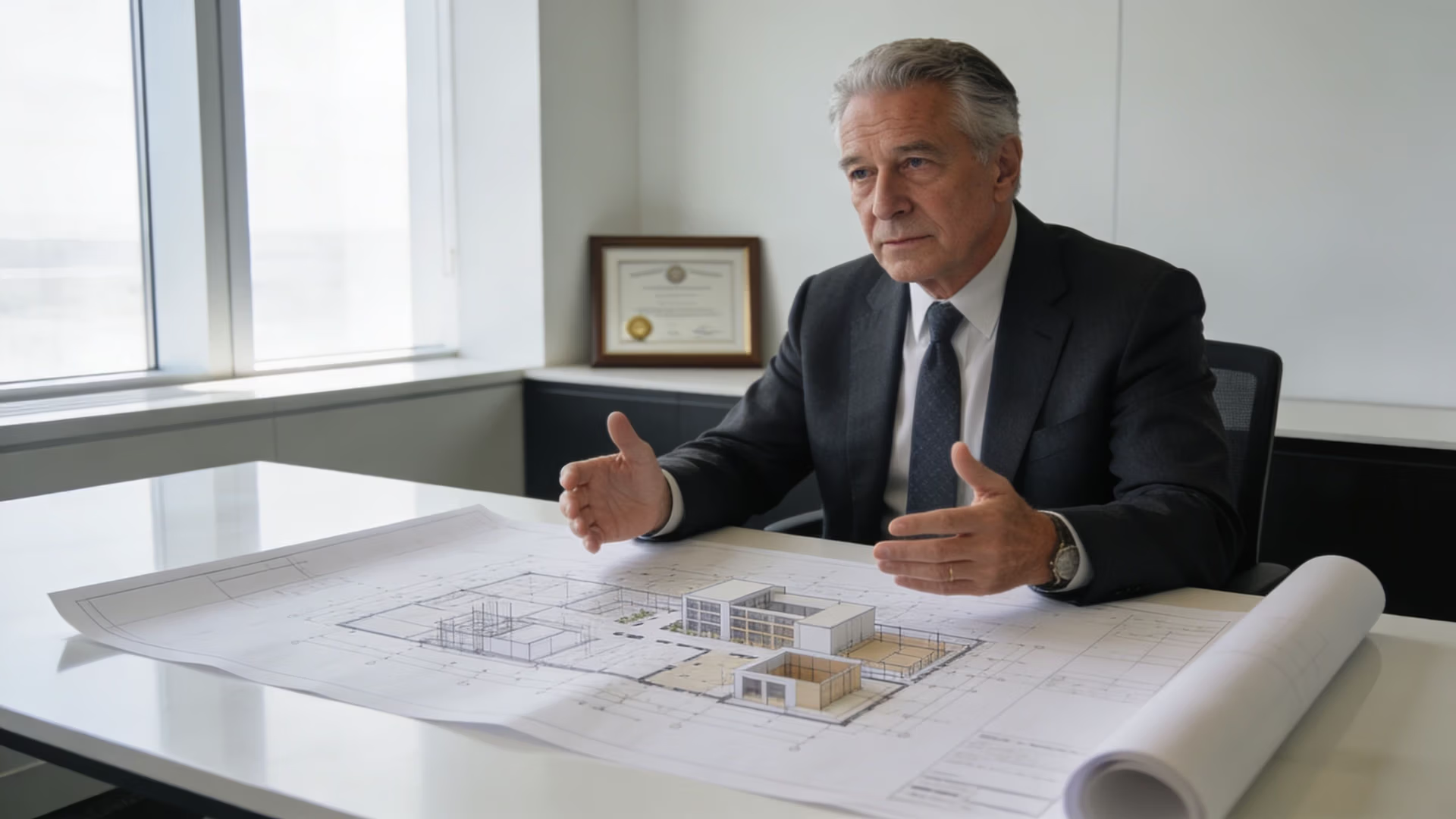
The reason people search for why use awesim building consultants for a scott schedule usually comes down to one issue. They want to know whether the author of the schedule understands building problems from the ground up, not just from behind a desk.
That distinction is real. There’s a major difference between someone who has read standards and someone who has spent decades dealing with slab movement, waterproofing failures, incomplete works, poor sequencing, trade interface problems and practical rectification on site.
What practical experience changes
A field-based consultant tends to look at a defect differently.
For example, a crack in masonry isn’t just a crack. The central questions are whether it’s cosmetic or symptomatic, whether movement is ongoing, what the likely cause is, what standard is engaged, and whether the proposed repair addresses the cause or merely hides the symptom. The same applies to leaking balconies, drummy tiling, inadequate falls, framing irregularities and unfinished contract scope.
That sort of judgement affects three parts of the schedule:
- Defect identification
The issue has to be framed correctly. If it’s framed too broadly, it becomes easy to challenge. If it’s framed too narrowly, the loss may be understated.
Rectification scope
Proper scope matters because a cheap patch repair often isn’t the same thing as compliant rectification.
Cost credibility
NCAT members and opposing experts look closely at whether costings match the actual work required.
The value of a schedule that can withstand challenge
According to BeSafe’s Scott Schedule report for NCAT reference, with a presence across Sydney and rural NSW, Awesim’s 35+ years of experience has contributed to securing over $8.2 million in 45 NCAT matters by 2023, achieving an 87% claimant success rate, compared with a 62% average for unassisted cases.
Those figures matter, but the underlying reason matters more. Outcomes improve when the schedule isn’t treated as an admin task. It needs to function as a piece of technical evidence.
The strongest schedules usually read plainly. That’s because they’re built on observation, standards, scope and cost, not rhetoric.
What works and what usually fails
In practice, these are the common trade-offs:
| Approach | Likely result |
|---|---|
| Generic defect list prepared from client notes | Fast to produce, weak under scrutiny |
| Builder quote used as evidence document | May help on pricing, often lacks independence and proper defect framing |
| Lawyer-drafted schedule without technical ownership | Can be organised, but risks reading like submissions rather than expert evidence |
| Site-based expert schedule | Slower upfront, but far more useful when causation, scope and cost are contested |
This is why seasoned building input matters. A dispute document has to do more than look tidy. It has to reflect how the building was constructed, how it failed, and what compliant rectification involves.
Building an NCAT-Compliant Evidence-Backed Report
A Scott Schedule only helps if each line item can be defended. That means compliance with NCAT procedure, disciplined drafting, and evidence that ties the allegation to something measurable.
In practical terms, the work starts before the schedule is ever typed. Site investigation, photographs, measurements, review of plans and specifications, and cross-checking against the applicable standards all shape whether an item belongs in the schedule and how it should be worded.
What a proper entry looks like
The difference between a weak item and a strong one is usually obvious.
| Element | Vague / Generic Entry | Awesim Expert Entry |
|---|---|---|
| Defect description | Poor waterproofing to bathroom | Waterproofing failure at bathroom floor to wall junction with moisture ingress observed at adjacent finishes. Item references the relevant waterproofing standard and defect location |
| Location | Ensuite | Main bedroom ensuite, shower recess and adjoining threshold |
| Cause | Bad work | Observed installation non-compliance based on site evidence and reviewed documents |
| Rectification scope | Repair waterproofing | Remove affected finishes as required, rectify substrate if necessary, install compliant waterproofing system, reinstate finishes |
| Costing | To be quoted | Quantified rectification cost tied to the defined scope |
| Evidentiary support | Photos attached | Photos, site measurements, report references and standards-based analysis |
A Tribunal can work with the right-hand column. The left-hand column just invites argument.
Compliance is more than layout
A proper NCAT-ready schedule needs to be consistent with the expert’s role. That means independence, clear reasoning and adherence to the tribunal obligations set out in the NCAT expert witness code of conduct guide.
That obligation matters for both claimants and respondents. An expert who overstates a defect can damage the whole case. An expert who understates scope can leave a client with an award that doesn’t cover compliant rectification.
Good evidence is specific enough to be tested and restrained enough to be believed.
Evidence that improves the schedule
The strongest schedules are usually supported by a mix of technical inputs, depending on the dispute:
- Measured observations: dimensions, levels, crack widths, set-out irregularities and affected locations.
- Photographic records: clear images tied back to item numbers.
- Document review: plans, specifications, contract scope, variations and prior reports.
- Standards references: the relevant Australian Standard or other applicable benchmark.
- Rectification logic: a method that addresses the actual defect, not just the visible symptom.
For readers interested in how technical compliance documents are treated in another construction context, understanding UK extension certification is a useful comparison on why certification detail and documentary accuracy matter.
One practical point is often missed. A Scott Schedule doesn’t become strong because it contains a lot of words. It becomes strong when every row is capable of standing on its own.
Our Process Timelines and What to Expect
Most clients want two things at the start. They want to know what happens next, and they want to know whether the process will be manageable.
A structured process matters because building disputes already carry enough uncertainty. The reporting side shouldn’t add more.
Step one and the initial brief
The first stage is the initial discussion. That usually involves understanding where the dispute sits, what documents already exist, whether NCAT proceedings are underway, and whether the immediate need is a standalone Scott Schedule or a broader expert report with the schedule attached.
At that point, the useful material usually includes the contract, plans, specifications, variation documents, correspondence, existing quotes, photos and any previous reports.
Site investigation and report preparation
Once the brief is clear, the next step is the site inspection. That’s where defects are observed, recorded and tested against the available documents and relevant standards. If access is incomplete or areas are covered up, that gets noted because it affects how firmly an opinion can be expressed.
From there, the schedule and supporting expert material are prepared. In straightforward matters, the path is simpler. In more complex disputes involving multiple trades or competing technical positions, the drafting and review process naturally takes longer.
A typical sequence looks like this:
Initial consultation and scope
The issues are identified and the required documents are requested.
Site investigation
The property is inspected and the alleged defects are documented.
Assessment and drafting
The defects are analysed, the schedule is structured, and rectification items are scoped.
Finalisation
The document is issued in a form suitable for negotiation, solicitor use or tribunal filing.
What affects timing and cost
There isn’t one fixed timeframe that suits every matter. The main variables are complexity, number of disputed items, document quality, property access and whether other expert material needs to be addressed.
The same applies to cost. A compact dispute with a small number of clearly visible issues is very different from a multi-trade residential claim involving waterproofing, structural cracking, incomplete works and disputed costings across several areas of the home.
If you want the report to move efficiently, organise the documents before the inspection and make sure access to all affected areas is available.
Take Control of Your Building Dispute Today
A weak Scott Schedule gives the other side room to attack your case item by item. A properly prepared one narrows the dispute, exposes weak denials, and puts realistic rectification cost and scope in front of NCAT.
That difference affects money.
Homeowners can recover less than they should if defects are described loosely or costed poorly. Builders can end up answering inflated or technically unsound claims if the issues are not tested properly. Lawyers lose time and advantage when the schedule reads like a complaint list instead of organised expert evidence.
Awesim Building Consultants prepares Scott Schedules with that outcome in mind. The point is not to produce another report. The point is to produce a document that stands up under scrutiny and helps drive settlement or hearing preparation in a commercially sensible way.
If your dispute also needs supporting technical material, Expert Witness Reports and Building Defect Inspections often form part of the same evidence strategy.
Frequently Asked Questions About Scott Schedules
A few questions come up in almost every dispute. The answers usually determine whether the matter moves cleanly or becomes harder than it needs to be.
| Question | Answer |
|---|---|
| Can I prepare my own Scott Schedule? | You can prepare a list of issues, and that can help organise instructions. But a formal Scott Schedule used in an NCAT dispute needs technical judgement, standards references, rectification logic and defensible costings. A self-prepared version often reads like argument rather than evidence. |
| Is a Scott Schedule the same as a building inspection report? | No. A building report explains findings. A Scott Schedule puts disputed items into a comparative format that lets each side respond to the same issue item by item. In many matters, both documents work together. |
| What if the other side disagrees with every item? | That’s common. The schedule still does its job because it isolates the disagreement. Once each item is answered separately, the dispute usually becomes narrower and more manageable. |
| Does every defect need to be included? | No. Only items that are properly identified, relevant to the dispute and capable of being supported should go in. Overloading a schedule with weak items can reduce its overall credibility. |
| Can a Scott Schedule help settlement before hearing? | Yes. When each issue is framed clearly, parties can often concede, narrow or negotiate items more effectively than they can through general correspondence alone. |
| What should I have ready before speaking to a consultant? | The most useful starting documents are the building contract, plans, specifications, photos, defect lists, quotes, correspondence and any tribunal orders or legal documents already issued. |
A final point is worth keeping in mind. The schedule doesn’t need to sound aggressive to be effective. It needs to be clear, technically sound and organised in a way the decision-maker can use.
If your building dispute needs a Scott Schedule, expert report, or site-based defect investigation, speak with Awesim Building Consultants. Email admin@awesim.com.au or call 1800 293 746 to discuss the matter confidentially.