
A building inspection isn't just a formality—it’s your most crucial quality check before you take the keys to your brand-new home. It's so easy to fall into the trap of thinking ‘new’ equals ‘perfect’, but that’s rarely the whole story. An independent inspector is your expert advocate, there to spot the things the builder might have missed under the pressure of a deadline.
Why a New Home Building Inspection Is Not Optional
Buying a newly built home is a massive financial and emotional investment. Caught up in the excitement, you might assume everything is built to perfection. But the reality is that construction sites are hectic places. Even the most reputable builders can't catch everything, and issues caused by subcontractor errors, rushed schedules, or simple oversights can hide away, only to become major headaches months or even years down the track.
A building inspection for a new home is your single best defence against future problems. Think of it less as a check-up and more as a full-scale audit of your property’s health. While builders have their own quality assurance processes, their end goal is finishing the project. Your independent inspector has only one job: to protect your interests by uncovering defects, poor workmanship, and anything that doesn't comply with Australian Standards.
Uncovering What Lies Beneath the Surface
A fresh coat of paint can hide a multitude of sins. An experienced inspector knows exactly what to look for, methodically working through hundreds of checkpoints that the average homebuyer would never think to check. This isn’t about being pessimistic; it's about being proactive to avoid nasty, expensive surprises after you’ve moved in and handed over that final payment.
So, what are they actually looking for? Key areas include:
- Structural Integrity: Checking that the bones of your house—the foundation, frame, and roof—are sound and meet the National Construction Code.
- Systems Functionality: Testing the plumbing, electrical, and air conditioning systems to make sure they’re installed correctly and work as they should.
- Workmanship Quality: Assessing the finish of the plastering, paint, tiling, and cabinetry for any shortcuts or defects.
- Safety and Compliance: Ensuring everything from balustrade heights to smoke alarm placement is up to code and meets NSW safety regulations.
This detailed examination gives you both peace of mind and powerful leverage. It’s no surprise that the demand for these inspections is on the rise in NSW. In fact, over 85% of property purchases now involve professional inspection services. That’s a huge jump from a few years ago, driven by homebuyers becoming more savvy and aware of their rights. You can read more about the growth of professional property inspections and what it means for buyers like you.
Your inspection report isn't just a list of flaws—it's your most powerful negotiation tool. It gives you documented, photographic proof of every issue, creating a clear, non-negotiable to-do list for the builder to fix before handover.
Skipping an inspection might save you a few hundred dollars now, but it means you're accepting the property ‘as is’—hidden problems and all.
Key Risks of Skipping a New Home Inspection
Thinking of forgoing that inspection to save a bit of cash? It's a gamble that rarely pays off. Here’s a look at the real-world consequences you could be facing.
| Risk Category | Potential Consequence | Average Cost to Rectify |
|---|---|---|
| Structural Defects | Undetected foundation cracks or framing issues leading to instability. | $15,000 – $70,000+ |
| Waterproofing Failures | Leaking showers, balconies, or roofing causing mould and rot. | $5,000 – $25,000 |
| Non-Compliant Work | Electrical, plumbing, or safety features not meeting Australian Standards. | $2,000 – $10,000 |
| Poor Workmanship | Badly finished paint, tiling, or joinery that devalues the property. | $3,000 – $12,000 |
| Future Legal Disputes | Difficulty proving defects were present at handover, leading to costly NCAT battles. | $10,000 – $50,000+ in legal fees |
The cost of a thorough inspection is a tiny fraction of your home's value, but as you can see, it can save you tens of thousands of dollars and immense stress later on. It’s the difference between being a hopeful buyer and an informed, protected owner, ensuring the quality home you paid for is the one you actually get.
So, What Kind of New Build Inspection Do You Actually Need?
Think of it like a series of medical check-ups for your brand-new home. Just as you wouldn't get a single check-up to last your whole life, a building inspection for a new home isn't a one-and-done deal. The right inspection depends entirely on where you are in the journey—whether you're watching it being built from a patch of dirt or about to get the keys.
Nailing this timing is everything. It’s about catching problems before they get buried behind plasterboard and become a nightmare to fix later. Each inspection has a specific job, a different lens it looks through to protect your investment at every critical stage. It’s your quality control playbook for what is likely the biggest purchase you'll ever make.
Staged Construction Inspections
If you’re building from the ground up, staged inspections are non-negotiable. Seriously. This is your only chance to get an expert to check the quality of the work before it's covered up forever. It's a proactive approach that lets your inspector spot fundamental mistakes with the slab, frame, or waterproofing when they are relatively simple and cheap for the builder to fix.
A solid staged inspection plan usually involves a few key site visits:
- Slab Inspection: This happens right before the concrete pour. The inspector is checking the steel reinforcement, the plumbing layout, and the formwork to make sure your home’s foundation is being done right.
- Frame Inspection: Once the frame is up, it's time to check that it’s structurally sound, properly braced, and matches the architectural plans. This is your home's skeleton—it has to be perfect.
- Pre-Lining/Lock-Up Inspection: Just before the internal walls go on, this inspection is a critical look at the "guts" of the house. We're talking plumbing, electrical wiring, insulation, and the building wrap.
- Waterproofing Inspection: Before a single tile is laid in your bathrooms or laundry, an expert needs to verify the waterproof membrane has been applied correctly. A failure here can lead to devastating, slow-burn water damage down the track.
Staged inspections are like having an expert looking over the builder’s shoulder on your behalf. It’s the only way to be sure the parts of your home you can't see are built to last.
The Critical Handover Inspection
Also known as a Practical Completion Inspection (or PCI), the handover inspection is probably the most well-known building inspection for a new home. This is your final quality assurance check, happening right when the builder says, "It's finished!" and is ready to hand over the keys.
The whole point is to create a detailed, official list of all defects, flaws, and incomplete items that the builder must fix before you make that final payment.
During this deep-dive, your inspector goes through the property with a fine-tooth comb. They're checking everything from the quality of the paint job and tiling to making sure every single door, window, and tap works as it should. The professional report you get from this inspection is your leverage. It’s the document you use to hold the builder accountable for delivering the quality you paid for. Many homeowners find that getting a professional second opinion is invaluable; you can learn more about why independent building inspections are so critical to protecting your interests.
Defects Liability Period Inspection
Okay, so you've moved in. The work isn't over yet. Your home now enters the Defects Liability Period, which in NSW is often 13 weeks for non-structural issues. This is the warranty window where the builder is legally required to come back and fix any defects that pop up as you start living in the space.
This inspection is your final safety net, best scheduled a few weeks before the period ends. It’s designed to catch issues that only reveal themselves once the house settles and experiences daily use, such as:
- Hairline cracks appearing in cornices or walls.
- Doors and windows that suddenly start sticking.
- Minor drips from taps or plumbing fixtures.
- Gaps opening up along skirting boards.
Getting a professional to document these issues before your warranty expires creates a formal, indisputable request for the builder to fix them. It's a simple step that ensures small annoyances don't turn into major problems you have to pay for yourself later on.
Your Step-By-Step New Home Inspection Journey
Getting a building inspection for a new home might seem daunting, but once you break it down, it's a pretty logical process. Think of it as a clear roadmap—one that strips away the uncertainty and puts you in the driver's seat, making sure you get the absolute most out of your inspector's expertise.
Your journey kicks off the moment you book. This is a critical first step. You'll need to give your inspector a heads-up early enough so they can get in touch with the builder, who has to grant them access to the site. Honest, open communication between everyone involved from the get-go is the key to making things run smoothly.
Booking and Coordinating Access
Once you've found an inspector you trust, booking is usually straightforward. You’ll give them the basics: the property address, the builder’s contact info, and when you’d like the inspection to happen. For a handover inspection, this is typically the date of practical completion.
From there, your inspector will take the lead and liaise directly with the builder's site supervisor to lock in a date and time. This little bit of coordination is vital to ensure the property is actually ready and safe for a proper, detailed look. The aim is to get the home as "finished" as possible so nothing gets missed.
The visual below maps out the key milestones, showing you how each inspection fits into the bigger picture from construction right through to post-handover.
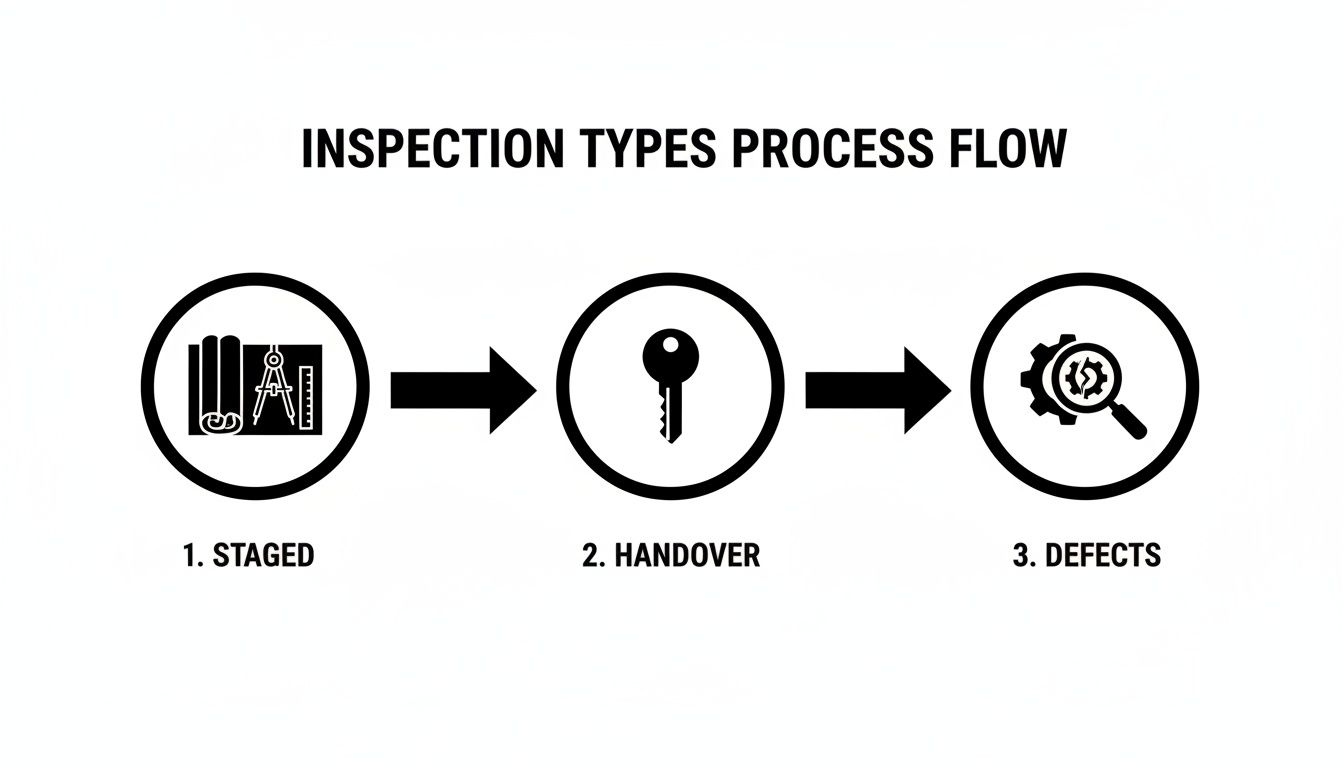
This flow shows exactly how inspections are timed to safeguard your investment, from checking the bones of the house during staged inspections to confirming the final fit and finish at handover.
What to Expect on Inspection Day
If you can, be there on inspection day. I can't recommend this enough. Walking through the property with your inspector gives you a level of understanding that a written report just can't match. You see the issues with your own eyes and can ask questions on the spot.
Your inspector won't just be relying on a keen eye. They'll come armed with a toolkit of specialised gear, including:
- Moisture Meters: For sniffing out hidden leaks or damp spots behind walls and under floors.
- Thermal Imaging Cameras: To spot things like missing insulation or sneaky water intrusion.
- Levels and Measuring Tapes: To check that walls are plumb, floors are level, and everything lines up with the plans.
The inspection itself usually takes anywhere from two to four hours, all depending on the home's size and complexity. In that time, the inspector will systematically work their way through hundreds of checkpoints, covering everything from the ridge capping on the roof right down to the stumps in the sub-floor space. To get a sense of just how detailed these checks can be, even on a commercial scale, it's worth looking at a comprehensive building inspection checklist.
Receiving and Understanding Your Report
Once the on-site work is done, your inspector will get to work compiling all their findings into a detailed report. You can expect this to land in your inbox, usually as a PDF, within 24 to 48 hours. It will kick off with a summary of the big-ticket items before diving into a forensic breakdown of every single defect, backed up by clear photos and references to the relevant Australian Standards or National Construction Code clauses.
Your report isn't just a list of what's wrong; it's your action plan. It gives you a clear, evidence-based list of rectification items to hand over to your builder before that final payment is made.
This document is your most powerful negotiation tool. If you want more tips on navigating this crucial stage, our guide on the final inspection before settlement has some great, actionable advice. A solid, well-documented report ensures your conversations with the builder are grounded in fact, not opinion, paving the way for a much smoother handover.
How to Choose a Qualified NSW Building Inspector
The quality of your building inspection for a new home comes down to one thing: the person doing the job. A great report can save you tens of thousands of dollars and a world of heartache. A vague, rushed one? It's not worth the paper it's printed on.
Choosing the right inspector isn't just a box-ticking exercise. Think of it as hiring a private detective for your new house. You need someone with a hawk's eye for detail, a deep well of technical knowledge, and the guts to give you the unvarnished truth—especially when it’s something the builder would rather you didn't know. This person is your advocate, plain and simple.
Non-Negotiable Credentials and Experience
In NSW, the term "building inspector" can be a bit of a wild west. The first thing you need to lock down is their credentials. A proper inspector should be a licensed builder or hold equivalent professional qualifications. This isn't just a nice-to-have; it means they’ve been in the trenches and understand construction from the slab up.
Next up, insurance. Make sure they have current Professional Indemnity Insurance. This is your safety net if they somehow miss a major defect. It’s a basic sign of a professional who takes their responsibility seriously.
But experience is king. You need to ask some direct questions:
- How many years have you actually been a builder or an inspector?
- Do you specialise in new residential builds? (This is a different beast to older homes).
- Can I see a sample report? This will tell you everything about the level of detail they go into.
An inspector with decades on the tools can spot the subtle signs of a cover-up job or shoddy workmanship that a less experienced eye would walk right past. They know exactly where builders are tempted to cut corners.
The Critical Importance of True Independence
Let me be crystal clear on this: your building inspector must be 100% independent. That means no connection to the builder, the developer, or the real estate agent. None.
Some builders might recommend an "independent" inspector they work with. Red flag. If there's any kind of existing relationship, you can't be sure their report is truly impartial.
An inspector who works only for you has zero vested interest in the sale going smoothly. Their one and only job is to find and report every single defect, non-compliance, and workmanship issue. That unbiased assessment is what you're paying for.
An independent inspector gives you an unfiltered, objective look at your property's real condition. Their loyalty is to you and the facts—giving you the power to hold your builder accountable.
In a market that can swing wildly, this oversight is more critical than ever. According to the Australian Bureau of Statistics, NSW saw 1,752 private sector house approvals in August 2025, while total dwelling approvals dropped 11.4% to 3,637. This kind of volatility puts immense pressure on construction timelines and budgets, which is exactly when corners get cut. To learn more, you can check out the latest NSW building approval trends on abs.gov.au.
Vetting Your NSW Building Inspector Checklist
Finding the right expert requires a bit of due diligence. Here’s a quick-glance table to help you separate the genuine professionals from those you should steer clear of.
| Essential Credentials (Look for This) | Warning Signs (Avoid This) |
|---|---|
| Holds a current NSW Builder’s Licence | Vague or no professional qualifications |
| Specialises in new home inspections | Generalist who "does a bit of everything" |
| Carries full Professional Indemnity Insurance | No insurance or won't provide a certificate |
| Is 100% independent (no ties to the builder) | Recommended or referred by the builder/agent |
| Provides a detailed, photographic sample report | Offers a cheap, vague, or checklist-only report |
| Cites the NCC and Australian Standards in reports | Can't explain the specific codes they work to |
| Has years of hands-on building experience | Limited practical experience on construction sites |
This checklist isn't about being difficult; it's about protecting what is likely your biggest-ever investment. Don't settle for less.
They Must Know the NSW Rulebook Inside and Out
Finally, your inspector has to be a master of the local regulatory landscape. This means an expert-level grasp of the National Construction Code (NCC), relevant Australian Standards (like AS 4349.1 for inspections), and the NSW Guide to Standards and Tolerances.
A good report doesn't just say, "The tiling is a bit uneven." A great report says, "The lippage between tiles exceeds the 2mm tolerance specified in the NSW Guide to Standards and Tolerances, Clause 10.3."
See the difference? That level of detail turns a subjective complaint into an evidence-backed fact the builder simply cannot argue with. It's what makes the report a powerful tool for negotiation or, if it comes to it, for a dispute at the NSW Civil and Administrative Tribunal (NCAT). Before you decide, see what a truly comprehensive service looks like by checking out our approach to Sydney building inspections.
Using Your Building Report to Get Results
Getting that detailed PDF in your inbox is a huge step, but it’s not the end of the road. A professional report from a building inspection for a new home is an incredibly powerful tool, but only if you know what to do with it. Think of it less as a report card and more as your instruction manual for getting the quality finish you paid for.
The report is your leverage. It takes vague feelings like, "that paint job looks a bit messy," and turns them into factual, evidence-based points the builder has to address. It’s the objective proof, complete with photos and direct references to building codes, that transforms a potential argument into a productive conversation.
How to Read and Interpret Your Report
At first glance, a 50-page report packed with technical terms can feel pretty intimidating. Don't worry. The key is to know how to navigate it, breaking it down into manageable chunks.
Most good reports are designed to guide you from the big picture down to the nitty-gritty details of every single defect.
- The Summary: Always start here. It’s the executive brief, highlighting the most significant or urgent problems. This gives you a clear snapshot of the main issues needing attention.
- The Body: This is the heart of the report, usually organised room-by-room or by area (roofing, exterior walls, etc.). Each defect gets its own entry with a clear description, a photo as evidence, and often a recommendation for the fix.
- The Conclusion: This section wraps things up, summarising the property's overall condition and outlining the recommended next steps.
As you read, pay close attention to how the inspector has categorised the defects. They’ll usually classify them by severity, which is your roadmap for prioritising what to push for with the builder.
A word of advice: don't get bogged down in every tiny paint chip on your first read. Focus on grasping the major defects and any structural concerns first. The summary is your best friend here. You can circle back to the cosmetic stuff later.
Distinguishing Major Defects from Minor Fixes
Knowing the difference between a major structural defect and a minor cosmetic issue is critical. In NSW, a builder is legally obligated to rectify major defects. Minor issues are also their responsibility to fix, but they carry less urgency. Your report should make this distinction crystal clear.
| Defect Category | Common Examples | Implication |
|---|---|---|
| Major Defects | Improper roof framing, significant foundation cracks, waterproofing failures, non-compliant safety barriers. | These affect the home's structural integrity, safety, or habitability. They are non-negotiable and must be fixed immediately. |
| Minor Defects | Paint smudges, chipped tiles, stiff door handles, minor plasterboard cracks. | These are mainly cosmetic issues affecting the final finish. While less urgent, they are still defects that need to be addressed. |
This is where your inspector’s experience really comes into play. A hairline crack in the plaster might look minor to you, but a seasoned inspector knows if it’s just settlement or a warning sign of a serious foundation problem.
If you’re struggling to wade through a particularly long report, some people are now using tools like AI to summarize your building inspection report to quickly pull out the high-priority items before diving into the full document.
Turning Your Report into a Rectification List
Once you’ve digested the report, it’s time to take action. Your goal is to give the builder a clear, consolidated list of every defect you want fixed before you hand over that final payment. Whatever you do, don't just forward the entire PDF and hope for the best.
Draft a simple, numbered list. For each point, state the defect and reference the page or item number in the inspection report. This clean, organised approach makes it easy for the site supervisor to tick off the issues one by one.
Send this list in a formal email. Keep your tone professional and to the point. The report has already done the heavy lifting, so there’s no need for emotion. The aim is to work with the builder towards a solution. This email also creates a vital paper trail, proving you formally notified them of every defect. If a dispute arises later, this document is your foundational evidence.
Commonly Asked Questions About New Home Inspections
It's completely normal to have a bunch of questions when you're organising a building inspection for a brand-new home. Getting your head around the practical side of things is the key to feeling confident as you head into the final stretch of your property purchase in NSW.
We've pulled together the most common queries we hear from homebuyers to give you some straight answers. It’s all about demystifying the process so there are no surprises, giving you the knowledge to make smart decisions and protect what is likely your biggest investment.
How Much Does a New Home Building Inspection Cost in NSW?
There’s no single price tag for a new home inspection in NSW; the cost really depends on the size and complexity of the property. For a typical single-storey house, you can generally expect to budget between $500 and $800 for a detailed handover report.
If you’re buying a larger or more intricate home, like a multi-level build or one with custom architectural features, the cost might move into the $800 to over $1,000 range. It might feel like just another upfront cost, but honestly, think of it as a small insurance policy. That one-time fee is a drop in the ocean compared to the tens of thousands you could be forking out down the track to fix defects the builder should have caught.
Can My Builder Refuse to Fix Defects Found in the Report?
In short, no. In NSW, your builder is legally on the hook to fix defects that a professional report brings to light. The statutory warranty, which falls under the Home Building Act 1989, makes them responsible for rectifying both defects and any work they've left incomplete.
An independent, evidence-based report is your best mate in this situation. It gives you clear photographic proof and points directly to the building codes or Australian Standards that haven’t been met. This takes the conversation from a subjective "he said, she said" argument to a factual, non-negotiable to-do list for the builder before you get the keys.
A professional report cuts through the noise and removes personal opinion from the discussion. It hands the builder a clear, factual basis for rectification, making it incredibly difficult for them to sidestep their contractual and legal obligations to deliver a defect-free home.
Is an Inspection Needed if the Home Has a Statutory Warranty?
Absolutely, and this is a point that trips up a lot of new homebuyers. The statutory warranty is your safety net, but an independent inspection is your proactive quality control. Think of it this way: the warranty is reactive. You use it to make a claim after you’ve discovered a problem.
An inspection, on the other hand, is proactive. It uncovers issues before they spiral into bigger, more expensive problems—and usually before you’ve even moved in. Believe me, it is far easier, quicker, and less stressful to get the builder to fix things in the final stages of construction than it is to kick off a formal warranty claim months or years later. The inspection makes sure quality is baked in from the beginning.
What Is the Difference Between an Independent Inspector and a Supervisor?
This is another critical distinction to understand. A builder’s site supervisor works for the builder. Their main job is to manage trades, keep the project on schedule, and make sure it all comes in on budget. While quality control is part of their role, their ultimate loyalty lies with their employer.
An independent building inspector works exclusively for you. Their one and only goal is to protect your interests.
- Builder's Supervisor: Primarily focused on the building company's efficiency and project completion.
- Independent Inspector: Focused on finding defects, non-compliance issues, and poor workmanship for you, the buyer.
That independence is everything. It guarantees you get an unbiased, unfiltered assessment of your new home's real condition, giving you the leverage needed to demand a quality finish.
When things get serious and you're facing a building dispute or need solid evidence for NCAT, a standard inspection isn't enough—you need an expert consultant. Awesim Building Consultants provides comprehensive Expert Witness Reports and Scott Schedules, backed by over 35 years of real-world building experience to give your case the strength it needs in NSW. https://www.awesim.com.au
