
Waterproofing Defects: Your NSW Expert Guide

A lot of waterproofing disputes start with something that looks minor. A ceiling stain under a bathroom. Peeling paint beside a shower recess. A balcony tile that sounds hollow underfoot after rain. By the time an owner calls a consultant or a solicitor, the visible mark is often the smallest part of the problem.
In practice, waterproofing defects rarely stay contained. Water tracks sideways, drops into cavities, wets insulation, corrodes steel, lifts finishes, and creates the kind of evidence trail that becomes critical once a dispute starts. For homeowners, that means repair costs and disruption. For builders, it can mean arguments about scope, cause, and responsibility. For solicitors, it usually means one question: what can be proved?
That’s where disciplined inspection and reporting matter. With 35+ years in building and construction and 15+ years providing litigation support, the work is not just finding moisture. It is identifying mechanism, documenting defect, linking symptom to cause, and presenting it in a form that stands up in a NSW dispute.
The Hidden Cost of a Simple Water Stain
A water stain has a way of inviting the wrong response. Many owners repaint it, regrout the shower, reseal a joint, or ask a handyman to patch the obvious area. That can make the room look better for a short time. It usually does nothing to address the failed membrane, the incorrect falls, the missing water stop, the defective flashing, or the moisture already sitting where it shouldn’t be.
The problem gets harder once the source is hidden behind finishes. In bathrooms, water may pass through movement cracks, poorly sealed penetrations, or failed junctions and only appear on the room below. In balconies, it may enter through tile beds or perimeter details and show up later as drummy tiles, stained soffits, or rust marks at slab edges. The original leak point and the visible symptom are often not in the same location.
That gap between symptom and cause is where disputes become messy. One side says it is maintenance. The other says it is defective work. Sometimes both issues are present. A proper forensic approach separates them.
What the stain often means
A simple stain can be the first sign of:
- Membrane failure under tiled wet areas or balconies
- Improper drainage that leaves standing water against vulnerable junctions
- Inadequate detailing at thresholds, outlets, door tracks, hobs, or wall-floor junctions
- Secondary damage such as mould, swollen skirtings, delaminated paint, and corrosion in concealed elements
Early inspection usually costs less than late argument. Once finishes are removed without a clear record, important evidence can disappear.
For solicitors, the practical issue is timing. The first inspection should happen before ad hoc repair work destroys the physical clues. For owners, the practical issue is restraint. Don’t rush to cosmetic repairs if there is a live question about cause, extent, or liability.
Identifying Common Waterproofing Defects
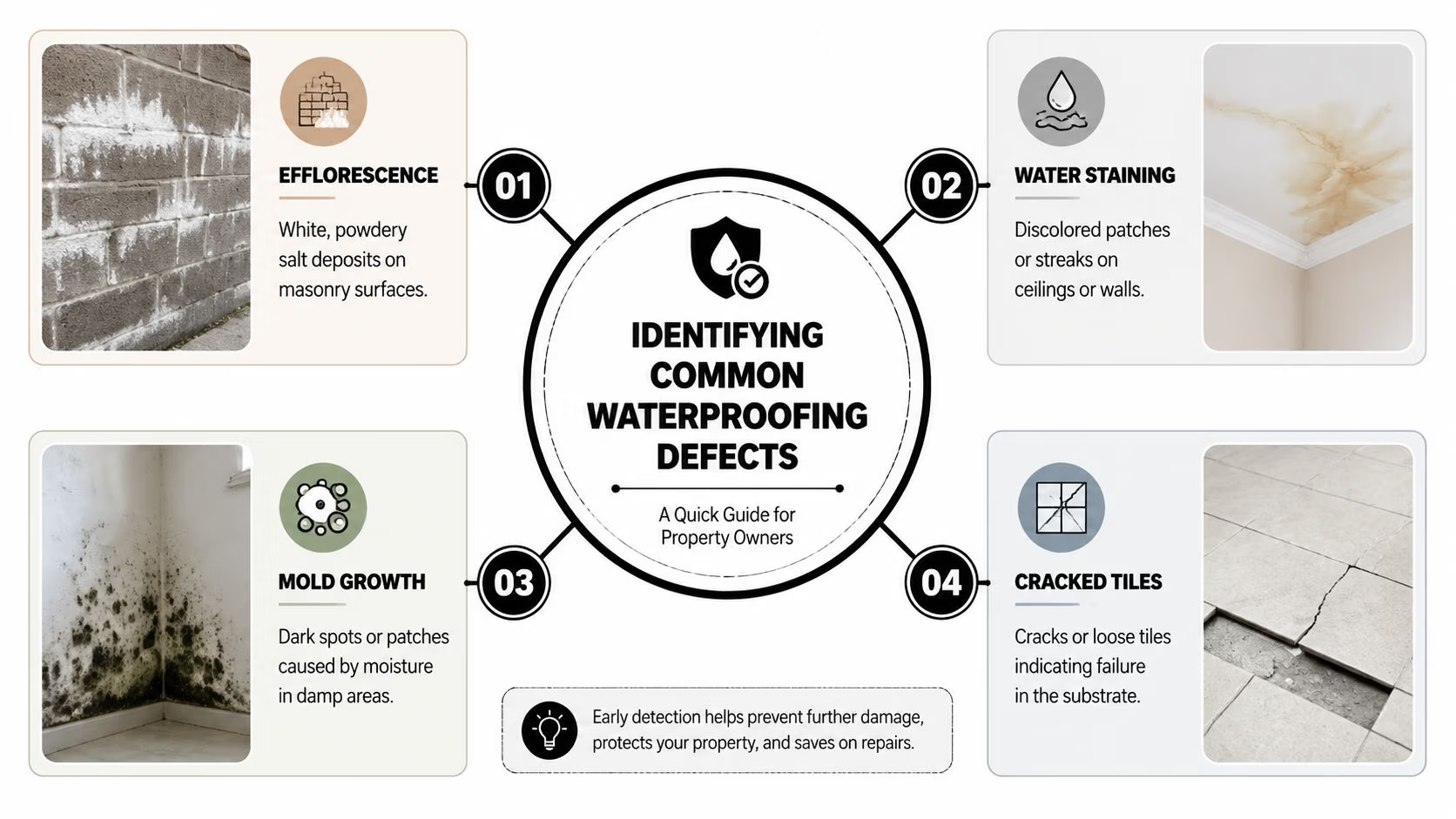
The first task is simple. Look at what the building is telling you. Waterproofing defects often announce themselves through finishes long before anyone opens a wall or lifts a tile.
What owners usually notice first
In a bathroom, the first clue is often downstairs. Brown discolouration to a ceiling, bubbling paint, or a musty smell in an adjacent robe can point back to a failed shower recess, a leaking waste, or water escaping beyond the intended wet area.
On balconies and podiums, the clues are more exposed. Tiles debond, grout cracks, puddles remain after rain, and white salts appear on masonry or concrete. That white residue is efflorescence. It indicates moisture is moving through the substrate and bringing dissolved salts to the surface.
Mould is another common sign, but it needs to be read carefully. Surface mould can result from condensation, poor ventilation, or water ingress. If it sits beside other moisture indicators, it often supports the case for a waterproofing problem rather than a simple housekeeping issue.
For a homeowner trying to distinguish a plumbing leak from a waterproofing failure, Harrlie Plumbing’s guide on shower leaks is a useful plain-English reference because it shows how leak symptoms can present through the ceiling below.
Common Waterproofing Defect Indicators
| Visible Symptom | Common Location | Potential Underlying Defect |
|---|---|---|
| Water staining to ceiling below | Bathrooms, balconies, laundries | Failed membrane, leaking penetration, poor drainage detail |
| Peeling or blistering paint | Walls outside showers, adjacent rooms | Moisture migration through substrate or junction failure |
| Efflorescence on masonry or concrete | Balconies, basements, retaining interfaces | Water ingress through porous substrate, failed sealing or membrane |
| Drummy or lifting tiles | Shower floors, balconies, podiums | Debonding from moisture, substrate movement, membrane failure below |
| Persistent mould or musty odour | Bathrooms, wardrobes behind wet walls | Ongoing moisture retention in concealed building fabric |
| Cracked grout or movement at corners | Shower recesses, wall-floor junctions | Building movement, failed flexible joints, compromised waterproofing |
| Ponding water | Balconies, shower bases, flat external surfaces | Inadequate falls, blocked drainage, poor set-out |
| Rust marks or concrete breakdown | Balcony edges, slab soffits | Water ingress causing corrosion and material deterioration |
What deserves urgent attention
Not every stain means immediate structural danger, but some signs justify prompt investigation:
- Repeated wetting after rain or shower use suggests an active pathway, not a historical event.
- Soft, swollen, or deteriorated finishes usually mean the moisture has been present for some time.
- Movement with moisture is a bad combination. Cracked joints and persistent leaks together often indicate the system has failed, not just the sealant.
- External concrete distress can point to more serious balcony or slab issues.
Practical rule: If the symptom returns after cleaning, resealing, or repainting, treat it as an unresolved defect until proven otherwise.
The Technical Causes of Waterproofing Failure
After identifying the visible signs, the necessary investigation begins. Waterproofing defects occur not because water possesses unique intelligence, but because the assembly contains a weakness that water follows.
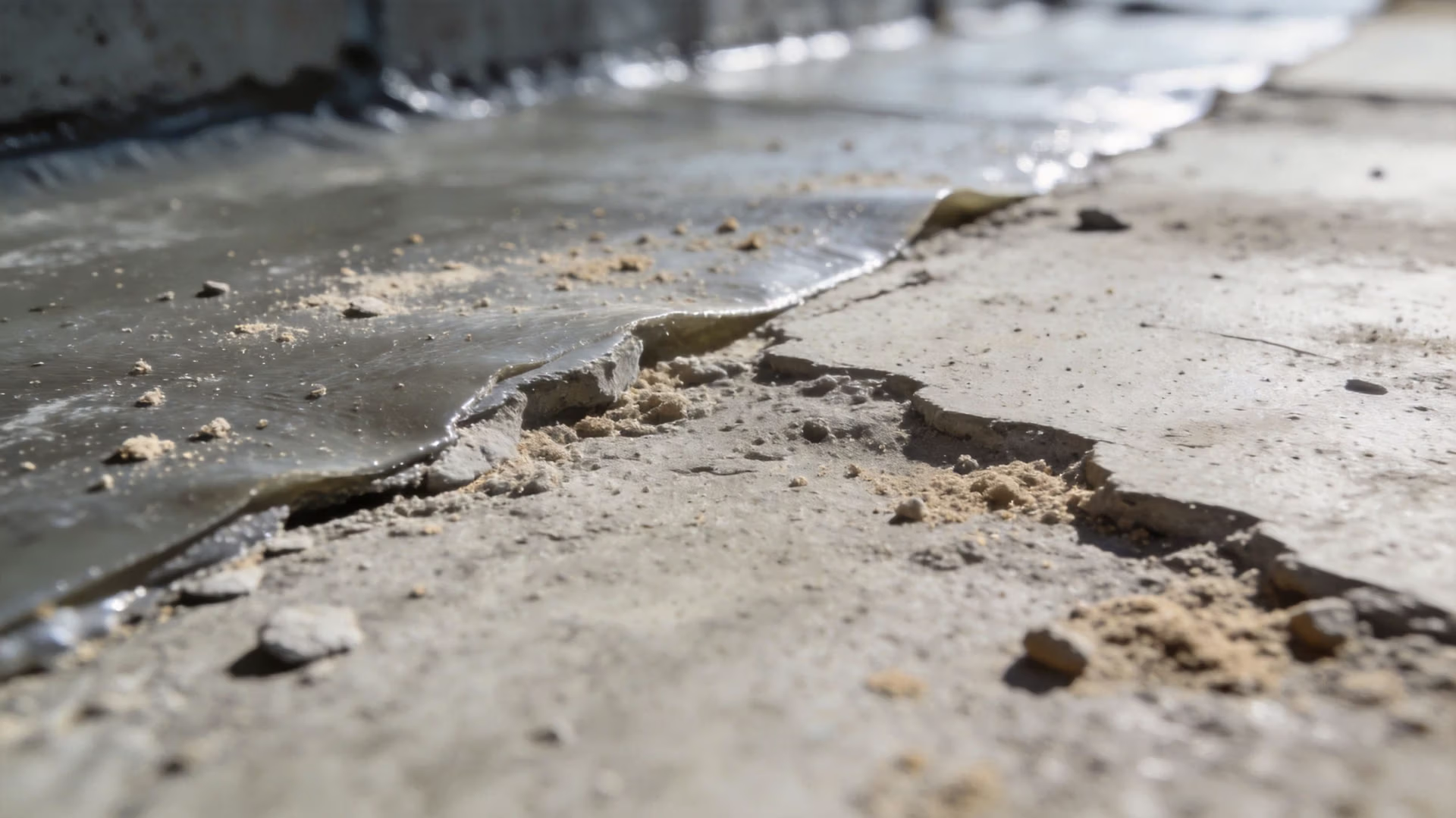
In NSW dispute work, poor installation is a frequent cause of waterproofing failure. The membrane product itself is often blamed first, but site execution—including substrate preparation, junction detailing, film thickness and curing—is often where the defect begins. The NCC 2022 moisture and waterproofing provisions explain the objective of preventing water entry and moisture-related damage.
The substrate is often the first failure point
Concrete is porous. It contains capillary pathways that allow water migration under pressure if the system is not designed and applied properly. That matters in bathrooms, but it matters even more in balconies, planter zones, and below-grade areas where water sits longer or builds hydrostatic pressure.
Inadequate surface preparation can lead to loss of bond and delamination. In practical terms, that means the membrane never properly keys to the substrate. It may look continuous on the day of application and still fail once moisture loading, movement, or temperature cycles begin.
Application errors that repeatedly turn up
A waterproofing system can fail even when the right product is on site. Common technical causes include:
- Insufficient film thickness. A membrane applied below the manufacturer’s specified dry film thickness can create weak points.
- Poor detailing at junctions such as corners, hob ends, thresholds, puddle flanges, and penetrations
- Wrong membrane for the substrate or environment, especially where movement or UV exposure is relevant
- Rushed curing before overlying finishes are installed
- Incompatible layers where primers, membranes, adhesives, and sealants are mixed without proper system compatibility
Failures in moisture management are not unique to wet areas. The same logic appears in external walling and retaining structures where water pressure, movement, and detailing interact. For related reading on movement and structural performance, best practices for reinforced wall stability give a useful reminder that drainage and detailing are inseparable from durability.
A membrane doesn’t compensate for bad set-out, poor falls, or careless penetrations. It only performs if the whole assembly is working with it.
Why standards matter in disputes
When I assess waterproofing defects for a legal forum, the issue isn’t just whether water got in. The issue is why, where the system broke down, and whether the work complied with the applicable standard, manufacturer requirements, and accepted building practice.
That is why notes, photographs, moisture readings, substrate observations, and finish removal locations all matter. A legally useful opinion ties failure mechanism to physical evidence. It does not rely on guesswork or broad statements that “the waterproofing is bad”.
Inspecting and Gathering Defect Evidence for NCAT
A dispute can be weakened at the first site visit if the evidence collection is sloppy. The inspection has to do two jobs at once. It has to diagnose the defect, and it has to preserve a clear factual record for NCAT or settlement discussions.
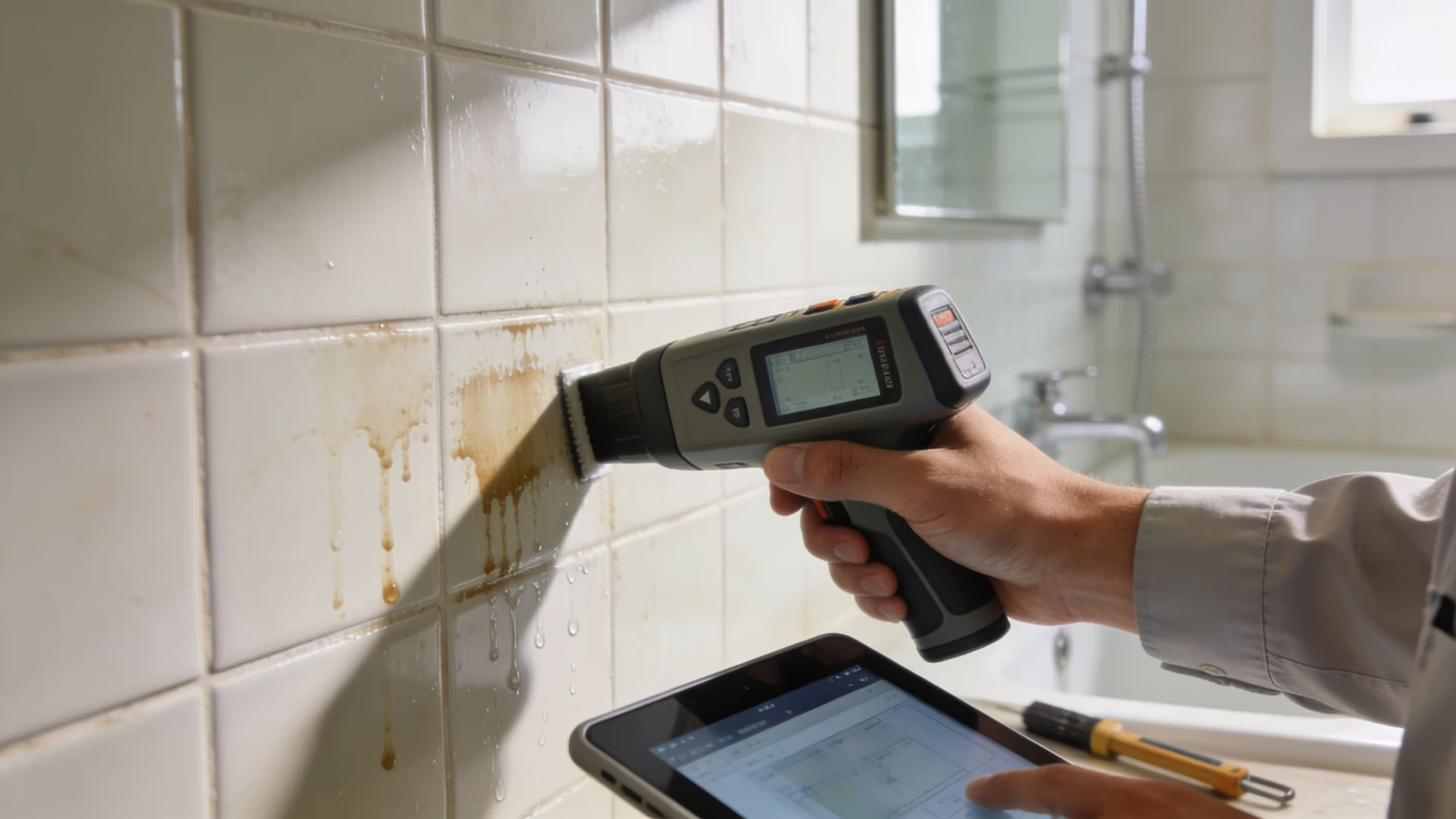
A strong inspection starts with the obvious. Photograph the symptoms before anything is touched. Record the room layout, the adjacent rooms, the levels below, the external face, and the drainage conditions. Then test methodically. Moisture meters, thermal imaging, sounding of tiled finishes, level checks, and targeted flood or hose testing can all assist if used properly and interpreted cautiously.
Why balcony evidence must be handled carefully
Balcony matters deserve particular care because the financial stakes are often larger than owners expect. A Victorian Government research paper on balcony defects found that 52% of buildings in the study had defective balconies caused by water ingress issues, 18% of cases developed black mould, and remediation of defective balconies comprised approximately 38% of the total construction contract value in affected buildings, according to the Victorian Government balcony defects research analysis.
Those figures explain why “just patch it” is often the wrong instruction. If the balcony membrane, falls, thresholds, or edge details are defective, localised repairs may preserve the appearance while leaving the failure mechanism untouched.
Building a defensible evidence trail
For NCAT purposes, evidence should be gathered in a sequence that makes sense to someone who wasn’t on site:
Initial observations
Record each visible symptom, location, orientation, and condition. Use marked-up plans where possible.Instrument readings
Moisture meters and thermal cameras can help identify moisture patterns. They do not replace destructive confirmation where the dispute turns on concealed conditions.Targeted opening-up
If finishes need to be removed, the location should be chosen for a reason and documented before, during, and after removal.Material and detail review
Check the membrane extent, bond, thickness appearance, penetrations, flashing transitions, drainage falls, and substrate condition.Causation analysis
Separate likely waterproofing failure from plumbing, condensation, maintenance neglect, and unrelated defects.
This short demonstration gives a sense of how moisture investigation is approached in practice:
What owners and solicitors should avoid
The biggest mistake is unrecorded rectification. Once the shower base is retiled or the balcony is resealed, the original condition may be gone. Another common mistake is relying on a quote as if it were expert evidence. A contractor’s quote may be useful for pricing work, but it usually doesn’t address causation, standard compliance, or defect categorisation in a way that helps the Tribunal.
Where a matter is heading toward litigation support, one option is a forensic inspection and defect documentation process by a consultant such as Awesim Building Consultants, using site observations, moisture testing, and structured defect schedules to preserve the technical record before major rectification begins.
Effective Remediation and Prevention Strategies
A bathroom has already leaked into the room below. The owner wants a quick repair. The strata manager wants a scope. The solicitor wants to know whether the proposed works will fix the cause or bury the evidence. At that point, remediation is no longer just a building task. It is also a risk management exercise.
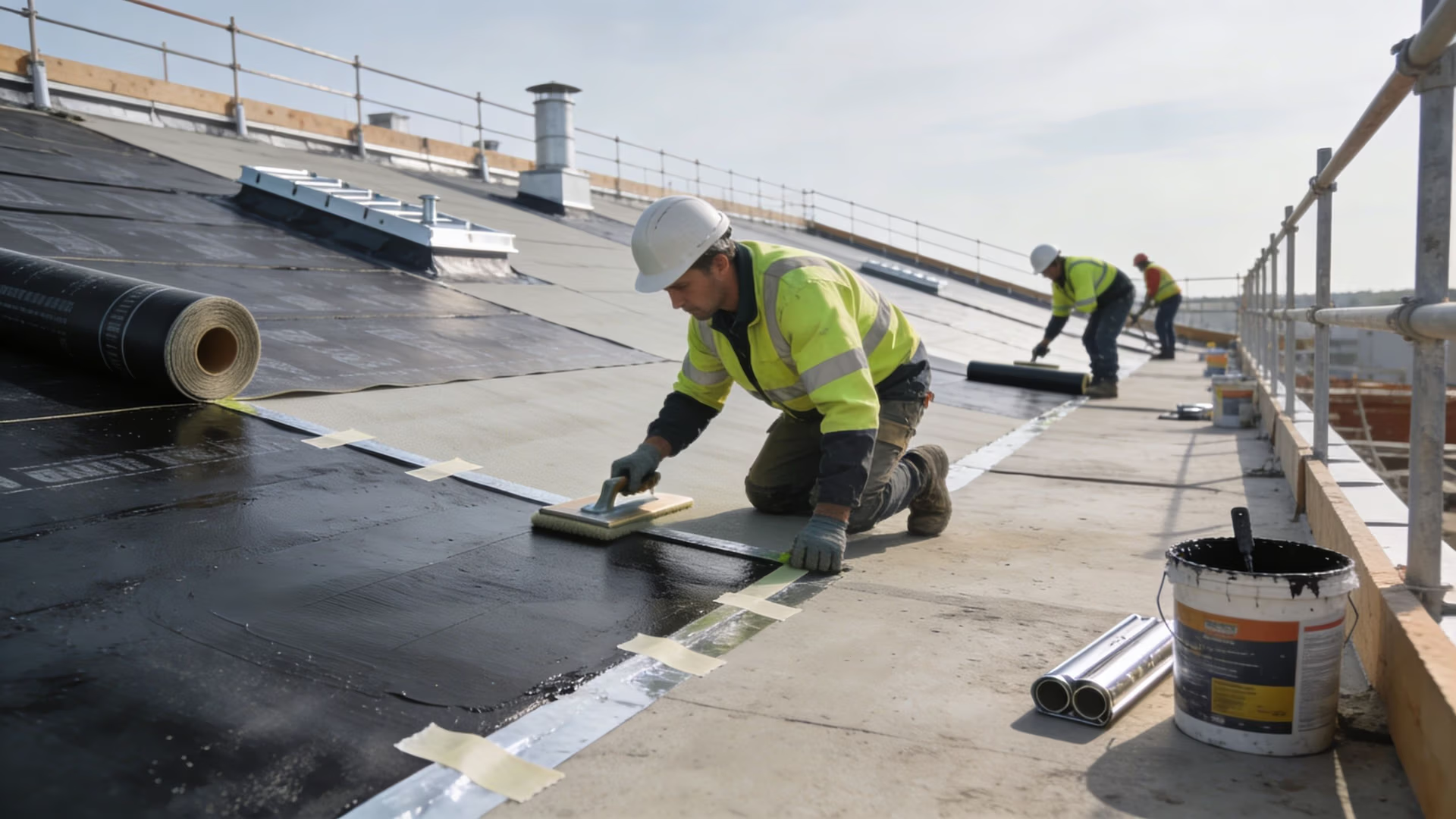
Good rectification starts with scope discipline. If the defect mechanism is not clear, any repair method is provisional. I regularly see failed waterproofing treated with fresh grout, silicone at junctions, or surface coatings over existing tiles. Those measures may reduce water entry for a short period, but they do not correct failed membrane continuity, inadequate falls, missing terminations, or a substrate that should never have been waterproofed in its original condition.
Balconies and showers illustrate the same problem in different ways. Once water is held in the assembly, the consequences spread. Tile bed saturation, loss of bond, efflorescence, swollen skirtings, corrosion at metal elements, damage to ceilings below, and fungal growth in concealed areas are all common. A cheap patch can therefore increase the eventual claim because the owner pays twice. Once for the temporary work, then again for proper demolition and reconstruction.
The practical remedy is often to remove enough of the build-up to repair the defect at system level. That can include re-forming falls, replacing cracked or drummy screeds, reinstating bond breakers, correcting door thresholds, installing proper flashing, and specifying a membrane system compatible with the substrate, movement profile, and exposure conditions. Product selection matters, but detailing matters more. Many failures occur at edges, corners, penetrations, and terminations rather than in the field of the membrane.
Some repair approaches repeatedly fail in NSW matters:
- Regrouting where moisture remains trapped below the tiles
- Applying sealant to perimeter joints while leaving defective falls unchanged
- Patching one visible crack on a balcony that still ponds after rain
- Overlaying new finishes onto unstable or contaminated substrates
- Combining components from different manufacturers without confirming compatibility and warranty position
Work that lasts usually includes:
- Falls that direct water to a lawful outlet
- Dry, stable, correctly prepared substrates
- Waterproofing terminations that are mechanically and geometrically sound
- Compatible primers, membranes, adhesives, and finishes
- Flood testing or equivalent hold-point inspection before concealment where appropriate
- Photographic records of the waterproofing stage for future defect or warranty disputes
Prevention is cheaper than rectification, but only if it is checked before the tiles go down. In showers, one recurring point of failure is the threshold and transition detail. A properly formed water stop can be the difference between water remaining in the wet area and water tracking into adjacent finishes. Owners comparing detail options can review this guide to water stops in showers, particularly where a renovation scope is being settled before works begin.
Water migration also affects finishes outside the wet area. Where leakage has reached adjacent timber boards, the flooring issue should be treated as a consequence, not the primary defect. Guidance on how to restore wood floors after spills may help an owner understand repair limits at the finish layer, but the building envelope or wet-area failure still needs to be corrected first.
For disputed matters, the order of work matters almost as much as the work itself. If destructive rectification starts before the condition is properly recorded, the parties may lose the best evidence of causation, extent, and reasonable scope. The aim is a compliant assembly and a defensible record of why that assembly was required.
Reporting for Legal Proceedings Scott Schedules and Expert Reports
Technical findings only become useful in a dispute when they are translated into a format the Tribunal can work with. That is where many matters either sharpen up or fall apart.
A proper Expert Witness Report does more than list complaints. It identifies the observed defects, records the inspection basis, explains the likely cause, considers alternative causes where relevant, notes departures from standards or accepted practice, and states what rectification is reasonably required. The report has to be clear enough for a solicitor to use and precise enough for a decision-maker to follow.
Why a Scott Schedule matters
In waterproofing matters, one defect often overlaps with others. A failed shower can involve membrane extent, screed falls, tile debonding, mould, damaged ceiling linings below, and repainting. If those items aren’t broken down carefully, the dispute becomes a jumble of opinions.
That’s why a Scott Schedule is so useful. It sets each item out in a structured format so the claimant, respondent, and expert positions can be compared line by line. In practice, it helps narrow issues. It also exposes where parties are talking about different things under the same label.
There is another practical reason this matters in NSW. Public data on claim values and dispute timelines for waterproofing matters is limited. As noted in this discussion of waterproofing dispute cost uncertainty, a significant challenge for homeowners and solicitors is accurately quantifying NCAT waterproofing disputes, and that gap is one reason a detailed Scott Schedule is so important.
What legally useful documentation looks like
A report prepared for proceedings should include:
- A defect-by-defect structure rather than broad narrative complaints
- Photographic references tied to locations and observations
- Clear causation opinions that distinguish likelihood from certainty
- Rectification scope that addresses root cause, not just finishes
- Costing basis that can be followed and challenged if necessary
For many parties, the most practical next step is to review what an Expert Witness Report for NCAT should contain before they commission one. That helps align expectations early and avoids generic reporting that doesn’t answer the legal questions in dispute.
A Tribunal doesn’t need drama. It needs organised facts, explained by someone who understands both construction and evidence.
Why experience changes the quality of the report
Litigation support is different from ordinary defect inspection. The consultant has to know what to look for on site, but also what will matter later when the other side responds. Ambiguous language, unsupported conclusions, and missing photo references create avoidable weakness.
That is why reporting discipline matters as much as technical knowledge. In waterproofing disputes, the report often becomes the bridge between a damp room and a legal outcome.
Secure Your Property and Your Position
A bathroom shows a ceiling stain downstairs, the shower still drains, and someone decides to patch grout and repaint. Six months later, the claim is larger, the finishes are worse, and the original condition of the work is harder to prove. That is how a small waterproofing issue turns into both a building problem and an evidence problem.
Protecting your position starts early. Homeowners should hold off on cosmetic repairs until the moisture source is identified and documented. Builders should respond to the alleged defect with a recorded inspection, relevant documents, and a clear position on cause, scope, and rectification. Solicitors need reporting that ties observations to the issues in dispute, without speculation and without advocacy dressed up as expert opinion.
In NSW matters, timing affects both damage and proof.
The practical sequence is simple, even if the technical issues are not. Record the symptoms. Inspect the likely pathways. Preserve photographs, moisture readings, and access findings. Distinguish waterproofing failure from plumbing leaks, condensation, or maintenance issues. Then convert those site facts into a report and Scott Schedule that another expert, a solicitor, and the Tribunal can follow.
That last step is where many otherwise sound cases weaken. A defect may be real, but if the reporting does not identify location, manifestation, probable cause, recommended rectification, and the basis for that opinion, the dispute becomes harder to resolve. In my work, the strongest outcomes usually come from early inspection, disciplined documentation, and a scope that addresses the failed system rather than the visible damage alone.
If you need legally defensible input, it helps to start with the reporting standard expected in NSW proceedings. Awesim’s services for Expert Witness Reports are directed to that purpose.
If you’re dealing with suspected waterproofing defects, a builder-owner dispute, or you need legally defensible inspection evidence, Awesim Building Consultants can assist with site investigations, Expert Witness Reports, and Scott Schedules for NSW matters. To discuss your situation, email admin@awesim.com.au or call 1800 293 746.

Related Posts

Schedule of Rates in Construction: How Disputes Arise in NSW
A Schedule of Rates contract prices construction work by unit rates applied to measured quantities, so the final cost varies
Read More »
NCAT Consumer Division: Steps From Lodgement to Hearing
Most people who end up at the NCAT Consumer and Commercial Division do not arrive there by choice. They arrive
Read More »
Statutory Warranty NSW: What Builders Must Fix and for How Long
Statutory warranty NSW obligations exist precisely for the moment a builder stops returning calls. A crack appears in the render.
Read More »