
Building Defect Report vs Expert Witness Report: What Each Document Does in a NSW Dispute
- What Is a Building Defect Report?
- What Is an Expert Witness Report?
- How the Two Documents Relate in Practice
- When You Need Each Document
- What to Look for in an Expert Witness Consultant
- A Note on Costs
- Frequently Asked Questions
If you've discovered serious defects in your home and you're heading toward NCAT or a NSW court, someone has probably told you that you need a "building report." But not all building reports are the same, and using the wrong one at the wrong stage can cost you time, money, and credibility.
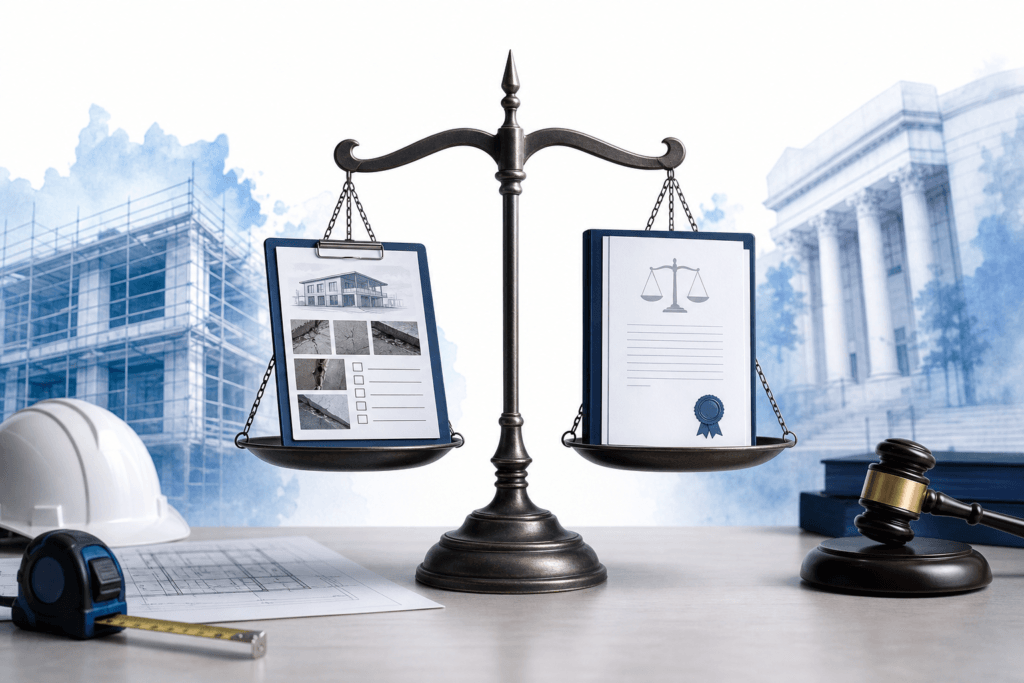
A building defect report and an expert witness report are two distinct documents. They serve different purposes, carry different legal weight, and are prepared under different standards. Understanding that distinction before you engage a consultant is one of the most practical things you can do for your dispute.
What Is a Building Defect Report?
A building defect report is a general term for any document that identifies and describes defects in a property. These reports vary widely in scope and format depending on who prepares them and why.
A pre-purchase inspection report is one type. So is a defect notice prepared by an owner-builder, a condition report from a strata manager, or an informal assessment commissioned to get a clearer picture before deciding whether to pursue a claim.
Reports of this kind are useful for understanding what you're dealing with. They help you assess whether a dispute is worth pursuing, what remediation might cost, and whether you have a credible basis for a claim. What they are not designed to do is serve as evidence in formal proceedings.
Why a General Defect Report Isn’t Enough for NCAT or Court
NSW tribunals and courts have specific requirements for expert evidence. A report that doesn't meet those requirements may be given little weight by the decision-maker, or excluded entirely.
The key requirement in NSW is the Expert Witness Code of Conduct, set out in Schedule 7 of the Uniform Civil Procedure Rules 2005 (UCPR). Any expert report intended for use in NCAT, the District Court, or the Supreme Court must comply with this code. A standard building defect report does not.
What Is an Expert Witness Report?
An expert witness report is a formal document prepared by a qualified expert whose primary duty runs to the court or tribunal, not to the party who engaged them. That independence is not just a professional standard — it is a legal requirement under UCPR Schedule 7.
A compliant report must include specific declarations: that the expert understands their duty to the court, that the report reflects their honest opinion, and that they have not been influenced by the party retaining them. It must also set out the expert's qualifications, the facts and assumptions underpinning their opinion, and the reasoning behind their conclusions.
This structure matters because courts and tribunals rely on expert reports to resolve technical questions that fall outside the expertise of judges, tribunal members, and lawyers. A well-prepared expert witness report gives the decision-maker a reliable, independent basis for assessing defects, causation, and rectification costs.
What an Expert Witness Report Covers in a Building Dispute
In a construction dispute, an expert witness report typically addresses some or all of the following:
- Whether the identified defects exist and what their nature is
- Whether the work complies with the relevant Australian Standards, the National Construction Code, or the contract specifications
- The likely cause of each defect
- The appropriate method of rectification
- The estimated cost of rectification
The report is grounded in a physical inspection of the property, a review of relevant documentation — contracts, plans, specifications, prior reports — and the expert's professional judgment. It is not a summary of the client's complaints. It reflects what the expert independently observed and concluded.
How the Two Documents Relate in Practice
These documents are not in competition. In many disputes, a building defect report comes first. You use it to understand what's wrong, assess whether the defects are serious enough to pursue, and prepare for the next step.
Once you decide to proceed to NCAT or court, you commission an expert witness report. The expert may review your earlier defect report as part of their background research, but they will conduct their own inspection and reach their own independent conclusions.
Think of the building defect report as the document that helps you decide whether to act. The expert witness report is the document that supports your case when you do.
Scott Schedules: the Document That Sits Between Them
In many NCAT proceedings, parties are required to prepare or respond to a Scott Schedule — a structured table that lists each alleged defect, the respondent's position on each item, and the estimated cost of rectification.
A Scott Schedule is not the same as either a building defect report or an expert witness report. It is a litigation management tool that organises the competing positions of the parties. That said, it is typically prepared alongside or with direct reference to an expert witness report. The expert's findings on defects and costs feed directly into the schedule.
If you are preparing for an NCAT hearing and haven't yet encountered Scott Schedules, it's worth understanding how they work before your hearing date arrives. Awesim's team at awesim.com.au prepares both expert witness reports and Scott Schedules for NSW proceedings.
When You Need Each Document
The right document depends on where you are in the dispute process.
You need a building defect report when:
- You've noticed problems and want to understand their scope before deciding whether to pursue a claim
- You're gathering information to send a formal defect notice to your builder
- You want a cost estimate to assess whether a claim is financially viable
You need an expert witness report when:
- You've received an NCAT hearing date
- A solicitor has advised you that independent expert evidence is required
- You are responding to a claim and need to rebut another party's expert evidence
- The dispute has reached the District Court or Supreme Court
You may need both, plus a Scott Schedule, when:
- Your NCAT proceedings are underway and the tribunal has directed the parties to prepare a Scott Schedule
- The defects are complex and the parties' positions are significantly different
What to Look for in an Expert Witness Consultant
Not every building inspector is qualified to prepare a compliant expert witness report. The person you engage needs to understand UCPR Schedule 7, have the technical qualifications to form opinions on the defects in question, and be genuinely independent.
Independence goes beyond having no financial relationship with the builder. It also means the expert is prepared to give an honest opinion even where it doesn't fully support your position. Courts and tribunals scrutinise independence closely, and a report that reads as advocacy rather than analysis will be treated accordingly.
Experience in the NSW jurisdiction matters too. Procedural requirements differ between NCAT, the District Court, and the Supreme Court, and an expert who has worked across those forums will understand what each decision-maker expects.
Awesim Building Consultants has been preparing expert witness reports for NSW courts since 1996. The firm's principal consultant, Glen Sim, has published case references at awesim.com.au/glen-sim-expert-witness-case-references, and the firm operates from offices in Sydney, Tamworth, and Tweed Heads, covering disputes across New South Wales.
A Note on Costs
The cost of an expert witness report in NSW typically falls between $2,000 and $10,000 AUD, with around $4,500 being a common figure for a straightforward residential dispute. That range reflects the complexity of the defects, the size of the property, the number of items in dispute, and the level of court or tribunal involved.
A general building defect report is usually less expensive, but it serves a different purpose. Spending less on the wrong document at the wrong stage is not a saving.
If you're unsure which document your situation requires, a free initial consultation with a qualified building consultant is a sensible first step before committing to any engagement.
Frequently Asked Questions
What is the difference between a building defect report and an expert witness report?
A building defect report is a general assessment of defects in a property. An expert witness report is a formal document prepared to comply with UCPR Schedule 7 and is designed to be tendered as evidence in NCAT, District Court, or Supreme Court proceedings. The expert witness report includes declarations of independence and structured reasoning that a standard defect report does not.
Can I use a building defect report as evidence in NCAT?
Not effectively. NCAT requires expert evidence to comply with the Expert Witness Code of Conduct under UCPR Schedule 7. A standard building defect report does not include the required declarations or structure, and the tribunal may give it little weight or exclude it from consideration.
What is UCPR Schedule 7 and why does it matter?
UCPR Schedule 7 is the Expert Witness Code of Conduct under the Uniform Civil Procedure Rules 2005. It sets out the obligations of expert witnesses in NSW proceedings, including that the expert's duty is to the court rather than the party engaging them. Any expert report intended for use in formal NSW proceedings must comply with this code to be admissible and credible.
Do I need both a building defect report and an expert witness report?
In many disputes, yes. A building defect report is useful early in the process to understand the scope of the problem and assess whether a claim is viable. Once you decide to proceed to NCAT or court, you will need a compliant expert witness report. The two documents serve different purposes at different stages.
What is a Scott Schedule and how does it relate to these reports?
A Scott Schedule is a structured table used in NCAT proceedings to organise each alleged defect, the parties' positions, and estimated rectification costs. It is not the same as a defect report or an expert witness report, but it is often prepared alongside or with reference to an expert witness report. Many NCAT matters require parties to complete or respond to a Scott Schedule before the hearing.
How much does an expert witness report cost in NSW?
The market range is approximately $2,000 to $10,000 AUD, with around $4,500 being typical for a residential building dispute. Cost depends on the complexity of the defects, the size of the property, and the level of proceedings involved. Pricing for a specific matter is available on enquiry.
How do I know which document I need for my dispute?
The stage of your dispute and the forum you're heading toward are the main factors. If you haven't yet decided whether to pursue a formal claim, a building defect report may be sufficient for now. If you have an NCAT hearing date or a solicitor has advised you to obtain independent expert evidence, you need a compliant expert witness report. A free initial consultation with a qualified building consultant can help you identify the right document for your situation.
The distinction between a building defect report and an expert witness report is not a technicality. It determines whether your evidence will be taken seriously by the decision-maker. Getting the right document, prepared by the right person, at the right stage, is one of the most direct ways to protect your position in a NSW construction dispute.
To discuss your situation and find out which document your matter requires, contact Awesim Building Consultants at awesim.com.au or call 1800 293 746.

Related Posts
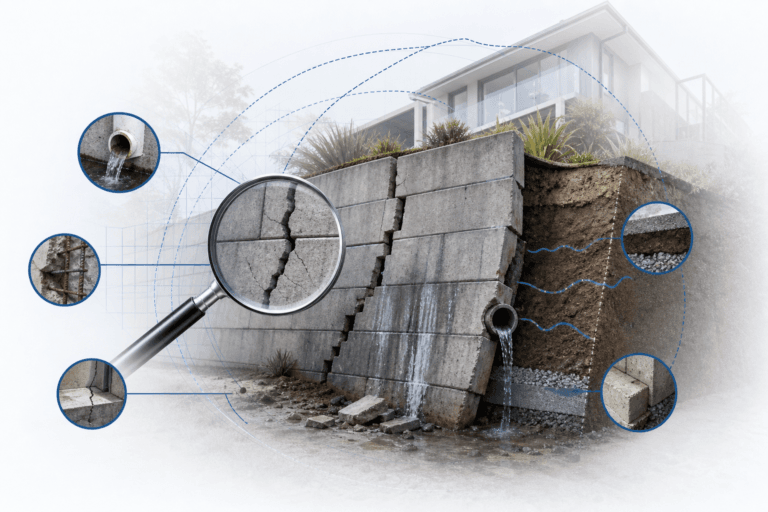
Retaining Wall Defects: Inspection, Evidence, and NSW Claims
Retaining wall defects range from visible cracking and leaning to hidden drainage failures that build dangerous hydrostatic pressure. In NSW,
Read More »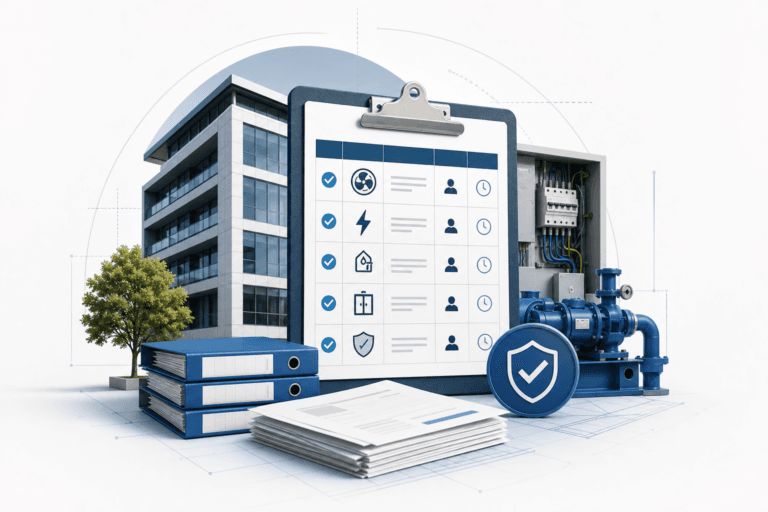
Building Maintenance Schedule: What Owners Must Document
A building maintenance schedule must document every asset, its required service frequency, the person responsible, and a timestamped record from
Read More »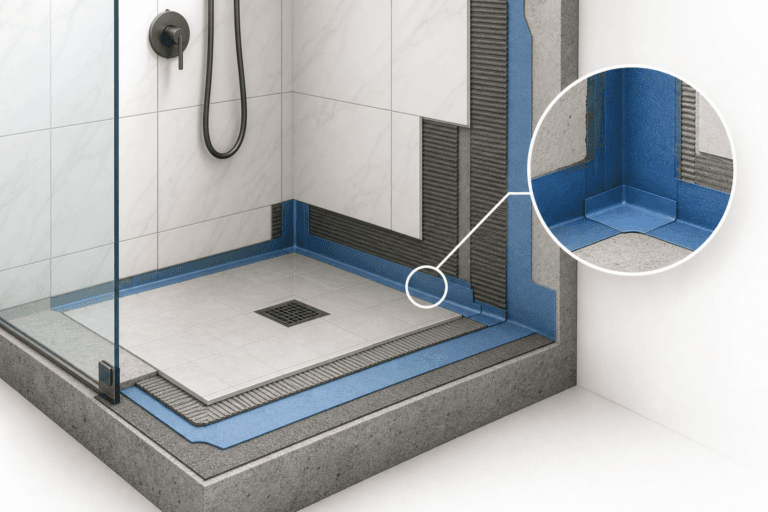
Waterproofing Under Tiles: What AS 3740 Actually Requires
Waterproofing under tiles in Australian bathrooms is governed by AS 3740:2021 Waterproofing of Domestic Wet Areas, and the requirements are
Read More »