
Building Inspector for Apartments: What Buyers Should Check
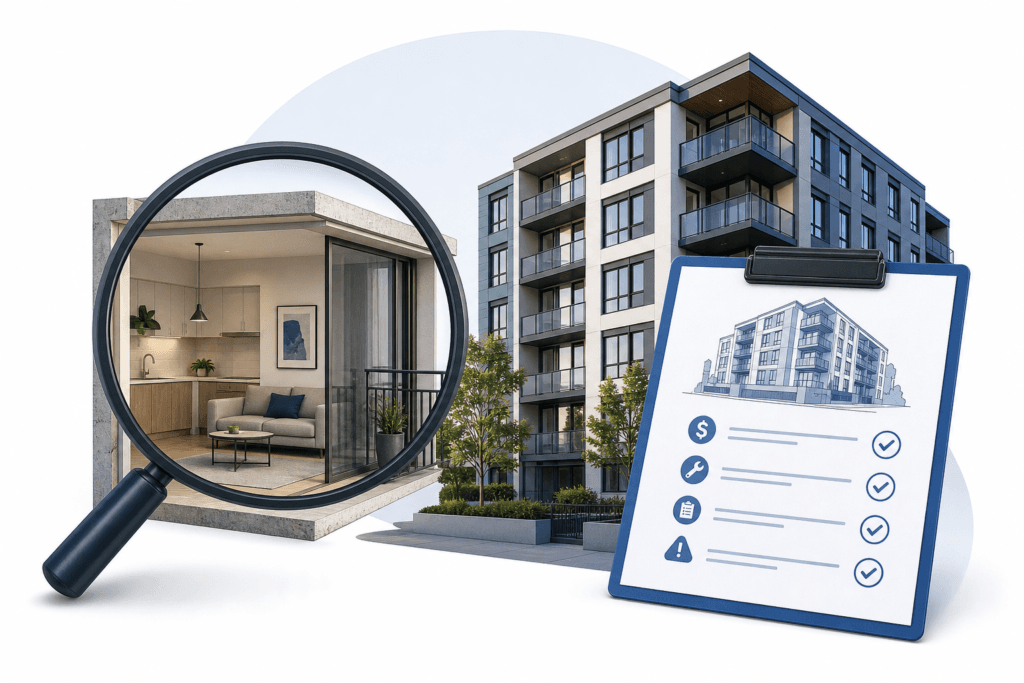
A building inspector for apartments checks the unit itself: plumbing, electrical, moisture, ceilings, windows, balcony and visible defects. They do not assess the whole building. Pair the inspection with a strata report covering common property, finances and defects, and book both before the cooling-off period ends.
Most buyers reach this question the same way. They have found an apartment they like, the contract has landed, and a friend asks whether they have had it inspected. Then comes the harder question: inspected for what, exactly? An apartment carries two layers of risk, the unit you own and the shared building around it. A unit inspection alone leaves the second layer unchecked, and a building inspector for apartments is only one half of the answer. This guide covers the unit side in detail and shows what sits in the strata records.
What does a building inspector for apartments actually cover?
A private inspector covers the lot you are buying: the interior of the unit and any exclusive-use areas such as a balcony or courtyard. The report describes the condition of what the inspector can see and reach on the day. It is a snapshot of one apartment, not a verdict on the building.
A private inspector's report typically covers:
- Internal finishes and fittings: walls, ceilings, floors, doors, windows, cabinetry and wet areas.
- Moisture and water damage: signs of leaks, damp, staining, mould and failed sealing, checked with visual inspection and often a moisture meter.
- Services inside the unit: visible plumbing, electrical fittings and any air conditioning, noting obvious faults rather than testing every circuit or pipe.
- Balcony condition: surfaces, balustrades, drainage and signs of water movement, where access is safe.
Common property sits outside that scope. The roof, external walls, structural frame, lifts, fire systems, car park and shared plumbing belong to the owners corporation. A private inspector may note a symptom visible from inside your unit, such as a stained ceiling that suggests a leak from above, but cannot usually trace the cause into the shared building.
This is where expectations go wrong. A clean unit report does not mean the building is sound. The intent of the inspection is to tell you what you are buying inside the walls you will own, and to flag what needs a closer look elsewhere.
Which type of inspector do you need for an apartment?
For most apartments, a licensed residential building inspector who regularly works in strata is the right choice. Ask whether they inspect apartments routinely, because a house-focused inspector may not know where a unit's responsibility ends and the owners corporation's begins. Ask for a sample report so you can judge how clearly they separate unit findings from common property observations.
Larger or older complexes are different. A tower with a podium, basement car park, lifts and shared mechanical plant raises questions a residential inspector is not engaged to answer. Cladding, structural movement, façade condition and fire safety systems call for a specialist consultant or engineer. That work is usually commissioned at building level, often by the owners corporation, rather than by an individual buyer.
A reasonable rule of thumb:
- Small or newer block, no visible concerns: a residential building inspector with strata experience.
- Older block, or visible defects in the unit: the same inspector, plus close review of the strata report and records.
- Large complex, or signs of building-wide problems: raise it with your solicitor and consider specialist advice before you commit.
Confirm the scope in writing before you book. If an inspection or strata record points to defects that someone must pay to fix, you may be heading towards a dispute rather than a purchase. At that point you need an independent consultant who prepares evidence for tribunals and courts, not a pre-purchase inspector. Awesim Building Consultants is a building consultancy that produces expert witness and defect reports for formal proceedings in NSW. It is not a substitute for a pre-purchase inspection, but it is the kind of practice to know about if a defect becomes contested. For background on how those disputes proceed, see building disputes in NSW.
What should be checked inside the apartment?
Walk the unit with your inspector's findings in mind and check the same items yourself. The following list covers the areas that cause the most expensive surprises.
- Plumbing: run taps and showers together and watch for slow drainage, low pressure and discoloured water. Look under sinks for staining, swelling or corrosion.
- Electrical: test power points and switches, check the switchboard for tripped or patched circuits, and confirm smoke alarms are present and working.
- Air conditioning: run each unit in both heating and cooling modes. Listen for noise, check for water leaking at indoor units, and ask for service records.
- Moisture and mould: look at ceiling corners, behind furniture, around windows and inside wardrobes on external walls. A fresh coat of paint on one patch is worth a question.
- Balcony and waterproofing: check for ponding water, cracked or lifting tiles, rust on balustrades and staining on the ceiling of the unit below, if you can see it. Wet areas such as bathrooms depend on a concealed waterproofing assembly, so look for failed grout, swollen skirtings and musty smells.
- Windows and doors: open and close every one. Sticking frames, failed seals and fogging between panes point to movement or age.
Some red flags matter more than others:
- Water ingress: repeated staining or patching suggests an ongoing source, which may sit in common property.
- Structural cracking: wide, stepped or diagonal cracks, or doors and windows that no longer sit square, warrant a specialist opinion.
- Combustible cladding: if the building has external cladding, ask whether it has been assessed. This is a building-level issue that appears in strata records, not in a unit report.
Photograph anything unusual and hand it to your inspector before the report is finalised.
Why is a strata report as important as the inspection?
A strata report tells you what the unit inspection cannot: how the building is run, funded and maintained. The unit report describes four walls. The strata records describe the structure, the shared systems, and the money behind them, and a problem in either can cost you tens of thousands of dollars after settlement.
Several things sit in those records:
- Finances: the administrative and capital works funds, the levies you will pay, and any special levies approved or being discussed. A fund that is thin relative to the building's age often means a levy is coming.
- Maintenance history: repairs completed, repairs deferred, and any building defect or waterproofing issues the owners corporation is dealing with.
- Insurance and disputes: whether cover is current, and whether the owners corporation is involved in active disputes with a builder or another party.
- By-laws: rules on renovations, pets, short-term letting and flooring, which can change how you intend to use the apartment.
StrataClear is one service that prepares strata inspection reports for NSW buyers, covering financial health, maintenance history and by-laws. It lists identifying pending special levies as part of that work, which is something a standard building inspection will not do. Its pricing is not publicly listed, so ask for a quote, and treat it as one option among several, including a solicitor or conveyancer who reviews the strata documents as part of your contract.
NSW strata law requires the owners corporation to keep records that a buyer can request, so the information exists. The point is to read it before you are committed. Start with the fund balances and any special levies, then the maintenance history and any defect or waterproofing issues, then insurance and disputes, and finish with the by-laws. For a closer look at how the boundary between unit and common property works under strata law, see what a strata property inspection covers in NSW. For a practical walkthrough of the records themselves, see what buyers need to read in a strata report before signing.
How do you book and brief an apartment inspector?
A clear brief gets you a useful report. Most scope problems come from the inspector not knowing what you wanted covered, so settle these points when you book.
- Give the full address. Share the full address and identify any specific buildings or parcels involved, particularly in a complex with several towers or blocks [S1].
- State the unit count. List the total number of units in the scheme, and provide an occupancy list if you have one, so the inspector understands the setting [S2].
- Define the scope in writing. Specify which unit interiors, common areas, balconies and shared systems you want covered. A private unit inspection will not normally include the roof or mechanical rooms unless access is arranged and the inspector agrees to look [S3].
- Arrange access. Provide a management contact who can coordinate keys and resident access [S4]. For common areas, this usually means the strata manager or building manager, and approval can take several days, so ask early.
- Disclose what you know. Tell the inspector about any building concerns, maintenance records you have seen and your transaction deadlines [S5]. If the contract has a cooling-off date, say so.
Ask the inspector to confirm in writing what the report will and will not cover, and when you will receive it. A report that arrives after your deadline has little value.
When should you book a building inspector for apartments in Sydney, Melbourne or Brisbane?
Book as soon as you have the contract and a likely purchase in mind, because your window to act is short. In NSW, the cooling-off period is five days. Withdrawing during that time costs 0.25% of the purchase price. That penalty makes it worth having the inspection and strata report done inside the window rather than discovering a problem afterwards.
For a building inspector for apartments in Sydney, aim to book before you exchange or immediately after. Leave time to order the strata documents, arrange access and read both reports. Electronic conveyancing has been the mandatory standard for NSW settlements since 11 October 2021, which speeds up some steps, but it does not extend your inspection window.
Searching for a building inspector for apartments in Melbourne or Brisbane works the same way in principle: find a licensed inspector who handles strata properties, brief them as above, and check the owners corporation records. The rules around cooling-off, contract timing and what records you can obtain differ by state, so confirm the details with your solicitor or conveyancer rather than assuming the NSW rules apply.
Who pays for repairs if the inspection finds defects?
Responsibility depends on where the defect sits. Inside your lot, the current owner is responsible until the sale completes, and you are responsible afterwards. Common property defects, such as roofs, external walls and shared pipes, belong to the owners corporation to maintain. A private unit report does not oblige the owners corporation or strata committee to act on it. It gives you information, not a right to compel repairs.
That shapes what you can do before purchase. For defects inside the unit, you can ask the seller to rectify the work, reduce the price or adjust the contract terms. For common property issues, check the strata records for planned works or a special levy, and ask your solicitor how the cost may fall on you after settlement. If the findings are serious and the seller will not move, walking away within the cooling-off period may cost less than inheriting the defect. If a defect later becomes contested, see pre-purchase building inspection in NSW and what it covers for defect claims.
FAQs
What is the biggest red flag in an apartment inspection?
Repeated water ingress is the one to take seriously. Staining, patched ceilings or musty smells that keep returning suggest an ongoing source, which may sit in common property rather than your unit. Wide structural cracks and doors or windows that no longer sit square are close behind. Ask your inspector what they can trace from inside the unit, and check the strata records for related repair history.
Does an apartment inspection satisfy lender requirements?
Not necessarily. A pre-purchase inspection is for your benefit as a buyer, while a lender's valuation is a separate assessment of the property's value as security. Some lenders may ask for specific reports, so check with your lender or broker. Do not assume that a clean inspection report replaces anything your finance approval requires.
Can I ask the strata committee to fix defects found in my private unit report?
You can raise the findings with the committee, but a private unit report does not oblige it to act. The owners corporation is responsible for common property, so it can act only on defects that sit there. A symptom visible in your unit, such as a ceiling stain, may point to a common property cause, and a written request supported by photographs gives you a record of when you reported it.
How is an apartment inspector different from a building engineer for a large complex?
A residential building inspector assesses the condition of one unit and its exclusive-use areas on the day. A building engineer or specialist consultant examines building-level matters such as structure, façade, cladding, fire systems and shared plant. That work is typically commissioned by the owners corporation, so for a large or older complex, ask your solicitor whether specialist advice is warranted before you commit.
Do I need an inspection if the apartment is new or off the plan?
Yes, in a different form. A new apartment can still have defects, and off-the-plan purchases mean inspecting at completion, before settlement. Check the finished unit against the contract specifications, and read the strata records and any defect liability terms. Ask your solicitor how defects found after completion are handled, since the process depends on your contract.
What qualifications should a building inspector hold?
Ask for their licence or registration details, insurance and relevant experience with strata properties. Requirements differ by state, so confirm what applies where you are buying. Ask for a sample report as well, because it shows how clearly they separate unit findings from common property observations. Credentials matter, but so does the quality of the written report.
Where can I find a free checklist or template for an inspection report?
Your inspector's sample report is the most useful template, because it shows what they will actually cover. The interior checklist earlier in this guide gives you a starting point for your own walk-through. Treat any generic template as a prompt for questions, not a replacement for a licensed inspector's written report on your specific unit.
Conclusion
Before you exchange, confirm the inspector's written scope, order the strata documents, and ask your solicitor how any defect you find would be handled. If the findings are serious, decide your position on price or withdrawal while the cooling-off window is still open.

Related Posts
Building Inspector for Apartments: What Buyers Should Check
A building inspector for apartments checks the unit itself: plumbing, electrical, moisture, ceilings, windows, balcony and visible defects. They do
Read More »![Businessman in a suit analyzes a 3D building model on blueprints with a hard hat nearby and a crane in the background, conveying construction planning and law.]](https://awesim.com.au/wp-content/uploads/2026/10/2ba440c4-9d47-4802-adf1-8b6f241eb8ff-768x512.png "2ba440c4-9d47-4802-adf1-8b6f241eb8ff - Awesim Building Consultants")
Construction Claims Experts and Witness Reports
Last updated: 8 November 2026 A construction expert witness provides an independent opinion on technical questions in a building dispute.
Read More »
Building Inspection Reports and Expert Evidence
Updated October 29, 2026 You’ve received a building and inspection report and you’re not sure what to do with it.
Read More »