
Navigating NSW Building Disputes Homeowner’s Guide to NCAT
When a project goes sideways, what starts as a dream home or renovation can quickly become a stressful and costly nightmare. We’re talking about NSW building disputes, and they’re more than just minor disagreements. These are serious conflicts, often stemming from defective work, unfinished projects, or major breaches of contract.
Navigating the path to a resolution can feel like a maze, but getting your head around the landscape is the first, most crucial step.
What To Do When Your Build Goes Wrong

It’s a gut-wrenching feeling, isn’t it? Finding a defect in your property. What begins as a small worry—a leaky window, a cracked tile, maybe some uneven flooring—can spiral into a full-blown conflict.
Tensions rise fast when there’s money on the line, communication breaks down, and what was promised on paper doesn’t match the reality. At its heart, a building dispute is a formal disagreement over the work itself. While a quick chat can solve minor issues, a formal dispute usually involves problems that seriously impact your property’s safety, value, or even its liveability.
The Key Players in a Dispute
To get through this, you need to know who’s involved. The main parties are, of course, the homeowner and the builder. But when they hit a stalemate, a third party usually enters the picture: the NSW Civil and Administrative Tribunal (NCAT). Think of NCAT as the official referee, providing a formal, legally-binding way to resolve things when talking it out just doesn’t work.
Unfortunately, the construction industry itself can be a pressure cooker for this kind of friction. To give you some perspective, in the September quarter of 2025 alone, Australia saw 87 industrial disputes involving 41,800 employees. That level of volatility often trickles down, turning residential projects into battlegrounds that end up at NCAT.
The Power of Independent Expert Evidence
When emotions are running high and everyone’s pointing fingers, cold, hard facts become your best friend. This is where an independent building consultant is worth their weight in gold.
An expert witness cuts through the “he said, she said” noise by providing a factual, unbiased assessment. They can pinpoint the real cause of a defect, check it against the proper Australian Standards, and map out exactly what needs to be done to fix it.
For homeowners, builders, and lawyers caught in the middle of a dispute, that kind of clarity is priceless. Awesim Building Consultants have 35+ years in Building & Construction, with over 15 years providing litigation support to home owners, builders and lawyers. We bring the real-world experience needed to guide you through these tough situations. Our detailed Expert Witness Reports for builder complaints in NSW deliver the rock-solid evidence you need to build a strong case and face the road ahead with confidence.
Understanding Your Rights Under NSW Law
Trying to navigate a building dispute without knowing your legal rights is like being up a creek without a paddle. It’s easy to feel stranded, but here in NSW, there’s a solid legal framework designed to protect homeowners. This framework is your foundation, giving you the power to hold builders accountable for their work.
At the heart of it all is the Home Building Act 1989. Think of this Act as the official rulebook for all residential construction in NSW. It clearly lays out the obligations for builders and contractors and, most importantly, creates a powerful safety net for you, the homeowner, known as statutory warranties.
These warranties aren’t optional extras you have to ask for; they’re automatically baked into every residential building contract worth more than $5,000. They act as a built-in consumer guarantee, ensuring the work done on your home meets a certain standard.
The Power of Statutory Warranties
So, what exactly do these statutory warranties cover? In short, they are legally binding promises that all work will be done with due care and skill, using materials that are fit for purpose and compliant with the law. Put simply, the job has to be done properly.
These warranties provide cover for a specific amount of time after the work is finished, and it’s crucial to understand the timeframes:
- Six-Year Warranty: This covers major defects. A major defect isn’t just a minor stuff-up; it’s a serious problem in a critical part of the building—like the foundations, waterproofing, or fire safety systems—that makes the property unsafe or uninhabitable.
- Two-Year Warranty: This applies to all other defects. This is a catch-all for anything that isn’t ‘major’ but still represents faulty or shoddy workmanship, like cracked plasterboard, poor paint finishes, or badly installed joinery.
Knowing these time limits is absolutely vital. If you find a defect, you have to act within the warranty period to make a claim. This legal safety net is there to ensure you aren’t left holding the bill for someone else’s mistakes.
Raising the Bar with the DBP Act
While the Home Building Act has been the cornerstone of consumer protection for decades, more recent laws have added another, much-needed layer of accountability. The Design and Building Practitioners Act 2020 (DBP Act) was brought in to tackle some of the deep-seated issues in the industry and lift the quality of construction, especially in apartment buildings.
This Act introduced a new duty of care, which means that even later owners of a property can go after the original builder or designer for defects, even if they never had a direct contract with them. It’s a game-changer, extending accountability much further down the track. It’s well worth getting your head around the requirements for Design Certifications As Per DBP Act 2020 to understand your full legal standing.
When you put these laws together, their effect is powerful. They set clear standards for workmanship and give homeowners a proper legal path to get things fixed when those standards aren’t met. This legal backing turns your complaint from a simple disagreement into a formal claim grounded in NSW law.
When you’re facing a dispute, knowing these rights is your first line of defence. It means you can walk into negotiations or legal proceedings with confidence, knowing you have legislation designed to protect your biggest investment. At Awesim Building Consultants, our 35+ years of industry experience are built on a deep understanding of these laws, which allows us to provide litigation support that perfectly aligns expert evidence with your legal rights.
Your Step-By-Step Guide to the NCAT Journey

This diagram neatly lays out the legal pillars that underpin the entire resolution process. It all flows from the foundational law, through to the specific consumer warranties, and finally, to holding someone accountable. These are the three core stages of any claim you bring before the Tribunal.
Facing the NSW Civil and Administrative Tribunal (NCAT) can feel like standing at the start of a long, unfamiliar road. It’s the formal pathway for resolving many NSW building disputes, but let’s be honest, the procedures can look complex and a little intimidating. This guide breaks that journey down into clear, manageable steps, giving you a practical map to follow.
Starting Your Claim: Lodging the Application
The first real step is lodging an application with NCAT. This means filling out a specific form for building disputes where you’ll detail what the fight is about, who’s involved, and what you want the outcome to be. Getting this right is critical—this document sets the stage for your entire case, so accuracy and clarity are everything.
Once lodged, your application is officially served on the other party (the respondent). They then get their chance to respond to your claims, and this initial exchange of documents formally kicks off the legal process.
The First Directions Hearing: What to Expect
After the paperwork is filed and served, everyone will be called to a “directions hearing.” Don’t let the name fool you; this isn’t the main event. It’s better to think of it as a case management meeting, led by a Tribunal Member.
The main goal here is just to get the case organised and ready to proceed. The Tribunal Member will set a clear timetable for all the key actions, such as:
- Exchanging evidence: This covers everything from witness statements to, most critically, expert reports.
- Filing specific documents: You might be ordered to prepare things like a Scott Schedule to clearly itemise every disputed point.
- Confirming next steps: This is where they’ll schedule a mediation, a conciliation conference, or lock in a date for the final hearing.
This hearing is purely procedural. It’s designed to keep things moving efficiently and make sure both sides know exactly what they need to do and by when. If you need help navigating the legal ins and outs, it’s often wise to consult with experienced law firms and attorneys.
Mediation and Conciliation: A Chance to Settle
Before things escalate to a full-blown formal hearing, NCAT heavily encourages everyone to try and resolve the dispute through mediation or conciliation. These are confidential meetings where a neutral third party steps in to help you and the other side find some common ground and reach an agreement.
This is a massive opportunity to settle the dispute without the stress and expense of a final hearing. If you can reach a deal here, it becomes a legally binding agreement, which is almost always a faster and more satisfactory outcome for everyone.
The Final Hearing: Presenting Your Case
If mediation doesn’t work out, your case will proceed to a final hearing. This is it—the main event. Both sides will present their evidence and arguments before a Tribunal Member, who acts much like a judge.
During the hearing, you (or your legal representative) will state your case, call witnesses to give evidence, and your experts might be cross-examined on their reports. Then, the other party gets their turn to do the same.
Once all the evidence has been heard, the Tribunal Member will make a final, legally binding decision. These orders could force a builder to fix defects, pay you for the cost of rectification work, or finish an incomplete project. This decision marks the end of the NCAT journey.
Knowing these steps can make the whole process feel far less daunting. Understanding how to prepare for an NCAT building dispute is vital, and so is having a seasoned building consultant from Awesim Building Consultants in your corner. With over 15 years of litigation support experience, we provide the expert evidence and clarity needed to navigate every stage of this journey with confidence.
Building an Unshakeable Case with Expert Evidence

When you’re caught in a building dispute, your case lives or dies on the strength of your evidence. It’s not enough to simply say something is wrong; you have to prove it with objective, credible facts. This is the point where raw frustration over defects needs to transform into a strategic effort to build a case the NSW Civil and Administrative Tribunal (NCAT) can actually act on.
At this pivotal stage, two documents become absolute game-changers: the Expert Witness Report and the Scott Schedule. These aren’t just bits of paper. Think of them as the architectural plans for your legal argument, turning a personal complaint into structured, professional evidence that provides the backbone for a successful claim in NSW building disputes.
The Power of an NCAT-Compliant Expert Witness Report
An Expert Witness Report isn’t just a list of things you’re unhappy with. It’s a forensic deep-dive into your property’s issues, carried out by a qualified and impartial professional. Its entire purpose is to give the Tribunal a clear, unbiased, and technical assessment of what’s gone wrong.
A truly effective, NCAT-compliant report will do several crucial things:
- Pinpoint and Detail Defects: It meticulously documents every single issue, from major structural problems right down to poor workmanship.
- Reference Australian Standards: This is key. The report links each defect back to a specific clause in the National Construction Code (NCC) or relevant Australian Standards, proving the work falls short.
- Propose Rectification Methods: The expert doesn’t just point out problems; they outline the correct, compliant way to fix each one, leaving no room for guesswork.
- Provide Credible Costings: It includes detailed, realistic cost estimates for all the proposed rectification work. This forms the basis of any financial claim you make.
This independent assessment is powerful because it shifts the argument away from a simple “he said, she said” scenario. The Tribunal places immense weight on the opinion of a qualified, independent expert. Drawing on over 35+ years in Building & Construction, we at Awesim Building Consultants craft reports that are built to withstand scrutiny and provide the clarity needed to move forward.
You can learn more about this critical document in our detailed guide to the Expert Witness Report.
Essential Evidence for Your Building Dispute Case
To build a compelling case, you need more than just one type of proof. A combination of documentation, expert analysis, and clear communication is what truly strengthens your position at NCAT.
| Type of Evidence | What It Is | Why It’s Important | Who Prepares It |
|---|---|---|---|
| Contracts & Agreements | The signed building contract, variations, quotes, and initial plans. | Forms the legal basis of the agreement and outlines the scope of work. | You and your builder/solicitor |
| Communication Records | Emails, text messages, and meeting notes between you and the builder. | Creates a timeline and shows what was discussed, agreed upon, or disputed. | You/Your solicitor |
| Photos & Videos | Dated visual evidence of defects, poor workmanship, and property damage. | Provides clear, objective proof of the issues as they appeared over time. | You/Building Consultant |
| Expert Witness Report | A detailed, independent assessment of defects by a qualified professional. | Provides the technical analysis and standard-breach evidence NCAT relies on. | Qualified Building Consultant |
| Scott Schedule | A table that itemises each dispute, with each party’s position side-by-side. | Organises the dispute, streamlines the hearing, and focuses on key disagreements. | You/Your solicitor and the other party |
Having a well-rounded collection of this evidence shows the Tribunal that you are organised, serious, and have a claim supported by objective facts, not just opinion.
Demystifying the Scott Schedule
If the Expert Witness Report is the detailed investigation, then the Scott Schedule is the executive summary. Imagine a spreadsheet where every single disputed item is laid out in its own row, with columns for each party’s argument. It’s an incredibly effective tool for cutting through the noise.
A Scott Schedule systematically breaks down the entire conflict, creating a clear, logical roadmap for the Tribunal Member to follow.
A well-prepared Scott Schedule stops a hearing from descending into a chaotic mess of claims and counterclaims. It forces everyone to respond directly to each point of contention, itemising the defect, the proposed fix, the cost, and each party’s comments—all in one place.
This document is so useful that NCAT will often order both parties to complete one. It streamlines the whole process by focusing everyone’s attention on the specific points of disagreement, which saves a huge amount of time and confusion in the hearing.
Transforming Claims into Concrete Evidence
Together, the Expert Witness Report and the Scott Schedule lift your case from a simple complaint to a structured, evidence-based claim. The report provides the technical “why”—why the work is defective and breaches standards. The Scott Schedule provides the “what”—what exactly is in dispute and what each party has to say about it.
This level of professional documentation demonstrates to the Tribunal that you are serious and have a claim backed by solid facts. For homeowners, builders, and solicitors navigating NSW building disputes, these documents are not just helpful—they are often the deciding factor between winning your case and having it dismissed. With over 15 years of litigation support experience, our team at Awesim Building Consultants specialises in preparing these crucial documents to help you build an unshakeable case.
When to Call in the Experts
Navigating a building dispute in NSW can feel like you’re lost in a thick fog.
You might start by trying to sort things out directly with your builder, hoping a simple conversation will clear the air. But what happens when that fog just gets heavier? Knowing exactly when to call in a professional building consultant can be the most critical decision you make in the entire process.
This isn’t about blowing a minor disagreement out of proportion. It’s about knowing when a problem has grown beyond a quick fix and needs an expert eye. Bringing in an impartial professional is a strategic move to get clarity, authority, and a definite path forward. Putting it off often leads to those drawn-out, expensive legal battles that everyone wants to avoid.
Clear Signals It’s Time for Expert Help
Spotting the warning signs early is key. If you find yourself nodding along to any of these points, it’s a massive red flag telling you to get professional guidance right away. Don’t wait for things to get worse.
- Communication Breakdown: Your emails are met with silence. Calls go to voicemail. Every conversation just goes around in circles. When you hit a wall like this, it’s a sure sign that direct negotiation has failed. An expert can pull the conversation back to the objective facts, taking the emotion out of it.
- Complex or Hidden Defects: Are you seeing persistent water leaks, hearing strange cracking noises, or worried about something structural? These aren’t just cosmetic touch-ups; they need a deep technical understanding to diagnose properly. A building expert can pinpoint the root cause, something an untrained eye will almost certainly miss.
- Disputes Over Standards: The builder keeps saying their work is “up to code,” but your gut is telling you something is seriously wrong. This is when you need an independent assessment. A building consultant can give you a definitive answer on whether the work breaches the National Construction Code or relevant Australian Standards.
- Legal Action Seems Likely: As soon as words like “NCAT,” “solicitor,” or “legal action” are mentioned—by you or your builder—the time for friendly chats is over. You need to start building your case with solid, credible evidence, and an expert witness report is the absolute cornerstone of that preparation.
The Process of Engaging a Building Consultant
Bringing in an expert from a firm like Awesim Building Consultants, with over 35 years in the Building & Construction industry, is a straightforward process designed to put you back in control. It all starts with an initial chat where we listen to get the full story behind your dispute.
The next step is a comprehensive on-site inspection. Think of it as a forensic examination where every single alleged defect is documented, photographed, and measured against the relevant building codes. This is where decades of hands-on experience really count, as a seasoned professional can spot the critical issues others might easily overlook.
Once the inspection is done, we compile all the findings into a detailed, NCAT-compliant report. This isn’t just a list of problems. The report explains the ‘why’ and the ‘how’—why the work is defective and how it should be properly fixed, complete with cost estimates. It turns your gut feelings into objective, actionable evidence.
With 15 years of dedicated experience providing litigation support, our job is to be your essential partner. We work alongside homeowners, builders, and solicitors to make sure the technical evidence is rock-solid and ready for any legal challenge. An expert report gives you the strategic advantage you need to either negotiate from a position of strength or present an unshakeable case at the Tribunal.
Your Top Questions About NSW Building Disputes, Answered
When you’re caught in the middle of a NSW building dispute, questions start piling up fast. It’s completely normal. Whether you’re a homeowner looking at a defect that just won’t go away, a builder managing a tough client relationship, or a solicitor piecing together a case, you need clear answers.
We’ve been in the trenches of the building industry for over 35 years, so we’ve heard just about every question there is. Let’s cut through the noise and tackle the big ones you’re likely asking yourself right now.
How Much Does It Really Cost to Go to NCAT?
This is usually the first question on everyone’s mind, and for good reason. The honest answer is: it varies. A lot. But we can break down where the money typically goes.
The fee to lodge an application with NCAT is surprisingly low, often just a few hundred dollars to get the ball rolling. The real costs, however, start to build up depending on how complex the fight is and how long it takes to resolve.
Here’s where your budget will be tested:
- Legal Representation: Bringing in a solicitor or barrister is a major expense. Their fees can quickly become the largest part of your costs, especially if your dispute goes all the way to a final hearing.
- Expert Witness Fees: This isn’t just a cost; it’s an investment in your case. You’re paying for a qualified building consultant to inspect the issues, write a detailed NCAT-compliant report, and potentially stand up at the hearing to give evidence.
- Tribunal Fees: On top of the initial application, you might face smaller fees for filing certain documents or other procedural steps along the way.
- The Risk of Adverse Costs: This is the kicker. If you lose, the Tribunal has the power to order you to pay a chunk of the other side’s legal costs.
The single best way to keep a lid on costs is to push for an early resolution. If you can settle the dispute at the mediation or conciliation stage, you can sidestep the massive expense of a full hearing and save yourself thousands of dollars and months of stress.
Can I Represent Myself at NCAT?
Yes, you absolutely can. NCAT was designed from the ground up to be more approachable and less formal than a traditional court. Plenty of people—we call them “self-represented litigants”—successfully handle their own cases, especially when the claims are smaller or straightforward.
But don’t mistake “less formal” for “no rules.” The same legal principles and evidence requirements are in play, and the decision to go it alone shouldn’t be taken lightly.
You should seriously consider getting professional help if your case involves:
- Serious Money: If there are significant financial stakes, the risk of a misstep is just too high to gamble.
- Complex Technical Problems: Disputes over things like deep-seated structural defects, chronic waterproofing failures, or a long list of compliance breaches demand a level of expertise that’s hard to argue on your own.
- Tricky Legal Points: If your case turns on a specific interpretation of the Home Building Act or a dense contract clause, a lawyer’s experience is worth its weight in gold.
Even if you decide to represent yourself, engaging an expert building consultant is one of the smartest moves you can make. They arm you with the hard, technical evidence you need to build a compelling case, giving you a solid foundation to argue from.
How Long Does an NCAT Building Dispute Take to Resolve?
Be prepared to play the long game. Resolving a NSW building dispute is rarely a quick fix, and the timeline can stretch out in ways you might not expect.
In a best-case scenario, where the dispute is relatively simple and both parties are willing to negotiate at the initial conciliation, you might have it all wrapped up in 3 to 6 months. That’s the goal.
However, if things are more complicated and a settlement isn’t on the cards, you’re heading for a final hearing. For these more complex battles, it’s not unusual for the process to take 12 months or even longer from start to finish.
A few things can drag out the timeline:
- The Scale of the Problem: The more defects, documents, and arguments there are, the more time everything takes.
- The Tribunal’s Calendar: Hearings have to be scheduled around the availability of Tribunal Members, and there’s often a backlog.
- How People Behave: Delays happen. Sometimes one party misses deadlines for filing evidence or simply refuses to cooperate, gumming up the works.
- Juggling Experts: Aligning the schedules of multiple expert witnesses for a hearing can be a logistical challenge in itself.
It’s crucial to go in with realistic expectations about how long this journey might take.
What Happens If I Win My Case at NCAT?
A win at NCAT isn’t just a moral victory; it gives you a legally enforceable way to finally put the issue to bed. When the Tribunal rules in your favour, it issues what are called “orders.” These are not suggestions—they are legally binding commands that the other party must obey.
What those orders look like depends on your case, but they usually fall into two categories:
- Work Orders: This is an order telling the builder they must return to the property and fix the specific defects or finish the incomplete work, usually by a firm deadline.
- Money Orders: This is an order for the other party to pay you a set amount of money. Typically, this covers the cost of hiring a different contractor to do the rectification work, based on the quotes laid out in your expert report.
And if the other party ignores the orders? You’re not stuck. You can enforce the NCAT orders through the NSW Local Court. This process effectively converts the Tribunal’s decision into a court judgment, unlocking much stronger enforcement tools like garnisheeing wages or seizing assets. A win at NCAT, built on the back of strong expert evidence, gives you the legal power to draw a line under the dispute for good.
When you’re facing the uncertainty of a building dispute, you need a partner with proven, hands-on experience. At Awesim Building Consultants, our 35+ years in construction and 15+ years in litigation support provide the rock-solid expertise required to build an unshakeable case. Contact us today to secure the clarity and evidence you need to move forward with confidence.

Related Posts
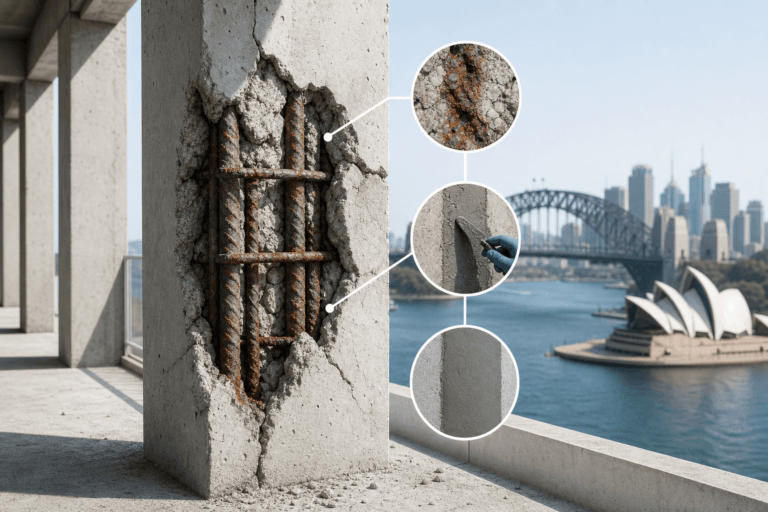
Concrete Spalling Repair: Causes, Costs, and Your NSW Rights
What Concrete Spalling Actually Is Common Causes of Concrete Spalling in NSW Buildings Reinforcement Corrosion Chloride Penetration Carbonation Poor Original
Read More »
Crack Injection Concrete: When It Fixes a Defect vs Hides One
What Crack Injection Actually Does Dormant Cracks vs Active Cracks: The Critical Distinction When Injection Fixes the Defect When Injection
Read More »
Concrete Crack Repair: When Is It a Defect Claim in NSW?
What Makes a Crack a Legal Defect in NSW? Major Defects vs Other Defects Types of Concrete Cracking and How
Read More »