
Lawyer Building Disputes: Your NSW Guide 2026
A building dispute usually starts with something small. A crack that shouldn’t be there. Waterproofing that fails. A job that drifts past completion dates while invoices keep arriving. Then the emails harden, the phone calls stop helping, and someone says, “You need a lawyer.”
That’s the point where many homeowners and builders freeze. They’re not only worried about the defect or the unpaid claim. They’re trying to work out who to trust, what to document, whether NCAT is next, and whether they should spend money on legal advice before anyone has properly identified what’s wrong.
The good news is that building disputes aren’t unusual. In Australia, one global legal-industry survey found that 70% of construction company lawyers expected dispute volumes to increase over the next two years, which tells you this is a persistent part of the industry rather than an outlier problem (construction dispute survey findings). There is a path through it. But the path only gets clearer when legal advice and technical evidence work together from the start.
Navigating the Stress of a Building Dispute
Clients involved in building projects typically expect inconvenience, not conflict. They can tolerate dust, delays, and minor variations. What they can’t easily absorb is the moment they realise the issue may be bigger than a touch-up or a conversation on site.
For homeowners, that often looks like defective tiling, water ingress, movement, incomplete works, or a builder who says the work is “within tolerance” when it plainly isn’t. For builders, it may be the opposite problem. The work was done, progress claims were issued, variations were discussed, and payment still hasn’t arrived. Both sides feel cornered. Both usually believe the other side has stopped acting reasonably.
Why distress makes bad decisions more likely
When people are under pressure, they tend to do one of two things. They either escalate too early with legal threats, or they wait too long hoping the issue will somehow resolve itself.
Neither approach works well.
Practical rule: Don’t mistake urgency for strategy. Fast action matters, but the right first action is evidence, not anger.
The early days of a dispute are often when the most important material is created or lost. Defects are patched before they’re photographed. Verbal instructions are forgotten. Site conditions change. A completion issue turns into a blame issue, and then into a credibility issue.
That’s why lawyer building disputes in NSW rarely turn on who sounds more upset. They turn on who can show, clearly and calmly, what happened, what standard applied, what departed from that standard, and what loss followed.
What usually helps and what usually doesn’t
A practical response looks like this:
- Preserve the site condition so the defect can still be inspected properly.
- Collect the documents before message chains disappear and file versions get muddled.
- Separate technical questions from legal questions so each is answered by the right professional.
What doesn’t help is sending long emotional emails, threatening court before the defect is defined, or relying on a generic building opinion that doesn’t tie the problem to standards, contract obligations, or rectification scope.
A dispute feels personal, but the process that resolves it is evidentiary.
That distinction matters. Once you understand it, the situation becomes less chaotic. You stop asking, “Who’s right?” in broad terms and start asking, “What can I prove?”
Understanding the NCAT Process and Timelines
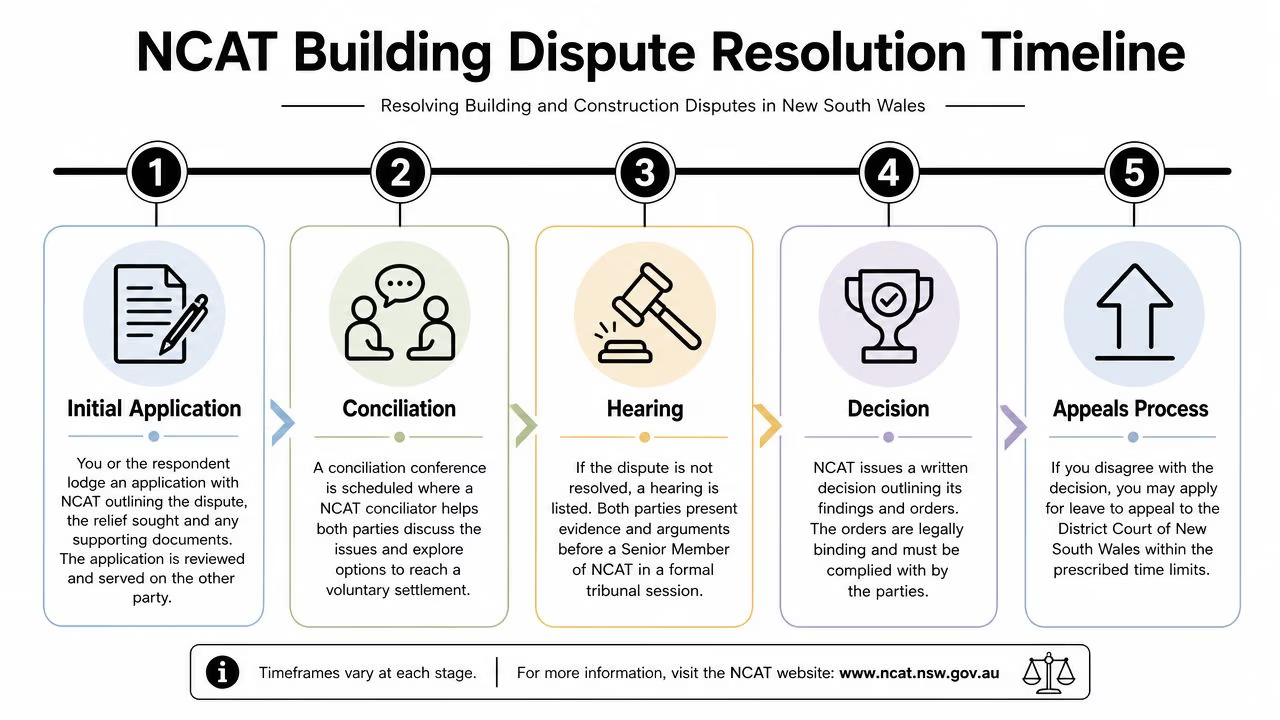
In NSW, many residential building disputes move through a fairly recognisable path. The details vary from matter to matter, but the overall sequence is familiar: complaint, attempted resolution, tribunal process, expert evidence, hearing, and decision.
A widely cited construction-litigation estimate places around 25% of projects ending in dispute, or roughly 1 in 4 generating a claim of some kind (construction litigation estimate). That’s one reason the process is structured. NCAT sees these matters regularly, and it expects the parties to present them in a disciplined way.
The usual pathway in NSW
Many matters begin before NCAT, with an attempt to identify the complaint and resolve it through the NSW building dispute pathway. If that doesn’t produce a practical outcome, a party may commence proceedings in NCAT.
Here’s the high-level flow:
Initial complaint
The issue is identified and put in writing. That might involve defects, delays, incomplete works, payment claims, or disputed variations.Early resolution efforts
The parties are often expected to try to resolve the issue first. That’s where poor documentation starts to hurt. If nobody can agree what the defect is, no one can meaningfully discuss rectification.NCAT application
Once proceedings start, the dispute becomes more formal. The claims, responses, and supporting documents need to be organised around actual issues in dispute.Directions and evidence
NCAT may make procedural directions about what each side must file. This is often where expert reports and Scott Schedules become central.Hearing and decision
The Tribunal considers the evidence, hears the parties, and makes orders.
Timelines are real, but not fixed
People want exact timeframes. In practice, that’s not how building disputes behave. Timelines depend on the number of defects alleged, whether the works are still underway, whether access is available for inspection, how many parties are involved, and how well the evidence is prepared.
A small completion dispute may move very differently from a multi-issue defect case involving waterproofing, structural concerns, and variations. Delay also has a habit of compounding when one side files incomplete material and the other side responds broadly instead of precisely.
| Stage | What matters most |
|---|---|
| Early complaint | Identifying the actual issue, not just the frustration |
| Pre-NCAT efforts | Giving rectification and response a fair chance |
| Application stage | Framing the claim clearly and attaching the right documents |
| Evidence stage | Using technical material that speaks to the pleaded issues |
| Hearing | Presenting a clean chronology and focused case |
The Tribunal can deal with conflict. What it won’t do is build your case for you.
That’s why the strongest files are usually the least theatrical. They’re organised, specific, and supported by material that can be tested.
The Critical First Call Lawyer or Expert Witness
The question comes up constantly in lawyer building disputes. Do you call the lawyer first, or the expert first?
The answer depends on the problem, but in many NSW building disputes the best early step is technical documentation rather than litigation language, particularly because NCAT expert evidence now needs to be relevant, concise, and properly mapped to the issues in dispute (NSW dispute guidance on expert evidence).
What a lawyer does and what an expert does
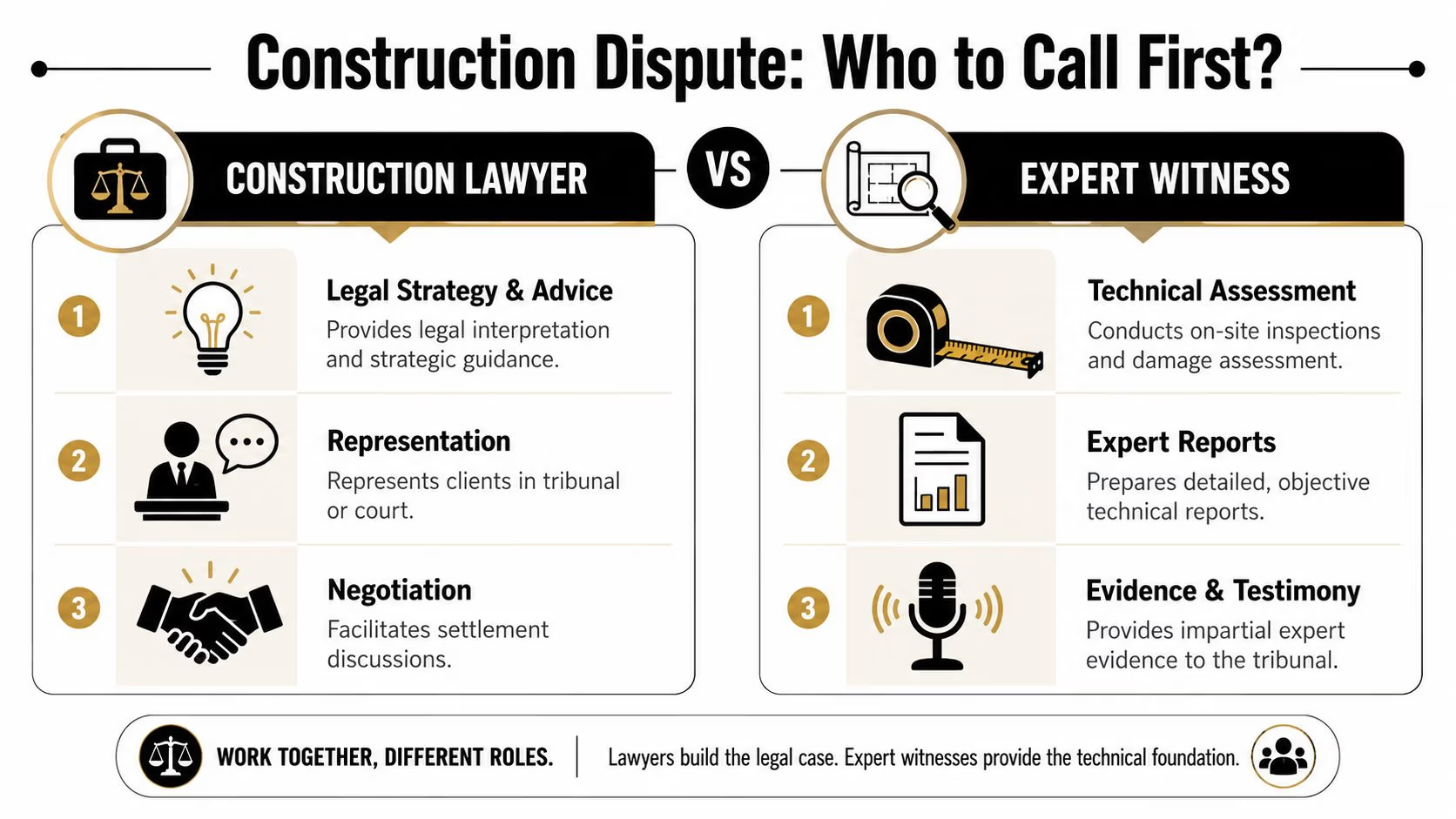
A construction lawyer handles legal rights, legal strategy, pleadings, negotiation, and representation. They analyse the contract, identify causes of action or defences, and shape the matter for NCAT or court.
An expert witness inspects the work, identifies defects or compliance issues, links them to standards or scope, and gives an independent technical opinion.
Those roles overlap in practice, but they are not interchangeable.
| If your main question is… | Usually start with… |
|---|---|
| What’s legally available to me? | Lawyer |
| What is actually wrong with the work? | Expert |
| Can this defect be proven and scoped? | Expert |
| How should this be pleaded and pursued? | Lawyer |
Why the technical brief often comes first
If the dispute is about workmanship, defects, incomplete scope, building compliance, or rectification cost, legal advice is far more effective once the technical position is clear.
A lawyer can’t properly frame breach, causation, and loss if the defect is still being described in vague terms like “bad work” or “not up to standard”. They need particulars. They need the report to say what element is defective, what obligation it fails to meet, what evidence supports that conclusion, and what rectification follows.
That’s why many solicitors prefer to receive a disciplined technical brief early. It saves time, narrows arguments, and reduces the risk of spending legal fees on issues that won’t survive scrutiny.
For a closer look at how this works in practice, see this guide on construction disputes and legal support.
A practical overview of the lawyer-versus-expert question is worth watching here:
When you should call a lawyer immediately
There are still situations where the lawyer should be contacted at once:
- Termination risk if a contract is about to be ended
- Urgent payment enforcement where security or insolvency issues are in play
- Defamation or threatening correspondence that could worsen the matter
- Complex multi-party disputes involving designers, certifiers, strata, or insurers
If the dispute turns on technical defect proof, get the defect properly documented. If it turns on urgent legal rights, get the lawyer on it straight away.
The strongest outcomes usually come when neither side works in a vacuum.
Building Your Case with Expert Reports and Scott Schedules
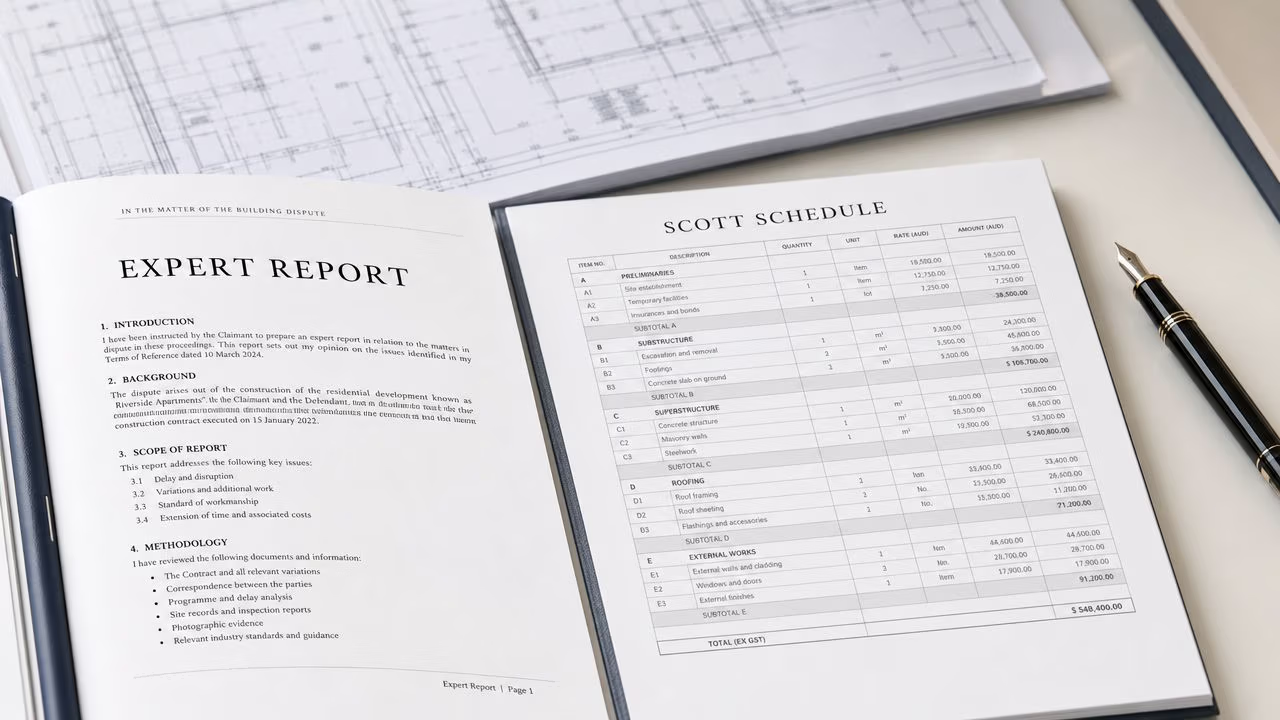
An expert report isn’t just a defect list. A proper report translates site conditions into findings a solicitor can use and a Tribunal can assess.
That translation is critical in building disputes. The practical benchmark is that legal teams and experts must turn defects into standards-based findings that can survive NCAT or court scrutiny, with the report operating as an evidentiary bridge between what happened on site and the legal remedy sought (construction defects as legal evidence).
What a useful expert report actually contains
A report that helps in lawyer building disputes usually does several jobs at once:
- Identifies each defect clearly with location, condition, and observed impact.
- Links the issue to the relevant obligation such as contract scope, approved plans, Australian Standards, or accepted construction practice.
- Explains causation rather than just noting dissatisfaction.
- Sets out rectification scope in a way that can be understood and priced.
A weak report says the work is poor. A useful report says why the work is poor, what requirement was not met, what needs to be done, and how the issue affects the claim or defence.
Why Scott Schedules matter so much
A Scott Schedule gives structure to conflict. It sets out, item by item, what is alleged, how the other party responds, and what rectification or cost consequence is said to follow.
That matters because building disputes often collapse under their own volume. Ten issues become thirty. Emails branch in all directions. The parties start arguing about different versions of the same defect.
A Scott Schedule forces discipline.
In practice, a Scott Schedule often does two things at once. It sharpens the case for hearing, and it exposes which issues were never properly defined.
Typical columns might include the item number, defect description, location, contractual or standards reference, claimant position, respondent position, expert opinion, and rectification allowance. For NCAT work, that format can be far more useful than a stack of disconnected complaint emails.
If you want a detailed breakdown of how these schedules work, this guide on Scott Schedules in NSW building disputes is a practical starting point.
The reports that don’t help
Three kinds of documents usually disappoint people:
- The informal builder’s opinion that isn’t independent.
- The generic inspection note that describes issues without analysing them.
- The inflated advocacy report that reads like argument instead of expert evidence.
Where technical support is needed, firms such as Awesim Building Consultants prepare site investigations, Expert Witness Reports, and Scott Schedules for residential building disputes and litigation support matters in NSW.
What Evidence You Need to Start Gathering Now
Before anyone drafts pleadings or books a hearing date, the raw material of the case has to be secured. In NSW building disputes, the strongest technical and legal cases are built around documentary proof that links a specific contractual breach to measurable loss, with persuasive material usually including contract clauses, variation records, progress claims, defect photos, and a quantified damages trail (documentary proof in construction litigation).
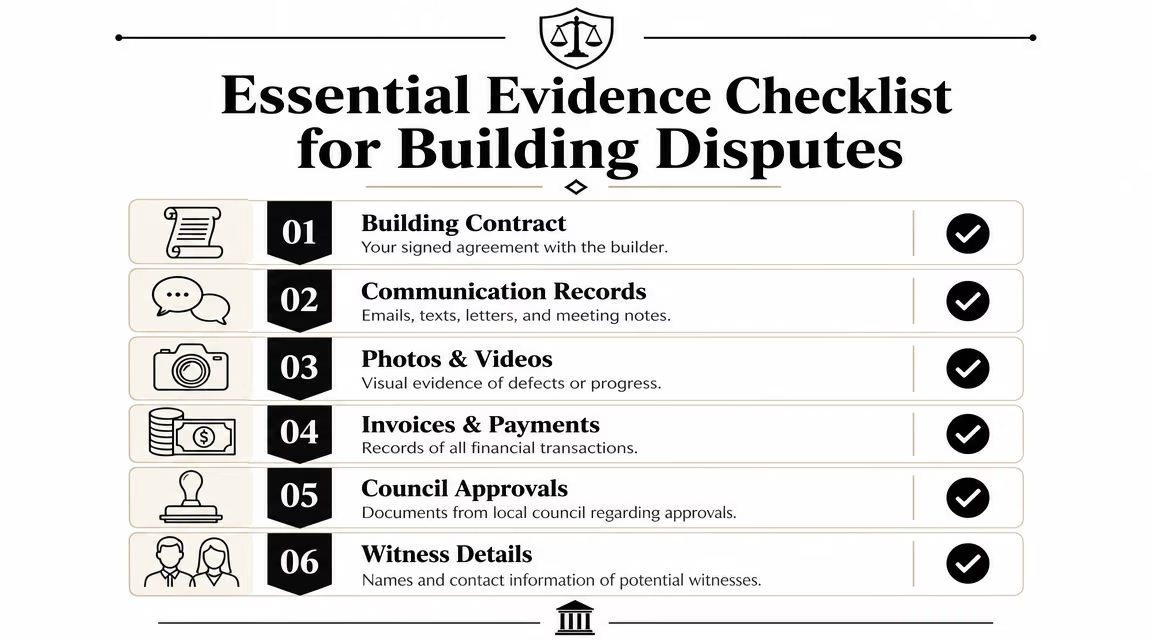
Your immediate evidence checklist
Start pulling these items together now, even if you haven’t yet retained a lawyer or expert:
The signed contract and all annexures
Include plans, specifications, inclusions, special conditions, and any amended versions. This is the reference point for scope and obligations.Variation records
Gather signed variations, disputed variations, quotes, texts approving changes, and any cost discussions. Variation fights are often documentation fights.Emails, texts, and site messages
Save them in date order. Don’t rely on your phone to preserve them forever.Dated photos and videos
Capture the defect wide, then close. Include context so the location is obvious.Invoices, progress claims, and proof of payment
Bank records, receipts, remittance advice, and unpaid claims all matter. Loss has to be shown, not assumed.Approvals and certificates
DA documents, CDC material, engineering details, waterproofing certificates, occupation paperwork, and compliance-related correspondence may all become important.Diary notes and witness details
If a supervisor, neighbour, subcontractor, or family member observed events that matter, record who they are and what they saw.
Preserve, don’t rewrite
One of the biggest mistakes people make is “tidying up” the file by rewriting the history in a summary email. Keep the original records. A chronology can be prepared later.
If your dispute involves structural movement or moisture issues, it can also help to understand how other jurisdictions discuss repair scope and warranty expectations. A useful comparative read is this resource on foundation repair protection in Dallas. It isn’t NSW law, but it shows how defect evidence and repair responsibility are often framed around documentation, scope, and remedial accountability.
Keep originals, export copies, and store everything in one place. Good cases are often built from ordinary records that someone had the discipline to preserve.
What not to do with evidence
Don’t annotate photos with accusations. Don’t delete messages that make your side look imperfect. Don’t send edited screenshots when the full thread can be produced. And don’t carry out broad rectification before an expert has seen the condition, unless safety or further damage leaves no real choice.
Assembling Your Expert Legal and Technical Team
Specialisation matters in building disputes. A general commercial lawyer may be very capable, but NSW residential construction claims often turn on legislation, procedure, and technical detail that sit in a narrower lane.
That’s particularly true where the dispute engages the NSW Home Building Act and the Design and Building Practitioners Act. Those matters need a lawyer who understands how the statutory framework interacts with the contract, the defect evidence, and the procedural demands of NCAT.
The type of lawyer worth engaging
When choosing representation, look for someone who does building and construction law as a core part of practice, not as an occasional add-on. The right lawyer will usually ask for the same things a good expert asks for: the contract, the plans, the variation trail, the photographs, and the chronology.
Two solicitors who fit that specialist profile are:
Both are known for work in building and construction law, including matters involving the NSW Home Building Act and the DBPA.
Why the working relationship matters
A dispute team functions better when the lawyer and technical consultant already understand how the other works. It reduces duplicated effort, shortens the briefing cycle, and helps ensure the expert material answers the legal questions that matter.
That’s especially valuable in defect matters where one side is trying to prove breach and rectification scope, while the other is challenging causation, reasonableness, access, or alleged over-scoping.
The practical point is simple. Don’t just hire a lawyer. Don’t just hire an expert. Build a team that can turn site facts into a legally usable case.
Your Practical Next Steps to Resolve the Dispute
A building dispute usually gets worse when the owner or builder reacts out of frustration and starts firing off long emails, arranging ad hoc repairs, or arguing about blame before the facts are pinned down. The better course is to slow the matter down and put it into an order that a lawyer, expert, or Tribunal can use.
Start by preserving the current condition. Take clear dated photographs, save text messages and emails, download plans, specifications, invoices, variation documents, and keep a short chronology of what happened and when. If work is still underway, record what is incomplete as well as what appears defective.
Then get the technical position defined. In many disputes, the argument sounds legal, but the pivotal point is factual. Is the work non-compliant, incomplete, outside tolerance, damaged by another trade, or merely different from what one party expected? Until that is answered properly, legal advice is often broad and expensive because too much is still uncertain.
After that, brief a construction lawyer with an organised file. A specialist lawyer can then assess the contract position, the available causes of action, the likely response from the other side, and whether the matter is better suited to negotiation, NCAT, or a court pathway. If the issue is urgent, for example access, waterproofing exposure, safety, or limitation risk, get legal advice first and have the expert work in parallel.
That sequence matters.
In practice, the first question is rarely lawyer or expert in absolute terms. It is which one needs to act first given the risk in front of you. If evidence may disappear, start with the expert. If you have been served with proceedings, a termination notice, or a solicitor’s letter raising statutory rights and deadlines, start with the lawyer. The strongest matters are built by doing both early and having each side of the team work from the same documents and the same theory of the case.
Focus on what you can prove, what it will cost to prove it, and what outcome is commercially sensible. Some disputes should be settled early. Others need to be prepared properly because the gap between the parties is too large or the allegations are too serious.
If you need help documenting defects, preparing a Scott Schedule, or obtaining an Expert Witness Report for a NSW building dispute, contact Awesim Building Consultants. Email admin@awesim.com.au or call 1800 293 746.

Related Posts

Water Damage in Homes: How to Track Down the Source
Water damage in a home rarely announces itself at the source. A stain on the ceiling, a musty smell in
Read More »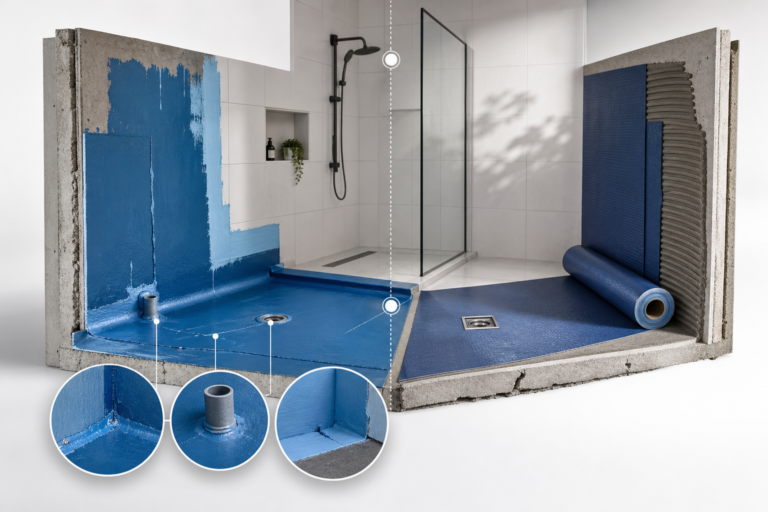
Waterproofing Membrane Types: Which Fails Most in NSW Bathrooms
Waterproofing failure is the single most common serious defect found in NSW apartments, and the type of membrane used, along
Read More »
Building Certifier NSW: Role, Limits, and When You Need More
A building certifier in NSW is a registered professional who issues construction certificates, conducts critical stage inspections, and grants occupation
Read More »