
Your Guide to the NCAT Scott Schedule in 2026

Think of an NCAT Scott Schedule as the official playbook for your building dispute. It’s not just another legal form; it’s a powerful document that turns a messy, complicated argument into a clear, organised format that the NSW Civil and Administrative Tribunal (NCAT) can easily understand and rule upon.
What Is an NCAT Scott Schedule and Why Is It Crucial?

Essentially, a Scott Schedule is a structured table that lists every alleged defect, the builder’s response, and the associated costs side-by-side. It’s a ‘dispute scorecard’ that creates a direct comparison, putting the homeowner’s list of defects, the builder’s response to each claim, and the competing costs for rectification all in one place.
This format provides a crystal-clear picture of what is agreed upon and, more importantly, what remains in contention. For most building and construction disputes in New South Wales, this document isn’t optional—it’s a mandatory requirement.
To get a better sense of how these components work together, the table below breaks down the purpose of each part for everyone involved.
Scott Schedule At-a-Glance
| Component | Purpose for Claimant | Purpose for Respondent | Importance for NCAT |
|---|---|---|---|
| Defect Item | Clearly lists each individual building defect or issue being claimed. | Isolates the specific complaint that needs a response. | Creates an organised agenda for the hearing, item by item. |
| Claimant’s Position & Costs | States what is wrong, what needs to be done, and the cost to fix it. | Shows the exact claim and financial amount being disputed. | Quantifies the dispute and sets the financial scope for orders. |
| Respondent’s Position & Costs | Provides a direct reply: admitting, denying, or proposing an alternative fix and cost. | Allows for a point-by-point defence or counter-offer. | Immediately highlights the core points of disagreement. |
| Evidence Reference | Links each claim to specific proof, like photos or expert reports. | Shows the evidence that needs to be challenged or refuted. | Helps the Tribunal Member quickly verify claims against the evidence. |
This structure is what makes the Scott Schedule so effective at cutting through the noise and focusing the hearing on what truly matters.
An Essential Tool for a Just and Quick Resolution
Under NCAT’s Procedural Direction 3, which outlines the rules for expert evidence, submitting a Scott Schedule is a required step. This is central to NCAT’s mission to deliver resolutions that are just, quick, and cheap.
The Tribunal is built for efficiency. Since its launch on 1 January 2014, it has handled over 700,000 applications and conducted more than 900,000 hearings. It maintains an impressive clearance ratio above 100%, meaning it resolves cases as quickly as they are filed. You can review NCAT’s latest performance data for more insight.
By forcing both parties to itemise and respond to issues methodically, the schedule prevents the hearing from getting bogged down in disorganised arguments. It helps everyone—the homeowner, the builder, and the Tribunal Member—focus on the facts rather than emotional claims.
A well-prepared Scott Schedule tells a clear story. It isolates the real issues, quantifies the damages, and links every claim to a piece of evidence, making it one of the most persuasive documents you can present to the Tribunal.
The Awesim Advantage in Your Corner
Preparing a Scott Schedule requires more than just listing complaints. It demands precision, adherence to procedural rules, and credible evidence, which is where professional expertise becomes invaluable.
With over 35+ years in the building industry and more than 15 years providing litigation support to home owners, builders and lawyers, Awesim Building Consultants specialises in creating NCAT-compliant Scott Schedules. We help homeowners, builders, and lawyers by:
- Translating technical issues into clear, concise language the Tribunal will understand.
- Structuring the document to align perfectly with NCAT Procedural Direction 3.
- Ensuring every defect is linked to strong evidence, like an expert witness report.
A professionally developed Scott Schedule can transform a confusing dispute into a structured case, focusing everyone on achieving a fair resolution without unnecessary delays.
Navigating NCAT Procedural Direction 3
If a Scott Schedule is your game plan for a building dispute, think of NCAT Procedural Direction 3 as the official rulebook you have to play by. This isn’t just a set of friendly guidelines; it’s a strict set of instructions from the Tribunal itself. Ignore them, and your schedule could be thrown out, sending you back to square one with costly delays.
This direction exists for a very good reason. It’s the framework that helps NCAT deliver on its promise of “just, quick, and cheap” resolutions. By making sure every schedule is clear, consistent, and logically structured, it allows the Tribunal Member to cut through the noise and get straight to the heart of the matter.
The Core Ingredients of a Compliant Schedule
Procedural Direction 3 clearly lays out what your Scott Schedule must include. Missing any of these key elements doesn’t just look sloppy; it can seriously undermine your entire case. Think of them as the non-negotiable foundations of a solid argument.
The main requirements are:
- Precise Identification of Each Defect: You can’t just state “the kitchen is a mess.” Each problem needs to be its own item. For example, “Item 1: Cracked splashback tile” and “Item 2: Misaligned cabinet door.”
- Clear Reference to Evidence: Every single claim needs backup. You must point the Tribunal to the exact evidence, whether it’s a photo, a specific page in an expert report, or a clause from your building contract.
- A Proposed Solution: For every defect listed, you have to state how it should be fixed. This isn’t your opinion; it should be based on the relevant Australian Standards or the National Construction Code.
- A Realistic Cost Estimate: Each item requires a dollar figure for the repair work. This number needs to be justifiable, not just something you’ve pulled out of thin air.
The whole point of these rules is to turn a heated list of complaints into a cool, objective, and evidence-based document. When done right, your ncat scott schedule becomes a powerful tool that methodically lays out your case, one proven point at a time.
Why Compliance Is Not Optional
Imagine walking into a formal hearing and handing the Tribunal Member a stack of messy, disorganised notes. It would create instant confusion and frustration. A non-compliant Scott Schedule has the exact same effect. It forces the Tribunal to do the organisational work you should have done, which is the complete opposite of an efficient process.
With over 35+ years in the building industry, our team at Awesim has seen perfectly good cases fall apart because of a poorly prepared schedule. We’ve also dedicated over 15 years to litigation support, helping clients transform chaotic disputes into the kind of structured, compliant arguments the Tribunal wants to see. If you’re using an expert, understanding their obligations is critical. For a complete breakdown, you can explore our detailed guide on NCAT Procedural Direction 3.
Following these procedural rules isn’t just about ticking boxes. It shows you respect the Tribunal’s process and makes it far easier for them to deliver a fair and just outcome. This structured approach keeps everyone focused on what truly matters: resolving the dispute.
How to Build Your Scott Schedule Item by Item
Putting together a solid NCAT Scott Schedule is a lot like a builder laying the foundations for a house. It’s methodical, precise work. Each part has to be placed just right and backed up by something solid, or the whole thing will be weak. This isn’t the place for vague complaints; it’s about getting the facts down with pinpoint accuracy to create a document the Tribunal can actually use.
The whole process really comes down to four key actions: describing each defect, linking it to evidence, explaining how to fix it properly, and putting a real-world cost on that fix. You need to think more like a detective building a case file, not an author writing a dramatic story.
Step 1: Number and Describe Each Defect
First things first, you have to break down your claim into individual, numbered items. It’s tempting to just write “the whole bathroom is a mess,” but that won’t fly. You need to get specific and give each problem its own entry.
For instance, that “messy bathroom” might actually be:
- Item 1: Cracked floor tile beside the shower.
- Item 2: Missing grout between wall tiles over the vanity.
- Item 3: Leaking seal on the shower screen door.
This level of detail is non-negotiable. It forces the other side to respond to each specific point and helps the Tribunal Member make clear, item-by-item decisions. You can group similar items together (like all the window problems), but every single one still needs its own unique number.
Step 2: Link Each Item to Specific Evidence
Here’s a hard truth: a claim without evidence is just an opinion. Every single defect you list in your schedule absolutely must be tied directly to proof the Tribunal can see and touch. Your schedule needs to be a roadmap, telling the Member exactly where to find the evidence that backs up your claim.
In the evidence column, you’d reference things like:
- A specific photo (e.g., “See Photo 5 in Annexure A”).
- A page in an expert’s report (e.g., “Refer to Expert Report, page 12, para 4.3”).
- A clause from the building contract or a relevant Australian Standard.
This cross-referencing is what makes the Scott Schedule so powerful. It proves you’re dealing in facts, not feelings, and it shows respect for the Tribunal’s time by making your case simple to follow. For a closer look at how to put these claims together effectively, you can find practical guidance in our step-by-step Scott Schedule examples.
Step 3: Outline a Compliant Rectification Method
Next, you have to explain how the defect should be fixed—and I mean properly fixed. This isn’t about what you want done. It’s about what the National Construction Code (NCC) and Australian Standards say is the correct way to do it.
Just writing “fix the leak” is nowhere near enough. A compliant method sounds more like this: “Remove and replace the failed waterproofing membrane in accordance with AS 3740-2021, then re-tile the affected area.”
This is precisely where an expert building consultant is worth their weight in gold. With over 35+ years in construction, our team at Awesim can specify the exact, compliant repair method, which gives your proposed solution the authority it needs to be taken seriously.
Step 4: Provide a Credible Cost for Each Item
Finally, every item needs a price tag. This can be the trickiest part. Plucking a number out of thin air or inflating the cost is the fastest way to lose all credibility. The figure you put down must be a realistic, justifiable estimate of what it would cost for a qualified professional to carry out the compliant repair you’ve just outlined.
To give you a clearer picture, here’s a simple, practical example of how one entry might look.
Sample Scott Schedule Entry for a Defective Window
This simplified example shows you exactly how to fill out a single item in your Scott Schedule, making the process tangible and easy to follow.
| Item No. | Claimant’s Allegation of Defect & Location | Reference to Evidence | Respondent’s Response | Claimant’s Cost to Rectify | Respondent’s Cost to Rectify |
|---|---|---|---|---|---|
| 4 | The master bedroom window does not close properly, leaving a 5mm gap at the top. | See Photo 8 in Annexure A. See video file “Window.mp4”. | Window operated correctly at handover. Issue is due to lack of maintenance by the homeowner. | $450.00 | $0.00 |
As you can see, the entry is specific, points to the proof, and clearly states the cost, leaving no room for ambiguity.
The diagram below shows how following these procedural rules creates a much smoother journey for your case.
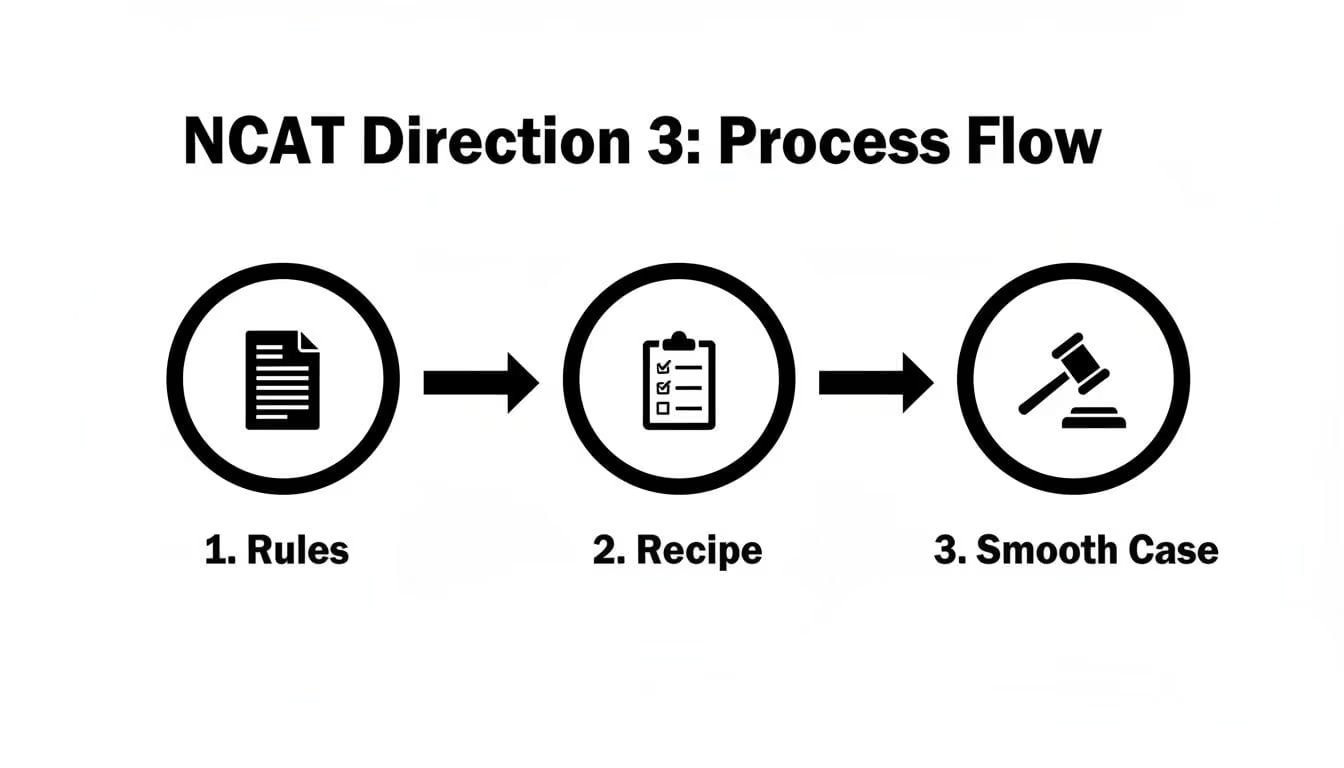
This process shows that if you know the rules and follow the recipe, your case will proceed far more smoothly. In a system as busy as NCAT—which remains Australia’s busiest tribunal and saw a record number of applications in 2022-2023—getting this document right from the start is absolutely essential.
Common Mistakes That Can Weaken Your Case
Knowing the rules for an NCAT Scott Schedule is one thing, but avoiding common pitfalls is what truly sets a strong case apart. With over 35+ years in the building and construction industry, our team at Awesim has seen how simple, preventable errors can damage credibility, cause frustrating delays, and undermine an otherwise solid claim.
Your Scott Schedule is often the first detailed document the Tribunal Member sees. If it’s messy, emotional, or disorganised, it sends a clear message before you’ve even spoken a word. Here are the most common traps to avoid, ensuring your schedule is professional, persuasive, and taken seriously from the get-go.
Mistake 1: Using Vague and Emotional Language
It’s completely understandable to feel frustrated about building defects, but the Tribunal operates on facts, not feelings. One of the quickest ways to lose credibility is by using subjective or emotional descriptions. These statements make it impossible for the other party to respond properly and for the Tribunal to make a clear assessment.
Before (Vague):
“The whole bathroom is a complete disaster and looks terrible. It was done so poorly.”
This doesn’t actually identify a defect. It fails to reference a building standard or propose a fix, giving the Tribunal nothing concrete to work with.
After (Factual):
“Item 5: The waterproofing membrane in the shower recess fails to comply with AS 3740, evidenced by water stains on the adjacent wall.”
This version is specific, factual, and points directly to a breach of the Australian Standards. It’s a clear claim the other side can understand and respond to.
Mistake 2: Lumping Multiple Defects Together
When you’re facing numerous issues, it’s tempting to group them together to save time, like writing “all the windows are faulty.” This is a critical error. NCAT’s Procedural Direction 3 is clear that each defect must be listed as a separate, numbered item. Lumping them together just creates confusion.
Before (Lumped):
“Item 3: All windows in the house are defective and don’t work properly.”
This vague statement forces the respondent—and the Tribunal—to guess which windows you’re talking about and what’s wrong with each one.
After (Itemised):
- Item 3: The master bedroom window sash is warped and does not create a seal when closed.
- Item 4: The kitchen window lock is broken and cannot be secured.
- Item 5: The living room window has a broken seal, causing condensation between the panes.
By itemising, each defect becomes a distinct, testable claim that can be assessed on its own merits.
A well-structured schedule is a sign of a well-prepared case. By itemising defects and using clear, objective language, you demonstrate respect for the Tribunal’s process and make your argument easier to follow and accept.
Mistake 3: Failing to Connect Claims to Evidence
A claim without proof is just an opinion. Every single defect you list on your Scott Schedule must be directly linked to a piece of evidence. This could be a photo, a contract clause, a video, or a specific page in an expert report. Without this direct link, your claims are left floating without any foundation.
This is a huge misstep. NCAT aims to resolve the ‘real issues’ efficiently, often through conciliation and mediation. Recent studies discover more about NCAT’s dispute resolution effectiveness, showing that negotiated outcomes are common. However, these successes rely on solid documentation. With our 35+ years of experience, Awesim focuses on building an evidence-driven ncat scott schedule that gets straight to the facts.
Mistake 4: Providing Unrealistic or Unsubstantiated Costings
The costings column is where credibility is often won or lost. Pulling a number out of thin air or inflating the cost of a repair will be spotted immediately by the Tribunal and the other party’s experts. Every cost you claim must be a realistic estimate tied to the specific, compliant repair method you’ve proposed.
This is where an expert witness becomes invaluable, as they can provide detailed costings based on current industry rates and proven methodologies.
Before (Unrealistic):
“Item 10: Fix leaking tap – $2,000.”
After (Justified):
“Item 10: Supply and install new mixer tap, including plumber call-out fee – $350.”
By steering clear of these common mistakes, your Scott Schedule becomes more than just a list of complaints. It becomes a powerful, evidence-based tool that builds the foundation for a successful outcome.
The Power of a Supporting Expert Witness Report

If you think of your NCAT Scott Schedule as the document that tells the Tribunal what is wrong, an Expert Witness Report is what proves why it’s wrong and how to fix it. The schedule lists and organises your claims into a neat table. The expert report provides the rock-solid evidence that gives each of those claims real weight and credibility.
This combination is the foundation of any strong building dispute case. While your Scott Schedule creates a clear, side-by-side comparison of claims and responses, the expert report delivers the technical substance needed to win the argument.
What an Expert Report Must Contain
An expert report is much more than a simple builder’s opinion. For NCAT to accept it as evidence, it has to meet strict criteria that confirm its authority and, most importantly, its independence. A true expert report is defined by its complete objectivity.
This means the expert isn’t there to be an advocate for your side. Their primary duty is to the Tribunal, and their role is to provide an impartial assessment based on their specialised knowledge.
A valid report must always show:
- Complete Independence: The expert must act as an independent advisor to the Tribunal, not as a representative for the party that engaged them.
- Compliance with the Code of Conduct: The report must strictly follow the NCAT Expert Witness Code of Conduct, which clearly outlines their duties.
- Evidence-Based Opinions: All conclusions must be based on observable facts, backed by the National Construction Code (NCC) and relevant Australian Standards.
An expert’s opinion has to be built on their specialised knowledge and a transparent process. If they can’t clearly explain how they reached their conclusions, the Tribunal may give the report less weight or even rule it inadmissible.
From Site Inspection to Solid Costings
Creating a credible expert report is a methodical, evidence-driven process. It’s this rigour that transforms a simple claim on your Scott Schedule into a substantiated fact. With over 15 years of litigation support experience, our team at Awesim Building Consultants follows a very precise process to build this evidence for our clients.
Typically, an expert will:
- Inspect the Defects: Perform a thorough on-site investigation to observe, photograph, and document every alleged defect.
- Identify the Cause: Use their technical expertise to find the root cause of the problem, referencing specific clauses from the NCC or Australian Standards to prove non-compliance.
- Specify Rectification: Clearly outline the correct, compliant method to fix the defect, ensuring the proposed solution meets all industry requirements.
- Provide Credible Costings: Develop a realistic and justifiable cost estimate for the required repair work, based on current industry rates for labour and materials.
This detailed analysis gives you the foundational proof you need to populate your Scott Schedule with strong, evidence-backed entries. It assures the Tribunal Member that your claims are not just personal grievances but are verified facts from a qualified professional. You can learn more about our Expert Witness Report services to see exactly how we can help.
Ultimately, pairing a well-prepared NCAT Scott Schedule with a robust expert report elevates your entire case. It shows you’re taking the matter seriously and makes it much easier for the Tribunal to understand the issues and rule in your favour.
When to Engage a Professional Building Consultant
Knowing when to bring in an expert can be the single most important decision you make in your building dispute. It might feel like just another expense, but getting a professional building consultant on your side at the right moment is a smart play that can save you a world of time, money, and stress down the track.
Honestly, it’s the difference between walking into NCAT with a clear, credible case and just hoping for the best. The decision to go it alone often comes down to the complexity of the problems and how much is at stake. For minor, clear-cut issues, you might manage on your own. But some situations should be a red flag, signalling it’s time to call for backup.
Key Triggers for Professional Help
You should seriously consider calling a consultant the moment you run into any of these scenarios:
- Complex Technical Defects: If your dispute is about things like waterproofing failures, structural problems, or anything that doesn’t comply with the National Construction Code, an expert is non-negotiable. They have the technical know-how to pinpoint the real cause and outline the correct, compliant way to fix it.
- Significant Costs Are Involved: When the quotes for rectification work start getting high, the risk of miscalculating is just too big. A consultant makes sure your costings are accurate, justified, and believable, which is crucial for strengthening your ncat scott schedule.
- The Other Party Is Legally Represented: If the builder or developer has brought in lawyers or their own experts, that’s your cue. Trying to face off against a professional team without your own expert puts you at a huge disadvantage from the start.
The Awesim Advantage: A Strategic Investment
Investing in a professionally prepared Scott Schedule and a supporting Expert Report is less of an expense and more of a strategic move. At Awesim Building Consultants, our background is what gives our clients a genuine edge. With 35+ years of hands-on construction experience, we know exactly how buildings are supposed to go together—and we know all the ways they can go wrong.
We pair that practical, on-the-tools knowledge with over 15 years of dedicated litigation support. This means we don’t just understand the building problem; we understand what NCAT needs to see and hear to make a decision.
We’re experts at translating complicated building failures into the clear, evidence-based language the Tribunal requires. When you work with us, you get back a sense of control and clarity. We’ll make sure your ncat scott schedule isn’t just a list of complaints, but a powerful, persuasive tool that becomes the bedrock of your case.
Common Questions Regarding NCAT Scott Schedules
Understanding the procedural requirements for an NCAT Scott Schedule is crucial for anyone involved in a building dispute. Below, we address some common questions to clarify the document’s role, its preparation, and how it functions within the Tribunal process.
Can I Prepare an NCAT Scott Schedule Myself Without a Lawyer?
Yes, it is permissible for you to prepare a Scott Schedule on your own. NCAT is designed to be accessible to the public, and you are not required to have legal representation to file a claim or prepare the necessary documentation.
However, the key requirement is that your schedule must strictly adhere to the rules outlined in NCAT’s Procedural Direction 3. The primary challenges for a self-represented party often involve correctly identifying defects against the National Construction Code, specifying a compliant method of repair, and providing realistic, defensible costings.
While a DIY approach may be adequate for very simple, low-value disputes, any errors in a schedule for a complex or high-value claim can significantly undermine your case or cause delays. Engaging a professional like Awesim Building Consultants ensures your schedule is robust, credible, and correctly formatted from the outset.
What Is the Difference Between a Scott Schedule and an Expert Report?
These two documents serve distinct but complementary functions. It’s essential to understand how they work together to build a strong case.
- The NCAT Scott Schedule is the organisational framework for the dispute. It is a table that methodically lists every disputed item, compares the positions of both parties (claimant and respondent), and outlines the associated costs. It provides the Tribunal with a clear, at-a-glance summary of all issues.
- The Expert Witness Report provides the substantiating evidence. This is a detailed, independent analysis prepared by a qualified expert. The report contains the technical proof—including photographic evidence, analysis against building codes and standards, and the root cause of defects—that validates the claims made in your Scott Schedule.
A strong case requires both: the Scott Schedule provides the structure, and the Expert Report provides the substance. The schedule tells the Tribunal what is in dispute, while the report proves why your position is correct.
You can learn more about how this powerful combination works by exploring our guide on the role of an Expert Witness Report.
How Detailed Should My Costs Be in the Schedule?
The costs you include must be both realistic and justifiable. While you are not required to have formal written quotes from tradespeople at the initial stage, your figures must be more than a guess or an inflated number intended to pressure the other party.
Your costings should be founded on a credible basis, such as:
- An expert’s assessment of the required labour and materials.
- Standard industry rates for the specific type of rectification work.
- In some instances, preliminary estimates from qualified trades.
Submitting costs as “TBC” (To Be Confirmed) or providing a wildly unrealistic figure can damage your credibility. The objective is to give the Tribunal a reasonable and defensible estimate for rectifying each defect according to a compliant methodology.
What Happens if the Other Party Disagrees With My Schedule?
Disagreement is an expected and fundamental part of the process; the Scott Schedule is specifically designed to manage it. After you file and serve your schedule, the respondent is required to complete their designated columns.
In these columns, they will state whether they agree or disagree with your description of each defect, your proposed solution, and your estimated costs. Where they dispute an item, they must provide their own position, supporting evidence, and alternative costings.
This procedure creates a clear, side-by-side comparison that enables the NCAT Member to instantly identify the exact points of contention. The hearing can then focus efficiently on resolving only those specific disputed items, making the entire process more focused and effective.
With over 35+ years in building and construction and 15+ years providing litigation support, Awesim Building Consultants assists homeowners, builders, and lawyers in creating clear, compliant, and compelling documentation for NCAT. If you need help building a stronger case, contact us at https://www.awesim.com.au.
Related Posts

Water Damage in Homes: How to Track Down the Source
Water damage in a home rarely announces itself at the source. A stain on the ceiling, a musty smell in
Read More »
Waterproofing Membrane Types: Which Fails Most in NSW Bathrooms
Waterproofing failure is the single most common serious defect found in NSW apartments, and the type of membrane used, along
Read More »
Building Certifier NSW: Role, Limits, and When You Need More
A building certifier in NSW is a registered professional who issues construction certificates, conducts critical stage inspections, and grants occupation
Read More »