When you’re caught in a building dispute, an expert witness building report is the single most powerful tool you have. It’s not just another inspection report; think of it as a specialist’s diagnosis for your property, prepared specifically to stand up in a legal setting. This document provides the impartial, evidence-based analysis a Tribunal needs to make a fair and informed decision.
The Foundation of Your Legal Building Claim
When a building project goes sideways, it often becomes a frustrating case of “he said, she said.” A homeowner sees growing cracks and persistent leaks as clear evidence of shoddy work. The builder, on the other hand, might brush them off as minor settlement issues that will resolve on their own.
An expert witness building report is designed to cut through these opposing opinions and provide objective clarity. It serves as the official, unbiased cornerstone of your legal case.
Unlike a standard pre-purchase inspection that gives you a general property health check, this is a forensic-level investigation built for legal scrutiny. It doesn’t just point out problems. It explains why something is a defect by referencing the exact clauses in the National Construction Code (NCC), relevant Australian Standards, and the builder’s own contract.
This report forms the crucial link between a visible building problem and its legal standing as a breach of contract or compliance. It translates complex construction faults into clear, actionable evidence that a court or tribunal can rely on.
Before diving deeper, it’s essential to understand just how different these two types of reports are. A standard inspection is for your peace of mind before buying; an expert witness report is for building your legal case.
Key Differences Between a Standard Inspection and an Expert Witness Report
| Feature | Standard Building Inspection | Expert Witness Building Report |
|---|---|---|
| Primary Purpose | To inform a potential buyer about the general condition of a property. | To provide impartial, expert evidence for legal proceedings (e.g., NCAT). |
| Audience | The potential homebuyer. | A court, tribunal, lawyers, and all parties in a legal dispute. |
| Content Focus | Identifies major and minor defects on a visual basis. | Forensically analyses defects, determines causation, and links them to specific codes and standards. |
| Legal Standing | Generally not suitable for use as evidence in court without significant additions. | Specifically written to comply with court/tribunal rules for expert evidence. |
| Required Expertise | Licensed building inspector with broad knowledge. | Deep specialist knowledge of construction, building codes, and legal evidence requirements. |
This table highlights why you can’t simply use a pre-purchase report in a legal dispute. The expert witness report is a completely different beast, built for a different purpose.
A Critical Tool for NCAT Proceedings
In New South Wales, the NSW Civil and Administrative Tribunal (NCAT) is the main battleground for resolving these disputes. The numbers speak for themselves. With over 5,000 home building claims filed every year, it’s clear these issues are widespread.
Many of these cases, which often involve claims between $25,000 and $50,000 for things like leaking showers and structural cracking, turn entirely on the quality of the expert reports presented. A well-prepared report is fundamental for claims made under the Home Building Act 1989. You can review more data on how these reports help resolve disputes via Fair Trading statistics.
A compliant report gives the Tribunal exactly what it needs:
- Objective Analysis: An independent assessment of every single alleged defect.
- Clear Causation: An expert opinion on exactly what caused the problem.
- A Rectification Roadmap: A detailed, step-by-step method on how to fix the issue properly.
- Cost Estimates: A reliable breakdown of the costs needed for the proposed repairs.
More Than Just an Inspection
Putting together a robust expert witness report is a meticulous process. It demands a rare mix of deep, hands-on construction knowledge and a sharp understanding of what constitutes valid legal evidence.
With over 35+ years in Building & Construction and more than 15 years providing litigation support to homeowners, builders, and lawyers, Awesim Building Consultants brings precisely this blend of experience to the table. We’ve seen it all, and our background empowers our clients by turning complex, messy disputes into clear and compelling evidence.
Our focus is squarely on creating litigation-ready documentation that ensures your case is built on a solid, defensible foundation. We craft reports that don’t just list the problems—they provide the clear, authoritative voice needed to get a fair resolution. To see the full scope of what these documents cover, you can learn more about our comprehensive expert witness report services.
The Anatomy of a Court-Compliant Report
An expert witness building report isn’t just a simple list of defects. It’s a highly structured legal document, specifically designed to present evidence with absolute clarity for a court or tribunal. To be effective in a legal setting like the NSW Civil and Administrative Tribunal (NCAT), it must follow a precise structure where every section has a critical job to do.
Think of it this way: each part of the report builds on the last, creating a bulletproof argument that’s easy for a Tribunal Member to follow and difficult for the opposing side to challenge.
The Foundational Sections of the Report
A court-compliant report is assembled in layers, each one adding to its credibility and legal weight. It’s a formula that, when handled by an expert, leaves no room for doubt. With over 15 years of litigation support experience, we at Awesim Building Consultants have this process down to a fine art, ensuring every report is robust and ready for legal scrutiny.
A standard report structure always starts with these key sections:
- Executive Summary: This is the ‘snapshot’ for the Tribunal. It’s a concise overview of the main findings and expert opinions, allowing a Member to quickly understand the core of the dispute without having to read the entire document first.
- Expert’s Qualifications and Experience: This section establishes our authority. It outlines our credentials and deep industry experience—including 35+ years in Building & Construction—proving to the Tribunal why our opinion is credible and should be taken seriously.
- Instructions Received: Here, we state the exact questions we were asked to answer. This clearly defines the report’s scope and demonstrates that we have directly addressed the specific issues we were engaged to investigate.
These opening sections set the stage, establishing credibility and context before diving into the evidence.
The hierarchy below illustrates how a well-structured report underpins the entire legal case.
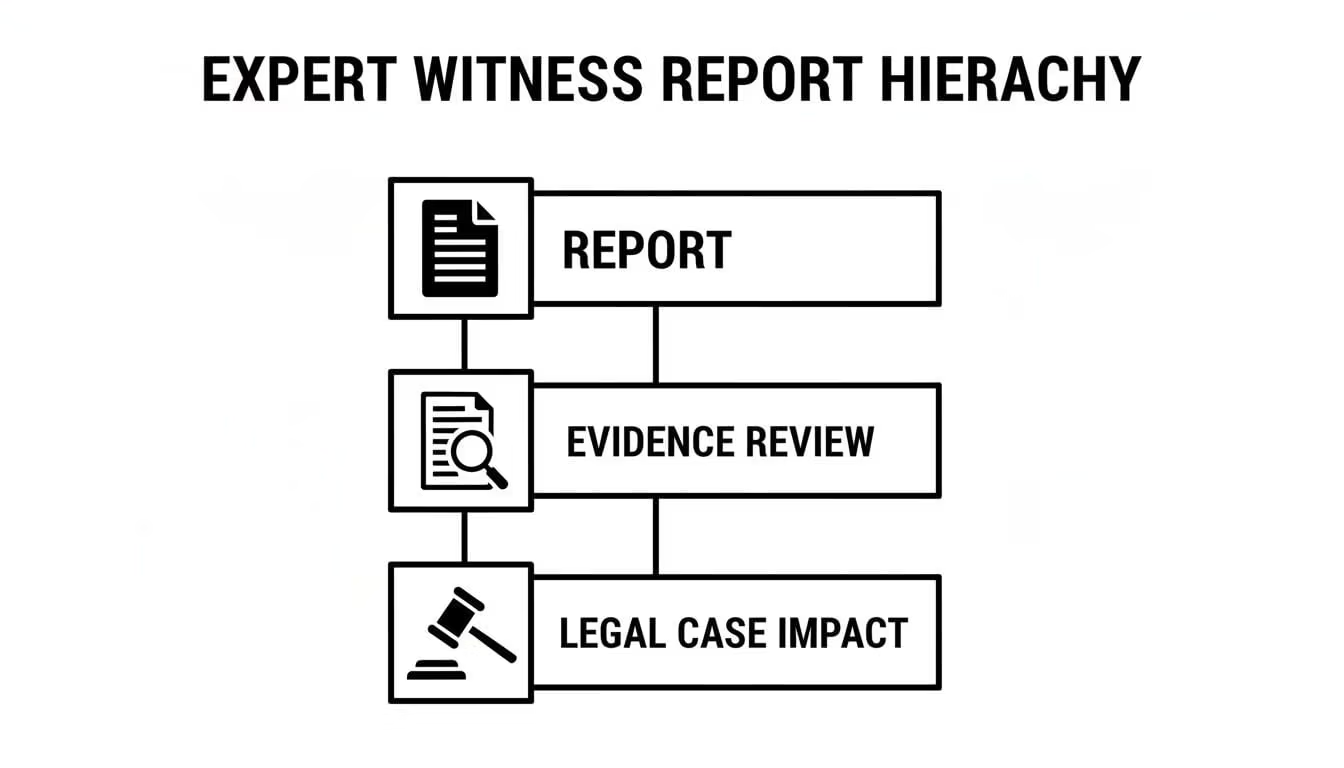
As you can see, the strength of the legal argument rests entirely on the quality of the report and the evidence it contains.
The Core Evidence and Analysis
This is where the real substance of the report lies. We move from the overview into a detailed, forensic analysis of every single building defect.
The goal here is to draw a direct, unbreakable line from an observed defect to a specific breach of a building code, Australian Standard, or the signed contract. The argument must be so clear and well-supported that it becomes an undeniable fact in the legal proceedings.
This core section meticulously documents the following for each and every defect:
- The Defect: The issue is identified, numbered, and described in plain, simple English.
- Photographic Evidence: We provide high-resolution, annotated photos as visual proof. Arrows, circles, and notes point directly to the problem, leaving no doubt about what is being discussed.
- The Breach: We pinpoint the exact clause from the National Construction Code (NCC), a relevant Australian Standard (like AS 3740 for waterproofing), or the building contract that has been violated.
- The Rectification Method: A clear, step-by-step methodology for how to properly fix the defect is outlined.
- The Cost: We include a detailed and justified cost estimate for the proposed repair work.
This methodical approach is what turns a complaint into a powerful piece of evidence. If you want to see how this comes together in practice, our guide on the expert witness report template in Australia shows how these elements are formatted to meet strict court standards.
While written reports are foundational, legal cases often involve verbal testimony. Understanding the need for an accurate record, such as a transcript of deposition, highlights the importance of precision in all forms of legal evidence.
Finally, all this detailed information is typically condensed into a crucial summary document called a Scott Schedule. This table acts as the ultimate ‘scorecard’ for the dispute, and we’ll cover its strategic importance in the next section.
Understanding the Scott Schedule’s Role in NCAT
If your expert witness building report is the in-depth diagnosis of the problem, think of the Scott Schedule as the official game plan for your NCAT case. It’s essentially a ‘dispute scorecard’ that lines up every single point of contention, side-by-side, for the Tribunal to see clearly. This document is absolutely vital for bringing order to the chaos of a complex building dispute.
It’s not just a simple summary. A Scott Schedule is a highly structured table that lists out every defect one by one. In many cases, NCAT’s own procedural directions will require you to use this format, making it a non-negotiable part of a strong case.
A Scorecard for Building Disputes
The real genius of a Scott Schedule is its comparative layout. It organises the entire argument into a table that’s incredibly easy to follow, letting the Tribunal directly compare what you’re claiming against the builder’s response for each individual defect.
A properly prepared schedule, like the ones we create at Awesim Building Consultants, will always have several key columns for each disputed item:
- Defect Item: A simple, clear description of the problem (e.g., “Water ingress at the base of the shower”).
- Claimant’s Position: This is where we explain why it’s a defect, referencing specific building codes, standards, or contract clauses.
- Respondent’s Position: The builder’s chance to respond—they might agree, disagree, or provide an alternative reason for the issue.
- Expert’s Recommended Solution: Our detailed, step-by-step method for fixing the problem correctly and to code.
- Estimated Rectification Cost: A precise, evidence-backed cost to complete the recommended repair work.
This format cuts through the noise. It forces both sides to address each issue directly, preventing the conversation from getting bogged down in vague complaints or off-topic arguments.
Streamlining Negotiations and Highlighting Strengths
A solid Scott Schedule is more than just a list of facts; it’s a seriously powerful tool for negotiation. By laying all the cards on the table so clearly, it often shines a spotlight on the strengths of one case while exposing the weaknesses of the other.
When a builder is faced with a meticulously prepared schedule that links every single defect to a specific standard and a justifiable cost, they are far more likely to come to the table and negotiate a fair settlement. The clarity it brings can fast-track the entire resolution process.
With over 15 years of litigation support under our belts, we know how to build Scott Schedules that anticipate and shut down counter-arguments. We construct a robust schedule that makes your position undeniable, often pushing the other side toward a favourable outcome before you even set foot in a formal hearing. You can find out more about how we assemble these critical documents in our detailed guide to the Scott Schedule.
The Evolving Mandate for Detailed Reporting
The importance of these documents isn’t just a trend; it’s growing. The building industry has seen major shake-ups from issues like the widespread cladding crisis, which has led to much stricter requirements for defect reporting and a greater reliance on detailed forensic analysis from experts.
By 2026, it’s widely expected that NCAT will mandate Scott Schedules in a high percentage of litigated building matters, cementing their role as a central piece of evidence. This is why our reports already include hard data from forensic tools like moisture meters, which can definitively prove issues like non-compliant waterproofing on a balcony.
How to Commission Your Expert Report
So, you’re ready to get an expert witness building report. It might sound like a huge, complicated step, but it’s more straightforward than you’d think, especially when you have someone experienced in your corner. Getting it right from the start is the key to creating a powerful, court-compliant document that can make all the difference to your case.
Let’s walk through how it works, from our first chat to you receiving the final, signed-off report.

The Step-by-Step Commissioning Process
Everything starts with a conversation. This first call is absolutely crucial—it allows us to get a handle on your specific dispute, and it gives you the confidence that you’re on the right track. With over 15+ years providing litigation support to homeowners, builders, and lawyers here at Awesim, we’ve made this process as transparent and stress-free as we possibly can.
Here’s what the journey typically looks like:
- Initial Consultation & Briefing: You get in touch and we’ll talk through your situation. We’ll want to know about the property, the specific defects you’ve noticed, and where things are at legally.
- Fee Proposal: From that initial brief, we’ll put together a clear, transparent fee proposal. It will outline exactly what we’ll do and what all the costs are. No surprises.
- Letter of Engagement: Once you’re happy with the proposal, we send over a formal letter of engagement. This is the document that officially appoints us as your expert.
- Site Inspection: We’ll book in a time to visit the property and conduct a thorough, on-site inspection to document every single alleged defect.
- Draft Report: We then take all our findings and compile them into a draft report. This gets sent to you and your legal team to look over.
- Final Report Delivery: After we’ve incorporated any feedback, we issue the final, signed expert witness building report. It’s now ready for submission to NCAT or any other legal party.
Preparing for the Site Inspection
To get the absolute most out of the site inspection, it helps enormously if you can pull together some key documents beforehand. Think of it like being an assistant detective—you’re gathering all the clues that tell the property’s story. This prep work allows us to build a far more detailed and solid report.
Unfortunately, building defects are still a massive headache for property owners. A recent NSW Fair Trading survey found that a worrying number of homeowners reported major defects within five years of completion. This has pushed NCAT applications to over 6,000 cases annually. It’s in these cases that firms like Awesim Building Consultants are brought in to create reports that dissect complex issues, like excessive slab deflection that goes beyond the AS 2870 tolerances.
And when you’re dealing with reports containing sensitive information, you’ll want to be sure you can share files online securely.
Evidence Checklist to Prepare for Your Expert
To make the process smoother, we’ve put together a simple checklist. Having these documents ready before our site visit will help us hit the ground running and ensure nothing gets missed.
| Document Type | Why It’s Important | Where to Find It |
|---|---|---|
| Building Contract | This establishes the agreed-upon scope of work, standards, and the builder’s obligations. | Your personal records, or you can request a copy from your solicitor or the builder. |
| Architectural Plans | These show the approved design and specifications the builder was supposed to follow. | Usually provided by your architect or builder; a copy may also be lodged with your local council. |
| Photos/Videos of Defects | This gives us a historical record of when the defects first appeared and shows how they might have changed over time. | Your personal phone or camera. Save them in a clearly organised folder. |
| Communication Records | Emails, text messages, or letters with the builder can prove when you first raised your concerns. | Search your email inbox, phone messages, and any physical mail you’ve held onto. |
| Previous Inspection Reports | Any prior reports, like pre-purchase or handover inspections, can provide valuable context and a baseline. | Check your property purchase files or the records from any inspectors you’ve hired in the past. |
Gathering this information gives your expert a complete picture, which is vital for building a strong, evidence-based argument on your behalf.
Why Choose Awesim Building Consultants?
When your dispute rests on the quality of an expert witness building report, who you choose to write it can mean the difference between a good outcome and a drawn-out, expensive legal fight.
You need more than just a builder with a clipboard. You need a seasoned specialist who has proven experience in litigation and understands the NCAT process inside and out. This is exactly where Awesim Building Consultants stands apart.
The right expert brings two critical skill sets to the table. First, they need deep, practical knowledge of construction. Second, they must have a sharp understanding of the legal process and what it takes to produce evidence that will stand up to the scrutiny of an NCAT hearing.
Grounded in Real-World Building Experience
Our founder, Glen Sim, has over 35+ years of hands-on Building & Construction experience. Unlike consultants whose knowledge is purely academic, our advice is grounded in decades of real-world practice. We’ve been on the tools, managed projects from the ground up, and seen firsthand what separates quality work from costly defects.
This practical background means we don’t just identify problems. We understand the how and the why behind them. This allows us to produce reports that are not only technically accurate but also clear, logical, and irrefutable. We know the Australian Standards and the National Construction Code from applying them on-site day in and day out, not just from reading about them.
Our commitment is to provide clear, independent, and factual evidence that strengthens your position. An expert report from Awesim is built on a foundation of unmatched practical experience, making it a powerful asset for any building dispute.
A Strategic Partner in Litigation
Beyond our building expertise, we have a long and successful track record in legal settings. With over 15 years dedicated specifically to providing litigation support to homeowners, builders, and lawyers, we have become a trusted partner for our clients across New South Wales. We aren’t just a service provider; we become a strategic part of your legal team.
We specialise in creating meticulously detailed, NCAT-compliant reports and the crucial Scott Schedules that get results. This unique focus means we understand the nuances of legal proceedings and exactly what Tribunal Members need to see to make an informed decision. Our reports are structured to be clear, defensible, and persuasive.
This dual expertise ensures our reports are:
- Technically Sound: Every finding is backed by decades of on-the-job experience.
- Legally Robust: We follow NCAT’s procedural rules and expert witness code of conduct to the letter.
- Strategically Valuable: Our insights help guide legal strategy and strengthen your overall case.
When navigating a building dispute, you need an expert who is equally comfortable on a construction site and in a legal conference. We act as your ally, turning complex technical issues into a clear, compelling case.
See how our approach has delivered results for clients by exploring some of our recent building dispute case studies.
Frequently Asked Questions
When you’re facing a building dispute, it’s natural to have questions. Here are a few straightforward answers to some of the most common queries we get about getting an expert report for an NCAT case.
How Much Does An Expert Witness Building Report Cost in NSW?
The cost for an expert witness report really comes down to the scale and complexity of your dispute. A simple case with just a handful of clear defects might start in the low thousands, whereas a dispute with deep-seated, multiple issues will naturally require a more significant investigation.
At Awesim, we’re always upfront about costs. After our first chat, we’ll give you a detailed fee proposal so you know exactly what to expect. Think of it this way: investing in a robust, well-defended report often saves you much more in the long run by building a stronger case and paving the way for a quicker, better outcome.
Can I Just Use My Pre-Purchase Inspection Report For NCAT?
This is a common question, and the answer is a firm no. A standard pre-purchase inspection report just isn’t built for legal proceedings and will almost certainly be dismissed by the Tribunal.
NCAT requires a formal expert witness building report that is prepared according to the Expert Witness Code of Conduct. It’s a specific legal document that has to be drafted by a qualified expert, offering impartial, detailed findings that link directly back to the relevant building codes and standards. Handing in the wrong report is one of the easiest ways to weaken your case right from the start.
Who Qualifies as An Expert Witness?
A genuine expert witness needs more than just a builder’s licence. They must have years of proven, hands-on expertise and, just as importantly, a solid grasp of their primary duty, which is to the Tribunal—not to the person who hired them.
You should look for someone with real-world experience in litigation support, the right qualifications, and a history of producing unbiased reports that stand up to scrutiny. Our team at Awesim, for example, brings over 35+ years of Building & Construction experience to the table, which ensures every finding we present is credible and backed by solid evidence.
What Happens If The Other Side Disagrees With Your Report?
It’s completely normal for the other party to have their own expert, and it’s also common for those two experts to disagree on a few points. We anticipate this and prepare every single report to withstand that kind of challenge.
Every finding is supported by clear photographic evidence and direct references to the Australian Standards, which makes our reports fundamentally factual and hard to argue with. If experts do disagree, the Tribunal might ask them to meet and create a joint report that outlines what they agree on and where they differ. We build every report with this possibility in mind.
When you need clarity and authority for your NCAT case, trust the hands-on experience of Awesim Building Consultants. With over 35+ years in Building & Construction and 15+ years providing litigation support to homeowners, builders, and lawyers, we deliver the evidence you need to secure a fair resolution. Contact us today to discuss your case at https://www.awesim.com.au.