
Building Dispute About Bathroom Defects: An NSW Guide

The call usually comes after a few sleepless nights. A shower starts leaking into the room below. Tiles sound hollow underfoot. Grout keeps cracking no matter how many times it’s patched. Or a musty smell settles into the bathroom and won’t leave. By the time most owners ask for help, they’re already juggling trades, emails, photos, warranty arguments, and the sinking feeling that a “small bathroom issue” has turned into a building dispute about bathroom defects.
That stress is normal. Bathroom defects are intrusive because they affect daily life straight away. You can live around a cracked driveway for a while. You can’t ignore a shower leak that’s spreading into walls, skirtings, joinery, or the unit below.
In New South Wales, this isn’t rare. According to NSW building defect data referenced hereLA.1943-4170.0000433), waterproofing defects in wet areas like bathrooms accounted for approximately 28% of all reported residential defects between 2018 and 2023, with average repair costs of $25,000 to $50,000 per case. Those figures explain why bathroom disputes escalate so quickly. The rectification work is often destructive, expensive, and hard to stage around normal family life.
For owners going through this for the first time, the hardest part isn’t just the defect itself. It’s knowing what to do in the right order. Evidence, timing, communication, causation, and the quality of your expert material all matter. Get those right early and your position improves. Get them wrong and even a genuine defect can become a weak claim.
The Sinking Feeling of a Failed Bathroom and Your First Steps
A bathroom defect often announces itself in a way that’s impossible to ignore. Water staining on the ceiling below. Silicone that keeps peeling away. Tiles that move under pressure. A shower screen corner that always seems wet. Some owners first notice mould. Others notice their bathroom floor feels wrong, with a slight dip or persistent dampness around the waste.
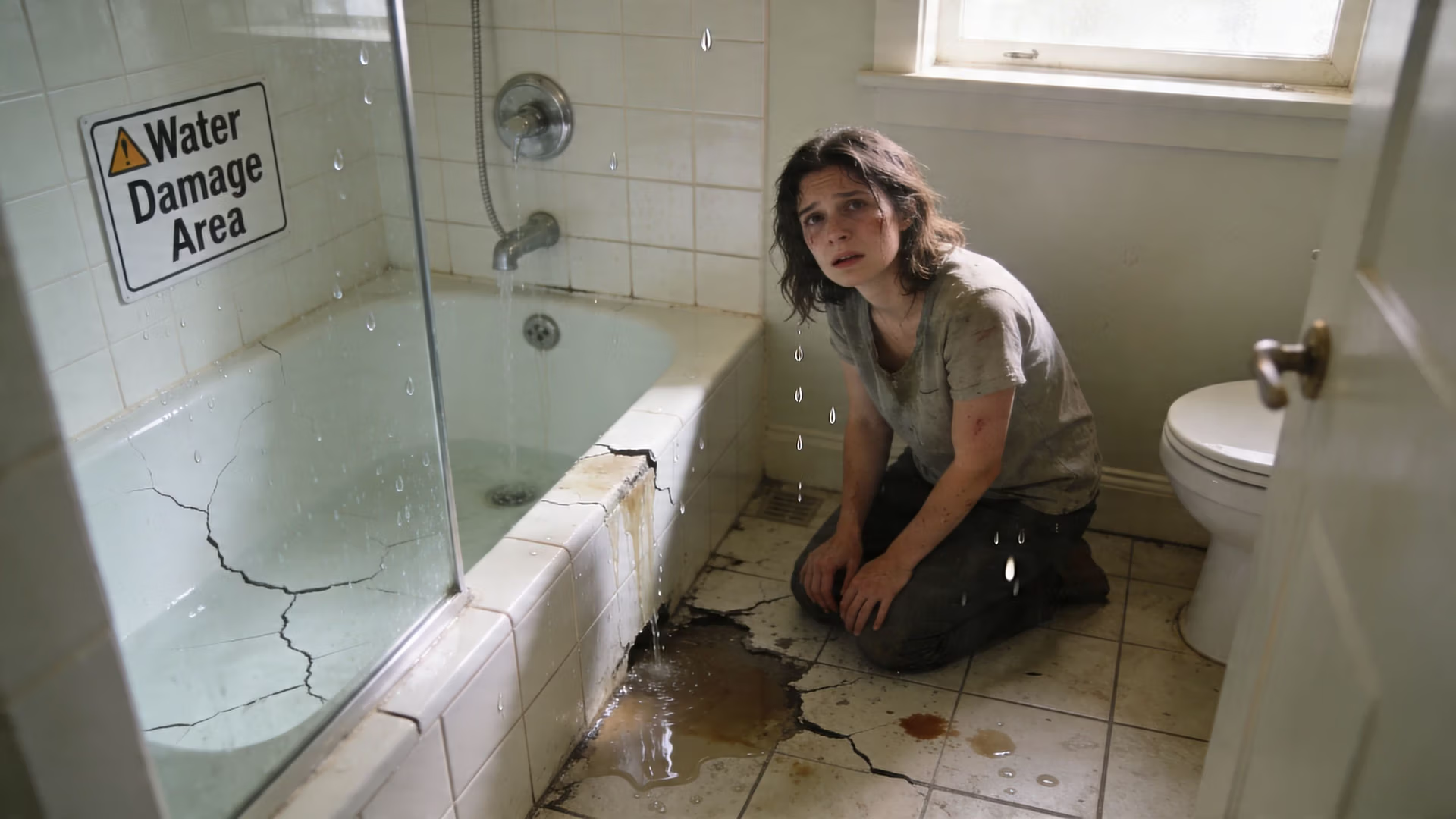
The first mistake many people make is treating it as a maintenance nuisance instead of a possible defect pathway. They re-silicone a junction, repaint a stain, or ask a handyman to replace grout. Sometimes that’s enough for a minor issue. Often it isn’t. Cosmetic work can hide the defect for a few weeks while moisture continues tracking behind finishes.
If your concern is centred on a shower enclosure or failed wet area sealing, it can help to understand how repair-focused contractors approach the problem. A practical overview of leaking shower repairs can give you a sense of what may be repairable and what usually points to deeper waterproofing failure.
What to do in the first 48 hours
Start simple and stay disciplined. Don’t argue the whole case on day one. Preserve the facts.
- Stop further damage where you reasonably can. Reduce shower use if that’s the suspected source. If water is actively escaping, contain it and protect nearby finishes.
- Take clear photos before anyone touches the area. Wide shots, close-ups, ceiling stains below, swollen skirtings, cracked grout, failed sealant, and any mould growth.
- Write down dates. Note when you first saw the issue, when it worsened, and who you notified.
- Keep all communication in writing where possible. Phone calls are easily disputed later.
Practical rule: Your first job isn’t to prove everything. Your first job is to avoid losing evidence.
Why bathroom disputes become serious so quickly
Bathroom defects don’t stay neatly inside the bathroom. Water migrates. It moves into wall cavities, floor sheeting, adjoining rooms, and common property issues in strata settings. That’s why even owners who start out hoping for a simple repair often end up needing a formal defect investigation.
The dispute also becomes personal fast. You’re dealing with a room your household uses every day, and every delay feels unreasonable because the disruption is immediate. That pressure causes people to send angry messages, accept poor patch repairs, or pay for work that weakens their later claim.
A better approach is calm, written, and methodical. If you’re facing a building dispute about bathroom defects in NSW, treat the first signs seriously. The people who tend to do better are not the loudest. They’re the ones who gather evidence early, avoid accidental remediation, and keep the issue anchored to defect identification rather than frustration.
Identifying and Documenting Bathroom Defects Like a Pro
Most bathroom disputes are won or lost long before a hearing date is set. They turn on what was documented, when it was documented, and whether the evidence shows a real defect rather than a vague complaint about workmanship.
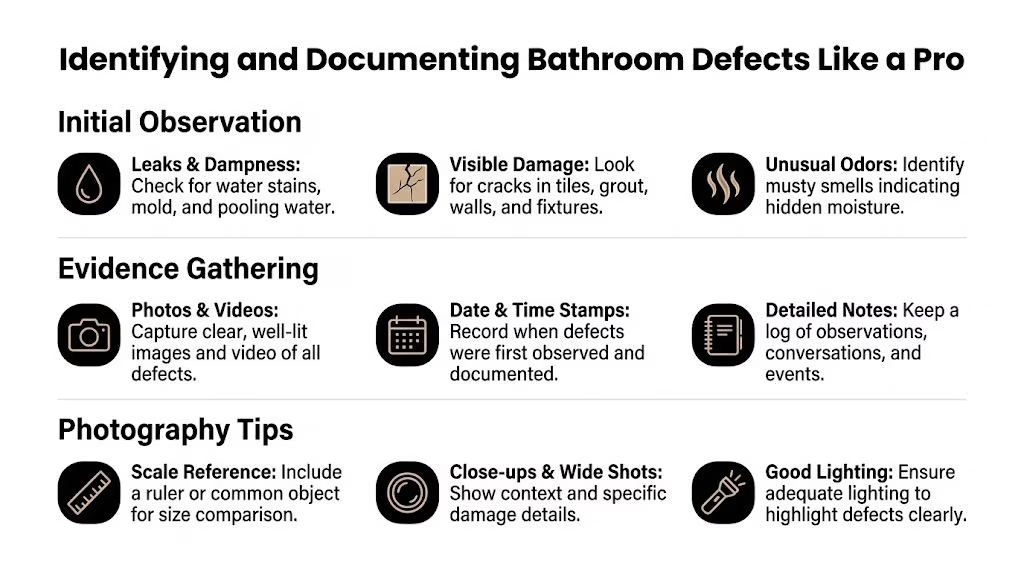
A good owner file does two things. It shows the defect symptoms clearly, and it shows the pattern over time. You don’t need to act like a lawyer, but you do need to think beyond “the bathroom leaks”.
According to a UTS construction research page, benchmark data from a 2022 University of Technology Sydney study found that bathroom defects made up 22% of total disputes in NSW low-rise residential buildings, with waterproofing failures at 55% prevalence and tiling delamination at 28%. That matters because it tells you where to look first. In practical terms, most serious bathroom claims aren’t about isolated cosmetic faults. They’re about water management failure and finish systems that have lost bond or were never installed properly.
What to look for on site
Not every defect is dramatic. Some of the strongest cases begin with modest signs that point to a larger failure.
- Leaks and dampness. Check for staining, swollen trims, persistent wetness at screen junctions, damp carpet or flooring outside the bathroom, and mould near skirtings or ceilings below.
- Tile and grout movement. Hollow-sounding tiles, loose tiles, cracked grout lines, drummy wall tiles, and repeated cracking after patching often justify closer investigation.
- Drainage issues. Water that ponds instead of moving to the waste can indicate falls, substrate problems, or poor set-out.
- Sealant failure. Failed silicone at wall-floor junctions, shower screens, hobs, and penetrations often accompanies broader waterproofing defects.
- Ventilation-related symptoms. Condensation alone doesn’t prove a defect, but persistent mould and damp odours can support a broader moisture pattern.
If your shower detail includes a threshold or stop, it’s worth understanding how these components should function in the broader waterproofing system. This guide on water stops in showers helps explain why small detail failures can lead to larger leak paths.
How to build a useful evidence file
A rushed evidence file is almost always messy. Owners save screenshots, random photos, and partial invoices, then struggle to reconstruct the story later. Keep it organised from the start.
Use a simple structure:
- Create one folder for the defect. Keep all photos, videos, emails, quotes, reports, and notes there.
- Name files by date. For example, “2026-04-17 ceiling stain below bathroom”.
- Keep a running chronology. Start with the first symptom and add each event as it happens.
- Store communication in PDF form. Email chains become easier to follow when exported.
- Log access and attendance. Record who attended, what they inspected, and what they said they would do.
Keep one version of the facts. If your timeline changes every time you explain it, the other side will use that against you.
Photos that actually help your case
A blurry close-up of cracked grout rarely proves much on its own. Good photographs show context and scale.
A practical photo set includes:
| Photo type | What it shows | Why it matters |
|---|---|---|
| Wide room view | Entire bathroom layout | Helps locate the defect in context |
| Medium shot | Defect area in relation to fixtures | Shows where water may be travelling |
| Close-up | Crack, failed silicone, stain, or tile movement | Records the specific symptom |
| Adjoining damage | Ceiling below, hallway, bedroom wall | Connects cause and consequence |
| Repeat photos over time | Worsening condition | Demonstrates persistence and progression |
Place a ruler, tape measure, or familiar object in some photos where scale matters. Turn on lights. Avoid filters. If there’s active water, film it.
What not to do
Owners sometimes damage their own case by trying too hard to be helpful.
- Don’t rip out tiles before proper inspection. You may destroy evidence of how the system failed.
- Don’t accept verbal assurances as a plan. If a builder says they’ll “sort it”, ask for that in writing.
- Don’t rely on one repair quote as proof of defect. A quote isn’t a causation report.
- Don’t clean everything before documenting it. Mould, staining, and damp marks can be important evidence.
- Don’t overstate the issue. Tribunals respond better to accurate, measured evidence than dramatic claims.
Many bathroom disputes involve technical standards such as waterproofing compliance, but owners don’t need to become standards specialists overnight. What matters at this stage is spotting symptoms, preserving condition, and creating a clear factual record. That record becomes far more valuable once an independent consultant inspects the bathroom and tests whether what you’re seeing lines up with a genuine construction defect.
Navigating the Dispute Resolution Pathway in NSW
Most bathroom disputes don’t start at NCAT. They start with an email that should have been written more carefully.
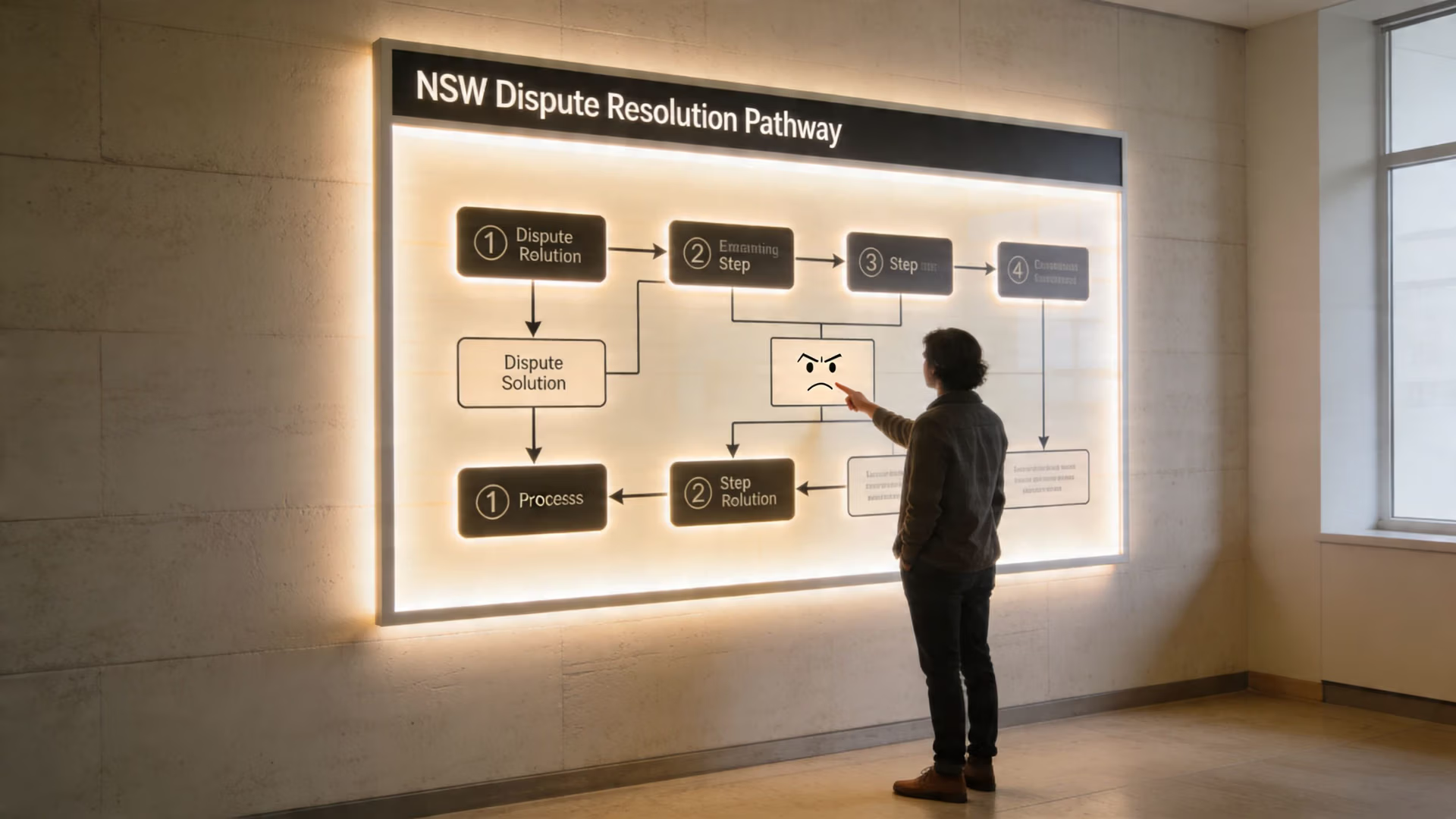
The pathway in NSW works best when you treat it as a sequence of decisions rather than one big fight. Some matters settle early because the defect is clear and the builder engages. Others only move when the owner presents a properly documented claim with technical support. The common mistake is skipping straight to accusations and legal language before the basic groundwork is in place.
Start with a clear written notice
Your first formal notice to the builder or responsible party should be short, factual, and specific. Don’t write a long emotional history. Don’t threaten everyone on day one. State what the defect is, where it appears, when it was first observed, and what you want them to do next.
A useful structure is:
- Identify the property and location of the defect
- Describe the symptoms you’ve observed
- Attach selected photos
- Request inspection and written response
- Set a reasonable timeframe for reply
If the issue is serious, avoid framing it loosely as “poor workmanship everywhere”. Be precise. Shower leak to wall cavity. Tiling movement to ensuite floor. Water staining to ceiling below main bathroom. Precision improves credibility.
In some matters, the legal framing of the builder’s failure can become important, especially where the promised work and the delivered work are plainly out of step. If you want a plain-English explanation of that idea, this overview of material breach of contract is a useful legal concept to understand.
Use Fair Trading and conciliation properly
If direct communication doesn’t resolve the issue, the matter may proceed through the NSW dispute pathway and, if needed, into NCAT. The practical lesson here is that parties who arrive with organised material usually get more traction than parties who arrive with general complaints.
According to the NCAT Annual Report 2024, 72% of 450 building defect matters were resolved pre-hearing via mediation, avoiding litigation costs that average $25,000 to $50,000. That’s one reason not to treat conciliation as a box-ticking exercise. A lot of matters do end before a full hearing, but only when someone has done the preparatory work.
Key point: Mediation isn’t where you “tell your story” and hope for sympathy. It’s where each side tests the strength of the evidence and the cost of continuing.
Before any conciliation event, prepare these documents:
- A short defect summary with each issue listed separately
- A photo pack arranged logically, not dumped as random attachments
- Any previous repair attempts and why they didn’t solve the issue
- A chronology of notices, inspections, and responses
- Your proposed outcome, whether that’s rectification, payment, or another practical resolution
This explainer may also help if you want a visual summary of dispute handling steps before a matter turns formal.
When the matter moves to NCAT
Once a case enters NCAT territory, casual evidence starts to show its limits. A builder may deny causation, argue maintenance failure, blame another trade, or say the work is within tolerance. Owners are often surprised by how quickly a straightforward complaint becomes a technical dispute.
At that point, structure matters. Separate each defect. Tie each item to evidence. Keep your communications consistent with your pleaded case. Don’t expand the claim every few weeks unless new evidence justifies it.
A simple way to think about NCAT preparation is this:
| Stage | What works | What usually fails |
|---|---|---|
| Early notice | Specific written complaint with photos | Angry general allegations |
| Conciliation | Organised defect list and clear remedy sought | Turning up with scattered documents |
| Tribunal preparation | Independent technical evidence and chronology | Reliance on verbal history alone |
| Hearing | Calm, defect-by-defect presentation | Repeating the same grievance without proof |
A building dispute about bathroom defects can settle at several points along this path. The owners who tend to get better outcomes are the ones who remain consistent. They don’t keep changing the defect description, the remedy sought, or the story of what happened. They build the case in layers and keep each layer supported by documents.
The Role of Expert Witnesses and Scott Schedules in Your Case
Once a bathroom dispute becomes contested, a repair quote is no longer enough. A quote tells you what someone may charge to fix a problem. It doesn’t usually explain what failed, why it failed, who is responsible, whether the observed damage is consistent with the alleged cause, or whether the proposed work is tied to compliant rectification.
That gap is where expert evidence matters.
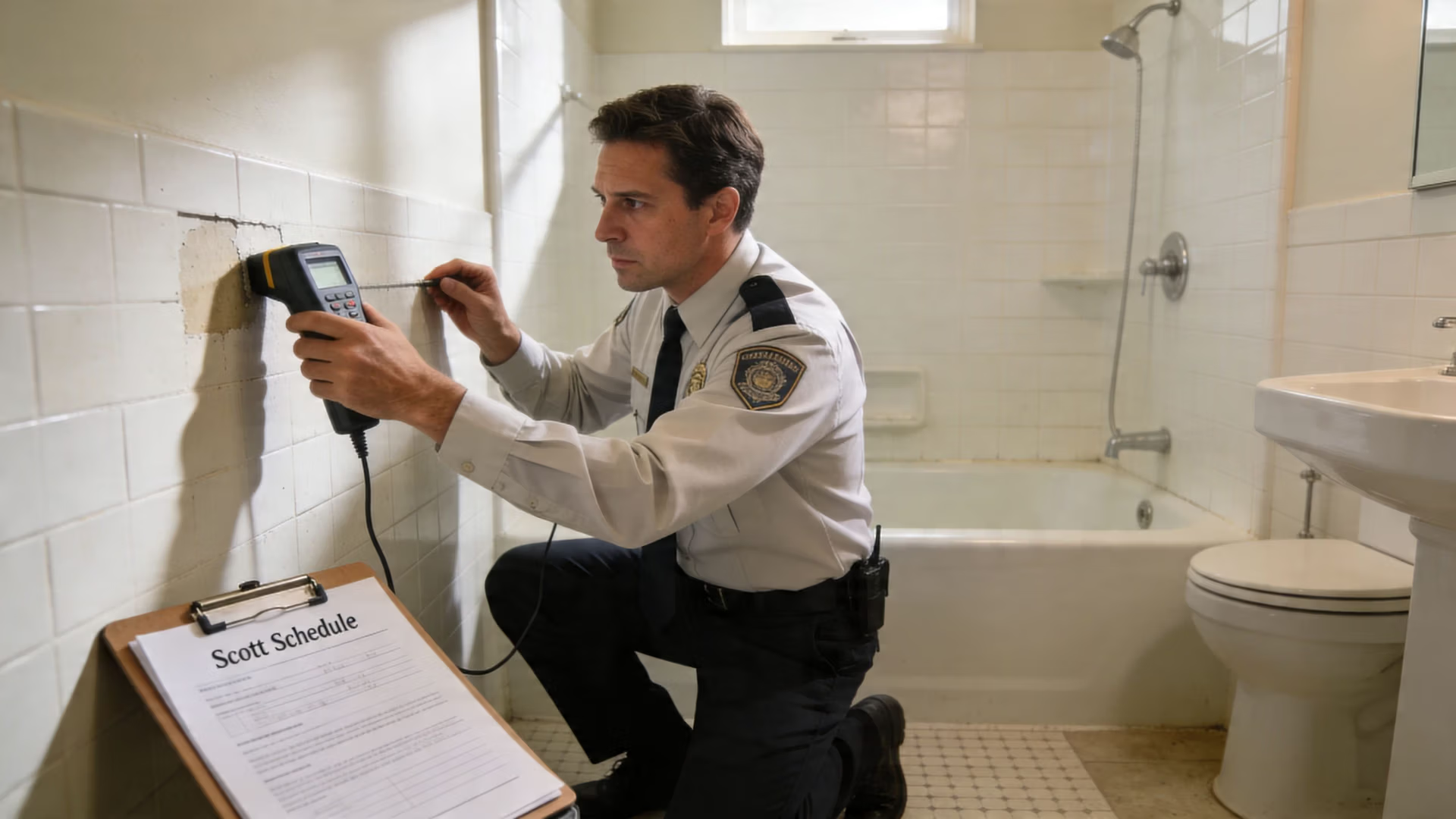
In practice, bathroom disputes often involve more than one possible responsible party. Waterproofing may have been installed poorly. Tiling may have concealed the problem. Plumbing penetrations may have been mishandled. Design details may have been weak from the start. In water intrusion cases, multiple parties can be held accountable, including homebuilders, subcontractors, and designers, and this discussion of water penetration liability and causation documents reflects why Scott Schedules and Expert Witness Reports are essential to document causation chains and establish clear liability.
What an expert report actually does
A proper building expert report should answer practical questions the Tribunal cares about:
- What defects are present?
- What observations support that conclusion?
- What testing or inspection basis was used?
- Is the work consistent with compliant construction?
- What is the likely cause?
- What rectification is reasonably required?
That’s very different from “the bathroom leaks and needs redoing”.
An expert also has to stay independent. Good expert evidence doesn’t read like advocacy for one side. It reads like technical analysis. That’s exactly why it carries more weight than a quote from the same person who wants the repair job.
The stronger report isn’t the one with the harshest language. It’s the one that ties each conclusion to an observable fact.
Why Scott Schedules matter so much
A Scott Schedule is the working document that gives a dispute shape. If you’ve never seen one before, think of it as a disciplined defect matrix. Each issue is listed item by item, then the positions of the claimant, respondent, and often the expert are set out against that same item.
That format matters because bathroom disputes become chaotic very quickly without it. One side talks about leaking at the shower hob. The other replies about ventilation. Someone else refers to grout cracking in the vanity wall. By the second round of submissions, everyone is arguing across each other.
A Scott Schedule forces alignment.
If you want a practical breakdown, this guide on what is a Scott Schedule in a building dispute NSW guide explains how the format works in NSW matters.
The trade-off most owners struggle with
Owners often hesitate to spend money on an expert because they’ve already spent money on the bathroom, and now they may also be facing temporary fixes, lost time, and legal advice. That hesitation is understandable. But in a serious defect matter, weak evidence is expensive in its own way. It leads to delay, contested causation, and avoidable arguments over whether the issue is even a defect.
Awesim Building Consultants provides site investigations, Expert Witness Reports, and Scott Schedules for NSW building disputes, which is the kind of documentation owners, builders, and solicitors often need once a bathroom matter becomes formal.
The practical question isn’t whether expert evidence costs money. It does. The central question is whether the dispute can be proved properly without it. In many contested bathroom matters, the answer is no.
Understanding Likely Outcomes and Managing Costs
Owners often ask one direct question: what am I likely to get at the end of this?
The honest answer is that outcomes vary with the evidence, the scope of the defect, the parties involved, and whether the matter settles or runs to determination. Some disputes end with agreed rectification. Some end with a money outcome. Some narrow down to only a few defect items. Some claims fail because the evidence never properly connected symptom, cause, and responsibility.
The hidden costs most people underestimate
The obvious cost is repair work. The less obvious costs are the ones that wear people down over time.
According to this consumer guide discussing construction defect losses and broader impacts, bathroom defect disputes can involve significant hidden costs beyond repair expenses, including engineering fees, temporary housing, and the psychological burden from extended periods of bathroom unavailability, and those impacts are often considered in NSW proceedings. That lines up with what many owners experience in practice. The dispute becomes part of the household routine. You plan your mornings around one usable bathroom. You move belongings. You take time off for inspections. You keep chasing emails at night.
The practical burden usually includes:
- Professional costs such as technical inspection and reporting
- Time costs from site access, meetings, and document preparation
- Accommodation disruption if the bathroom can’t be used during investigation or rectification
- Personal strain caused by ongoing uncertainty and constant household inconvenience
A bathroom dispute is rarely just a defect file. It becomes a time file, a stress file, and often a money file long before it reaches a final outcome.
What sensible budgeting looks like
Good budgeting in a dispute isn’t only about cash. It’s about stamina.
Ask yourself:
| Question | Why it matters |
|---|---|
| Can you fund proper evidence early? | Strong early evidence may shorten the dispute |
| Can the household cope with bathroom disruption? | Practical living arrangements affect how hard you can push timing |
| Is a commercial settlement acceptable? | A perfect outcome on paper may cost too much to chase |
| Are you documenting consequential loss properly? | Secondary impacts need records, not assumptions |
One of the hardest conversations in these matters is about proportionality. Not every defect needs a scorched-earth case. Sometimes the best result is a focused claim on the strongest items. Sometimes a practical settlement is better than a technically satisfying argument that drags on for months.
That isn’t giving up. It’s making a commercial decision.
Outcomes that help and outcomes that don’t
What usually helps is a claim that stays disciplined. Each defect is defined. The evidence supports the allegation. The remedy sought is realistic. The owner understands that not every annoyance translates into a recoverable item.
What usually hurts is overreach. Inflated claims, mixed-up timelines, repeated patch repairs without records, and broad accusations against everyone involved tend to muddy the core issues. If your case has merit, don’t bury it under unnecessary noise.
Taking Control of Your Bathroom Defect Dispute
It usually starts the same way. You notice swollen skirting outside the bathroom, a musty smell that keeps returning, or grout cracking again after a recent patch-up. By then, the stress is not only about the defect. It is about not knowing who to trust, what to fix first, or whether you are already behind if NCAT becomes necessary.
Control starts when the dispute stops being a swirl of opinions and becomes a file of usable evidence.
In practical terms, that means one version of the facts, one defect list, one set of photos and records, and a clear decision about whether the matter needs an independent expert. Owners often feel pressure to keep chasing trades for informal views. That rarely helps once positions have hardened. A repair contractor may tell you what they would replace. That is not the same as identifying the failed building element, the likely cause, and the proper scope of rectification.
What control actually looks like
A controlled dispute has structure. It does not drift from phone call to phone call.
The basics are simple:
- A chronology that matches the documents
- Photos, invoices, emails, and reports stored in one place
- Defects described by location and symptom
- Technical opinions separated from personal frustration
- Written communication that is measured and consistent
- Expert evidence obtained before the case becomes confused by competing stories
That discipline does two things. It helps your own case, and it makes it harder for the other side to sidestep the main issues.
Where cases lose strength
I see the same mistakes repeatedly in bathroom matters. Homeowners focus on blame before the evidence shows cause. Lawyers sometimes draft broad allegations before the technical foundation is settled. Both approaches create avoidable problems in NCAT.
The Tribunal is much easier to deal with when each item can be traced from symptom, to inspection finding, to rectification recommendation, to cost. If that chain is missing, the argument usually turns into noise about who said what and when.
Another common problem is well-meant repair activity. Owners are understandably trying to stop damage, keep the bathroom usable, or make the house liveable. But every patch repair, tile replacement, silicone touch-up, or plumber visit can muddy the evidence if it is not recorded properly. Sometimes those steps are necessary. If they are, document them carefully and keep the invoices, photos, and dates.
If you are only just starting
Keep the next move tight and practical.
Ask yourself:
- What am I seeing, and where?
- What records already exist?
- Has anyone carried out repairs, testing, or demolition?
- Who has been notified in writing?
- Do I need an independent inspection now, before the defect presentation changes?
That last question matters more than many owners realise. I have seen viable claims weakened because the bathroom was partly stripped, regrouted, or repeatedly patched before anyone documented the original condition properly.
If NCAT is now a real prospect
Treat preparation as part of the result.
A well-prepared bathroom defect claim is easier to negotiate, easier to mediate, and easier to present at hearing. It also gives your solicitor or expert something useful to work with. The strongest matters are usually not the loudest. They are the ones where the owner has stayed disciplined, resisted exaggeration, and kept the claim tied to provable defects and realistic rectification work.
You do not need to know every procedural step on day one. You do need to stop the file getting messier.
If you are dealing with a leaking shower, failed waterproofing, drummy tiles, substrate movement, or water damage outside the bathroom, get the evidence in order before more work is done and before assumptions harden into positions. That is often the difference between a focused dispute and an expensive argument that runs well past the core issues.
If you need help with a bathroom defect dispute in NSW, Awesim Building Consultants can assist with site investigations, Expert Witness Reports, and Scott Schedules for homeowners, builders, and solicitors. With over 35 years in building and construction and more than 15 years providing litigation support, the work focuses on clear, factual, NCAT-ready documentation. Email admin@awesim.com.au or call 1800 293 746.

Related Posts

NCAT Consumer Division: Steps From Lodgement to Hearing
Most people who end up at the NCAT Consumer and Commercial Division do not arrive there by choice. They arrive
Read More »
Statutory Warranty NSW: What Builders Must Fix and for How Long
Statutory warranty NSW obligations exist precisely for the moment a builder stops returning calls. A crack appears in the render.
Read More »
Home Building Act NSW: Key Clauses Every Owner Should Know
The Home Building Act 1989 (NSW) sets the rules for residential building work in New South Wales. It requires licensed
Read More »