
Building Dispute About Kitchen Defects A NSW Guide

A new kitchen should make daily life easier. Instead, you’re finding swollen cabinet panels, uneven doors, leaking plumbing, loose tiles, or benchtops that already show cracking or movement. By the time you start searching for help, you’re no longer asking whether something is wrong. You’re asking who is responsible, what evidence matters, and how to stop the problem getting worse.
That’s where most building disputes go off track. People either wait too long, rely on verbal promises, or file a claim with weak documentation. The result is a dispute that drags on, costs more than it should, and becomes harder to prove. The wider construction sector gives a warning about this. The 2022 Global Construction Disputes Report by Arcadis found that the average dispute value in North America increased by 42% in a single year, disputes took an average of 15.4 months globally to resolve, and the primary cause identified was poorly drafted or incomplete claims (Arcadis construction disputes report).
A building dispute about kitchen defects is rarely won by outrage alone. It’s won by identifying the actual defects, preserving the evidence, tying those defects to the contract and the standards, and presenting the case in a way NSW Fair Trading or NCAT can use.
Your Dream Kitchen is a Disaster Now What
Most homeowners start in the same place. Something feels off. A drawer rubs. A cabinet line looks crooked. Water appears where it shouldn’t. The builder says it’s normal settlement, a product issue, or your expectations are too high.
That early stage matters. If you treat a genuine defect like a minor annoyance, you lose time. If you treat every cosmetic issue like a major failure, you weaken your position. The first job is to slow down and separate emotion from evidence.
Start with control, not confrontation
Don’t begin with a furious phone call. Begin with a record.
Write down:
- What you first noticed and the date
- Where the issue appears in the kitchen
- Whether it’s getting worse or staying the same
- What the builder has already said about it
- Whether there’s any immediate risk from water, electricity, movement, or mould
That simple record often becomes the backbone of the dispute later.
Practical rule: The first version of events usually carries the most weight. Record it while the facts are fresh.
What usually goes wrong
In kitchen disputes, I see the same mistakes repeatedly:
- Verbal arrangements only. The owner says the builder promised to fix it. The builder says no such promise was made.
- Poor photos. One blurry image of a leak tells nobody where the water came from.
- No timeline. Without dates, the other side argues the defect appeared after handover or after someone else altered the work.
- Repair attempts too early. Owners sometimes remove evidence before anyone independent has inspected it.
A kitchen is also a concentration point for different trades. Cabinetmakers, plumbers, tilers, waterproofers, stone installers, electricians and appliance installers can all affect the final result. If one trade covers another trade’s defective work, the argument quickly turns into a blame-shifting exercise.
The path that usually works
A sound pathway looks like this:
- Identify the genuine defects
- Document them properly
- Notify the builder in writing
- Get an independent expert report where needed
- Choose the right dispute path, whether that’s direct negotiation, Fair Trading, or NCAT
That’s the practical route. It isn’t glamorous, but it’s how homeowners regain control.
Identifying Genuine Kitchen Defects
A lot of kitchen complaints are valid. Not all of them are legally useful. You need to separate a true defect from a maintenance issue, a tolerance issue, or a preference issue.
Use the kitchen in zones. That makes the inspection more organised and gives you a clearer defect list.

Cabinetry and joinery
Look closely at the alignment and operation of the kitchen, not just the finish.
Check for:
- Uneven door and drawer gaps. If one run of cabinets looks stepped or twisted, that can point to poor set-out or installation.
- Doors that swing shut or open by themselves. This often suggests the cabinets weren’t installed plumb.
- Drawer runners that bind or scrape. Sometimes that’s an adjustment issue. Sometimes it shows the carcass is out of square.
- Cabinet panels swelling near sinks or dishwashers. That usually raises questions about water ingress, sealing, or product suitability.
- Loose hinges, handles or fixings. Repeated movement can mean the substrate or fixing method is inadequate.
If the whole kitchen line looks visually inconsistent, stand back and photograph the run from end to end. That view is often more useful than a close-up.
Benchtops and splashbacks
Stone, laminate and tiled surfaces fail in different ways, but the warning signs are usually visible.
Watch for:
- Cracks near cut-outs around sinks or cooktops
- Lipping at joins where one section sits higher than the next
- Poorly finished edges or chips that shouldn’t be present on handover
- Water pooling instead of draining away from vulnerable areas
- Sealant gaps where splashback, benchtop and sink meet
A cracked top is not always just a product issue. Movement below, poor support, oversized spans, or bad cut-out detailing can be the underlying cause.
Plumbing and waterproofing
Concealed problems often make kitchen disputes expensive. Hidden moisture can damage cabinetry, walls and flooring before the owner realises what’s happening.
The forensic side matters here. Kitchen waterproofing defects comprise 42% of residential disputes in NSW, and claimant success rates rise to 68% with lab-tested or forensic evidence compared with 22% for visual-only inspections. A compliant expert report must deal with causation, not just list symptoms (Rimkus building defects article).
Look for:
- Swollen kickboards or cabinet bases
- Musty smells inside under-sink cabinets
- Silicone that has split, detached or never bonded properly
- Leaks at traps, mixer connections, dishwasher points or fridge water lines
- Staining on adjacent walls or flooring
Water damage is often argued as a maintenance problem by the respondent. If you suspect ongoing moisture, don’t rely on a visual guess.
Tiling, flooring and finishes
Some defects show up underfoot before they show up on a report.
Look for:
- Drummy or loose tiles
- Uneven tile lines or poor cuts
- Cracked grout at junctions
- Vinyl or timber flooring lifting near wet areas
- Visible scratches, dents or impact damage present from completion
Major defect or minor defect
This distinction affects urgency. In NSW, warranty periods differ depending on the nature of the defect. In practical terms, a more serious failure involving structural integrity, water penetration, safety, or major unfitness for use needs immediate attention. Lesser workmanship issues may still support a claim, but they’re treated differently.
If you’re unsure, don’t argue the label first. Document the condition and get the cause assessed. The facts come before the category.
Building Your Evidence A Step-by-Step Documentation Plan
A good claim starts long before any tribunal application. It starts the day you realise the builder may not fix the problem voluntarily.
In NSW, the dispute process begins with a pre-lodgement notice, and NCAT data from 2024 indicates that 28% of claims are at risk of dismissal when that initial step isn’t followed correctly. Clear photos and a documented timeline matter from the beginning, alongside the 6-year major defect and 2-year minor defect warranty periods under the Home Building Act framework as stated in the verified material (construction defect litigation guide).
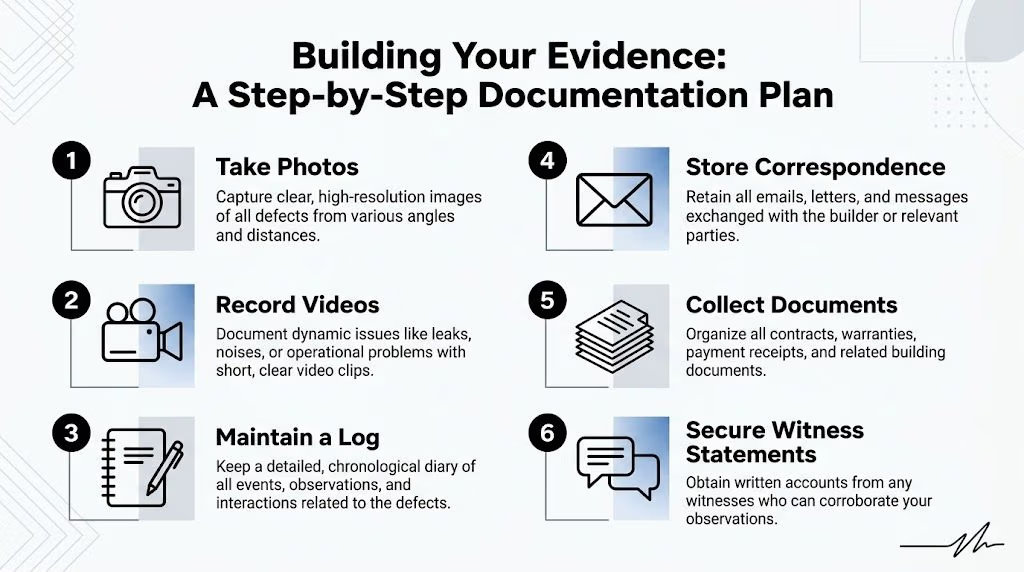
Build one file, not ten loose trails
Create a single digital folder for the dispute. Keep everything there. If the material is spread across texts, emails, screenshots and random photos, you’ll miss something important.
Include:
- The signed contract and any variations
- Plans, specifications and selections
- Invoices and payment records
- Emails, texts and letters
- Photos and videos in date order
- Notes of phone calls
- Product manuals and warranties
- Occupation certificate or completion documents, if available
Name files clearly. “Kitchen leak under sink 12 May” is useful. “IMG0048” is not.
Take photos like you expect a stranger to read them
Most owners photograph defects too close. That proves damage exists, but not where it is.
For each defect, take:
- A wide shot showing the location in the kitchen
- A medium shot showing the affected area
- A close shot showing the detail
- A repeat shot over time if the defect changes
For water issues, add photos after the area has been dry, after normal use, and when the leak reappears. Short videos can also help with intermittent issues such as drips, door misalignment, noisy plumbing, or movement in cabinetry.
Keep a defect diary
Your diary doesn’t need legal language. It needs dates and facts.
A useful entry includes:
- Date
- What happened
- What you observed
- Who you spoke to
- What was said
- What action followed
For example, note that the dishwasher leaked during a normal cycle, water reached the left-hand cabinet base, and the builder was notified by email that same day. Keep it factual. Don’t turn the diary into an argument.
Write to the builder properly
Your first written notice should be calm and specific. Don’t overload it with legal threats unless you’ve been advised to do that.
A practical structure is:
- Identify the property and contract
- List each defect separately
- Attach photos
- State when each defect was first noticed
- Request inspection and rectification by a stated date
- Ask for all responses in writing
If there are several defects, number them. That makes it easier to turn the same list into an expert brief or a tribunal schedule later.
The strongest owner correspondence reads like a site record, not an emotional release.
Get your list into a claim-ready format
Once the defects are identified, start thinking in schedule form. NCAT and experts work best when each issue is itemised, not buried in narrative. If you want to understand how these lists are structured, this guide on a Scott Schedule in a building dispute in NSW gives a practical overview of how defects, responsibility and rectification items are organised.
One warning before you clean up
Don’t throw away failed parts, packaging, offcuts, receipts, or damaged fixtures if they may help prove what was installed and how it failed. In disputes about kitchen defects, owners often tidy the scene before anyone independent sees it. That can make a strong claim harder to prove.
Engaging an Expert for an NCAT-Compliant Report
There’s a point where owner-collected evidence stops being enough. That point usually arrives when the builder denies the defect, blames another trade, says the issue is maintenance, or offers a superficial patch that doesn’t deal with the cause.
That’s when an expert report matters. Not a generic pre-purchase style inspection. Not a casual opinion from another tradesperson. A proper report for a building dispute about kitchen defects needs to identify the defect, explain the likely cause, assess compliance, and connect each item to a rectification pathway.

What an expert actually does
A serious expert inspection is forensic in approach. The work usually involves:
- Reviewing the contract and drawings
- Inspecting the kitchen against the documented complaints
- Using tools such as moisture meters, laser levels, borescopes, or thermal methods where appropriate
- Assessing workmanship against the relevant standards and specifications
- Separating cause from symptom
- Listing rectification works in an organised schedule
That causation point is critical. A report that says “cabinet damaged by moisture” is incomplete if it doesn’t address whether the moisture came from plumbing leakage, failed sealing, condensation, product incompatibility, or owner misuse.
The difference between a general defect note and usable evidence
A weak report often reads like this: “Observed cracking to benchtop. Recommend replacement.”
That doesn’t answer the key questions:
- Was the benchtop unsupported?
- Was the cut-out too close to a vulnerable point?
- Was the substrate moving?
- Was installation inconsistent with the manufacturer’s instructions?
- Is the crack cosmetic, structural, or progressive?
NCAT needs more than a list of complaints. It needs a reasoned opinion.
When a specific defect report helps
Sometimes the dispute is not yet wide enough to justify a full litigation package. If the issue is confined to one serious problem, such as a leak, movement around a benchtop, or a persistent joinery failure, a targeted report can be a sensible first step. For that kind of narrower assessment, a specific defect report can be a useful reference point for understanding how focused defect investigations are framed.
What a Scott Schedule does
A Scott Schedule is one of the most practical documents in a kitchen dispute. It breaks the case into separate items so everyone can see:
- The defect complained of
- The claimant’s position
- The respondent’s response
- The expert view
- The rectification item
That structure stops the hearing from becoming a fog of competing stories. It forces each defect to stand on its own evidence.
If you’re moving toward formal proceedings, this page on a building expert witness report for NCAT outlines the type of report used for defect disputes and tribunal matters.
What to ask before you engage anyone
Before appointing an expert, ask practical questions:
- Have they prepared reports for NCAT matters before
- Do they inspect for causation, not just visible symptoms
- Can they prepare or work with a Scott Schedule
- Do they understand kitchen-specific defects across cabinetry, plumbing, waterproofing and finishes
- Will the report comply with expert witness obligations
Awesim Building Consultants prepares site investigations, Expert Witness Reports and Scott Schedules for homeowners, builders and lawyers dealing with NSW building disputes.
A report is only useful if it helps an independent decision-maker understand what failed, why it failed, and what rectification actually requires.
Navigating Dispute Resolution Negotiation Fair Trading and NCAT
Once the evidence is organised, the decision begins. Do you push for a direct commercial outcome, try the administrative pathway, or prepare for a tribunal fight?
The right answer depends on the defect, the builder’s attitude, the quality of your evidence, and whether the kitchen can be used safely in the meantime.

Option one is direct negotiation
Direct negotiation works best when the builder is still engaged, the issues are clearly identified, and there’s a genuine willingness to rectify.
The advantages are obvious:
- It’s usually faster
- It can preserve a working relationship
- It may avoid expert and hearing costs
- You can agree practical solutions, not just legal outcomes
But negotiation fails when the owner has no evidence or the builder senses weakness. If your letter says the kitchen is “terrible” but can’t identify the exact defects, the builder can stall, deny, or offer cosmetic touch-ups.
A stronger negotiation position usually includes:
- A numbered defect list
- Clear photographs
- Reference to contract documents
- A deadline for inspection or response
- An independent report where liability is disputed
Option two is NSW Fair Trading
Fair Trading sits in the middle ground. It can be useful where communication has broken down but the matter still has some prospect of negotiated resolution.
This path can help when:
- The owner wants an external process without filing in NCAT immediately
- The builder is disputing scope rather than denying everything
- Both sides may still respond to technical input or mediation pressure
Fair Trading is not a substitute for evidence. It won’t fix a vague claim. If your file is disorganised, that weakness follows you into the process.
Option three is NCAT
NCAT is the formal route. Once you’re there, the case needs structure. Defects need to be itemised, evidence has to be coherent, and expert material needs to be usable.
For strata properties, the complexity rises quickly. Verified material states that NCAT applications for strata kitchen defects rose 25% from 2024 to early 2025, recent amendments to Procedural Direction 3 require digital Scott Schedules, and 30% of claims are still dismissed for insufficient evidence (construction defect claims and mediation perspective).
That’s especially relevant where a kitchen defect affects common property, shared services, by-laws, certifiers, or an owners corporation.
Side-by-side practical comparison
| Pathway | Best used when | Main advantage | Main risk |
|---|---|---|---|
| Direct negotiation | Builder is still responsive | Can achieve a practical fix quickly | Owner accepts an inadequate patch |
| Fair Trading | Communication has broken down but resolution is still possible | External process without immediate hearing | Weak evidence still sinks the matter |
| NCAT | Liability, scope or causation is seriously disputed | Formal decision-making process | Poorly prepared claims are exposed fast |
What works and what usually doesn’t
What works:
- A concise schedule of defects
- Technical evidence linked to the actual complaints
- A claimant who understands the difference between urgent mitigation and unauthorised alteration
- Realistic rectification requests
What doesn’t:
- A bundle of random photos with no dates
- Allegations of “non-compliance everywhere”
- Inflated claims unsupported by inspection
- Relying on oral promises from site meetings
If the builder has already taken a hard denial position, good evidence can still produce settlement. Bad evidence almost never does.
Special caution for strata kitchens
In strata matters, ask early:
- Is the defect within the lot, common property, or both
- Does the issue involve shared pipework, exhausts, membranes, or penetrations
- Has the owners corporation been notified
- Do the by-laws affect access, responsibility or rectification
Kitchen disputes in strata are often delayed because parties argue over responsibility before anyone properly identifies the defect path.
Understanding the Timelines and Costs
Most homeowners ask two questions once the dispute becomes real. How long will this take, and what will it cost me?
The honest answer is that both depend on the quality of the evidence, the builder’s response, and whether the matter resolves early or runs through a formal process. Time limits are strict, though. Verified material notes that California’s SB800 framework uses a similar legal structure, with apparent defects within 4 years, latent defects within 10 years from completion, and claims filed within 3 years of discovery, which underlines the broader principle that defect timeframes are enforced closely (construction defect claims in California).
In NSW, you should work from the local warranty periods and act promptly. Delay causes practical problems even before it causes legal ones. Evidence deteriorates. Water damage spreads. Trades return and alter the original condition.
Estimated Costs & Timelines for a Kitchen Defect Dispute
| Dispute Stage | Estimated Cost (AUD) | Estimated Timeline |
|---|---|---|
| Initial owner documentation and file preparation | Varies by owner effort and any urgent protective works | Days to a few weeks |
| Expert inspection and report preparation | Varies by scope, property location, and whether testing is needed | Often a few weeks, depending on access and complexity |
| Negotiation with builder | Can be limited if handled directly, or higher if supported by expert input or legal advice | Weeks to months |
| Fair Trading process | Application and preparation costs vary | Often weeks to months |
| NCAT preparation and hearing process | Application, expert, and possible legal costs vary by dispute size and complexity | Months, and sometimes longer if evidence is contested |
The cost trade-off people often miss
Cheap early action can become expensive later. If you commission the wrong type of inspection, send a poor notice, or allow informal repairs that hide the original problem, the dispute often becomes harder and more expensive to prove.
That doesn’t mean every matter needs a full legal team from day one. It means spending money in the right place, at the right time.
Duty to mitigate loss in practical terms
If there’s an active leak under the sink and you do nothing while the cabinet base disintegrates, that can become part of the dispute. You’re generally expected to take sensible steps to limit further damage.
That usually means:
- Protecting the area from ongoing water damage
- Keeping records of temporary measures
- Not carrying out full rectification before evidence is preserved
- Retaining receipts for emergency works
If you want a plain-English comparison of how long formal disputes can unfold in another area of law, this overview of a personal injury lawsuit timeline is useful as a general reminder that legal processes tend to move in stages, not in one straight line.
Frequently Asked Questions about Kitchen Disputes
Can I use the kitchen while the dispute is ongoing
Usually yes, if the kitchen is safe and use won’t worsen the defect. If there’s active water ingress, electrical risk, movement in heavy stone, or mould concerns, get advice before continuing normal use. Keep records of any restrictions placed on the area.
What if the builder offers to fix it, but I’ve lost confidence
Loss of confidence alone isn’t the whole test. The key issue is whether the proposed rectification is adequate, properly scoped, and likely to address the cause. If the offer is vague, partial, or unsupported by any method statement, caution is sensible. Record the offer in writing and get technical advice if needed.
Should I get another builder to quote for repairs straight away
A repair quote can help with understanding scope, but a quote is not the same as an expert opinion on causation. In many disputes, the quote comes too early and the evidence comes too late. Work out what failed first. Price the fix second.
What if the defect is hidden behind cabinetry or inside a wall
Hidden defects need careful handling. Don’t authorise destructive opening-up without first notifying the other side where appropriate and preserving the evidence trail. If invasive inspection becomes necessary, the process should be documented properly.
What happens if the builder blames the supplier or subcontractor
That’s common. It may be true, partly true, or a complete sidestep. From the homeowner’s point of view, the important thing is identifying the defective work, the contractual responsibility, and the actual cause. A tribunal won’t be helped by finger-pointing unless the evidence supports it.
What if I’m in a strata unit
Notify the owners corporation early if there’s any chance the issue affects common property, service penetrations, shared pipework, ducting, or membranes. Kitchen defects in strata properties often involve overlapping responsibilities. Delay usually makes that more complicated.
Do I need a lawyer for every kitchen dispute
No. Some matters resolve through organised evidence, direct communication and technical reports. Others need legal input because the builder denies liability, the claim grows, or procedural issues become more serious. The mistake is waiting until the matter is badly documented before seeking help.
Take Control of Your Building Dispute Today
Kitchen defect disputes feel personal because they are. You paid for a functional, properly finished space, and now you’re dealing with leaks, misalignment, damage, excuses, or silence. The way out isn’t more frustration. It’s a disciplined file, a clear defect list, and evidence that can stand up under scrutiny.
The strongest cases usually have three things in common:
- The defects were identified early
- The owner documented the problem properly
- An independent expert dealt with cause, compliance and rectification
If you’re dealing with a building dispute about kitchen defects in NSW, act while the evidence is still fresh. Don’t rely on memory, verbal assurances, or informal site conversations to carry the case for you. Put the facts in order and make each next step deliberate.
If you need help with a kitchen defect dispute, Awesim Building Consultants can assist with site investigations, Expert Witness Reports and Scott Schedules for NSW matters. Email admin@awesim.com.au or call 1800 293 746 to discuss the defects and the documentation needed for your next step.

Related Posts

NCAT Consumer Division: Steps From Lodgement to Hearing
Most people who end up at the NCAT Consumer and Commercial Division do not arrive there by choice. They arrive
Read More »
Statutory Warranty NSW: What Builders Must Fix and for How Long
Statutory warranty NSW obligations exist precisely for the moment a builder stops returning calls. A crack appears in the render.
Read More »
Home Building Act NSW: Key Clauses Every Owner Should Know
The Home Building Act 1989 (NSW) sets the rules for residential building work in New South Wales. It requires licensed
Read More »