You turn the shower on, step in, and the water drops to a trickle or stops altogether. Sometimes it happens without warning. Sometimes it’s been getting worse for weeks and you finally hit the point where the shower barely works.
That problem sits in one of two buckets. It’s either a straightforward maintenance issue, or it’s the first visible sign of a larger plumbing or waterproofing defect. After decades in building and construction, and many years preparing evidence for disputes, I can say many owners lose time and money at this stage. They treat a defect like a minor annoyance, patch the symptom, and miss the underlying cause.
That matters in Australia because showers are a major household water load, and even a one-minute reduction in shower time can save around 9 litres with a 9 L/min shower head, and around 12.5 litres with a 12.5 L/min shower head, according to Australian shower flow rate guidance referencing WELS and ABS water-efficiency guidance. When a shower stops working properly, the issue can affect water use, compliance, safety, and in some cases the evidence trail for an NCAT claim.
What To Do When Your Shower Suddenly Stops
A stopped shower feels like a plumbing problem. Sometimes it is. A blocked shower head, a dirty cartridge, or a local shut-off issue can often be found quickly.
But the timing tells you a lot.
If the shower fails straight after other work was done, such as a bathroom renovation, hot water service replacement, mixer change, or tiling job, I’d be slower to assume it’s just wear and tear. New work often introduces new faults. Valves are left incorrectly adjusted, debris gets into mixer bodies, pressure issues show up after reconnection, and waterproofing defects become visible only after the shower returns to use.
Start with the simplest question
Ask this first: is it only this shower, or is the problem wider than the shower?
That one question separates basic fixture faults from system faults. If every outlet in the home is affected, you’re looking at a supply or pressure problem. If only one shower is affected, the fault is more likely local to that fixture, mixer, shower head, cartridge, or branch line.
Practical rule: If the shower problem appeared suddenly and another recent trade was involved, keep records from the first day. The cause may matter later.
Don’t confuse two different meanings of water stop
In homes, people often say “the shower water stop” when they mean the shower has stopped flowing. In construction, shower water stops also refer to the physical waterproofing barrier installed at the shower entry in wet areas. Both can become important in the same job.
One affects water delivery. The other affects water containment.
That’s why a shower complaint can widen from “no water” to a defect report covering plumbing compliance, waterproofing, and workmanship.
Immediate Safety Checks and Water Shutoff Procedures
Before you pull anything apart, make the area safe. If there’s any sign of leaking into walls, flooring, ceilings below, or electrical fittings, your first job is to stop more damage.
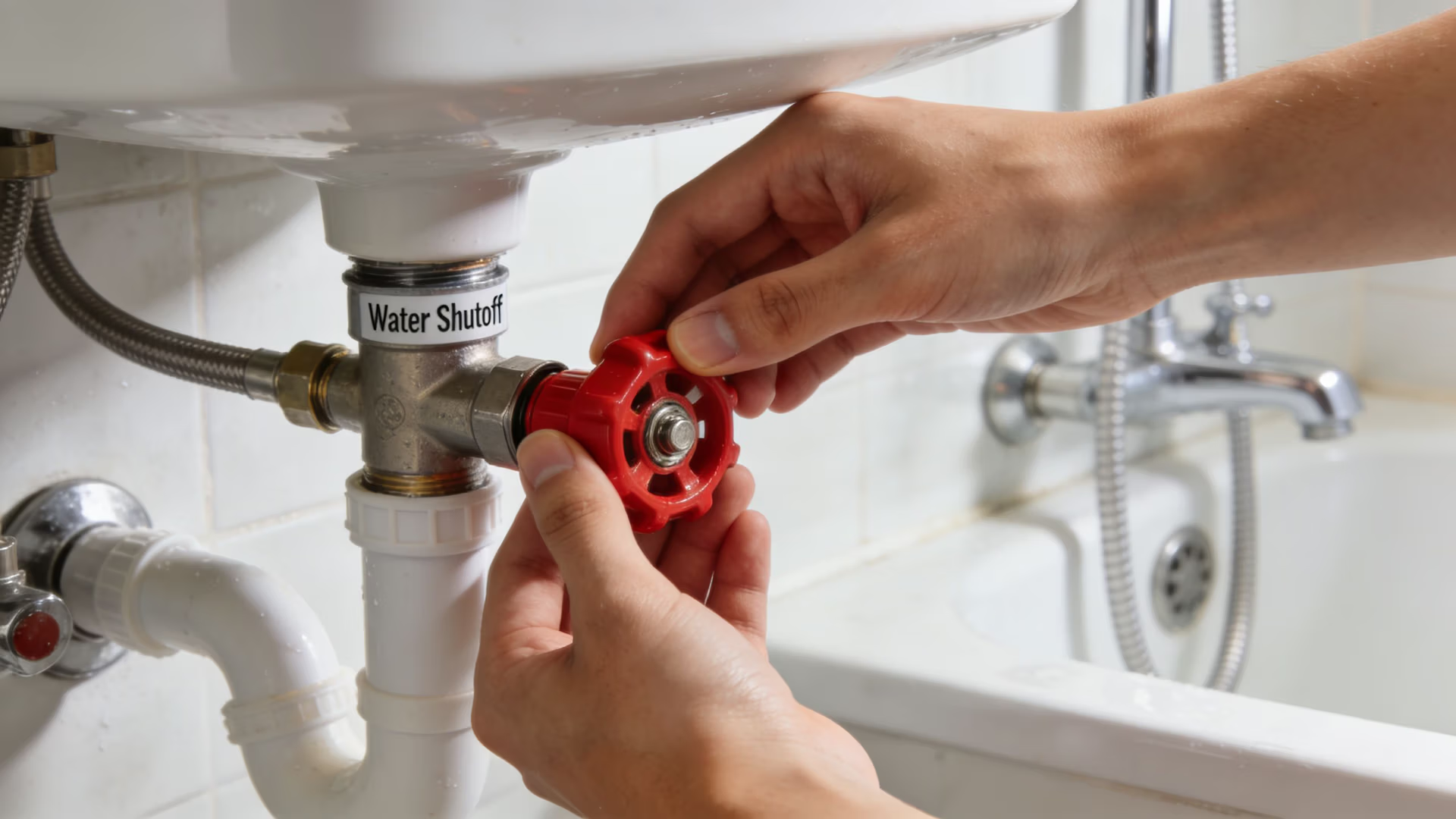
What to shut off first
Use this order:
- Shower mixer or local isolation point if one is accessible and you know exactly what you’re operating.
- Nearby fixture isolation valves if the issue appears limited to that bathroom.
- Main water supply if water is escaping, pressure is unstable, or you’re not confident the problem is isolated.
If you’re not sure where the property shut-off is, a practical visual reference is this Los Angeles main water valve guide. The fittings and property layouts differ from NSW homes, but the basic idea of identifying and operating a main shut-off valve is still useful.
Safety checks that matter
Don’t assume low flow is harmless. A faulty shower valve can also create a temperature control problem.
Australian plumbing rules require temperature control for shower outlets to reduce scalding risk. A worn, faulty, or incorrectly adjusted valve can create an unsafe outlet condition, and that’s one reason these issues appear in building defect evidence and NCAT matters, as noted in the verified plumbing compliance guidance provided for this topic.
If the water turns suddenly very hot, fluctuates sharply, or changes after recent plumbing work, stop using that shower until a licensed plumber checks it.
What not to do
A lot of avoidable damage starts here.
- Don’t force seized handles or valves. You can damage the spindle, trim, or wall lining.
- Don’t remove mixer components while the supply is live. That can turn a diagnostic check into a flooding event.
- Don’t keep “testing” a leaking shower. Repeated operation can feed water into wall cavities and floor junctions.
- Don’t ignore a hot-water irregularity. Scald risk is a real safety issue, not just a comfort issue.
If you’ve shut the water off, dry the area, note the time, and take a few photos before anyone starts repairs. Those first images often end up being the cleanest evidence.
How To Diagnose The Problem Yourself
The right way to troubleshoot a stopped shower is to narrow the fault, not guess. You don’t need specialist tools to do the first pass. You do need a calm sequence.
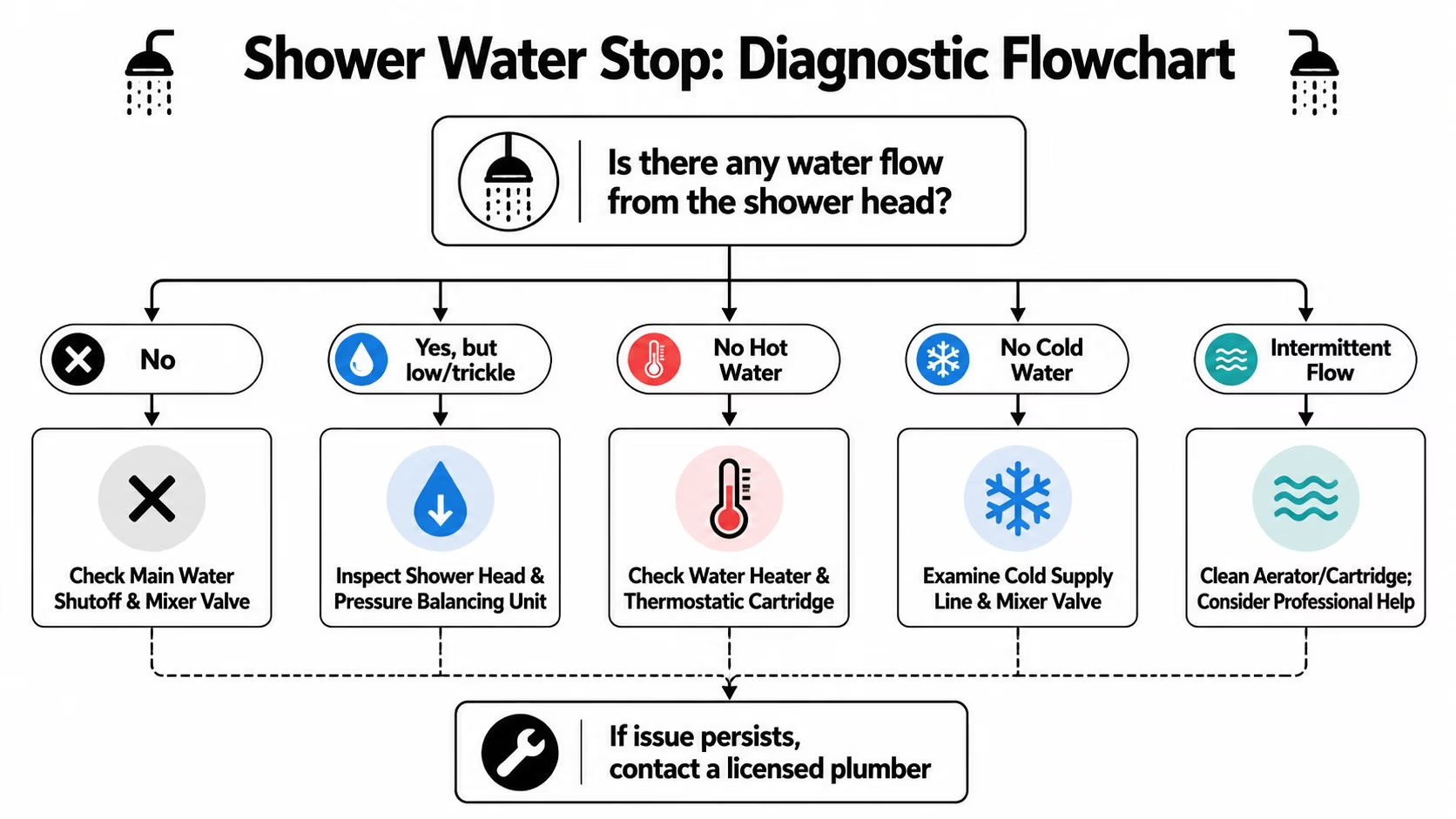
A simple decision path
Start with these checks:
Only one shower affected
Run the basin tap, bath spout, and another shower if you have one. If they work normally, the fault is probably local to that shower set.Hot only or cold only affected
If cold runs but hot doesn’t, or the reverse, the fault may sit in the mixer cartridge, tempering arrangement, branch supply, or a recent plumbing adjustment.No water at all
Check whether the main supply is on, whether other fixtures work, and whether anyone has recently carried out plumbing, tiling, or hot-water work.Low flow or pulsing flow
Remove the shower head and inspect for debris or scale. If flow improves with the head removed, the obstruction is likely at the outlet end.
Here’s a visual summary of that logic.
Checks you can do safely
Most owners can manage these without creating extra risk:
Clean the shower head
Unscrew the shower head carefully and check the inlet screen and spray face. Debris from maintenance work often ends up there. If you’ve had recent plumbing work, small particles can lodge in regulators and nozzles.
Rinse, clean, and re-test. If the flow returns to normal, you’ve found the restriction.
Compare hot and cold response
Turn the mixer slowly through its range. Watch for dead spots, sudden drop-off, or a point where pressure disappears. That pattern often suggests an internal valve or cartridge issue rather than a basic blockage.
Listen for clues
A blocked outlet often gives you weak, steady flow. A valve problem can give you surging, pulsing, hesitation, or abrupt cut-out. Noise in the wall also matters. Knocking, chattering, or a scraping feel in the handle tells you the problem may be inside the mixer body or the supply line.
A shower that fails the same way every time usually points to a component fault. A shower that behaves differently day to day often points to pressure instability, a failing regulator, or hidden pipework trouble.
Keep notes as you test
Make a short record while you troubleshoot. Write down:
- Which fixtures still work
- Whether hot, cold, or both are affected
- Whether the problem is total stoppage or weak flow
- Whether the issue started after repairs, renovation, or replacement work
Those details help a licensed plumber diagnose faster. They also become useful if the matter turns into a workmanship dispute.
Understanding the Common Causes and Technical Faults
A shower doesn’t usually “just stop” for no reason. Something in the system has changed. The trick is knowing whether that change is at the fitting, in the wall, or in the wet-area construction itself.
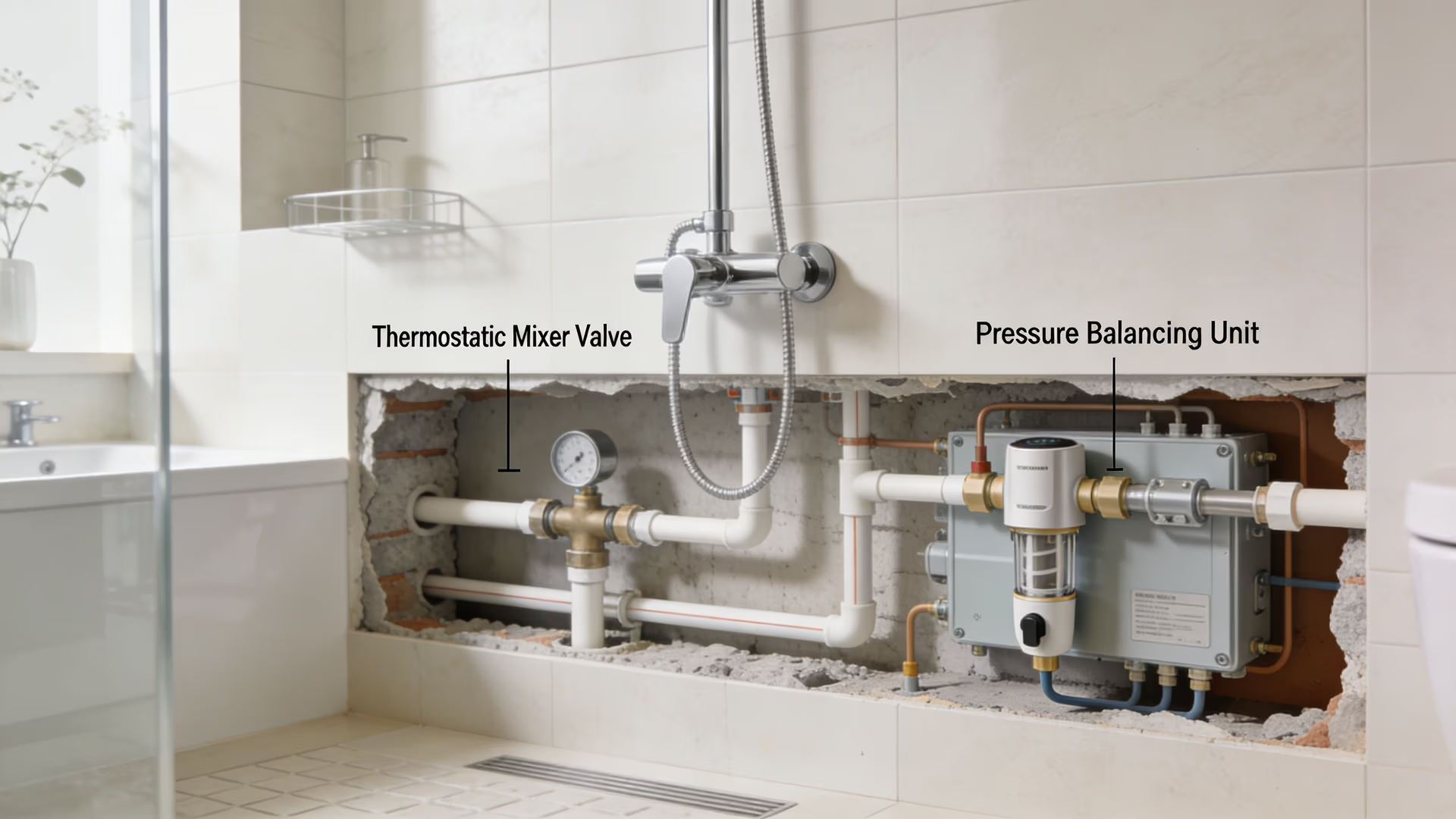
The plumbing faults behind stopped showers
The common mechanical faults are usually one of these:
| Fault area | What it tends to look like |
|---|---|
| Shower head or regulator | Weak spray, uneven pattern, local restriction |
| Mixer cartridge | Sudden stoppage, temperature irregularity, stiff handle |
| Pressure regulator or supply issue | Broader pressure loss across multiple outlets |
| Hot water system interaction | Poor hot-side performance, unstable shower behaviour |
| Debris after maintenance | New problem appearing straight after works |
Pressure-balancing and thermostatic components exist to control flow and temperature together. When they wear, clog, or are adjusted incorrectly, the shower can lose performance or shut down on one side.
That’s why a “simple shower fault” often isn’t solved by replacing the shower head.
The building defect many owners miss
There’s another issue that gets overlooked because the wording is confusing. In wet-area construction, a water stop is not a flow-control fitting. It is a waterproofing component at the shower threshold.
In Australian wet-area construction, that component is governed by AS 3740. In compliant installations, the water stop forms part of a continuous waterproofing system. In unenclosed showers, the vertical leg should finish flush with the finished floor surface. Where a shower screen is installed and there is no hob or set-down, the vertical leg should finish at least 5 mm above finished floor level, as outlined in this Awesim guide on water stops in showers.
If that detail is set too low, not bonded properly, or not integrated with the membrane, the shower may still run but water escapes into adjacent flooring or rooms below. That’s often where a plumbing complaint turns into a larger defect claim.
A shower can have two separate problems at once. One stops the water from coming out properly. The other stops the waterproofing from containing it.
When To Stop and Call a Professional
There comes a point where more DIY effort makes the position worse. In NSW properties, sudden or chronic water pressure loss is often more than maintenance. It can indicate defective installation, non-compliant materials, or wider system problems, and these complaints frequently show up in NCAT disputes, based on the verified guidance supplied for this topic.
Red flags that change the job
Stop troubleshooting yourself if you notice any of the following:
Multiple fixtures affected
That points away from a single blocked shower head and toward pressure regulation, supply, or installation defects.Leaks into adjoining rooms or downstairs ceilings
At that point the issue is no longer just plumbing performance. You may be dealing with waterproofing failure, drainage detailing failure, or both.The shower improved briefly, then failed again
Recurring symptoms often mean the visible blockage was only the surface problem.Recent renovation or trade work preceded the fault
New defects often show up after mixer replacement, hot-water changes, retiling, or bathroom alterations.The property is strata or multi-unit
Shared services, common property, and responsibility boundaries complicate the issue quickly.
Why the right expert matters
A plumber repairs. A building consultant investigates the broader defect question. In dispute matters, those are not the same thing.
If you only need practical repair advice, a trade-focused guide such as fixing your shower can help you understand common repair paths. But if the issue keeps returning, affects surrounding construction, or may involve workmanship and compliance, you need someone who can inspect the system and document the defect properly.
What professional assessment should answer
A proper defect assessment should identify:
- Whether the fault is maintenance or defective work
- Whether related waterproofing details comply with the wet-area standard
- Whether valve settings, pressure behaviour, and outlet performance indicate a safety issue
- Whether the defect evidence is suitable for insurer, builder, or NCAT use
That’s the point where patch repairs stop being enough.
How To Document The Issue for a Builder Insurer or NCAT
If there’s any chance the matter may involve a builder, strata, insurer, or tribunal, start documenting before repairs erase the evidence.
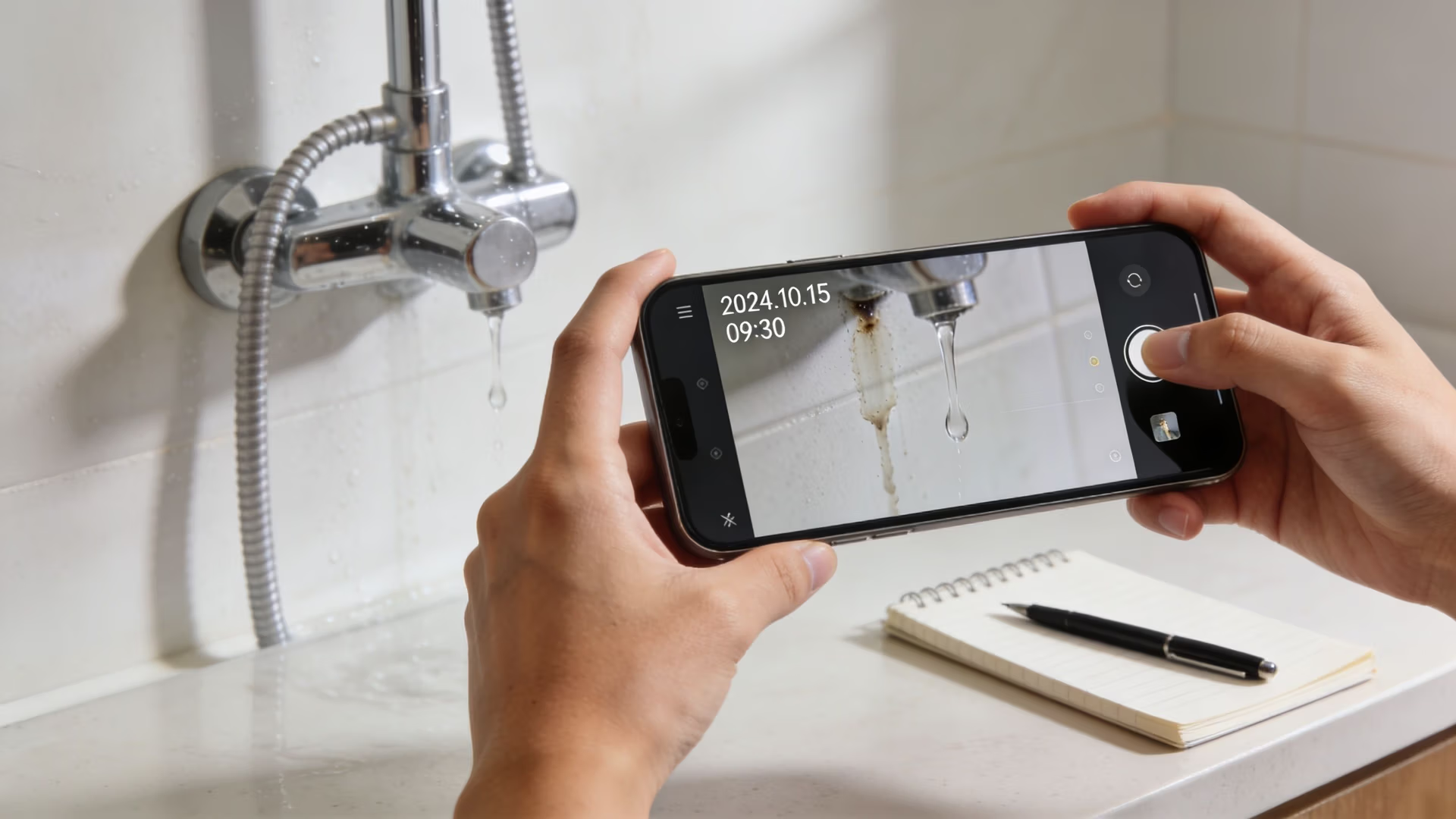
What to record from day one
Use your phone and keep it simple:
Take dated photos and video
Record the shower running, poor flow, no flow, leaks, ceiling staining, swollen skirtings, or water outside the shower area.Keep a running log
Note when the problem started, whether it is constant or intermittent, and what changed just before it began.Save all communications
Keep texts, emails, invoices, scope of works, and attendance records from plumbers, builders, strata, and insurers.Record any temporary repairs
If someone cleaned a head, changed a cartridge, or resealed an area, note exactly what they did and when.
Why that evidence matters
NCAT matters often turn on sequence. What happened first, what work was done, when symptoms appeared, and whether the repairs addressed cause or only symptoms.
For wet-area and leak matters, a formal waterproofing defect report can help frame the evidence around workmanship, waterproofing continuity, shower threshold details, and resulting damage. Awesim Building Consultants also prepares site investigations, Expert Witness Reports, and Scott Schedules where that level of documentation is required.
Good evidence is chronological, clear, and unedited. Blurry afterthought photos taken months later rarely answer the real questions.
Frequently Asked Questions
| Question | Answer |
|---|---|
| Can a blocked shower head really cause the shower to stop? | Yes. It can cause very weak flow or what feels like a stoppage. It’s one of the first things to check because it’s low risk and easy to confirm. |
| What’s the difference between a shower water stop and a shower that stops running? | In building work, shower water stops are waterproofing threshold components. In everyday language, people often use the phrase to mean the water flow has stopped. They are different issues, but both can matter in the same bathroom. |
| Who is responsible in a strata property? | That depends on the by-laws, the location of the fault, and whether the problem sits in common property, a lot owner’s fixture, or shared services. Don’t assume. Get the boundary checked early. |
| Will insurance cover it? | Insurance response depends on the policy and the cause. Sudden damage, escape of water, defective work exclusions, and maintenance issues are treated differently. Keep records and notify the insurer promptly. |
| Should I call a plumber or a building consultant first? | If there’s an active leak or safety issue, call a licensed plumber first to make safe. If the issue appears linked to defective work, recurring pressure problems, waterproofing failure, or a dispute, a building consultant may be needed to assess and document the broader defect. |
| When do I need an Expert Witness Report? | Usually when the matter has moved beyond repair coordination and into disagreement about cause, responsibility, compliance, or rectification scope. That often happens with builders, strata disputes, insurers, or NCAT proceedings. |
| What is a Scott Schedule? | It’s a structured defect document used to identify issues, positions, and responses in dispute matters. It helps organise competing claims about defect items and rectification. |
| Can I keep using the shower while I wait? | If there is any sign of leakage beyond the shower area, unstable temperature, damage below, or worsening pressure behaviour, it’s safer to stop using it until the cause is identified. |
If your shower problem looks like more than a blocked fitting, Awesim Building Consultants can assist with site investigations, Expert Witness Reports, and Scott Schedules for NSW building disputes. To discuss the issue, email admin@awesim.com.au or call 1800 293 746.