
Construction Project Management in NSW: Complete Guide
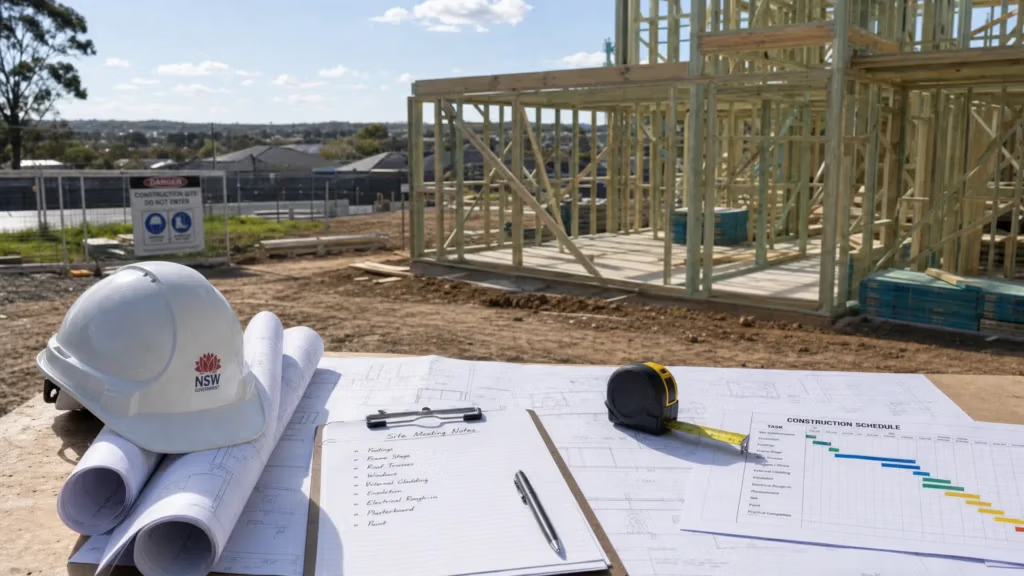
Construction project management in NSW is not just about keeping trades moving on site. It is the structured coordination of scope, approvals, contracts, budget, time, quality, risk and records from the early planning stage through to handover and defects close-out.
For homeowners, strata committees, developers and commercial principals, the value is often simple: fewer surprises, clearer accountability and better evidence if something goes wrong. A well-managed project gives each party a documented path from the contract to completion, rather than relying on memory, text messages or informal promises.
Why construction project management is different in NSW
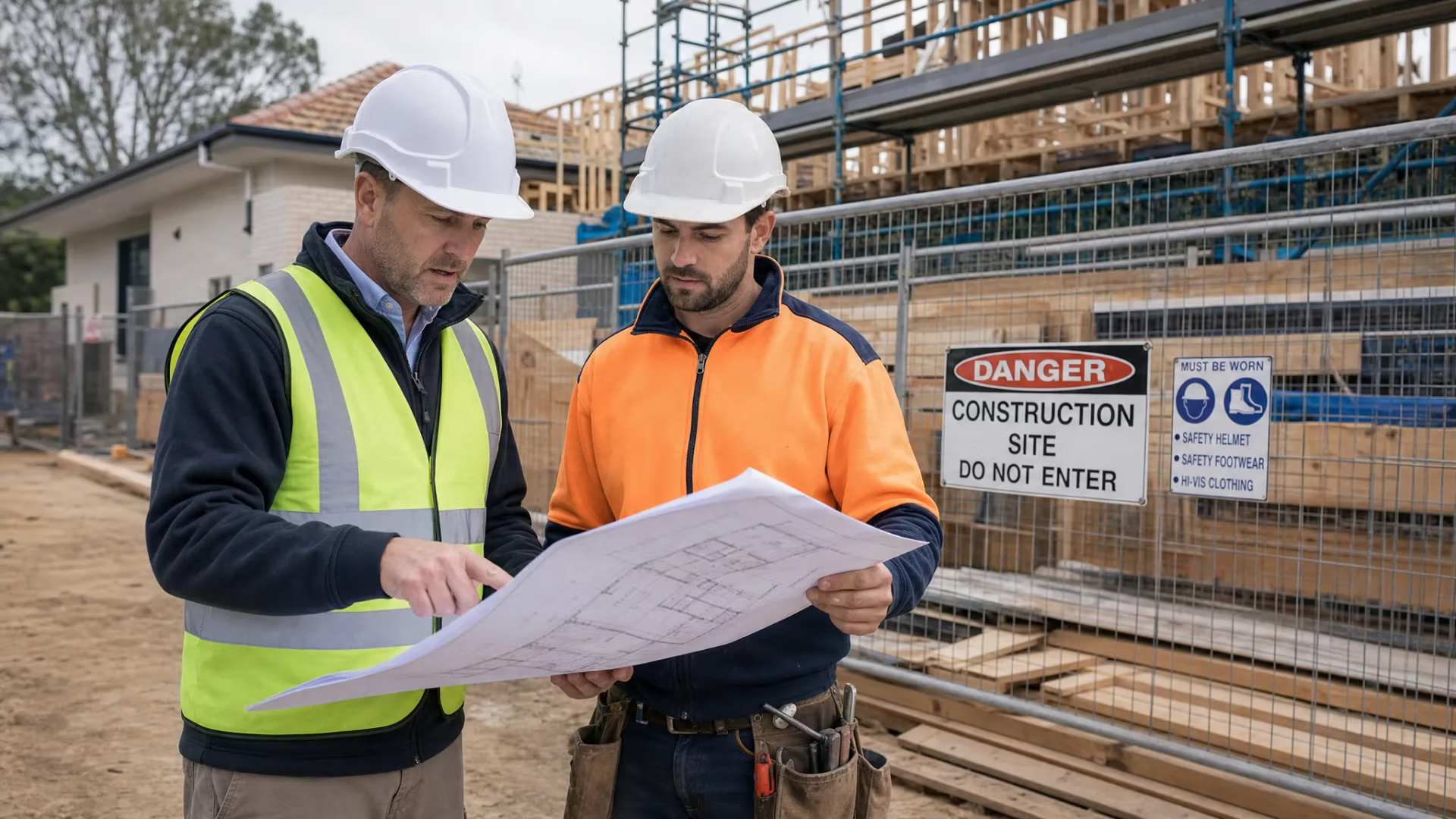
Every construction project needs planning, but NSW adds its own regulatory, contractual and dispute-resolution environment. Depending on the type of work, a project may involve council or private certification, development consent, a construction certificate, a complying development certificate, occupation certificate requirements, licensed building work, home building contract rules, strata approvals, regulated design obligations and payment claim processes.
That does not mean a project manager replaces a certifier, lawyer, designer or builder. It means the project manager helps the client coordinate the moving parts, track obligations and keep the job aligned with the agreed scope, programme and budget.
For residential work, NSW Fair Trading guidance on building and renovating is a useful starting point for understanding consumer and contractor responsibilities. For planning and approval pathways, the NSW Planning Portal is also central to many projects.
Construction project management versus site management
A common misunderstanding is that the builder’s site supervisor and the client’s project manager are doing the same job. They overlap, but they are not the same role.
| Role | Usually represents | Main focus | Typical outputs |
|---|---|---|---|
| Builder’s site supervisor | Builder or head contractor | Daily site coordination, trades, materials and build sequence | Site diaries, trade coordination, safety coordination, progress updates |
| Client-side project manager | Principal, owner, developer or strata client | Time, cost, scope, contract compliance and stakeholder coordination | Programmes, meeting minutes, cost tracking, variation registers, risk logs, progress reporting |
| Contract administrator | Principal, builder or consultant, depending on appointment | Administration of contract notices, claims, payments and completion processes | Payment assessments, notices, extension of time records, variation tracking |
| Superintendent or principal’s representative | As defined by the contract | Independent or contract-defined assessment functions | Directions, certificates, determinations, practical completion assessments |
In smaller residential projects, one consultant may perform more than one function. In larger or disputed matters, separating roles is often important so that decisions, instructions and evidence are clear.
What construction project management covers across the project lifecycle
Construction project management is best understood as a lifecycle service. The work changes as the project moves from concept to construction and then to completion.
| Project stage | What project management typically covers | Why it matters |
|---|---|---|
| Early brief and feasibility | Scope definition, objectives, budget assumptions, risk identification and consultant coordination | Prevents unclear expectations before contracts are signed |
| Design and approvals | Coordination of designers, approval pathway tracking, design issue registers and buildability reviews | Reduces delays caused by missing information or approval gaps |
| Procurement | Tender documentation, builder comparisons, scope clarifications and contract preparation support | Helps ensure quotes are comparable and exclusions are understood |
| Construction | Programme monitoring, progress meetings, cost reporting, variation tracking, document control and risk management | Keeps the project aligned with the contract and agreed decisions |
| Completion | Defects inspections, practical completion coordination, handover documents and final account review | Reduces disputes over whether work is complete and compliant |
| Post-completion | Defects liability follow-up, warranty issue tracking and dispute support if required | Creates a clear record of unresolved items and responsibility |
The exact scope depends on the appointment. A project manager engaged early will usually have more influence over risk reduction than one brought in after delays, cost overruns or workmanship concerns have already developed.
Scope, brief and expectation management
Most construction disputes start with a gap between what one party thought was included and what another party priced or agreed to deliver. Good construction project management starts by turning assumptions into written scope.
This can include reviewing the owner’s brief, drawings, specifications, inclusions, exclusions, provisional sums, prime cost items, site constraints and staging requirements. On renovation and remedial projects, the project manager may also help identify unknowns that need investigation before pricing, such as concealed damage, access limitations or structural issues.
The aim is not to remove every risk. Construction always contains uncertainty. The aim is to make the risk visible, allocate it properly and keep a written trail of decisions.
Budget, procurement and cost control
Cost management is more than checking whether the final price is affordable. It involves setting a realistic budget, testing allowances, comparing tenders properly and monitoring changes during the job.
A project manager may help a client understand why one builder’s price is lower than another, whether important items have been excluded, and how provisional sums or incomplete design information may affect the final cost. During construction, the project manager can track approved variations, pending variations, payment claims, contingency use and forecast final cost.
This is particularly important in NSW residential building work, where contract requirements, variation rules and payment disputes can become significant if records are poor. If a dispute later arises, a clear cost trail can assist with expert assessment, negotiation or tribunal preparation.
Construction scheduling and programme control
A construction schedule is not just a list of dates. It is the logic of the build. It shows what must happen, in what sequence, and what activities depend on earlier decisions, approvals, procurement or site access.
Construction project management in NSW often includes preparing, reviewing or monitoring a construction programme. This can cover design deadlines, approval milestones, long-lead materials, trade sequencing, inspection points, access windows, shutdown periods, weather-sensitive activities and handover requirements.
The programme should be updated when the project changes. If a delay occurs, the key questions are usually: what caused it, when did it occur, who was responsible, what notice was required, and how did it affect completion? Without programme records, delay arguments often become difficult to prove.
Contract administration and notices
Contract administration is one of the most important parts of construction project management. Even a well-drafted contract can fail in practice if notices, approvals, variations and payment processes are handled informally.
Depending on the contract and appointment, contract administration may involve tracking contract documents, issuing or reviewing instructions, managing requests for information, recording site meeting outcomes, reviewing progress claims, assessing variation claims, monitoring extensions of time and coordinating practical completion processes.
For payment disputes, the Building and Construction Industry Security of Payment Act 1999 (NSW) may be relevant. It has strict processes and timeframes. A project manager should not be treated as a substitute for legal advice, but strong contract administration can help ensure payment-related records are complete and organised.
Quality management and defect control
Quality management involves checking that the work being delivered matches the contract, approved drawings, specifications, applicable standards and reasonable workmanship expectations. It is not limited to a final inspection after the builder says the job is complete.
A project manager may coordinate inspection points, arrange specialist input where needed, maintain a defects register and ensure that defects are photographed, described and tracked to close-out. For complex or contentious matters, an independent building consultant may be needed to assess defects and prepare a formal report.
If concerns develop, early independent input can be valuable. Awesim’s work includes building defect assessments and dispute reports for NSW matters, including NCAT-related disputes where expert evidence may be required. You can also read more about the role of independent inspections in the guide to independent building inspections.
Risk, safety and site constraints
Construction project management also covers risk management, but it is important to distinguish project risk from statutory work health and safety obligations. Builders, principal contractors, PCBUs and other duty holders have specific WHS responsibilities. The project manager’s role depends on the contract and appointment.
From a client-side perspective, risk management may include identifying site access issues, neighbouring property risks, latent conditions, live services, weather exposure, procurement delays, design gaps and stakeholder constraints. For safety information in the construction sector, SafeWork NSW provides industry guidance.
On projects near adjoining buildings, public assets or strata property, pre-work records can be critical. A dilapidation report may help document the condition of nearby property before construction begins, especially where excavation, demolition, vibration or heavy vehicle movement is expected. Awesim has a separate guide explaining what a dilapidation report is and why it matters.
Communication and document control
A construction project can deteriorate quickly when instructions are scattered across phone calls, emails, site conversations and text messages. One of the practical functions of project management is to create a reliable communication structure.
This usually means regular site meetings, written minutes, action registers, decision logs, document registers, clear approval pathways and consistent reporting. The purpose is not paperwork for its own sake. The purpose is to make sure everyone knows what has been agreed, who is responsible and when action is due.
Good records also reduce the cost and stress of disputes. If a disagreement reaches NSW Fair Trading, mediation, NCAT or court, contemporaneous records are often far more persuasive than reconstructed timelines.
NSW-specific issues a project manager should keep on the radar
NSW projects vary widely, but several issues often require early attention.
Residential building work may require licensed contractors, written contracts and home building compensation cover depending on the value and type of work. Apartment projects may involve additional regulated design and compliance obligations. Strata projects often require by-laws, owners corporation approvals, access arrangements and careful communication with residents.
Approval pathways also need to be understood before work starts. Some projects require development consent and a construction certificate, while others may proceed as complying development if eligibility criteria are met. A project manager helps coordinate the process, but the certifier, council and appointed professionals remain responsible for their own statutory functions.
For contract disputes, incomplete work or defect claims, the evidence pathway matters. If a matter is likely to proceed to NCAT, expert reports, Scott Schedules and properly organised defect evidence may become central. Awesim’s NSW dispute support includes expert witness reports, Scott Schedules and quantum meruit reports for appropriate matters. For a broader overview, see the guide to building disputes in NSW.
Records that matter if the project later becomes disputed
Even when the aim is to avoid a dispute, project management should create records that can be relied on if one occurs.
| Record type | What it helps prove |
|---|---|
| Signed contract and specifications | Agreed scope, price, standards and obligations |
| Approved drawings and revisions | What design information was current at each stage |
| Site meeting minutes | Decisions, responsibilities and agreed actions |
| Programme updates | Delay events, sequencing and completion impacts |
| Variation register | Claimed, approved, rejected and pending changes |
| Payment claim records | Amounts claimed, assessed, paid or disputed |
| Defect register and photographs | Nature, location, timing and status of defects |
| Correspondence and notices | Whether required contract processes were followed |
These documents are especially useful when preparing a Scott Schedule, expert report or quantum assessment. They allow the issues to be broken down item by item, rather than argued in broad and unsupported terms.
When to engage a construction project manager
The best time to engage a project manager is before major commitments are made. Early involvement can improve the brief, tender documents, contract structure, risk allocation and programme. That said, a project manager or independent building consultant can also assist mid-project when the job is under pressure.
Common triggers include repeated delays, unclear variations, rising costs, poor communication, incomplete work, defects, builder abandonment, disagreement over progress claims or uncertainty about practical completion. In these situations, the first priority is usually to stabilise the record, identify the contractual position and create a practical path forward.
For disputed work, the support required may shift from project management to independent assessment and litigation support. This is where expert witness reports, Scott Schedules and quantum meruit reports may become relevant, particularly for NCAT and court matters.
What good construction project management should deliver
A well-run project should give the client confidence in three areas: control, transparency and evidence. Control means there is a plan and someone is actively monitoring it. Transparency means cost, time and quality issues are reported clearly. Evidence means decisions and events are recorded in a way that can be understood later.
Good construction project management should help answer practical questions such as whether the project is on programme, whether the current claimed cost is supported, whether variations have been properly approved, whether defects have been closed out, and what decisions are needed next.
It should also bring discipline to the relationship between the client and builder. Construction is collaborative, but collaboration works best when the scope, contract and communication process are clear.
Frequently Asked Questions
What does construction project management cover in NSW? It usually covers scope planning, approvals coordination, procurement, contract administration, scheduling, cost control, quality monitoring, risk management, stakeholder communication, handover and defects follow-up. The exact scope depends on the project and appointment.
Is a construction project manager the same as a builder? No. A builder delivers the building work under the construction contract. A client-side project manager helps the owner or principal coordinate time, cost, scope, reporting, records and contract processes.
Do I need construction project management for a small renovation? Not always. For simple, low-risk work, a builder and clear contract may be enough. For complex renovations, strata works, remedial works, tight budgets or projects with high dispute risk, independent project management can be worthwhile.
Can a project manager help if my NSW building project is already in dispute? Yes, but the role may shift towards independent assessment, contract review support, defect documentation, programme analysis or preparation of evidence. For NCAT or court matters, expert reports and Scott Schedules may be required.
Who manages construction approvals in NSW? The owner, builder, certifier, designers and consultants may all have roles depending on the project. A project manager can coordinate the approval pathway and track requirements, but does not replace statutory decision-makers or legal obligations.
What is the link between project management and Scott Schedules? Strong project records make Scott Schedules easier to prepare because defects, incomplete work, claimed costs, responses and evidence can be organised item by item. Poor records often make disputes slower and harder to resolve.
Need independent construction project support in NSW?
Awesim provides independent building dispute support and construction-related consulting across New South Wales, including client-side project management, contracts administration, construction scheduling, expert witness reports, Scott Schedules and quantum meruit reports.
If your project needs clearer control, better records or independent support for an emerging dispute, contact Awesim to discuss the right next step for your matter.

Related Posts
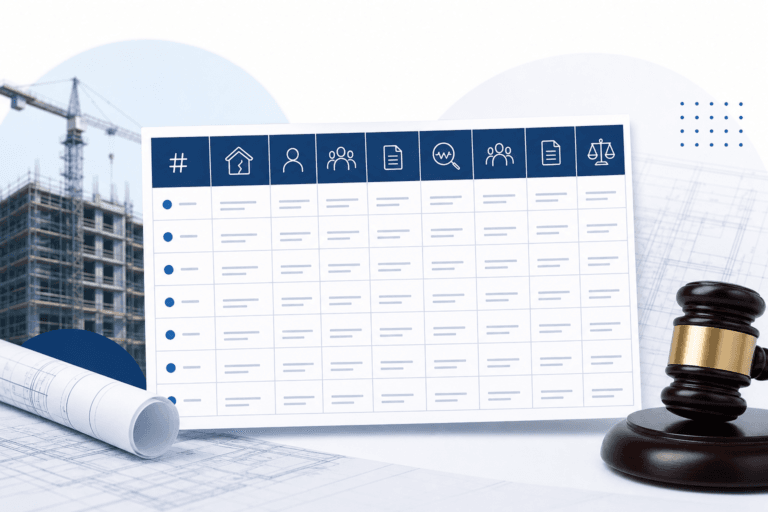
Scott Schedule Template: What Columns a NSW Claim Needs
What Is a Scott Schedule? Why the Column Structure Matters The Core Columns in a NSW Scott Schedule Template Column
Read More »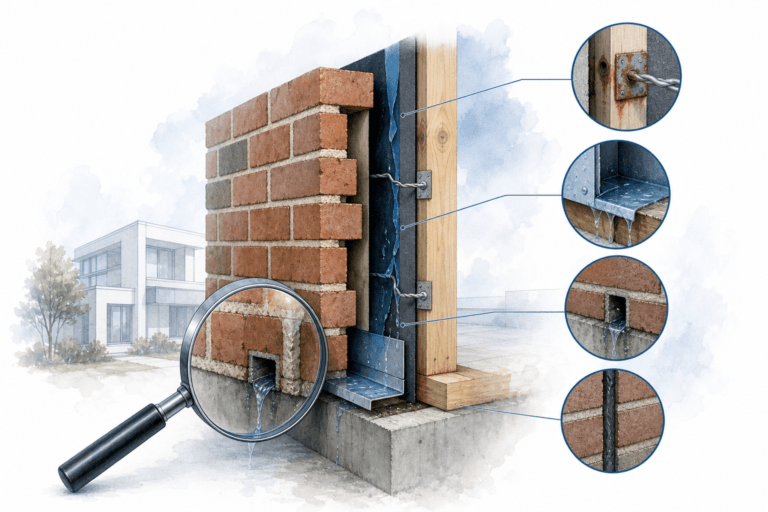
Brick Veneer Construction Defects: A Site Inspector’s View
What Brick Veneer Construction Actually Is The Most Common Brick Veneer Construction Defects Cracking in the Brickwork Missing or Blocked
Read More »
Liquidated Damages in Construction: How NSW Contracts Work
What Are Liquidated Damages in Construction? Why Contracts Use Them How Liquidated Damages Work in NSW Building Contracts Standard Contracts
Read More »