
So, what exactly is a building consultant in Sydney? Think of them as an independent expert you bring in to get to the bottom of building defects and resolve disputes that a standard inspection just won't cover. They’re your go-to when you're facing complex construction problems, are at a loggerheads with your builder, or need official evidence for legal action, like a case at the NSW Civil and Administrative Tribunal (NCAT).
When You Absolutely Need a Building Consultant in Sydney
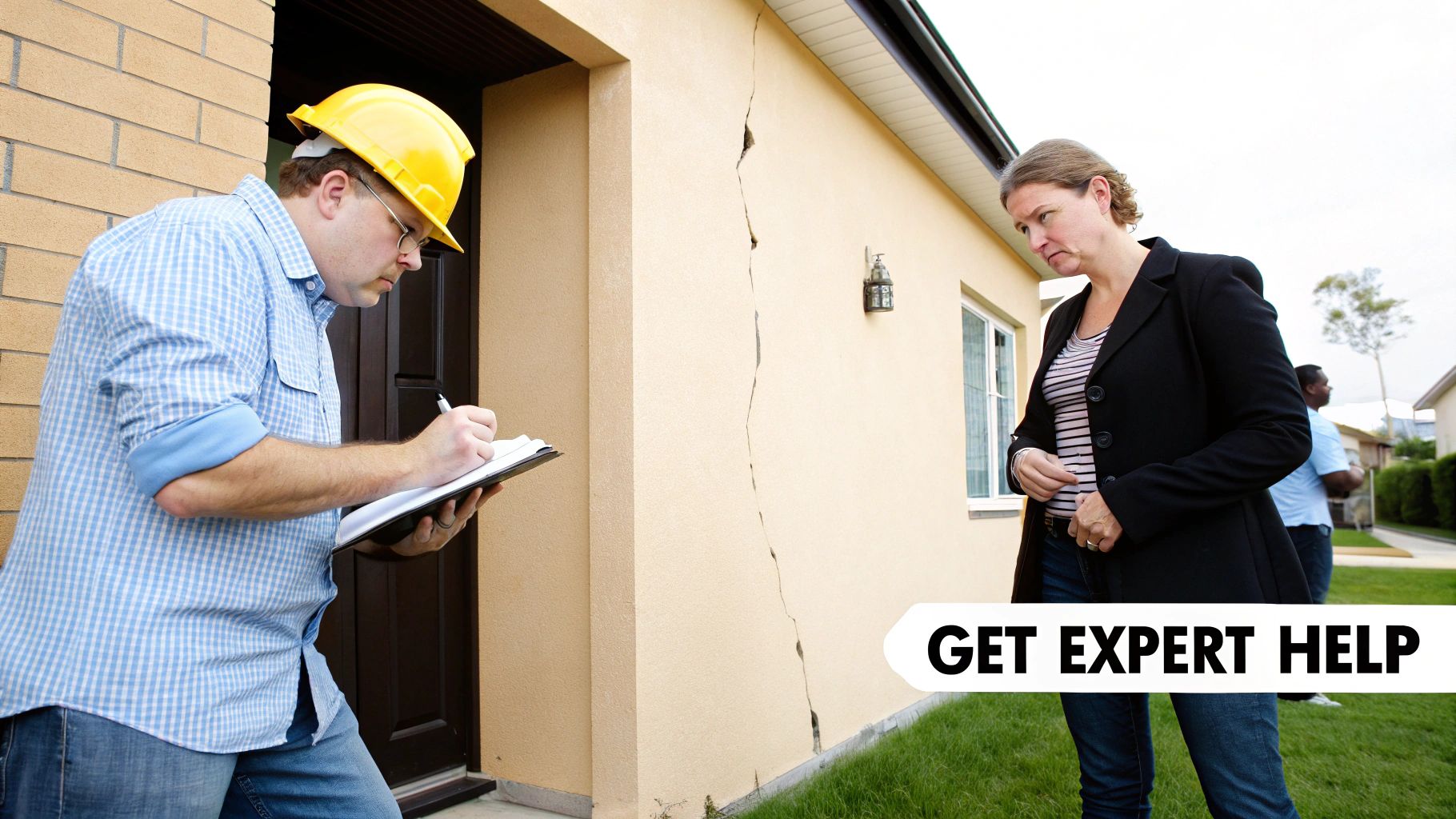
It’s an incredibly frustrating place to be. You've poured your money, time, and heart into a building project, only to find yourself stuck arguing with your builder over what you can clearly see are defects. It might be a leak that just won't go away, cracks appearing in the brickwork, or finishes that are nowhere near the standard you agreed on. These aren't just small gripes; they can seriously impact your property's value and even its safety.
This is precisely where a building consultant becomes your strongest ally. They cut through the "he said, she said" arguments by delivering an impartial, evidence-based assessment. Their job isn’t to pick sides—it’s to report the facts, plain and simple, based on Australian Standards, the Building Code of Australia (BCA), and the contract you signed.
Unresolved Disputes and Workmanship Issues
One of the most common reasons people call in a building consultant in Sydney is when communication with their contractor has completely broken down. You've pointed out the issues, you've sent the emails, you've made the calls, but the problems are either ignored or brushed off as being "within tolerance." An independent expert report puts a stop to that.
A consultant will:
- Objectively assess the quality of the work: They’ll determine if the workmanship actually holds up against the relevant building codes and accepted industry standards.
- Document every single defect: With meticulous notes and photos, they create a factual record that's very hard to argue with.
- Provide a clear path forward: The report will often suggest specific ways to fix the problems, giving everyone a clear, expert-guided solution to follow.
Often, just having this clear, factual report is enough to break the deadlock and stop a minor disagreement from blowing up into a full-blown legal battle.
Preparing for a Tribunal or Legal Action
If your dispute has escalated to the point where you're thinking about taking it to NCAT, then hiring a building consultant isn't just a good idea—it's essential. The tribunal needs credible, unbiased evidence to make a ruling. A professionally prepared Expert Witness Report is the bedrock of a strong case.
A consultant's report provides the tribunal with an independent and factual assessment of building defects, which is critical for a fair hearing. Without it, you are relying on opinion rather than verifiable evidence.
This formal report will detail every defect, reference the specific codes or standards that have been breached, and include an estimated cost for the rectification work. For trustworthy expert witness services in Sydney and NSW, you can find seasoned professionals like Awesim Building Consultants on their Google Profile who specialise in preparing NCAT-compliant reports.
Navigating Sydney's Construction Climate
Let's be honest, the building industry in Sydney and right across Australia is facing some serious headwinds. A recent report from Infrastructure Australia pointed to a growing labour crisis, with skilled worker shortages set to skyrocket. This pressure-cooker environment can easily lead to rushed jobs, less experienced tradespeople on-site, and a noticeable rise in defects and delays. You can explore the full findings on these industry pressures to see how it directly impacts project quality.
All this makes having independent oversight more critical than ever to protect your investment.
How to Choose the Right Building Consultant
Picking the right expert is, without a doubt, the most critical decision you'll make when you're caught in a building dispute. The quality of their investigation and report will have a direct impact on your ability to get a fair outcome.
The thing is, not all consultants are created equal. It’s absolutely vital to know the difference between a general building inspector and a genuine expert witness—someone who can produce evidence that will actually hold up under legal scrutiny.
Your search should zero in on finding someone with a very specific skill set, one that's perfectly suited to Sydney's complex construction world. This means looking way beyond a simple license. You need to dig into their real-world experience, their qualifications, and their track record in successfully resolving disputes. A great consultant doesn’t just point out problems; they place them in the context of the relevant building codes and standards, giving you the clarity needed for tribunals and legal battles.
Differentiating an Expert From an Inspector
A standard pre-purchase property inspector is trained to spot common, visible issues for potential homebuyers. It's a completely different job.
An expert building consultant, on the other hand, operates on another level entirely. Their work is forensic. It's designed to uncover the root cause of defects, assess whether the work complies with the National Construction Code (NCC), and prepare rock-solid, detailed reports for formal disputes.
Think about these key differences:
- Experience: A true expert often has decades of hands-on building experience, not just a weekend course in inspections. They’ve likely been a builder or site manager themselves, so they know how things are meant to be built.
- Qualifications: Look for formal qualifications in building and construction, plus specific training in how to be an expert witness.
- Focus: Their day-to-day work is dispute resolution and providing evidence for bodies like NCAT, not churning out basic property inspection reports.
This distinction is crucial. When you're sizing up potential candidates, understanding different types of professional advisors can give you a useful framework for vetting them, even though the context is a bit different. You’re not just hiring an inspector; you’re engaging a consultant to provide strategic, evidence-based advice tailored to your specific dispute.
Critical Questions For Your Potential Consultant
Before you sign on the dotted line, you need to ask some hard questions. This isn't just a formality; their answers will tell you everything you need to know about their depth of knowledge and whether they're the right fit for your case. A vague or cagey response should be a massive red flag.
The goal here is to find an independent expert who is confident, articulate, and can explain complex building issues in simple, clear terms. This is the person who might have to stand up in a formal setting and defend their report.
Get a list of questions ready to make sure you cover all your bases. The table below outlines what you should be asking and, more importantly, why it matters so much for your case. For a bit more local advice, you might also find our guide on finding the best building consultants near you helpful.
This checklist is your first line of defence in making sure you hire the right person for the job.
Key Questions for Your Potential Building Consultant
| Question Category | Specific Question to Ask | Why This Matters |
|---|---|---|
| Experience & Qualifications | "Can you detail your hands-on building experience and formal qualifications?" | You need an expert with practical, on-the-tools experience, not just theory. This proves they understand how buildings are actually put together in Sydney. |
| Expert Witness History | "How many times have you acted as an expert witness in NCAT or court?" | This tells you if they're comfortable with legal and tribunal processes. An experienced expert knows the rules of evidence and how to write a compliant report. |
| Specialisation | "What types of building disputes do you specialise in?" | Some consultants are waterproofing gurus, others live and breathe structural issues. You need someone whose expertise directly matches the defects you're dealing with. |
| Independence & Impartiality | "Do you have any affiliations with builders or developers in the area?" | True independence is completely non-negotiable. To be credible in a dispute, their report must be unbiased and based only on the facts. |
| Reporting Process | "What is your process for inspection and reporting, and what are the typical timelines?" | A real professional will have a clear, structured process. This helps you understand what to expect and ensures they conduct a thorough investigation. |
Taking the time to ask these questions upfront can save you a world of headache, time, and money down the track.
Right, so you’ve hired a building consultant in Sydney. What happens next? This is where their real value starts to show, as they move from the initial chat to a full-blown, evidence-based assessment of your property. It’s a methodical process, all designed to capture every last detail needed for your case.
It all kicks off with the on-site inspection. This isn't just a quick walk-around; think of it more like a forensic investigation. The consultant will methodically go through all the areas of concern you've flagged, looking at everything through the lens of the Building Code of Australia (BCA) and the relevant Australian Standards.
They'll have a few tools of the trade, but their most important one is a high-resolution camera. Meticulous photo documentation is absolutely non-negotiable. Every single image serves as a piece of visual evidence, capturing cracks, water stains, or shoddy workmanship from multiple angles. The goal is to create an undeniable record of the property's condition at that exact moment in time.
The On-Site Inspection Unpacked
During the inspection, your consultant is essentially putting together a puzzle. They're not just noting a surface-level defect; they’re digging deeper to find the likely root cause. That crack in the wall? It might look cosmetic, but it could be a red flag for serious structural or foundation issues.
A good, thorough consultant will always:
- Go through your paperwork: This means your building contracts, architectural plans, and any emails or messages you've exchanged with the builder about the defects.
- Follow a system: They’ll move through the property logically, making sure nothing gets missed. This systematic approach is crucial for a report that will actually stand up to scrutiny later.
- Take detailed notes: It's not just about the photos. They'll be writing extensive notes on-site, connecting what they see with specific clauses in the building codes.
This detailed groundwork is what separates a generic, tick-box report from a powerful piece of evidence. You want someone who leaves no stone unturned, building the final report on a solid foundation of fact.
Deconstructing the Final Building Report
Once the on-site work is done, the consultant heads back to the office to translate their findings into a formal report. This document is the culmination of their investigation and needs to be clear, logical, and, most importantly, defensible. While the exact structure of a report can be seen in a comprehensive property inspection report template, there are a few key components you should always expect to see.
Any professional report from a building consultant in Sydney worth their salt will contain these key elements.
Key Elements of a Professional Report:
- Executive Summary: This is the high-level overview, a snapshot of the most critical findings and the consultant's main conclusions. It’s designed for quick reference, especially for solicitors and tribunal members who are short on time.
- Scope of Inspection: This part clearly states what was inspected and, just as importantly, what wasn't. It sets clear boundaries for what the report covers.
- Detailed Defect Analysis: Here's the heart of the report. Each defect is listed, described in detail, backed up with photos, and linked directly to the specific part of the BCA or Australian Standard that has been breached.
- Recommended Rectification Methods: A good consultant won't just point out the problems; they'll outline a recommended course of action to fix each defect properly.
- Conclusion: A final summary that pulls all the findings together into a clear, professional opinion.
The real art of a great consultant is their ability to translate complex building jargon into plain English. The report has to be easy for everyone to understand—from you as the homeowner to your solicitor and the members of the NCAT.
A well-written report avoids technical waffle wherever possible. This clarity is what makes your position effective, removing any doubt about the seriousness of the building defects. On that note, it’s always a good idea to be prepared before the inspection day. Using a guide like this comprehensive house inspection checklist can help you organise your own thoughts so you don't forget to point out any key concerns to your consultant.
Understanding Expert Witness Reports and Scott Schedules for NCAT
When your building dispute finds its way to the NSW Civil and Administrative Tribunal (NCAT), the game changes. Your standard inspection report just won't cut it anymore. Now, you're dealing with a different class of evidence—formal, legally structured documents built specifically for tribunal hearings.
This is where the Expert Witness Report and the Scott Schedule come into play. These aren’t just lists of what’s wrong; they are forensic tools that present evidence exactly how NCAT needs to see it. A good building consultant in Sydney is completely fluent in preparing both, making sure your case is presented with the clarity and authority it needs.
The Role of an Expert Witness Report
Think of an Expert Witness Report as far more than a simple defect list. It’s a formal, independent opinion from a qualified expert, written to help the tribunal make an informed decision. For NCAT to even consider it, the report must strictly follow the Expert Witness Code of Conduct. That means it has to be impartial, based on solid facts, and stick to the expert's specific area of knowledge.
Its main job is to break down complex building issues into plain English. The report will methodically identify every single defect, explain why it's a defect by pointing to the exact clause in the Building Code of Australia (BCA) or the relevant Australian Standards, and usually lay out a recommended fix with an estimated cost.
This process is what turns a personal complaint into objective, verifiable evidence. As we've covered before, a great expert witness is a crucial part of any construction dispute. You can learn more about their critical role in our dedicated guide.
Breaking Down the Scott Schedule
If the Expert Witness Report tells the detailed story of your case, the Scott Schedule is the cheat sheet. It’s a powerful spreadsheet-style document that NCAT uses to get straight to the point, laying out every contested issue in a simple, column-based format.
This structure is brilliant because it forces both sides to respond directly to each specific claim, creating a side-by-side comparison that a tribunal member can quickly understand.
A typical Scott Schedule breaks down like this:
- Item Number: Every defect gets its own number so it's easy to reference.
- Claimant's Allegation: A straightforward description of the problem (e.g., "Water is leaking through the upstairs window frame").
- Respondent's Response: The builder's official reply to that specific claim (e.g., "We deny this; the window was installed to the manufacturer’s specifications").
- Claimant's Reply: Your chance to respond to what the builder said.
- Expert's Opinion: This is where the consultant provides their independent, professional assessment.
- Estimated Rectification Cost: The expert’s estimate of what it would cost to fix the problem properly.
The process of getting to these detailed reports is a structured journey, starting from your very first phone call.
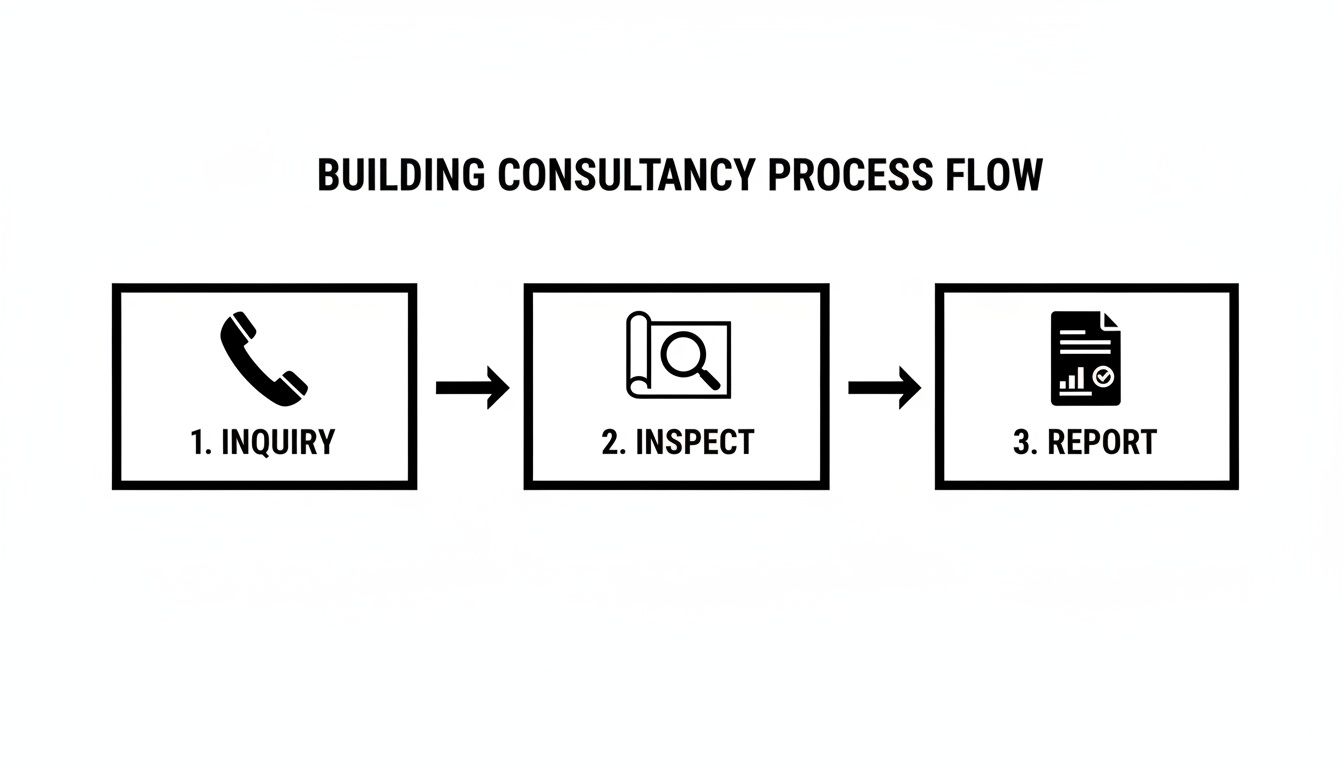
As you can see, it’s a methodical approach designed to produce the kind of robust, evidence-backed documents that stand up in a legal setting.
A Practical Example of a Scott Schedule Entry
Let’s make this real. Here’s an anonymised example of a single line item from a Scott Schedule in a residential dispute. It shows just how quickly it cuts through the noise.
| Item | Claimant's Allegation (Homeowner) | Respondent's Response (Builder) | Expert Consultant's Opinion | Estimated Cost |
|---|---|---|---|---|
| 5 | Incorrectly installed roof flashing above the rear sliding door has resulted in persistent water ingress during rain, causing damage to the internal plasterboard wall. | Flashing was installed as per standard practice. The leak is likely due to blocked gutters, which is a maintenance issue. | The box gutter flashing has insufficient fall and the stop ends were not correctly sealed, breaching AS/NZS 3500.3. This is the direct cause of the water ingress. Gutter blockage is not the primary cause. | $2,850 + GST |
See how it gets right to the heart of the disagreement? It strips away any ambiguity and forces a direct, evidence-based conversation.
When you're heading to NCAT, the quality of these documents can genuinely make or break your case. An experienced consultant ensures every claim is backed by evidence, every response is carefully considered, and the tribunal gets a clear, impartial roadmap to the entire dispute.
Understanding Costs, Timelines, and How to Prepare
Bringing a building consultant on board is a big decision, so it's completely normal to have questions about the bottom line, how long it will all take, and what you need to do to hit the ground running.
Getting these practical details sorted from the get-go makes the whole process smoother and ensures you get the most out of your expert’s time and knowledge.
There’s no single price tag for hiring a building consultant in Sydney. The cost really just mirrors the complexity of the job. A straightforward defect inspection for a minor issue is one thing; a comprehensive Expert Witness Report for an NCAT hearing is another beast altogether, demanding far more rigour and adherence to strict legal protocols.
Breaking Down the Costs
Most of the time, consultancy fees come down to the time needed for a hands-on site inspection, a deep dive into the documents, and the careful work of putting the final report together.
To give you a better idea, here’s a realistic look at what you can expect to pay for different services in the Sydney market:
- Initial Consultation & Site Inspection: This usually starts with a fixed fee or an hourly rate for the first few hours. You’re typically looking at somewhere between $500 to $1,500, which can vary based on the property’s size and how far the consultant has to travel.
- Standard Defect Report: If you just need a report to identify and document defects without heading to court, costs generally fall between $1,500 and $4,000. The final figure depends on how many defects there are and the level of detail you need.
- NCAT-Compliant Expert Witness Report: This is the most detailed service you can get. It involves heavy research, cross-referencing building codes, and making sure every claim is watertight for the tribunal. Costs for these reports typically start around $4,000 and can climb higher for complex cases with multiple experts or mountains of paperwork.
It's helpful to see these costs as an investment in getting clarity and solid proof. A well-written, independent report can end up saving you tens of thousands of dollars by stopping a dispute in its tracks or giving you the upper hand in a legal fight.
Managing Timelines and Expectations
Just like the costs, the timelines can vary. It’s important to be realistic about how long it takes from that first phone call to holding the final, signed report in your hands. Trying to rush it can lead to mistakes or a half-baked assessment, which won't do you any favours.
Here’s a typical timeline when you engage a building consultant in Sydney:
- First Contact to Site Visit: You can usually get this sorted within one to two weeks, depending on how busy your consultant is.
- Inspection to Draft Report: After the site visit, give the consultant about one to three weeks to pull together their findings, review all the evidence, and write up the first draft of the report.
- Final Report Delivery: Once you’ve had a chance to look over the draft and give your feedback, the final report is usually issued within a couple of days.
All up, you can expect the whole process for a standard report to take somewhere between three to six weeks. For those more complex NCAT reports, the timeline can stretch out, particularly if more site visits or extra research is needed.
How to Prepare for Your Consultation
The best way to make the process efficient is to be prepared. The more organised you are from the start, the quicker your consultant can get straight to the heart of the problem.
Before they even set foot on your property, try to get all the important documents together in one place. This lets them spend less time on admin and more time focused on the physical inspection and technical analysis.
Your Essential Document Checklist:
- The Building Contract: The original agreement, along with any variations or addendums.
- Approved Plans and Specifications: This includes architectural drawings, engineering plans, and any documents detailing materials or finishes.
- Communication Records: A timeline of all emails, text messages, and notes from meetings related to the dispute.
- Photos and Videos: Any visual evidence you’ve been collecting of the defects as they’ve appeared or worsened.
Having all this ready gives your consultant the full picture, ensuring no stone is left unturned. This kind of groundwork is more important than ever. While Australia's construction industry saw real growth of 3.8% in 2025, that boom also brings challenges like rising costs and contractor insolvencies. These pressures make getting independent, expert advice non-negotiable. You can learn more about these construction industry trends and see why resolving defects properly is so critical.
Got Questions? Here Are Some Straight Answers
Jumping into a building dispute can feel like navigating a maze. It’s completely normal to have a heap of questions before you decide to bring in a professional. Getting clear, honest answers is the first step to feeling confident you're on the right track.
Let's tackle some of the most common questions we get from homeowners, builders, and solicitors right across Sydney.
How Is a Building Consultant Different From a Council Certifier?
This is a big one, and it causes a lot of confusion, but their roles are night and day.
Think of it this way: a council certifier's job is to tick boxes. They check that the construction work lines up with the approved plans and meets the bare minimum regulatory standards at key stages. Their focus is on compliance, a green light for things like occupation certificates.
A building consultant, on the other hand, is your independent expert. You hire them to dig deep into specific problems—defects, shoddy workmanship, or contract disputes. They work for you, providing the evidence you need to resolve an issue, often long after a certifier has come and gone.
When Is It Too Late to Hire a Consultant?
Honestly, it's almost never too late, but getting in early can save you a world of pain. Bringing a consultant in as soon as a problem pops up can often head off a full-blown, expensive legal battle. A solid, independent report can be the reality check both parties need to sort things out.
But even if you're already on the path to NCAT, a consultant isn't just a good idea—they're essential. They’re the ones who prepare the formal Expert Witness Report and Scott Schedule that the tribunal requires. Without it, your case is just your word against the builder's.
Don't wait until you're at your wit's end. The sooner you get an expert opinion, the more power you have to steer the situation towards a decent outcome.
What If the Builder Disagrees With the Consultant's Report?
This happens all the time, and it's just part of the process. The builder will likely get their own expert to write a counter-report, trying to poke holes in your claims. This is exactly why the quality, detail, and independence of your consultant's report are absolutely critical.
A well-written report from a seasoned building consultant in Sydney will hold up under pressure because it’s built on a solid foundation:
- It’s all about the facts: The findings are based on what can be seen, measured, and documented with photos and other evidence.
- It references the rulebook: Every claim of a defect is backed up by the specific clause in the Building Code of Australia (BCA) or the relevant Australian Standards.
- It's completely impartial: A true expert's duty is to the tribunal, not to the person paying the bill. This objectivity is what gives their report its credibility.
When two reports clash, NCAT will look closely at the evidence and the credibility of each expert before making a call. A thorough, well-referenced report always carries more weight.
Can a Consultant Guarantee a Win at NCAT?
Absolutely not. If a consultant promises you a win, turn around and walk away. Their role isn't to be a 'hired gun'; it's to provide an honest, factual, and independent assessment of the building work. Their professional reputation depends on their impartiality.
What a great consultant can do is make sure your case is as strong as it can possibly be. They arm you with clear, professional evidence that meets all the tribunal’s requirements. This dramatically increases your chances of getting a fair result. They don't guarantee a win, but they give you the best possible tools to fight for one.
If you're looking for direct, professional advice from a team with a solid track record, it's always worth seeing what past clients have to say. For instance, you can see what people are saying about Awesim Building Consultants on their Google Profile.
For expert guidance on your building dispute, trust the hands-on experience of Awesim Building Consultants. With over 35 years in the industry, we provide clear, factual, and NCAT-compliant reports to protect your property investment. Contact us today.
