
What Is Building Project Management and Why Homeowners Are Hiring Consultants to Handle It
- What Building Project Management Actually Means
- What a Building Project Manager Does
- Why Homeowners Are Increasingly Hiring Consultants
- When to Bring in a Consultant
- What to Look for in a Building Project Management Consultant
- The Difference Between Project Management and Building Inspection
- What Happens When Things Go Wrong Despite Good Management
- Frequently Asked Questions
Managing a building project sounds straightforward until you’re in the middle of one. Suddenly you’re juggling contractors, reading contracts you didn’t write, chasing progress claims you don’t fully understand, and wondering whether the work on site actually matches what you agreed to pay for.
That’s the reality for most homeowners who take on a construction or renovation project without professional support. It’s also why more of them are turning to building project management consultants.
What Building Project Management Actually Means
Building project management is the process of planning, coordinating, and overseeing a construction project from start to finish. It covers contract review, program management, on-site quality monitoring, variation assessment, and keeping the project on time and within budget.
In commercial construction, a dedicated project manager is standard practice. On residential projects, that role tends to fall to the homeowner by default — even when they have no construction background.
That gap between expectation and reality is where things go wrong.
What a Building Project Manager Does
A building project management consultant works on your behalf, not the builder’s. That distinction matters more than most homeowners realise. Their job is to protect your interests throughout the construction process.
In practical terms, that includes:
- Reviewing and administering the building contract so you understand your rights and obligations before work starts
- Developing and monitoring a construction schedule so delays are caught early rather than quietly absorbed
- Assessing progress claims to confirm work has actually been completed before you release payment
- Managing variations so scope changes are documented, fairly priced, and agreed in writing
- Conducting site inspections at key stages to verify quality and compliance
- Communicating with the builder on your behalf, which removes the kind of friction that often turns disagreements into formal disputes
Each of these tasks requires both construction knowledge and a working understanding of how contracts operate. Most homeowners have neither — and that’s not a criticism. It’s simply not their field.
Why Homeowners Are Increasingly Hiring Consultants
The construction environment in NSW has become more complex. Material costs, subcontractor availability, and contract terms have all shifted in ways that push more risk onto the owner’s side of the ledger.
Several specific pressures are driving demand for independent project management support.
Contracts Are More Complicated
Standard residential building contracts in NSW contain provisions around variations, delay claims, and dispute resolution that are easy to misread. Signing without fully understanding what you’ve agreed to can leave you with limited recourse when things go sideways.
A consultant reviews the contract before you sign, flags problematic clauses, and helps negotiate better terms where possible.
Progress Payment Disputes Are Common
Builders submit progress claims tied to construction stages. The question is whether those stages have genuinely been reached. Homeowners who release payment without an independent assessment often find themselves ahead of the work — which weakens their position considerably if a dispute arises later.
Having someone verify progress before you pay is one of the most practical protections available.
Variations Can Blow Out Budgets Quickly
Variations are changes to the original scope of work. They’re normal on any project, but they need to be managed carefully. Without proper documentation and pricing, a series of small changes can add tens of thousands of dollars to a project cost — often without the homeowner realising it until the final account arrives.
A project management consultant keeps a running record of approved variations and challenges any that aren’t properly substantiated.
Disputes Are Expensive to Resolve After the Fact
If a project ends badly, the options — whether through NCAT, the NSW District Court, or the Supreme Court — are time-consuming and costly. Getting independent support during the project is almost always cheaper than engaging experts to unpick what went wrong after it’s over.
That said, when disputes do arise, having well-documented records from throughout the project makes a significant difference to the strength of your position.
When to Bring in a Consultant
The earlier the better. Ideally, you engage a building project management consultant before you sign the contract. That gives them the opportunity to review the terms, assess the proposed program, and set up the right administrative framework from the start.
Bringing someone in mid-project is still worthwhile — particularly if you’re concerned about quality, falling behind on the program, or facing a dispute about variations or defects. But the further along the project is, the more limited your options become.
What to Look for in a Building Project Management Consultant
Not all consultants operate the same way. When assessing who to engage, a few things are worth checking:
- Independence: They should have no financial relationship with the builder or any subcontractor on your project.
- Experience with residential construction in NSW: Familiarity with local regulations, standard contracts, and dispute resolution pathways matters.
- Ability to produce formal documentation: If a dispute arises, you want someone who can produce reports suitable for legal proceedings — not just informal notes.
- Clear scope of engagement: Understand exactly what they will and won’t do, and what their fees cover.
Awesim Building Consultants has been working across NSW since 1996, providing client-side project management, contracts administration, and construction scheduling for homeowners, builders, and strata managers. The firm also prepares independent expert reports for formal proceedings when disputes escalate, with offices in Sydney, Tamworth, and Tweed Heads. You can find out more at awesim.com.au.
The Difference Between Project Management and Building Inspection
These two services are sometimes confused. A building inspector visits the site at specific stages to check compliance and quality. A project management consultant does that too, but also handles the contractual and administrative side of the project throughout its entire life.
Both have their place. For a straightforward purchase or a small renovation, a staged inspection service may be enough. For a new build, a significant extension, or any project with a substantial contract value, full project management support gives you considerably broader protection.
What Happens When Things Go Wrong Despite Good Management
Even well-managed projects can end in dispute. When they do, the quality of the documentation gathered during the project becomes critical.
A consultant who has been administering the contract, recording variations, and conducting site inspections will have a clear paper trail. That record supports any expert witness report, Scott Schedule, or quantum meruit assessment needed for NCAT or court proceedings.
If you’re already in a dispute, Awesim also prepares independent forensic reports for use in formal legal proceedings — covering defect identification, cost of rectification, and waterproofing failures.
Frequently Asked Questions
What does a building project management consultant do for a homeowner?
They act on your behalf throughout the construction process — reviewing contracts, monitoring the program, assessing progress claims, managing variations, and conducting site inspections to verify quality. Their role is to protect your interests, not the builder’s.
When should I hire a building project management consultant?
Ideally before you sign the building contract. Early engagement allows the consultant to review terms, set up proper administrative processes, and establish a clear baseline for the project. Mid-project engagement is still valuable if concerns have already arisen.
Is building project management only for large projects?
No. While the service is particularly valuable on new builds and major extensions, any project with a significant contract value or complex scope can benefit from independent oversight. The cost of a consultant is generally much lower than the cost of resolving a dispute after the fact.
How is a project management consultant different from the builder’s site supervisor?
The site supervisor works for the builder and represents the builder’s interests. A project management consultant works for you and represents yours. They are independent of the builder and have no commercial incentive to overlook problems.
Can a building project management consultant help if a dispute has already started?
Yes. While prevention is preferable, a consultant can review what has happened, document defects or contract breaches, and help prepare the evidence needed for formal dispute resolution through NCAT or the courts.
What is contracts administration in a building project?
Contracts administration is the ongoing management of the building contract throughout the project. It covers assessing and approving progress claims, processing variations, issuing instructions to the builder, and maintaining records of all contractual communications and decisions.
Do I need separate legal advice as well?
A building project management consultant handles the construction and contractual administration side of your project. For advice on your legal rights and remedies — particularly if a dispute escalates to formal proceedings — you should also engage a solicitor with construction law experience.
Managing a building project without support is possible, but the risks are real and the cost of getting it wrong can be significant. An independent consultant brings construction knowledge, contract experience, and a focus entirely on your outcome. For a project that matters, that’s a straightforward investment.

Related Posts
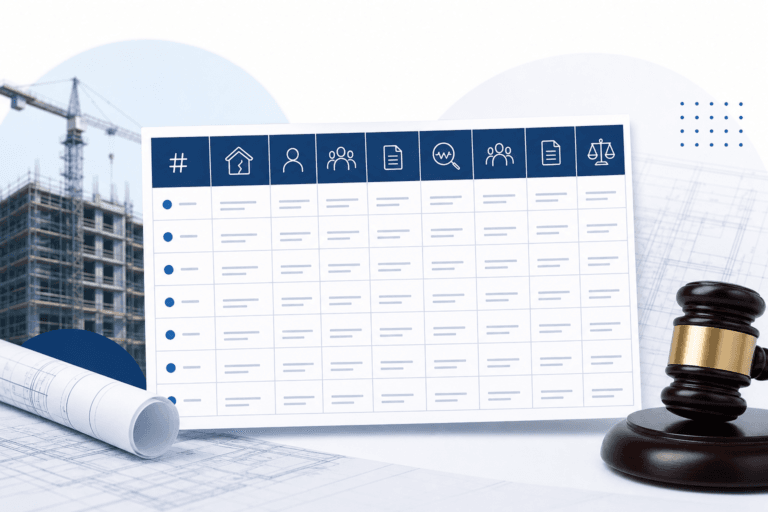
Scott Schedule Template: What Columns a NSW Claim Needs
What Is a Scott Schedule? Why the Column Structure Matters The Core Columns in a NSW Scott Schedule Template Column
Read More »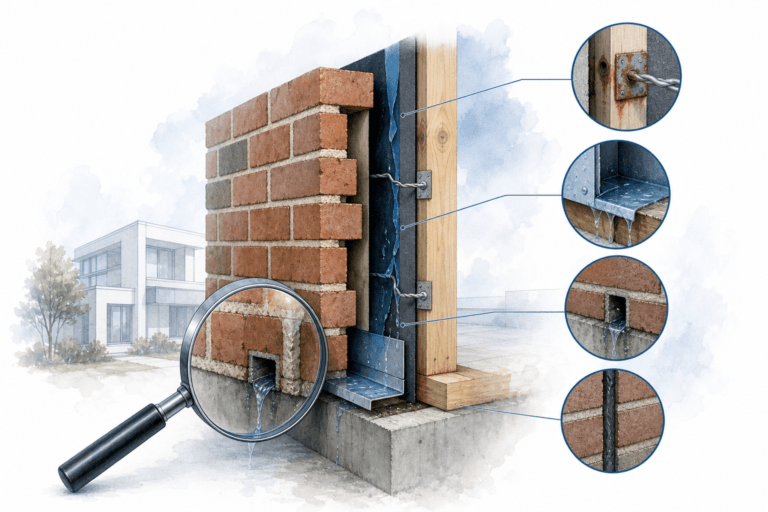
Brick Veneer Construction Defects: A Site Inspector’s View
What Brick Veneer Construction Actually Is The Most Common Brick Veneer Construction Defects Cracking in the Brickwork Missing or Blocked
Read More »
Liquidated Damages in Construction: How NSW Contracts Work
What Are Liquidated Damages in Construction? Why Contracts Use Them How Liquidated Damages Work in NSW Building Contracts Standard Contracts
Read More »