
Expert Witness in Construction: The NSW Homeowner Guide
You’ve got a defect that won’t go away, the builder’s still arguing about it, and now someone has told you that you need an expert witness in construction. That usually lands right when a homeowner is already overloaded, because the job suddenly shifts from “What’s wrong with my house?” to “What will NCAT or a court accept as proof?” In NSW, that answer depends less on who shouts loudest and more on whether the report is independent, structured, and technically defensible.
An expert witness is not just a builder with years on the tools. In a dispute, the expert has to turn what they see on site into an opinion that a tribunal member can test, challenge, and rely on. That means methodology, assumptions, limitations, and compliance matter just as much as hands-on experience.
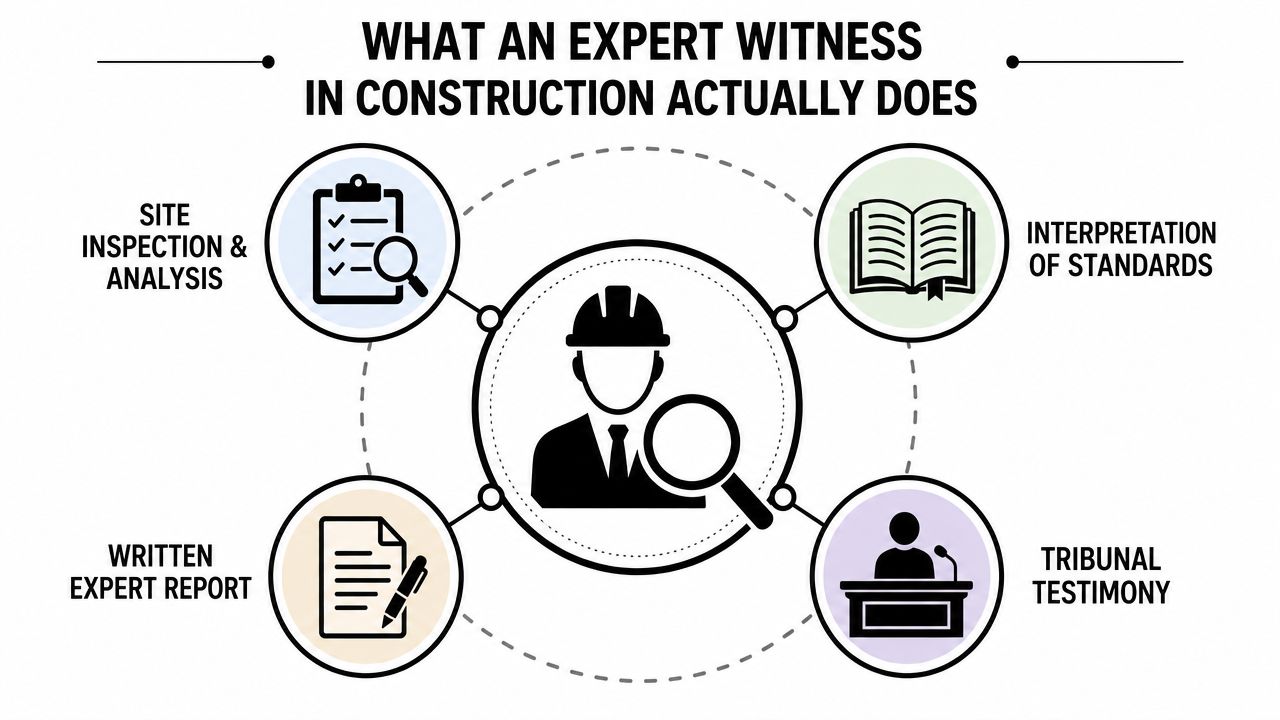
What an Expert Witness in Construction Actually Does
A homeowner usually meets this role at a stressful point. There’s water ingress in a bathroom, cracks in a retaining wall, or a fight over whether a defect is cosmetic or structural, and then the solicitor or NCAT file starts using the word “expert”. That word can be misleading, because the expert’s job isn’t to fight your corner. It’s to give an independent opinion that helps a decision-maker understand what happened on site and why it matters.
The expert is not your advocate
A builder, a private inspector, and an expert witness can all look at the same defect, but they don’t do the same job. A builder gives trade experience. An inspector may identify visible problems. An expert witness in construction has to go further and explain the reasoning chain from observation to conclusion, so a Member of NCAT or a judge can see how the opinion was reached.
That distinction matters because expert evidence in Australian construction disputes is shaped by procedural rules, including the NSW Supreme Court’s Expert Witness Code of Conduct and NCAT’s Procedural Direction 3. The expert’s authority comes from being independent and objective, not from being the loudest person in the room, and not from merely siding with the party who paid for the report. NSW expert witness guidance in construction disputes sets out that framework plainly.
Practical rule: if the report reads like an argument, it’s already drifting away from what a tribunal wants to see.
What the report is really for
The report becomes the technical backbone of claims about defects, compliance, rectification scope, and causation. That’s why an expert has to deal with what was observed, what documents were reviewed, what standards matter, and where the limits of the opinion sit. A good expert doesn’t just say “this is defective.” They explain why the defect exists, how it likely arose, and what evidence supports that view.
That same logic is what makes the evidence usable in the tribunal room. The expert is there to help the decision-maker, not to replace them.
How NSW Tribunals Treat Expert Evidence
NSW doesn’t treat expert evidence as casual commentary. In NCAT building matters, Procedural Direction 3 is a real guardrail, not a formality. It requires the expert to be independent and to disclose conflicts of interest, prior relationships with the parties, and any financial interest in the outcome. That is exactly why a report can rise or fall on independence alone. NCAT expert selection and independence requirements reflect that rule in practical terms.
What independence means in practice
An expert can’t write what one side wants to hear. They need to provide an opinion based on professional judgment, within the area they’re qualified to address. If the expert has worked for one of the parties before, has a business link to them, or stands to gain from the result, that has to be disclosed. If it isn’t disclosed, the report can lose weight very quickly.
That is why NSW dispute work is so procedural. The tribunal is not just looking at whether a defect exists, it’s also checking whether the evidence was properly produced. NCAT Procedural Direction 3 for expert evidence is the kind of document lawyers and homeowners need close by when they commission a report.
Why the procedural rules matter
The NSW Supreme Court’s Expert Witness Code of Conduct has been in place since 2005, and NCAT’s current direction belongs to the same family of rules. Together, they establish a simple principle. Expert evidence must be independent, objective, and confined to the expert’s area of knowledge. The expert’s report needs to survive cross-examination, because opposing counsel will test how the opinion was reached and whether the expert stepped outside their lane.
For readers who work with consultants in other regulated fields, the pattern will feel familiar. Even a practical compliance guide like the ReOC Australia guide shows how regulated work depends on process, documentation, and defined scope. Construction disputes are the same. The tribunal wants a report that follows the rules, not one that improvises around them.
Qualifications the Tribunal Will Actually Accept
A polished website doesn’t make someone tribunal-ready. What matters is whether the expert’s background matches the dispute and whether their evidence can survive challenge. In NSW construction matters, the strongest reports usually come from people with substantial hands-on experience, relevant registration or specialist credentials where appropriate, and real familiarity with the issue in dispute, whether that’s structural failure, waterproofing, cost quantum, or delay analysis.
Experience has to match the issue
Industry guidance used in construction litigation commonly expects around 10 years of construction experience for a testifying expert role. That figure is a useful benchmark, but it doesn’t stand alone. A person can have long general experience and still be the wrong expert if the dispute is about something they’ve never handled in depth. A waterproofing argument needs a different skill set from a footing movement dispute or a delay claim.
The best way to test an expert is simple. Ask what kinds of defects they inspect most often, what standards they work with, and whether they’ve given evidence on issues like yours before. You’re not looking for someone who knows everything. You’re looking for someone whose actual field lines up with the defect in front of the tribunal.
Credentials matter, but so does fit
Formal registration and membership in recognised professional bodies can help, but they don’t rescue a mismatched brief. A report written by someone outside the core issue can be challenged on scope, methodology, or relevance. That’s why the expert’s specialty should align with the dispute type, and why a homeowner shouldn’t hire a generalist just because the profile sounds impressive.
Good test: if the expert can’t explain how their background connects to the exact failure on site, they may not be the right witness.
A tribunal will usually prefer measurable benchmarks, such as drawings, tolerances, code provisions, photographic defect mapping, and quantified rectification scope. Those are the features that let the decision-maker compare the alleged breach against objective technical criteria rather than a vague story.
What Goes Inside an Expert Witness Report
A proper report does more than say “there are defects.” It has to show how the expert got there. Expert evidence guidance says the witness must identify the issues addressed and the material instructions received, then set out the basis for each opinion and the information relied on. That’s the “show your working out” part, and it’s not optional if the report is going to hold up under scrutiny. Expert evidence and the need to show working out captures that principle well.
The core structure
A compliant report usually starts with the instructions received, followed by the issues the expert has been asked to address. Then come the documents reviewed, the site inspection details, the factual background, the analysis, the opinion, and the declaration of compliance with the Code of Conduct. That sequence matters because it makes the reasoning traceable.
The useful question is not “Does the report sound confident?” It’s “Can another expert follow the path from inspection to conclusion?” If the answer is no, the report is vulnerable. Photographs, drawings, and references to Australian Standards are not decoration. They are part of the logic of the opinion.
A report should read like evidence, not a brochure
A vague narrative report often gives the conclusion first and the reasoning later, if at all. That’s a problem because the tribunal needs to see what the expert observed, what assumptions they made, and where the limits are. A solid report is careful with language, separates fact from inference, and identifies what was measured, what was checked, and what remains uncertain.
For a practical example of the structure, Awesim’s NCAT building expert witness report guide shows how that material is commonly organised in building disputes. The same discipline is what makes the report useful when a Member starts asking hard questions at hearing.
Scott Schedules and How They Fit Alongside Reports
A Scott Schedule is not a replacement for an expert report. It’s a structured way of lining up the competing positions so the tribunal can see the dispute item by item. In NSW building matters, that can be the difference between a messy bundle of allegations and a clear comparison table that helps the Member work through the evidence.
| Feature | Expert Witness Report | Scott Schedule |
|---|---|---|
| Main job | Explains the defect, cause, standards, and rectification scope | Sets out each disputed item in a side-by-side format |
| Focus | Technical reasoning and opinion | Issue-by-issue comparison |
| Typical use | Supports the evidence base | Organises the hearing material |
| Content | Inspection findings, analysis, and conclusion | Item, allegation, claimant’s position, respondent’s position, expert opinion, quantum |
| Relationship to the other document | Supplies the substance | Presents the substance in table form |
How the two documents work together
A Scott Schedule usually comes into play after pleadings, before hearing, when the Tribunal wants a clean record of what each side says about each defect. The expert column is often the bridge between the site evidence and the numbers, especially where rectification cost is disputed. That is why a schedule and a report need to match each other, not tell different stories.
Awesim Building Consultants provide Scott Schedules aligned with NCAT Procedural Direction 3 (2025) for claimant and respondent cases, which is the kind of document format that helps keep the evidence aligned with the tribunal’s expectations. For a plain-English breakdown of how that table works, see this Scott Schedule guide for NSW tribunal matters.
Why this format matters
The schedule helps the tribunal read the dispute in one pass. The report gives the technical basis. Together, they reduce confusion, especially where there are multiple defects, multiple trades, or competing views about what should be rectified and why.
A Scott Schedule is the map. The expert report is the ground it’s drawn on.
Engaging an Expert and Briefing Them Properly
The quality of the report starts before the first site visit. If the brief is vague, the opinion will usually be vague too. In a NSW building dispute, the safest approach is to identify the exact issue, collect the right documents, and ask the expert to answer focused questions that sit inside their area of expertise.
Start with the right specialty
A structural movement matter needs a different expert from a waterproofing dispute, and both are different again from a valuation or delay issue. That sounds obvious, yet many homeowners get caught at this point. They engage a general builder when the matter really needs a more specific technical lens.
Before issuing instructions, gather the contract, drawings, specifications, correspondence, photographs, previous inspection reports, and any repair quotes already obtained. The expert can only reason from what they can inspect and verify. If the material is thin, the opinion will usually be cautious for good reason.
Brief the issues, not the outcome
The instructions should ask questions like, “What defect is present?”, “What is the likely cause?”, “Does the work comply with the relevant standard?”, and “What rectification scope is reasonable?” That is very different from asking the expert to “prove the builder is wrong.” The first brief supports independent analysis. The second pushes the report toward advocacy.
A clean brief also helps the expert comply with the Code of Conduct. They can state what they were asked to look at, what they reviewed, and where their opinion stops. That keeps the evidence useful if the matter later becomes contested.
For homeowners, builders, and lawyers who need site investigations, Building & Construction Expert Witness Reports, and Scott Schedules, Awesim Building Consultants is one option to consider alongside other NSW-facing consultants, provided the scope of work matches the dispute and the hearing timetable.
Common Mistakes That Undermine Expert Evidence
Most bad reports don’t fail because the defect was imaginary. They fail because the process was sloppy. The same problems show up again and again in NSW files, and opposing counsel knows exactly how to use them.
The usual errors
- Late engagement: The expert is brought in after positions have hardened, so the report has to fit an existing argument instead of testing the evidence properly.
- Wrong specialty: The expert knows construction generally, but not the particular defect or technical issue in dispute.
- Advocacy creep: The report starts sounding like a submission, which weakens independence.
- Thin basis for opinion: The conclusion appears without enough documentation, photographs, or reasoning.
These mistakes usually show up in the report language. You’ll see broad statements, no clear link between observations and opinions, and a lack of specific technical criteria. Once that happens, the opposing side will attack weight, independence, and reliability.
Why the tribunal notices
A tribunal member doesn’t need to be a builder to see when a report is overreaching. If the expert hasn’t shown how they reached their opinion, or if they’re clearly straying outside their area, the evidence can be given less weight. In some matters, the parties end up needing supplementary reports or extra hearing time because the first report wasn’t usable enough.
The safest habit is simple. Keep the expert inside their brief, keep the evidence tied to the site material, and update the report if new information comes in. That’s how you avoid the kind of technical weak spots that get picked apart later.
Choosing the Right Expert for Your Matter
Homeowners need an expert who can explain the defect in plain English and stand up in NCAT. Builders often need an independent report just as much, especially where they’re facing unfair or inflated defect claims and need the technical issues tested properly. Lawyers and strata managers need someone whose specialty, geography, and availability fit the hearing window, because a good opinion that arrives too late is still a problem.
The best choice is the witness whose scope matches the dispute, whose independence is clear, and whose report format fits NSW procedure. That’s the practical test, whether the issue is waterproofing, structural movement, workmanship, or rectification scope. When the brief is tight and the evidence is disciplined, the tribunal gets something it can use.
If you’re dealing with a defect dispute in NSW and need evidence that’s built for NCAT, Awesim Building Consultants prepares site investigations, Expert Witness Reports, and Scott Schedules for homeowners, builders, and lawyers. Visit Awesim Building Consultants to review the available services, or contact the team at admin@awesim.com.au and 1800 293 746 to discuss the next step for your matter.
Related Posts

Water Damage in Homes: How to Track Down the Source
Water damage in a home rarely announces itself at the source. A stain on the ceiling, a musty smell in
Read More »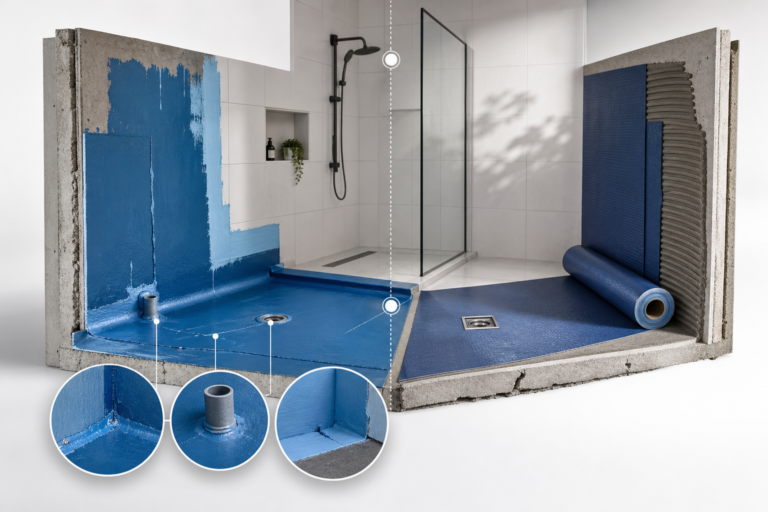
Waterproofing Membrane Types: Which Fails Most in NSW Bathrooms
Waterproofing failure is the single most common serious defect found in NSW apartments, and the type of membrane used, along
Read More »
Building Certifier NSW: Role, Limits, and When You Need More
A building certifier in NSW is a registered professional who issues construction certificates, conducts critical stage inspections, and grants occupation
Read More »