- What Is a Forensic Waterproofing Inspection?
- When Do You Need a Forensic Waterproofing Inspection?
- What Happens During the On-Site Assessment
- What the Report Must Include
- Why an Independent Report Matters
- FAQs
Water damage is one of the most common and costly defects in NSW construction. Yet when a dispute reaches NCAT or the courts, many homeowners arrive with little more than a builder's denial and a damp patch on the wall. A forensic waterproofing inspection changes that. It gives you documented, independent evidence of what failed, why it failed, and what it will cost to fix.
This article explains what happens during an on-site waterproofing assessment in NSW, what a properly prepared report must contain, and why the difference between a standard inspection and a forensic one matters once you are in a formal hearing.
What Is a Forensic Waterproofing Inspection?
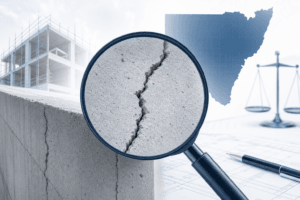
A forensic waterproofing inspection is not a standard pre-purchase building inspection. It is an evidence-gathering exercise conducted by a qualified building consultant who understands both construction defects and the requirements of formal legal proceedings.
The word "forensic" signals the purpose: the findings are intended to withstand scrutiny in a Tribunal or court. That means the inspector must do more than identify a leak. They must document the cause, link it to a specific failure in workmanship or materials, and express an opinion that can be tested under cross-examination.
In NSW, that opinion must be delivered in a report that satisfies the UCPR Schedule 7 Expert Witness Code of Conduct. Schedule 7 sets out the obligations an expert owes to the court or Tribunal — not to the party who engaged them. A report that does not comply with Schedule 7 can be rejected as evidence, which means your inspection may count for nothing at the hearing.
When Do You Need a Forensic Waterproofing Inspection?
You need one when water ingress has caused damage and a dispute has arisen — or is likely to arise — about who is responsible.
Common triggers include:
- Water penetrating a balcony, terrace, or roof after construction or renovation
- Wet area failures in bathrooms, laundries, or ensuites in a new build or recent renovation
- Water damage in a strata building where responsibility between the owners corporation and individual lot owners is contested
- A builder denying liability and claiming the defect is maintenance-related or caused by the owner
- A solicitor advising you to obtain independent expert evidence before filing at NCAT or the District Court
If you are already in a dispute, the earlier you commission a forensic inspection, the better. Waterproofing defects tend to worsen over time, and delays can complicate the evidence.
What Happens During the On-Site Assessment
Initial Review Before the Visit
Before arriving on site, a competent forensic consultant will review whatever documentation you can provide — the original building contract, the waterproofing specification, correspondence with the builder, previous inspection reports, or photographs you have taken yourself.
This preparation matters. It tells the inspector what the builder was contractually required to install, which becomes the baseline against which the actual work is measured.
Physical Inspection of the Affected Areas
On site, the inspector works methodically through every area where water ingress has occurred or is suspected. For a typical bathroom or balcony defect, this involves:
Visual examination. The inspector looks for visible signs of failure: efflorescence (white salt deposits on tiles or concrete), cracking in grout lines or membranes, bubbling or delamination of tiles, staining, mould, and areas where the membrane has been poorly applied or is missing entirely.
Probing and tapping. Hollow tiles, disbonded membranes, and compromised substrates often cannot be seen. The inspector uses a sounding hammer or similar tool to identify areas where the substrate has separated from the membrane or tile bed.
Moisture measurement. A calibrated moisture meter records moisture content in walls, floors, and adjacent substrates at multiple points. This maps the extent of water migration, which is often far wider than the visible damage suggests.
Drainage and fall assessment. Inadequate falls to drains are a frequent cause — or aggravator — of waterproofing failures. The inspector measures the gradient of the floor or balcony surface to determine whether it complies with the relevant Australian Standard: AS 3740 for wet areas, AS 4654 for above-ground waterproofing systems.
Membrane assessment. Where accessible, the inspector examines the type and condition of the waterproofing membrane — whether it was the correct product for the application, whether it was installed to the manufacturer's specification, and whether it was taken to the correct height at junctions, penetrations, and upstands.
Photography. Every finding is photographed with reference markers so images can be matched to specific locations in the report. This is not optional. Photographs are the visual evidence that supports the written opinion.
Invasive Investigation
Sometimes a non-invasive inspection cannot definitively identify the source of a leak. In those cases, the inspector may recommend or conduct controlled water testing — isolating a drain, filling the area to a set depth, and measuring any drop in water level over a defined period.
In more complex cases, limited opening up of the substrate may be necessary to inspect the membrane directly. This is done carefully and documented thoroughly, as it forms part of the evidence.
What the Report Must Include
A forensic waterproofing inspection report prepared for use in NSW legal proceedings is a formal document. It is not a one-page summary or a tick-box form.
Expert Witness Declaration
Every report used in NSW courts or NCAT must include a declaration by the expert confirming they have read and understood the UCPR Schedule 7 Expert Witness Code of Conduct and that their report complies with it. This declaration confirms the expert's duty is to the Tribunal or court, not to the party who engaged them. Without it, the report is not Schedule 7 compliant and may be inadmissible.
Qualifications and Experience
The report must state the expert's relevant qualifications, licences, and experience. This establishes why their opinion carries weight. An inspector who cannot demonstrate relevant expertise in waterproofing systems and construction defects is unlikely to be accepted as a qualified expert.
Scope of Inspection
The report must clearly state what was inspected, what was not, and why. If certain areas were inaccessible, that limitation must be recorded. A Tribunal member or judge needs to understand the boundaries of the opinion being offered.
Factual Findings
This section records what the inspector observed, measured, and tested. It is written in objective terms and supported by photographs, moisture readings, fall measurements, and any test results. Facts and opinions are kept separate.
Reference to Applicable Standards
A forensic waterproofing report must identify the Australian Standards and any other technical documents that govern the work being assessed. For wet areas, that is typically AS 3740. For above-ground waterproofing, AS 4654 applies. The report must explain how the actual work measured against those standards.
Expert Opinion
This is the core of the report. The expert states, in plain terms, whether the waterproofing work was defective, what caused the failure, and whether that failure stems from poor workmanship, incorrect materials, design failure, or some combination. The opinion must be reasoned and grounded in the factual findings.
Critically, the expert must state their opinion clearly even where it is not entirely favourable to the party who commissioned the report. That is a requirement of Schedule 7 — and it is also what gives the report its credibility.
Scope of Rectification Works
A complete forensic waterproofing report describes the remediation works required to fix the defect properly. This is not a builder's quote. It is the expert's independent assessment of what needs to be done, expressed in enough detail to support a cost estimate or a Scott Schedule item.
Estimated Cost of Rectification
Where the report is intended to support a claim, it should include an estimated cost of the rectification works, or the basis on which that cost should be calculated. This figure becomes the foundation of your claim value.
Why an Independent Report Matters
Builders often commission their own inspections or rely on reports from inspectors they have used before. Those reports are not independent. They may be technically competent, but they carry an inherent conflict that a Tribunal member will notice.
An independent opinion from a consultant with no affiliation with any builder, insurer, or developer carries significantly more weight. It also protects your position if the matter settles before a hearing, because the other side knows the report will hold up.
Awesim Building Consultants has been preparing forensic waterproofing inspection reports for use in NSW proceedings since 1996. Operating from three offices across Sydney, Tamworth, and Tweed Heads, the firm can conduct on-site inspections anywhere in NSW without the delays that come from engaging a Sydney-only firm for a regional property. All reports are court-ready and Schedule 7 compliant. If you also need an Expert Witness Report, a Scott Schedule, or a Quantum Meruit assessment as part of the same dispute, Awesim can provide all of those from a single engagement.
Find out more at awesim.com.au, or call 1800 293 746 to arrange a free initial consultation.
FAQs
What is the difference between a standard building inspection and a forensic waterproofing inspection?
A standard building inspection identifies defects for a buyer or owner. A forensic waterproofing inspection is conducted specifically to produce evidence for use in a legal dispute. The inspector applies a higher standard of documentation, references applicable Australian Standards, and prepares a report that satisfies the UCPR Schedule 7 Expert Witness Code of Conduct.
Does a forensic waterproofing report need to comply with Schedule 7?
Yes. If you intend to use the report as evidence in NCAT, the NSW District Court, or the Supreme Court, it must include a Schedule 7 declaration and comply with the Expert Witness Code of Conduct. A report that does not comply may be rejected as evidence at the hearing.
What areas of a property are typically inspected?
The inspector will assess every area where water ingress has occurred or is suspected. This commonly includes bathrooms, ensuites, laundries, balconies, terraces, roofs, and any adjacent walls or floors showing signs of water migration. The scope is documented in the report.
Can the inspection cause damage to my property?
Most forensic waterproofing inspections are non-invasive. In some cases, controlled water testing or limited opening up of the substrate is necessary to definitively identify the source of a leak. If invasive investigation is required, the inspector will discuss this with you before proceeding and will document the process thoroughly.
How long does the inspection take?
It depends on the size and complexity of the affected areas. A single bathroom defect may take two to three hours on site. A multi-level strata building with widespread water ingress may require a full day or more. Report preparation takes additional time after the site visit.
Can I use the report if the matter settles before a hearing?
Yes. A well-prepared forensic waterproofing report is useful at every stage of a dispute — in settlement negotiations, mediation, and any formal hearing. Having an independent, Schedule 7 compliant report often accelerates settlement because the other side can assess the strength of your evidence directly.
Do I need a forensic waterproofing inspection if I already have a builder's report?
If the builder's report disputes liability or attributes the defect to maintenance or owner behaviour, you need an independent assessment. A report commissioned by the builder or their insurer is not independent. An unbiased opinion from a qualified expert with no conflicts gives you the credibility to challenge that position effectively.
Waterproofing failures rarely get simpler over time. If you are dealing with a dispute and need a report that will hold up at NCAT or in court, the first step is a conversation with an expert who has been doing this work across NSW since 1996. Call Awesim on 1800 293 746 or visit awesim.com.au to book a free initial consultation.