
Security of Payment NSW: A Builder’s Guide to Payment Claims

The Building and Construction Industry Security of Payment Act 1999 No 46 is the foundation of payment protection for the construction industry in New South Wales. For builders, contractors and subcontractors, understanding how this legislation works can mean the difference between receiving payment on time and chasing debts for months. The Act exists to keep money moving through the industry, and it provides a structured way to recover what you are owed.
This guide explains what security of payment in NSW involves, how payment claims and payment schedules operate under the Act, what role adjudication plays, and how the process has changed for residential owner-occupiers. It also covers what happens when a payment dispute escalates into a larger building dispute.
What is Security of Payment in NSW?
Security of payment refers to the rights and processes created by the Building and Construction Industry Security of Payment Act 1999 No 46. The Act is NSW-specific legislation intended to reduce the incidence of insolvency in the construction industry. It does this by establishing a statutory framework that helps people who carry out construction work under a construction contract recover the payments they are owed.
The purpose of the Act is to enable a person who, under a construction contract, has undertaken to carry out construction work to make a claim for payment and have that claim dealt with quickly and fairly. The current consolidated version of the Act has been in force since 20 August 2024. For contractors working across NSW, the Act is more than a piece of legislation. It is a practical tool for protecting cash flow on projects of all sizes, from small residential renovations to large commercial developments.
Why the Security of Payment Act Matters for Builders
The primary objective of the Security of Payment Act is to prevent contractors and subcontractors from experiencing financial hardship. In the building industry, businesses often carry significant upfront costs for materials, plant and labour. When a payment is delayed, that financial pressure can push through the entire supply chain, affecting suppliers, sub-subcontractors and the builder’s own staff.
The Act is designed to make sure that contractors and subcontractors in the construction industry are paid on time, without the need for costly and lengthy court proceedings. This is especially important for smaller subcontractors, who rarely have the resources to fund a dispute through the courts while waiting for payment. By creating a faster pathway to payment, the Act helps keep businesses solvent and projects on track.
How Payment Claims and Payment Schedules Work
Two documents sit at the centre of the security of payment process: the payment claim and the payment schedule. These documents are the formal steps the Act sets out for recovering payment under a construction contract, and getting them right is essential.
A payment claim is served by a person who has carried out construction work under a contract. It identifies the work done and the amount claimed. Once a payment claim has been served, the party receiving it must respond with a payment schedule.
- A payment claim allows a contractor to formally state what they are owed for work completed.
- A payment schedule is the response, which either confirms the amount to be paid or sets out why the claim is disputed.
- If no payment schedule is provided within the required framework, the claimant may have further options under the Act.
Serving the right documents at the right time is critical. The Act sets out how payment claims and payment schedules should be handled, and the consequences of missing a step can be significant. Builders who are unfamiliar with the process should seek professional guidance before serving a claim, particularly where a homeowner is involved.
The Role of Adjudication in NSW
When a payment dispute cannot be resolved directly between the parties, adjudication provides an avenue for a faster decision. Adjudication in NSW exists to ensure that all due payments are recovered and received. An adjudicator reviews the payment claim, the payment schedule and any supporting material, then makes a determination that the parties are required to follow.
Adjudication applications are made through an authorised nominating authority, commonly referred to as an ANA. The process is designed to be faster and more cost-effective than litigation, which aligns with the Act’s aim of keeping payment disputes out of the court system wherever possible.
One important practical point is that the rules differ depending on when the contract was made. Contracts made on or after 21 October 2019 are dealt with under the current provisions of the scheme. Contracts made before 21 October 2019 are subject to the earlier version of the process. Before preparing an adjudication application, builders should confirm which regime applies to their contract, because using the wrong process can delay the outcome.
Changes for Residential Owner-Occupiers
The Act has been amended over time, including in ways that directly affect residential owner-occupiers. These changes influence how builders and contractors can make claims against homeowners who live in the property where the work is being carried out. If you are building or renovating a home and the owner occupies it, the rules around payment claims may differ from those that apply to a commercial project.
Because these provisions have changed, relying on old advice or outdated templates can create problems. Builders should confirm the current requirements before serving a payment claim on a homeowner. Homeowners who receive a payment claim should also understand their rights and obligations when responding. Checking the current version of the Act, or speaking with a building consultant or legal professional, is the safest approach for both sides.
Practical Steps for Builders Serving a Payment Claim
For builders preparing to make a claim under the Act, the process can be broken into a few practical steps. These steps help ensure the claim is properly made and that the recipient has a fair opportunity to respond.
- Confirm that your contract is a construction contract covered by the Act.
- Prepare a payment claim that clearly sets out the work performed and the amount claimed.
- Serve the payment claim on the party that owes payment, following the requirements of the Act.
- Wait for a payment schedule in response, and review any reasons given for disputing the claim.
- If payment is not made and the dispute cannot be resolved, consider applying for adjudication through an authorised nominating authority.
Throughout this process, keep clear records of the work performed, the documents served and all correspondence between the parties. Good records make the process easier and provide valuable evidence if the dispute later ends up in NCAT or court.

When Payment Disputes Escalate to NCAT or Court
Not every payment dispute is resolved through payment schedules and adjudication. Some matters proceed to the NSW Civil and Administrative Tribunal (NCAT) or the courts, particularly when the dispute also involves defective work, incomplete works or genuine questions about the amount owed. In those situations, builders and their legal representatives often need more than a payment claim.
Documentary tools such as Scott Schedules help set out the issues in dispute in a clear, itemised format. Expert witness reports can provide an independent assessment of technical issues such as building defects or the value of completed work. A building consultancy that understands both the technical and procedural sides of construction disputes can assist with inspections, reports and litigation support. Having these resources in place early can make a significant difference when a payment dispute becomes a broader building dispute.
Frequently Asked Questions
What is security of payment in NSW?
Security of payment in NSW refers to the rights and processes created by the Building and Construction Industry Security of Payment Act 1999. It allows contractors and subcontractors who carry out construction work under a contract to recover the payments they are owed through payment claims, payment schedules and adjudication. The Act aims to reduce insolvency risk in the construction industry by keeping money flowing through the supply chain.
What does SOPA mean in construction?
SOPA stands for the Security of Payment Act. In NSW, this is the Building and Construction Industry Security of Payment Act 1999. The legislation is designed to make sure contractors and subcontractors in the construction industry are paid on time, without the need for costly and lengthy court proceedings. It establishes a statutory process for claiming payment and resolving payment disputes through adjudication.
How does adjudication work under the NSW Security of Payment Act?
Adjudication is a dispute resolution process that helps parties recover and receive payments that are due. A party that has not been paid can apply to an authorised nominating authority, and an adjudicator reviews the claim and the response before making a determination. The process is intended to be faster and more cost-effective than litigation. Different rules apply depending on whether the contract was made before or after 21 October 2019.
Why does the date of my construction contract matter?
The date of your construction contract matters because different provisions of the security of payment scheme may apply. Contracts made on or after 21 October 2019 are dealt with under the current framework, while contracts made before that date are subject to earlier rules. Before serving a payment claim or lodging an adjudication application, confirm which version of the process applies to your contract so that your claim is handled correctly.

Related Posts

Building Handover Inspection: What to Check Before You Sign
A building handover inspection, also called a practical completion inspection (PCI), is your last chance to identify defects before you
Read More »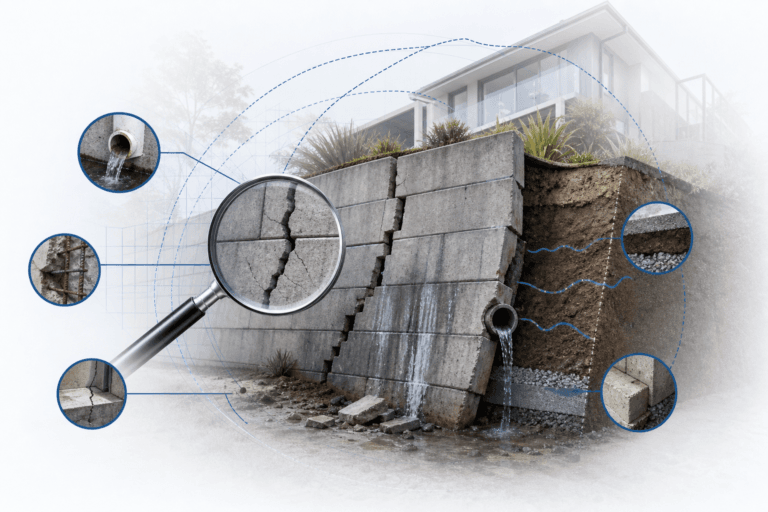
Retaining Wall Defects: Inspection, Evidence, and NSW Claims
Retaining wall defects range from visible cracking and leaning to hidden drainage failures that build dangerous hydrostatic pressure. In NSW,
Read More »
Building Maintenance Schedule: What Owners Must Document
A building maintenance schedule must document every asset, its required service frequency, the person responsible, and a timestamped record from
Read More »