
Building Inspection Reports and Expert Evidence
Updated October 29, 2026
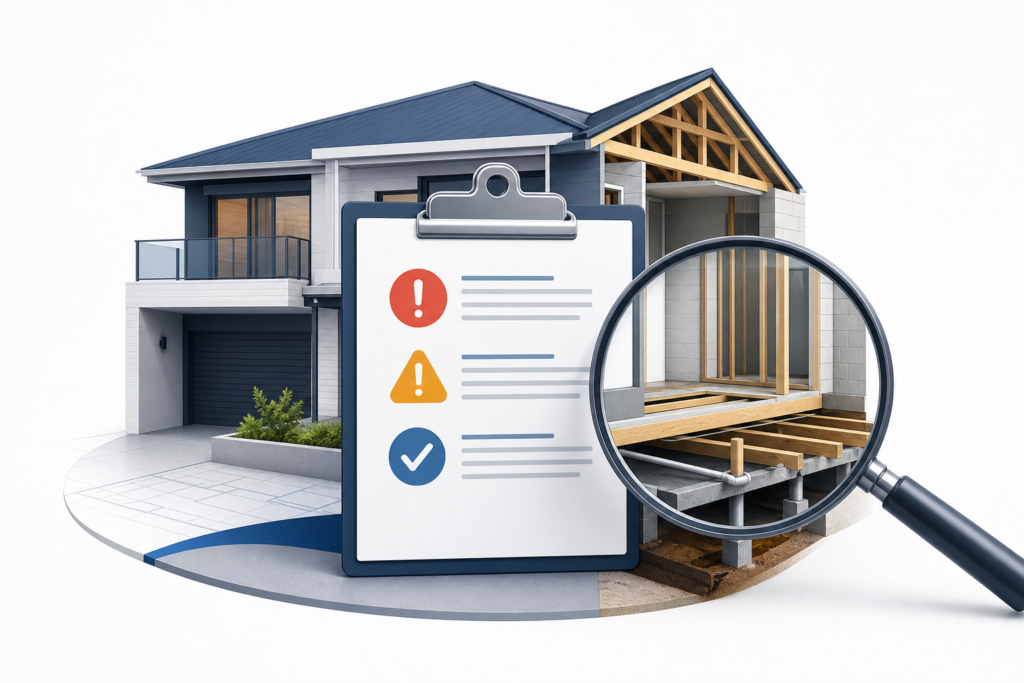
You've received a building and inspection report and you're not sure what to do with it. The report classifies findings as major defects, safety hazards, or minor maintenance items, covers the roof, exterior, interior, and subfloor, and is typically delivered within 24 hours of the inspection. Knowing how that report is structured is what allows buyers, owners, and builders to act on its findings rather than file it away.
The report is a formal, standards-based document with real legal and financial consequences. A finding of "major defect" is not a negotiating chip. It is a defined term under a national standard, and treating it as anything less can lead to costly mistakes at settlement or in a dispute.
What Is a Building and Inspection Report?
A building and inspection report is a written record of a property's observable condition at the time of inspection, prepared in accordance with the Inspection of Buildings standard. That standard sets out what the inspector must assess, how findings must be classified, and what limitations apply to the report's scope.
For a standard residential inspection in NSW, the inspector covers the roof exterior and interior (including the roof void where accessible), the exterior walls and drainage, the interior rooms and finishes, and the subfloor space. The report documents observable defects only. It does not include invasive investigation unless specifically commissioned.
A building and inspection report in NSW must also state any significant items that were outside the inspector's scope on the day, such as areas concealed by furniture, locked rooms, or inaccessible roof voids. Those exclusions matter as much as the findings themselves.
Major Defects, Safety Hazards, and Minor Maintenance Items: What Is the Difference?
The standard uses three classification tiers, and the distinctions between them carry real consequences for how you respond.
A major defect is a deficiency in a significant element of the building that requires urgent attention and, if not addressed, is likely to result in deterioration of the property or pose a safety risk. Structural cracking, failed waterproofing membranes, and significant roof framing damage fall into this category. A safety hazard is any condition that poses an immediate risk to occupants: exposed wiring, unstable balustrades, or a subfloor with inadequate ventilation causing dangerous moisture accumulation.
Minor maintenance items are defects that do not affect the structural integrity or safety of the property but still require attention over time. Cracked tiles, worn seals, and minor timber decay typically fall here.
The distinction matters because a pre purchase building inspection that returns several major defects may justify renegotiating the purchase price or withdrawing from a contract entirely. A NSW government strata survey found that 53 per cent of apartment buildings registered between 2016 and 2022 had at least one serious defect. That figure applies to strata buildings specifically, but it signals how common serious defects are in newer construction across NSW.
What Are the Stages of a New Construction Inspection in NSW?
For newly built properties, a single pre-purchase inspection is rarely sufficient. Construction-stage inspections check the work at critical points before it is concealed behind plaster, paint, or cladding. Once those finishes go on, defects in framing, bracing, or rough-in services become very difficult and expensive to access.
Four inspection points are commonly used, in the order they occur:
- Frame inspection: Carried out after the roof truss is in place, before wall linings are installed. [S1]
- Pre-plaster inspection: Conducted before plasterboard goes on, while electrical and plumbing rough-ins are still visible. [S2]
- Pre-paint or fixing inspection: Checks plaster work, doors, architraves, and waterproofing before painting begins. Waterproofing defects identified here are far cheaper to rectify than those found after tiling. [S3]
- Practical completion inspection: The final check before handover, conducted after the builder issues a Notice of Completion. [S4]
For more detail on each stage, see Building Stage Inspections NSW.
Are Pest Inspections Separate from Building Inspections?
A building inspection and a pest inspection are separate disciplines governed by different standards, but they are commonly commissioned together as a combined pre-purchase building and pest inspection. The building inspection covers structural and non-structural defects. The pest inspection covers timber pest activity including termites, borers, and fungal decay.
A combined pre-purchase property inspection report covers both in a single site visit, usually conducted by two inspectors or one dual-qualified practitioner. Ordering them together is standard practice for residential purchases because the findings often interact: timber decay identified in a building report may indicate conditions that attract termites, and vice versa.
For investment properties, strata units, or older homes in high-termite-risk areas of NSW, a combined report is the minimum sensible baseline. Ordering them separately risks gaps between the two assessments.
Residential vs. Commercial Reporting: Legal Requirements and Inspector Insurance in NSW
The legal framework for building inspections differs between residential and commercial properties in NSW, and so do the obligations that apply to the inspector.
For residential inspections, the Inspection of Buildings standard applies directly, and inspectors are expected to carry both professional indemnity (PI) insurance and public liability insurance. In NSW, any inspector providing reports for use in property transactions or legal proceedings should confirm both covers are current before you commission the work.
Commercial inspections operate under a broader and less prescriptive framework. The same Inspection of Buildings standard still provides a baseline, but commercial reports frequently require additional engineering input, specialist services assessments, and compliance reviews against the National Construction Code (NCC, formerly the Building Code of Australia). The scope is larger, the inspection more complex, and the report more detailed as a result. Insurance requirements follow the same general categories, PI and public liability, but indemnity limits are typically higher given the greater financial exposure involved.
Always confirm the inspector's insurance before signing an engagement letter, regardless of property type.
When Does a Standard Report Become a Legal Expert Witness Report?
A standard building and pest inspection report, or a construction-stage report, is prepared for the client's information. It is not automatically admissible as expert evidence in NCAT, the NSW District Court, or the Supreme Court. When a dispute reaches formal proceedings, the report must meet a different standard entirely.
An expert witness report must comply with the court or tribunal's expert evidence rules. In NSW, that means the inspector must be qualified to give expert opinion, the report must state the factual basis for each finding, and the inspector must acknowledge their duty to the court rather than to the party who commissioned the report. A standard pre-purchase property inspection report does not satisfy those requirements, regardless of how thorough it is.
The transition point is usually when a matter moves from negotiation to formal proceedings, or when a solicitor advises that evidence-quality documentation is needed. A 2023 survey by the NSW Building Commissioner found that 71% of defects are resolved directly between building owners and developers or builders, which means the majority of disputes never reach that threshold. But when they do, the documentation requirements change substantially.
Awesim Building Consultants is a NSW building consultancy operating since 1996 that prepares independent Expert Witness Reports, Scott Schedules, Quantum Meruit Reports, and Forensic Waterproofing Inspection reports for use in NCAT, NSW District Court, and Supreme Court proceedings. For matters that have moved beyond a standard report, see the firm's Expert Witness Building Report service.
FAQs
What is included in a standard building inspection report?
A standard report covers the roof exterior and interior, exterior walls and drainage, interior rooms and finishes, and the subfloor. Findings are classified as major defects, safety hazards, or minor maintenance items. The report also lists any areas that could not be inspected on the day, such as locked rooms or inaccessible roof voids, and states why those areas were excluded.
How much does a building inspection cost in Australia?
Awesim does not publish fixed pricing. Contact the firm directly for a quote based on your specific property and circumstances.
Do building reports include repair cost estimates?
Most standard building inspection reports do not include repair cost estimates. The inspector's role is to identify and classify defects, not to price rectification works. Some inspectors will provide indicative ranges on request, but a formal cost estimate requires a separate scope of works and is typically produced by a builder or quantity surveyor. For dispute matters, a Quantum Meruit Report provides a formal costing of rectification works.
How long does it take to receive a building inspection report?
Delivery within 24 hours of the inspection is common industry practice for residential reports. Turnaround times vary between providers and depend on report complexity. Commercial inspections and expert witness reports typically take longer given the additional analysis and documentation required.
What is a thermographic inspection and when is it used?
A thermographic inspection uses an infrared camera to detect conditions that a standard visual inspection cannot see, such as moisture sitting behind a tiled bathroom wall. It is used as a supplementary tool in cases involving suspected water damage, leaks behind tiled surfaces, or disputes where concealed defects need to be located without invasive opening-up works.
Conclusion
A building and inspection report is a structured, standards-based document that classifies what is wrong with a property and how seriously. The difference between a major defect, a safety hazard, and a minor maintenance item is not semantic. It determines what you do next.
Once you have the report, the defect classifications tell you what to do next. Major defects need a response before you proceed, whether that means renegotiating, requesting rectification, or withdrawing. Minor maintenance items can be scheduled. If a matter has moved into formal dispute, check whether your existing report meets the evidentiary requirements for the relevant tribunal or court. A standard inspection report and a legal expert witness report are not the same thing, and using the wrong one in proceedings can undermine your position.

Related Posts
![Businessman in a suit analyzes a 3D building model on blueprints with a hard hat nearby and a crane in the background, conveying construction planning and law.]](https://awesim.com.au/wp-content/uploads/2026/10/2ba440c4-9d47-4802-adf1-8b6f241eb8ff-768x512.png "2ba440c4-9d47-4802-adf1-8b6f241eb8ff - Awesim Building Consultants")
Construction Claims Experts and Witness Reports
Updated October 30, 2026 A construction expert witness is a qualified specialist, whether a structural engineer, building consultant, scheduler, or
Read More »
Building Inspection Reports and Expert Evidence
Updated October 29, 2026 You've received a building and inspection report and you're not sure what to do with it.
Read More »
Waterproof Membrane Failure: How Inspectors Find the Cause
Waterproof membrane failure is diagnosed by tracing the water entry point, reviewing design documents, exposing the membrane for visual inspection,
Read More »