
When you’re caught in a building dispute, it often feels like a frustrating ‘he said, she said’ stalemate. A building expert witness report is the document that cuts through the noise. It’s the professional, independent assessment that translates building defects and compliance failures into a clear, factual argument for legal proceedings.
What Is a Building Expert Witness Report
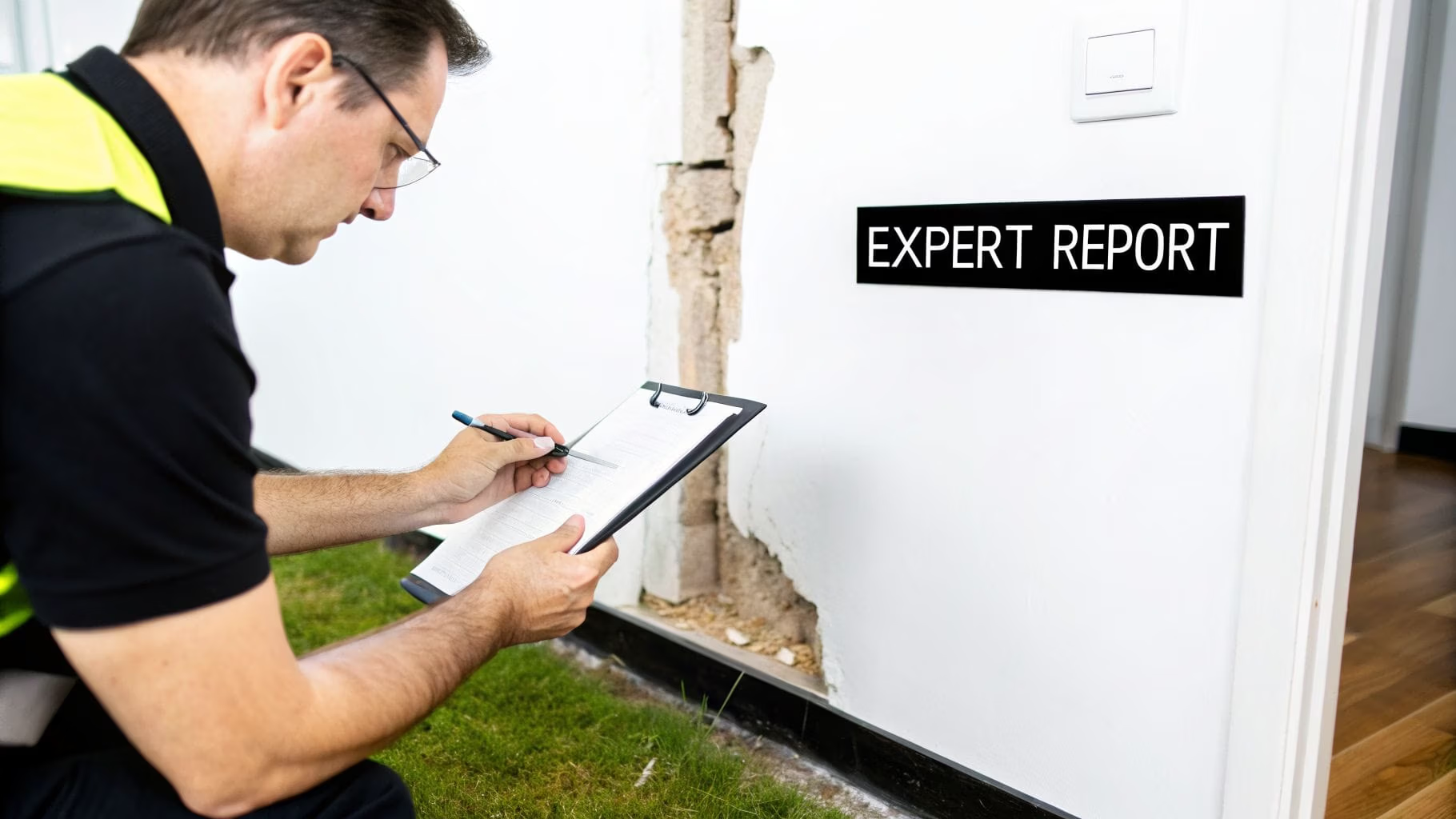
Think of it this way: you wouldn’t go to court for a medical claim without a doctor’s formal opinion. The same logic applies here. A building expert witness report is the critical piece of evidence that provides an impartial, authoritative opinion on building matters for homeowners, builders, and lawyers alike.
This report is specifically designed to help a court or tribunal, like the NSW Civil and Administrative Tribunal (NCAT), understand the technical side of your case. It moves the argument away from personal opinion and grounds it in provable facts and industry standards.
The Foundation of Your Legal Argument
An expert report is far more than just a list of what’s wrong. It’s a meticulously structured document that methodically records each defect, cross-references it against the National Construction Code and relevant Australian Standards, and presents the findings in a way that holds up under legal scrutiny.
At its core, the report serves as an independent expert’s opinion, presented in a written format that complies with the rules of evidence and the specific requirements of the court or tribunal. It provides the objective analysis needed for a fair resolution.
Awesim Building Consultants have 35+ years in Building & Construction, with over 15 years of providing litigation support to homeowners, builders, and lawyers. Our team draws on this specialised experience to produce reports that are built to withstand the pressures of the legal process.
Key Functions of the Report
A well-crafted building expert report does several critical jobs. It gives your legal team a solid framework to build their case and clarifies the complex technical issues for the decision-makers at NCAT or in court.
Here’s what it accomplishes:
- Identifies Defects and Non-Compliance: It precisely documents specific building defects, instances of poor workmanship, and any failure to meet the standards set by the National Construction Code (NCC) or other Australian Standards.
- Establishes Causation and Liability: The report analyses the root cause of the defects, which is absolutely essential for proving who is responsible for the problems.
- Recommends Rectification Methods: It outlines the correct, compliant, and industry-accepted methods required to properly fix the defects. You can find more on this in our guide to rectification costs.
- Provides Cost Estimates: Crucially, the report includes detailed costings for the recommended repair work. This forms the financial basis of your claim.
Ultimately, commissioning a building expert witness report is the first practical step toward turning a personal grievance into a powerful, evidence-backed legal argument.
Why Your NCAT Case Hinges on an Expert Report
Walking into the NSW Civil and Administrative Tribunal (NCAT) without a building expert witness report is a bit like going to court with a strong opinion but no evidence. You know what’s wrong with your property, and the frustration is real, but the Tribunal Member doesn’t. They rely almost entirely on impartial, expert evidence to make binding decisions.
A powerful report from a qualified professional shifts your case from subjective complaints to a fact-based argument. It’s the difference between saying, “I think the waterproofing is wrong,” and stating, “The waterproofing in the main bathroom fails to comply with AS 3740, Clause 5.2.1, resulting in water ingress to the subfloor.” That’s the level of detail the Tribunal needs to see.
The High Stakes of Opinion vs. Fact
Relying on your own views or a simple builder’s quote is a massive gamble. The other side can easily dismiss your claims as unsubstantiated, leaving the Tribunal Member with little choice but to rule against you.
Awesim Building Consultants have 35+ years in Building & Construction, and with over 15 years of litigation support under our belt, we have seen it time and time again: a well-prepared report is the deciding factor. It substantiates claims for damages, puts a precise dollar figure on rectification costs, and proves clear breaches of the Home Building Act 1989.
A Necessary Investment for a Fair Outcome
In New South Wales, building disputes landing in NCAT have skyrocketed. Today, expert witness reports have become the cornerstone of resolution in over 70% of residential construction cases. According to NCAT’s own annual reports from 2022, the Building and Construction List managed a staggering 12,500 applications—a 28% increase from 2019. This surge is largely driven by defects in waterproofing, structural integrity, and non-compliant workmanship.
This sheer volume means the Tribunal is more dependent than ever on clear, credible expert evidence to get through its caseload. You can read more about what strengthens this type of evidence in our guide on the role of expert evidence in building disputes.
A building expert witness report isn’t just another dispute-related expense. It’s a fundamental investment in securing a just outcome and provides the objective foundation on which successful cases are built.
Understanding the legal roadmap is also key. The pre-trial phase in civil cases includes a process called discovery in litigation, which is when expert reports are formally introduced and challenged. Your report becomes a central piece of evidence that both sides exchange and scrutinise.
An expert report from a consultant with deep, hands-on experience, like our team at Awesim, gives your case the authority it needs. It proves to the Tribunal that your claims aren’t just complaints—they are verified facts backed by decades of industry knowledge. It’s the tool that levels the playing field, ensuring your side of the story is heard, understood, and respected.
The Anatomy of a Powerful Expert Witness Report
What’s the difference between a building expert witness report that wins your case and one that the Tribunal dismisses? It’s not the length or the amount of jargon. A truly effective report is a methodical, evidence-based argument that a Tribunal Member can easily follow, understand, and act on.
Think of it like a prosecutor building a case. Every piece of the puzzle must be there, from the expert’s credentials right down to the specific photo of a defect, all tied together by clear, objective analysis. Get this structure right, and you have a powerful tool. Awesim Building Consultants have 35+ years in Building & Construction, and we’ve seen that a report’s real strength is built on this foundation of meticulous, evidence-backed detail.
The Declaration of Impartiality
Every single compliant expert report must start with a crucial promise: the Expert Witness Code of Conduct declaration. This isn’t just a box-ticking exercise. It’s a signed statement where the expert confirms their primary duty is to the Tribunal, not the client who is paying their invoice.
This declaration immediately establishes the expert’s independence. It signals to the Tribunal Member that the findings inside are the expert’s own genuine, professional judgment, free from bias. Without this, the entire report’s credibility is on shaky ground from page one.
The Building Blocks of Evidence
With impartiality established, the report gets down to the nuts and bolts. Each alleged building defect is broken down and treated as a separate item, creating an itemised list that makes it simple for the Tribunal to assess each point of the dispute. This prevents issues from getting lost in a long-winded narrative.
For every single defect, a strong report will always include:
- A Precise Location and Description: It’s not enough to say, “the bathroom has a leak.” A proper report will state, “Water penetration was found at the wall-to-floor junction inside the main ensuite shower, next to the doorway.”
- High-Quality Photographic Evidence: Every defect needs to be backed up with clear, dated photos. An expert will often annotate these images with arrows or circles to highlight the exact problem, leaving absolutely no room for misinterpretation.
- Specialised Testing and Measurements: Where it helps the case, the expert will include hard data from tests. This could be moisture meter readings, thermal imaging results, or crack width measurements, providing solid numbers to back up their visual observations.
This level of granular detail transforms a subjective complaint into objective, verifiable evidence that’s incredibly difficult to argue against.
Connecting Defects to Standards and Codes
Finding a problem is just step one. To have any weight in NCAT, the report must explain why it’s a problem by linking the defect directly to Australia’s building codes and standards. This is where real expertise comes into play, as it requires deep knowledge of the complex regulatory framework.
An expert will pinpoint specific clauses from documents like:
- The National Construction Code (NCC), which used to be called the Building Code of Australia (BCA).
- Australian Standards (AS), such as AS 3740:2021 for waterproofing or AS 2870:2011 for residential slabs and footings.
- The product manufacturer’s own installation guidelines.
This shows the Tribunal that the defect isn’t just a matter of opinion—it’s a clear failure to meet a mandatory industry requirement. It definitively answers the all-important question, “What rule was actually broken?”
For example, instead of just noting a puddle in a shower, an expert would write: “The observed ponding of water on the shower floor fails to comply with AS 3740:2021, Clause 3.2 (b), which requires falls in shower areas to be sufficient to prevent ponding. The measured fall of 1:150 does not meet the minimum required fall of 1:80.”
This simple formula turns a complaint into a technical, fact-based argument that gives a Tribunal Member the grounds they need to make a ruling. Having provided litigation support for over 15+ years, we’ve seen this precision make all the difference. For a closer look at these core components, our guide on a building expert witness report template offers more structural insights.
Providing Clear Recommendations and Costings
Finally, a complete report doesn’t just point out problems; it provides solutions. The expert will detail a clear, compliant method for rectifying each defect. This is not a vague suggestion but a practical scope of works that a qualified builder can use to fix the issue properly.
To support this, the report will almost always include a detailed cost estimate for the recommended repairs. This “quantum” section is vital for any claim seeking financial compensation. It gives the Tribunal an independent, expert assessment of the costs involved, which can then form the basis of a monetary order.
Mastering the Scott Schedule for NCAT
When you’re preparing a building expert witness report for an NCAT hearing, the Scott Schedule is arguably the single most important document you’ll deal with. It’s often misunderstood, but think of it as the official, structured scorecard for the entire dispute. It’s a table that methodically lists every alleged defect, making sure you, the other party, and the Tribunal Member are all on the same page.
This document isn’t just a helpful suggestion; it’s a core part of the process. NCAT formalised its use in Procedural Direction 3, which clearly dictates how the schedule must be prepared and used in building disputes. The whole point is to drive clarity and efficiency, cutting through vague complaints and forcing everyone to address each issue systematically.
This framework ensures that the fundamental principles of a credible report—impartiality, solid evidence, and adherence to standards—are clearly demonstrated.
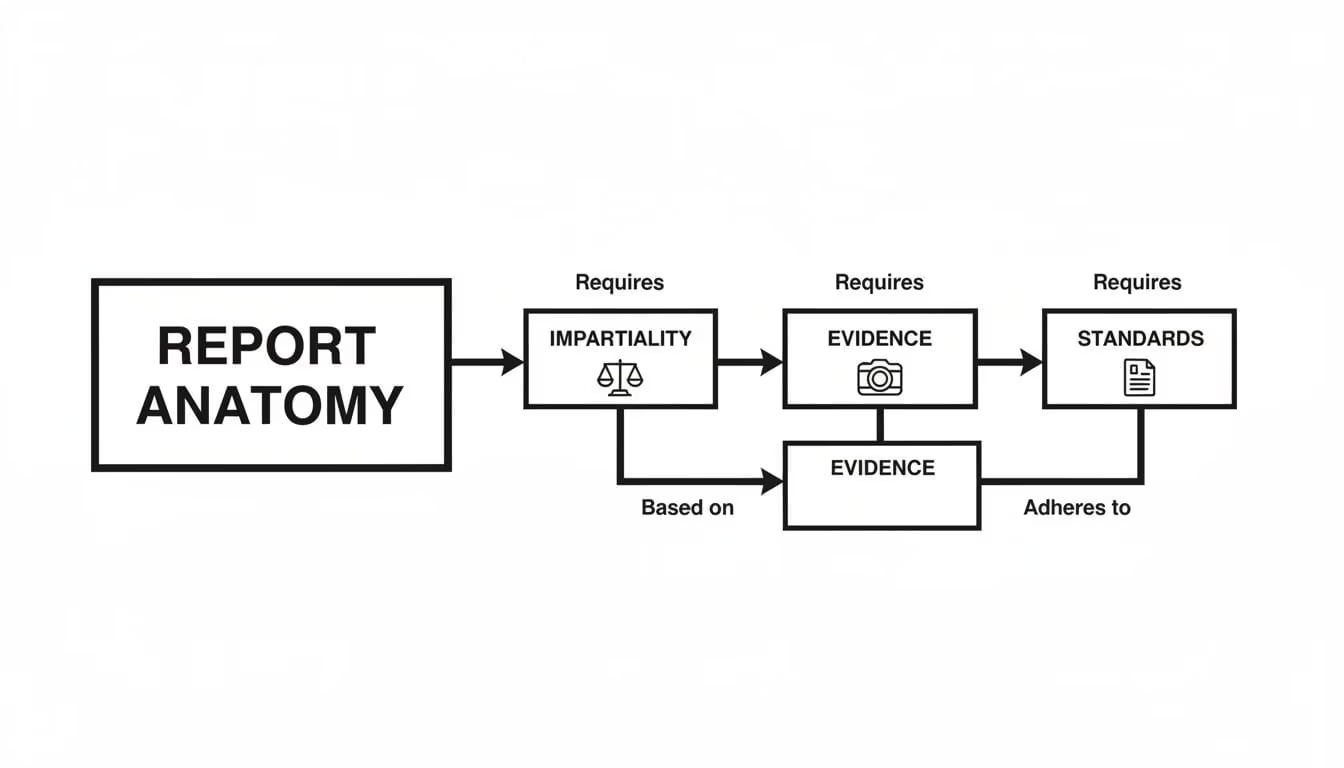
As the diagram shows, these pillars are what give a report its strength, and a well-drafted Scott Schedule is where they all come together in a practical, easy-to-follow format.
What Goes into a Scott Schedule
A Scott Schedule is far more than a simple to-do list. It’s a detailed table with specific columns designed to break down every part of the dispute. Following NCAT’s guidelines, each item must be laid out in a precise, systematic way.
With our 15+ years providing litigation support at Awesim Building Consultants, we’ve seen firsthand how the quality of this document can make or break a case. A clear, well-structured schedule allows the Tribunal to easily grasp your arguments. A sloppy or vague one, on the other hand, just creates confusion and weakens your entire position.
Essentially, each row in the schedule tackles one defect and is broken down into columns:
- Item Number: A unique number to identify each defect.
- Description of the Defect: A clear, factual description of the problem and its exact location.
- Claimant’s Position: This section explains why it’s a defect, usually by referencing the National Construction Code (NCC), Australian Standards, or manufacturer’s instructions.
- Respondent’s Position: The other party’s response to your claim for that specific item.
- Claimant’s Estimated Cost to Rectify: Your expert’s detailed cost estimate to fix the issue properly.
- Respondent’s Estimated Cost to Rectify: Their estimate, if they agree the item is a defect and needs fixing.
- Tribunal Member’s Findings: This final column is left blank for the Member to record their decision.
The real power of a Scott Schedule is in this side-by-side comparison. It forces a direct response to every single point, stopping arguments from spiralling off-topic. To get a deeper understanding, you can learn more about creating an effective Scott Schedule for NCAT in our dedicated guide.
The Awesim Difference: Vague vs. Precise Entries
The difference between a schedule drafted by a homeowner and one prepared by a seasoned building expert is night and day. A vague entry gives the Tribunal Member nothing solid to assess, while a professional entry presents a compelling, evidence-backed claim that’s hard to dispute.
Let’s compare an example to see what we mean. An amateur entry is often full of emotion and lacks detail, whereas a professional one is objective, specific, and grounded in industry standards.
Scott Schedule Entry Comparison Poor vs Professional
| Component | Poor Entry (Homeowner Example) | Professional Entry (Expert Witness Example) |
|---|---|---|
| Defect Description | “The bathroom leaks.” | “Waterproofing failure at the shower hob/wall junction in the main bathroom, evidenced by water stains on the adjacent architrave.” |
| Claimant’s Position | “The tiling is bad and the water goes everywhere. It’s not right.” | “The installed waterproofing system does not comply with AS 3740-2021, Clause 3.2, as it fails to prevent water penetration. The observed water damage is a direct result of this non-compliance.” |
| Proposed Rectification | “Rip it all out and start again.” | “Remove shower screen, tiles, and screed bed. Re-apply waterproofing membrane to meet AS 3740-2021. Re-screed and re-tile floor and walls to a height of 2100mm. Reinstall shower screen.” |
| Cost Estimate | “Maybe $5,000?” | “$8,750 + GST. (See attached detailed cost breakdown for labour and materials).” |
As the table clearly shows, precision is everything. The professional entry links a visible problem to a specific broken rule, describes the correct repair method, and provides a cost that can be justified.
This is the level of detail that a successful building expert witness report demands. It’s the standard we apply to every case, backed by our team’s 35+ years in Building & Construction.
How Experts Accurately Calculate Rectification Costs
Successfully proving a building defect is really only half the battle in an NCAT dispute. The other, equally crucial half is proving exactly what it will cost to fix it. This dollar figure, known as the ‘quantum’, is the entire basis of your claim for damages, and a simple quote from a builder often won’t stand up to the scrutiny of the Tribunal.
This is where a building expert witness report becomes indispensable. It delivers a credible and defensible cost assessment, moving beyond rough estimates to create a detailed, itemised breakdown that the Tribunal can confidently rely on to award a monetary order. It’s not just about adding up figures; it’s a methodical process grounded in decades of real-world building experience.
The Methodology Behind Defensible Costings
An expert doesn’t just pull numbers out of thin air. They use established methodologies to build a detailed cost estimate from the ground up, making sure every single dollar is accounted for and justified. This process relies on deep industry knowledge and access to current, real-time data on labour and material rates.
With over 15 years of litigation support experience, we know that a quantum assessment must be bulletproof enough to withstand challenges from the other side. Our approach at Awesim Building Consultants marries hands-on building knowledge with a precise, evidence-based costing framework.
The main components of a professional quantum assessment typically include:
- Labour Costs: Calculated using industry-standard hourly rates for every trade required, from carpenters and waterproofers to tilers and painters.
- Material Costs: Based on current market prices for all the materials needed, whether it’s structural timber and concrete or specific waterproofing membranes and tiles.
- Preliminary and General Costs: This covers the essential project overheads that are often forgotten, like site setup, scaffolding, waste removal, and project management fees.
- Contingency Allowances: A reasonable percentage, often around 10-15%, is factored in to cover unexpected problems that might crop up during rectification work.
Why Real-World Experience Is Non-Negotiable
Accurately calculating rectification costs takes more than a price list and a calculator. It demands a practical, on-the-ground understanding of how buildings are actually put together and, more importantly, how they’re taken apart and repaired. An expert with decades of hands-on experience, like our team at Awesim, instinctively knows the correct sequence of trades, how long each task realistically takes, and the hidden complexities that can blow out a budget.
This practical insight is what separates a defensible, robust estimate from a flimsy quote that falls apart under questioning. An experienced consultant can foresee things a less experienced person might miss, like the need for temporary structural propping or the specific challenges of matching 20-year-old render.
A credible quantum report is built on a foundation of real-world construction knowledge. It must reflect not just what needs to be fixed, but exactly how it will be fixed in a compliant and efficient manner, step by step.
The stakes in construction disputes are incredibly high. The Australian construction sector is a huge economic driver, and the financial fallout from defects is massive. In NSW alone, industry analysis revealed that around 65% of the 18,700 serious building defect complaints filed in 2023 required expert evidence on costs, with rectification works averaging $85,000 per case. These figures highlight just how critical it is to get the costing right, and tribunal reviews consistently show that cases backed by detailed quantum reports secure more favourable outcomes. To understand the scale of these assessments, you can explore more about the construction sector’s economic impact.
Our 35+ years in Building & Construction at Awesim Building Consultants directly informs every cost estimate we create. We don’t just rely on generic costing guides; we build our assessments from scratch, applying our practical knowledge to ensure your building expert witness report provides a quantum that is fair, accurate, and ready to stand up to scrutiny in NCAT. You can find out more about how we support legal cases by exploring our construction management expert witness services.
Choosing the Right Building Expert for Your Case
The choice of expert for your building dispute is a pivotal one. The strength of a building expert witness report rests entirely on the credibility and experience of the person who authors it. Picking an expert without the right qualifications can seriously undermine your case before it even reaches the NCAT hearing room.
The right professional isn’t just a builder; they need a specific blend of skills covering both the practicalities of construction and the formalities of litigation. At Awesim, our foundation is built on 35+ years in the Building & Construction industry, which gives us the hands-on knowledge to assess defects properly. This is paired with 15+ years of dedicated litigation support, ensuring our reports are perfectly aligned with NCAT’s strict procedural rules. It’s this combination that so often proves essential for a favourable outcome.
Key Criteria for Your Expert
When you’re looking for an expert, you have to dig deeper than a builder’s license or a professional-looking website. The real value of their report will come down to their on-the-ground experience, their grasp of legal procedures, and their demonstrated independence. Remember, your expert will need to defend their findings under the pressure of cross-examination.
Here are the non-negotiable qualities you should be looking for:
- Extensive Construction Experience: The expert must have years of practical, hands-on experience in the specific type of construction at the heart of your dispute. This is the only way they can correctly identify defects and specify compliant, cost-effective rectification methods.
- Deep Familiarity with NCAT: They must be completely fluent in the Expert Witness Code of Conduct and NCAT’s procedural rules, particularly Procedural Direction 3. An expert who knows the system produces reports that the Tribunal will value and rely upon.
- Proven Independence: An expert’s first duty is to the Tribunal, not to the person who hired them. You need to find a professional with a solid track record of providing objective, unbiased opinions.
Essential Questions to Ask a Potential Expert
Before you commit to an expert, it’s wise to have a detailed conversation with them. How they answer the following questions will tell you a lot about their competence and whether their approach is right for your specific case.
Make sure you ask:
- How many NCAT-compliant expert reports have you personally prepared and signed?
- Can you walk me through your process for conducting an on-site defect inspection?
- What steps do you take to guarantee your opinions remain independent and impartial?
- Are you experienced in preparing a Scott Schedule for building defect claims?
- What are your formal qualifications, and how long have you been working in this industry?
Their responses should give you a clear sense of their experience and professionalism. You can find more details about our own approach in our construction management expert witness services.
The Importance of a Clear Letter of Instruction
For an expert report to be truly effective, it has to be focused. It needs to directly answer the specific legal questions relevant to your dispute. This is where a letter of instruction comes in.
This formal document, usually drafted with your solicitor, acts as a clear brief for the expert. It outlines the precise questions they need to investigate and answer, guiding their entire analysis and ensuring the final report is targeted and relevant.
A well-written letter of instruction is what stops a report from being a vague, general commentary on the building work. Instead, it becomes a powerful piece of evidence directly linking defects to specific failures in compliance. For instance, reports can be strengthened by using safety data to highlight the seriousness of a defect, such as showing how non-compliant scaffolding violates AS 1576 and contributes to the thousands of falls from height recorded each year. This evidence-based approach, which aligns with NSW Fair Trading’s focus, can make a claim much more compelling, especially as NCAT’s caseload continues to rise. You can review this type of data in the Federal Safety Commissioner’s annual data report.
Your Questions About Expert Reports, Answered
When you’re caught in a building dispute, the path forward can seem murky. Questions about process, cost, and timelines are completely normal. Getting clear, straight answers about the building expert witness report is the first step toward making a confident, informed decision.
Here are the answers to the questions we hear most often.
How Much Does a Building Expert Witness Report Cost?
There’s no one-size-fits-all answer here. The cost really depends on the complexity of your situation. A straightforward report on a single, isolated defect might be a few thousand dollars. However, a case involving significant, widespread, or structural defects will naturally require more time for investigation and analysis, which is reflected in the cost.
At Awesim Building Consultants, we’re upfront about costs from the beginning. After our initial chat, we’ll give you a clear fee proposal so there are no surprises. Remember, the investment in a rock-solid report, backed by 35+ years in Building & Construction, is often just a small fraction of what it could cost to fix the defects you’re facing.
How Long Does It Take to Prepare a Report?
A properly prepared, NCAT-compliant report takes time. You should typically allow for a two to four-week timeframe after the on-site inspection is complete.
This isn’t just about writing. This period allows us to perform the critical work that makes a report effective:
- Conducting a meticulous site investigation and gathering all necessary evidence.
- Digging into the relevant Australian Standards and National Construction Code (NCC) clauses.
- Carefully analysing all the findings and drafting our opinion.
- Developing a detailed Scott Schedule with accurate costings for rectification.
We can sometimes speed things up if a matter is truly urgent. But it’s a balancing act. A rushed report can miss the very detail that wins your case.
An expert report is a methodical, evidence-driven document. Rushing its creation risks overlooking critical details that could be the deciding factor in your case. A carefully prepared report is worth the wait.
What Happens if the Other Party Has Their Own Expert Report?
This is standard practice. In almost any dispute that reaches NCAT, both sides will have their own building expert witness report. It’s just part of the process.
Once the reports are prepared, they are exchanged between the parties. The next step, often directed by the Tribunal, is for the experts to meet in what’s called a ‘conclave’ or ‘joint conference’.
The goal of this meeting isn’t to argue, but to find common ground. The experts work to identify areas where they agree and, just as importantly, clarify exactly where and why they disagree. This process helps narrow the issues in dispute before a final hearing, which saves everyone time and money.
After the conclave, the experts issue a joint report to the Tribunal. This document outlines the points of agreement and clearly defines the remaining issues for the Tribunal Member to decide on. With our 15+ years of litigation support, this collaborative and crucial part of the process is one we know inside and out.
With over three decades of hands-on construction experience, Awesim Building Consultants provides the independent, authoritative reports you need to navigate your building dispute with confidence. Contact us to discuss your case and learn how we can assist. Find out more at https://www.awesim.com.au.