
Australian Standards for Construction: Free Access and NSW Defect Claims
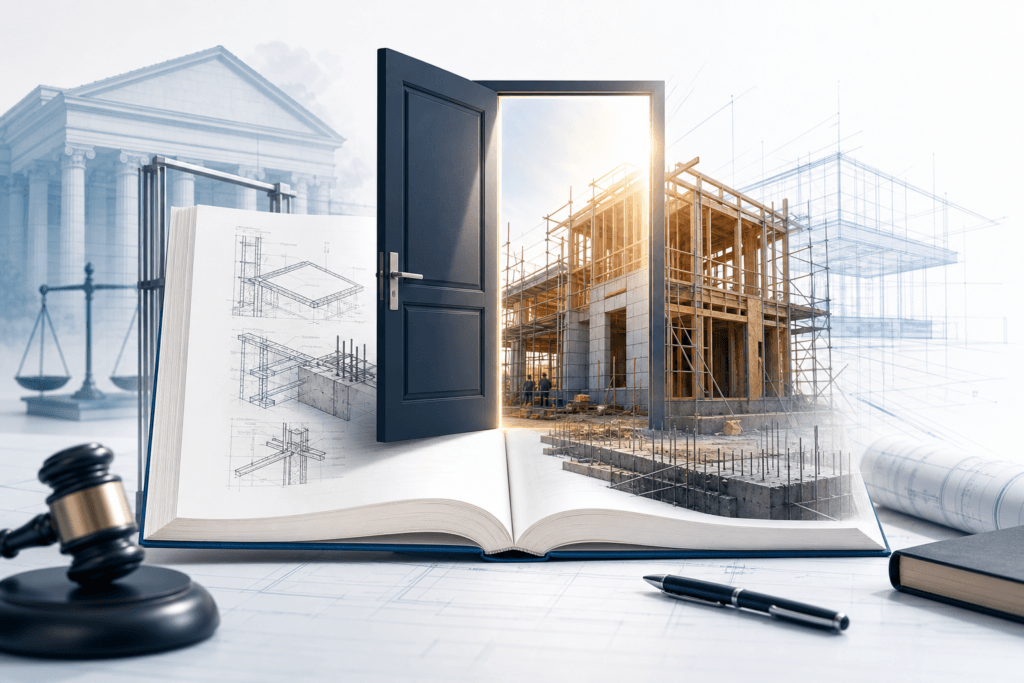
- Why Australian Standards Are Relevant to Building Defect Claims
- Australian Standards for Construction: Check Access
- How Standards Are Actually Used in Expert Witness Reports
- What Free Access Does Not Change
- Standards Most Relevant by Defect Type
- Practical Implications for NCAT Applicants and Solicitors
- Getting the Right Report for Your Dispute
- FAQs
Australian Standards for construction help identify the technical requirements relevant to building work. When assessing a NSW defect, check the contract, approval requirements, applicable NCC edition and the edition of each referenced standard.
Access update: Standards Australia announced on 25 August 2026 that it was working with the Australian Government to implement sponsored, online, read-only access to selected standards referenced in legislation and regulations. Its announcement does not confirm a launch date or the availability of every construction standard. Check the official access announcement and updates.
This guide identifies standards commonly relevant to building defect investigations. The list is not a confirmed catalogue of documents available through the proposed scheme.
Why Australian Standards Are Relevant to Building Defect Claims
Australian Standards aren't just technical reference documents. In NSW construction disputes, they define what "acceptable" looks like.
When a homeowner, solicitor, or strata manager alleges that work is defective, the question the tribunal or court is really asking is whether the work departed from the standard a competent tradesperson would have applied. That standard is almost always expressed by reference to a specific Australian Standard.
An expert witness preparing a report for NCAT or the NSW District Court will cite the relevant standard, identify the applicable clause, and document how the inspected work either meets or falls short of that requirement. Without access to the standard itself, the opposing party, the tribunal member, and any self-represented applicant are working at a disadvantage.
Free access removes that disadvantage.
Australian Standards for Construction: Check Access
The federal government's initiative focuses on standards that are referenced in legislation or adopted by regulation. For construction, that covers a significant portion of the documents most frequently cited in defect disputes.
The following categories have the highest practical relevance to building defect claims in NSW.
Waterproofing: AS 3740
AS 3740 (Waterproofing of domestic wet areas) is arguably the single most cited standard in residential building defect disputes in NSW. It sets out the requirements for membranes, falls, upstands, bond breakers, and surface preparation in bathrooms, laundries, and wet areas generally.
For domestic internal wet areas, check the applicable requirements of AS 3740 and the NCC. External above-ground membranes, including relevant balcony systems, are addressed by the AS 4654 series. The correct document and edition depend on the work being assessed.
Concrete and Masonry: AS 3600 and AS 4773
AS 3600 (Concrete structures) and AS 4773 (Masonry in small structures) govern the design and construction of some of the most common structural elements in residential and commercial buildings. Cracking, spalling, inadequate cover to reinforcement, and substandard mortar joints are all defects regularly assessed against these standards.
Roof Plumbing and Drainage: AS/NZS 3500 Series
The AS/NZS 3500 series covers plumbing and drainage systems including roof drainage, stormwater, and sanitary plumbing. Defects in these systems — inadequate falls, incorrect pipe sizing, non-compliant flashings — come up regularly in expert witness reports for both residential and strata disputes.
Structural Steel: AS 4100
AS 4100 (Steel structures) applies where steel framing, connections, or structural elements are involved. It becomes relevant in commercial construction disputes and in residential projects where steel portal frames or structural steel beams form part of the build.
Timber Framing: AS 1684
AS 1684 (Residential timber-framed construction) covers wall frames, roof trusses, and floor systems in timber-framed homes. Inadequate bracing, incorrect member sizing, and improper connection details are all measured against this document.
How Standards Are Actually Used in Expert Witness Reports
Knowing a standard exists is one thing. Understanding how it functions inside a formal dispute document is another.
An expert witness preparing a report for NCAT or a NSW court doesn't simply state that work is defective. The report must identify the specific clause of the relevant standard that applies, describe the observed condition, and explain the departure in terms a tribunal member or judge can follow.
Under Schedule 7 of the Uniform Civil Procedure Rules 2005, an expert witness has a duty to the court rather than to the party retaining them. That duty requires the opinion to be grounded in the expert's own knowledge and experience, with the reasoning set out clearly. References to Australian Standards form part of that reasoning chain.
When the applicable standard is freely accessible, the opposing party can verify the citation, the tribunal member can review the clause, and the self-represented applicant can understand what the expert is actually saying. That transparency strengthens the integrity of the process.
What Free Access Does Not Change
Free access to Australian Standards doesn't make applying them straightforward. Reading AS 3740 won't tell you whether the membrane in a specific bathroom was applied to the correct thickness, whether the upstand height was adequate given the floor-to-wall junction detail, or whether substrate preparation was sufficient. Those judgements require on-site inspection, measurement, and experience.
Access to a standard does not replace the expert’s inspection, reasoning or disclosure of limitations. An expert report must also address the applicable NCAT or court requirements and the directions made in the particular case.
What free access does change is the information gap between parties. A homeowner who can read the same standard the builder's expert is citing is better placed to instruct their own expert, ask the right questions, and follow the technical arguments being made.
Standards Most Relevant by Defect Type
| Defect Category | Primary Standard |
|---|---|
| Waterproofing failures (wet areas) | AS 3740 |
| Roof and stormwater drainage | AS/NZS 3500.3 |
| Concrete cracking and spalling | AS 3600 |
| Masonry and brickwork defects | AS 4773 |
| Timber framing deficiencies | AS 1684 |
| Structural steel issues | AS 4100 |
| Fire resistance and separation | BCA / NCC (referenced alongside, not an AS) |
Note that the National Construction Code is a separate document from Australian Standards. It frequently references Australian Standards as the means of compliance, which is why the two appear together in defect reports.
Practical Implications for NCAT Applicants and Solicitors
If you're preparing for a hearing at NCAT, or instructing an expert witness for a District Court or Supreme Court matter, free access to Australian Standards has a few direct implications.
When a cited standard and edition are available to you, compare the citation with the original text and ask the expert to explain its relevance. Check access and licence conditions before obtaining or sharing any document.
When briefing your own expert, you can have a more informed conversation about which standards apply and why. That doesn't replace the expert's role, but it reduces the information asymmetry that has historically put self-represented applicants at a disadvantage.
For solicitors preparing Scott Schedules, the ability to reference specific standard clauses alongside each alleged defect item strengthens the document as a litigation tool. A Scott Schedule that ties each defect to a specific clause is more useful to a tribunal than one that describes the condition in general terms only.
Getting the Right Report for Your Dispute
Knowing which standards apply is a starting point. The harder work is correctly applying them to the specific conditions observed on site, presenting that analysis in a form the tribunal or court can act on, and doing so in compliance with the procedural rules that govern expert evidence in NSW.
Awesim Building Consultants prepares independent inspection reports, expert witness reports and Scott Schedules for NSW building disputes. Glen Sim brings over 35 years of construction experience and more than 15 years of litigation support experience. See what to provide when briefing an expert.
If you're at the stage where you need an independent, evidence-based report, visit awesim.com.au or call 1800 293 746 for a free initial consultation.
FAQs
Which Australian Standards for construction will be available?
Check the official scheme updates for the confirmed catalogue, editions and access conditions. The standards discussed here are examples relevant to construction defects, not a promise that each is available through the proposed service.
Do Australian Standards have legal force in NSW building disputes?
Not directly, but they are frequently adopted by reference in the National Construction Code and in building regulations. Where a standard is referenced in the NCC or in a contract, non-compliance can constitute a breach of the statutory warranties under the Home Building Act 1989 (NSW).
Can I use Australian Standards to support my own NCAT claim without an expert?
You can reference them in your submissions, but a tribunal will generally give more weight to an independent expert witness report that applies those standards to the specific conditions observed on site. Self-represented applicants who rely solely on their own reading of a standard, without an expert opinion, often find it difficult to meet the evidentiary threshold.
What is the difference between an Australian Standard and the National Construction Code?
The NCC sets the minimum performance requirements for buildings in Australia. Australian Standards are technical documents that describe how to achieve those requirements. The NCC frequently references Australian Standards as the accepted means of demonstrating compliance, so the two work together rather than independently.
How does an expert witness use Australian Standards in a report?
The expert identifies the standard and clause that applies to the work in question, describes the observed condition on site, and explains the departure from the standard's requirements. Under Schedule 7 of the Uniform Civil Procedure Rules 2005, the expert must set out the reasoning behind their opinion, and references to Australian Standards form a core part of that reasoning.
Does free access to Australian Standards reduce the cost of an expert witness report?
It removes one minor input cost, but the primary cost of an expert witness report reflects the time required for on-site inspection, measurement, documentation, and the preparation of a compliant, defensible report. The market range for expert witness reports in NSW construction disputes is approximately $2,000 to $10,000, with around $4,500 being typical.
Which standards are relevant to waterproofing investigations?
AS 3740 addresses domestic wet areas, while the AS 4654 series addresses external above-ground waterproofing membranes. Identify the relevant system, scope and applicable edition before assessing compliance.

Related Posts
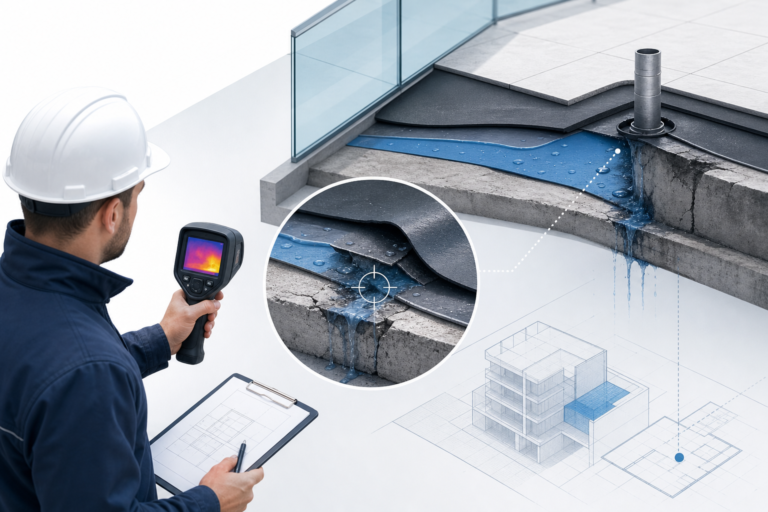
Waterproof Membrane Failure: How Inspectors Find the Cause
Waterproof membrane failure is diagnosed by tracing the water entry point, reviewing design documents, exposing the membrane for visual inspection,
Read More »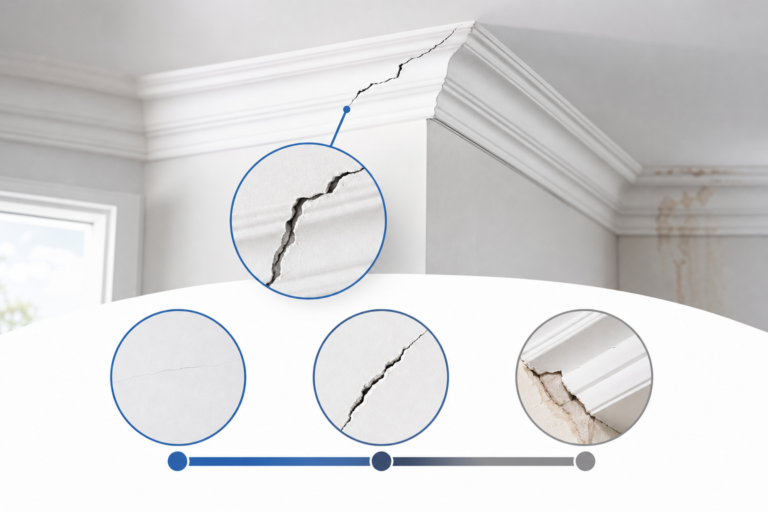
Cornice Cracking: How to Tell If the Damage Is Serious
Cornice cracking is one of the most common concerns Australian homeowners raise, and the hard part is not spotting the
Read More »
Digital Construction Consultant Australia: What They Do
A digital construction consultant in Australia manages the technology-driven side of building projects: BIM coordination, clash detection, asset data handover,
Read More »