
Awesim Building Consultants: NSW Expert Witness Reports
You’re usually not looking for a building consultant on a good day.
You’re looking because the renovation has gone wrong, the defects won’t stop appearing, the builder says the work is acceptable, or a lawyer has told you that your current photos and emails won’t be enough. Sometimes the problem starts with cracking, leaking, movement, or unfinished work. Sometimes the bigger problem is that nobody has properly explained what failed, why it failed, and what it will take to put it right in a form NCAT or a court can use.
That’s where experienced building dispute work matters. Good consulting in this space isn’t just about finding defects. It’s about turning a messy site history, competing stories, and incomplete records into a clear technical position. That means identifying cause, separating workmanship issues from design or maintenance issues, and documenting rectification logic in a way that stands up under scrutiny.
Your Guide Through Building Dispute Complexity
A typical dispute starts with confusion, not clarity. A homeowner might have a bathroom that leaks into the room below. The waterproofing contractor blames the tiler. The tiler points at the screed. The builder says the owner’s ventilation habits caused the damage. By the time someone mentions Fair Trading or NCAT, the file is already full of photos, invoices, text messages, and opinions that don’t line up.
That’s the point where experience on both sides of the problem matters. Site knowledge tells you what to inspect. Dispute knowledge tells you what to record. If you miss either one, the report often ends up too vague for the tribunal and too legalistic for practical rectification.
What concerned owners and solicitors usually need
Many individuals don’t need more noise. They need someone who can answer a short list of hard questions:
- What is defective: Not what looks rough, but what departs from acceptable construction practice or compliance expectations.
- What caused it: Poor workmanship, sequencing failures, wrong materials, movement, water entry, deferred maintenance, or a mix.
- What has to be fixed: Not a wish list. A defensible scope tied to the observed condition.
- What will happen if nothing is done: Further damage, deterioration, recurrence, or dispute escalation.
A practical owner should also understand the difference between maintenance and capital improvement before arguing about responsibility. For that, Everglow Prosperity’s guide for property owners is a useful plain-English reference.
Practical rule: The earlier a dispute is framed around evidence instead of emotion, the easier it is to resolve.
The calm part of this work is often the most valuable. Once the issues are properly categorised and documented, people stop arguing in circles and start dealing with the actual building problem.
Your Trusted Partner Across New South Wales
In building disputes, experience across different regions of NSW gives clients a practical advantage. A consultant who works only in one setting can miss how location changes the evidence, the repair method, and the way a dispute needs to be documented for NSW Fair Trading or NCAT.
According to Awesim Building Consultants’ Houzz business profile, the company has operated since 1996 as a building expert witness and client-side project management business servicing Sydney and broader NSW from Kent Street in Sydney.

That reach matters because the dispute path is rarely the same from one matter to the next. A Sydney apartment matter may involve waterproofing between lots, common property interfaces, access restrictions, and competing views from strata, builder, and owner. A regional house claim may turn on delayed attendance, weather exposure, soil movement, or that suitable trades are not immediately available for destructive inspection or rectification.
The consultant’s job is to turn those site conditions into evidence that can be used. That means recording what was observed, separating likely cause from assumption, and framing rectification in a way a homeowner, solicitor, insurer, or tribunal member can follow. For matters that may proceed further, a properly prepared building expert witness report for NSW disputes helps connect on-site findings to the questions that usually decide responsibility.
Why statewide coverage matters in practice
Working across New South Wales calls for more than general building knowledge. It requires judgment about how the same defect presents differently depending on the project type, access, and local conditions.
- Metropolitan matters: Strata boundaries, basement leaks, balcony defects, neighbour complaints, limited site access, and overlapping trade responsibility.
- Regional matters: Longer response times, transport and material delays, exposure to harsher weather, and repairs that need to suit local construction methods.
- Dispute preparation: Documents that support a Fair Trading complaint, settlement discussion, Scott Schedule, or tribunal evidence without overstating the case.
Scale also affects the way dispute work is handled. In expert matters, clients usually want direct involvement from the person who inspected the site and formed the opinion, not a file passed through layers of administration.
That is often what makes a specialist consultancy useful in this type of work. The process stays closer to the building, the documents stay closer to the facts, and the advice stays tied to the actual dispute instead of a generic template.
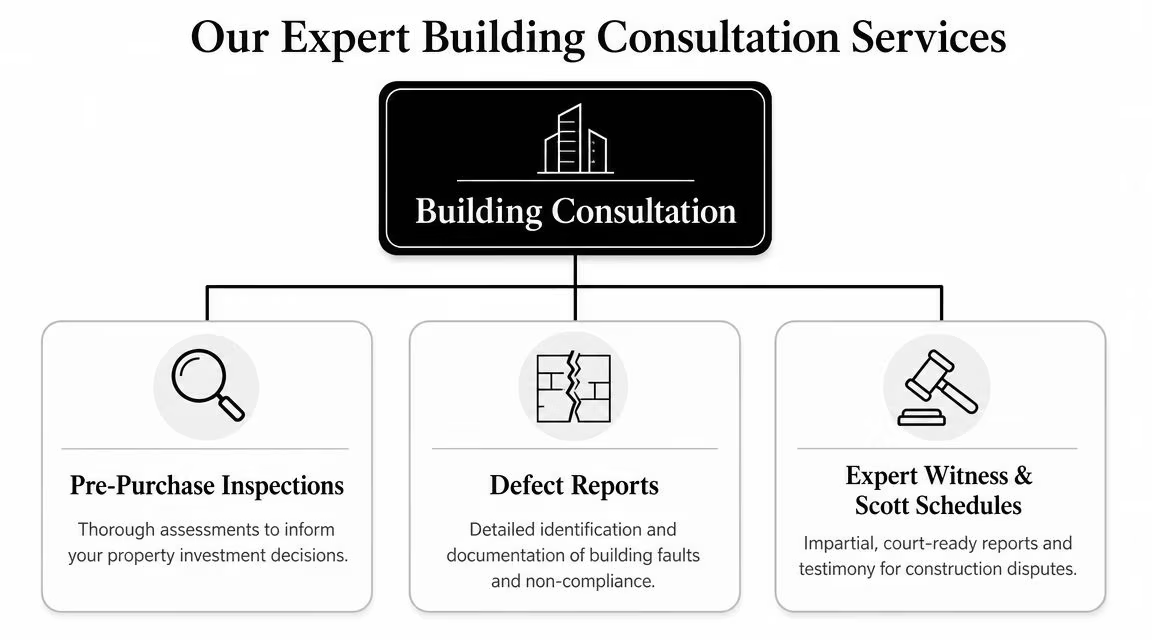
Our Expert Building Consultation Services Explained
The core services in this field aren’t interchangeable. Each one solves a different problem, and using the wrong report for the wrong purpose wastes time.
Independent site investigations
A site investigation is where the technical work starts. This isn’t just a walk-around with a camera. It’s a structured inspection of the complaint areas, adjoining building elements, probable causes, and visible consequences.
The value of the investigation depends on how it is framed. If the brief is too broad, the report becomes unfocused. If it’s too narrow, the underlying cause can be missed. In practice, a good investigation usually tests what the client says happened against what the building fabric reveals.
Typical issues examined include:
- Water ingress: Entry points, failed junctions, drainage paths, sealing failures, and damage patterns.
- Cracking and movement: Location, width, repetition, likely mechanism, and whether the cracking is cosmetic or indicative of something larger.
- Incomplete or poor workmanship: Finishes, tolerances, sequencing, missing items, and obvious departures from expected trade practice.
- Compliance concerns: Whether the observed work raises issues that need closer consideration against applicable construction requirements.
Expert witness reports
An expert witness report is not the same as a standard defect report. The difference is purpose. A standard report may help an owner understand the condition of the work. An expert report has to do more. It has to assist a tribunal or court by setting out observations, reasoning, opinions, and the basis for those opinions in a disciplined way.
Awesim’s own site states that the firm was established in 1996, has more than 35 years of building and construction experience, and prepares building dispute reports for NCAT and NSW courts, including expert witness reports and Scott schedules through its main website.
A litigation-ready report should deal with points such as:
| Issue | What works | What does not work |
|---|---|---|
| Defect description | Precise location and condition | Broad statements like “poor quality work” |
| Cause | Reasoned opinion tied to site evidence | Guesswork or blame without technical basis |
| Compliance impact | Clear explanation of why the issue matters | Generic references to standards with no context |
| Rectification | Logical scope linked to observed defects | Inflated or vague repair suggestions |
Awesim building consultants is one option for parties needing a building expert witness report for NSW disputes, particularly where the brief requires site findings to be translated into tribunal-ready evidence.
Scott schedules
A Scott Schedule is often where chaotic disputes start becoming manageable. It lists disputed items in a structured format so the parties, their solicitors, and the decision-maker can see exactly what is alleged, what is admitted or denied, and what each side says should happen next.
This format is especially useful when there are many defect allegations across multiple rooms, trades, or stages of work.
A useful Scott Schedule normally includes:
- A clearly identified item tied to a location or building element.
- The complaint or alleged defect stated in plain terms.
- The responding position from the other side.
- The expert view on condition, cause, and rectification where required.
A long dispute file becomes easier to resolve when each issue is reduced to one line item, one response, and one technical opinion.
Navigating Building Disputes in NSW
A typical NSW dispute starts with a homeowner who knows something has gone wrong, a builder who says the work is acceptable, and a file full of photos, emails, quotes, and frustration. The problem is not always the defect itself. The problem is turning what happened on site into material that Fair Trading, NCAT, a solicitor, or an expert can use.
In New South Wales, many matters begin with direct complaints between owner and builder. If that stalls, NSW Fair Trading may become involved. If settlement still does not happen, the dispute often ends up in NCAT, where the issue is no longer just whether the work looks wrong. The issue is whether the allegations, evidence, and expert opinions are set out in a form the Tribunal can test.
What tribunal-ready actually means
A tribunal-ready report does more than identify defects. It links each complaint to a location, records what was observed, explains the likely cause where that opinion can properly be given, and states what further work is required to rectify it. It also sets out limits. If access was restricted, finishes concealed the structure, or destructive inspection was not authorised, that needs to be said plainly.
That is where many cases weaken. Owners often arrive with genuine concerns, but the material has been gathered in the wrong order. A contractor’s quote is treated as proof of defect. Photos are not dated. Allegations are broad, such as “poor workmanship throughout,” with no room-by-room detail. By the time the matter reaches NCAT, someone has to convert that into a schedule of issues, site findings, and opinions that can withstand scrutiny.
Awesim building consultants is one option for parties who need that translation from site problem to admissible expert material. The task is practical. Inspect the property properly. Match each issue to the complaint. Separate maintenance from defective work. Explain what can be concluded and what remains uncertain.
Where disputes usually go off track
The recurring mistakes are predictable because the pressure of a dispute pushes people toward advocacy before evidence.
- Fault is assumed too early: owners, builders, and sometimes even advisers decide who is responsible before the inspection process is complete.
- Records are incomplete: photographs have no dates, no marked locations, and no tie back to a specific item in dispute.
- Claims are overstated: minor finish issues are rolled together with serious waterproofing, structural, or compliance concerns, which affects credibility.
- The wrong document is relied on: a repair quote, agent report, or general inspection note is used in place of a proper expert opinion.
I have seen matters settle quickly once the issues were reduced to a clear defect list with evidence beside each item. I have also seen cases drift for months because nobody stopped to define what was being alleged.
If expert evidence is likely, early attention should be given to the NSW expert witness code of conduct guidance. That point matters in practice. An expert is there to assist the Tribunal with an independent opinion, not to argue the client’s case. Reports drafted with that duty in mind are usually more persuasive because they are measured, specific, and tied to observed facts.
The reports that carry weight in NSW disputes are usually the ones that stay within the evidence, explain the reasoning, and resist the urge to overstate the case.
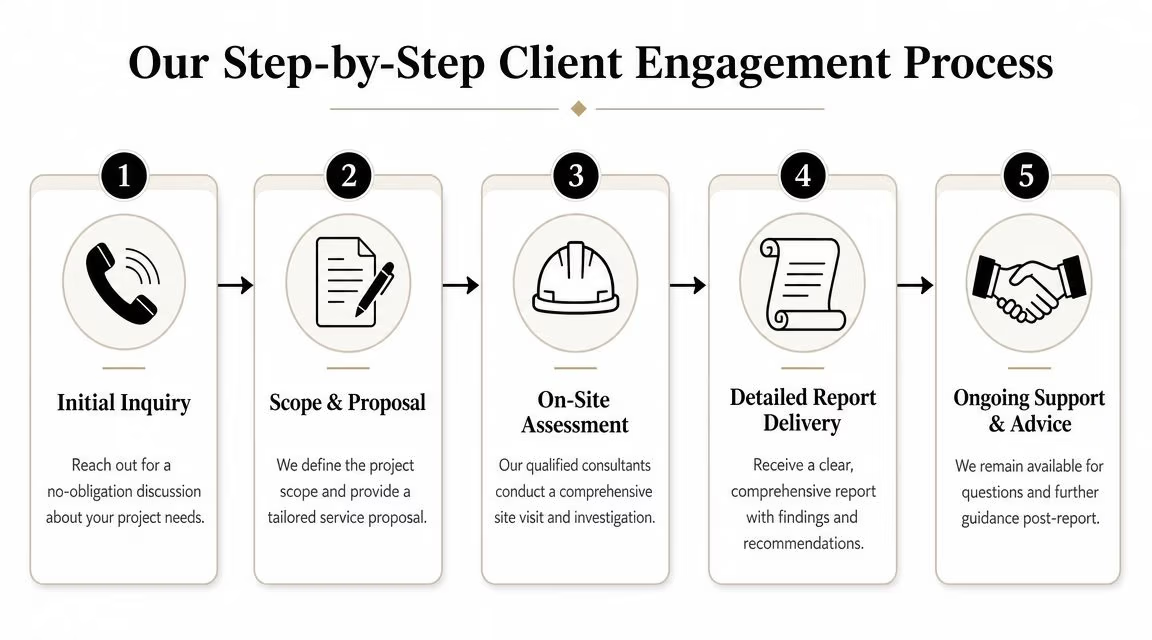
Our Step-by-Step Client Engagement Process
Most clients feel better once they know what happens next. Dispute work becomes manageable when the process is clear and the deliverables are defined.
A straightforward engagement usually follows a sequence like this.
From first contact to final report
Initial enquiry
The first conversation should identify the dispute stage, the property type, the main issues, and whether the matter is still informal or already moving toward NCAT or court. A short call often reveals whether the client needs an inspection, an expert report, a Scott Schedule, or help with narrowing the issues.Document review and scoping
Before anyone attends site, the consultant usually needs the building contract, plans, relevant correspondence, photographs, prior reports, and the list of complaints. This stage matters because scope drives cost, timing, and usefulness.Site inspection
The inspection should follow the pleaded issues or the complaint list, but it must also allow room for related observations. Good site work is methodical. It records locations, conditions, likely causes, and anything that limits the opinion.
A practical overview of the process is also set out in this video:
What happens after the site visit
The reporting stage is where raw observations become usable evidence.
- Analysis and drafting: The consultant organises the defects, tests possible causes, and frames opinions within the limits of what was observed.
- Photo schedules and appendices: These should support the reasoning, not drown it.
- Report issue: The final document needs to be clear enough for owners and solicitors, but rigorous enough for proceedings.
- Follow-up support: Questions often arise once the report is served, especially if the other side disputes findings or asks for item-by-item clarification.
Clients should expect the process to be disciplined. Good experts don’t promise a result. They provide a supportable opinion and a usable work product.
Real-World Scenarios We Resolve
A dispute usually becomes urgent after the second or third sign that something is wrong. A bathroom renovation starts showing water staining below. Newly laid tiles sound drummy underfoot. Internal doors that once closed cleanly begin to catch. By that stage, the owner often has dozens of photos, a chain of heated emails, and no clear way to turn any of it into evidence that NSW Fair Trading, NCAT, or the other side will take seriously.
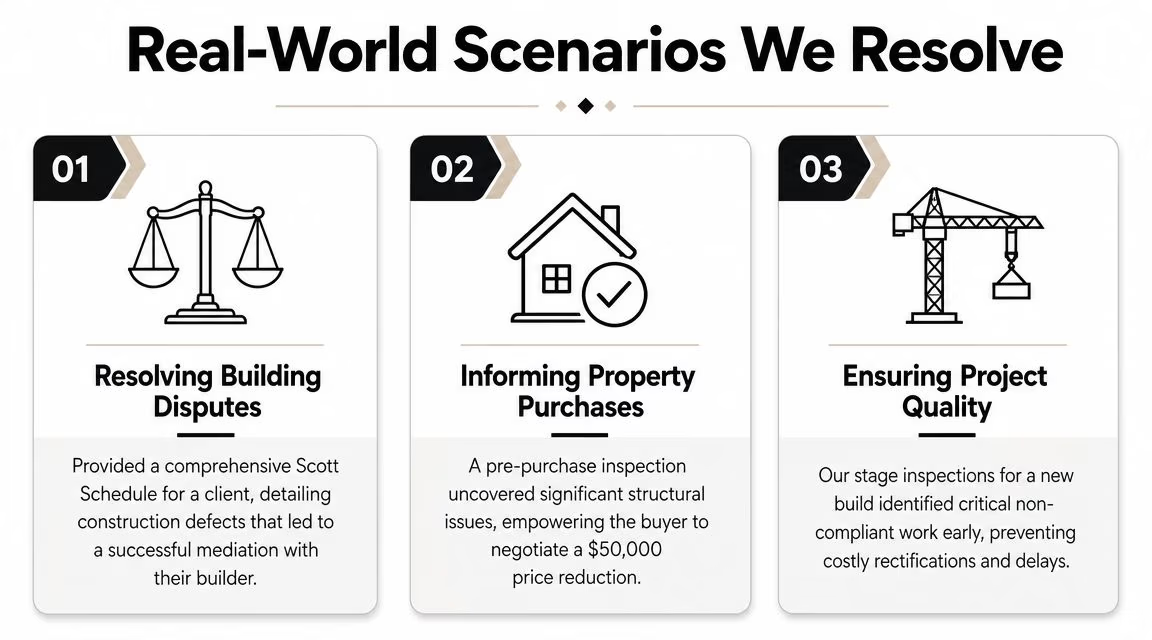
The homeowner with a defective renovation
This is one of the most common matters in residential work. The finish may have looked acceptable at practical completion, but defects begin to show once the building is used in ordinary conditions.
The job at that point is not to produce a long complaint list. It is to sort visible symptoms from underlying building problems and tie each issue back to the contract, the plans, the standards, or the workmanship on site. That distinction matters. A report that includes every scuff mark and cosmetic irritation can weaken the serious parts of the case. A report that focuses too narrowly can miss the pattern, especially where waterproofing, substrate preparation, set-out, and finishing errors all point to the same poor supervision or trade sequencing.
In practice, these matters often involve questions such as whether cracking is shrinkage or movement, whether water entry comes from failed flashing or failed sealing, and whether rectification requires patching or full removal and replacement. Those are the points that change cost, scope, and legal position.
The solicitor preparing for NCAT
Solicitors regularly receive files that are heavy on correspondence and light on technical discipline. The client may be convinced every item is defective. The builder may say everything is within tolerance. Neither position helps much unless the issues are framed properly.
The consultant’s role is to convert site conditions into material that can be used in a pleading, Scott Schedule, expert report, or settlement discussion. That usually involves:
- Reducing the defect list to supportable items. Repetition, vague allegations, and emotional language need to come out.
- Matching each item to evidence. Photographs, measurements, contract clauses, drawings, and observed conditions must line up.
- Explaining causation and rectification. NCAT needs to see why the defect exists, what work is required, and where the opinion stops if invasive inspection has not occurred.
Good technical support can also help a solicitor decide what not to run. That can save a client a great deal of time and cost.
The strata or project stakeholder with multiple issues
Strata and multi-issue files are different again. There may be water ingress, concrete cracking, balcony falls, fire stopping concerns, incomplete records, and disagreement about whether the problem sits with design, workmanship, maintenance, or later alteration.
These matters need structure from the start. The useful approach is to group defects by building element, identify the likely mechanism for each problem, and keep a clear record of what has been observed against what still needs opening up or testing. Without that discipline, parties end up arguing over symptoms in one area while missing the common thread across the building.
A specialist advisory practice is often well suited to this kind of work because the file stays close to the person doing the inspection, analysis, and reporting. In dispute matters, that continuity has real value. The consultant who walked the site is the one who can explain the photo sequence, the standards issue, the probable cause, and the limits of the opinion if the matter proceeds.
On complex defect matters, the best results usually come from simplification. Group the issues, identify the primary causes, and stop treating every symptom as a separate dispute.
Take the First Step Towards a Resolution
Most building disputes don’t improve by waiting. Moisture spreads, records get harder to track, and each side becomes more committed to its own version of events. The practical first step is to get the issues inspected and documented properly.
What works is a disciplined approach. Inspect the site. Gather the contract and communication trail. Identify the actual defects. Separate workmanship from maintenance, design, and consequential damage. Put the findings into a format that your solicitor, the opposing party, and the tribunal can understand.
If you’re dealing with a residential building dispute in New South Wales, or you need site investigation, an expert witness report, or a Scott Schedule, contact the team by email at admin@awesim.com.au or call 1800 293 746. If you’re still comparing options, it’s also worth reviewing related service pages on the website for expert reports, code of conduct obligations, and dispute documentation requirements.
The sooner the issues are framed properly, the sooner the matter can move from argument to resolution.
If you need practical help with a building dispute, report preparation, or tribunal-ready documentation, contact Awesim Building Consultants. Email admin@awesim.com.au or call 1800 293 746 to discuss your matter.
Related Posts

Water Damage in Homes: How to Track Down the Source
Water damage in a home rarely announces itself at the source. A stain on the ceiling, a musty smell in
Read More »
Waterproofing Membrane Types: Which Fails Most in NSW Bathrooms
Waterproofing failure is the single most common serious defect found in NSW apartments, and the type of membrane used, along
Read More »
Building Certifier NSW: Role, Limits, and When You Need More
A building certifier in NSW is a registered professional who issues construction certificates, conducts critical stage inspections, and grants occupation
Read More »