
NSW Expert Witness Code of Conduct: Duties & Compliance
Expert evidence in a NSW building dispute should provide impartial technical assistance. Before commissioning a report, identify the court or Tribunal, the applicable expert code and the directions in the matter.
NSW court requirements and NCAT requirements
For relevant NSW court proceedings, Schedule 7 of the Uniform Civil Procedure Rules 2005 contains the expert witness code. The Council of Chief Justices’ guidance explains the NSW rules, including the required acknowledgement and the court’s power to order otherwise.
NCAT has its own code in Procedural Direction 3. Paragraph 11 identifies its application, including Home Building Act claims above $30,000 and other proceedings when directed. Read it with the orders and applicable requirements on generative AI.
Use the current requirements for your proceeding. A court’s admissibility rule should not be presented as an automatic rule for every NCAT report.
Core Duties Under the NSW Expert Witness Code
A building expert can lose the case before cross-examination starts. It happens when the report reads like advocacy, strays into another discipline, or hides the assumptions needed to support the conclusion. In NSW building disputes, the Code is applied in that practical way. The question is not whether the expert is experienced. The question is whether the opinion is independent, confined to expertise, and reasoned clearly enough to be used.
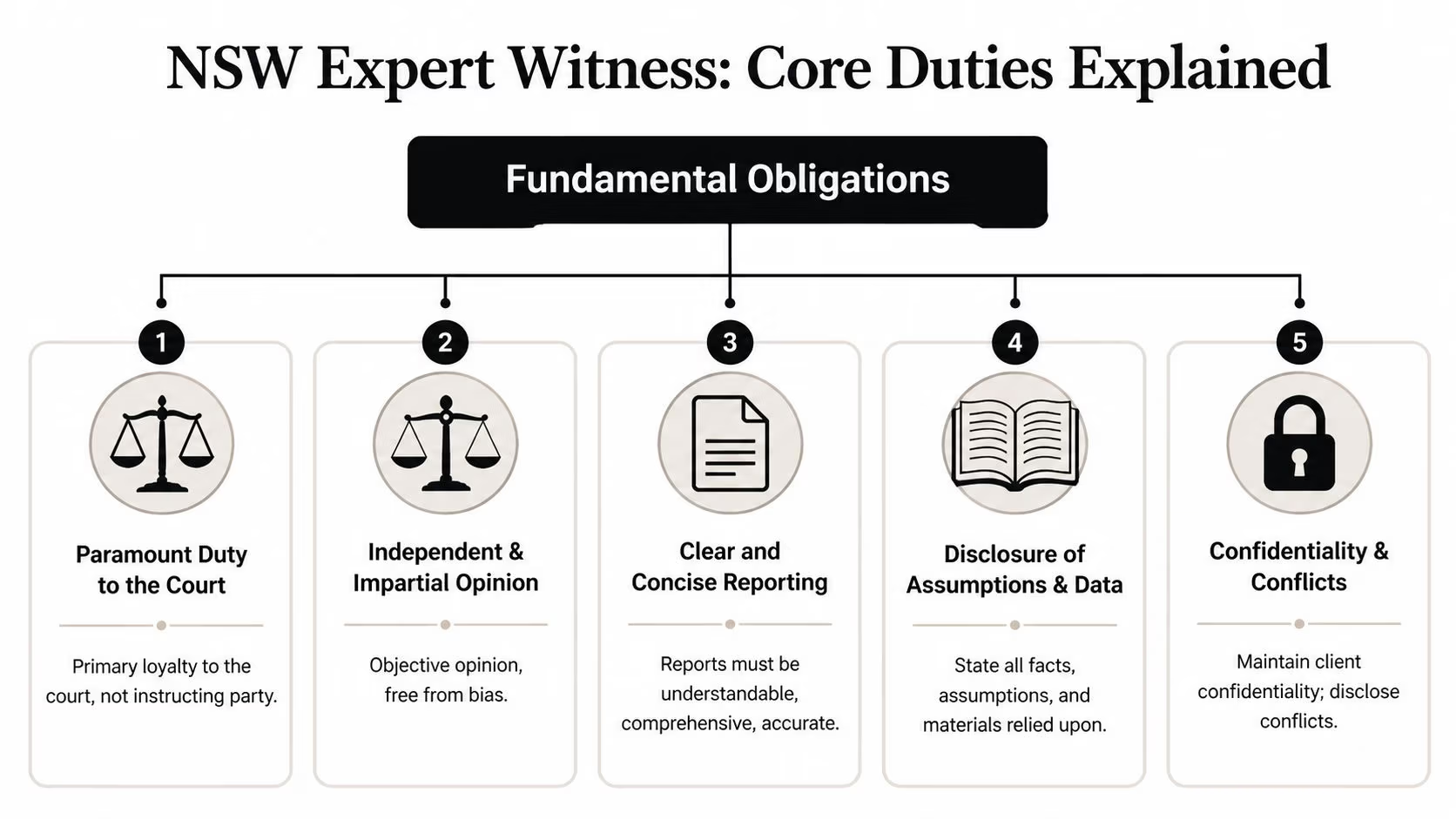
Duty to the Court overrides duty to the client
This is the defining rule in expert witness duties NSW. The expert must assist the court impartially. The solicitor may have a pleaded case. The owner, builder, developer, or insurer may have a commercial objective. None of that changes the expert’s duty.
In practice, the report must be able to withstand the uncomfortable points. A proper expert will say, where necessary:
- The alleged defect is not made out on the material available
- Further investigation is required before a reliable opinion can be given
- Part of the issue falls within engineering, hydraulics, or another specialist field
- The opposing expert is correct on a particular point
That is usually where the primary pressure sits in building matters. Clients pay for an opinion, but the court expects assistance. If an expert cannot disappoint the client when the facts require it, that expert should decline the brief.
Requirement to provide objective, unbiased opinions
Objectivity is shown in method, not slogans. The expert must separate what was seen on site, what was assumed, what technical standard was applied, and how the conclusion was reached. A building report that reads like submissions will usually attract criticism quickly.
The difference is usually obvious:
| Approach that fails | Approach that works |
|---|---|
| Adopting the client’s version of events without testing it | Checking the site conditions, documents, and chronology independently |
| Stating a conclusion and attaching reasons afterward | Setting out the reasoning path in the order it was reached |
| Omitting inconvenient photos, correspondence, or prior repairs | Identifying material that supports and undermines the opinion |
| Using loaded terms such as “clearly defective” without analysis | Using technical language tied to inspection findings and standards |
Practical rule: If a paragraph reads like a submission for one side, rewrite it as expert evidence or remove it.
Obligation to state assumptions and limitations
Assumptions do not weaken a report. Unstated assumptions do. In building disputes, experts are often asked to opine on concealed work, incomplete records, or conditions that have changed since construction. The report must identify what was observed, what was assumed, what testing was done, and what could not be confirmed.
This point matters in defect cases involving water ingress, cracking, settlement, fire compliance, and rectification scope. A consultant may be qualified to inspect finishes, workmanship, sequencing, and visible moisture effects, but not to express structural design opinions or detailed hydraulic causation opinions unless that is within the consultant’s field. That boundary should be stated in direct terms.
The same discipline is expected in NCAT matters. The NCAT Procedural Direction on expert evidence reinforces the need for clarity about assumptions, reasoning, and the scope of the opinion.
Duty to use relevant expertise only
Building practitioners often have broad site experience. Courts and NCAT still require precision about the field of expertise being relied upon. Experience as a builder, superintendent, or consultant does not create authority to answer every technical question in the dispute.
A careful expert asks four things before finalising the report:
- What is the actual discipline engaged by this issue
- What opinions can I support from my own training and experience
- Which opinions require another expert
- Have I marked those limits clearly in the report
Identify the expertise needed for each issue. If an opinion requires structural engineering, acoustics, quantity surveying or another discipline outside the author’s expertise, obtain appropriate specialist input and identify any reliance on it.
Requirement to acknowledge uncertainty
Some building issues cannot be resolved to a final conclusion on the available material. Concealed framing may not be opened. Membranes may not be exposed. Movement may have more than one plausible cause. The Code requires candour about that uncertainty.
A qualified opinion is often the stronger opinion. If the conclusion depends on further destructive testing, invasive inspection, laboratory analysis, or records that have not been produced, say so plainly. The tribunal or court can work with a measured opinion. What causes difficulty is false certainty, especially where the reasoning does not match the limits of the inspection.
NSW Procedural Requirements for Expert Reports
The Code drives the substance of the report, but expert witness report requirements NSW also involve structure. If the report is poorly organised, the tribunal or court may struggle to follow the reasoning even when the technical work is sound.
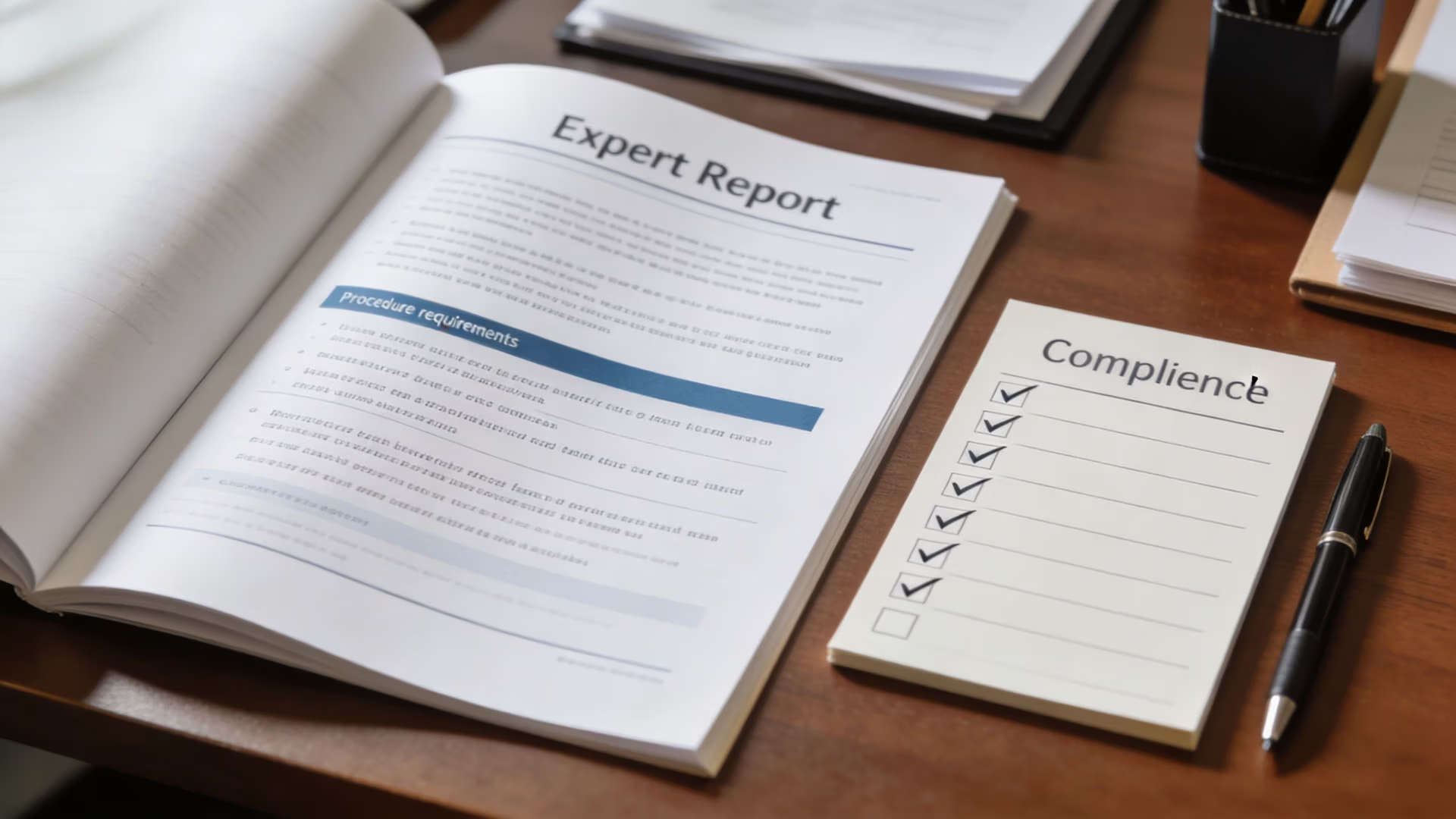
A practical report for building litigation should usually include the following elements:
Core report components
Qualifications and experience
The expert must identify the qualifications and experience that support the opinions offered.Instructions received
The report should disclose the instructions or issues the expert was asked to address. That transparency helps the decision-maker see the scope of the engagement.Documents and materials reviewed
Plans, contracts, photographs, correspondence, standards, prior reports, and any other materials relied upon should be identified.Facts observed and assumptions made
Many reports often fail in this area. Observed site conditions must be distinguished from assumed background facts.Opinions and reasons
Conclusions must be explained, not asserted. The reasoning path has to be visible.Limits and qualifications on opinion
If the opinion depends on limited access, non-destructive inspection, third-party material, or incomplete records, that must be said plainly.
For NCAT expert witness rules, the report also needs to align with the tribunal’s procedural expectations on expert evidence and related material such as Scott Schedules. The current practical context is reflected in NCAT Procedural Direction 3 expert evidence guidance.
What works in drafting
- Short issue-based sections: One defect, one issue, one reasoning path.
- Clear distinction between fact and opinion: This makes cross-examination easier to answer.
- Direct references to inspections and tests: The reader should know how the conclusion was reached.
What happens if the requirements are not met?
The consequences depend on the proceeding and the deficiency. NCAT Procedural Direction 3 distinguishes evidence-rule proceedings from those where those rules do not apply. In the latter, non-compliance with the code does not itself make expert evidence inadmissible, but may affect its weight.
Raise an omitted acknowledgement, unexplained assumption or opinion outside expertise promptly with the expert and legal representative. Confirm whether a supplementary report or other direction is needed. Do not assume a formal omission is harmless or that it automatically decides the whole dispute.

A practical workflow for building disputes
Provide the directions, issues and relevant documents with the brief. Keep the original instructions and record any later changes. Confirm the areas to be inspected, access restrictions and any authorised testing.
- Record observations and measurements by location and disputed item.
- Identify the source of photographs, documents, tests and specialist opinions relied upon.
- Separate observed facts, assumptions and technical reasoning.
- State access limits, alternative explanations and any further investigation needed.
- Keep report references and Scott Schedule item numbers consistent.
When experts confer, focus on the technical reasons for agreement and disagreement. Preserve each expert’s independent judgment and follow the directions for the joint document.
Awesim provides site investigations, expert witness reports and Scott Schedules for NSW building matters. The brief should identify which of these services is required.
Frequently asked questions
Can the expert advocate for the person paying them?
The expert’s role is impartial technical assistance within their expertise. Instructions should identify the questions to answer, without requiring a predetermined conclusion.
Is a standard inspection report sufficient?
Check its purpose, scope and content against the directions and applicable code. An existing inspection may be useful evidence, but additional investigation or a further report may be needed.
What should I send with an enquiry?
Provide the property location, orders, deadline, disputed items and relevant reports. Contact Awesim to discuss the investigation and reporting required, or call 1800 293 746.
Related Posts
![Businessman in a suit analyzes a 3D building model on blueprints with a hard hat nearby and a crane in the background, conveying construction planning and law.]](https://awesim.com.au/wp-content/uploads/2026/10/2ba440c4-9d47-4802-adf1-8b6f241eb8ff-768x512.png "2ba440c4-9d47-4802-adf1-8b6f241eb8ff - Awesim Building Consultants")
Construction Claims Experts and Witness Reports
Last updated: 8 November 2026 A construction expert witness provides an independent opinion on technical questions in a building dispute.
Read More »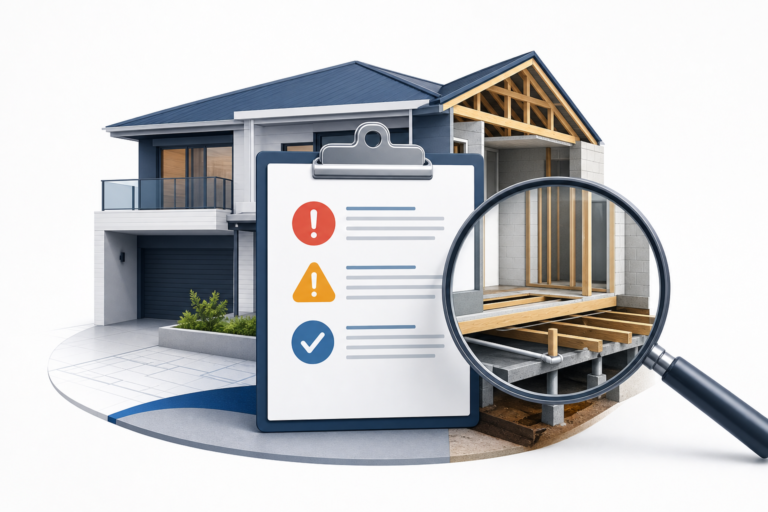
Building Inspection Reports and Expert Evidence
Updated October 29, 2026 You've received a building and inspection report and you're not sure what to do with it.
Read More »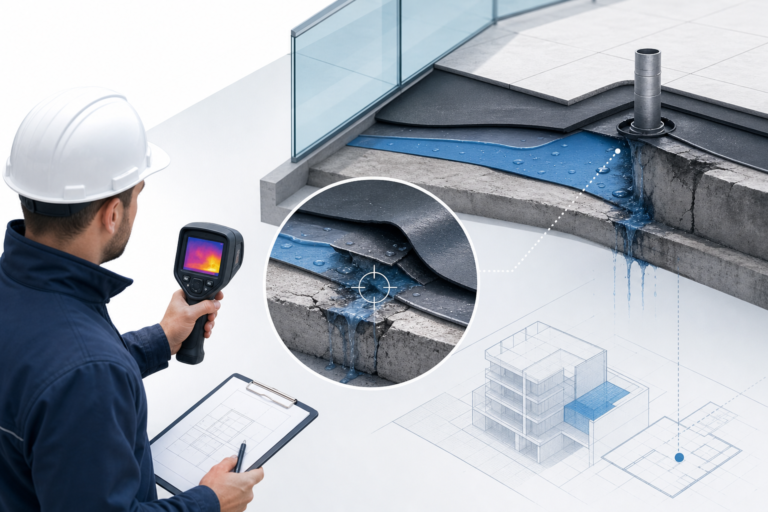
Waterproof Membrane Failure: How Inspectors Find the Cause
Waterproof membrane failure is diagnosed by tracing the water entry point, reviewing design documents, exposing the membrane for visual inspection,
Read More »