
Cost of a Building Expert Witness Report: 2026 Guide
TL;DR: In NSW, the cost of a building expert witness report for NCAT typically ranges from $2,000 to $10,000 AUD, and a standard residential dispute report usually sits around $4,500 AUD. The final price depends on the complexity of the defects, the amount of investigation required, and how much documentation and tribunal-ready work needs to be prepared.
You usually start looking into expert report costs when something has already gone wrong. A defect has appeared, the builder and owner disagree about cause or responsibility, or a solicitor needs proper evidence before filing or responding in NCAT. At that point, the question isn’t just “What will this report cost?” It’s also “Will this report help resolve the dispute?”
A properly prepared report can do that. It can identify the defect, explain the likely cause, connect the issue to workmanship or compliance, and present the findings in a form that a tribunal can use. That’s very different from a general building opinion or a routine inspection note.
With 35+ years in building and construction and more than 15 years providing litigation support, the work in this area is straightforward to describe even if the disputes themselves aren’t. The report needs to be technically sound, independent, and practical. It also needs to help the reader, whether that’s a homeowner, builder, strata manager, or solicitor, understand what matters and what doesn’t.
Understanding the Need for an Expert Witness Report
A building dispute often begins with a defect that won’t go away. Water ingress keeps returning. Cracking gets worse. A bathroom renovation fails. A slab movement issue raises questions about site classification, drainage, or workmanship. Both sides have opinions, but NCAT won’t decide the case on opinion alone.
That’s where an expert witness report becomes important. It provides an independent technical assessment prepared for a legal setting, not just a conversation between parties. The report sets out what was observed, what documents were reviewed, what standards or construction principles were considered, and what conclusions can reasonably be drawn.
When the report becomes necessary
Some disputes can still be resolved with early negotiation. Others can’t. A report is usually needed when:
- The defect is disputed: One side says it’s poor workmanship, the other says it’s maintenance, wear, design, or owner-caused damage.
- The scope of rectification is unclear: The parties may agree something is wrong, but not agree on the extent of work required.
- The matter is heading to NCAT: The tribunal needs evidence that is organised, objective, and relevant to the issues in dispute.
- A solicitor needs an independent opinion: Legal strategy is much stronger when the technical position has been properly tested first.
Practical rule: If the issue is serious enough that someone is talking about formal proceedings, it’s serious enough to get the evidence right.
A lot of clients initially compare the report cost to a standard inspection and wonder why the gap is so wide. The answer is simple. A litigation report has to do more than identify a problem. It has to support a defensible position.
Cost is only one part of the decision
People understandably focus on the invoice first. But in practice, the bigger risk is paying for a report that doesn’t properly address causation, scope, compliance, or tribunal requirements. A cheaper report can become expensive if it has to be redone, challenged, or supplemented later.
The right first step is to get clear on scope. If you need guidance on your dispute, site issues, or likely report requirements, contact admin@awesim.com.au or call 1800 293 746 for a practical discussion about what’s involved.
What a Professional Building Expert Report Includes
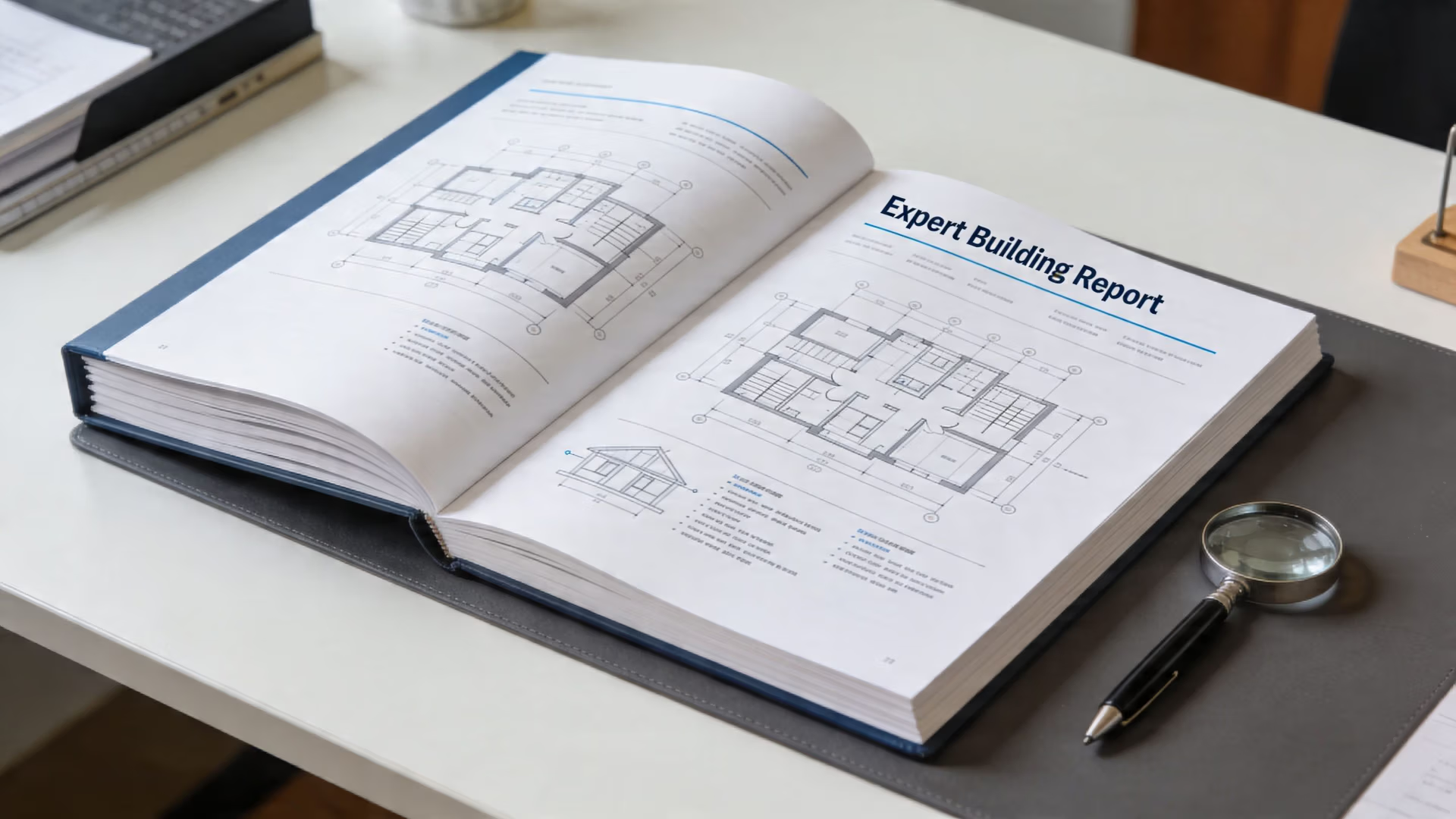
A professional report isn’t just a few pages of comments and photographs. It is a structured forensic document prepared to withstand scrutiny. That’s why the work takes longer and costs more than a standard inspection.
What the client is actually paying for
The report usually starts well before the site visit. Documents need to be reviewed first so the inspection is targeted and efficient. Depending on the dispute, that can include plans, specifications, contracts, variations, photographs, engineering details, correspondence, previous reports, and defect lists.
At the property, the inspection isn’t limited to identifying what looks wrong. The purpose is to assess condition, likely cause, extent, relevant workmanship issues, and whether the defect aligns with the allegations being made.
Typical inclusions are:
- Site investigation: Visual assessment of defective items and surrounding construction.
- Photographic evidence: Images that support findings, not just record general conditions.
- Document analysis: Review of plans, contracts, specifications, and related material.
- Standards and compliance review: Consideration of applicable construction requirements and relevant Australian Standards.
- Causation analysis: An opinion on why the defect has occurred, where that can be reasonably determined.
- Rectification commentary: What work is likely needed to address the issue.
The Scott Schedule matters
In NCAT matters, the Scott Schedule is often one of the most useful working documents. It organises each alleged defect in a line-by-line format so the claimant’s position, respondent’s position, and expert opinion can be compared clearly.
That structure is especially helpful when there are multiple defects across wet areas, finishes, structural items, drainage, or external works. It forces precision. It also reduces the chance that a hearing gets sidetracked by vague allegations.
For readers wanting to understand the structure of this kind of document, an expert witness report template in Australia is useful as a guide to what a properly organised report should contain.
Why it costs more than a pre-purchase inspection
A pre-purchase inspection is narrower in purpose. It gives a general view of condition for an informed buying decision. An expert witness report is different. It’s prepared for a dispute and has to connect observations to evidence, allegations, standards, and likely tribunal use.
A good expert report doesn’t just say a defect exists. It explains what was found, why it matters, and how the evidence supports the conclusion.
That’s why the work is slower, more detailed, and more disciplined than a routine inspection.
Typical Building Expert Witness Report Costs in NSW
A homeowner receives a builder’s response denying responsibility. A solicitor needs a report that can stand up in NCAT. A builder wants an independent view before the claim widens. In each of those situations, the question is not only “what will the report cost?” but “what does the right report save me?”
For NSW residential matters, the cost of a building expert witness report commonly falls between $2,000 and $10,000 AUD. Where a matter lands in that range depends on scope, complexity, and the amount of analysis needed to produce a report that is effective in a dispute. A cheaper report can look attractive at the start, but if it is unclear, incomplete, or not prepared to tribunal standard, clients often pay again in extra conferences, follow-up inspections, or report amendments. Over 35+ years in building disputes, that is the trade-off I see most often.
Where many residential matters fall
A fairly contained dispute, such as a small number of defective items with a modest document set, will usually sit toward the lower to middle part of the range. A larger claim involving water ingress, movement, multiple trades, or disagreement about causation will usually move higher because the expert has to spend more time examining each issue properly.
That is why cost should be judged against outcome, not fee alone.
A well-prepared report can narrow the dispute early, support settlement discussions, and reduce wasted hearing time. That return on investment matters to homeowners funding the claim themselves, builders managing exposure, and solicitors trying to run a case efficiently. The same principle applies in other service-based work. Clear scope, document volume, and turnaround pressures all affect pricing, which is why articles on understanding service cost factors are useful as a general comparison.
Sample Quote Comparison
| Service Component | Standard Report (e.g., Single Defect) | Complex Report (e.g., Multiple Defects, Structural Issues) |
|---|---|---|
| Initial document review | Limited plans, contract, photos, defect list | Large document set with multiple technical records |
| Site inspection | One focused inspection | Broader inspection across multiple issue areas |
| Evidence gathering | Basic photographic and defect recording | Expanded evidence capture and issue-by-issue analysis |
| Scott Schedule input | Straightforward defect entries | Detailed comparative entries across many items |
| Causation analysis | Narrow and relatively direct | More involved, with overlapping building factors |
| Report drafting | Shorter report | Longer report with more detailed reasoning |
| Revisions and conferences | Limited | More likely due to legal or party feedback |
| Likely cost position | Around the lower to middle part of the range | Toward the upper part of the range |
A practical way to budget before you instruct an expert
Clients usually get better value by asking a few direct questions before the quote is accepted.
How many disputed items need an opinion?
One leaking balcony is a different exercise from a defect claim covering bathrooms, brickwork, drainage, and finishes.How organised are the records?
Clear plans, contracts, photos, and correspondence reduce time. Disordered material increases review time and often increases cost.Is the report for early advice, negotiation, or a hearing?
A report intended to support NCAT proceedings usually requires tighter wording, closer document cross-checking, and more disciplined presentation.Is there likely to be follow-up work?
Joint expert meetings, conference calls with solicitors, responses to further questions, and hearing attendance are often outside the base report fee.
The best quote is rarely the lowest one. The better test is whether the scope is clear, the exclusions are stated, and the expert has allowed enough time to produce a report that helps resolve the dispute instead of adding another layer to it.
Key Factors That Influence the Final Report Cost
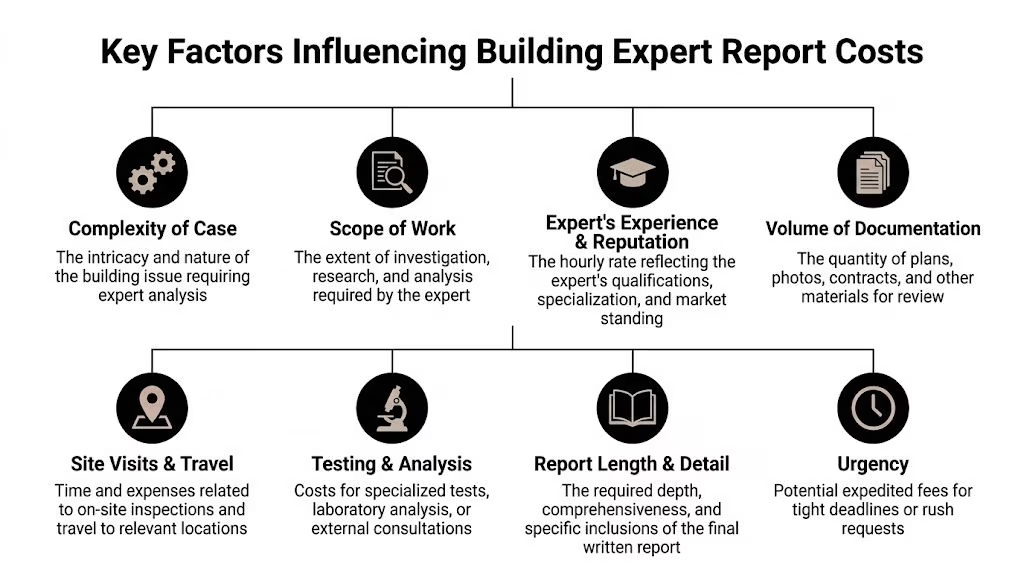
No two building disputes are priced the same because no two disputes ask the expert to do exactly the same work. The invoice usually reflects time, travel, complexity, document volume, and whether extra testing or legal coordination is required.
Location changes the numbers
Regional variation is real. In NSW, expert witness fee data by region shows Sydney-based consultants charging $500 to $750 AUD per hour, while rural NSW averages $350 to $550 AUD per hour, with a 10 to 25 percent difference reflecting market conditions and travel considerations.
That doesn’t always mean rural matters are cheaper overall. A regional property may involve lower hourly rates but longer travel time, harder access, or the need to combine inspections efficiently because repeat visits are impractical.
The main cost drivers
Some cost factors are obvious. Others aren’t. The biggest ones are usually:
- Complexity of defects: Waterproofing, movement, structural concerns, and recurring water damage often need more analysis than a cosmetic finish issue.
- Scope of work: A report on one defect is one thing. A report across internal finishes, external cladding, wet areas, drainage, and slab performance is another.
- Document volume: Large sets of plans, emails, variations, photographs, and previous reports take time to sort and test against the physical evidence.
- Site visits and access: Travel, tenancy arrangements, strata access, and the need for repeated inspections all affect cost.
- Testing and analysis: Some matters need more than observation. The more forensic the investigation, the greater the likely expense.
- Report detail: A short advisory opinion costs less than a carefully reasoned tribunal-ready report.
- Urgency: Tight deadlines can compress diary availability and drafting time.
Costs usually rise because the scope rises. They don’t rise because the title of the report changes.
Hidden costs that clients often miss
Hourly rates are only part of the picture. Clients often underestimate the time spent outside the site visit itself. The document review, issue mapping, Scott Schedule preparation, conference calls, revisions, and response to solicitor queries can be substantial.
That same budgeting principle appears in other professional services too. If you’ve ever looked at understanding service cost factors, the pattern is familiar. The visible task is only one part of the actual work. Preparation, handling complexity, turnaround expectations, and output quality all affect total cost.
What usually does not work
A few habits nearly always increase cost without improving the result:
- Drip-feeding documents: Sending plans today, emails next week, and photos later slows the review and creates rework.
- Asking for a broad report without narrowing issues: The wider the brief, the less efficient the investigation becomes.
- Using a standard inspection where expert evidence is needed: This often leads to duplicated cost because the matter later needs a proper forensic report anyway.
A disciplined brief nearly always saves money.
How Reports Are Prepared for NCAT and Legal Standards
An expert report for litigation isn’t merely a building opinion written in formal language. It has to be prepared in a way that makes it usable in proceedings and credible under scrutiny. If it misses that mark, the client can spend money on a document that adds very little weight when it matters.
Independence comes first
The expert’s duty is to provide an objective opinion based on the evidence, not to argue for the party who engaged them. That matters in NCAT because a report that reads like advocacy is easier to challenge.
The discipline starts with the brief. The issues need to be identified clearly, the inspection needs to be tied to those issues, and the conclusions need to distinguish between observation, assumption, and opinion. Good reports are careful with language for that reason.
The legal framework affects the work
For admissibility, the report must comply with the Expert Witness Code of Conduct under the Uniform Civil Procedure Rules 2005. Costing also tends to reflect the work required, with guidance on expert report preparation and itemised quote structure noting that quotes often allocate 40% to investigation, 30% to report drafting, and 30% to revisions and meetings.
That breakdown makes practical sense. The investigation establishes the factual base. Drafting turns those findings into a coherent opinion. Revisions and meetings deal with clarification, legal input, and final formatting for use in proceedings.
What makes a report useful in NCAT
A useful NCAT report is usually:
- Issue-specific: It answers the disputed questions directly.
- Evidence-based: It ties conclusions to site observations and documents.
- Plainly written: Tribunal members and parties need to follow it without unnecessary jargon.
- Properly organised: Defects, findings, and opinions need a clear structure.
- Consistent with procedure: Scott Schedules and supporting material should align with the way the matter will be run.
For matters specifically headed to tribunal, a building expert witness report for NCAT should be scoped with the legal use in mind from the start, not retrofitted later.
A compliant report doesn’t guarantee success. But a non-compliant or poorly organised one can weaken a sound case.
Practical Tips to Help Manage Your Report Costs
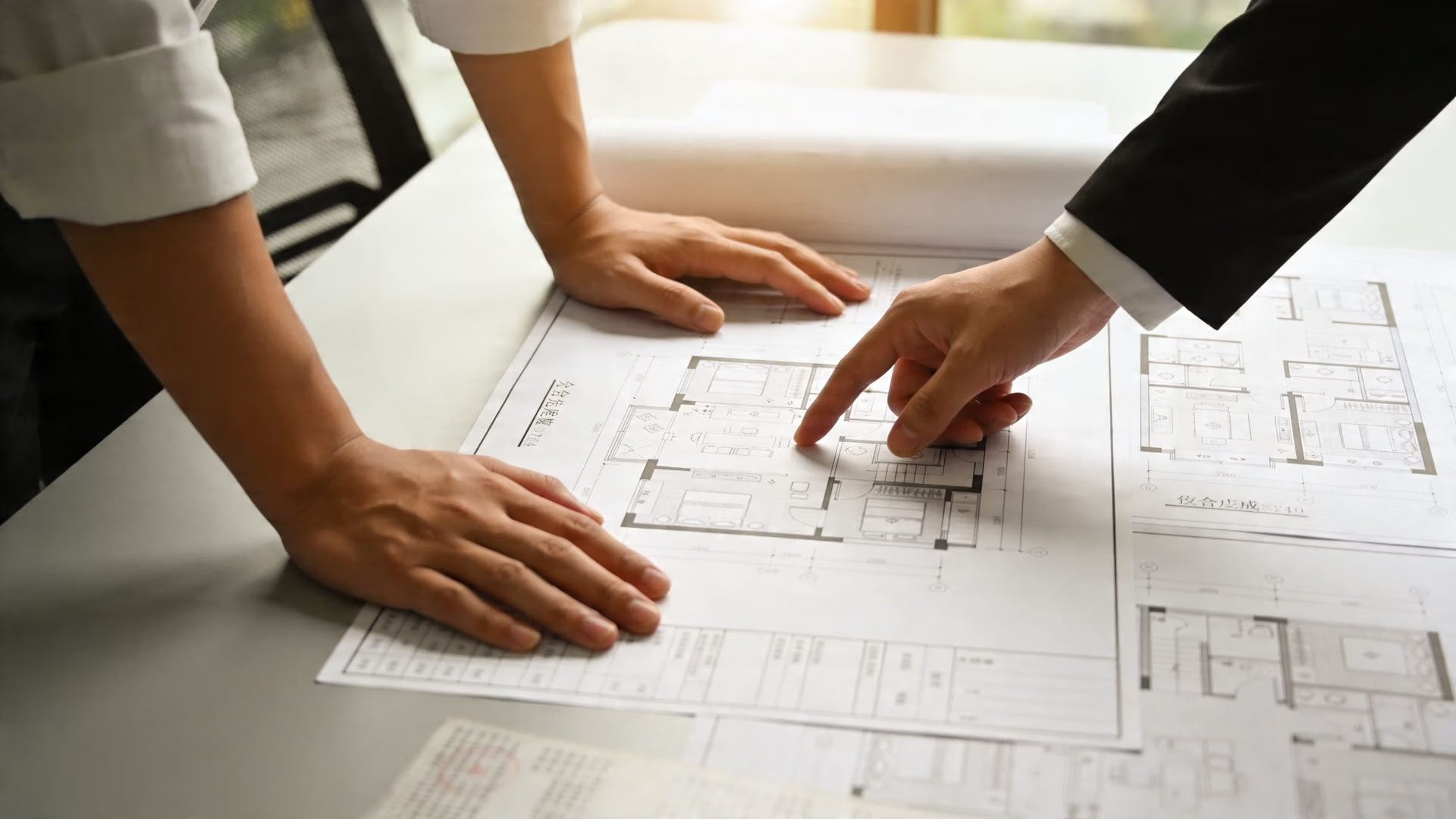
The most effective way to control costs isn’t to push for the lowest quote. It’s to reduce wasted time. Good preparation lets the expert spend more of the budget on technical analysis and less on chasing documents, clarifying basics, or correcting avoidable gaps.
What clients can do before the inspection
A well-prepared client usually gets a cleaner, more efficient report. The basics help more than people expect:
- Prepare one defect list: Group issues by area, not by emotion or chronology.
- Collect the key documents early: Plans, contract, variations, emails, photos, invoices, and previous reports should be provided together.
- Keep a simple timeline: When the work was done, when defects appeared, and what happened after that.
- Provide safe and practical access: Locked rooms, blocked subfloors, or missing ladders create delay.
- State the purpose clearly: Early advice, settlement support, or hearing preparation all require a different level of work.
One useful mindset comes from managing your budget in residential home design. The same principle applies in disputes. If you define scope clearly at the start, you avoid paying for confusion later.
Why the report can still be worth it
There’s a genuine data gap on hard ROI figures for expert witness reports, but commentary on expert report value in dispute resolution makes the practical point well. The strategic value is in strengthening legal position and improving the prospects of a favourable settlement, which can help avoid prolonged and costly litigation.
That lines up with day-to-day dispute work. A clear report can narrow the argument, expose weak allegations, and make settlement discussions more realistic. It won’t fix every case, but it often changes the quality of the conversation.
If you want a short overview of how these disputes are approached in practice, this video is a useful starting point.
Choose the brief carefully
If you’re comparing providers, ask for an itemised scope and make sure the quote states whether it includes site attendance, document review, report drafting, Scott Schedule work, meetings, and any later conference or evidence time. Awesim Building Consultants is one provider that offers site investigations, expert witness reports, and Scott Schedules for NSW building disputes, but the same rule applies whoever you engage. Compare scope, not just price.
Frequently Asked Questions About Expert Reports
Is an expert witness report the same as a pre-purchase building inspection
A dispute often starts with someone holding a standard building inspection report and assuming it will be enough for NCAT or a solicitor. In practice, it rarely is.
A pre-purchase inspection is written to give a buyer a general view of condition before a sale. An expert witness report is prepared to examine specific defects, causation, rectification, scope responsibility, and the evidence needed in a legal dispute. It requires a different brief, a different level of investigation, and a different standard of reasoning.
That difference affects cost, but it also affects outcome. Paying for the right report at the start can save time, avoid duplicated fees, and put the dispute on clearer footing.
How long does a report usually take
Time depends on the size of the brief, access to the property, the number of defect items, and the quality of the documents provided at the start.
A small matter with a clear issue and organised records can be turned around far faster than a multi-trade dispute with missing drawings, incomplete contracts, and competing allegations. Delays usually come from poor access, late instructions, or documents arriving in stages. If you want to control time and cost, give the expert the full brief early, including plans, contract documents, variation records, photos, emails, and any prior reports.
What if the other side also gets an expert
That is common in building disputes.
The question is not who has an expert. It is which report is better reasoned, better documented, and more closely aligned with the issues the tribunal or court needs decided. A good expert report identifies what can be confirmed, what remains uncertain, and why. It also separates observed defects from assumptions and legal argument.
In many matters, competing reports help narrow the actual points in dispute. That can support settlement discussions and reduce hearing time, which is often where the financial return on a well-prepared report starts to show.
Can I save money by using a cheaper report first
Sometimes, but many clients end up paying twice.
If the matter is heading toward NCAT, formal negotiations, or solicitor review, a basic advisory report may not be enough. You may then need a second report prepared in the proper format, with further inspection, document review, and revised opinions. The cheaper first step can become an extra layer of cost rather than a saving.
The better question is simple. Will this report do the job you need it to do?
What should I ask for before I engage an expert
Ask for a written scope. It should set out what is included, what is excluded, whether site attendance is allowed for, how documents will be reviewed, whether the report is for advice or proceedings, and what later costs may arise if the matter continues.
Also ask whether the expert can prepare material suitable for NCAT, including defect schedules or Scott Schedule work if needed. After more than 35 years in this field, I can say this with confidence. Clear scoping at the start is one of the best ways to protect your budget and get a report that helps resolve the dispute, rather than just describing it.
If you need practical advice on the likely cost of a building expert witness report, or you want a clear scope for an NCAT matter, contact Awesim Building Consultants. You can email admin@awesim.com.au or call 1800 293 746 to discuss the dispute, the documents available, and the kind of report that will actually help.

Related Posts

NCAT Consumer Division: Steps From Lodgement to Hearing
Most people who end up at the NCAT Consumer and Commercial Division do not arrive there by choice. They arrive
Read More »
Statutory Warranty NSW: What Builders Must Fix and for How Long
Statutory warranty NSW obligations exist precisely for the moment a builder stops returning calls. A crack appears in the render.
Read More »
Home Building Act NSW: Key Clauses Every Owner Should Know
The Home Building Act 1989 (NSW) sets the rules for residential building work in New South Wales. It requires licensed
Read More »