
What is a Shower Water Stop? An Expert Guide for NSW

You notice it after a shower. A damp edge in the carpet outside the bathroom. A swollen skirting board. A stain on the architrave that wasn’t there before. The grout and tiles inside the shower might still look fine, so people often assume the leak must be coming from the shower head, the screen, or a failed silicone bead.
Quite often, the underlying issue sits lower and further back. It’s at the threshold, hidden under the tile build-up, where a small component was meant to stop water leaving the shower area.
That component is the shower water stop. It sounds minor. In practice, it’s one of the details that can decide whether a bathroom performs properly or ends up in dispute. When it’s missing, too low, interrupted, or wrongly placed, water can track into adjacent floor areas and the damage usually shows up outside the shower before anyone realises what has happened.
That Mysterious Puddle The Unseen Guardian of Your Bathroom
A homeowner usually doesn’t call a building consultant because they’re curious about waterproofing terminology. They call because something has gone wrong. Water appears where it shouldn’t. The bathroom smells damp. Paint starts lifting on the other side of a wall. Timber trim near the door begins to move.
In many of these situations, the shower itself still looks tidy. The screen is in place. The waste is draining. The tiles seem intact. That’s why water stop defects get missed. They’re not obvious unless you know what you’re looking for and understand how water moves once the floor bed becomes wet.
Why the damage often shows up outside the shower
Shower floors are built to direct surface water to the drain. That part is straightforward. The problem starts when water gets beyond the intended wet zone and reaches the threshold or adjoining floor area. If the containment detail at that edge isn’t doing its job, the water doesn’t need a dramatic path. It only needs a small weakness.
A bad water stop detail can lead to:
- Damp finishes nearby: carpet, timber trim, door jambs, and floor coverings outside the shower opening can show the first signs.
- Recurring leaks despite resealing: many owners keep replacing silicone because the symptom is visible there, even though the failure sits below.
- Arguments about cause: one party blames cleaning habits, another blames the screen, and the underlying issue is a non-compliant threshold detail.
The smallest waterproofing details often create the biggest arguments, because they’re hidden until the bathroom starts affecting rooms next to it.
Why this matters in NSW
In dispute work, a “simple” threshold detail can become a key piece of evidence. If the water stop isn’t installed where it should be, or isn’t finished correctly, that can shift a leak discussion from opinion to compliance. For homeowners, that means understanding what this component is. For builders, it means understanding that this is not just a finishing item. It’s part of the waterproofing system.
Defining the Shower Water Stop What It Is and Why It Matters
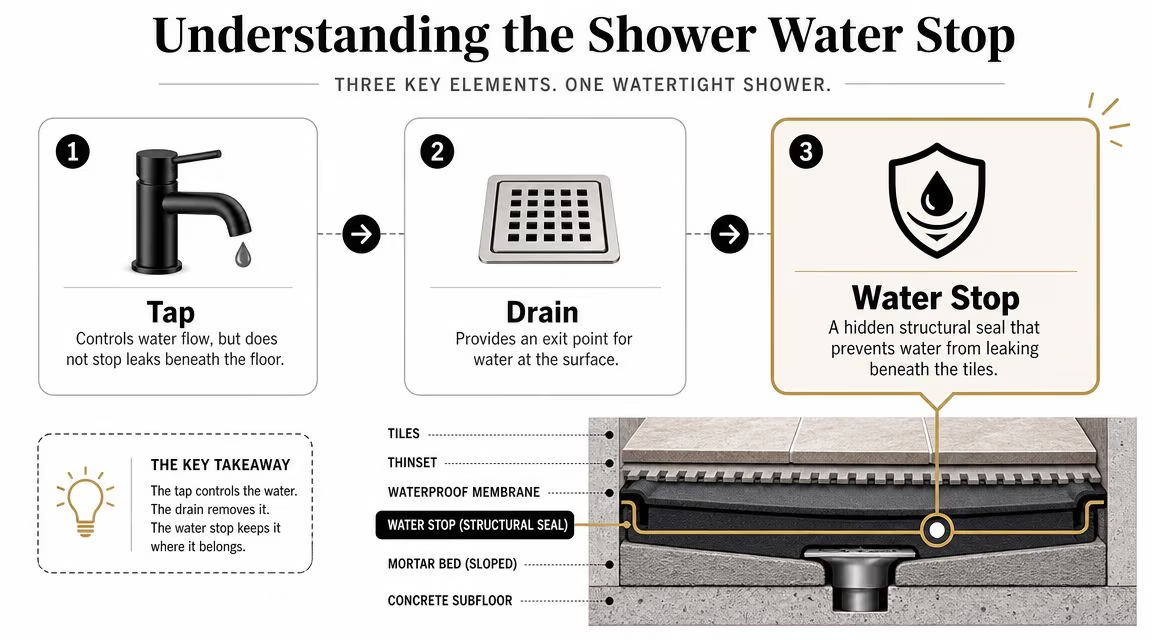
A shower water stop is not the tap. It’s not the drain grate. It’s not the shower screen. Those components either control flow, dispose of water, or help reduce splash. The water stop does a different job.
Think of it as a small built-in dam at the edge of the shower. Its purpose is to stop water from moving out of the shower zone and into the surrounding floor area once the rest of the system has done what it can.
The simple explanation
A shower needs several layers of protection working together:
- The floor fall pushes water towards the waste.
- The drain removes that water.
- The membrane protects the structure below the tile finish.
- The water stop blocks water from travelling across the threshold into adjacent areas.
If one of those parts fails, the others can’t always compensate. That’s why a shower can leak even when the tiles look sound and the drain appears to work normally.
For readers also trying to understand the broader waterproofing build-up behind a tiled finish, this guide on how to waterproof shower walls is a useful companion to the threshold detail discussed here.
The formal definition under AS 3740
In Australia, this isn’t just trade slang. AS 3740:2021 defines a water stop as a “vertical extension of the waterproofing system forming a barrier to prevent the passage of moisture in the floor or vertically in a wall”, as discussed in this summary of AS 3740 water stop requirements.
That definition matters because it confirms two things.
First, a water stop is part of the waterproofing system, not an optional trim. Second, its function is to create a physical barrier against moisture movement, not just to tidy the edge of a tiled area.
Why the detail matters so much
Many bathroom leaks aren’t caused by dramatic failures. They come from ordinary shower use over time. Water splashes, runs, pools, and sits. A compliant threshold detail helps contain that movement before it reaches a more vulnerable part of the bathroom.
Practical rule: if a detail is meant to contain water, finishing it flush, cutting it short, or breaking it at a junction usually defeats the whole point.
That’s why the question “what is a shower water stop?” matters more than is commonly understood. It’s a small detail with a structural purpose, and when it’s wrong, the consequences show up outside the shower zone.
Water Stop Requirements Under Australian Standards
The main issue in practice isn’t whether a water stop exists in theory. It’s whether it has been installed in the right place, to the right height, and in the right layout for that particular shower design.
Australian guidance sourced to AS 3740 states that unenclosed showers require a water stop at the perimeter of the shower area, while enclosed showers require it under the shower screen or bottom rail. It also states that where there is no hob or set-down, the vertical leg must finish at least 5 mm above the finished floor level, and for a Type 2 unenclosed shower the water stop must extend a minimum of 1500 mm from the shower rose connection to the wall or ceiling. That summary is set out in the KBDi article on waterproofing design decisions for bathrooms.
What changes with the shower type
A water stop detail isn’t identical in every bathroom. The location depends on how the shower is configured.
| Shower Type | Water Stop Location | Key Requirement (AS 3740) |
|---|---|---|
| Enclosed shower | Under the shower screen or bottom rail | Must be positioned to contain water at the shower enclosure edge |
| Unenclosed shower | At the perimeter of the shower area | Required at the perimeter rather than relying on an enclosure |
| Type 2 unenclosed shower | At the perimeter in relation to shower layout | Must extend a minimum of 1500 mm from the shower rose connection |
| Hobless or no set-down shower | Threshold detail at the floor edge | Vertical leg must finish at least 5 mm above finished floor level |
For a more detailed discussion of this issue in bathroom defect work, see our page on bathroom water stops.
Why these dimensions exist
These aren’t arbitrary measurements. The threshold has to perform physically.
A 5 mm upstand in a hobless arrangement creates a barrier against water moving as a thin sheet across the floor finish. The 1500 mm requirement in a Type 2 unenclosed shower is there because open showers need a larger containment zone than enclosed ones.
What often gets misunderstood
Builders and renovators sometimes assume a level-entry shower means the threshold barrier can be ignored. It can’t. A flush visual outcome doesn’t remove the need for a compliant containment detail below or within the build-up.
The most common misunderstandings are:
- Assuming the screen is enough: a screen reduces splash. It does not replace a required water stop.
- Treating aluminium angle as a cosmetic trim: unless it forms part of the waterproofed barrier detail, it may not achieve the intended function.
- Finishing the detail too low: if the vertical leg doesn’t sit proud where required, water can track over it.
A compliant shower isn’t just one that looks neat on handover day. It’s one where the unseen details still control water after repeated daily use.
Common Water Stop Defects and How to Identify Them
Most water stop defects aren’t found because someone pulls up tiles looking for trouble. They’re found because the bathroom starts telling on itself. Moisture marks appear outside the shower area. Silicone gets replaced but the leak returns. The threshold feels suspiciously flat when it should have a clear containment detail.
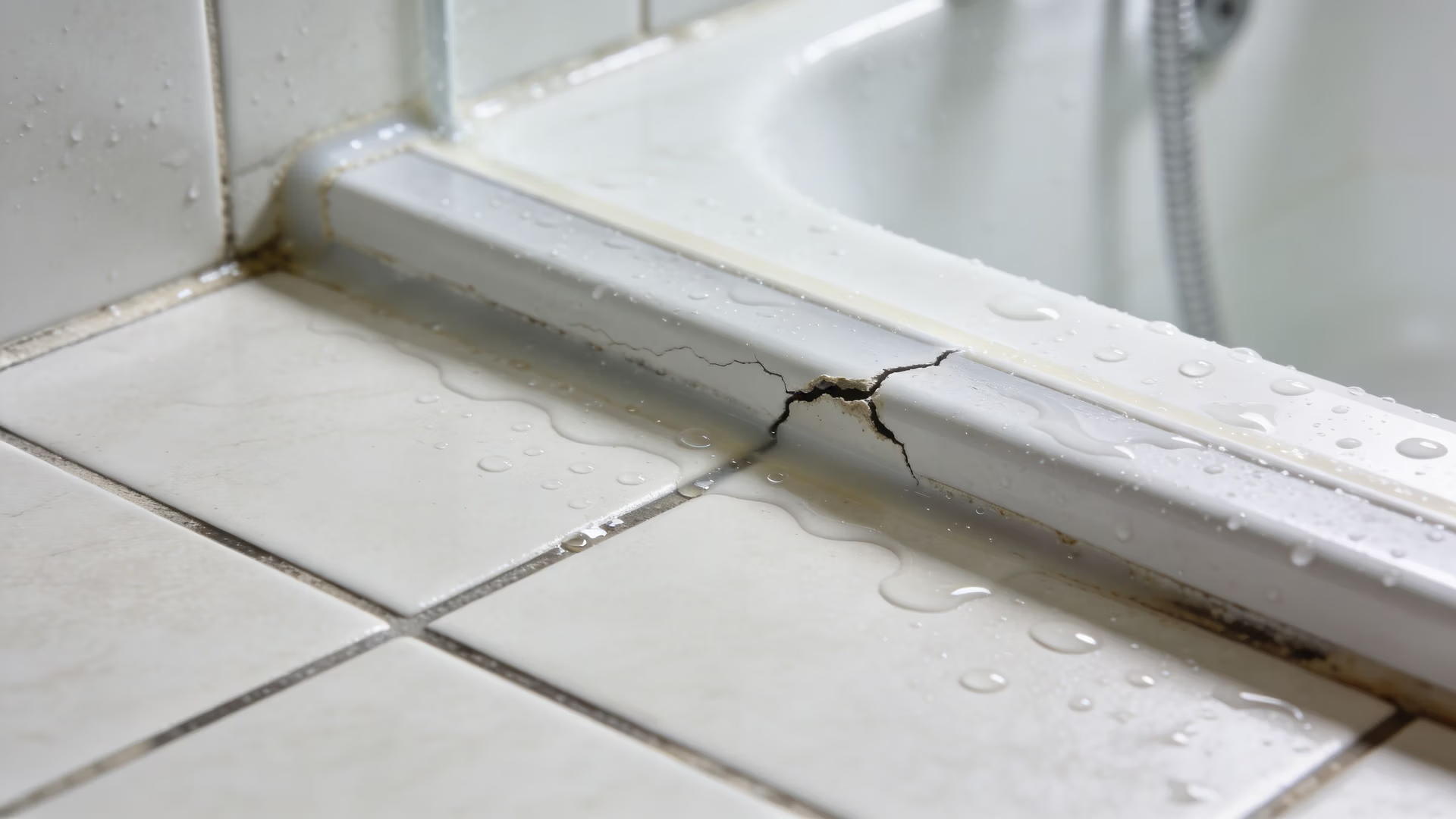
The defects seen most often on site
Some failures are visible. Others only become obvious when the build-up is opened. The common patterns are fairly consistent.
Finished flush instead of proud
In hobless work, a threshold detail that ends up effectively flush with the tile surface defeats the barrier function. Water doesn’t need much encouragement to move laterally across a smooth floor. Once that happens, the shower has lost one of its main containment points.
Gaps at wall junctions
A water stop has to terminate properly where it meets walls and returns. If there is a gap, break, or poorly integrated junction, water can bypass the barrier at the ends rather than over the top.
Missing under the screen
With enclosed showers, installers sometimes rely on the shower screen frame and sealants alone. That’s risky. If the required stop under the bottom rail is absent, water can find its way beyond the enclosure edge.
Corrosion or physical damage
Older aluminium components can be bent, cut, punctured, or corroded. Once the barrier detail is physically compromised, it can no longer perform as intended, even if the surrounding finishes still look acceptable.
Practical signs a homeowner can look for
You usually won’t confirm full compliance without invasive inspection. But you can spot warning signs.
- Water outside the opening after ordinary use: repeated pooling just beyond the shower line suggests poor containment.
- Swelling to nearby trims or floor finishes: damage often appears beyond the wet area first.
- Repeated silicone failure at the same location: constant patching usually means the underlying problem sits deeper.
- A very flat threshold in a level-entry shower: if there is no obvious containment strategy, ask how the barrier was formed.
For leaks that may also relate to plumbing components inside the wall, this practical overview from Bear Valley Plumbing & Heating on shower valve leaks behind a wall can help distinguish threshold and waterproofing issues from supply-side leaks.
What doesn’t work as a fix
The usual quick fixes don’t address a failed water stop.
- More silicone at the tile edge
- A different shower screen sweep
- Regrouting the floor surface
- Surface sealers sold as “waterproofing”
Those measures may reduce symptoms briefly. They don’t recreate a missing or non-compliant barrier within the waterproofing system.
A short visual explanation helps here:
If the containment detail below the tiles is wrong, surface maintenance won’t put it right. It only delays the proper repair.
Why Water Stops are Critical in NSW Building Disputes
In NSW, a failed shower water stop isn’t just a technical footnote. In many matters, it becomes one of the clearest ways to show whether a bathroom was built in accordance with the required standard.
The reason is straightforward. The shower floor is designed to fall toward the drain, while the water stop acts as a containment threshold to stop horizontal spread once the floor bed becomes saturated. Australian industry commentary also notes that in unenclosed showers the 1500 mm water-stop length is tied to observed shower spray patterns, and that this detail has moved from informal trade practice into codified compliance under AS 3740 and the NCC. That summary is discussed in this article on what a water stop is.
Why this detail carries weight in NCAT matters
A bathroom leak complaint on its own is often vague. People describe dampness, staining, odour, or repeated water escape. Those symptoms matter, but they don’t prove the construction defect by themselves.
A non-compliant water stop can. Once an expert identifies the threshold detail, records its location, measures it, photographs it, and compares it against the applicable requirement, the issue becomes evidence rather than argument.
That’s why these cases often turn on points such as:
- Placement: was the stop installed at the required position for the shower type?
- Continuity: was the barrier broken or left open at wall junctions?
- Height and extent: did the built detail match the required performance criteria?
- Integration with waterproofing: was it treated as part of the waterproofing system, or as an afterthought?
How the defect is documented properly
In dispute work, the process matters as much as the defect itself. A consultant doesn’t just say “the shower leaks”. The defect is documented in a way a tribunal, solicitor, insurer, or opposing party can follow.
That usually means:
- Site observation of the bathroom layout, shower type, and visible symptoms.
- Targeted inspection of threshold details and adjacent damage.
- Measurement and photographs that show the actual built condition.
- Reference to the relevant standard requirement and how the installation departs from it.
- Itemisation in a defect schedule or Scott Schedule where required.
For parties needing formal investigation and reporting, Awesim’s guide on why shower water stops are required gives useful context on how these details are assessed in practice.
In a dispute, broad statements rarely help. Measured defects, clear photos, and correct references to the standard do.
Why homeowners and builders should care early
For homeowners, early identification can stop a small defect from turning into a bigger rectification scope. For builders, getting this detail right from the start is far cheaper than reopening a finished bathroom after occupation.
It also affects responsibility. Once damage extends outside the shower zone, arguments can broaden into flooring, skirtings, doors, paintwork, and adjoining rooms. A threshold detail that looked minor during construction can end up driving the whole claim.
Next Steps When You Suspect a Water Stop Failure
If you suspect a failed water stop, don’t assume a tube of sealant will solve it. In many cases, proper rectification means removing finishes, exposing the threshold build-up, correcting the barrier detail, and redoing waterproofing and tiling in the affected area.
That’s why the first step should be to establish the facts. Before spending money on piecemeal repairs, work out whether the issue is a maintenance problem, a plumbing issue, or a construction defect in the waterproofing system.
What to do first
A sensible approach is usually:
- Stop guessing at the cause: recurring dampness doesn’t automatically mean the shower screen is at fault.
- Document what you can see: note where water appears, what damage is visible, and when it occurs.
- Avoid cosmetic patch jobs: regrouting and resealing can hide symptoms and complicate later assessment.
- Get the shower assessed properly: if there is a dispute with a builder, timing matters. Evidence is easier to preserve before multiple attempted repairs.
When formal reporting makes sense
A formal site investigation is usually worth it when:
- the leak keeps returning
- adjacent finishes are being damaged
- you’re dealing with a recent renovation or new build
- the builder disputes responsibility
- legal, insurance, or NCAT action may follow
In those situations, an independent consultant can inspect the bathroom, identify whether the threshold detail appears non-compliant, and set out the issue clearly in a building defect report. Where litigation is already in view, that same evidence may need to be translated into an Expert Witness Report or a Scott Schedule format.
Awesim Building Consultants carries out site investigations, Building & Construction Expert Witness Reports, and Scott Schedules for homeowners, builders, and lawyers dealing with these kinds of defects across NSW.
A shower water stop is a small component, but it has a very large job. When it fails, the leak usually doesn’t stay “just in the shower”. It spreads into finishes, into costs, and sometimes into formal proceedings. Getting a clear diagnosis early is usually the cheapest and cleanest move.
If you suspect a shower water stop defect and need clear, usable evidence before repairs or a dispute escalates, contact Awesim Building Consultants for an obligation-free discussion. With 35+ years in building and construction and 15+ years providing litigation support, we assist with site investigations, Building & Construction Expert Witness Reports, and Scott Schedules. Email admin@awesim.com.au or call 1800 293 746.

Related Posts
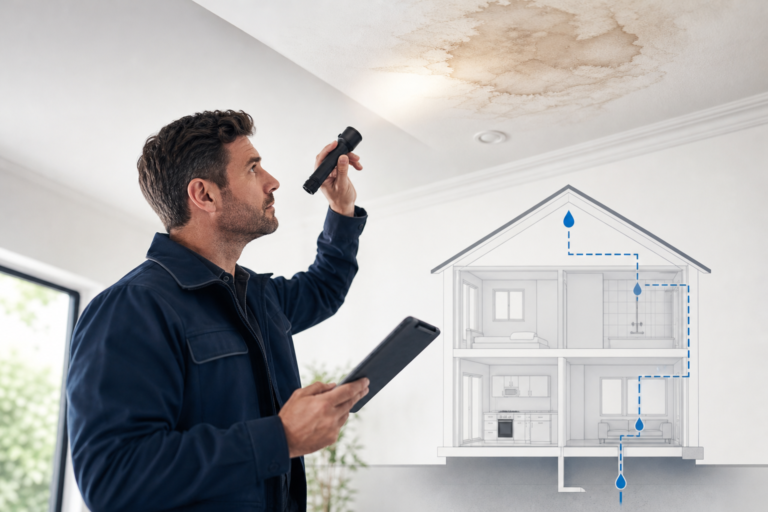
Water Damage in Homes: How to Track Down the Source
Water damage in a home rarely announces itself at the source. A stain on the ceiling, a musty smell in
Read More »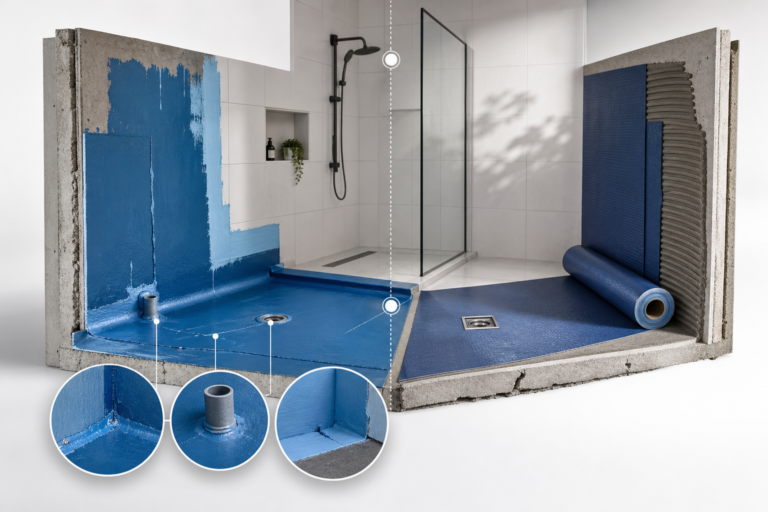
Waterproofing Membrane Types: Which Fails Most in NSW Bathrooms
Waterproofing failure is the single most common serious defect found in NSW apartments, and the type of membrane used, along
Read More »
Building Certifier NSW: Role, Limits, and When You Need More
A building certifier in NSW is a registered professional who issues construction certificates, conducts critical stage inspections, and grants occupation
Read More »