
Defects Liability Period in NSW: What Builders Must Fix and What Happens When They Refuse

A defects liability period comes from the building contract. Check its length, the notice process and the work it covers. Keep a dated defect list and copies of repair requests. The contractual process should be read alongside NSW statutory warranty guidance; an independent defect assessment can help document disputed work.
- What Is the Defects Liability Period?
- Statutory Warranties Under the Home Building Act
- What the Builder Is Required to Fix
- What Happens When a Builder Refuses to Rectify
- Strata Buildings and Common Property Defects
- Major Defects: The Six-Year Window
- What a Scott Schedule Adds to Your Case
- When the Builder Has Gone Insolvent
- Getting the Evidence Right
- Frequently Asked Questions
You've moved into your new home, or your strata committee has flagged a list of problems with common property. The builder says it will sort things out. Weeks pass. Then months. At some point you start wondering whether you have any real standing to force the issue.
That's where the defects liability period matters. Understanding how it works in NSW, what it covers, and what happens when a builder goes quiet can be the difference between getting defects rectified and absorbing the cost yourself.
What Is the Defects Liability Period?
The defects liability period (DLP) is a defined window after practical completion during which the builder remains contractually responsible for rectifying defects in the work. It's not a warranty in the consumer goods sense — it's a contractual obligation, and what it covers depends on the contract type, the nature of the defect, and whether the work falls under residential or commercial building law.
In NSW, residential building work is governed by the Home Building Act 1989. That Act creates statutory warranties that run separately from, and in addition to, any contractual DLP. The two are often confused, but they're distinct.
Statutory Warranties Under the Home Building Act
For residential work in NSW, the Home Building Act implies several warranties into every contract for residential building work. The most relevant are:
- The work will be done with due care and skill
- Materials will be suitable and fit for purpose
- The work will be carried out in accordance with the plans and specifications
- The work will comply with all applicable laws and legal requirements
- The work will be completed with reasonable diligence
These warranties apply regardless of what the contract says. A builder cannot contract out of them.
How Long Do the Warranties Last?
The statutory warranty periods under the Home Building Act are:
- Six years for major defects
- Two years for all other defects
The six-year period applies to defects in a structural element, or to a defect that makes the building uninhabitable, unsafe, or unfit for occupation. Cracks in a structural slab, roof framing failures, and serious waterproofing failures causing ongoing water ingress into habitable spaces are the kinds of defects that typically fall into this category.
The two-year period covers defects that don't meet the major threshold but still represent a failure to meet the statutory warranties — faulty tiling, poor paintwork, or non-compliant plumbing fixtures, for example.
Both periods run from the date of completion, or from the date the contract is terminated if it ends before completion.
What the Builder Is Required to Fix
Within the DLP or statutory warranty period, the builder must rectify defective work at no cost to the homeowner. The obligation is to bring the work up to the standard required by the contract and the statutory warranties.
That sounds straightforward. In practice, it generates disputes because builders and homeowners frequently disagree on three things:
- Whether a defect actually exists
- Whether it's the builder's fault or the result of owner misuse or poor maintenance
- Whether the proposed rectification is adequate
This is where independent expert evidence becomes essential. A builder disputing the existence or severity of a defect is not going to accept the homeowner's own assessment as authoritative. A report from a qualified building consultant, prepared to a standard that holds up in a tribunal or court, carries a different weight entirely.
What Happens When a Builder Refuses to Rectify
If a builder refuses to rectify defects within the statutory warranty period — or simply stops responding — the homeowner's primary avenue in NSW is the NSW Civil and Administrative Tribunal (NCAT). NCAT has jurisdiction over residential building disputes and can order a builder to carry out rectification work or pay compensation.
For disputes involving larger sums or more complex matters, the NSW District Court or Supreme Court may be the appropriate forum.
The Role of a Formal Defects Notice
Before filing at NCAT, give the builder written notice of the defects and a reasonable opportunity to rectify. This is both a practical step and, in many cases, a procedural requirement. Keep records of all correspondence. If the builder ignores the notice or provides an inadequate response, that documentation becomes part of your evidence.
Why Independent Expert Evidence Matters
NCAT and the courts don't simply take a homeowner's word that work is defective. You need independent expert evidence — a report from a qualified building consultant who has inspected the property, identified the defects, described them with reference to the relevant standards, and provided an opinion on causation and rectification cost.
In NSW courts and NCAT, expert witnesses are bound by Schedule 7 of the Uniform Civil Procedure Rules 2005. Schedule 7 sets out the code of conduct for expert witnesses and requires that the expert's duty is to the tribunal or court, not to the party who engaged them. A report that doesn't comply with Schedule 7 can be challenged or excluded.
This isn't a minor technical point. It's the standard that solicitors and NCAT members use to assess whether expert evidence is admissible and credible. If you're preparing for a hearing, the compliance of your expert's report with Schedule 7 is one of the first things the other side will scrutinise.
Awesim Building Consultants prepares Expert Witness Reports written specifically to Schedule 7, as well as Scott Schedules that itemise each defect alongside the associated rectification cost. Both document types are designed for use in NCAT, District Court, and Supreme Court proceedings.
Strata Buildings and Common Property Defects
Strata buildings add another layer of complexity. Defects in common property — waterproofing failures in basement car parks, roof membranes, external facades — are the owners corporation's responsibility to pursue. The builder's statutory warranty obligations apply to the owners corporation in the same way they apply to individual homeowners.
Strata managers dealing with common-property defect disputes often need to commission independent reports to support an NCAT application or to negotiate with a builder before proceedings begin. A forensic inspection that documents the nature and extent of defects, with photographic evidence and reference to the applicable standards, is the foundation of any credible claim.
Waterproofing failures are among the most common defects in strata buildings and among the most contested. Builders frequently argue that failures result from owner damage or inadequate maintenance rather than defective installation. A forensic waterproofing inspection report that traces the failure back to the original installation — with reference to the relevant Australian Standards — is the document that resolves that argument.
Major Defects: The Six-Year Window
If you're approaching the end of the six-year statutory warranty period, act now. Once it expires, your right to pursue the builder under the Home Building Act statutory warranties is gone. You can't extend it by waiting.
The practical implication is that homeowners and strata managers should commission an independent inspection before the six-year period closes, even if defects haven't yet become visible. Some structural and waterproofing defects develop slowly and may not be obvious until they've caused significant damage.
An inspection report prepared before the warranty period expires creates a contemporaneous record. If defects are identified, you have time to serve notice and, if necessary, file at NCAT before your rights are extinguished.
What a Scott Schedule Adds to Your Case
If you proceed to NCAT or court, a Scott Schedule is often required or strongly encouraged. It's a structured document that lists each defect in a separate row, describes the defect, identifies the applicable standard or specification that has been breached, and sets out the estimated rectification cost.
The format allows the tribunal or court to work through the dispute item by item. It also gives the builder an opportunity to respond to each defect individually, which focuses the hearing and reduces time spent on contested generalities.
A well-prepared Scott Schedule, supported by an Expert Witness Report, gives the decision-maker a clear factual record. It also signals to the other side that you've done the work properly — which can prompt settlement discussions before a hearing date arrives.
When the Builder Has Gone Insolvent
Builder insolvency sits outside the DLP framework. If the builder is no longer trading or has gone into liquidation, pursuing them directly is often not viable. In NSW, the Home Building Compensation Fund (HBCF) provides insurance cover for residential building work in certain circumstances, including builder insolvency. The HBCF is administered by icare.
This is a separate process from an NCAT claim and has its own eligibility requirements. If you're dealing with an insolvent builder, seek legal advice early. An independent building report remains essential in this context — the insurer will require evidence of the defects and their rectification cost.
Getting the Evidence Right
Whether you're a homeowner, a strata manager, or a solicitor preparing a matter for NCAT, the quality of your expert evidence determines how far your case goes. A report that documents defects thoroughly, complies with Schedule 7, and withstands cross-examination is the asset that makes the difference.
Awesim Building Consultants has been preparing Expert Witness Reports, Scott Schedules, and Forensic Waterproofing Inspection reports for NSW proceedings since 1996, operating from offices in Sydney, Tamworth, and Tweed Heads. A free initial consultation is available by calling 1800 293 746.
Frequently Asked Questions
How long is the defects liability period for residential building work in NSW?
Under the Home Building Act 1989, the statutory warranty period is six years for major defects and two years for all other defects. Both periods run from the date of completion. Any contractual DLP in the building contract may be shorter, but it doesn't reduce your statutory warranty rights.
What counts as a major defect under the Home Building Act?
A major defect is a defect in a structural element of a building, or a defect that makes the building uninhabitable, unsafe, or unfit for occupation. Examples include failures in structural framing, serious waterproofing failures causing ongoing water ingress into habitable areas, and defects in fire safety systems. The six-year warranty period applies to major defects.
What should I do if a builder refuses to fix defects during the warranty period?
Give the builder written notice of each defect and a reasonable timeframe to rectify. If they refuse or fail to respond, you can apply to NCAT for an order requiring rectification or compensation. You'll need independent expert evidence to support your claim. Keep all correspondence and document the defects with photographs before any work is done.
Do I need an expert witness report to go to NCAT?
You're not legally required to have one, but in practice NCAT relies on independent expert evidence to resolve factual disputes about whether defects exist and what they cost to fix. Without an expert report, you're asking the tribunal to accept your own assessment over the builder's. A report prepared by a qualified building consultant, written to Schedule 7 of the Uniform Civil Procedure Rules, carries significantly more weight.
What is a Scott Schedule and when is it used?
A Scott Schedule is a structured document that lists each defect in a separate row, describes the defect, identifies the relevant standard or specification that has been breached, and sets out the rectification cost. It's commonly used in NCAT and court proceedings to organise the evidence and allow each party to respond to individual items. NCAT often directs parties to prepare one before a hearing.
Can strata owners corporations pursue builders for common-property defects?
Yes. The statutory warranty obligations under the Home Building Act apply to owners corporations in the same way they apply to individual homeowners. The owners corporation can apply to NCAT for an order requiring rectification of defective work in common property, subject to the same warranty periods and evidentiary requirements.
What happens if the six-year warranty period is about to expire?
Act before it closes. Once the period expires, your right to pursue the builder under the statutory warranties is gone. Commission an independent inspection before the deadline, serve written notice of any defects identified, and if the builder doesn't respond adequately, file at NCAT before the period ends. Don't wait until defects become visible — some structural and waterproofing failures develop slowly and may not be obvious until significant damage has already occurred.
The defects liability period gives you a defined window to hold a builder accountable. Use it deliberately. Identify defects early, document them properly, and get independent expert evidence that will hold up in a tribunal. If you're approaching a hearing date or the end of a warranty period, the time to act is now.

Related Posts

Waterproof Membrane Failure: How Inspectors Find the Cause
Waterproof membrane failure is diagnosed by tracing the water entry point, reviewing design documents, exposing the membrane for visual inspection,
Read More »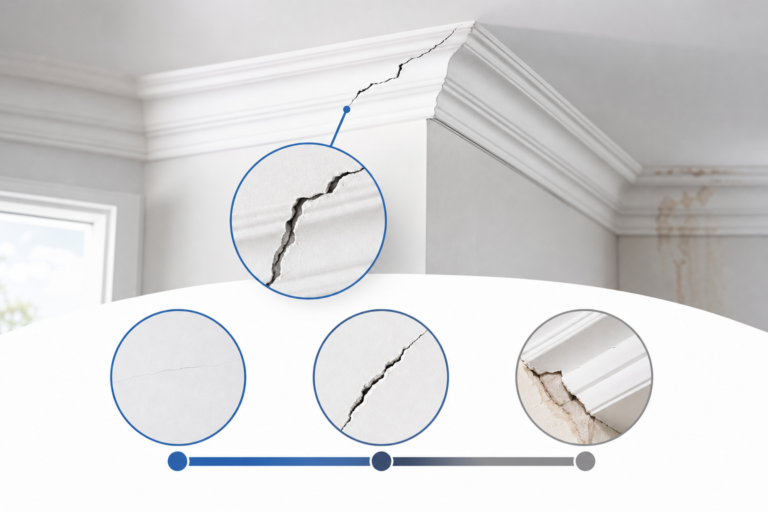
Cornice Cracking: How to Tell If the Damage Is Serious
Cornice cracking is one of the most common concerns Australian homeowners raise, and the hard part is not spotting the
Read More »
Digital Construction Consultant Australia: What They Do
A digital construction consultant in Australia manages the technology-driven side of building projects: BIM coordination, clash detection, asset data handover,
Read More »