
Expert Witness Building Report: Ensure Legal Success
A building dispute usually changes tone the moment one side realises the paperwork will decide it.
A homeowner may be living with leaks, cracking, or incomplete work while the builder says the job is within tolerance. A builder may be chasing payment for labour and materials while the owner says the work has no value because the project was never properly finished. A solicitor may have a file full of photos, emails, invoices, and variations, but still lack the one document that ties the facts to the technical issues and the claim being made.
A proper expert witness building report does that job. It brings site observations, building standards, document review, causation, scope of rectification, and, where needed, valuation into a form a tribunal or court can test and use. That matters in ordinary defect cases, but it also matters in a growing class of disputes that many articles skip over entirely. Quantum Meruit claims. If there is no clear written contract, or the contract position has broken down, the dispute often turns on a harder question. What was the work worth?
That question is rarely answered by a quote or a running invoice. It needs measured analysis, a clear record of what was done, what remains incomplete, what is defective, and what fair value can properly be attached to the work on site.
Awesim Building Consultants have 35+ years in Building & Construction, with over 15+ years providing litigation support to home owners, builders and lawyers. We provide site investigations, Building & Construction Expert Witness Reports and Scott Schedules.
If Scott Schedules or defect reporting are part of the dispute, related guidance on Scott Schedules and building defect reporting may also help.
Your Essential Tool in a Building Dispute
A building dispute usually reaches a point where ordinary evidence stops being enough. Photos alone don’t explain whether cracking is cosmetic or structural. Emails don’t prove whether waterproofing failed because of poor workmanship, defective materials, or later damage by another trade. Quotes from contractors rarely answer the legal questions that matter.
An expert witness building report is the document that breaks that deadlock.
It translates technical building issues into findings a tribunal can assess. That means identifying what was built, what’s wrong with it, which standards apply, what caused the problem, what work is needed, and what that work is likely to cost. In practice, that’s what allows a decision-maker to move from allegation to conclusion.
What the report actually does
A good report serves three jobs at once:
- It sorts fact from opinion so the tribunal can see what was observed on site and what conclusions flow from those observations.
- It connects defect to cause rather than stopping at a list of complaints.
- It frames the remedy so rectification or valuation can be considered on a proper basis.
Practical rule: If the report doesn’t explain why the issue exists, not just that it exists, it won’t carry the weight people expect.
For homeowners, that can mean finally showing why water ingress, movement, poor finishes, incomplete work, or non-compliant construction should result in an order. For builders, it can mean showing that claimed defects are overstated, outside scope, caused by others, or better resolved by a different remedy.
When the dispute gets serious
Once a matter heads toward NCAT or court, casual paperwork starts to fail. The standard changes. The decision-maker wants independence, method, reasoning, and compliance with procedure.
That’s why the report isn’t just another inspection document. It’s the working foundation of the case.
What Is an Expert Witness Building Report
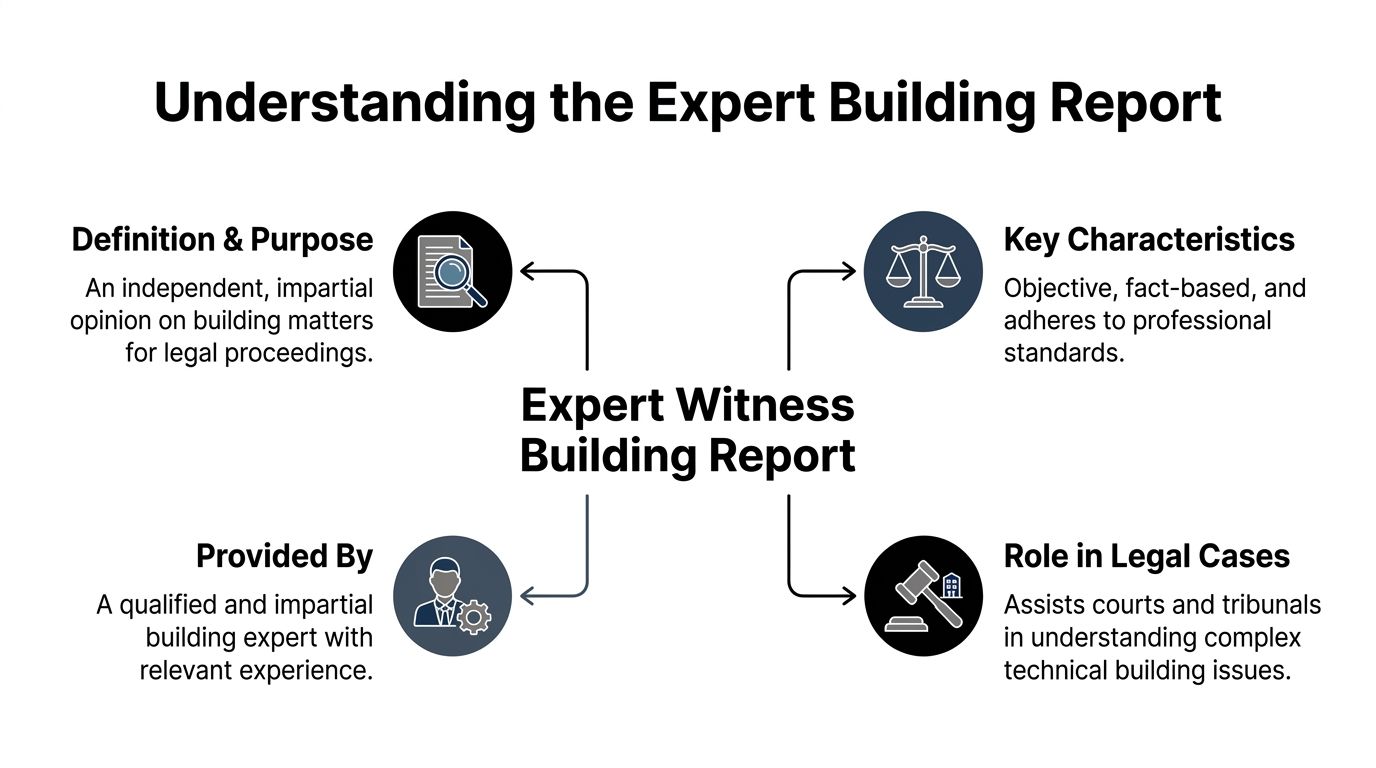
An expert witness building report is an independent opinion from a qualified building expert prepared for legal proceedings. Its purpose isn’t to argue for the person who paid for it. Its purpose is to help the tribunal or court understand technical building issues clearly and fairly.
That distinction matters. In NSW proceedings, an expert’s duty is to the decision-maker, not to the client. If the report reads like a sales pitch or a complaint letter, it’s already in trouble.
More than an inspection report
A routine inspection report tells you what the inspector saw. An expert witness building report must go further. It has to present a reliable pathway from observation to opinion.
Think of it as a roadmap of the facts. It should take the reader through:
- what exists on site
- what defect, omission, or disputed work is identified
- which standards, plans, specifications, or contractual obligations are relevant
- what likely caused the issue
- what rectification or valuation follows from that analysis
That is why these reports carry so much weight in NSW disputes. In NSW, an expert witness must demonstrate “specialised knowledge” from training, study, or experience, and the expert’s primary legal duty is to the Tribunal, not the client, ensuring impartiality. Courts often reject evidence from people who lack deep site-based experience and relevant qualifications, as outlined in this explanation of expert witness requirements compared with routine inspection reporting.
What makes it legally useful
A legally useful report is built on objectivity. It doesn’t overreach. It doesn’t make findings outside the expert’s actual field. It doesn’t assume facts that haven’t been verified unless those assumptions are clearly identified.
The strongest reports are usually the most disciplined ones. They say what can be proved, what can be inferred, and what can’t yet be concluded.
That discipline is why a genuine expert report often changes negotiations before hearing. Once both sides can see a structured technical opinion, weak arguments become harder to maintain.
Why a Compliant Report Is Crucial for NCAT Success
A report can be detailed and still fail if it doesn’t comply with the procedural rules. That catches a lot of people out. They assume that if an experienced builder or consultant writes a long report with photos, the tribunal will automatically accept it. NCAT doesn’t work that way.
Compliance is part of the substance. If the report doesn’t identify the expert’s qualifications properly, set out the facts and assumptions relied on, and explain the reasoning behind its conclusions, it can be sidelined or carry far less weight. That is exactly why poor reports so often lead to dismissed claims or adverse outcomes.
The outcome gap is real
The practical difference shows up in results. In 2023–2024, over 68% of building defect claims at NCAT that included a properly structured expert witness report were resolved in favour of the claimant, compared to only 32% of cases lacking such documentation, according to analysis discussing why building expert witness reports fail and how to avoid it.
That doesn’t mean a report guarantees success. It does mean the tribunal expects properly organised technical evidence, and cases without it start from a weaker position.
What NCAT wants to see
A compliant report usually shows these features:
- Qualified authorship: the expert’s background is stated clearly and tied to the opinions given.
- Transparent reasoning: the reader can follow how the expert moved from facts to conclusions.
- Proper assumptions: anything not directly observed is identified, not hidden.
- Procedural compliance: the report is prepared with the tribunal’s directions in mind, including the obligations reflected in the NCAT expert witness code of conduct guidance.
Why this changes strategy
A compliant report does more than support a hearing. It shapes the whole dispute. Solicitors use it to refine pleadings, test allegations, and narrow contested issues. Homeowners use it to separate genuine defects from irritations that won’t justify a claim. Builders use it to challenge inflated scopes and vague accusations.
If the technical evidence is organised early, the legal strategy becomes clearer. If the technical evidence is weak, the legal argument usually starts guessing.
That’s why I treat compliance as part of the engineering work, not as paperwork added at the end.
Anatomy of a Defensible Building Report
A defensible report isn’t just well written. It is organised so that each part supports the next. When one part is missing, the whole opinion becomes easier to attack.
For NSW building disputes, the report needs to show causation, identify the standards that have been breached, and present the reasoning in a way NCAT can follow. A robust expert report must document causation with quantified evidence and specific references to breached standards, including examples such as AS 4654.2 for waterproofing, and it must include a Scott Schedule aligned with Procedural Direction 3, as explained in this guide to best practice in expert report writing for NCAT.
The parts that matter most
The report should usually include these core elements.
| Section | Purpose |
|---|---|
| Expert qualifications | Shows why the author is competent to give the opinions expressed |
| Instructions received | Defines the scope of the engagement and the issues addressed |
| Documents reviewed | Identifies the plans, contracts, correspondence, photos, and records relied on |
| Site observations | Records factual findings from inspection |
| Defect analysis | Describes each issue and ties it to workmanship, materials, design, or scope |
| Standards and code references | Benchmarks the work against the NCC, plans, specifications, and relevant Australian Standards |
| Causation reasoning | Explains how the expert reached the conclusion about why the issue occurred |
| Rectification methodology | Sets out the repair approach, not just a complaint about the defect |
| Costing and alternatives | Addresses likely cost and whether another reasonable remedy exists |
| Scott Schedule | Organises disputed items in a format NCAT can compare efficiently |
| Compliance declaration and expert duties | Confirms the report is prepared within the expert evidence rules |
Causation is where weak reports fail
Anyone can list cracked tiles, moisture damage, ponding, or incomplete finishes. The hard part is proving why those things happened and who is responsible.
That’s where quantified evidence matters. The report should rely on photographs, measurements, levels, moisture patterns where relevant, document review, and direct reference to the applicable building requirements. It should distinguish between observed fact and assumed fact. It should also explain competing possibilities where they exist.
A tribunal can forgive a dispute about one technical conclusion. It won’t forgive a report that never shows its working.
Rectification cost is not optional
For reports concerning rectification or repair of residential building work under the Home Building Act 1989 (NSW), the expert report must detail the likely costs involved and explain how those costs have been calculated, and it must also state whether an alternative remedy is reasonable, as required by NCAT Procedural Direction 3 on expert evidence.
That means a bare figure at the end of the report isn’t enough. The costing needs logic behind it. If the remedy is replacement instead of repair, the report should explain why. If a partial repair is possible, that should be addressed too.
The Scott Schedule matters more than most clients expect
A Scott Schedule gives the tribunal a structured way to compare allegations, responses, and expert opinions line by line. In real disputes, that often becomes the working document around which the case is argued.
Solicitors wanting a sharper picture of what that document should do can compare their brief against this outline of what building defect lawyers need from an expert report.
How to Select a Qualified Building Expert Witness
Choosing the expert is often more important than choosing the lawyer on the technical side of the case. A poor expert can weaken a strong claim. A careful expert can clarify a difficult one.
The starting point is simple. You need someone with real specialised knowledge that comes from training, study, or experience, and whose duty is to the Tribunal rather than to the client. That requirement is not decorative. It is central to whether the opinion will be taken seriously.

What to ask before you engage anyone
Start by asking practical questions, not marketing questions.
- What site-based experience do you have: A consultant who has spent years on actual construction sites will usually identify workmanship pathways, sequencing problems, and trade interactions better than someone who only reviews paperwork.
- Have you prepared reports for NCAT or court: Legal settings have their own discipline. A technically capable person can still produce a report that fails procedurally.
- Can you explain your duty to the Tribunal: If the answer sounds like “I’m here to fight for you”, that’s the wrong expert.
- Do you prepare Scott Schedules and rectification scopes: Many disputes turn on comparative schedules and costed repair pathways, not just defect lists.
Red flags that should stop the engagement
Some warning signs appear in the first conversation.
One is certainty before inspection. If someone decides the case on the phone, they’re not acting like an expert. Another is overreach. A person who claims to handle every discipline, from structural design to waterproofing diagnosis to quantity surveying, usually creates risk.
A third is advocacy. You want independence, not theatre.
The right expert may support your position. They should never sound as if they were hired to repeat it.
Awesim Building Consultants fit the sort of profile many solicitors and property owners look for in these matters. The firm has 35+ years in Building & Construction and 15+ years providing litigation support to home owners, builders and lawyers, and provides site investigations, Building & Construction Expert Witness Reports and Scott Schedules.
Look at how they communicate
Good experts explain complex defects in plain language. That matters in conference, in mediation, and at hearing. If you want a broader legal overview alongside the technical side, this guide to resolving legal disputes is a useful companion read because it helps frame where expert evidence fits within the larger dispute process.
The best engagement usually starts with a careful brief, full document transfer, and a clear understanding of what the expert can and cannot decide.
The Expert Report Process Costs and Timelines
Many parties leave expert evidence too late because they assume it’s quick. It isn’t. A proper report takes planning, inspection, analysis, drafting, and revision. If hearing dates are already approaching, delay becomes expensive in ways that have nothing to do with the report fee itself.
What the process usually looks like
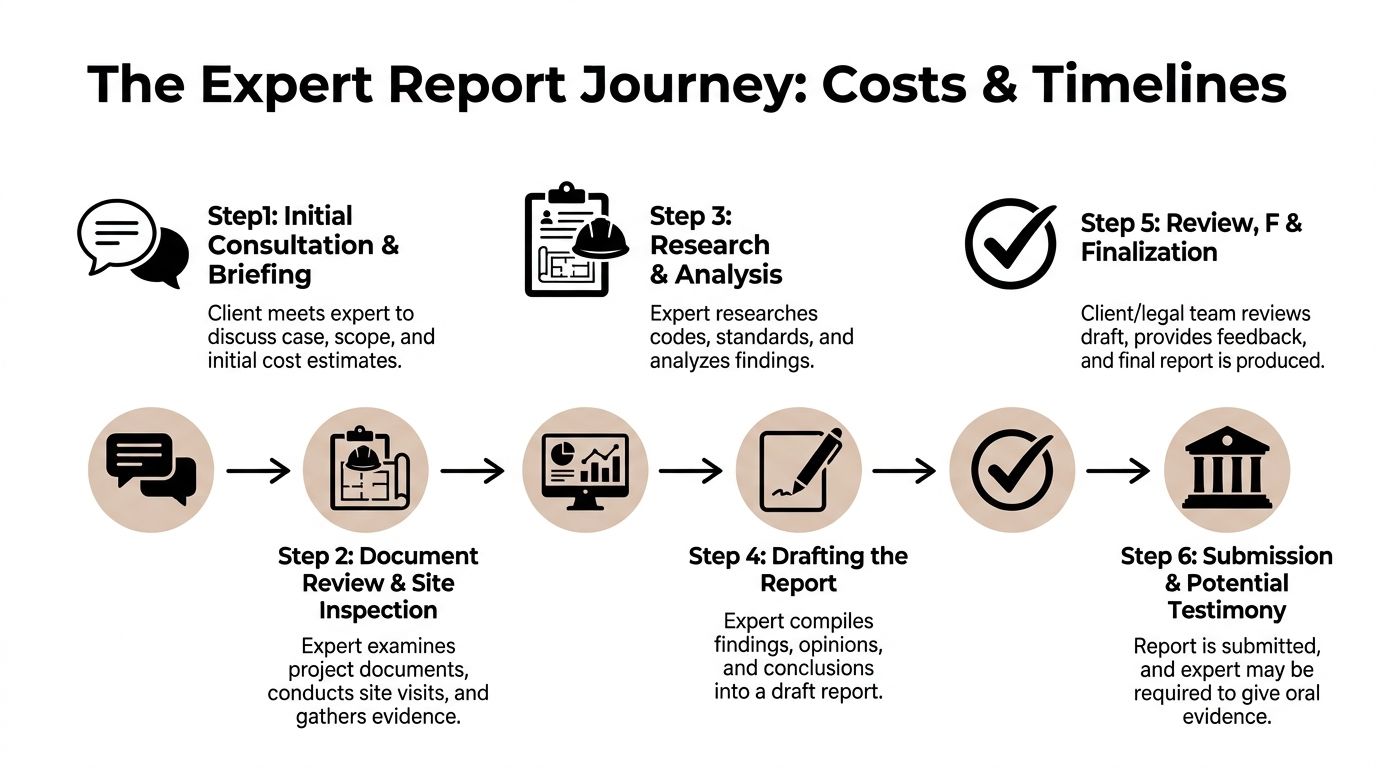
A typical expert witness building report proceeds through a practical sequence:
Initial briefing
The expert receives the dispute background, available documents, and the questions that need answering.Document review
Plans, specifications, contracts, variations, photos, prior reports, and correspondence are checked before site attendance.Site inspection
The expert inspects the disputed work and records factual observations.Analysis against standards and scope
The findings are tested against the NCC, relevant Australian Standards, plans, and the pleaded issues.Drafting
The report is written, often alongside a Scott Schedule where required.Final issue and possible evidence
The report is served, and the expert may later confer with other experts or give oral evidence.
Here’s a practical discussion of the workflow:
What it costs and why
An NCAT-compliant expert witness building report in Australia typically costs between $3,900 and $7,000, and the full process from commissioning the report to an NCAT hearing averages 4–6 months, with report preparation alone taking 2–3 weeks of an expert’s time, according to this breakdown of NCAT expert witness report costs and timelines.
That pricing isn’t just for writing. It reflects inspection time, document analysis, benchmarking against standards, reasoning, and the discipline needed to make the report compliant. Where more detailed costing is required, you can also review this explanation of how much an expert witness report costs in NSW in 2026.
The lazy shortcuts that waste money
Clients sometimes try to save money by commissioning the cheapest report, limiting documents, or asking for a “quick letter” instead of a proper expert opinion. Those shortcuts often produce a document that can’t carry the case.
Three common mistakes are easy to avoid:
- Instructing too late: by the time the expert is engaged, access issues, incomplete records, or looming directions can limit the usefulness of the evidence.
- Providing a partial brief: missing plans, scope changes, and key correspondence often lead to avoidable assumptions.
- Confusing surveys with litigation reports: consumer guidance such as this Guide for London homebuyers on surveyors is helpful for understanding selection issues, but a dispute report needs a different level of forensic and procedural rigour.
A proper report costs more than an ordinary inspection because it does far more. Done properly, it also prevents a lot of wasted legal spend later.
Common Pitfalls That Can Invalidate Your Report
Most bad reports don’t fail because the writer missed every defect. They fail because the report can’t survive scrutiny. The expert acts like an advocate, the reasoning is thin, the scope is unclear, or the procedural requirements are ignored.
That’s why some reports look impressive to the client but collapse once the other side or the tribunal starts pulling at the detail.
The failure points I see most often
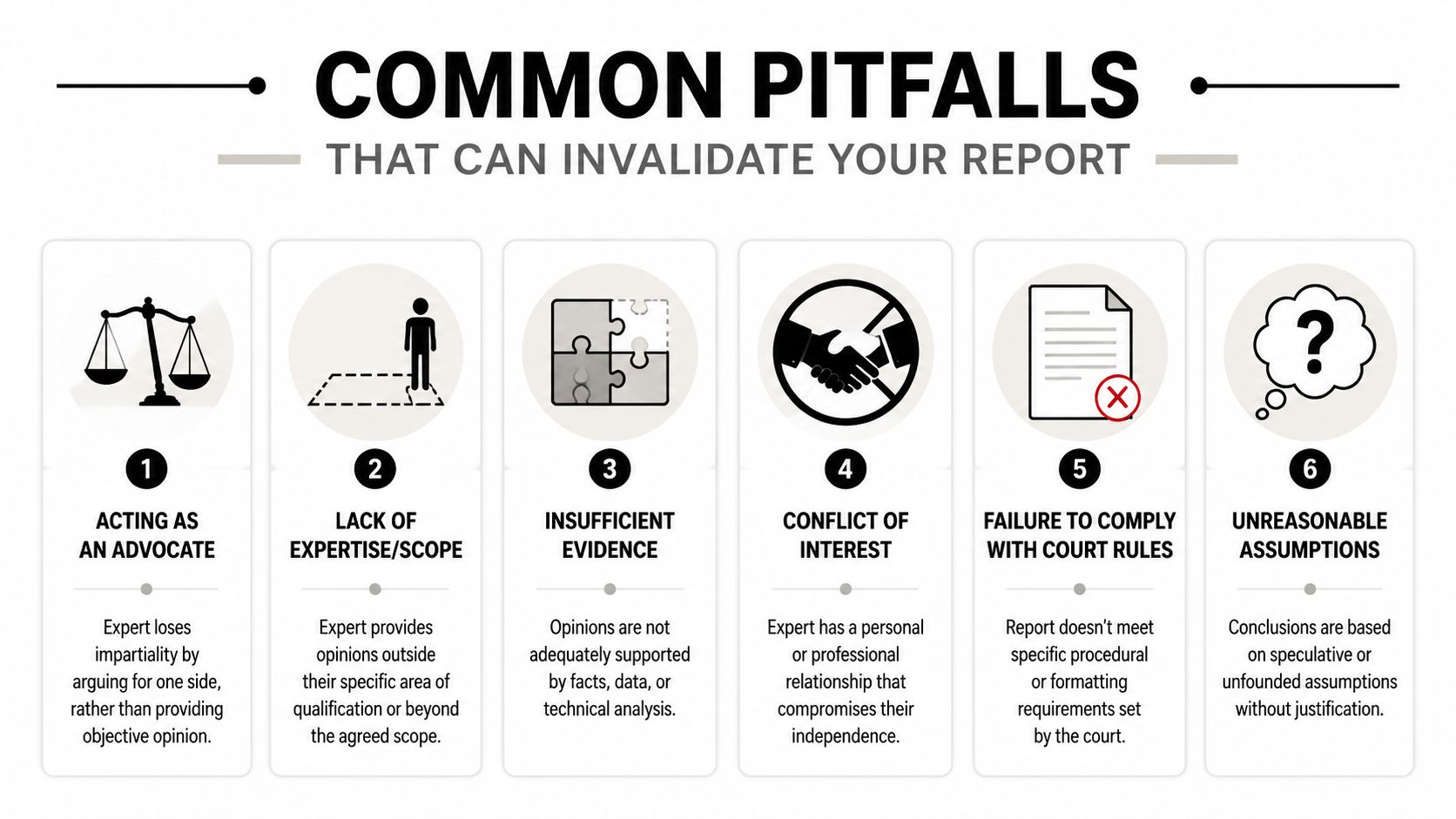
A non-compliant or weak report usually suffers from one or more of these problems:
- Advocacy instead of independence: the writer sounds like they’re there to win the case, not assist the Tribunal.
- Opinion outside expertise: a building consultant gives specialist engineering conclusions without the proper foundation.
- Assumptions dressed up as facts: missing documents or denied access are glossed over rather than stated openly.
- No reasoning chain: the conclusion is asserted but not demonstrated.
- Thin evidence base: photos are included, but measurements, standards references, and technical linkage are missing.
- Administrative non-compliance: required declarations and formal elements are absent.
The compliance declaration is a hard requirement
Under NCAT Procedural Direction 3, effective 7 April 2025, a report must include a signed Compliance Declaration confirming the expert has read and agrees to be bound by the Expert Witness Code of Conduct. Omitting it is a major red flag, as set out in this explanation of NCAT Procedural Direction 3 expert evidence requirements.
That omission tells the tribunal something important straight away. It suggests the expert may not understand the framework they’re operating in.
A report can be technically sound in parts and still be weakened fatally by non-compliance. Procedure is part of admissibility and weight.
Where this becomes critical in harder disputes
These pitfalls become even more dangerous when the dispute isn’t just about visible defects. In no-contract work, disputed variations, and unfinished scopes, the expert has to separate actual work done, reasonable value, causation, and responsibility without drifting into speculation.
That’s where disciplined evidence, clear assumptions, and proper valuation method all have to work together.
Beyond Defects Reports for Quantum Meruit Claims
Not every building dispute is about defective work. A growing share involve work done without a formal contract, incomplete agreement on price, or disputed variations that were carried out anyway. Those matters often end up as Quantum Meruit claims.
A rising number of disputes, 30% of new cases in 2024-2025, involve work done without a formal contract, requiring a Quantum Meruit claim. In those matters, an expert report must calculate value based on reasonable cost rather than agreed terms, as outlined in this discussion of expert report issues in no-contract building disputes.
Why these reports are different
A standard defects report asks: what is wrong, why is it wrong, and what does rectification involve?
A Quantum Meruit report asks a different question. What is the reasonable value of the work performed?
That changes the method. The expert may need to work from the site condition, available documents, progress evidence, trade scope, and a Bill of Quantities approach to identify and value the work done. The report still needs discipline, but the focus shifts from breach and repair to scope, quantity, and reasonable cost.
Where parties go wrong
Homeowners often assume that without a signed price there’s nothing to measure against. Builders often assume that unpaid work can be invoiced at whatever they would have liked to charge. Neither approach is enough.
The report has to show a rational valuation pathway. It needs to identify the work, assess whether it was done, and calculate value on a reasonable basis the tribunal can follow. That specialised skill is one reason many otherwise capable defect inspectors struggle in these matters.
If you need an expert witness building report, Scott Schedule, or a site investigation for an NCAT or court matter, Awesim Building Consultants can assist with practical, independent reporting across NSW. For enquiries, email admin@awesim.com.au or call 1800 293 746.
Related Posts
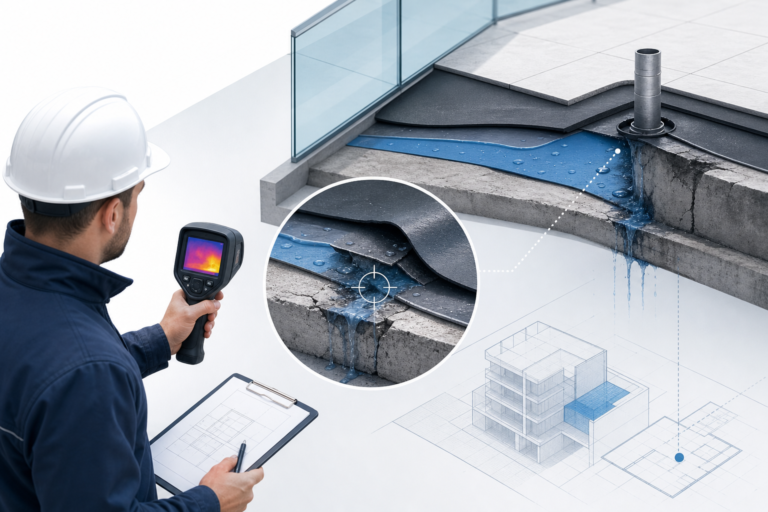
Waterproof Membrane Failure: How Inspectors Find the Cause
Waterproof membrane failure is diagnosed by tracing the water entry point, reviewing design documents, exposing the membrane for visual inspection,
Read More »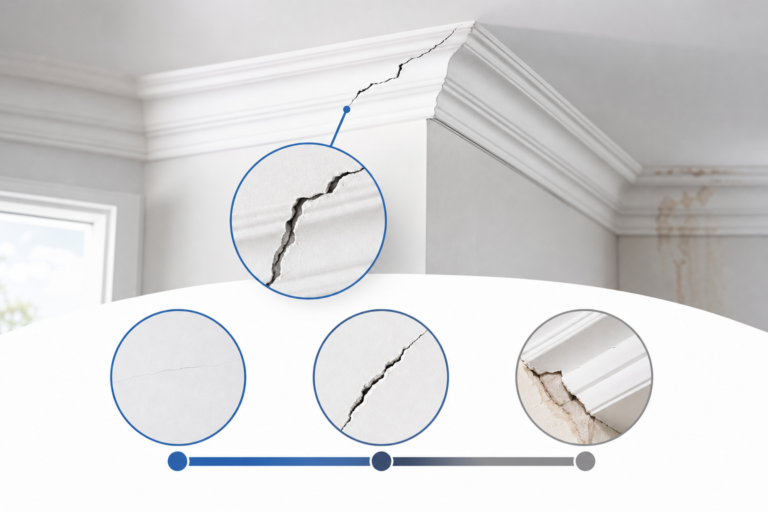
Cornice Cracking: How to Tell If the Damage Is Serious
Cornice cracking is one of the most common concerns Australian homeowners raise, and the hard part is not spotting the
Read More »
Digital Construction Consultant Australia: What They Do
A digital construction consultant in Australia manages the technology-driven side of building projects: BIM coordination, clash detection, asset data handover,
Read More »