
Expert Witness for Building Disputes: What Solicitors Need to Know in 2026
- What an Expert Witness in Building Disputes Actually Does
- The Key Documents: Expert Witness Reports, Scott Schedules, and Quantum Meruit
- What to Look for When Briefing a Building Expert Witness in NSW
- Common Pitfalls That Weaken Expert Evidence
- Working Effectively with Your Expert Witness
- Why the Expert’s Track Record Matters
- Fees: What to Expect
- Conclusion
- Frequently Asked Questions
When a construction dispute reaches NCAT or the NSW District Court, the quality of your expert witness evidence often shapes the outcome more than anything else in your brief. Yet finding a building expert who genuinely understands court procedure, writes to the required standard, and delivers on time remains harder than it should be.
This article is written for construction law solicitors in NSW. It covers what to look for in a building expert witness, how the report process works, the pitfalls that most commonly weaken evidence, and how to get the most from the relationship before a hearing date is locked in.
What an Expert Witness in Building Disputes Actually Does
A building expert witness is a qualified construction professional appointed to give independent, opinion-based evidence on technical matters. Their role is not to advocate for your client. Their duty is to the court or tribunal.
In NSW building disputes, that typically means:
- Inspecting the property and documenting defects or incomplete works
- Assessing whether the work meets the relevant standard under the Home Building Act 1989 or the applicable building code
- Quantifying the cost to rectify defects
- Producing a written report that complies with the Uniform Civil Procedure Rules 2005 (UCPR) or NCAT’s expert evidence requirements
- Attending hearings to give oral evidence and be cross-examined
A report that reads like advocacy will be challenged immediately and may damage your client’s position. What you need is someone who states the facts clearly, reaches defensible conclusions, and can hold those conclusions under cross-examination.
The Key Documents: Expert Witness Reports, Scott Schedules, and Quantum Meruit
Expert Witness Reports
A compliant expert witness report in NSW must include the expert’s qualifications, the instructions received, the facts relied upon, the expert’s opinion, and a declaration of independence. The UCPR requirements are specific. A report that omits the declaration or conflates facts with assumptions can be rejected outright or significantly discounted.
NCAT’s Consumer and Commercial Division also has its own procedural directions. Reports prepared for District Court use may need adjustment before being filed in NCAT, and vice versa. An expert who works regularly across both forums will already know this — and it shows in how they structure their reports.
Scott Schedules
A Scott Schedule is a structured table that sets out each defect item in dispute, the claimant’s position, the respondent’s position, and the expert’s findings on each item. NCAT commonly orders Scott Schedules in building defect matters because they force the parties to define exactly what is in dispute and what is agreed.
For solicitors, a well-prepared Scott Schedule is one of the most useful documents in a complex multi-defect case. It narrows the issues, reduces hearing time, and gives the tribunal a clear framework for its decision. A poorly prepared one does the opposite.
Quantum Meruit Reports
Quantum Meruit — Latin for “as much as deserved” — is a legal basis for recovering payment for work done where no valid contract exists, or where a contract has been terminated. In building disputes, this arises when a builder has completed substantial work but cannot rely on the original contract price.
A Quantum Meruit report quantifies the reasonable value of the work performed. It requires the expert to assess the scope of work completed, applicable market rates, and any deductions for defective work. This is a specialist document. Not every building consultant can prepare one properly, and not every firm offers it as a service.
What to Look for When Briefing a Building Expert Witness in NSW
Demonstrated Court and Tribunal Experience
Ask specifically about NCAT experience, not just general building inspection work. NCAT’s Consumer and Commercial Division handles the majority of residential building disputes in NSW, and its procedural requirements differ from those of the District Court or Supreme Court. An expert who has appeared across multiple forums and been cross-examined will write a more defensible report than one who has not.
Independence and Credibility
The expert’s primary obligation is to the court. If their report reads as though it was written to support a predetermined conclusion, opposing counsel will exploit that in cross-examination. Ask to see published case references or a track record of prior engagements before you brief.
Scope of Services
In complex matters, you may need more than one document. An expert who can prepare an Expert Witness Report, a Scott Schedule, and a Quantum Meruit Report from the same on-site investigation saves time and avoids the inconsistencies that arise when different consultants prepare different documents.
Geographic Coverage
NSW building disputes are not limited to Sydney. If your client’s property is in Tamworth, Tweed Heads, Newcastle, or regional NSW, you need an expert who can attend the site without significant delay or travel costs affecting the scope of engagement.
Turnaround and Communication
Solicitors consistently identify turnaround time and responsiveness as the factors that most affect their ability to work with an expert. A report that arrives two days before a directions hearing is not useful. Establish expected timeframes before briefing, and confirm whether the expert can attend a conclave or give oral evidence on the proposed hearing dates.
Common Pitfalls That Weaken Expert Evidence
Conflating the expert’s role with the advocate’s role. Language like “the builder clearly failed” or “the claimant’s position is correct” signals advocacy, not independence. Courts and tribunals notice this, and it undermines the report’s credibility.
Insufficient factual basis. Opinions must be grounded in observable facts from the inspection. If the expert has not seen the relevant work, or if the inspection was limited in scope, the report will be vulnerable to challenge on exactly that basis.
Failure to engage with the opposing party’s case. In concurrent evidence sessions — sometimes called hot tubs — which NCAT uses in some matters, your expert needs to address the other side’s report directly. An expert who has not read it, or cannot respond to it, is a liability in that format.
Non-compliant declarations. The UCPR requires a specific declaration of independence. Missing or incorrectly worded declarations have caused reports to be rejected. This is a basic compliance issue that an experienced expert should never get wrong.
Vague instructions. If you ask an expert to “inspect and report on all building issues,” you may receive a report that addresses matters outside the pleaded case, creating problems at hearing. Define the scope clearly, in writing, before the inspection.
Working Effectively with Your Expert Witness
Brief the expert in writing. Include the relevant pleadings, any prior reports, and the specific questions you need answered. Do not ask the expert to reach a particular conclusion — do ask them to address specific technical questions.
Provide access to the property promptly. Delays in site access push out report delivery dates and can affect hearing readiness.
When you review the draft, check for compliance and scope — not for the strength of the opinion. Your job is to confirm the report meets the formal requirements and addresses the right questions. Editing the expert’s technical conclusions is not your job, and doing so creates its own risks.
If the matter involves concurrent evidence, prepare your expert for that process. They should understand how it works, have read the opposing report thoroughly, and be ready to explain clearly where and why they disagree.
Why the Expert’s Track Record Matters
An expert witness who has appeared before NCAT, the NSW District Court, and the Supreme Court over many years brings something a less experienced consultant simply cannot: familiarity with how each forum operates, what each decision-maker expects, and how to present technical evidence clearly under pressure.
Awesim Building Consultants has been preparing expert witness reports for NSW courts and NCAT since 1996. Principal consultant Glen Sim’s case references are published on the site. The firm prepares Expert Witness Reports, Scott Schedules, and Quantum Meruit Reports, and operates from offices in Sydney, Tamworth, and Tweed Heads — covering matters across NSW.
Fees: What to Expect
Expert witness fees for building disputes in NSW typically range from $2,000 to $10,000 AUD, depending on the complexity of the matter, the number of defects, the size of the property, and whether the report needs to address quantum as well as liability. A typical single-property residential defect report sits around $4,500.
Those figures cover the inspection and the written report. Attendance at conclave, preparation of a Scott Schedule, or preparation of a Quantum Meruit Report will each be scoped and priced separately. Confirm the fee structure before briefing so there are no surprises when the invoice arrives.
Conclusion
The difference between a useful expert witness and a problematic one comes down to independence, technical depth, and procedural knowledge. In NSW building disputes, those qualities are not interchangeable with general building inspection experience.
When you brief an expert, you are investing in the quality of your client’s evidence. Choose someone who has appeared in the forums you are litigating in, who can produce all the documents the matter may require, and who understands that their duty runs to the court — not to the outcome your client wants.
To discuss a matter or brief an expert witness report for NCAT or NSW court proceedings, contact Awesim Building Consultants at awesim.com.au or call 1800 293 746 for a free initial consultation.
Frequently Asked Questions
What qualifications should an expert witness in a NSW building dispute have?
They should hold relevant trade or professional qualifications in building, construction, or a related discipline, and have demonstrable experience inspecting and reporting on the type of work in dispute. Practical experience in the relevant forum — whether NCAT, the District Court, or the Supreme Court — matters just as much. Qualifications alone do not make a credible expert witness; the combination of technical knowledge and procedural familiarity does.
What is the difference between an expert witness report and a building inspection report?
A standard building inspection report is a general assessment of a property’s condition, typically prepared for pre-purchase purposes. An expert witness report is a formal legal document prepared for use in court or tribunal proceedings. It must comply with the UCPR or the relevant tribunal’s procedural requirements, include an independence declaration, and be structured to address specific questions in dispute. The two documents serve entirely different purposes and should not be substituted for each other.
Can the same expert prepare both an Expert Witness Report and a Scott Schedule?
Yes, and it is generally preferable. When the same expert who conducted the inspection prepares both documents, the findings are consistent and the Scott Schedule items are grounded in the same factual observations. Using two different experts for these documents can create inconsistencies that opposing counsel will exploit.
What is a Quantum Meruit Report and when is it needed?
A Quantum Meruit Report is needed when a party is seeking payment for work performed where the original contract cannot be relied upon — for example, because it was terminated or was never validly formed. The report quantifies the reasonable value of the work completed, taking into account market rates and any deductions for defective work. It is a specialist document that not all building consultants are equipped to prepare.
How long does it take to receive an expert witness report in NSW?
Timeframes vary depending on the complexity of the matter, the size of the property, and the expert’s current workload. For a standard residential defect matter, allow two to four weeks from site inspection to delivery of a draft report. Confirm the expected timeframe before briefing, particularly if you have a directions hearing or conclave date already set.
What happens if two expert witnesses reach different conclusions?
Differing expert opinions are common in building disputes. NCAT and NSW courts use several mechanisms to manage this, including concurrent evidence sessions where both experts give evidence simultaneously and respond to each other’s positions. The tribunal or court then weighs the competing opinions. An expert who has participated in concurrent evidence before will be better prepared for that process.
Does the expert witness have to attend the hearing in person?
Not always. Some matters are resolved on the papers, and in others the expert may give evidence remotely. For contested hearings where technical issues are genuinely in dispute, however, in-person attendance and the ability to be cross-examined is generally expected. Confirm your expert’s availability for the proposed hearing dates before briefing to avoid last-minute complications.

Related Posts

Water Damage in Homes: How to Track Down the Source
Water damage in a home rarely announces itself at the source. A stain on the ceiling, a musty smell in
Read More »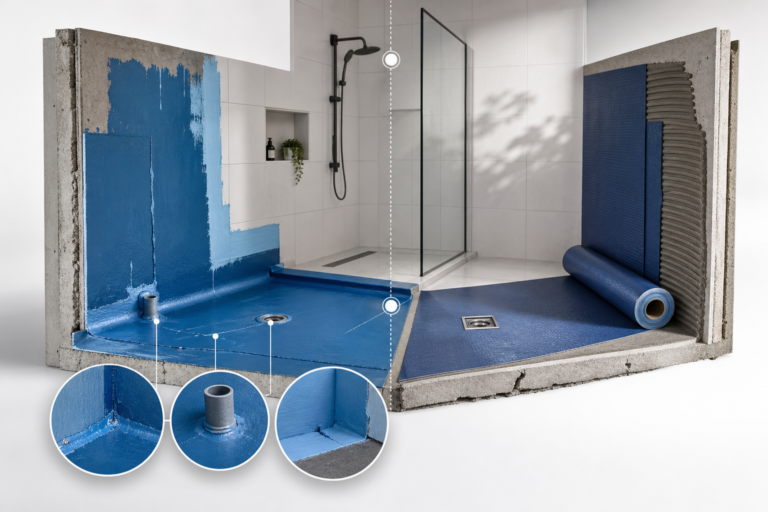
Waterproofing Membrane Types: Which Fails Most in NSW Bathrooms
Waterproofing failure is the single most common serious defect found in NSW apartments, and the type of membrane used, along
Read More »
Building Certifier NSW: Role, Limits, and When You Need More
A building certifier in NSW is a registered professional who issues construction certificates, conducts critical stage inspections, and grants occupation
Read More »