
Programme of Works: How a Construction Schedule Protects You When a Builder Falls Behind
- What a Programme of Works Actually Is
- Why the Programme Matters When Delays Happen
- What a Proper Programme of Works Should Include
- When Delays Become a Legal Issue
- How a Building Consultant Assesses Delay
- What to Do If Your Builder Is Falling Behind
- Where Construction Scheduling and Dispute Reports Connect
- FAQs
- Act Before the Delay Gets Worse
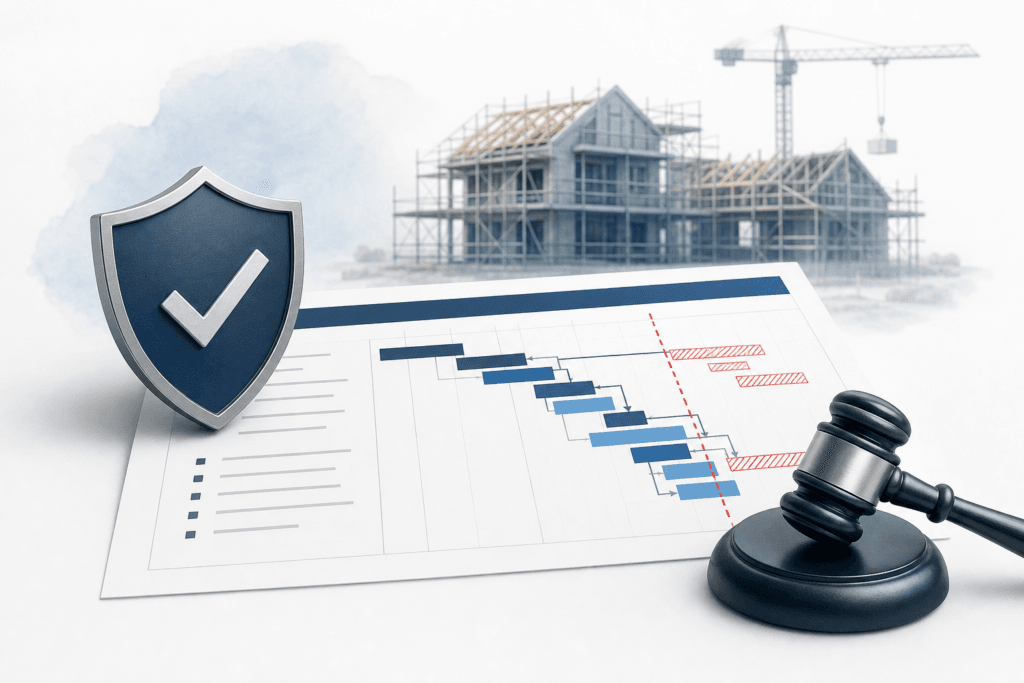
A programme of works sets out construction activities, their sequence and planned timing. When a project falls behind, compare the schedule with site records, contract terms and extension-of-time notices. These documents help explain what delayed completion. The NSW Government guide to building delays provides a useful starting point.
This article explains what a programme of works is, what it should contain, how delays get measured against it, and what your options look like when a builder can't or won't meet the agreed timeline.
What a Programme of Works Actually Is
A programme of works is a documented schedule that sets out the sequence and timing of construction activities across a project. It maps which tasks need to happen, in what order, and by when. On a residential build, that typically covers stages like site preparation, slab, frame, lock-up, fit-out, and practical completion.
The builder usually prepares the programme and provides it to the owner at the start of the project. Under the Home Building Act 1989 (NSW), residential building contracts above a certain value must include a start date and a completion date. A programme of works gives those dates meaning by showing the path between them.
Without one, you have a contract with a finish line but no map for getting there.
Why the Programme Matters When Delays Happen
When a builder falls behind, the first question is always whether the delay is their fault or something outside their control. A programme of works is what makes that question answerable.
Establishing the Baseline
The agreed programme sets the baseline. Every subsequent event — a wet weather week, a subcontractor no-show, a variation instruction — gets measured against it. If the programme shows framing was due to start in March and it didn't begin until June, you have a documented gap that needs explaining.
Without that baseline, the builder can attribute any delay to external causes and you have no objective reference to push back with.
Identifying Concurrent Delays
Not every delay is straightforward. Sometimes the builder is behind on one trade while you're still waiting on a council approval for another. A programme of works lets you see whether those delays overlap, which matters when calculating how much time the builder is actually responsible for.
This kind of analysis — sometimes called concurrent delay assessment — is exactly the work a building consultant performs when disputes reach NCAT or the courts.
Separating Excusable from Inexcusable Delays
Most residential contracts distinguish between delays the builder can claim an extension of time for — wet weather, owner-requested variations — and delays they can't, such as poor subcontractor management or failure to order materials on time.
The programme is the tool that separates those categories. If the schedule shows the builder had six weeks of float before the wet weather hit, a claim that rain caused the overall delay becomes much harder to sustain.
What a Proper Programme of Works Should Include
Not all programmes are equal. A one-page list of stages with rough months attached is not the same as a working construction schedule. If your builder has provided a programme, check whether it covers the following.
Stage-by-stage sequencing. Each major construction stage should appear in logical order, with dependencies shown — the frame can't start until the slab is complete, the roof can't start until the frame is inspected.
Start and finish dates for each stage. Vague references to "approximately eight weeks" aren't useful. Dates let you measure progress objectively.
Allowances for known lead times. Windows, structural steel, and certain waterproofing membranes often have long lead times. A credible programme accounts for these rather than assuming materials arrive on demand.
Variation and weather provisions. The programme should note how extensions of time will be managed, including what notice the builder must give and within what timeframe.
Practical completion date. This is the date the contract is effectively fulfilled. Everything in the programme should flow toward it.
If your programme is missing most of these elements, you may have a document that looks like a schedule but doesn't function as one. That gap can work against you in a dispute if the builder argues the programme was always indicative rather than contractual.
When Delays Become a Legal Issue
A builder falling behind isn't automatically a breach of contract. Construction is unpredictable, and most contracts allow for extensions of time under defined circumstances. The legal issue arises when the delay is substantial, unexplained, or the builder is claiming extensions they're not entitled to.
Unreasonable Delay Under the Home Building Act
Under NSW law, a builder who fails to carry out work with due diligence and in a competent manner may be in breach of a statutory warranty. Persistent, unexplained delays can fall within this category — particularly where the programme shows the builder had no objective reason to stop work.
Abandonment
If a builder leaves the site for an extended period without a valid reason, this may constitute abandonment. The programme of works becomes evidence of when the builder was last on track and how far the project has fallen behind since.
Liquidated Damages
Some contracts include a liquidated damages clause specifying a daily or weekly amount the builder owes for each day past the completion date. Enforcing it requires you to establish the completion date — which the programme defines — and to show the builder was responsible for the overrun rather than entitled to an extension.
How a Building Consultant Assesses Delay
When a dispute reaches NCAT or the NSW courts, a building consultant's role is to provide an independent, evidence-based assessment of what happened and why. In delay disputes, that means analysing the programme of works alongside site records, correspondence, variation orders, and inspection certificates.
The consultant isn't there to advocate for either side. Their job is to give the tribunal or court a clear technical picture of the delay, its causes, and its consequences — the standard required by Schedule 7 of the Uniform Civil Procedure Rules 2005, which governs how expert witnesses must conduct themselves in NSW proceedings.
A well-prepared expert witness report on a delay dispute will typically address:
- The agreed programme and any revisions to it
- Actual progress against the programme at key intervals
- Events that caused or contributed to delay
- Whether those events entitle the builder to an extension of time under the contract
- The net delay attributable to the builder
- The cost or loss flowing from that delay
If the programme was never properly documented, or if the builder updated it unilaterally without your agreement, the consultant will note that too. The absence of a proper programme is itself a finding.
What to Do If Your Builder Is Falling Behind
If your project is already delayed, the steps below will help protect your position — whether or not the matter ends up in formal proceedings.
Get the programme in writing. If you don't have a current programme, ask for one in writing. If the builder refuses or provides something vague, document that refusal.
Keep a site diary. Record every site visit, every conversation with the builder, and every day the site sits empty when it shouldn't. Dates and observations matter in a dispute.
Issue notices as required by your contract. Many contracts require formal written notice before you can challenge an extension of time claim or terminate. Missing those notice requirements can weaken your position significantly.
Preserve all correspondence. Emails, text messages, and letters all form part of the record. Don't delete anything.
Get independent advice before taking action. Terminating a building contract is a serious step with real legal consequences. Before you do it, speak to a building consultant and a solicitor. An independent assessment of the delay and its causes will tell you whether you have grounds to act — and what those grounds are.
Where Construction Scheduling and Dispute Reports Connect
Awesim Building Consultants provides both client-side construction scheduling and independent expert reports for dispute proceedings. These are separate services, but they address the same underlying problem: a project that isn't going to plan.
On the project management side, Awesim's services include contracts administration and construction scheduling — helping owners understand their programme, monitor progress, and respond appropriately when the builder falls behind.
On the dispute side, when a matter has already reached NCAT, the NSW District Court, or the Supreme Court, Awesim prepares Expert Witness Reports and Scott Schedules that meet the requirements of Schedule 7 of the Uniform Civil Procedure Rules 2005. Principal consultant Glen Sim has been doing this work across NSW since 1996, from offices in Sydney, Tamworth, and Tweed Heads.
If you're in the middle of a delay dispute and unsure whether your situation warrants formal proceedings, a free initial consultation is available by calling 1800 293 746 or through awesim.com.au.
FAQs
What is a programme of works in a building contract?
A programme of works is a construction schedule that sets out the sequence, timing, and completion dates for each stage of a building project. It forms part of or accompanies the building contract and is used to measure progress and assess delays.
Is a builder legally required to provide a programme of works in NSW?
Under the Home Building Act 1989 (NSW), residential building contracts above a certain value must include a start date and a completion date. A detailed programme of works isn't always required by statute, but it's standard practice on well-managed projects and becomes essential if a delay dispute arises.
What happens if a builder falls behind the programme of works?
The builder may be entitled to an extension of time if the delay was caused by events covered in the contract, such as wet weather or owner-requested variations. If the delay stems from the builder's own failures — poor subcontractor management, failure to order materials — the owner may have grounds to claim liquidated damages or, in serious cases, to terminate the contract.
Can I use a programme of works as evidence in NCAT?
Yes. A programme of works is a key document in any NCAT proceeding involving delay. An independent building consultant can analyse it alongside site records and correspondence to produce an expert witness report that explains the cause and extent of the delay in terms the tribunal can rely on.
What is the difference between a building consultant and a solicitor in a delay dispute?
A solicitor advises on your legal rights and manages the proceedings. A building consultant provides the technical evidence — the independent assessment of what went wrong on site, whether that's a delay, a defect, or a cost dispute. Both roles are usually needed in a serious construction dispute.
What is concurrent delay in a construction dispute?
Concurrent delay occurs when two or more independent causes of delay are operating at the same time. For example, the builder may be behind on framing while you're also waiting on a council approval. Untangling which delays are the builder's responsibility requires careful analysis of the programme of works and the full project record.
When should I contact a building consultant about a delay?
The earlier the better. If you have a set tribunal date, you need enough lead time for an independent inspection and a properly prepared report. If you're still on site and the project is running significantly behind, a consultant can help you assess your position before you decide whether to issue a formal notice or terminate the contract.
Act Before the Delay Gets Worse
A programme of works is only useful if you treat it as a live document rather than a filing exercise. When a builder falls behind, the schedule is your evidence. The longer you wait to document the gap between what was promised and what was delivered, the harder it becomes to reconstruct the timeline later.
If your project is delayed and you're not sure what your options are, Awesim Building Consultants offers a free initial consultation. The firm has been providing independent building consultancy services across NSW since 1996. Reach the team at 1800 293 746 or through awesim.com.au.

Related Posts

Waterproof Membrane Failure: How Inspectors Find the Cause
Waterproof membrane failure is diagnosed by tracing the water entry point, reviewing design documents, exposing the membrane for visual inspection,
Read More »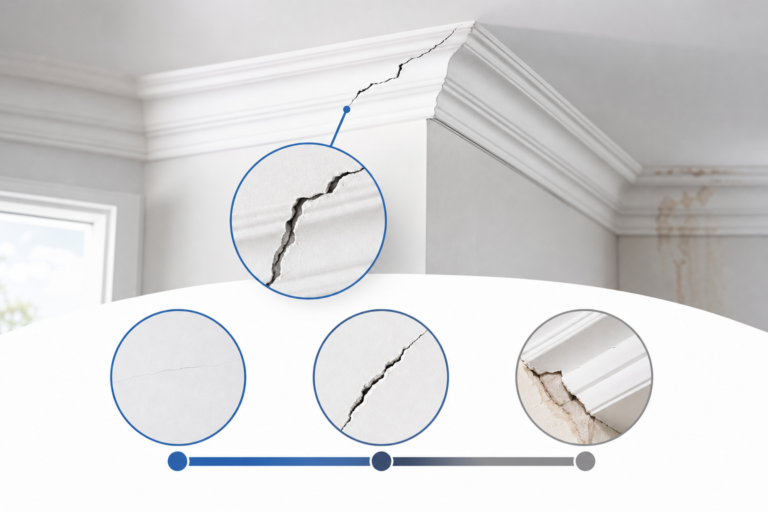
Cornice Cracking: How to Tell If the Damage Is Serious
Cornice cracking is one of the most common concerns Australian homeowners raise, and the hard part is not spotting the
Read More »
Digital Construction Consultant Australia: What They Do
A digital construction consultant in Australia manages the technology-driven side of building projects: BIM coordination, clash detection, asset data handover,
Read More »