
Scott Schedule Housing Disrepair Explained Simply
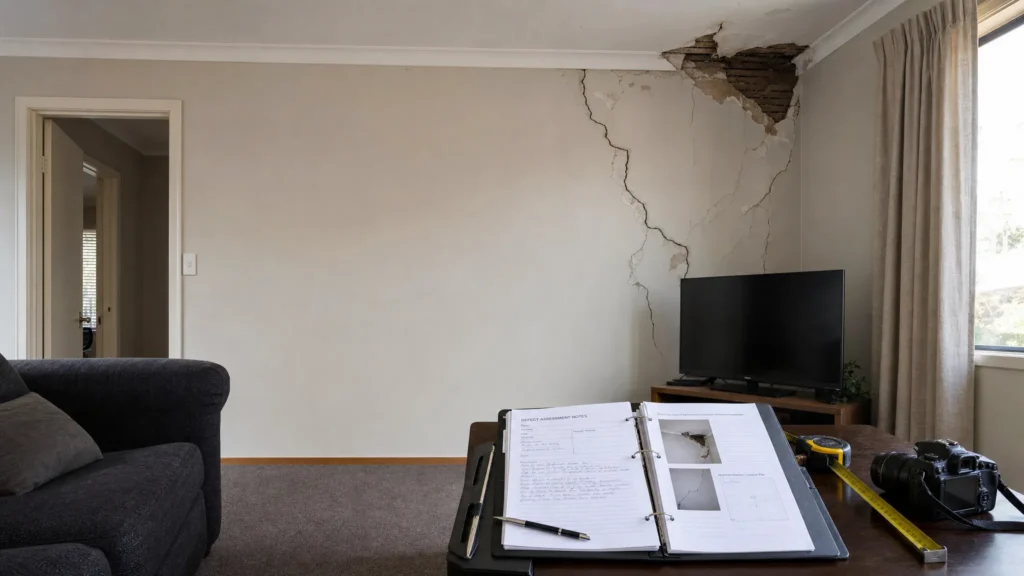
A housing disrepair dispute rarely feels simple when you are in the middle of it. One side may see leaking, cracking, mould, unfinished work or poor workmanship. The other side may say the issue is maintenance, design, access, wear and tear, or not their responsibility at all.
A Scott Schedule brings that mess into order.
In plain terms, a Scott Schedule for housing disrepair is a table that lists each alleged defect or repair issue, one by one, then records what each party says about it, what evidence supports it, and what rectification or cost is claimed. It does not decide the dispute by itself. It helps the tribunal, court, expert, solicitor, owner and builder see the dispute clearly.
In NSW, the phrase housing disrepair may appear in different contexts. Some people use it for rental repair problems. Others use it for residential building defects, incomplete rectification work, strata defects, or defective renovation work. The legal label matters, but the practical purpose of the schedule is the same: identify the issues, separate the agreed items from the disputed items, and connect each claim to evidence.
If your matter is in NCAT, the court, or solicitor-led negotiations, you should always follow the applicable directions and obtain legal advice where needed. NCAT hears building and construction disputes in NSW, and a well-prepared schedule can be a major advantage because it reduces confusion.
Scott Schedule housing disrepair: the simple version
Think of the Scott Schedule as an itemised issue list. Each row deals with one repair problem or alleged defect. A good schedule answers these questions:
- What is the alleged disrepair or defect?
- Where is it located?
- Who says it is a problem?
- What evidence supports or disputes it?
- What rectification work or cost is being claimed?
- What does the other party say in response?
- What does the independent expert conclude, if expert evidence is included?
The key is discipline. One issue should not be spread across three different rows, and three different issues should not be squeezed into one vague row. For example, water staining to a ceiling, failed bathroom waterproofing and damaged floor framing may be related, but they may need separate entries if each requires different evidence and rectification.
For a broader explanation of the role of this document in disputes, Awesim has also covered what a Scott Schedule does in a building dispute. This article focuses specifically on the housing disrepair angle and how to make the schedule easy to understand.
Why housing disrepair disputes become complicated
Housing disrepair matters often involve overlapping facts. A leak might cause staining, swelling, mould growth, electrical concerns and damaged finishes. A builder may accept one item but deny another. A homeowner may have quotes from different trades that do not use the same scope. A solicitor may need to present the claim in a way that matches pleadings, evidence and expert opinion.
Without a Scott Schedule, the dispute can turn into a bundle of photos, emails, invoices and general complaints. That makes it harder for the decision-maker to identify what is actually being claimed.
A Scott Schedule helps because it forces the parties to be specific. Instead of saying the house has water damage throughout, the claimant must identify the room, surface, cause, evidence and proposed remedy. Instead of saying the claim is exaggerated, the respondent must explain whether they deny the defect, deny responsibility, dispute causation, dispute the rectification method, or dispute the amount.
That clarity is valuable for all sides. Homeowners can make sure important defects are not lost in general wording. Builders and contractors can respond to each item fairly. Lawyers can narrow the issues. Experts can focus their inspection and report on the matters that need technical opinion.
The usual columns in a housing disrepair Scott Schedule
There is no single universal format that suits every dispute. Court or tribunal directions may specify a format, and solicitors may adapt the columns to suit the claim. Still, most effective schedules include the same core information.
| Column | What it means | Why it matters |
|---|---|---|
| Item number | A stable reference for each defect or repair issue | Keeps everyone referring to the same issue throughout the dispute |
| Location | The room, area or building element affected | Prevents confusion where similar defects appear in multiple areas |
| Alleged disrepair or defect | A concise description of the problem | Defines what is actually being claimed |
| Claimant position | What the homeowner, tenant, owners corporation or claimant says | Records the basis of the claim and requested remedy |
| Respondent position | What the builder, landlord, contractor or other party says | Shows whether the issue is admitted, denied or partly disputed |
| Evidence | Photos, reports, contracts, invoices, test results or correspondence | Links the row to proof, not just assertion |
| Rectification scope | The work said to be required to fix the issue | Helps distinguish minor repair from full replacement |
| Claimed or assessed cost | The amount claimed or independently assessed | Turns the issue into a quantified claim where required |
| Expert comment | Independent technical opinion, if included | Helps the decision-maker understand cause, compliance and reasonable repair |
| Outcome or decision | Tribunal, court or negotiated result | Useful when the schedule is used through to final determination or settlement |
If you need a more detailed structure, Awesim has a separate guide to the Scott Schedule format used in NSW building cases.
A simple example of how a row might work
A Scott Schedule does not need complex language to be effective. It needs precision. Here is a simplified example for illustration only.
| Item | Location | Alleged issue | Claimant says | Respondent says | Expert focus |
|---|---|---|---|---|---|
| 1 | Main bathroom ceiling below ensuite | Water staining and paint bubbling | Leak from ensuite waterproofing has damaged ceiling and requires investigation and rectification | Staining is historic or caused by poor maintenance of sealant | Identify moisture source, assess waterproofing indicators, review photos and determine reasonable rectification |
| 2 | Bedroom external wall | Cracking to plasterboard lining | Crack is caused by building movement linked to defective construction | Crack is minor shrinkage or normal settlement | Determine crack pattern, movement indicators, likely cause and whether repair is cosmetic or structural |
| 3 | Kitchen floor | Uneven or drummy tiles | Tiles were laid defectively and require replacement | Issue is isolated and does not justify full replacement | Inspect extent, check hollow sounding areas, review installation evidence and assess reasonable scope |
The wording is calm and factual. It does not need to accuse. It simply identifies the problem, the competing positions and the technical question that needs to be answered.
What evidence should sit behind each item?
A Scott Schedule is only as strong as the evidence behind it. Photos are useful, but they are rarely enough on their own if causation, compliance, responsibility or cost is disputed.
Common supporting material may include photographs, videos, inspection notes, contracts, scopes of work, plans, specifications, building reports, expert witness reports, invoices, quotations, correspondence, moisture readings, test results and references to relevant codes or standards.
The important point is that evidence should be matched to the item. A folder with 200 unlabelled photos can create more confusion than clarity. A good schedule should make it easy to see which photo, report paragraph or quote relates to which defect.
For example, if item 4 concerns water ingress around a window, the schedule might refer to inspection photographs of that window, the relevant report section, the builder’s response, and the proposed rectification quote. That approach helps the decision-maker move from allegation to evidence without searching through the whole bundle.

How homeowners should use a Scott Schedule
For homeowners, the biggest benefit is control. A disrepair dispute can feel emotional and overwhelming, especially where the home is difficult to live in or repairs have been delayed. The schedule helps convert frustration into a structured claim.
Homeowners should aim to describe defects in clear, observable terms. Instead of poor workmanship everywhere, it is better to say cracked grout to ensuite shower wall tiles, water staining to laundry ceiling, or external door not closing due to frame distortion. Specific wording makes it easier for an expert to inspect and for the other side to respond.
It is also important to separate cause from symptom. Water staining is a symptom. Failed flashing, defective waterproofing or plumbing leakage may be the cause. If the cause is not yet known, say so. An independent inspection may be needed before the schedule can properly quantify the issue.
How builders and contractors should use a Scott Schedule
For builders and contractors, the schedule is an opportunity to respond accurately rather than generally. A blanket denial can be unhelpful if some items are minor, some are admitted, and some are genuinely disputed.
A strong response identifies whether each item is admitted, denied, partly admitted, outside scope, already rectified, caused by others, caused by lack of maintenance, or excessive in the rectification claimed. Where possible, the response should refer to evidence such as contract scope, variation documents, completion records, photos, certificates, maintenance information or previous correspondence.
Builders should also pay attention to cost. Even if a defect exists, the claimed rectification method may be disputed. The issue may be whether patch repair is reasonable, whether full replacement is required, or whether the quoted amount includes unrelated work.
How lawyers and solicitors should use a Scott Schedule
For lawyers, the schedule is useful because it can connect pleadings, evidence and expert opinion. It can also expose gaps in the case early. If a row has no clear defect, no evidence, no causation theory and no cost, it may need further work before it can be relied upon.
A solicitor may use the schedule to narrow issues before a hearing, prepare cross-examination, brief an expert, or structure settlement discussions. It can also help prevent disputes where parties talk past each other because they are using different descriptions for the same defect.
The schedule should remain consistent with the legal case being advanced. If the claim concerns breach of statutory warranty, defective work, negligence, tenancy repair obligations or contractual scope, the wording and evidence should align with that framework. A building consultant can assist with technical clarity, but legal characterisation should be handled by the legal representative.
Where Glen Sim and Awesim fit in
Glen Sim, owner and director of Awesim Building Consultants, approaches a Scott Schedule as a technical roadmap. The purpose is not to make the loudest argument. The purpose is to identify the relevant building issues, inspect them properly, explain the likely cause, and set out a reasonable rectification position.
That independent approach matters in housing disrepair disputes because the schedule may be scrutinised by solicitors, experts, NCAT members, judges, builders and homeowners. If the entries are vague, exaggerated or unsupported, the schedule can lose credibility. If the entries are measured, evidence-based and technically sound, the dispute becomes easier to assess.
Awesim Building Consultants provides independent building dispute support across NSW, including expert witness reports, Scott Schedules, NCAT dispute reports, building defect assessments and litigation support. In practical terms, that means helping parties turn a confusing list of complaints into a structured document that can be tested.
Common mistakes to avoid
Many Scott Schedules fail because they try to do too much or say too little. The table below summarises common problems and better alternatives.
| Mistake | Why it causes problems | Better approach |
|---|---|---|
| Grouping many defects into one row | The other party cannot respond properly and the expert cannot assess each item clearly | Use one row per distinct issue |
| Using emotional language | It can distract from the technical issue | Use neutral, observable descriptions |
| Failing to identify location | Similar defects may appear in different rooms or elevations | Record room, elevation, level or building element |
| Attaching evidence without references | The decision-maker must search through the bundle | Refer to photo numbers, report sections and quote lines |
| Claiming a cost without scope | The amount may be impossible to assess | Link the cost to a defined rectification method |
| Changing item numbers repeatedly | It creates confusion across reports and submissions | Keep stable item numbers and add revisions carefully |
| Treating the schedule as the expert report | The schedule may summarise issues, but it usually cannot replace technical reasoning | Use expert reports where opinion evidence is needed |
The simplest rule is: one defect, one row, one clear evidentiary trail.
When should the schedule be prepared?
A Scott Schedule is often prepared after the main defects have been identified, but before the dispute becomes too advanced. If it is prepared too early, it may miss issues that only become clear after inspection. If it is prepared too late, the parties may have already spent time and money arguing about unclear claims.
In many matters, the best time is after an initial inspection and document review, but before final expert evidence or hearing preparation. The schedule can then be refined as new evidence emerges, provided the item numbering and version control remain clear.
Where a tribunal or court has made directions, those directions should guide timing, format and exchange. Parties should not assume that a generic template will satisfy every procedural requirement.
Frequently Asked Questions
What is a Scott Schedule in a housing disrepair claim? A Scott Schedule is a structured table that lists each alleged repair issue or defect, the parties’ positions, supporting evidence, claimed rectification and, where relevant, expert opinion. It helps organise the dispute item by item.
Is a Scott Schedule evidence? The schedule itself is usually a summary tool. The evidence is the material behind it, such as expert reports, photos, contracts, quotes, invoices and inspection findings. A schedule without supporting evidence may carry little weight.
Can I prepare a Scott Schedule myself? You can prepare a basic schedule yourself, especially to organise issues early. However, where causation, building compliance, rectification scope or cost is disputed, independent expert input can make the schedule much stronger.
Does every housing disrepair dispute need one? Not every minor repair issue needs a formal schedule. It becomes more useful when there are multiple defects, competing versions of events, disputed costs, expert evidence, NCAT proceedings, court proceedings or solicitor involvement.
What is the difference between a Scott Schedule and an expert witness report? A Scott Schedule organises the disputed items. An expert witness report explains the expert’s inspection, reasoning, technical findings and opinions. In many building disputes, the two documents work together.
Need a clear Scott Schedule for a NSW housing disrepair dispute?
If you are dealing with a residential building defect, disrepair allegation, NCAT matter or court dispute, a clear schedule can save time and reduce confusion. The stronger the structure, the easier it is for each issue to be assessed on its evidence.
For independent support with expert witness reports, Scott Schedules, quantum meruit reports and building defect assessments across NSW, speak with Glen Sim at Awesim Building Consultants.

Related Posts
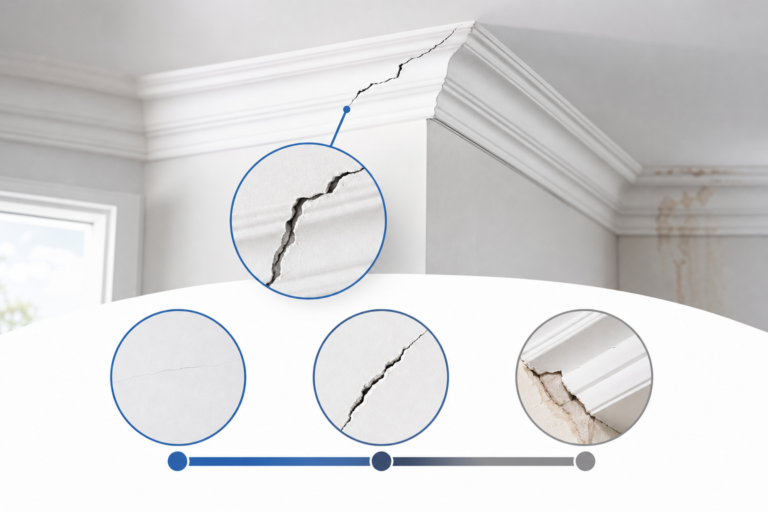
Cornice Cracking: How to Tell If the Damage Is Serious
Cornice cracking is one of the most common concerns Australian homeowners raise, and the hard part is not spotting the
Read More »
Digital Construction Consultant Australia: What They Do
A digital construction consultant in Australia manages the technology-driven side of building projects: BIM coordination, clash detection, asset data handover,
Read More »
Strata Report: What Buyers Need to Read Before Signing
A strata report is the document that surfaces hidden obligations before you are legally committed to a purchase. A strata
Read More »