
Building Defects in NSW: What Homeowners Need to Know Before Going to Tribunal in 2026
- What Counts as a Building Defect in NSW?
- Before You Go to Tribunal: The NSW Fair Trading Step
- What NCAT Can Order
- Why Evidence Is Everything
- What to Do Before You File
- Getting Independent Expert Support
- FAQs
You’ve paid a builder to do a job, and something has gone wrong. Maybe the waterproofing has failed, the roof leaks, the cracking is getting worse, or the work was simply left unfinished. Now you’re wondering what your options are — and whether the NSW Civil and Administrative Tribunal (NCAT) is the right path forward.
This guide explains what qualifies as a building defect under NSW law, how the NCAT process works, what evidence you’ll need, and why getting an independent expert witness report before you file can make a significant difference to your outcome.
What Counts as a Building Defect in NSW?
Not every imperfection in a build is a defect in the legal sense. Under the Home Building Act 1989 (NSW), residential building work must meet certain statutory warranties. A defect arises when work fails to meet those warranties — which include:
- Work must be done with due care and skill
- Materials must be suitable for their purpose
- Work must comply with the Building Code of Australia (BCA/NCC) and any other applicable laws
- The home must be fit for occupation (for new dwellings)
Common defects that end up before NCAT include waterproofing failures, structural cracking, substandard tiling, roof and drainage problems, and incomplete work. The key distinction NCAT draws is between major defects and other defects. Major defects — those affecting structural elements or making a home uninhabitable — carry a six-year warranty period. Other defects carry a two-year period, both running from the date of completion.
If your defect falls outside these timeframes, your options narrow considerably. Getting advice early matters.
Before You Go to Tribunal: The NSW Fair Trading Step
NCAT is not usually your first stop. In most cases, you are required to attempt to resolve the dispute through NSW Fair Trading before lodging a tribunal application.
The process typically looks like this:
- Lodge a complaint with NSW Fair Trading — they will attempt to conciliate between you and the builder
- If conciliation fails, Fair Trading may issue a rectification order or refer the matter for further action
- If the dispute remains unresolved, you can apply to NCAT for a hearing
This step is worth taking seriously, not just as a procedural requirement. Some disputes do settle at conciliation, which saves time and cost. But if your builder is unresponsive, has gone into liquidation, or disputes the defects entirely, you will likely need to proceed to tribunal.
What NCAT Can Order
NCAT has broad powers in building disputes. Depending on the circumstances, it can order a builder to:
- Rectify defective work
- Pay compensation for the cost of rectification
- Pay damages for consequential losses
The tribunal can also deal with disputes about money owed under a contract, incomplete work, and in some cases, claims against the builder’s licence. For claims under $500,000, NCAT is generally the appropriate forum. Larger or more complex matters may be referred to the NSW District or Supreme Court.
Why Evidence Is Everything
Here is where many homeowners underestimate what is required. NCAT is a formal legal proceeding. You need to prove your case — not just describe the problem, but demonstrate that the work is defective, explain why it fails to meet the statutory warranties, and establish the cost of rectification.
That means you need more than photos on your phone and a quote from another tradie.
An independent expert witness report is the most important document you can have. It is prepared by a qualified building consultant who inspects the site, identifies and documents the defects, explains why they fall short of the required standard, and provides an opinion on the cost and method of rectification.
NCAT gives significant weight to expert evidence. Without it, your claim rests on your own account against the builder’s. With a well-prepared expert report, you have independent, technical evidence that the tribunal can rely on.
A Scott Schedule is often used alongside the expert report. It is a structured document that lists each defect, the builder’s response, and the estimated rectification cost — presented in a format that makes it easier for the tribunal to assess the dispute item by item. If your matter involves multiple defects, a Scott Schedule is often required or strongly recommended.
What to Do Before You File
If you are considering an NCAT application, these steps will put you in the strongest position:
- Document everything now — photograph defects with timestamps, keep all correspondence with your builder, and retain any contracts, variations, and invoices
- Check your warranty timeframes — confirm whether your defect falls within the two-year or six-year statutory warranty period
- Lodge with NSW Fair Trading — initiate the conciliation process and keep records of the outcome
- Get an independent inspection — engage a qualified building consultant to inspect the property and prepare a formal expert witness report before you file your application
- Understand the costs — NCAT application fees apply, and while the process is designed to be accessible, a contested hearing can take time and require ongoing expert involvement
One thing worth knowing: obtaining your expert report early — before lodging — gives you a clear picture of the strength of your case. It may also prompt a settlement before the matter reaches a hearing.
Getting Independent Expert Support
Awesim Building Consultants has been preparing independent expert witness reports for NCAT and NSW court proceedings since 1996. The team conducts on-site inspections, documents defects, and prepares evidence-based reports that meet the tribunal’s requirements. Awesim also prepares Scott Schedules and can support your matter through to hearing if needed.
A free initial consultation is available — it is a practical first step if you are unsure where your dispute stands.
Call 1800 293 746 or get in touch at awesim.com.au.
FAQs
What is the time limit for making a building defect claim in NSW?
Under the Home Building Act 1989 (NSW), major defects carry a six-year statutory warranty from the date of completion. Other defects carry a two-year warranty. If your defect falls outside these periods, your claim may be time-barred, so it is important to act promptly.
Do I have to go through NSW Fair Trading before applying to NCAT?
In most residential building disputes, yes. NSW Fair Trading will attempt to conciliate the matter first. If conciliation fails or is not appropriate in your circumstances, you can then apply to NCAT. Skipping this step can affect your application.
What is an expert witness report and why do I need one for NCAT?
An expert witness report is an independent, technical assessment of the building defects prepared by a qualified building consultant. NCAT places significant weight on expert evidence. Without one, it is very difficult to prove that work is defective and establish the cost of rectification to the tribunal’s satisfaction.
What is a Scott Schedule?
A Scott Schedule is a structured document used in building disputes that lists each defect, the parties’ positions on each item, and the estimated cost of rectification. It helps the tribunal assess a multi-defect claim in an organised way and is often required or expected in NCAT proceedings.
How much does it cost to take a building dispute to NCAT?
NCAT application fees vary depending on the type and value of the claim. Beyond the filing fee, you should also factor in the cost of an independent expert witness report. While fees vary by complexity, the investment in a proper expert report is generally far outweighed by the value of the claim being pursued.
Can I make a claim if my builder has gone out of business?
Possibly. Residential building work in NSW is covered by Home Building Compensation (HBC) insurance for certain circumstances, including insolvency of the builder. The eligibility rules are specific, so it is worth seeking advice early to understand whether you have a claim under the insurance scheme.
What if my builder disputes the defects entirely?
This is common. A well-prepared independent expert witness report directly addresses the builder’s position and provides technical grounds for the tribunal to accept your version of events. The strength of your expert evidence often determines the outcome in a contested matter.

Related Posts

Water Damage in Homes: How to Track Down the Source
Water damage in a home rarely announces itself at the source. A stain on the ceiling, a musty smell in
Read More »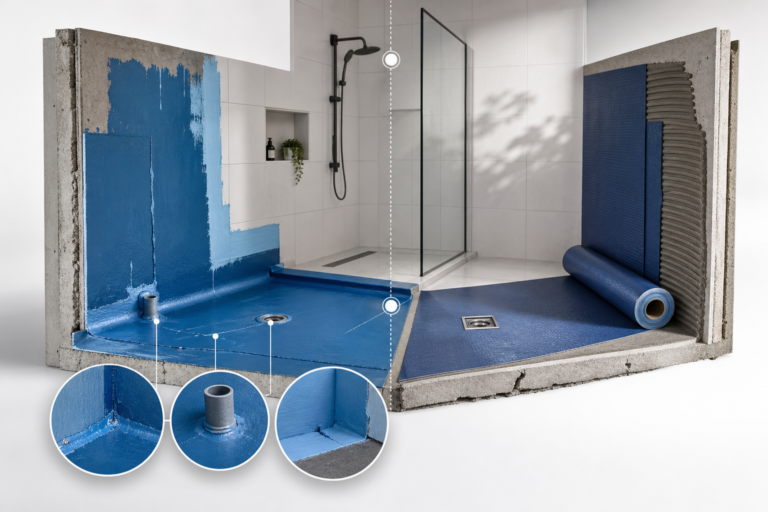
Waterproofing Membrane Types: Which Fails Most in NSW Bathrooms
Waterproofing failure is the single most common serious defect found in NSW apartments, and the type of membrane used, along
Read More »
Building Certifier NSW: Role, Limits, and When You Need More
A building certifier in NSW is a registered professional who issues construction certificates, conducts critical stage inspections, and grants occupation
Read More »