
Forensic Waterproofing Inspection NSW: When You Need One and What It Covers
- What Makes an Inspection “Forensic”
- When You Need a Forensic Waterproofing Inspection
- What a Forensic Waterproofing Inspection Covers
- How It Differs From a Standard Building Inspection
- What to Look for in an Inspector
- The Role of a Forensic Waterproofing Report in NCAT Proceedings
- Frequently Asked Questions
- Get Independent Technical Evidence for Your Dispute
Water getting into a building where it shouldn’t is one of the most common — and most damaging — defects in NSW construction. It’s also one of the most contested. When a dispute arises over who is responsible for water ingress, a standard building inspection rarely provides enough evidence to resolve it. That’s where a forensic waterproofing inspection comes in.
This article explains what a forensic waterproofing inspection involves, when you need one, and how it differs from a routine check. If you’re preparing for NCAT proceedings or a NSW court claim, understanding this process will help you make better decisions about your evidence.
What Makes an Inspection “Forensic”
The word forensic simply means prepared for use in legal proceedings. A forensic waterproofing inspection isn’t a general check of your property’s condition — it’s a structured, evidence-based investigation carried out specifically to document the nature, cause, and extent of a waterproofing failure in a format that holds up in NCAT, the NSW District Court, or the Supreme Court.
A standard pre-purchase inspection might note water staining and recommend further investigation. A forensic inspection goes further. It identifies the specific waterproofing system that was installed (or should have been installed), assesses whether it was designed and applied in accordance with the relevant Australian Standards and the National Construction Code, and traces the pathway of water ingress back to its source.
The output is a written report that can be tendered as evidence. It needs to be objective, methodical, and authored by someone who can be cross-examined on its contents.
When You Need a Forensic Waterproofing Inspection
Not every water problem requires a forensic investigation. You need one when the matter is heading toward formal dispute resolution, or when you need independent technical evidence to support or defend a claim.
You’re an owner preparing for NCAT
If you’ve lodged a complaint with the NSW Civil and Administrative Tribunal about waterproofing defects, a forensic inspection report is typically required to substantiate your claim. NCAT’s Building and Construction Division handles disputes under the Home Building Act 1989 (NSW). Without technical evidence from a qualified inspector, your claim rests on your own account of the problem rather than objective findings.
A forensic report documents exactly what failed, why it failed, and what remediation is required — giving the Tribunal something concrete to assess.
You’re a solicitor building a construction defect case
Construction law solicitors in NSW regularly need independent expert evidence on waterproofing failures. Whether the matter is in NCAT, the District Court, or the Supreme Court, the report must comply with the relevant expert witness requirements and be authored by someone with demonstrable technical credentials. At this stage of a dispute, speed and report quality are non-negotiable.
You’re a builder defending a claim
If a homeowner or strata body is alleging that your waterproofing work failed, an independent forensic inspection can establish whether the defect is attributable to your work, to subsequent trades, to owner modifications, or to a design issue outside your scope. The facts matter, and an independent report presents them without bias.
You’re a strata manager dealing with common property water ingress
Water ingress in common property areas — particularly in multi-storey residential buildings — often involves multiple contractors, overlapping warranty periods, and competing versions of events. A forensic inspection can isolate the source, identify the responsible party, and provide the structured evidence needed to progress a Scott Schedule claim through NCAT or the courts.
What a Forensic Waterproofing Inspection Covers
The scope depends on the building type, the nature of the defect, and the stage of proceedings. A thorough inspection will typically cover the following.
On-site investigation
The process begins with a physical inspection of the affected areas — wet areas such as bathrooms, laundries, and kitchens; external elements such as balconies, roofs, and podium decks; and below-ground structures such as basements and retaining walls.
The inspector examines the installed waterproofing membrane or system, looks for visible failure points, and assesses associated elements including substrates, flashings, junctions, drainage, and surface finishes. Where accessible, construction documentation may also be reviewed to compare what was built against what was specified.
Assessment against Australian Standards
Waterproofing in NSW residential construction is governed primarily by AS 3740 (Waterproofing of domestic wet areas) and AS 4654 (Waterproofing membranes for external above-ground use). The forensic inspector assesses whether the installed system met the applicable standard at the time of construction — a technical determination that requires knowledge of both the standards themselves and how they apply to specific building configurations.
Identification of defect type and cause
Not all waterproofing failures look the same, and the cause directly affects who is responsible. Common failure modes include:
- Membrane not applied to the correct thickness or coverage rate
- Incorrect substrate preparation before membrane application
- Failure to turn the membrane up to the required height at junctions and penetrations
- Inadequate or missing cove fillet at floor-to-wall junctions
- Incorrect or missing flashings at balcony and roof junctions
- Drainage design that directs water toward rather than away from vulnerable junctions
- Damage to the membrane by subsequent trades after waterproofing was completed
Identifying the specific failure mode matters because it determines whether the defect is a workmanship issue, a design issue, or damage caused by others — and each scenario carries different legal implications.
Remediation scope
A forensic waterproofing inspection typically includes an assessment of what is required to rectify the defect: whether the existing system can be repaired or needs to be removed and replaced, and what associated work is involved, such as tile removal, substrate repair, or reinstatement of finishes. This scope feeds directly into the cost of rectification, which is a central issue in most NCAT and court proceedings.
Court-ready documentation
The final report is written to meet the requirements of the relevant proceedings. For NCAT matters, that means compliance with the Tribunal’s requirements for expert evidence. For NSW District Court and Supreme Court matters, the report is prepared in accordance with the Uniform Civil Procedure Rules 2005 (NSW), including the declaration that the expert’s duty is to the court rather than to the party who retained them.
This isn’t a minor formality. A report that doesn’t meet these requirements can be excluded from evidence or given limited weight.
How It Differs From a Standard Building Inspection
A standard building inspection is a snapshot of a property’s condition at a point in time. It’s typically non-invasive, covers the whole property, and is designed to inform a purchase decision or a general maintenance plan.
A forensic waterproofing inspection is narrower in scope but significantly deeper. It focuses on a specific system, traces a specific failure, and produces a document designed for a specific legal purpose. The inspector must be prepared to defend their findings under cross-examination — which means every observation, measurement, and conclusion in the report needs to be supported by evidence gathered on site.
If you’re heading toward NCAT or a NSW court, a standard inspection report won’t be sufficient. You need a forensic report authored by someone with the relevant technical qualifications and experience in court proceedings.
What to Look for in an Inspector
When selecting a building consultant to carry out a forensic waterproofing inspection in NSW, consider the following:
- Technical qualifications in building or construction, with specific experience in waterproofing systems
- Experience in NSW proceedings, including NCAT, District Court, and Supreme Court
- Published case references so you can assess the inspector’s track record
- Independence from contractors, developers, and insurers involved in the dispute
- Report quality that meets the requirements of the relevant tribunal or court
Awesim Building Consultants has been preparing expert witness reports and forensic inspection reports for NSW courts and NCAT since 1996. The firm operates from three NSW offices — Sydney, Tamworth, and Tweed Heads — with services extending across more than 200 NSW locations. Principal consultant Glen Sim’s case references are published on the website.
The Role of a Forensic Waterproofing Report in NCAT Proceedings
NCAT’s Building and Construction Division regularly deals with waterproofing disputes under the Home Building Act 1989 (NSW). A forensic waterproofing report serves as the technical foundation for your case — it tells the Tribunal what failed, why it failed, and what it will cost to fix.
Without that evidence, you’re asking the Tribunal to accept your account of the problem over the builder’s. With a well-prepared forensic report, the Tribunal has objective technical findings to work from.
The report also helps your solicitor structure the claim accurately. When the rectification scope is clearly documented, the quantum — the dollar value of the claim — is easier to establish and harder to dispute.
Frequently Asked Questions
What is a forensic waterproofing inspection?
A forensic waterproofing inspection is a detailed, evidence-based investigation of a waterproofing failure, carried out by a qualified building consultant and documented in a report suitable for use in NCAT, the NSW District Court, or the Supreme Court. It differs from a standard building inspection in its depth, focus, and legal purpose.
When do I need a forensic waterproofing inspection in NSW?
You need one when you’re preparing a building defect claim for NCAT or a NSW court, when you’re defending a claim about waterproofing work you carried out, or when you need independent technical evidence to establish the cause and extent of water ingress in a property dispute.
What does a forensic waterproofing inspection cover?
It covers the on-site investigation of affected areas, assessment of the installed waterproofing system against applicable Australian Standards, identification of the specific failure mode and its cause, assessment of the remediation scope, and preparation of a court-ready report.
How is a forensic inspection different from a standard building inspection?
A standard building inspection provides a general overview of a property’s condition. A forensic inspection focuses on a specific defect, investigates its cause in technical detail, and produces a document designed to meet the evidentiary requirements of a tribunal or court.
Can a forensic waterproofing report be used in NCAT proceedings?
Yes. A properly prepared forensic waterproofing report can be tendered as expert evidence in NCAT’s Building and Construction Division. The report must comply with the Tribunal’s requirements for expert evidence, including an independent declaration from the author.
Who can carry out a forensic waterproofing inspection in NSW?
The inspector should hold relevant technical qualifications in building or construction, have specific experience with waterproofing systems, and have a demonstrated track record of preparing expert witness reports for NSW tribunals and courts. Independence from all parties to the dispute is essential.
How long does a forensic waterproofing inspection take?
The on-site inspection typically takes a few hours depending on the size and complexity of the affected area. Report preparation takes additional time and varies with the complexity of the defect and the requirements of the proceedings. Your building consultant can give you a realistic timeframe after an initial consultation.
Get Independent Technical Evidence for Your Dispute
If you’re dealing with a waterproofing defect and heading toward NCAT or a NSW court, the quality of your technical evidence will directly affect the outcome of your claim. A forensic waterproofing inspection gives you objective, court-ready findings from an independent expert.
Awesim Building Consultants has been carrying out forensic inspections and preparing expert witness reports for NSW proceedings since 1996. To discuss your situation and understand your options, call 1800 293 746 or book a free initial consultation at awesim.com.au.

Related Posts
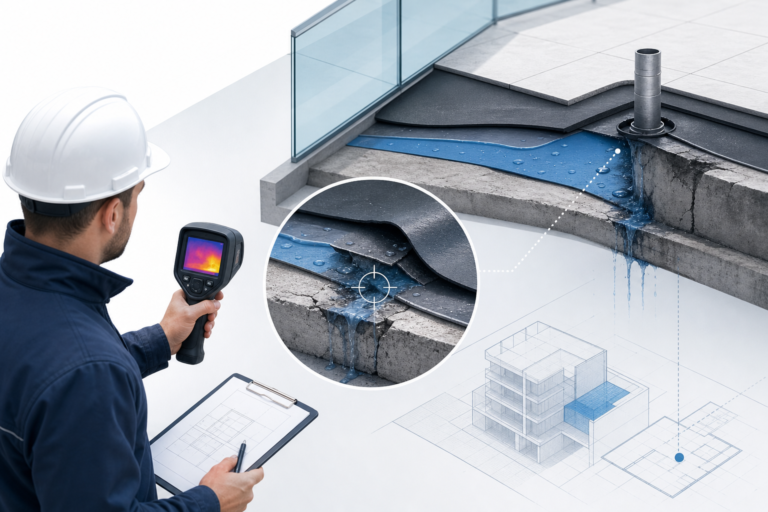
Waterproof Membrane Failure: How Inspectors Find the Cause
Waterproof membrane failure is diagnosed by tracing the water entry point, reviewing design documents, exposing the membrane for visual inspection,
Read More »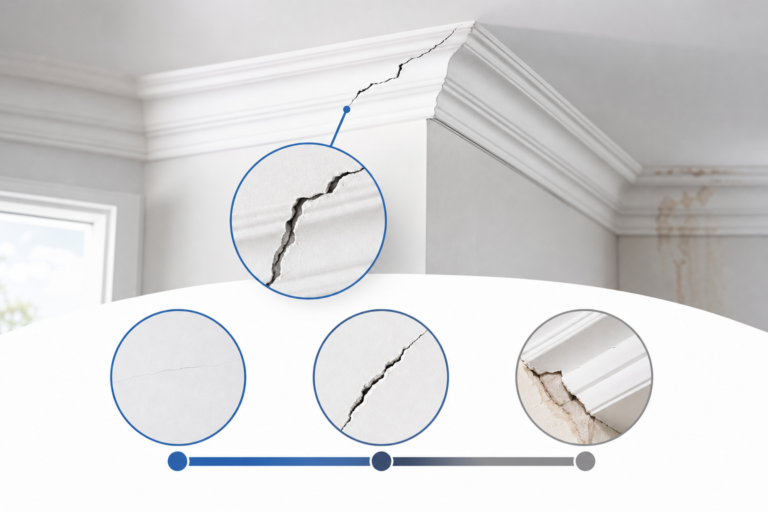
Cornice Cracking: How to Tell If the Damage Is Serious
Cornice cracking is one of the most common concerns Australian homeowners raise, and the hard part is not spotting the
Read More »
Digital Construction Consultant Australia: What They Do
A digital construction consultant in Australia manages the technology-driven side of building projects: BIM coordination, clash detection, asset data handover,
Read More »