
How Construction Dispute Lawyers Use Expert Evidence
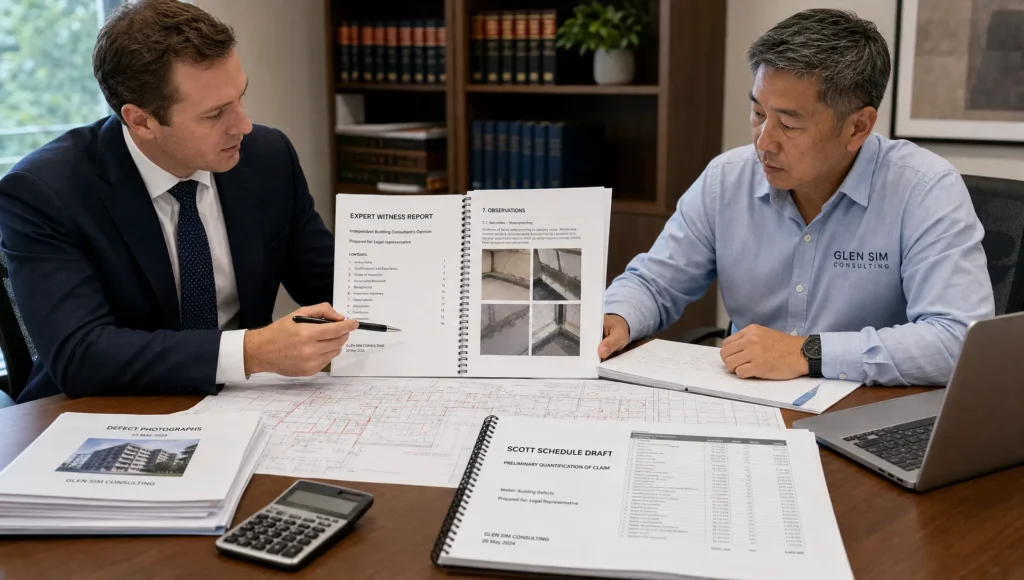
In a building dispute, the strongest legal argument still needs a reliable factual foundation. A construction dispute lawyer may understand the contract, limitation periods, pleadings and tribunal procedure, but the core question often remains technical: what was built, what should have been built, what failed, why it failed, and what it will reasonably cost to fix.
That is where expert evidence becomes critical.
For homeowners, builders and solicitors in New South Wales, expert evidence can turn a disagreement into a structured case. It helps separate opinion from proof, emotion from causation, and broad allegations from precise findings. At Awesim Building Consultants, owner and director Glen Sim focuses on this practical gap: providing independent building dispute evidence that lawyers can use in NCAT and court matters.
This article explains how construction dispute lawyers use expert evidence, what they need from an expert, and why briefing the right expert early can change the direction of a dispute.
What expert evidence means in a construction dispute
Expert evidence is opinion evidence given by a person with specialised knowledge based on training, study or experience. In construction disputes, that may include evidence about building defects, incomplete works, compliance with standards, defective workmanship, causation, rectification methodology, variations, delay-related scope issues, or the reasonable value of work performed.
In NSW building matters, expert evidence is commonly used in:
- NCAT Home Building Division disputes
- Local Court, District Court or Supreme Court proceedings
- Mediation and settlement conferences
- Security of payment or payment-related disputes where technical issues affect entitlement
- Pre-litigation advice where a lawyer needs to assess prospects before filing
The expert is not there to argue the client’s case. Their role is to provide an independent opinion within their area of expertise. In NSW court proceedings, the Expert Witness Code of Conduct in Schedule 7 of the Uniform Civil Procedure Rules 2005 reflects the key principle: an expert’s paramount duty is to assist the court impartially, not to act as an advocate for a party.
That principle also matters in NCAT. Even where procedures are less formal than court, an expert report that reads like advocacy can lose weight quickly. Lawyers need evidence that is careful, transparent and supportable.
Why construction dispute lawyers rely on experts
Construction disputes are rarely won by simply saying work is “defective” or “unfinished”. A lawyer must usually prove the elements of the claim or defence. That often requires technical answers that only an appropriately experienced building consultant can provide.
A construction dispute lawyer may use expert evidence to establish:
- Whether the work complies with the contract, plans, Building Code of Australia, Australian Standards or accepted building practice
- Whether an alleged defect is actually a defect or an expected characteristic of the work
- Whether the builder, subcontractor, designer, supplier, owner or another party caused the problem
- Whether the proposed rectification scope is necessary and reasonable
- Whether the amount claimed is supported by the physical evidence
- Whether variations, incomplete work or quantum meruit claims are properly valued
This is important for both sides. A homeowner may need evidence that cracking, water ingress or poor finishes are not merely cosmetic. A builder may need evidence that alleged defects are minor, caused by owner-supplied materials, caused by design issues, or already rectified. A lawyer needs the expert to clarify the technical dispute so the legal case can be properly framed.
How expert evidence is used throughout a case
Expert evidence is not only used at the final hearing. In many matters, it shapes the case from the first advice conference through to settlement or determination.
| Stage of dispute | How lawyers use expert evidence | Practical value |
|---|---|---|
| Early case assessment | Identify real defects, weak allegations, missing documents and likely rectification issues | Helps the lawyer advise on prospects and strategy |
| Pleadings or points of claim | Convert broad complaints into specific technical allegations | Makes the case clearer and harder to dismiss as vague |
| Defence or response | Test whether alleged defects are valid, overstated or caused by others | Helps narrow the dispute and reduce exposure |
| Scott Schedule preparation | Itemise each alleged defect, response, expert opinion and cost | Creates a structured roadmap for negotiation or hearing |
| Mediation or settlement | Support a realistic commercial position with independent findings | Encourages resolution based on evidence rather than emotion |
| Hearing | Explain technical matters to the tribunal or court | Assists the decision-maker in resolving disputed factual issues |
When expert evidence is obtained early, it can prevent a party from pursuing allegations that are not technically sustainable. It can also uncover stronger issues that were not obvious from photographs or correspondence alone.
The legal issues an expert can help prove
The best expert reports do more than list defects. They connect the physical evidence to the legal issues in dispute. This is where an experienced building consultant can be particularly valuable to construction dispute lawyers.
Defects and non-compliant work
A building defect may involve defective workmanship, non-compliance with the contract, failure to meet manufacturer requirements, departure from Australian Standards, or failure to comply with the Building Code of Australia where applicable.
The expert’s role is to inspect, test where appropriate, review documents and explain the basis for each opinion. A conclusion such as “the tiling is defective” is rarely enough. A stronger opinion explains what was observed, why it fails the relevant standard or accepted practice, what likely caused it, and what rectification is reasonable.
For a deeper look at this role, Awesim has also explained how an independent expert witness report can help resolve NSW construction disputes.
Causation
Causation is often the difference between a persuasive claim and an expensive argument. A defect may exist, but the legal question is who is responsible for it.
For example, water damage may be caused by poor waterproofing, inadequate falls, defective flashing, design issues, maintenance failures, movement in the structure, or a combination of factors. Without expert evidence, parties may argue about symptoms rather than root causes.
A good expert report identifies the most likely cause and explains why alternative causes are less likely. That helps the lawyer connect the technical findings to contractual obligations, statutory warranties or claimed damages.
Rectification scope
Lawyers also use expert evidence to test whether proposed rectification is necessary and proportionate. In some disputes, one party may claim full removal and replacement while the other says minor repair is sufficient. The expert’s opinion can help determine the reasonable scope.
This matters because over-scoped rectification claims may be challenged, while under-scoped repairs may fail to address the cause of the problem. A balanced expert report gives the lawyer a defensible position.
Quantum and valuation
Many construction disputes are ultimately disputes about money. Even where liability is contested, lawyers need evidence about the amount reasonably payable or recoverable.
Expert evidence may address:
- Reasonable rectification costs
- Value of incomplete work
- Variations and disputed extras
- Credits for defective or omitted work
- Quantum meruit claims where payment is sought for the reasonable value of work performed
When the financial issues are complex, a lawyer may need a dedicated quantum report. Awesim discusses this further in its guide on when a quantum expert is needed in building matters.
Why Scott Schedules matter to lawyers
In construction disputes involving multiple defects or payment items, lawyers often use a Scott Schedule. This is a structured table that breaks the dispute into individual items so each allegation can be addressed clearly.
A Scott Schedule may include the item number, location, alleged defect, claimant’s position, respondent’s position, expert opinion, rectification scope, cost and supporting references. It is particularly useful in NCAT and court matters because it prevents the case from becoming a confusing bundle of photographs and competing complaints.
For construction dispute lawyers, a well-prepared Scott Schedule helps to:
- Narrow the issues in dispute
- Identify which allegations are supported by expert evidence
- Separate liability issues from quantum issues
- Make settlement discussions more productive
- Assist the tribunal or court in following the evidence item by item
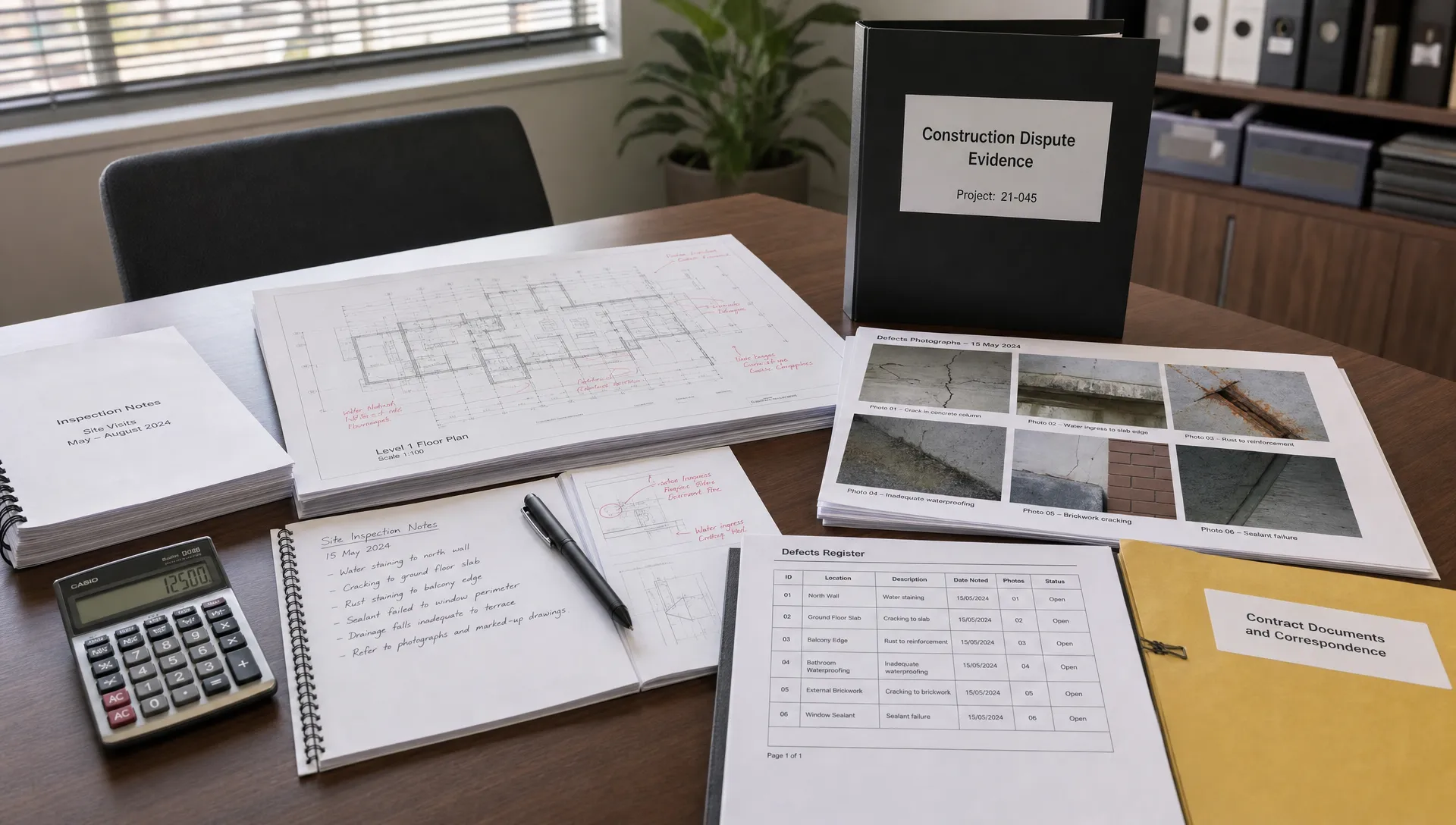
The schedule is only as useful as the evidence behind it. If the expert opinions are vague or unsupported, the schedule becomes a list of assertions. If the expert evidence is clear, the schedule becomes a practical map of the dispute.
What lawyers need from a strong expert report
Construction dispute lawyers need reports that can withstand scrutiny. A polished document is not enough. The report must be independent, methodical and useful to the legal issues.
| Report feature | Why it matters to the lawyer |
|---|---|
| Clear instructions and scope | Shows what the expert was asked to consider and prevents confusion about the limits of the opinion |
| Relevant documents reviewed | Demonstrates the opinion is based on the contract, plans, correspondence, certificates, photos and other key material |
| Inspection findings | Grounds the opinion in observed evidence rather than assumptions |
| Standards and references | Helps connect the findings to recognised benchmarks |
| Causation analysis | Explains why the problem occurred and who may be responsible from a technical perspective |
| Rectification methodology | Shows what work is reasonably required to fix the problem |
| Cost or quantum support | Assists the lawyer in proving or challenging the amount claimed |
| Independence and limitations | Improves credibility and identifies any assumptions or information gaps |
This is why lawyers should avoid treating an expert report as a mere formality. The report can influence settlement leverage, hearing preparation and the credibility of the entire case.
Awesim has covered the solicitor’s perspective in more detail in its article on what building defect lawyers need from your expert report.
The lawyer and expert relationship
The relationship between lawyer and expert must be carefully managed. The lawyer can define the issues, provide documents, ask questions and identify the legal context. The expert must then form their own independent opinion.
A proper letter of instruction is important. It should clearly set out the questions the expert is asked to address, the documents provided, any assumptions to be made, relevant deadlines and the intended forum, such as NCAT or court. If the expert is expected to comply with a code of conduct or procedural direction, that should be made clear at the outset.
The lawyer should not pressure the expert to reach a particular conclusion. If the expert’s opinion is unfavourable, that may still be valuable. It can help a party avoid a weak claim, adjust settlement expectations, or correct a misunderstanding before costs escalate.
This is one of the reasons Glen Sim’s role as an independent building consultant is important. In a dispute environment where parties often feel strongly about their position, the expert’s value comes from disciplined, impartial assessment rather than taking sides.
Common mistakes when using expert evidence
Some building disputes become harder to resolve because expert evidence is obtained too late or prepared without enough focus. Lawyers, homeowners and builders can avoid many problems by recognising the common traps.
One mistake is briefing an expert only after positions have hardened. By that stage, pleadings may already be too broad, settlement offers may be unrealistic, and the parties may have spent money arguing about issues that a site inspection could have clarified earlier.
Another mistake is relying on photographs alone. Photographs are useful, but they rarely prove the cause of a defect. An expert may need to inspect the property, review plans, consider construction sequencing and assess whether the visible symptom matches the alleged cause.
A further mistake is using a report that reads like advocacy. A report that simply supports one party without acknowledging limitations, alternative explanations or evidence gaps may be given less weight. Strong expert evidence is not the same as aggressive evidence.
Finally, parties sometimes underestimate quantum. A defect finding without a clear rectification scope or cost basis can leave a lawyer with only half the evidence needed. Liability and quantum should be considered together wherever possible.
Practical guidance for homeowners, builders and solicitors
If you are a homeowner, expert evidence can help you understand whether your concerns are technically valid and how they should be presented. It can also help prevent your claim from being dismissed as general dissatisfaction.
If you are a builder, expert evidence can help you respond to allegations fairly. It may confirm that rectification is required, but it may also show that the claim is overstated, caused by others, or outside the contractual scope.
If you are a solicitor, early expert input can improve pleadings, narrow issues and support settlement advice. It can also help you identify whether the matter needs a defect report, a Scott Schedule, a quantum meruit report, or a combination of these.
Before briefing an expert, gather the contract, variations, plans, specifications, photographs, invoices, payment claims, notices, inspection records and correspondence. The better the document set, the more useful the expert’s opinion is likely to be.
Frequently asked questions
Do construction dispute lawyers always need expert evidence? Not always. Some disputes turn mainly on contract interpretation, notices or payment procedure. However, where the dispute involves defects, incomplete work, causation, rectification cost or reasonable value of work, expert evidence is often essential.
When should a lawyer brief a building expert? Ideally, before pleadings or formal claim documents are finalised. Early expert input can help define the real issues, avoid weak allegations and support a more accurate settlement strategy.
Can the same expert prepare a defect report and a Scott Schedule? In many matters, yes, provided the expert has the appropriate expertise and the scope is clear. A Scott Schedule often draws on the expert’s defect findings, rectification opinions and cost assessment.
Is an expert witness on the client’s side? No. An expert may be engaged by one party, but their opinion must remain independent. Their primary role is to assist the tribunal or court by providing specialised technical evidence.
What makes expert evidence persuasive in NCAT or court? Persuasive expert evidence is clear, independent, well-reasoned and supported by observed facts, relevant documents and recognised standards. It should explain not only what the expert concludes, but how and why they reached that conclusion.
Need independent expert evidence for a NSW building dispute?
Construction dispute lawyers use expert evidence to build clearer, stronger and more realistic cases. The right report can identify the technical issues, support a Scott Schedule, clarify causation and help resolve the dispute with less uncertainty.
Awesim Building Consultants provides independent expert witness reports, Scott Schedules, quantum meruit reports and building dispute support across New South Wales. Led by owner and director Glen Sim, Awesim assists homeowners, builders and lawyers who need practical, defensible evidence for NCAT and court matters.
To discuss expert evidence for your matter, contact Awesim Building Consultants.

Related Posts
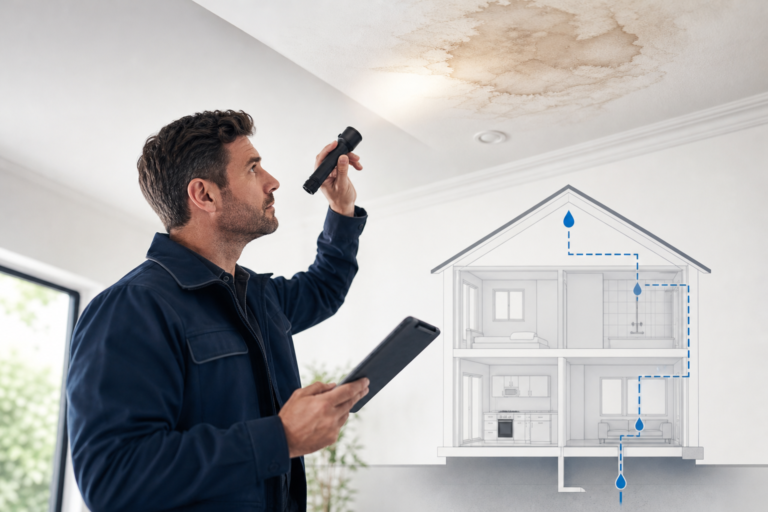
Water Damage in Homes: How to Track Down the Source
Water damage in a home rarely announces itself at the source. A stain on the ceiling, a musty smell in
Read More »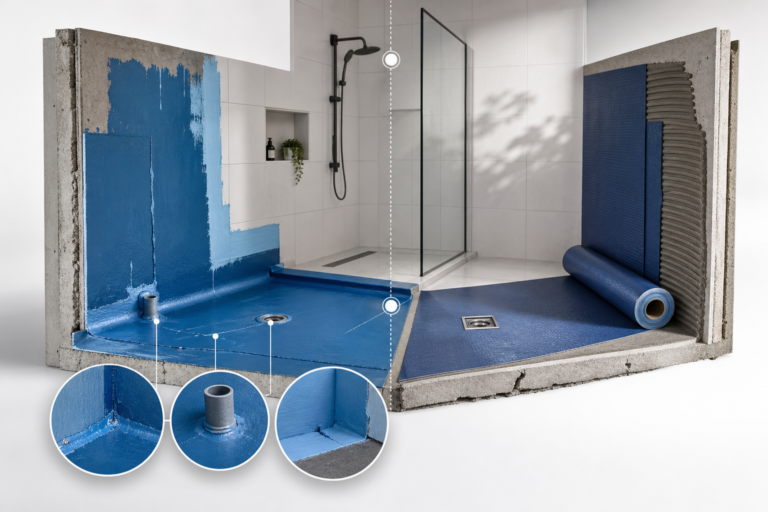
Waterproofing Membrane Types: Which Fails Most in NSW Bathrooms
Waterproofing failure is the single most common serious defect found in NSW apartments, and the type of membrane used, along
Read More »
Building Certifier NSW: Role, Limits, and When You Need More
A building certifier in NSW is a registered professional who issues construction certificates, conducts critical stage inspections, and grants occupation
Read More »