
How Site Inspections in Construction Strengthen Dispute Claims
A building dispute often begins with a simple disagreement: one party says work is defective, incomplete or overcharged, while the other says the work is acceptable, finished or properly valued. The problem is that allegations alone rarely move a dispute forward. What strengthens a claim is clear, independent evidence gathered from the site itself.
That is why site inspections in construction are so important in NSW building disputes. A properly conducted inspection can connect the condition of the works to the contract, drawings, standards, scope, variations, payment claims and rectification costs. It turns a dispute from a general complaint into an evidence-based position that can be understood by homeowners, builders, solicitors, NCAT members and the court.
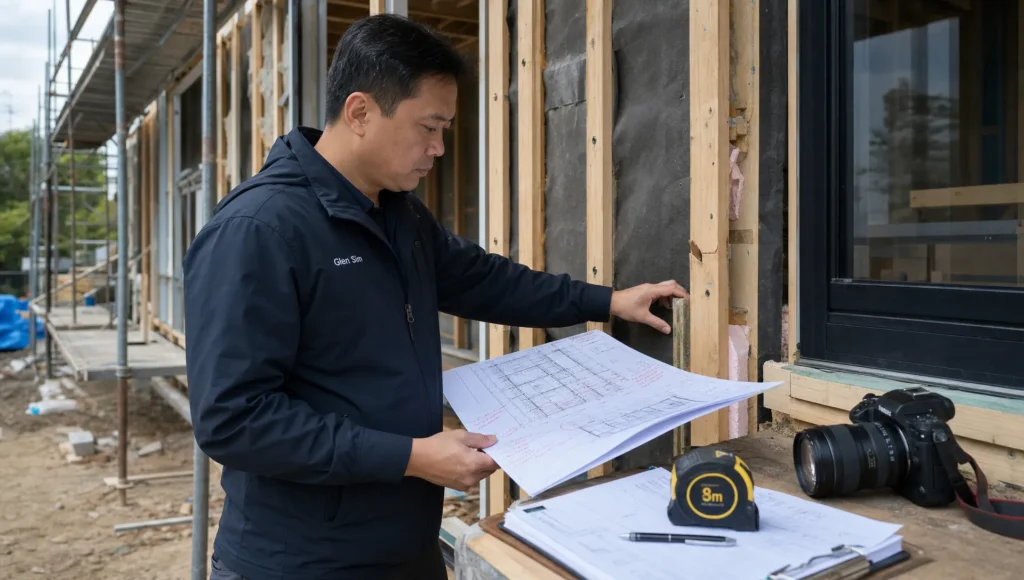
For Glen Sim, owner and director of Awesim Building Consultants, the inspection is not just a walk-through. It is the foundation for credible expert evidence. When a claim depends on whether work is defective, incomplete, non-compliant or reasonably valued, the site inspection is often where the strongest proof is found.
Why site inspections matter in construction disputes
A construction dispute can involve thousands of documents, emails, invoices, photographs and competing opinions. Yet the physical condition of the building remains central. The site shows what was actually built, what remains unfinished, what has failed, and whether the complaint is consistent with observable evidence.
A site inspection in construction helps answer practical questions such as:
- Is the alleged defect visible and measurable?
- Does the work appear consistent with the approved drawings, specification or relevant tolerances?
- Is the item incomplete, defective, damaged by others or outside the agreed scope?
- What rectification work may be required?
- Are claimed variations supported by physical evidence on site?
- Does the claimed value of work reflect what has actually been carried out?
Without an inspection, parties can become stuck in assertion and denial. With an inspection, the dispute can be narrowed to specific items, locations, quantities, causes and likely remedies.
This is especially important where a matter may proceed to NSW Fair Trading, NCAT, mediation, expert conclave or court. Decision-makers need evidence they can follow. A well-documented inspection helps translate technical building issues into a structured claim.
What an effective site inspection captures
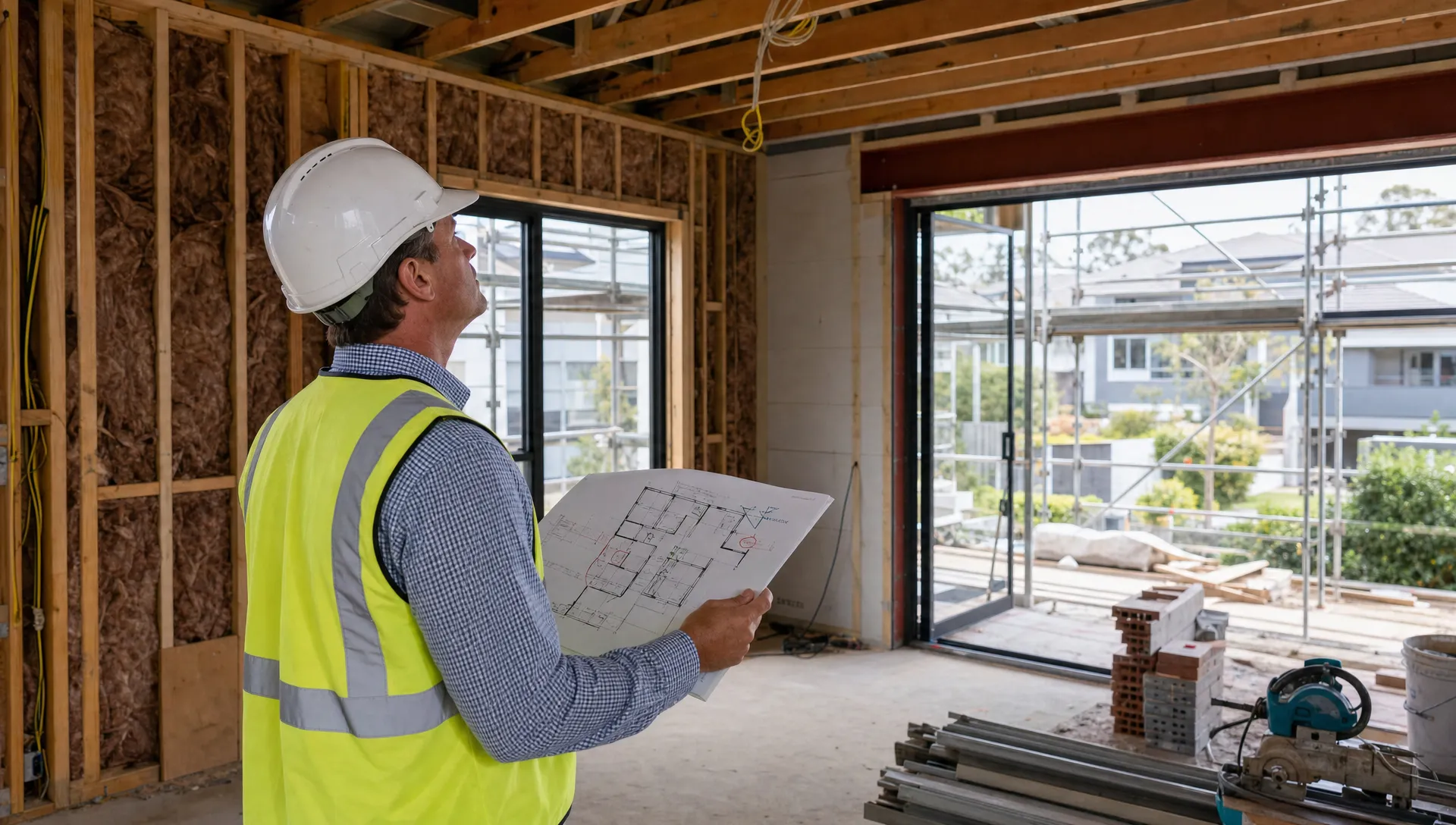
A strong inspection does more than take photos. It records observations in a way that can later be tested, explained and relied upon. The expert must identify what was inspected, what documents were considered, what limitations applied and how the findings were reached.
Common inspection inputs include the building contract, scope of works, architectural drawings, engineering drawings, variation records, payment schedules, invoices, photographs, correspondence, occupation certificates where relevant, and any prior defect lists. The on-site inspection then checks those documents against the physical work.
For homeowners, this process can validate whether concerns are genuine building defects or expected construction tolerances. For builders, it can identify where a claim is overstated, unsupported or caused by design, maintenance, access or owner-directed changes. For lawyers, it provides the technical foundation needed to plead, defend or settle a claim with more confidence.
Awesim has covered related inspection considerations in more detail in its guide to what building services consultants assess on site, including workmanship, compliance, water ingress and structural indicators.
How inspections strengthen defect claims
Defect claims are often won or lost on specificity. A vague statement such as “the bathroom waterproofing is defective” is much weaker than a report that identifies the affected area, records moisture readings or visible symptoms, references the relevant construction detail, explains the likely cause, and sets out the rectification scope.
A site inspection can strengthen a defect claim by establishing three key links.
First, it identifies the defect with precision. The inspection should describe where the issue is located, what is visible, how extensive it appears to be, and whether further invasive investigation may be needed. Photographs, measurements and notes are critical because they preserve the condition at the time of inspection.
Second, it considers causation. A crack, leak or movement issue may have several possible causes. It could arise from poor workmanship, design issues, product failure, ground movement, lack of maintenance or later damage. An expert inspection helps separate likely causes from assumptions.
Third, it supports rectification. A claim is stronger when it explains not only what is wrong, but what should reasonably be done to fix it. This may include removal and replacement, local repair, further testing, specialist investigation or monitoring.
Glen Sim’s approach is to treat the inspection as a disciplined evidence-gathering exercise. The aim is not to advocate for the loudest party, but to provide independent technical evidence that can withstand scrutiny.
How inspections support incomplete work and payment disputes
Not every construction dispute is about defects. Many claims concern incomplete work, progress payments, variations or the reasonable value of work performed. In these matters, a site inspection can be just as important.
For incomplete work claims, the inspection can compare the contracted scope against the actual state of the project. This helps identify what has been completed, what is partially complete, what is absent, and what may need to be redone before completion can occur.
For payment disputes, the inspection can test whether a claimed progress stage has genuinely been reached. For example, a payment claim may assert that a stage is complete, while the inspection reveals missing installation, incomplete finishes or works that cannot yet be certified as complete.
For variation disputes, the site can show whether additional work was performed, whether it differs from the original drawings, and whether it appears to align with alleged verbal or written instructions. This does not replace legal analysis of whether a variation is enforceable, but it can provide the factual basis for that analysis.
For quantum meruit claims, where a party seeks payment for the reasonable value of work, the site inspection helps establish what work was physically performed and its apparent extent. Awesim’s work in quantum meruit reports can assist where the value of completed building work is disputed and needs independent assessment.
| Dispute issue | What the site inspection can record | How it strengthens the claim |
|---|---|---|
| Defective work | Location, symptoms, measurements, photographs and likely cause | Connects the allegation to observable technical evidence |
| Incomplete work | Items finished, partially finished or not started | Helps quantify remaining scope and completion issues |
| Payment claim dispute | Actual progress against claimed stage or invoice | Tests whether payment is supported by site conditions |
| Variation claim | Physical changes from original scope or drawings | Supports or challenges whether extra work was performed |
| Rectification cost | Scope of repair likely required | Assists with Scott Schedules and expert reports |
| Quantum meruit | Extent and nature of work carried out | Helps assess reasonable value where contract entitlement is disputed |
The role of photographs, measurements and contemporaneous notes
Photographs are powerful, but they must be used carefully. A close-up image can show a defect, but without context it may not prove where the item is located or how extensive the issue is. Good inspection evidence usually includes both wide-angle context photographs and detailed close-ups.
Measurements also matter. Gaps, falls, levels, cracking, moisture readings and dimensions can turn a subjective complaint into a measurable issue. Where tolerances or compliance standards are relevant, measurements help the expert explain whether the work appears to fall within or outside acceptable limits.
Contemporaneous notes are equally important. They record what was observed at the time, who attended, what access was available, what could not be inspected, and what assumptions may need to be verified later. This protects the integrity of the report and helps avoid later disputes about what was seen.
In expert evidence, the strength of a conclusion often depends on the quality of the underlying observations. If the inspection record is weak, the opinion may be easier to challenge. If the inspection record is thorough, structured and transparent, the opinion is more likely to assist resolution.
How inspections improve Scott Schedules
In many building disputes, especially NCAT matters, a Scott Schedule is used to organise disputed items. It typically sets out the alleged defect or issue, the parties’ positions, the expert’s opinion, and the claimed rectification cost or value.
A site inspection strengthens a Scott Schedule because each item can be tied to actual site findings. Instead of listing broad complaints, the schedule can identify specific rooms, elevations, building elements, quantities and rectification steps.
For example, a weak Scott Schedule item might say “poor painting throughout”. A stronger item might identify affected walls and ceilings, describe visible defects such as patchiness or inadequate preparation, attach photographs, and state the recommended rectification method. The difference is significant because the stronger item is easier to assess, price, admit, deny or negotiate.
This is where independent expert input can add substantial value. Awesim provides expert witness reports and Scott Schedules for NSW building disputes, helping parties organise technical issues into a form that is more useful for negotiation, NCAT or court proceedings.
Why independence makes inspection evidence more persuasive
A homeowner’s photographs and a builder’s site notes can both be useful, but each may be viewed as coming from an interested party. Independent inspection evidence carries more weight because it is prepared by someone whose role is to assist with technical opinion rather than simply argue one side’s case.
Independence does not mean the expert ignores the client’s concerns. It means the expert tests those concerns against the documents, the site conditions and the limits of what can properly be concluded. If an allegation is unsupported, overstated or outside the expert’s field, a credible expert should say so.
This independence can help both sides. Homeowners gain clarity about which issues are real, provable and worth pursuing. Builders gain protection against exaggerated or poorly founded claims. Lawyers gain a clearer evidentiary basis for advice, negotiation and submissions.
For a deeper look at the importance of impartial technical input, Awesim explains why an independent construction consultant matters in NSW disputes.
When should a site inspection be arranged?
Timing can affect the quality of evidence. If an inspection is delayed, defects may worsen, incomplete work may be altered, or access may become harder. If rectification work begins before evidence is recorded, it may become difficult to prove the original condition.
A site inspection should be considered when a dispute involves alleged defects, incomplete work, termination, payment refusal, variation claims, water ingress, structural concerns, poor workmanship or competing scopes of rectification. It is also sensible before a matter escalates into formal proceedings, because early expert evidence can help narrow the dispute and support settlement discussions.
That said, parties should coordinate carefully where legal proceedings are active or likely. Solicitors may need to brief the expert, define the questions to be answered, manage privilege issues and ensure the report is suitable for the intended forum. Awesim’s article on how construction dispute lawyers use expert evidence explains how technical reports can fit into the broader legal strategy.
Common mistakes that weaken inspection-based claims
Even genuine claims can be weakened by poor evidence handling. A recurring problem is relying on scattered photographs without dates, locations or context. Another is making broad allegations without linking them to a contractual obligation, drawing, standard or measurable site condition.
Parties also run into trouble when they repair, remove or cover up disputed work before obtaining proper evidence. In urgent cases, safety and damage mitigation must come first, but the condition should still be documented as thoroughly as possible before changes are made.
Another mistake is asking an expert to provide conclusions without adequate documents. The site may reveal what exists, but the documents often explain what was required. A reliable opinion usually needs both.
The strongest claims are built on organised information, early inspection, clear photographs, measured observations, relevant documents and an independent expert report that explains the reasoning in plain English.
Frequently Asked Questions
What is the purpose of a site inspection in construction disputes? A site inspection helps identify the actual condition of the works, record defects or incomplete items, compare the work against relevant documents, and provide evidence for reports, Scott Schedules, negotiation, NCAT or court proceedings.
Can a site inspection prove who is at fault? It can help identify likely causes, but fault may also depend on the contract, instructions, design responsibility, statutory duties and legal issues. An expert can provide technical opinion, while a solicitor can advise on legal liability.
Should homeowners get an inspection before lodging a claim? In many cases, yes. An early inspection can clarify which issues are technically supportable, what evidence is needed and whether the cost of pursuing the dispute is proportionate.
Can builders use site inspections to defend claims? Yes. Builders can use independent inspection evidence to respond to alleged defects, identify exaggerated claims, show completed work, clarify variation issues and support payment disputes.
How does a site inspection help lawyers? It gives lawyers a technical foundation for pleadings, evidence, settlement negotiations and cross-examination. It also helps convert broad complaints into specific issues that can be admitted, denied, priced or resolved.
Need independent inspection evidence for a NSW building dispute?
If your construction dispute depends on defects, incomplete work, variations, payment claims or rectification costs, a well-prepared site inspection can materially strengthen your position.
Glen Sim, owner and director of Awesim Building Consultants, provides independent building dispute support across New South Wales, including expert witness reports, Scott Schedules, quantum meruit reports, NCAT dispute reports and building defect assessments.
To discuss how independent site inspection evidence may assist your matter, contact Awesim Building Consultants.

Related Posts

Waterproof Membrane Failure: How Inspectors Find the Cause
Waterproof membrane failure is diagnosed by tracing the water entry point, reviewing design documents, exposing the membrane for visual inspection,
Read More »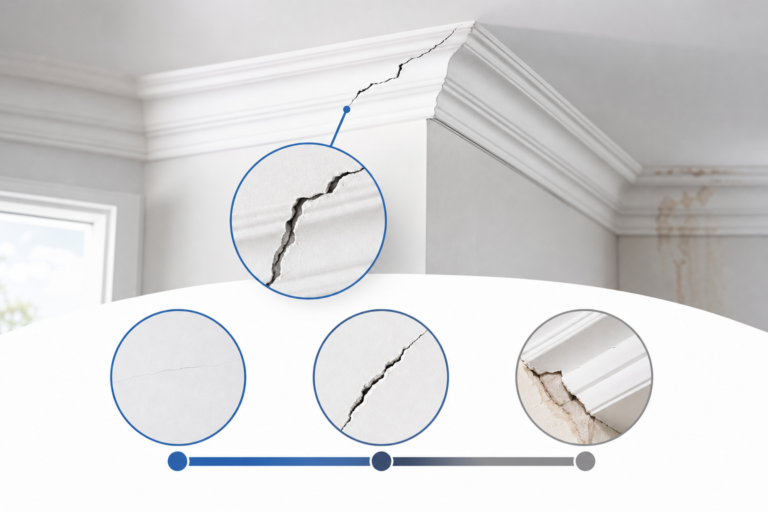
Cornice Cracking: How to Tell If the Damage Is Serious
Cornice cracking is one of the most common concerns Australian homeowners raise, and the hard part is not spotting the
Read More »
Digital Construction Consultant Australia: What They Do
A digital construction consultant in Australia manages the technology-driven side of building projects: BIM coordination, clash detection, asset data handover,
Read More »