If you’re in a NSW building dispute, the hard truth is this. In New South Wales building contract disputes, builders who represent themselves succeed only 40% of the time, whereas those with legal representation achieve a 73% success rate, a 33% increase in success probability that shows how much procedure and presentation matter in NCAT (NSW self-representation success rates in building disputes).
Most homeowners don’t lose because they care less or because their complaint isn’t real. They lose because building disputes sit at the intersection of law, evidence, contracts, site conditions, scope, workmanship, Australian Standards, variation records, and causation. A cracked wall, leaking balcony, defective waterproofing system, or unfinished extension may look obvious on site, but NCAT and the courts still need the issue framed properly, supported properly, and argued properly.
That is why the search for lawyers for building disputes can’t start and end with finding someone who can file papers. The stronger approach is to build the matter from day one around two things. A construction law specialist who knows the NSW legislation, and technical evidence that can survive scrutiny.
Awesim Building Consultants have 35+ years in Building & Construction, with over 15+ years providing litigation support to home owners, builders and lawyers. We provide site investigations, Building & Construction Expert Witness Reports and Scott Schedules. That practical crossover between the building site and the hearing room is what most dispute guides miss.
Why You Need a Lawyer for Building Disputes in NSW
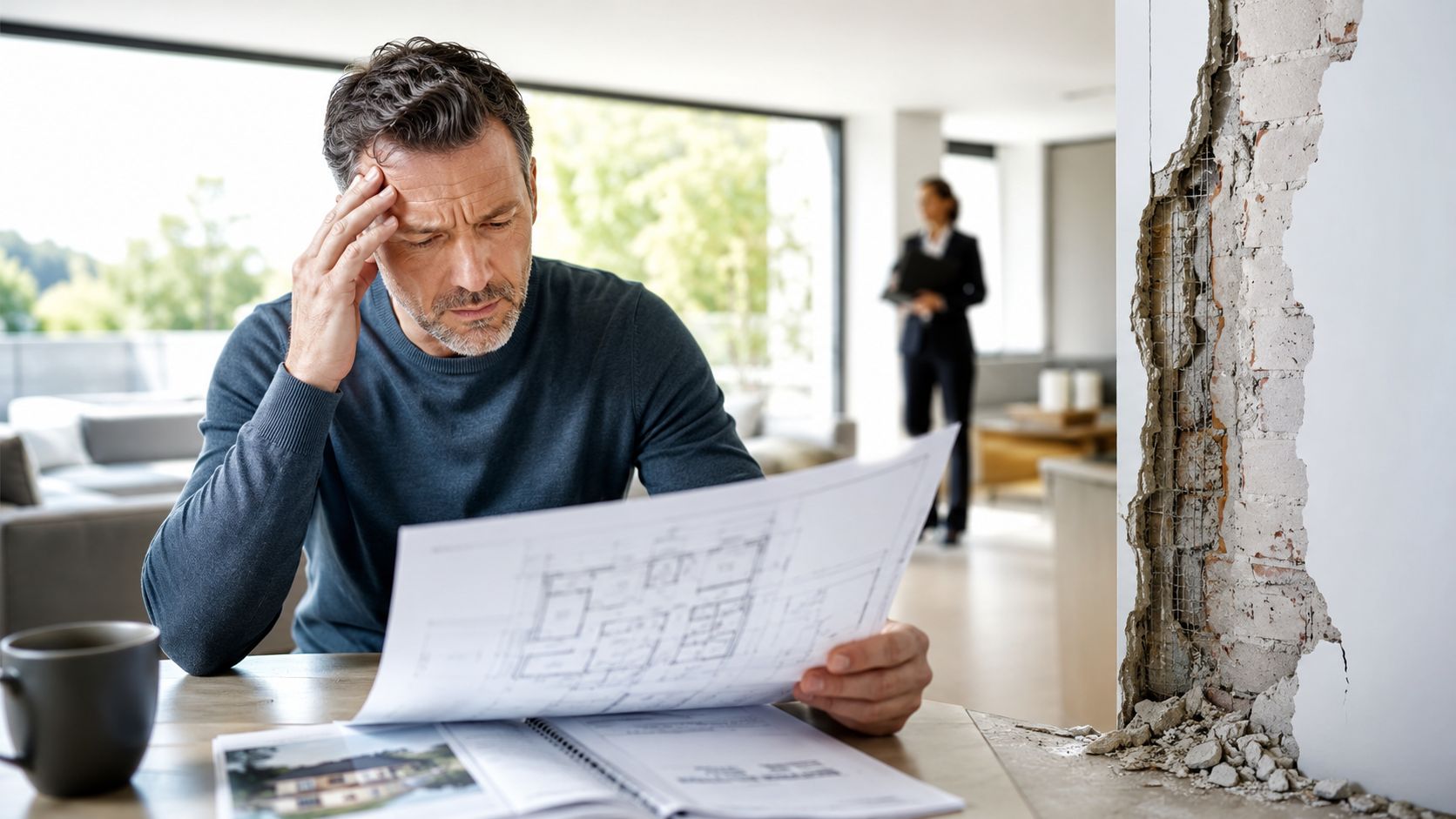
A building dispute doesn’t stay simple for long. What starts as “the tiling is wrong” or “the builder walked off the job” quickly turns into arguments about contractual scope, variations, access, delays, waterproofing sequencing, certification, and whether the defect is cosmetic, structural, or caused by someone else’s later work.
NCAT isn’t just about being right
People often assume that if the defects are obvious, the result should be obvious too. That isn’t how these matters run. You still have to identify the defects precisely, tie them to the contract or legislative obligations, explain the rectification path, and present the claim in a way NCAT can work with.
A specialist lawyer does more than “speak for you”. They control the structure of the case. They know what orders to seek, what to concede, what to leave out, when to brief an expert, and when a settlement is worth taking.
For many owners, the first mistake is waiting too long. They spend months emailing the builder, collecting random photos, and hoping one more conversation will fix it. By the time they seek legal help, records are disorganised, the site has changed, and key evidence has gone cold. A practical early guide is when to brief a construction dispute solicitor.
Practical rule: If the dispute involves defects, delay, unpaid work, variations, water ingress, or termination, get legal advice before you commit to a long chain of informal negotiations.
Stress clouds judgement
Homeowners under pressure often do one of two things. They either become too aggressive too early, or too passive for too long. Neither helps. Threatening letters without evidence usually hardens the other side’s position. Endless informal requests usually produce more excuses and wasted time.
Lawyers for building disputes are valuable because they impose order on a messy situation. They identify the actual issues in dispute and separate emotion from proof.
That only works when the legal case rests on sound technical material. A lawyer can frame the claim, but a building consultant gives the claim factual weight. Without both, even a legitimate grievance can become difficult to prove.
The Difference Between a General Lawyer and a Construction Law Specialist
Not every solicitor who handles civil matters should handle a building dispute. This area is specialised for the same reason structural design is specialised. The rules may sit inside a broader profession, but the detail decides the outcome.
What a specialist actually knows
A construction law specialist in NSW should be comfortable working with the Home Building Act (HBA) and the Design and Building Practitioners Act (DBPA) in live disputes, not just mentioning them in a brochure. They need to understand how statutory warranties, compliance obligations, contractual interpretation, and defect evidence interact in practice.
They also need to know what usually happens before a hearing. Building matters turn on records, scope analysis, expert evidence, competing defect allegations, and whether the technical material is organised in a tribunal-friendly way.
A general litigation lawyer may be competent and diligent, but still miss the points that matter most in a building case:
- Scope drift: whether the disputed work was part of the original contract, a variation, or an owner-supplied instruction
- Defect characterisation: whether the issue is incomplete work, defective work, maintenance, movement, design failure, or later damage
- Standards alignment: whether the criticism connects to the right code, standard, tolerance, or manufacturer requirement
- Evidence timing: whether the site should be inspected before rectification, demolition, or further trades alter the condition
Why general experience isn’t enough
A building dispute isn’t a standard debt claim with photos attached. It’s a technical dispute wrapped in legal procedure. If your lawyer can’t read a report critically, challenge an opposing expert, or identify what’s missing from a Scott Schedule, you’re carrying unnecessary risk.
Asking a general lawyer to run a defect case is like asking a GP to perform heart surgery. They’re both qualified professionals, but the specialist deals with that anatomy every day.
There is also a practical issue. A construction specialist knows how to work with building consultants, quantity evidence, defect lists, photographs, contract documents, and chronology. That collaboration saves time because the legal strategy and technical strategy develop together instead of colliding halfway through the matter.
The standard you should expect
Before you engage anyone, check whether they can answer these questions clearly:
- Legislation: Do they regularly advise on HBA and DBPA issues?
- Tribunal familiarity: Do they routinely handle NCAT building matters?
- Technical literacy: Can they explain how expert evidence will support the legal case?
- Dispute realism: Can they tell you what parts of your complaint are strong, weak, or commercially not worth fighting over?
If the answers are vague, keep looking. In this field, specialisation isn’t a bonus. It’s basic risk control.
How to Find and Vet the Right Building Dispute Lawyer
The first filter is simple. Only speak to lawyers who regularly act in building and construction matters. Anything less wastes time.
For NSW disputes, two solicitors worth speaking to are David Mitchell of Mitchell & Shorten Lawyers and Joseph Taouk of Gavel and Page Lawyers. Both have expertise with the NSW Home Building Act (HBA) and the Design and Building Practitioners Act (DBPA). They also understand the practical difference between a legal argument and a provable building claim.
Awesim Building Consultants are their preferred Building Expert Witnesses and have worked together on dozens of claims.
Recommended specialist construction lawyers
| Lawyer/Firm | Website | Key Expertise |
|---|---|---|
| David Mitchell, Mitchell & Shorten Lawyers | Mitchell & Shorten Lawyers | Building and construction law, HBA, DBPA |
| Joseph Taouk, Gavel and Page Lawyers | Gavel and Page Lawyers | Building and construction law, HBA, DBPA |
A useful companion piece is how to choose building dispute lawyers in Sydney, especially if you’re comparing firms and trying to avoid a poor first engagement.
Questions that expose whether a lawyer is the right fit
The first consultation shouldn’t be a sales pitch. It should tell you whether the lawyer understands your matter, your documents, and the likely path forward.
Ask direct questions:
- Matter type: How many building defect, incomplete work, variation, or payment disputes like mine do you handle?
- Legislative footing: How does my matter sit under the HBA or DBPA?
- Evidence plan: What technical evidence do you want before filing, and why?
- Forum strategy: Is NCAT the sensible path, or is another forum more appropriate?
- Settlement approach: At what point would you push for negotiation, mediation, or expert conclave if available?
- Expert coordination: How do you work with building consultants and expert witnesses?
- Communication: Who will run the file day to day?
- Costs: What is included in your estimate, and what tends to sit outside it?
The most important question is this: What technical evidence do you need from me before you can properly assess the strength of my case?
That question matters because weak evidence creates false confidence. A lawyer who asks for your contract, plans, variation records, photographs, correspondence, invoices, and independent expert material is usually taking the matter seriously.
Signs to proceed carefully
Some warning signs show up early:
- They give a strong merits view too fast: No one can sensibly assess a building dispute off a quick verbal summary.
- They focus only on blame: Good lawyers focus on proof, remedy, and recoverability.
- They don’t mention expert evidence: In construction disputes, that’s a major omission.
- They can’t explain process clearly: If the first meeting is confusing, the file probably will be too.
A good construction lawyer won’t promise victory. They will define the dispute properly, identify what evidence is missing, and tell you where the pressure points are.
Decoding Legal Fees and Budgeting for Your Dispute
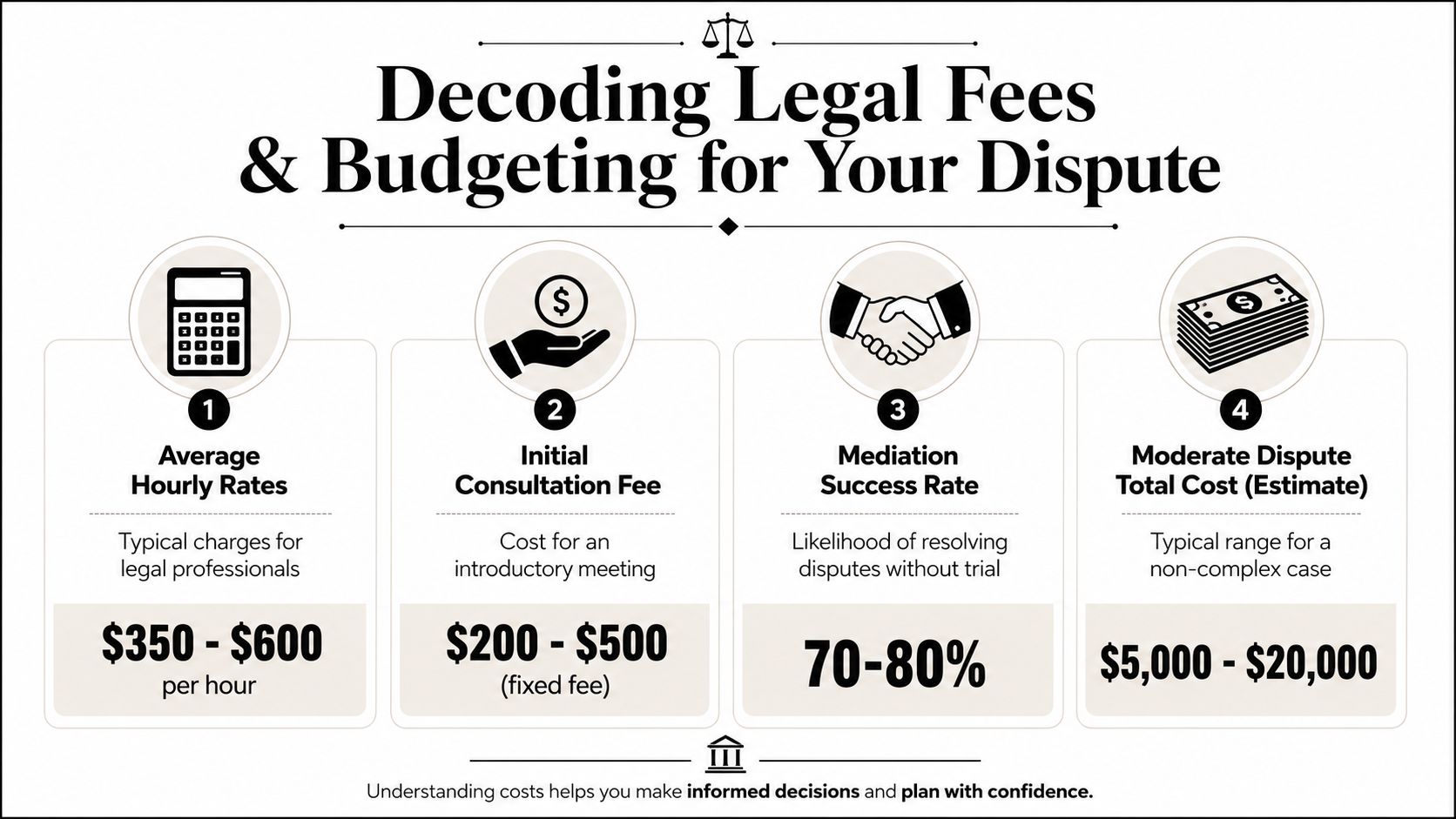
Legal cost anxiety stops many people from acting when they should. The better approach is to budget early and understand which stages of the dispute consume money fastest.
For NCAT building matters in NSW, legal and expert fees for straightforward disputes typically range from $5,000 to $8,000, while more complex cases can cost between $13,500 and $23,000. Full hearing representation alone often accounts for $8,500 to $15,000+ of this cost (NCAT building dispute lawyer cost guide).
Where the money usually goes
The same cost guide also breaks out common stages of representation. Directions hearing representation sits at a lower level than settlement conference work, and full hearing work is usually the most expensive component because it involves preparation, evidence handling, submissions, and coordination with experts.
That matters because many people think legal fees are one undifferentiated lump sum. They aren’t. Cost usually rises with dispute complexity, document volume, expert involvement, and how close the matter gets to a contested hearing.
To help visualise the budgeting side, review this overview.
Fee structures to ask about
Different firms charge in different ways. You need to know what model is being proposed and what that means in practice.
- Fixed fee for defined stages: Useful when the scope is clear. It can work well for early advice, a directions hearing, or a settlement conference.
- Hourly billing: Sometimes appropriate where the dispute is messy or likely to change shape. It can become expensive if there is poor file management.
- Blended approach: Some lawyers use a fixed fee for initial work, then move to hourly billing if the matter proceeds further.
Ask for a detailed costs disclosure that separates legal work from expert costs, filing costs, and any likely hearing preparation. If it isn’t broken down, you can’t budget properly.
What works and what doesn’t
What works is discussing fees before the first major procedural step. Ask what is included, what assumptions the estimate relies on, and what events usually trigger extra cost.
What doesn’t work is treating the cheapest quote as the best value. In building disputes, poor early preparation often leads to duplicated work, rushed evidence gathering, and higher expense later.
A careful budget is part of the dispute strategy, not an afterthought.
Assembling Your Arsenal The Documents You Absolutely Need
The strongest lawyer in NSW can’t rescue a poorly documented building claim. Consequently, many cases fail. NCAT data from 2024 to 2025 indicates an estimated 65% of claimants lose their building dispute not because of flawed legal arguments, but because of insufficient or non-compliant technical documentation, such as a poorly prepared Scott Schedule or a weak Expert Witness Report (NCAT technical documentation issue in building disputes).
That figure matches what happens on the ground. Homeowners often bring emotion, photographs, and a long story. What they don’t bring is a properly structured technical case.
The documents that carry the dispute
A building dispute file should be assembled like evidence, not like a memory box. You need documents that identify the obligation, the defect, the breach, and the remedy.
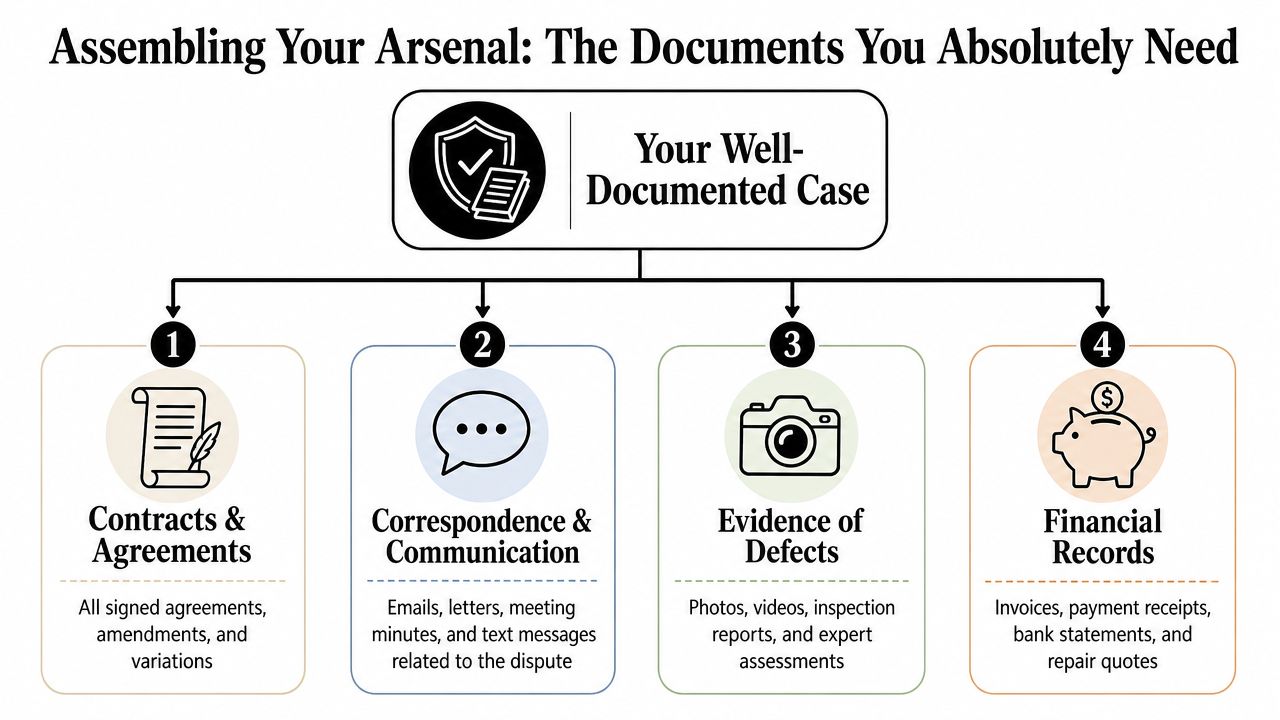
The core categories are:
- Contracts and scope records: Signed contract, plans, specifications, variations, inclusions, and any agreed changes
- Communications: Emails, letters, texts, meeting notes, site instructions, and complaint notices
- Financial records: Invoices, progress claims, receipts, bank records, quotations for rectification, and credits
- Defect evidence: Dated photographs, videos, consultant notes, inspection records, and expert analysis
Why expert reports and Scott Schedules matter so much
An Expert Witness Report is not just a defect list. It should identify the relevant condition, explain why the work is defective or incomplete, connect that conclusion to standards or contractual requirements where relevant, and outline the rectification position.
A Scott Schedule is the document that organises the dispute issue by issue. It lets the tribunal and the parties compare each alleged defect, the response, and the competing position in a structured way. In real terms, it turns a chaotic complaint into a workable dispute document.
Without that structure, parties end up arguing in broad terms. Broad arguments are hard to prove and even harder to decide.
Good technical evidence doesn’t just describe a problem. It isolates each issue, ties it to a location or trade, and states what needs to happen next.
Common documentation mistakes
I see the same problems repeatedly:
- Too many photos, no logic: Hundreds of images with no dates, no labels, and no explanation of what each image proves
- Missing contract trail: Owners know what they thought was agreed, but can’t show the signed variation or instruction
- Rectification before inspection: Work gets demolished or patched before anyone independent records the condition
- Opinion from the wrong person: A handyman quote or casual trade comment is not the same thing as expert evidence
If you’re serious about engaging lawyers for building disputes, build the evidence file first. The law needs facts it can use.
Your Winning Strategy Collaborating with Your Lawyer and Building Consultant
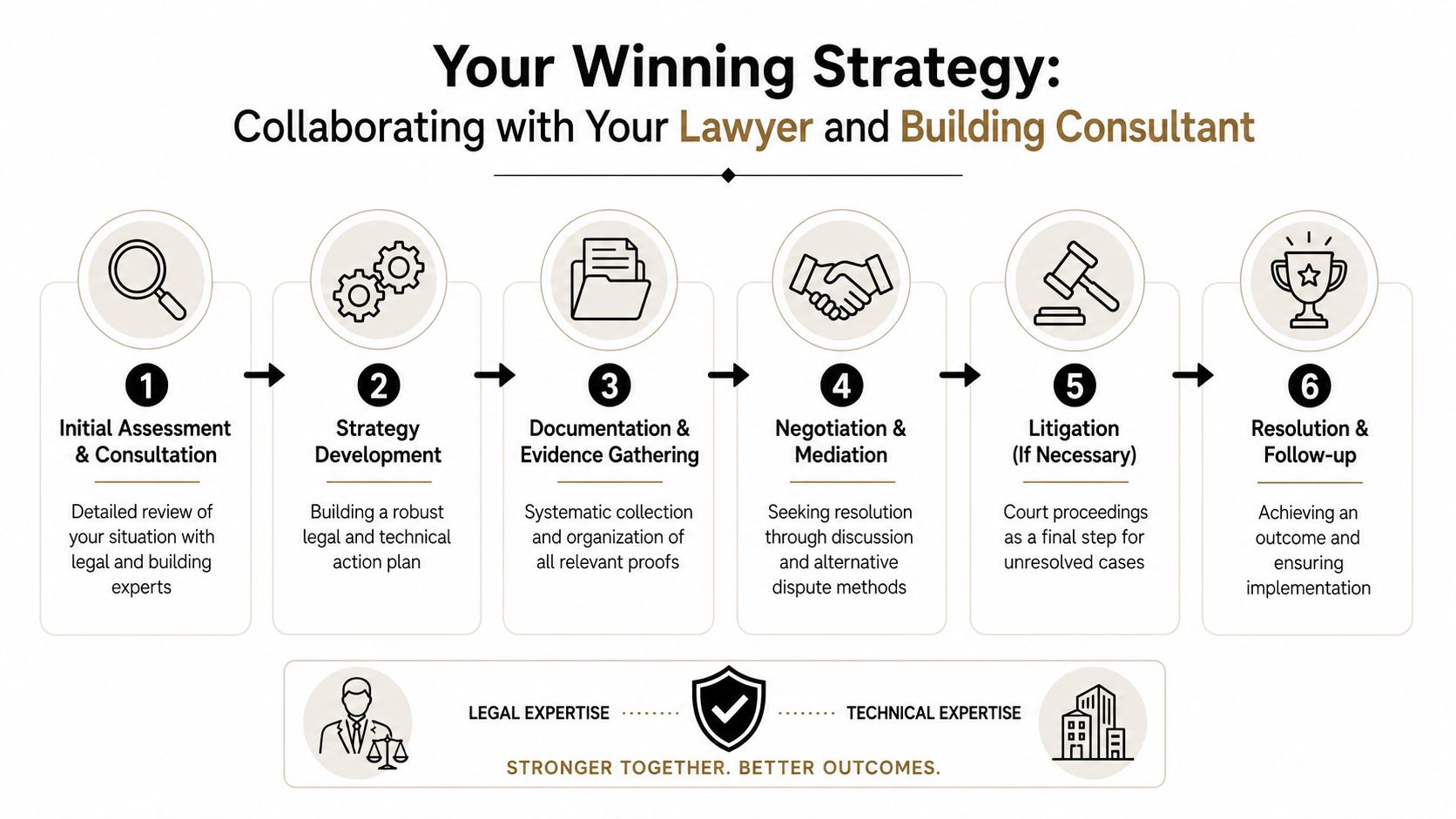
The most effective disputes are run as a coordinated job. The owner supplies the factual history and records. The building consultant investigates the site, isolates the technical issues, and prepares usable evidence. The lawyer turns that material into pleadings, submissions, negotiation strategy, and procedural action.
When that sequence is done early, matters often resolve without running all the way to a contested hearing. In NSW, an estimated 78% of NCAT building cases are resolved without a full hearing, often because strong early technical evidence such as an Expert Witness Report and Scott Schedule drives settlement (NSW NCAT building case resolution trend).
How the collaboration should work
A sound workflow usually looks like this:
Initial review of the dispute
The documents are checked for contract scope, key dates, payment history, and complaint history.Site investigation and technical assessment
The physical issues are inspected and recorded properly before conditions change.Preparation of organised evidence
The defects, incomplete items, causation issues, and rectification pathway are documented in a form the legal team can use.Lawyer-led negotiation or filing
Once the facts are organised, the legal strategy becomes sharper and more credible.
A detailed explanation of that process appears in how construction dispute lawyers use expert evidence.
What helps settlement and what blocks it
What helps is precision. If the report identifies each issue clearly, the opposing party has less room to hide behind vague denials. That is especially important in specialist areas where compliance turns on technical benchmarks. For example, where roofing failures are part of the dispute, reviewing material on industrial roofing standards can help owners understand why roof performance arguments need to be tied to recognised standards rather than broad complaints about leaks.
What blocks resolution is disorder. If the owner sends scattered emails, the consultant writes a general commentary, and the lawyer is left to patch it together later, the case becomes slower, dearer, and weaker.
The point isn’t merely to hire a lawyer. The point is to give that lawyer a technically defensible case to run.
If you’re dealing with defective work, an abandoned project, variation disputes, water ingress, or an NCAT claim that isn’t properly documented, start with the evidence. Awesim Building Consultants provides site investigations, Building & Construction Expert Witness Reports, and Scott Schedules for homeowners, builders, and lawyers across NSW. To discuss your matter, email admin@awesim.com.au or call 1800 293 746.