
Do You Need a Forensic Waterproofing Inspector or a Regular Waterproofing Contractor?
- What a Waterproofing Contractor Does
- What a Forensic Waterproofing Inspector Does
- The Key Difference: Purpose
- When You Need a Forensic Waterproofing Inspector
- When You Need a Waterproofing Contractor
- Why Independence Matters in a Dispute
- What a Forensic Waterproofing Report Contains
- How This Connects to Your Broader Claim
- Making the Right Call Early
- Frequently Asked Questions
Water damage is one of the most common and costly defects in Australian homes. But when you find a leak, a damp wall, or persistent moisture getting through, the first question isn’t always “how do I fix it?” Sometimes the more pressing question is “what actually caused this, and who is responsible?”
That question determines whether you need a waterproofing contractor or a forensic waterproofing inspector. These are not interchangeable roles, and choosing the wrong one at the wrong time can cost you your claim.
What a Waterproofing Contractor Does
A waterproofing contractor is a licensed tradesperson. Their job is to apply waterproofing systems, repair membrane failures, seal penetrations, and fix leaks. They work to the relevant Australian Standards and building codes. When the work is straightforward and there’s no dispute involved, they’re exactly who you need.
A good waterproofing contractor will:
- Identify the visible source of a leak
- Recommend and carry out remedial work
- Apply new membrane systems or repair existing ones
- Provide a warranty on their workmanship
If your shower is leaking and you want it fixed, call a waterproofing contractor. That’s their domain.
What a Forensic Waterproofing Inspector Does
A forensic waterproofing inspector does something fundamentally different. They don’t fix the problem — they investigate it, document it, and produce an evidence-based report that explains what failed, why it failed, and what it will cost to rectify.
This matters because a court or tribunal doesn’t want to know what a contractor thinks happened. It wants an independent, qualified expert opinion that meets the evidentiary standards required under NSW law.
At Awesim Building Consultants, forensic waterproofing inspections are conducted specifically to produce reports that satisfy the UCPR Schedule 7 Expert Witness Code of Conduct — the standard NSW courts and NCAT enforce when admitting expert evidence. A report that doesn’t comply with Schedule 7 can be rejected or given little weight, regardless of how accurate the findings are.
A forensic waterproofing inspection will typically:
- Identify the nature and extent of the waterproofing defect
- Establish whether the failure resulted from poor workmanship, non-compliant materials, or a design fault
- Reference the applicable Australian Standards and building codes
- Quantify the scope and estimated cost of rectification
- Produce a written report formatted for use in NCAT, District Court, or Supreme Court proceedings
The Key Difference: Purpose
It comes down to purpose.
A waterproofing contractor’s purpose is remediation. A forensic waterproofing inspector’s purpose is evidence.
If you’re in a dispute with a builder, developer, or strata manager over defective waterproofing and you’re preparing to file at NCAT or in court, you need a forensic inspection report. A quote or assessment from a waterproofing contractor — even a detailed one — won’t carry the same weight as a Schedule 7 compliant expert witness report. Opposing legal teams know this, and they will challenge contractor assessments on exactly these grounds.
When You Need a Forensic Waterproofing Inspector
Consider a forensic waterproofing inspection if any of the following apply:
- You’ve received a hearing date from NCAT and waterproofing defects are part of your claim
- A solicitor has told you that an independent expert report is required before you can file
- You’re disputing a builder’s or developer’s claim that the waterproofing was installed correctly
- The builder has denied liability and you need documented evidence to support your position
- You’re a strata manager dealing with recurring waterproofing failures in common property and need to establish the cause for insurance or legal purposes
- You’re an owner-builder who has been told the waterproofing work doesn’t meet the required standard
In each of these situations, what you need is not a contractor’s assessment. It’s a court-ready forensic inspection report prepared by an independent building consultant with no affiliation to any builder, insurer, or developer.
When You Need a Waterproofing Contractor
You need a waterproofing contractor when:
- There’s no dispute and you simply want the defect repaired
- You’ve already obtained a forensic report and now need the rectification work carried out
- You’re getting quotes to include in a Scott Schedule or to support a damages claim — though these quotes should sit alongside, not replace, an independent forensic report
Even when you’re pursuing a claim, you’ll eventually need a contractor to carry out the rectification. The forensic report establishes the defect and the scope. The contractor delivers the fix. Both have a role, but they serve different stages of the process.
Why Independence Matters in a Dispute
When a forensic waterproofing report is used in NCAT or court, the expert who prepared it may be cross-examined. The opposing party will look for any reason to challenge the report’s credibility — including whether the expert has any commercial relationship with the party who commissioned it.
Awesim Building Consultants has no affiliation with any builder, insurer, or developer. That independence isn’t incidental. It’s a structural feature of how the firm operates, and it matters when your report is tested under cross-examination.
Awesim has been preparing forensic waterproofing inspection reports and expert witness evidence for NSW proceedings since 1996, with on-site inspection capability across the full state from offices in Sydney, Tamworth, and Tweed Heads.
What a Forensic Waterproofing Report Contains
A well-prepared forensic waterproofing report will document the following:
Site observations: Photographic evidence of the defect, its location, and its extent, recorded during an on-site inspection.
Defect identification: A clear description of what failed and where, referenced against the applicable Australian Standards — typically AS 3740 for wet area waterproofing.
Causation analysis: An expert opinion on whether the failure resulted from poor workmanship, non-compliant materials, design error, or a combination of factors.
Rectification scope: A description of the work required to bring the waterproofing installation up to the required standard.
Cost estimate: An independent assessment of the reasonable cost of rectification, which can be used to support a damages claim.
Expert declaration: A signed statement of compliance with UCPR Schedule 7, confirming that the expert’s duty is to the court, not to the party who engaged them.
This structure is what separates a forensic report from a contractor’s assessment. Every element is designed to hold up under scrutiny in a formal legal proceeding.
How This Connects to Your Broader Claim
Waterproofing defects rarely appear in isolation. In most NCAT or court matters involving building defects, waterproofing failures are one item in a longer list. That’s where a Scott Schedule becomes relevant — a structured document that lists each defect, the respondent’s position, and the expert’s findings side by side. It’s a standard tool in NSW building disputes.
If your matter involves multiple defects alongside waterproofing failures, working with a single firm that can prepare both the forensic waterproofing report and the broader expert witness evidence saves time and avoids the coordination problems that come with multiple consultants.
Awesim provides exactly that full-scope service. You can find out more about the range of expert witness and dispute services available at Awesim Building Consultants.
Making the Right Call Early
One of the most common mistakes homeowners make is engaging a waterproofing contractor to assess a defect before they’ve worked out whether a dispute is likely. That contractor’s report — prepared without the forensic and legal framework — can then be used against them by the opposing party to argue the defect was minor, the scope was overstated, or the cause was something other than the builder’s workmanship.
Getting an independent forensic inspection early, before any remediation work begins, protects the evidence. Once the defect is repaired, the physical evidence is gone. A forensic inspection conducted on the defect as it exists captures what you need.
If you’re not sure whether your situation calls for a forensic inspection or a contractor assessment, a free initial consultation with Awesim’s team can help you work out the right approach before you commit to either. Call 1800 293 746 or get in touch through awesim.com.au.
Frequently Asked Questions
What is the difference between a forensic waterproofing inspection and a standard building inspection?
A standard building inspection identifies visible defects and reports on the general condition of a property. A forensic waterproofing inspection goes further — it investigates the cause of a specific waterproofing failure, references the applicable Australian Standards, and produces a report formatted for use as expert witness evidence in NCAT or court proceedings. The forensic report is designed to withstand legal scrutiny; a standard inspection report is not.
Can a waterproofing contractor’s quote be used as evidence in NCAT?
A contractor’s quote or assessment can be submitted as evidence, but it carries less weight than a Schedule 7 compliant expert witness report. NCAT and NSW courts apply the UCPR Schedule 7 Expert Witness Code of Conduct to expert evidence. A contractor’s assessment doesn’t comply with that code, and the opposing party can challenge its admissibility or credibility on that basis.
Do I need a forensic waterproofing inspection before I file at NCAT?
In most building defect matters at NCAT, you’ll need an independent expert report to support your claim. If waterproofing defects are part of that claim, a forensic waterproofing inspection report is the appropriate form of evidence. Your solicitor will advise on the specific requirements for your matter, but having the report ready before your hearing date is essential.
How long does a forensic waterproofing inspection take?
The on-site inspection typically takes a few hours depending on the extent of the defect and the size of the property. Preparing the written report takes additional time. The total timeframe from engagement to delivery varies based on the complexity of the matter and current workload. Contact Awesim directly to discuss timeframes for your specific situation.
Can forensic waterproofing inspections be conducted outside Sydney?
Yes. Awesim Building Consultants operates from three offices — Sydney, Tamworth, and Tweed Heads — providing on-site inspection coverage across NSW. Regional and rural properties are within scope.
What Australian Standard applies to waterproofing in residential construction?
AS 3740 (Waterproofing of domestic wet areas) is the primary standard for wet area waterproofing in residential buildings. A forensic waterproofing report will typically reference AS 3740 when assessing whether the installed system meets the required standard. Other standards may apply depending on the location and type of waterproofing involved, such as balconies or below-ground structures.
What should I do if the builder has already repaired the waterproofing before I could get an inspection?
This is a difficult situation because the physical evidence of the defect may no longer be accessible. However, a forensic inspector can still review photographic records, any documentation from the original installation, and the current condition of the remediated area. If you’re in this position, contact Awesim to discuss what evidence is still available and what can be established from it.
Choosing between a forensic waterproofing inspector and a waterproofing contractor isn’t complicated once you understand what each one is for. If you’re in a dispute, you need forensic evidence. If you need repairs and there’s no dispute, you need a contractor. Get the sequence right, and you protect both your claim and your property.

Related Posts
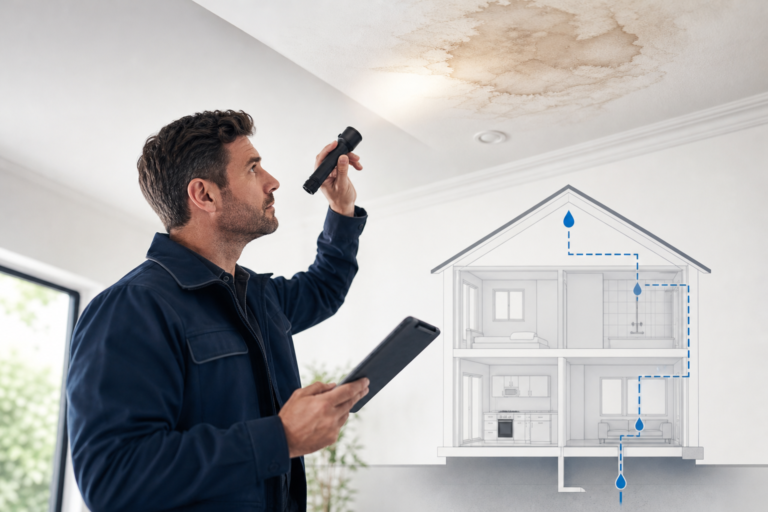
Water Damage in Homes: How to Track Down the Source
Water damage in a home rarely announces itself at the source. A stain on the ceiling, a musty smell in
Read More »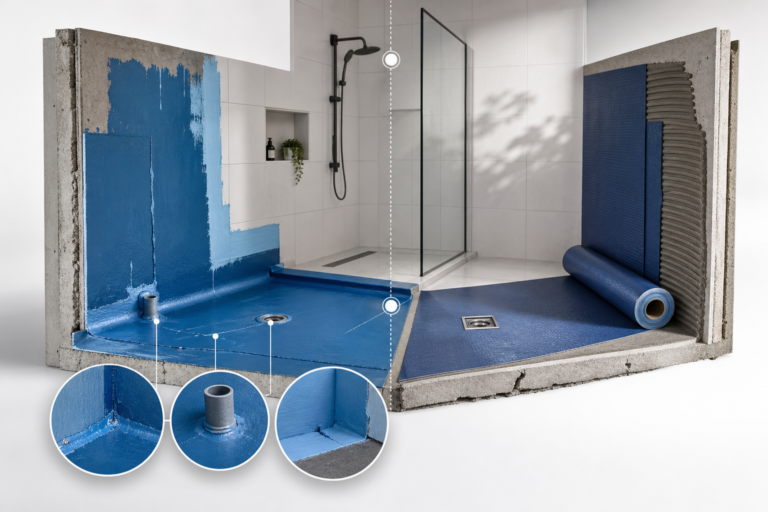
Waterproofing Membrane Types: Which Fails Most in NSW Bathrooms
Waterproofing failure is the single most common serious defect found in NSW apartments, and the type of membrane used, along
Read More »
Building Certifier NSW: Role, Limits, and When You Need More
A building certifier in NSW is a registered professional who issues construction certificates, conducts critical stage inspections, and grants occupation
Read More »