
Building Inspector Newcastle NSW: Expert Guide 2026
You’ve found a Newcastle property you like, the agent wants a quick decision, and the building looks fine at first glance. Then, after settlement, paint begins to blister, a ceiling stain returns, or cracking appears around a door opening. The difficult question is no longer whether the defect exists. It’s who caused it, whether it breaches the applicable requirements, what repair is appropriate, and what evidence will persuade Fair Trading or NCAT.
A building inspector Newcastle NSW property owners can rely on should do more than identify visible faults. The inspection should preserve site conditions, connect each defect to a building element, and explain what further testing or expert opinion is needed. That distinction matters when a straightforward pre-purchase report later needs to support a formal building dispute.
Why Newcastle Buyers and Owners Need the Right Inspection
A buyer inspecting a weatherboard home in Hamilton may see fresh paint, tidy floors and a recently renovated bathroom. Those surface improvements can conceal moisture movement, poor drainage, ageing roof components or work that lacks clear approval records. A newer infill dwelling presents different questions, including construction sequencing, waterproofing, cracking, junction details and whether completed work matches the applicable compliance requirements.
Newcastle’s property stock creates a broad inspection brief. Older homes, renovated cottages, apartment buildings around the harbour, suburban infill projects and properties across the Hunter region each develop different risks. Coastal exposure can accelerate deterioration of external metalwork and fixings, while sloping sites and drainage arrangements can influence moisture and movement. An inspector who only walks through rooms and photographs obvious marks can miss the cause behind the defect.
Practical rule: A report should record not only what looks wrong, but also the conditions that may explain why it happened.
Consider a purchaser who notices a small bathroom stain but proceeds without a detailed inspection. After settlement, the stain returns, skirting boards swell and cracking appears in the adjoining room. The owner now needs to separate a pre-existing defect from later damage, identify the responsible work package and establish whether the issue is incomplete, defective or outside the builder’s responsibility. That is much harder when nobody recorded the original condition.
An inspection also has a formal place in NSW dispute resolution. NSW Fair Trading describes a staged process in which an owner first seeks rectification from the builder or developer, then may involve Fair Trading or Building Commission NSW, which can issue a Rectification Order where the evidence supports intervention. The regulator states that 20 building inspectors are located across NSW, including Newcastle, placing local inspection access within a statewide home-building dispute framework. NSW Fair Trading’s home-building dispute-resolution material provides the relevant context.
For buyers preparing their inspection process, the inspecting a home before listing infographic is a useful visual reminder that property condition should be documented before decisions become irreversible. A proper building inspection belongs near the top of the due-diligence list, not at the bottom of a conveyancing checklist.
The Four Core Inspection Types and When Each One Applies
The right inspection depends on the event that triggered it. A pre-purchase inspection isn’t interchangeable with a defect investigation, and neither is automatically suitable as expert evidence.
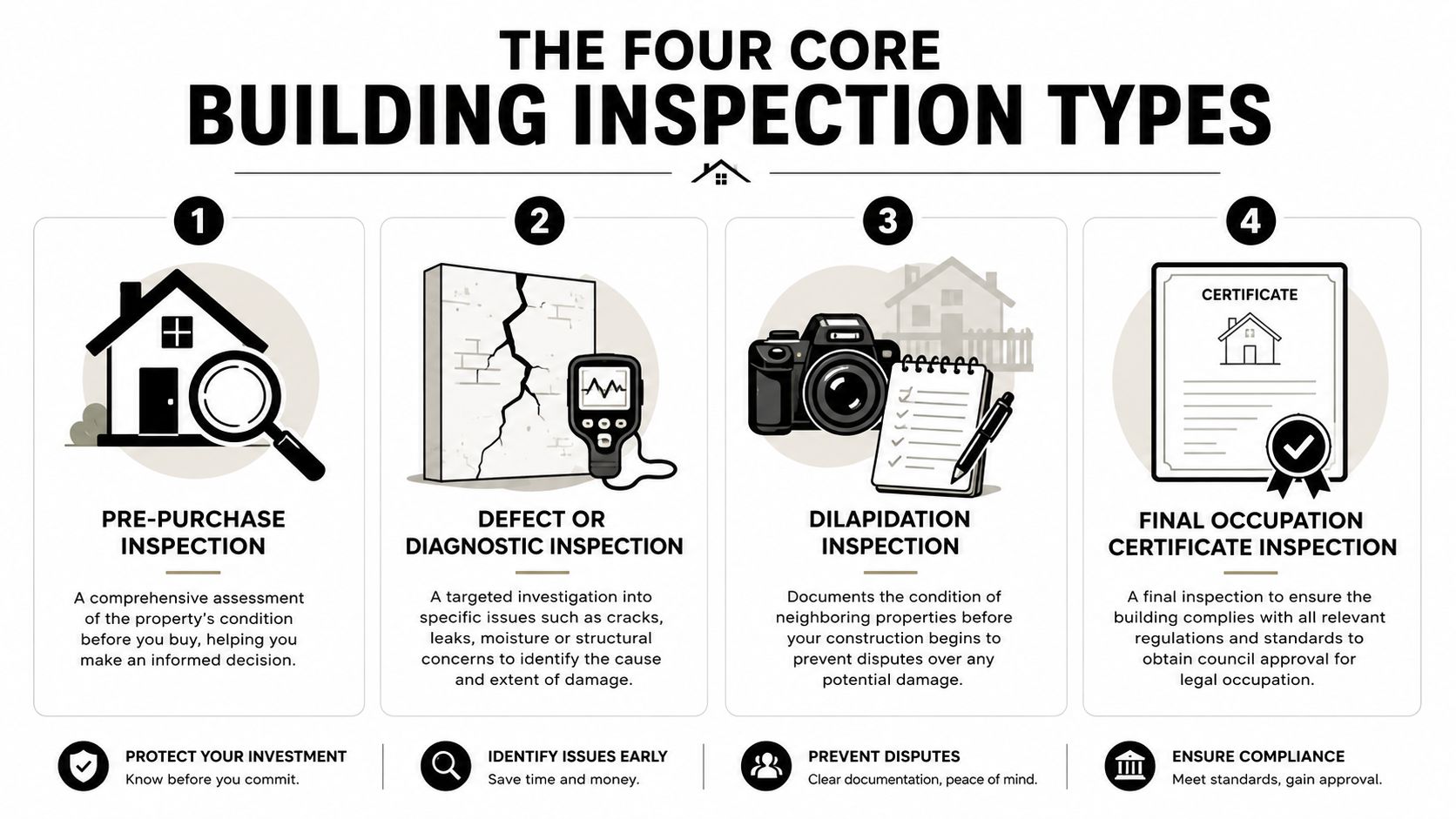
Pre-purchase building inspection
Book this before exchange or settlement, subject to the contract and your solicitor’s advice. The inspector examines accessible parts of the building and site, records defects and highlights matters needing specialist assessment. The output is a condition-focused report designed to help you understand risk before committing to the property.
It can support a decision to proceed, negotiate, seek further testing or withdraw where the contract permits. It usually isn’t intended to prove causation in a contested dispute.
Defect or diagnostic inspection
This inspection starts with a known problem, such as cracking, water ingress, movement, failed waterproofing, corrosion or recurring dampness. The work should focus on cause, extent, consequence and recommended next investigation, rather than merely listing symptoms.
A diagnostic inspection may require moisture mapping, review of drawings and approvals, roof-cavity access, drainage observations or referral to an engineer, plumber, electrician or other specialist. The report should say where the evidence ends and where testing is required.
Dilapidation inspection
A dilapidation inspection documents the condition of a neighbouring property, public area or adjoining structure before construction, excavation or renovation begins. Photographs should be organised by location, with cracks, finishes, movement indicators and existing damage described clearly.
Its value is comparative. If a neighbour later alleges that construction caused damage, the earlier record gives the parties a baseline. Without that baseline, arguments can become dependent on memory and photographs taken after the event.
Expert witness inspection
An expert witness engagement arises when the dispute is already forming, or when the consequences require a formal opinion. The inspection is only one part of the work. The expert may review contracts, specifications, plans, variations, correspondence, photographs, approvals and previous reports before giving an opinion on responsibility, compliance, causation or rectification.
The report needs to be independent and structured for the forum in which it may be used. A visually impressive pre-purchase report may not answer the questions an NCAT Member needs resolved. If the matter involves plumbing or drainage work, NSW Fair Trading requires staged audit inspections covering matters such as internal drainage, external drainage, recycled-water work, final inspection and reinspection where earlier work didn’t comply. Inspections generally occur when work is complete and before it is backfilled or covered, or when Fair Trading requests a further compliance check. NSW Fair Trading’s plumbing inspection guidance explains why timing and documentary evidence matter.
What a Newcastle Inspection Report Should Actually Contain
A credible report starts with the site, not a template. It should identify the inspected property, the date and conditions, areas accessed, areas not accessed, limitations, documents reviewed and any reason an opinion remains provisional. Those details allow another professional, regulator or Tribunal Member to understand how the conclusion was reached.
The evidence behind each defect
Every significant finding should be tied to a location and supported by useful photographs. A photograph should show the defect in context and close enough to reveal the relevant detail. Where measurements matter, the report should record them or explain why they couldn’t be taken.
The classification must also be disciplined. A report should distinguish between:
- Incomplete work, where an agreed work package hasn’t been finished.
- Defective work, where completed work fails to meet the contract, applicable code, required standard or reasonable workmanship expectation.
- Potentially unrelated damage, where the evidence doesn’t establish that the trader is responsible.
- Further investigation required, where visual inspection can’t establish causation or concealed conditions.
NSW Fair Trading’s dispute-resolution pathway makes this distinction important. If an inspector cannot be satisfied on the balance of probabilities that the alleged defective or incomplete work is the trader’s responsibility, the consumer may need to apply to NCAT for a hearing and determination. The NSW Fair Trading dispute-resolution guidance therefore points to a practical reporting requirement: an inspector should collect evidence that addresses responsibility, not merely describe appearance.
Compliance references and work packages
The report should identify the relevant building element and work package, such as bathroom waterproofing, roof drainage, facade interfaces, structural framing or external paving. It should then explain the measurable non-conformance, the evidence supporting it and the likely rectification scope.
For new building work in NSW, the applicable NCC edition matters. The current code is NCC 2022 Amendment 2, while NSW is scheduled to adopt NCC 2025 on 1 May 2027. NSW Fair Trading’s guidance on building issue intervention also identifies the five key elements relevant to serious defects in class 2, 3 and 9c buildings: fire safety systems, waterproofing, structural issues, building enclosure and key services.
A report that says “not compliant” isn’t enough. It should state the benchmark, explain how the observed work falls short and separate a compliance failure from a durability concern. For a detailed explanation of the formal standard, see what an Expert Witness Report for construction disputes must contain to be accepted by NCAT.
Comparing Costs Timelines and Depth Across Inspection Types
Inspection fees and timing depend on access, property size, documents, testing, urgency and the dispute’s complexity. A simple pre-purchase inspection is generally scoped around accessible conditions and a defined report. A diagnostic or expert engagement may involve multiple visits, document analysis, specialist coordination and careful drafting.
The cheapest option isn’t always the economical option. Paying for a broad expert report before a dispute has developed may be unnecessary, while commissioning a brief visual report for a serious waterproofing or structural matter can leave you paying twice.
Inspection Types in Newcastle at a Glance
| Inspection Type | Typical Cost Band (AUD) | On-Site Time | Report Turnaround | Pre-purchase building inspection | Depends on property scope and access | Agreed at booking | Set by the inspection provider | Defect or diagnostic inspection | Depends on testing and investigation scope | May require targeted or repeat visits | Depends on findings and document review | Dilapidation inspection | Depends on the area and neighbouring structures recorded | Agreed before works commence | Should be arranged before construction begins | Expert witness inspection | Depends on site work, records and formal opinion required | May involve one or more inspections | Can extend from days to weeks |
|---|
Ask for a written scope before booking. It should say whether the fee includes photographs, moisture testing, document review, a conference, a follow-up visit, a Scott Schedule or a formal Expert Witness Report. For a dispute-focused engagement, the 2026 guide to Expert Witness Report costs can help frame the questions you should ask about scope rather than treating every report as a standard product.
From Site Finding to Tribunal Evidence
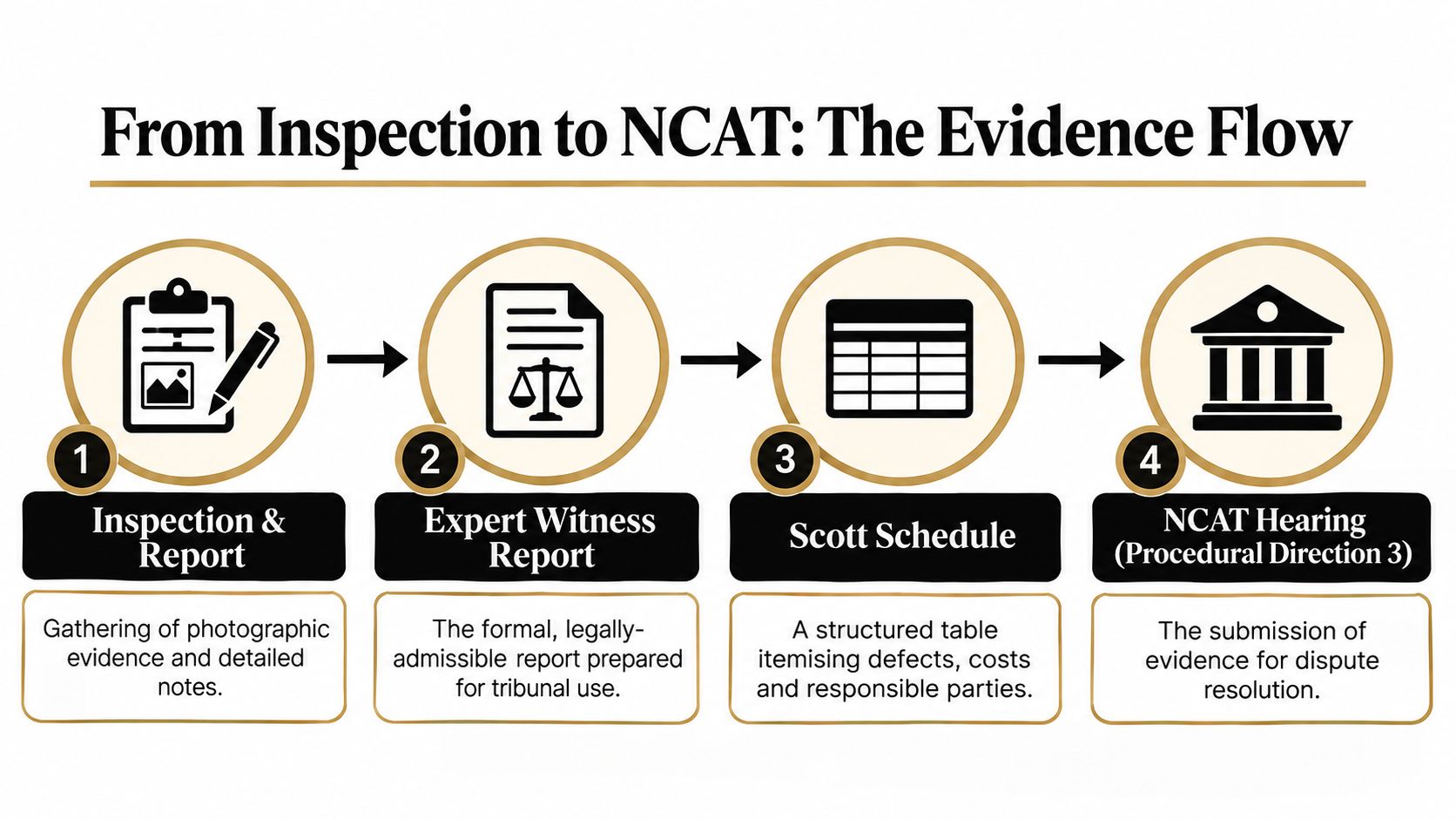
A site finding becomes useful dispute evidence only when it answers the questions that determine responsibility and remedy. The owner should first preserve the condition, notify the builder or developer and request rectification. NSW Fair Trading or Building Commission NSW may then assess the issue and, where the statutory pathway is met, issue a Rectification Order. Non-compliance with that order is a breach of the Home Building Act 1989.
The regulator’s role has limits. Where the inspector cannot be satisfied on the balance of probabilities that the trader is responsible, the matter may move towards NCAT. That transition changes the report’s purpose. The expert must explain the observed facts, the methodology, the applicable benchmark, causation and the rectification opinion without acting as an advocate for the party who commissioned the report.
The documents that give the evidence structure
NCAT lists Procedural Direction 3, Expert Evidence, on its current Procedural Directions page. Its home-building guidance also explains that Scott Schedules are generally used in complex matters or disputes involving numerous defects. A Scott Schedule itemises each alleged defective or incomplete work, allowing the parties and Tribunal to compare the allegation, response, evidence and proposed outcome. NCAT’s Procedural Directions and guidelines provide the procedural reference.
A Scott Schedule isn’t a substitute for technical reasoning. Each row should connect to photographs, plans, specifications, contracts, correspondence or expert opinion. It should also make clear whether the issue concerns incomplete work, defective work, causation, scope, rectification or responsibility. NCAT’s home-building guidance states that, where a Scott Schedule is required, the Tribunal Member will give directions about its use at the hearing. This explanation of Scott Schedules in NSW home-building matters provides further context for how the document operates.
The compliance date matters
The expert must use the correct benchmark for the work being assessed. Current NSW building work must be considered against NCC 2022 Amendment 2, while NSW’s adoption of NCC 2025 is scheduled for 1 May 2027. A defect opinion should therefore identify the applicable edition and avoid judging historic work solely against today’s expectations.
The same discipline applies to higher-risk buildings. For class 2, 3 or 9c buildings, regulator intervention for serious defects is tied to fire safety systems, waterproofing, structural issues, building enclosure or key services. Apartment and strata owners should treat facade, membrane and services allegations as evidence projects that may need engineering or specialist input, not as matters a generic visual report can always resolve.
The video below provides a practical visual introduction to the relationship between inspection findings and formal dispute preparation.
Choosing a Qualified Building Inspector in Newcastle
A qualified building inspector should be able to explain what the inspection will and won’t establish before attending site. Ask whether the practitioner has relevant registration, professional indemnity insurance and public liability insurance, and whether the engagement is limited to a visual inspection or includes testing and document review.
Local experience helps, but it shouldn’t replace technical method. A Newcastle practitioner should understand how to inspect older weatherboard homes, renovated wet areas, apartment common property, coastal exposures, sloping sites and newer construction. The inspector should be able to explain which findings require an engineer, licensed plumber, electrical contractor, surveyor or other specialist.
Questions worth asking before booking
- Report scope: Which accessible areas will be inspected, and what will be excluded?
- Evidence quality: Will the report include location-specific photographs, defect descriptions and limitations?
- Compliance method: Can the inspector identify the applicable NCC edition and relevant contract or specification requirements?
- Dispute readiness: If the matter escalates, can the practitioner prepare an independent Expert Witness Report or assist with a Scott Schedule?
- Communication: Will the inspector explain the findings and identify urgent further investigations?
- Fees: Does the written fee cover the site visit only, or also document review, conference, follow-up attendance and formal report drafting?
Verbal-only advice is a poor record for a developing dispute. A report with no clear scope creates uncertainty about what was inspected. A practitioner who can’t discuss the distinction between a condition report and expert evidence may not be suitable for a matter already heading towards Fair Trading or NCAT.
Awesim Building Consultants’ Newcastle building-consultant service is one example of a service that combines site investigation with dispute-focused reporting. The sensible choice is the practitioner whose scope matches the risk, not just the provider offering the fastest appointment.
Putting It Into Practice and Getting Help
A Newcastle homeowner commissions a pre-purchase inspection and receives a warning about possible wet-area waterproofing concerns. The report doesn’t pretend to prove concealed failure. Instead, it records the visible indicators, identifies the affected work package and recommends targeted investigation before the buyer commits.
After settlement, cracking appears near the bathroom and moisture readings remain high. The owner then commissions a defect investigation, supplies the contract and renovation documents, and preserves correspondence with the builder. The later expert report can connect the original observations with the new evidence, distinguish symptoms from cause and itemise the disputed work in a Scott Schedule if NCAT directions require one.
That sequence is more useful than commissioning a generic report after the dispute has hardened. It gives the expert a documented history, helps the owner make a properly framed rectification request and clarifies whether engineering, plumbing or other specialist evidence is needed.
Awesim Building Consultants has 35+ years in Building & Construction and over 15+ years providing litigation support to home owners, builders and lawyers. Its services include site investigations, Building & Construction Expert Witness Reports and Scott Schedules for building and construction disputes. The report should still be selected according to the facts, scope and procedural needs of the matter.
If you need a Newcastle building inspection that may later support Fair Trading or NCAT, contact Awesim Building Consultants by emailing admin@awesim.com.au or calling 1800 293 746. Visit Awesim Building Consultants to discuss a site investigation, Expert Witness Report or Scott Schedule suited to your building dispute.

Related Posts

Water Damage in Homes: How to Track Down the Source
Water damage in a home rarely announces itself at the source. A stain on the ceiling, a musty smell in
Read More »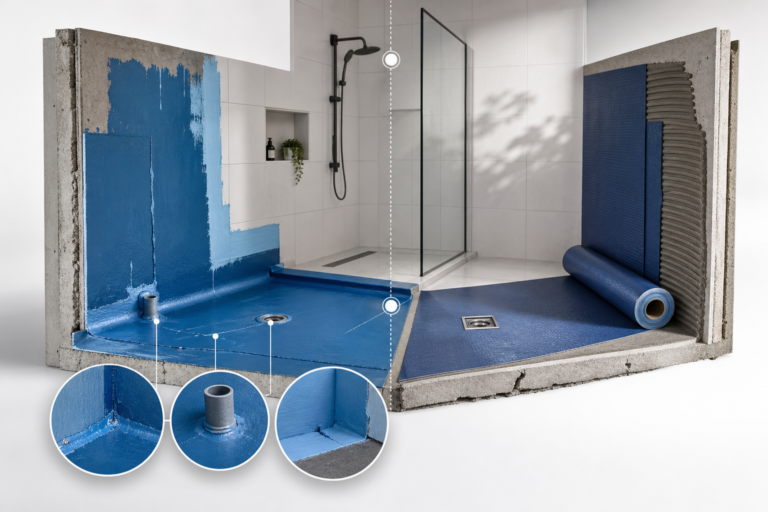
Waterproofing Membrane Types: Which Fails Most in NSW Bathrooms
Waterproofing failure is the single most common serious defect found in NSW apartments, and the type of membrane used, along
Read More »
Building Certifier NSW: Role, Limits, and When You Need More
A building certifier in NSW is a registered professional who issues construction certificates, conducts critical stage inspections, and grants occupation
Read More »