
Bathroom Waterstop Systems: How to Tell If the Installer Followed AS 3740 on Your Job
A bathroom waterstop should be assessed as part of the whole waterproofing system. Check the approved details, membrane junctions, installation records and the requirements applicable when the work was approved. The National Construction Code website is a starting point for identifying the relevant edition. An independent building report can explain the observations and limitations where a defect is alleged.
- What Is a Bathroom Waterstop System?
- What AS 3740 Requires
- How to Tell If the Installation Was Done Correctly
- When You Need a Formal Assessment
- Why AS 3740 Compliance Matters in a Dispute
- FAQs
- What to Do Next
Waterproofing failures in bathrooms are among the most common and costly defects in Australian residential construction. And more often than not, the membrane itself isn't the problem — it's the waterstop system at the perimeter, the shower recess, or the floor-to-wall junction that was skipped, poorly executed, or done with the wrong product.
Whether you're dealing with water damage, a dispute with your builder, or simply want to know whether your bathroom was built to standard, AS 3740 — the Australian Standard for waterproofing of domestic wet areas — gives you a practical benchmark to work from.
This article explains what a bathroom waterstop system is, what AS 3740 requires, and what to look for if you suspect the installation on your job didn't meet the standard.
What Is a Bathroom Waterstop System?
A waterstop (also written as water stop) is a physical barrier installed at joints, junctions, and penetrations in wet areas to prevent water from migrating through those points. In a bathroom, the most critical locations are:
- The floor-to-wall junction inside the shower recess
- The shower hob or step threshold
- Around floor waste outlets and pipe penetrations
- The junction between the wet area floor and any adjacent dry area
Waterstops are typically formed using a combination of membrane, bond breaker tape, and reinforcing fabric. They work alongside the waterproofing membrane — not as a substitute for it. If the waterstop is missing or poorly formed, water will find those joints. It usually does.
What AS 3740 Requires
AS 3740:2021 (Waterproofing of domestic wet areas) sets out minimum requirements for waterproofing systems in residential bathrooms, laundries, and similar spaces. It covers material selection, substrate preparation, membrane application, and the formation of waterstops at critical junctions.
Membrane Continuity at Junctions
The membrane must be continuous at all floor-to-wall junctions inside the shower recess — it can't simply stop at the base of the wall or terminate at the tile edge. The standard specifies minimum upstand heights, typically 150mm above the finished floor level for internal shower walls, though this varies depending on the shower type and configuration.
Bond Breaker Tape
At right-angle junctions (floor to wall), a bond breaker tape or foam cane must be installed before the membrane goes on. This allows the membrane to flex at the joint rather than crack under structural movement. Without it, even a correctly applied membrane can fail at the junction over time.
Reinforcing Fabric at Junctions
Most membrane systems require a strip of reinforcing fabric embedded in the membrane at floor-to-wall junctions. This adds tensile strength and helps the membrane bridge minor movement at the joint. If that step was skipped, the membrane at the junction is significantly more vulnerable to failure.
Pipe Penetrations and Floor Wastes
Every pipe penetration through a waterproofed surface must be sealed. For floor wastes, the membrane must be integrated with the waste flange — not simply lapped over the top of it. A common defect is membrane that terminates near the waste outlet rather than bonding properly to the flange collar.
Shower Hob or Threshold Waterproofing
Where a hob or step forms the shower threshold, the waterproofing must extend over the full height of the hob and return down the external face. This is frequently missed on jobs where the tiler and waterproofer are different trades, or where the hob was built after the waterproofing was already applied.
How to Tell If the Installation Was Done Correctly
You generally can't see a waterstop system once tiling is complete. But there are observable signs — and recognisable patterns of failure — that point to whether the work was likely done to standard.
Signs the Waterstop May Be Deficient
Water staining or efflorescence at floor-to-wall junctions. White mineral deposits or tide marks at the base of shower walls are a common indicator that water is tracking through the junction rather than being contained by it.
Grout cracking at the floor-to-wall junction. This joint should be filled with a flexible sealant — silicone — not grout. If there's grout there and it's cracking, the junction wasn't correctly detailed, and there's likely no bond breaker tape behind it either.
Hollow or debonded tiles near the shower base. Tap the tiles around the perimeter of the shower floor. A hollow sound suggests the adhesive has failed, often because moisture has been sitting behind the tiles due to a membrane failure at the junction.
Damp patches on the wall or ceiling below the bathroom. Water appearing on the ceiling of a room below, or tracking down an adjacent wall, points to a waterproofing failure. The location of the damp patch often helps narrow down whether the failure is at a junction, a penetration, or across the field of the membrane.
Rust staining around the floor waste. A corroding waste flange is a strong indicator that water is reaching the substrate at the penetration point — a clear sign the membrane-to-waste integration wasn't done correctly.
What You Can Check Without Removing Tiles
- Look at the floor-to-wall junction inside the shower. Is there silicone or grout? Silicone is correct. Grout at that junction is a defect.
- Check whether any membrane upstand is visible at the top of the shower base, sometimes visible at the tile edge. If you can see membrane, it should extend at least 150mm up the wall.
- Inspect around the floor waste. The membrane should be visibly bonded to the flange collar, not terminating nearby.
- Look at the shower hob from the outside. Is there any visible membrane on the external face, or does the tiling run straight down to the floor with nothing underneath?
When You Need a Formal Assessment
If you're seeing signs of failure — or if you're in a dispute with a builder or waterproofer about the quality of the work — a visual inspection on your own only goes so far. Tiles can't be removed without cost, and the cause of a failure isn't always obvious from surface observations alone.
A forensic waterproofing inspection by a qualified building consultant involves a systematic on-site assessment of the wet area, typically including moisture testing, thermal imaging, and a review of available documentation such as the waterproofer's certificate of compliance. The result is a written report that documents what was found, references the applicable standard, and identifies specific defects with photographic evidence.
This kind of report is particularly useful if the matter is heading toward NCAT, the NSW District Court, or the Supreme Court. At Awesim Building Consultants, forensic waterproofing inspections are prepared as formal expert evidence, suitable for use in legal proceedings. Operating across NSW since 1996, Awesim produces reports that meet the evidentiary requirements of the courts and tribunals where these disputes are heard.
Why AS 3740 Compliance Matters in a Dispute
When a waterproofing defect ends up in dispute, the question isn't simply "is there water damage?" — it's "was the work done to the required standard?" AS 3740 is the benchmark against which the installer's work is measured. A report that documents specific departures from the standard, with photographic evidence and reference to the relevant clauses, gives the tribunal or court a clear basis for its findings.
Without that kind of structured analysis, disputes often come down to competing opinions. A properly prepared forensic report removes that ambiguity.
FAQs
What is AS 3740 and does it apply to my bathroom?
AS 3740 is the Australian Standard for waterproofing of domestic wet areas. It applies to residential bathrooms, ensuites, laundries, and similar spaces. If your bathroom was built or renovated under a residential building contract in NSW, the waterproofing work is expected to comply with this standard.
What is a waterstop in a bathroom, and where should it be installed?
A waterstop is a sealed junction formed at points where water is most likely to penetrate — particularly the floor-to-wall junction inside the shower, around floor waste outlets, and at the shower threshold or hob. It typically consists of bond breaker tape, reinforcing fabric, and membrane applied continuously across the junction.
Can I tell if the waterproofing was done correctly without removing tiles?
You can identify some indicators without removing tiles — grout instead of silicone at the floor-to-wall junction, hollow tiles near the shower base, efflorescence, or visible membrane defects around the floor waste. A definitive assessment of the underlying membrane system, however, usually requires a forensic inspection.
What does a forensic waterproofing inspection involve?
A forensic waterproofing inspection involves an on-site assessment of the wet area by a qualified building consultant. It typically includes moisture testing, thermal imaging where appropriate, and a review of available documentation. The result is a written report that identifies defects, references the applicable standard, and documents findings with photographs.
Can a waterproofing report be used as evidence in NCAT or court?
Yes. A forensic waterproofing inspection report prepared by a qualified expert can be used as evidence in NCAT, the NSW District Court, and the Supreme Court. The report needs to meet specific evidentiary requirements, including the expert's declaration and compliance with the relevant court or tribunal rules.
What are the most common waterproofing defects found in bathrooms?
The most common defects include: no bond breaker tape at floor-to-wall junctions, membrane not extending to the required upstand height, grout instead of flexible sealant at movement joints, membrane not integrated with the floor waste flange, and incomplete waterproofing of the shower hob or threshold.
How long does a waterproofing defect take to show up after construction?
It varies. Some failures appear within months — particularly where no membrane was applied at all, or where it was applied to an unprepared substrate. Others take years to surface, especially where the membrane was applied but junction details were incorrect. Water can track slowly through a poorly formed joint for a long time before visible damage appears.
What to Do Next
If you're seeing signs of water damage in a bathroom, or you suspect the waterproofing on your job wasn't installed correctly, getting a clear picture of what actually happened is the first step. A forensic waterproofing inspection gives you documented evidence rather than guesswork — and if the matter ends up in dispute, that evidence matters.
Awesim Building Consultants prepares forensic waterproofing inspection reports for homeowners, solicitors, builders, and strata managers across NSW. To find out more about how a formal inspection report can support your situation, visit awesim.com.au.

Related Posts
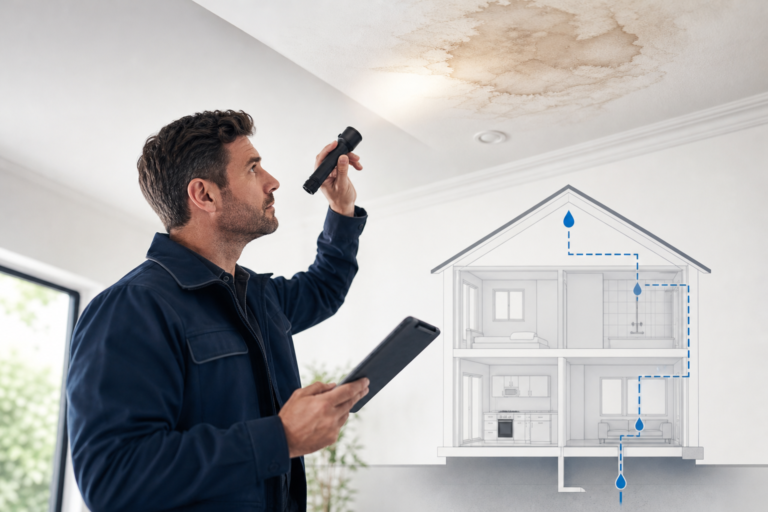
Water Damage in Homes: How to Track Down the Source
Water damage in a home rarely announces itself at the source. A stain on the ceiling, a musty smell in
Read More »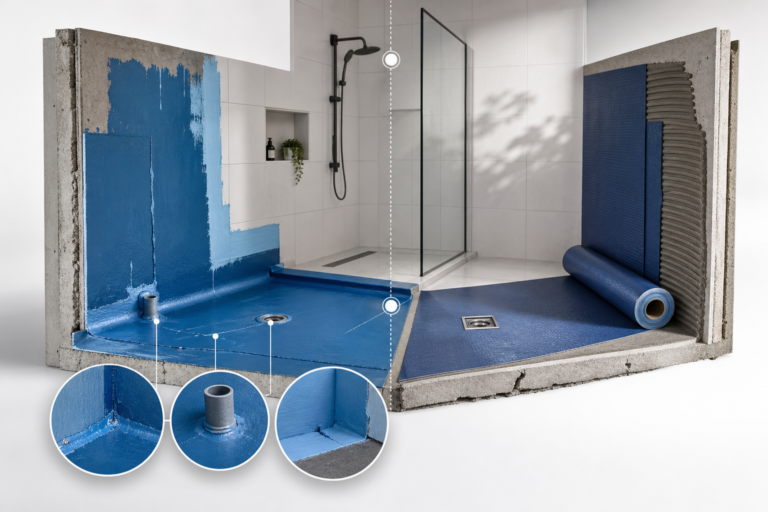
Waterproofing Membrane Types: Which Fails Most in NSW Bathrooms
Waterproofing failure is the single most common serious defect found in NSW apartments, and the type of membrane used, along
Read More »
Building Certifier NSW: Role, Limits, and When You Need More
A building certifier in NSW is a registered professional who issues construction certificates, conducts critical stage inspections, and grants occupation
Read More »