
Can You Use a Pre-Purchase Report as an Expert Witness Report at NCAT? What NSW Rules Say
- What a Pre-Purchase Inspection Report Is Actually For
- What NCAT Actually Requires from Expert Evidence
- The Specific Problems That Arise in Practice
- What an Expert Witness Report for NCAT Actually Looks Like
- Can the Pre-Purchase Report Play Any Role at All?
- Getting the Right Report Before Your Hearing Date
- Frequently Asked Questions
You've found a defect. There's a pre-purchase inspection report sitting in a folder somewhere — it describes the damage, lists the problem, maybe even puts a number on the repair. So the question feels reasonable: can you hand that report to NCAT and use it as your expert evidence?
The short answer is no. And understanding why matters a great deal before your hearing date arrives.
What a Pre-Purchase Inspection Report Is Actually For
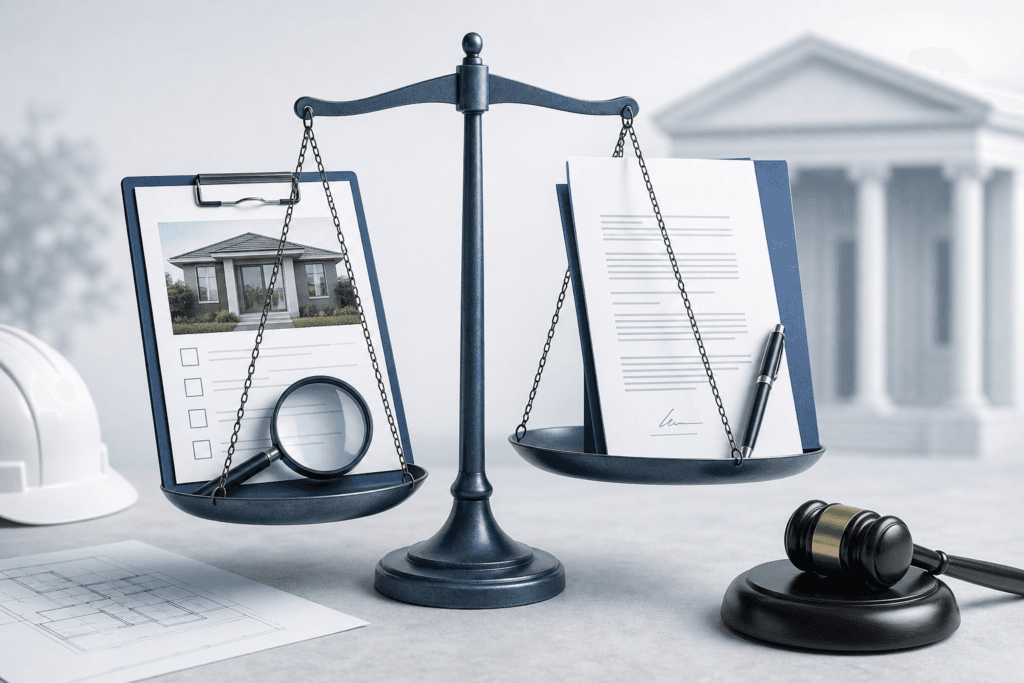
A pre-purchase inspection report is a risk-assessment document. Its job is to help a buyer decide whether to proceed with a purchase, negotiate on price, or walk away. The inspector is writing for a prospective buyer — not for a tribunal.
That purpose shapes everything: the language, the depth of investigation, the way findings are qualified, and the relationship between the inspector and the person who commissioned the report. None of it is structured around the demands of formal legal proceedings.
What NCAT Actually Requires from Expert Evidence
When you file an expert witness report at NCAT, the tribunal expects it to comply with Schedule 7 of the Uniform Civil Procedure Rules 2005. This is the code of conduct governing expert witnesses in NSW courts and tribunals, and it imposes specific obligations that a standard pre-purchase report almost never meets.
Under Schedule 7, an expert witness report must:
- State that the expert has read and agrees to be bound by the expert witness code of conduct
- Identify the questions the expert was asked to address
- Set out the expert's opinion on each question, with the reasoning behind it
- Acknowledge any facts, matters, or assumptions that are material to the opinion
- Confirm that the expert's duty is to the tribunal, not to the party who retained them
- Disclose any limitation on the expert's opinion
A pre-purchase inspection report does none of these things. It contains no Schedule 7 declaration. It doesn't frame findings as answers to questions put by a party to proceedings. It says nothing about the expert's duty to the tribunal. And the inspector who wrote it wasn't preparing for cross-examination.
Submit it as expert evidence and NCAT can reject it outright, give it reduced weight, or allow the other side to attack it on procedural grounds before you've even reached the substance of your dispute.
The Specific Problems That Arise in Practice
The Inspector’s Role and Independence
A pre-purchase inspector is engaged by a buyer at a point in time before any dispute exists. Their client relationship, their scope of work, and their professional obligations all point toward that buyer's commercial decision. An expert witness, by contrast, owes their primary duty to the tribunal itself — not to the party who commissioned the report.
This isn't a technicality. If the opposing party's solicitor challenges the admissibility or weight of your report, the absence of a Schedule 7 declaration and the commercial framing of the original inspection will both be used against you.
Scope of Investigation
Pre-purchase inspections are typically visual and non-invasive. The inspector walks through the property, notes observable conditions, and flags items that warrant further investigation. That scope is appropriate for what the report is designed to do.
An expert witness report prepared for NCAT is usually far more targeted. It's built around the specific defects in dispute, the applicable building standards those defects may breach, the likely cause of each failure, and a reasoned opinion on rectification scope and cost. That level of specificity requires a purpose-built investigation — not a repurposed general inspection.
The Findings May Not Match the Dispute
Construction disputes at NCAT are often narrower than the full scope of a pre-purchase report. You might be disputing a specific waterproofing failure, a structural crack, or defective tiling. The pre-purchase report may mention those items in passing, but it wasn't structured to address the precise defects in contention, the relevant building codes, or rectification costs in the way a tribunal needs.
There's also a risk in the other direction. A pre-purchase report that flags dozens of unrelated items can actually complicate your case by giving the other side material to deflect attention from the real issues.
What an Expert Witness Report for NCAT Actually Looks Like
A properly prepared expert witness report is a structured legal document. To give you a concrete sense of what an example of an expert witness report contains, here is what a Schedule 7-compliant report typically includes:
- Cover page and expert's credentials — qualifications, professional memberships, years of relevant experience
- Schedule 7 declaration — a signed statement that the expert has read the code of conduct and agrees to be bound by it
- Instructions received — the specific questions or issues the expert was asked to address
- Documents and materials reviewed — contracts, plans, photographs, prior reports, correspondence
- Site inspection details — date, conditions, who was present, what was observed
- Findings on each defect — described with reference to applicable Australian Standards or the National Construction Code where relevant
- Expert opinion on causation — what caused each defect and why
- Rectification scope and cost — what work is required and a reasoned estimate of cost
- Limitations — any constraints on the opinion, including areas not inspected or information not available
- Signature and date
None of these elements appear in a standard pre-purchase inspection report. The structure is fundamentally different because the purpose is fundamentally different.
Can the Pre-Purchase Report Play Any Role at All?
Yes — but a supporting one. If your pre-purchase report identifies defects you're now disputing, it can serve as background evidence of when the problem was first observed, or as part of a chronology of events. It isn't useless. It just can't stand in for a properly prepared expert witness report.
Your solicitor may also use it to brief the expert, so the new report is focused on the right defects from the outset.
Getting the Right Report Before Your Hearing Date
If you have a tribunal date set or a solicitor telling you that independent evidence is required, the time to act is now. A report commissioned too close to the hearing — without enough lead time for a proper site inspection and thorough preparation — won't serve you well.
Awesim Building Consultants has been preparing Schedule 7-compliant expert witness reports for NCAT, District Court, and Supreme Court proceedings across NSW since 1996. Operating from offices in Sydney, Tamworth, and Tweed Heads, the firm conducts on-site inspections and has no builder affiliations. A free initial consultation is available by calling 1800 293 746.
Frequently Asked Questions
Can a pre-purchase inspection report be used as evidence at NCAT?
It can be submitted as background evidence, but it can't serve as an expert witness report. NCAT requires expert evidence to comply with Schedule 7 of the Uniform Civil Procedure Rules 2005, which sets out specific obligations around the expert's duty to the tribunal, the structure of opinions, and mandatory declarations. A pre-purchase report doesn't meet those requirements.
What is Schedule 7 of the Uniform Civil Procedure Rules 2005?
Schedule 7 is the expert witness code of conduct governing how expert witnesses must prepare and present their reports in NSW courts and tribunals, including NCAT. It requires the expert to declare their duty to the tribunal, identify the questions they were asked, provide reasoned opinions, and disclose any limitations on those opinions.
What does an expert witness report for NCAT need to include?
At minimum: a Schedule 7 declaration signed by the expert, a clear statement of the questions addressed, findings from a site inspection, the expert's opinion on causation and rectification, an estimate of costs, and disclosure of any limitations. The report must be structured to survive cross-examination.
What is the difference between a building inspector and an expert witness?
A building inspector conducting a pre-purchase inspection is working for a buyer making a purchase decision. An expert witness is engaged to provide independent opinion to a tribunal and owes their primary duty to that tribunal — not to the party who commissioned the report. The professional obligations, the scope of work, and the document structure are all different.
How long does it take to get a Schedule 7-compliant expert witness report prepared?
It depends on the complexity of the defects, the number of items in dispute, and site availability. Engaging a consultant as early as possible after your tribunal date is confirmed gives the best chance of a thorough, well-documented report.
Can I commission an expert witness report if I am self-representing at NCAT?
Yes. Self-represented parties can and do commission expert witness reports. The report must still comply with Schedule 7 regardless of whether you have a solicitor. An independent building consultant prepares the report on your behalf, and you submit it as part of your evidence.
What if the defects in my pre-purchase report aren't exactly the same as what I'm now disputing?
This is common. Defects can worsen over time, or new issues may become apparent after purchase. A purpose-built expert witness report addresses the specific defects in dispute at the time of the hearing — with current observations, current cost estimates, and opinions framed around the actual issues before the tribunal.
If your matter is approaching a hearing date and you're not confident your existing documentation will hold up, the safest step is to get independent advice early. You can reach Awesim at awesim.com.au or on 1800 293 746 for a free initial consultation.

Related Posts

Water Damage in Homes: How to Track Down the Source
Water damage in a home rarely announces itself at the source. A stain on the ceiling, a musty smell in
Read More »
Waterproofing Membrane Types: Which Fails Most in NSW Bathrooms
Waterproofing failure is the single most common serious defect found in NSW apartments, and the type of membrane used, along
Read More »
Building Certifier NSW: Role, Limits, and When You Need More
A building certifier in NSW is a registered professional who issues construction certificates, conducts critical stage inspections, and grants occupation
Read More »