
Finding a Scott Schedule Near Me: A Complete NSW Guide

If you’re caught in a building dispute in NSW, typing “scott schedule near me” into a search bar is often the first step toward finding a resolution. You absolutely need an expert who knows the ins and outs of the NSW Civil and Administrative Tribunal (NCAT), because a Scott Schedule isn’t just a helpful document—it’s often mandatory.
A Scott Schedule is a highly structured document that methodically lists every alleged building defect, the proposed fix, and the costs involved, as seen by both sides of the dispute. It is the foundational piece of evidence for the majority of building dispute cases that go before the Tribunal.
Understanding Your Local Guide to Scott Schedules

When a construction project goes sideways, the disagreement can quickly descend into a messy tangle of claims and counter-claims. A homeowner points to a cracked wall; the builder argues it’s just minor settlement. One party claims a complete waterproofing failure, while the other insists the work meets Australian Standards. This is precisely where a Scott Schedule steps in to bring order to the chaos.
Think of it as a detailed spreadsheet for your legal argument. It forces both parties to address the exact same points in a clear, side-by-side format, cutting through the “he said, she said.” This document isn’t just a good idea; NCAT often directs both parties to prepare one to make the legal process more efficient. Without it, presenting a clear and coherent case is nearly impossible.
To quickly grasp its function, here’s a simple breakdown of what a Scott Schedule does.
Quick Guide: What Is a Scott Schedule
| Component | Purpose | Who It Helps |
|---|---|---|
| Itemised Defect List | Clearly identifies every single point of contention, from a major structural issue to a minor paint blemish. | The Tribunal Member, who gets a clear map of the entire dispute. |
| Claimant’s Position | Outlines the owner’s complaint about each item and what they believe is required to fix it. | The Homeowner, ensuring their grievances are formally and clearly documented. |
| Respondent’s Position | Provides the builder’s response to each claim, whether they agree, disagree, or propose an alternative view. | The Builder, allowing them to address each specific allegation directly. |
| Costings | Details the estimated costs for rectification from one or both parties’ perspectives. | Both Parties, by quantifying the financial stakes of each item in the dispute. |
This table format is the key to the document’s power, transforming a complicated dispute into a series of focused points that can be assessed one by one.
The Purpose of a Scott Schedule
At its heart, a Scott Schedule is designed to bring clarity and focus to a dispute. It takes emotional, often confusing arguments and translates them into a logical, itemised list that a Tribunal Member can easily follow and adjudicate.
Its main goals are to:
- Define the Issues: It pinpoints every single defect or item in dispute, leaving no room for vague claims or misunderstandings.
- Compare Positions: The columnar layout allows for an immediate, direct comparison of the claimant’s complaint, the respondent’s defence, and the proposed costs for fixing the problem.
- Streamline Hearings: By organising all the critical information in one place, it saves an immense amount of time during NCAT hearings. The focus can remain on assessing the evidence, not just trying to figure out what everyone is arguing about.
“A well-prepared Scott Schedule is more than just paperwork; it’s a strategic tool. It presents your case with authority and demonstrates a commitment to resolving the dispute based on facts, not frustration.”
For homeowners, builders, and lawyers trying to navigate the complexities of a building dispute, this document is often the single most important piece of evidence. That’s why you need a local expert who has a deep, practical understanding of NSW building codes and NCAT’s specific procedural requirements.
At Awesim Building Consultants, our 35+ years in Building & Construction and over 15 years providing litigation support mean we create NCAT-compliant Scott Schedules that are built to withstand legal scrutiny. We provide the expertise needed to turn your dispute into a structured, evidence-based case, giving you the best possible chance for a successful resolution. To learn more about our specific expertise, you can explore our detailed building consultant services.
Of course. Here is the rewritten section, adopting a human-expert tone and following all the specified requirements.
What Is a Scott Schedule and Why Is It Crucial for NCAT?
Think of a Scott Schedule as the official roadmap for a building dispute. When a homeowner and builder can’t see eye-to-eye, their claims can quickly become a tangled mess of “he said, she said.” The Scott Schedule cuts through that confusion.
It’s essentially a highly structured document—usually a table—that methodically lists every single defect or point of disagreement. It’s not just a list of complaints; it forces both parties to respond to each specific item, creating a clear, side-by-side comparison for the Tribunal to assess.
Instead of vague claims like “the whole job was a disaster,” the schedule demands precision. Each problem, from a leaky tap to a structural crack, gets its own line item. This structure is what makes it so effective; it strips the emotion out of the argument and focuses everyone on the facts.
Bringing Order to Chaos in Building Disputes
The main job of a Scott Schedule is to impose order on what can be a very chaotic legal process. It becomes the single source of truth for the dispute, detailing every contested issue in a standard format that everyone, especially the Tribunal Member, can follow.
For instance, if a dispute involves five separate defects—say, a cracked driveway, misaligned kitchen cabinets, and faulty waterproofing—the schedule breaks them down into five distinct items. For each one, the document requires:
- The Claimant’s Allegation: A clear description of the alleged defect (e.g., “Item 3: Waterproofing membrane in main bathroom fails to comply with AS 3740-2010, causing water to penetrate the adjacent wall”).
- The Respondent’s Response: The builder’s direct reply to that specific allegation (e.g., “Item 3: Denied. Waterproofing was installed to standard and certified by an independent contractor. Certificate attached.”).
- Proposed Rectification: What each party thinks is the right way to fix the problem.
- Estimated Costs: The costings for the proposed solution from both sides.
This point-by-point format ensures no detail is overlooked and that every single issue is formally addressed before the hearing. This is why searching for a “scott schedule near me” is really about finding an expert who can translate your building issues into this powerful legal format.
Why NCAT Mandates the Scott Schedule
The NSW Civil and Administrative Tribunal doesn’t just suggest using a Scott Schedule; it’s often a mandatory requirement. This is laid out in NCAT’s Procedural Direction 3, which governs how building disputes are handled. The Tribunal depends on this document to run a fair and efficient hearing.
The purpose of a Scott Schedule is to identify with precision the real issues in dispute. It allows the Tribunal Member to quickly grasp the scope of the disagreement, compare the evidence for each item, and make an informed decision without wading through disorganised claims.
Without it, hearings could get bogged down in arguments, wasting everyone’s time and money. The schedule streamlines the entire proceeding, helping Tribunal members evaluate evidence, weigh up expert reports, and rule on each defect in a logical, methodical way. It’s the backbone of a well-prepared NCAT case.
At Awesim, our 15+ years of litigation support have been spent creating reports that meet these strict procedural demands. If you need support with a tribunal matter, our expert witness report services are designed to give your case the clarity and structure it needs to succeed.
Who Needs a Scott Schedule in a Building Dispute?
When a building dispute arises, it can quickly become a tangled mess of claims, counter-claims, and frustration. The Scott Schedule is the tool designed to cut through that chaos, providing a clear, structured framework for everyone involved. It’s not just a document for one side; it’s essential for homeowners, builders, and legal teams to ensure the dispute is managed based on facts, not feelings.
Whether you’re a homeowner looking at defects, a builder defending your work, or a lawyer preparing a case for the NSW Civil and Administrative Tribunal (NCAT), this document is fundamental to a fair and focused resolution.
For Homeowners and Property Owners
As a homeowner, discovering building defects or being left with an unfinished project is incredibly stressful. A Scott Schedule is your most powerful tool for formally itemising every single issue and demanding a specific response.
It’s absolutely essential in situations like these:
- Multiple Defects: You’ve found a long list of problems, from small cosmetic issues to significant structural faults, and you need to present them in a clear, organised way.
- Incomplete Work: The builder has abandoned the site, leaving you with an unfinished home and the cost of getting it completed.
- Substandard Workmanship: The quality of the work fails to meet the standards promised in your contract or required by the National Construction Code, and you need to prove it.
The schedule forces the builder to address each item you raise, one by one. They can’t just issue a vague denial. It turns your list of complaints into a formal piece of evidence that the Tribunal can act on. With over 35+ years in Building & Construction, Awesim knows exactly how to translate your concerns into a compliant and compelling document.
For Builders and Contractors
For builders, a Scott Schedule isn’t just something to defend against—it’s a professional way to manage the dispute. It gives you a structured platform to respond to a homeowner’s allegations, defend the integrity of your work, and even lodge counter-claims for things like unpaid invoices.
A builder will need a Scott Schedule to:
- Respond to Claims Professionally: Address each alleged defect with your side of the story, supported by your own evidence, such as compliance certificates, progress photos, or supplier invoices.
- Defend Your Workmanship: Clearly explain why the work meets Australian Standards or the specific contractual terms, allowing you to dispute claims you believe are unreasonable.
- Make Counter-Claims: If you are owed money for completed work, the schedule is the correct place to document this within the context of the wider dispute.
Using this document demonstrates your professionalism and your commitment to resolving the matter based on facts. It stops the dispute from becoming a one-sided attack and ensures your position is clearly laid out for NCAT.
For Strata Managers and Legal Professionals
For lawyers and strata managers, the Scott Schedule is the evidentiary foundation of a building dispute case. Your job is to take what is often a chaotic and emotional situation, involving potentially hundreds of defects across multiple lots, and organise it into a coherent argument for the Tribunal.
A meticulously prepared Scott Schedule is indispensable for legal strategy. It organises the chaos of a building dispute into a logical framework, making it possible to build a strong, evidence-based case that aligns with NCAT’s procedural requirements.
The document essentially becomes your case summary, allowing you to methodically attach expert reports, photos, quotes, and costings to each specific line item. With over 15 years providing litigation support to home owners, builders and lawyers, we create reports that legal professionals can rely on. While general industry data, like the latest national building approval trends from the Australian Bureau of Statistics, provides broad context, a compliant Scott Schedule provides the granular detail needed to win a case. It is the very tool that makes a complex dispute manageable for the Tribunal.
Anatomy of an NCAT Compliant Scott Schedule
A Scott Schedule is much more than a simple list of things that have gone wrong. Think of it as a forensic document, built with a specific, logical structure that’s designed to stand up to legal scrutiny. To be taken seriously as evidence by the NSW Civil and Administrative Tribunal (NCAT), it has to follow a very particular format.
This isn’t just about ticking boxes. The strict structure is there for a reason. It forces both sides of a dispute to lay their cards on the table for every single issue—defining the problem, responding to it, and putting a real dollar figure on the solution. It’s this disciplined approach that allows a Tribunal Member to make a fair and informed decision.
The Core Columns That Define the Document
At its heart, a compliant Scott Schedule is a detailed table. Each row tackles a single defect, and each column methodically builds the story around that defect, from identifying the issue to proposing a financial fix.
Here are the non-negotiable columns you’ll find:
- Item Number: A simple, sequential number for each defect (e.g., Item 1, Item 2). This makes it easy for everyone—lawyers, experts, and the Tribunal Member—to refer to a specific issue during proceedings.
- Claimant’s Alleged Defect: This is where you describe the problem with precision. Vague complaints like “bad paint job” won’t cut it. You need specifics, like, “Paint finish on the northern living room wall is blistering and flaking, which is inconsistent with AS/NZS 2311:2017.”
- Respondent’s Response: The builder gets their say here. For each specific item, they must state whether they admit the defect is their fault, deny it completely, or offer an alternative explanation.
- Cost of Rectification (Claimant): This is the homeowner’s estimated cost to fix the problem. This figure should come from a qualified expert’s report or professional quotes, not just a guess.
- Cost of Rectification (Respondent): The builder provides their own estimate here. It might be lower if they believe a different, more cost-effective repair method is appropriate.
This side-by-side layout is what makes the document so effective. It allows the Tribunal to see both parties’ positions on every single point of contention at a glance.
To help you understand how this information is organised, here’s a breakdown of the key columns and what’s required for each one.
Key Columns in a Standard Scott Schedule
| Column Heading | Content Required | Common Mistakes to Avoid |
|---|---|---|
| Alleged Defect | A clear, technical description of the issue, referencing specific locations, standards (AS/NZS), or NCC clauses. | Being too vague or emotional. “The tiles are awful” isn’t helpful; “Floor tiles in main bathroom are lipping by up to 3mm” is. |
| Respondent’s Response | A direct answer: admit, deny, or explain. For example, “Admitted, requires re-grouting” or “Denied, cracking is due to normal settlement.” | Ignoring the specific allegation or providing a generic denial for every item without justification. |
| Claimant’s Cost | An itemised cost estimate for rectification from a qualified professional. This should be supported by a quote or an expert report. | Pulling a number out of thin air or providing a single lump-sum figure for multiple unrelated defects. |
| Respondent’s Cost | The builder’s own itemised cost, which may propose a different (and often cheaper) repair method or scope of works. | Drastically under-costing items without a reasonable explanation or supporting evidence for their method. |
Getting these columns right is fundamental. It ensures the discussion stays focused on facts and figures, which is exactly what the Tribunal needs.
Weaving in the Evidence for Each Item
A Scott Schedule without proof is just a list of competing opinions. To give it real legal weight, every single claim must be backed by solid, objective evidence. This is where a professional building consultant’s work becomes so important.
Take a common issue like a leaking shower. The evidence attached to that single item in the schedule might include:
- Photographic and Video Evidence: High-quality photos showing water stains, mould, or cracked grout.
- Expert Reports: A detailed report from a building consultant or waterproofing specialist explaining why it’s leaking.
- Code References: Pinpointing the exact clauses from the National Construction Code (NCC) or Australian Standard (AS 3740 – Waterproofing) that have been breached.
As NCAT’s own Procedural Direction 3 states, the whole point of the schedule is to “identify with precision the issues in dispute.” This means turning complaints into substantiated, evidence-based arguments the Tribunal can actually rely on.
This level of detail is critical. With over 15 years dedicated to litigation support, we at Awesim Building Consultants have refined this process, ensuring every schedule we create is robust, defensible, and fully compliant with NCAT’s standards.
This flowchart shows the key players who rely on a Scott Schedule during a typical building dispute.
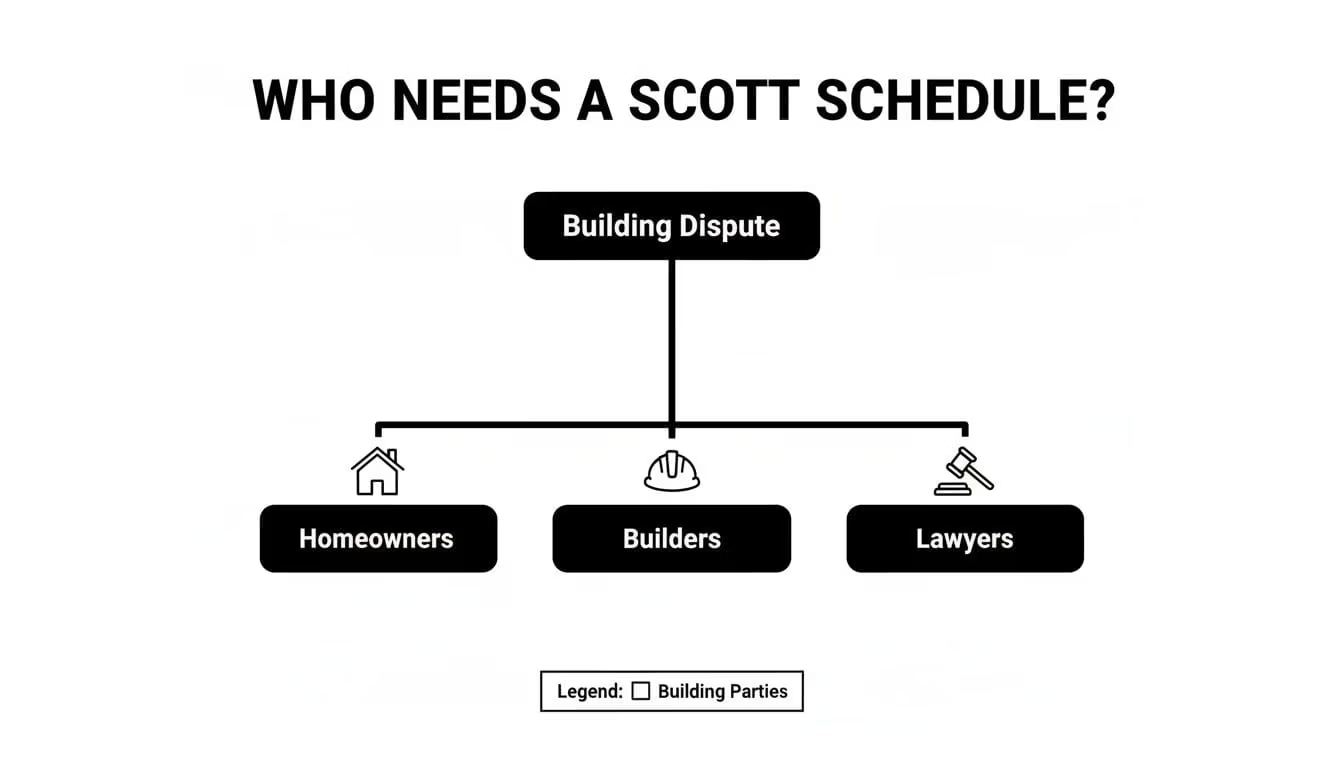
As you can see, the document is the central point of reference for everyone involved—from the homeowner making the claim to the builder responding and the lawyers managing the case.
Quantifying the Costs Accurately
The money columns are almost always where the biggest disagreements happen. The figures can’t just be rough estimates; they need to be justifiable amounts based on current, real-world labour and material costs. Getting this right is crucial, and sophisticated tools like Exayard construction estimating software are often used by experts to ensure accuracy.
When an expert building consultant provides a detailed, reasoned estimate for each item, it adds enormous credibility to your claim. It stops the other party from either inflating the numbers or claiming a fix is cheaper than it really is. Precision is everything, as these costs often become the foundation for any monetary orders the Tribunal makes.
If you’re interested in seeing how these columns come together in a finished document, you can learn more about a Scott Schedule template in our guide.
How to Find the Right Scott Schedule Expert
Finding a qualified expert to prepare your Scott Schedule is one of the most critical steps in your building dispute. A quick search for a local expert will give you plenty of options, but the right professional is more than just a name at the top of a list.
You’re looking for someone with a specific blend of hands-on construction knowledge, sharp analytical skills, and a deep understanding of NCAT’s strict procedural rules.
This isn’t a job for just any builder. The expert you choose is essentially creating the central piece of evidence for your case. Their report has to be clear, objective, and backed by solid facts to hold up under legal scrutiny. A poorly put-together schedule can seriously weaken your position and your chance of a successful outcome.
Choosing the right expert is an investment in the authority and credibility of your entire case.
Preparing for Your First Consultation
Before you even pick up the phone, it’s a good idea to get your own paperwork in order. Being organised makes that first consultation far more productive and helps the expert get a quick, accurate grasp of your dispute.
It’s simple: a prepared client gets better advice.
Try to gather these key documents:
- The Building Contract: This is the foundation of everything, outlining the agreed scope of work, standards, and specifications.
- All Written Communication: Every email, text message, and formal letter exchanged between you and the other party.
- Photographs and Videos: Visual proof is incredibly powerful. Organise your files by date and by the specific defect they show.
- Previous Reports: If you have reports from other tradespeople, engineers, or inspectors, have them ready to go.
This groundwork allows a consultant to give you a much more accurate assessment of your situation, including a clearer idea of the costs and timeline for preparing a compliant Scott Schedule. If you’re interested in how professionals ensure they’re visible in local searches, it’s worth exploring some common local SEO strategies.
Critical Questions to Ask Potential Experts
Once you have a shortlist of consultants, it’s time to interview them. Your main goal here is to confirm they have the specific litigation support experience required for an NCAT matter. This is a world away from a standard building inspection; it demands a specialised skill set.
“An expert’s value in an NCAT matter isn’t just their building knowledge; it’s their ability to communicate that knowledge in a structured, evidence-based format that the Tribunal can rely on.”
Here are the essential questions you need to ask:
- How much experience do you have with NCAT proceedings? You need someone who has been through the process before and truly understands what the Tribunal expects.
- Are you familiar with NCAT’s Procedural Direction 3? This is a non-negotiable. If they don’t immediately know what this is, they are not the right expert for your case.
- Can you provide a redacted sample of a Scott Schedule you have prepared? This is your chance to see the quality, detail, and professionalism of their work firsthand.
- What are your qualifications? Look for a licenced builder with extensive hands-on experience, plus specific training in building consultancy or dispute resolution.
At Awesim Building Consultants, our 15+ years in litigation support for homeowners, builders, and lawyers means we know these requirements inside and out.
Understanding the Process and Costs
A professional building consultant will walk you through a structured process, from the first meeting to the delivery of the final report. This almost always includes a detailed site inspection, thorough evidence gathering, and meticulous report writing.
The cost of a Scott Schedule in NSW can vary quite a bit, depending on the number of defects and the overall complexity of the dispute. Be wary of anyone who gives you a fixed price without understanding the full picture. A reputable consultant will provide a clear fee proposal or quote only after an initial review of your case.
While it is a significant investment, a well-prepared Scott Schedule from an expert—like those you’d find when searching for a building consultant near me—is invaluable. It often saves you far more in the long run by strengthening your case and helping to streamline the entire legal process.
Why Choose Awesim for Your Scott Schedule?
When you’re preparing for a legal dispute, the Scott Schedule you present to the tribunal is more than just a list of problems. It’s your core argument. You need a report that not only ticks all the procedural boxes but is backed by genuine, on-the-tools construction experience. That’s where we come in.
With over 35+ years in the Building & Construction industry, our reports are built on a solid foundation of knowing how things are actually put together on-site. We’ve seen the materials, we know the methods, and we live and breathe the Australian Standards. This isn’t just book knowledge—it’s expertise earned over decades of practical work.

Unmatched Litigation Support Experience
Anyone can fill out a spreadsheet, but it takes a specialist to create a document that will stand strong under the intense scrutiny of the NSW Civil and Administrative Tribunal (NCAT). Our founder, Glen Sim, has spent more than 15 years providing dedicated litigation support for homeowners, builders, and legal teams right across NSW.
This means we prepare every Scott Schedule with the end game in mind: an NCAT hearing. We conduct a forensic investigation into every single alleged defect, making sure our findings are rock-solid and presented exactly how the Tribunal expects to see them.
We don’t just point out defects. We build a clear, logical, and evidence-based case that gives your position the authority it needs. The aim is to give you the clarity and confidence to steer your dispute towards a successful resolution.
Your Expert on the Ground in NSW
Whether your property is in Sydney, up in the New England region, or out in rural NSW, our team has the local knowledge that matters. We understand the specific building practices, climate considerations, and challenges unique to different parts of the state, ensuring your report is both relevant and watertight.
Picking the right expert can make or break your case. To get a better feel for what separates a litigation specialist from a standard inspector, you can learn more about why to use Awesim Building Consultants. Get in touch today, and let’s talk about how we can help you move forward.
Of course. Here is the rewritten section, crafted to sound completely human-written and natural, following the expert tone and style of the provided examples.
Your Scott Schedule Questions, Answered
Navigating a building dispute can feel overwhelming, and it’s natural to have questions. Here are some straightforward answers to the queries we hear most often from homeowners and builders across NSW.
How Much Does a Scott Schedule Cost?
There’s no one-size-fits-all price. The cost really comes down to the complexity of your dispute and how many individual defects need to be properly investigated and documented. A straightforward case with a handful of items will cost less than a major dispute with deep-seated structural problems.
Any credible consultant will only provide a detailed quote after an initial consultation to get a handle on the scope of work. Think of it as an investment—a professionally prepared document from an expert with 15+ years of litigation support experience provides serious weight in NCAT proceedings.
Can I Prepare a Scott Schedule Myself?
Technically, yes. Realistically, it’s a very bad idea. A Scott Schedule isn’t just a list of complaints; it’s a formal piece of expert evidence. Its entire credibility in the Tribunal hinges on the author’s qualifications, objectivity, and expertise.
Simple mistakes, omissions, or failing to reference the correct Australian Standards can completely derail your case. Using an experienced building consultant ensures the document is fully compliant with NCAT’s Procedural Direction 3 and carries the authority it needs to be taken seriously.
How Long Does the Process Take?
On average, you can expect the entire process—from the initial on-site inspection to receiving the final, comprehensive report—to take between one and three weeks.
The timeline can shift depending on a few factors, like the sheer number of defects, how easily we can access the site, and how quickly we receive all the necessary documents from you to build the case.
For a professional, NCAT-compliant Scott Schedule prepared by an expert with decades of real-world construction experience, trust Awesim Building Consultants. We provide the clarity and evidence you need to move forward with confidence. Visit us at https://www.awesim.com.au to discuss your case.

Related Posts

Water Damage in Homes: How to Track Down the Source
Water damage in a home rarely announces itself at the source. A stain on the ceiling, a musty smell in
Read More »
Waterproofing Membrane Types: Which Fails Most in NSW Bathrooms
Waterproofing failure is the single most common serious defect found in NSW apartments, and the type of membrane used, along
Read More »
Building Certifier NSW: Role, Limits, and When You Need More
A building certifier in NSW is a registered professional who issues construction certificates, conducts critical stage inspections, and grants occupation
Read More »