When a building dispute gets serious, the technical details can quickly become overwhelming. This is where a building expert witness steps in. Think of them as a translator—a specialist who can take complex construction problems and explain them clearly and impartially to a court or tribunal like NCAT.
Unlocking the Role of a Building Expert Witness
It’s a bit like trying to explain a complex medical diagnosis to a judge without a doctor present. All the critical details, technical terms, and professional standards would simply get lost. A building expert witness plays that exact role for construction disputes, bridging the gap between the building site and the courtroom.
But their job goes much deeper than a standard building inspection. While an inspector’s report is for a homeowner or buyer, a building expert witness provides an opinion that is ultimately owed to the tribunal. Their number one duty is to help the court understand the facts of the case, which means impartiality isn’t just a goal—it’s a requirement.
With over 35+ years in the Building & Construction industry, we at Awesim Building Consultants have seen countless disputes stall without clear, objective evidence. For over 15 years, we’ve focused on providing litigation support, giving home owners, builders and lawyers the clarity they need to move forward.
When Does a Dispute Require an Expert Witness?
Not every argument over a build needs to end up in a formal hearing. But when things escalate, you’ll see some clear signs that it’s time to bring in an expert. You should start thinking about engaging a building expert witness when:
- You’ve hit a wall: Communication with the builder has completely broken down. You’re stuck in a stalemate, and simple talks or even mediation aren’t getting you anywhere.
- The defects are complicated: The problems go beyond a few paint touch-ups. You might be dealing with potential structural issues, serious water leaks, or major non-compliance with the National Construction Code (NCC).
- You’re heading to NCAT: If you’re lodging a claim with the NSW Civil and Administrative Tribunal (NCAT), a compliant expert report isn’t just a nice-to-have. It’s often the cornerstone of a successful case.
- The money involved is significant: The cost to fix everything is substantial. You need a detailed, evidence-based breakdown of these costs to form the basis of your claim.
A building expert witness doesn’t just point out a defect. They have to explain why it’s a defect by referencing specific building codes, outline a compliant method to fix it, and provide properly calculated costings for the rectification work.
The Critical Difference Between a Consultant and an Expert Witness
This is a common point of confusion, but the distinction is crucial. A building consultant works for you. Their job is to give you advice and reports to help you understand problems and negotiate with the other party. Their duty is to you, their client. For instance, a consultant might help you put together a defect list to give your builder. You can learn more about how a consultant’s role differs from an expert witness.
A building expert witness, on the other hand, has an overriding duty to the tribunal or court. Even though you’re the one who hires and pays them, their report and testimony must be completely independent and unbiased. Their report is a formal piece of evidence designed to hold up under the pressure of legal scrutiny and cross-examination. It’s this impartiality that gives their opinion weight.
This deep technical knowledge is also vital for getting to the bottom of complex design failures, such as the common mistakes in designing retaining walls. An expert can identify the true cause of the problem, which is essential for working out who is liable and how to create a fix that lasts. Choosing the right professional for the right stage of your dispute is the first step toward a successful outcome.
The Role of an Expert Witness in NCAT Proceedings

When a building dispute finds its way to the NSW Civil and Administrative Tribunal (NCAT), the game changes. Informal chats and arguments are over; it’s all about formal, hard evidence. This is precisely where a building expert witness steps in and becomes your most critical asset.
Think of them not just as a building inspector, but as an independent advisor to the Tribunal itself. Their job is to cut through the noise of a ‘he said, she said’ dispute. Instead of vague claims about shoddy work, an expert witness provides a report grounded in cold, hard facts—the National Construction Code (NCC), relevant Australian Standards, and the manufacturer’s own installation guides.
Building defect claims are a huge part of NCAT’s workload. In fact, matters brought under the Home Building Act 1989 (HBA) consistently make up over 40% of the Consumer and Commercial Division’s cases. A solid expert report can get to the heart of the matter quickly. Figures from NSW Fair Trading have shown that good technical evidence can cut dispute resolution times by as much as 25%. Why? Because it replaces opinion with facts.
Expert Witness vs Building Consultant: What’s the Difference?
It’s a common point of confusion, but the roles of a building consultant and an expert witness are worlds apart, especially once a dispute is underway. A consultant works for you; an expert witness works for the Tribunal. Understanding this distinction is key.
Here’s a simple breakdown:
| Aspect | Building Consultant | Building Expert Witness |
|---|---|---|
| Primary Role | To advise you, the client. | To assist the Tribunal with an independent, expert opinion. |
| Main Duty | Owed to the client who hired them. | Paramount duty is to the Tribunal, not the paying client. |
| Report Purpose | To inform the client about defects, options, and potential costs. | To provide formal evidence that complies with the court’s rules. |
| Key Output | A standard building report or defect list. | A formal expert report and often a Scott Schedule for use in legal proceedings. |
| Legal Status | An advisor. | An independent expert whose opinion is used as evidence. |
Essentially, you might start with a consultant to understand your position, but you’ll need a qualified expert witness to formally present that position as evidence in NCAT.
The Foundation of a Strong NCAT Case
An expert witness report isn’t just a list of problems. It’s a formal legal document, and it has to play by a very strict set of rules. The most important of these is the Expert Witness Code of Conduct. This code legally binds the expert to remain impartial, with their main duty being to the Tribunal, not the person who hired them.
An expert report that doesn’t comply with the Code of Conduct can be thrown out by the Tribunal. If that happens, your case can fall apart in an instant. This is why you don’t just need an expert; you need one with proven experience in litigation support.
Our team at Awesim Building Consultants brings over 15 years of dedicated experience to the table, specifically in preparing evidence for legal disputes for home owners, builders and lawyers. We know that every report must be watertight and ready for the scrutiny of NCAT, because our job is to provide clarity and facts that help everyone reach a fair outcome.
The Scott Schedule: A Roadmap for the Dispute
One of the most powerful tools in an expert’s arsenal is the Scott Schedule. It’s basically a detailed roadmap of the entire dispute, laid out in a simple table. This document breaks down every single point of disagreement, making even the most complex cases easy for the Tribunal to follow.
A properly drafted Scott Schedule includes:
- Item Number: A unique reference for every defect or claim.
- Claimant’s Allegation: What the homeowner or owners corporation says is wrong.
- Respondent’s Position: The builder or developer’s response to that specific claim.
- Expert’s Opinion: The expert witness’s impartial assessment, referencing the specific building codes or standards that have been breached.
- Estimated Rectification Cost: A detailed, itemised cost to fix the defect, calculated by the expert.
By laying everything out so clearly, a Scott Schedule eliminates confusion and forces the conversation to centre on the evidence. It allows the Tribunal Member to see both sides of the argument right next to an independent expert opinion, which is why it’s so effective at moving proceedings along. Our deep experience in preparing these documents, as required by NCAT’s Procedural Direction 3, ensures your case is presented with the clarity it needs to succeed.
The Hallmarks of a Credible Building Expert Witness
In a building dispute, not all opinions carry the same weight. What separates a true building expert witness from just another consultant is a powerful combination of deep, real-world experience, a detailed knowledge of the legal framework, and unwavering impartiality.
It’s a role that demands much more than just qualifications on paper.
Think of it this way: if you needed surgery, you wouldn’t want someone who has only read medical textbooks. You’d want a professional who has spent years in the operating theatre, successfully performing complex procedures. The same principle applies here. A credible expert witness must have extensive hands-on experience in the construction industry.
This ‘on the tools’ background is invaluable. It allows the expert to move beyond theory and provide practical, real-world assessments that can withstand intense scrutiny. At Awesim Building Consultants, our reports are backed by 35+ years of direct experience in building and construction, letting us diagnose defects with an authority that only comes from having seen and solved these issues firsthand.
Beyond the Builder’s Licence
While practical experience is the foundation, it must be supported by a sophisticated understanding of the rules governing construction and legal disputes in NSW. A credible building expert witness isn’t just a seasoned builder; they are a specialist in the language of compliance.
This includes:
- Mastery of the National Construction Code (NCC): They must be able to pinpoint exactly where a build deviates from these mandatory national standards.
- Intimate Knowledge of Australian Standards: They need to reference specific standards for everything from waterproofing and balustrades to structural timber framing.
- Proficiency with NCAT Procedures: Understanding the Expert Witness Code of Conduct and procedural requirements is absolutely non-negotiable for a report to be accepted.
A credible expert’s report doesn’t just say “this is wrong.” It says, “this is wrong because it breaches Clause X of Australian Standard Y and Section Z of the National Construction Code.” This level of detail is what gives their opinion authority in a tribunal setting.
Impartiality and Professional Integrity
The final, and perhaps most critical, hallmark is absolute impartiality. An expert witness’s primary duty is to the tribunal or court, not to the person paying their invoice. Their role is to assist the tribunal by providing an unbiased, objective opinion based on the evidence.
Any hint of bias or a conflict of interest can render their report worthless and damage your case.
This is why professional indemnity insurance is a non-negotiable requirement. It’s a clear signal that the expert stands behind their professional opinion and operates at a level of accountability expected in legal proceedings. You can explore the stringent obligations an expert must follow by reviewing the Expert Witness Code of Conduct they are bound to.
In NSW, the focus on NCAT-specific compliance is intense. An expert must seamlessly blend formal qualifications with practical site experience. In fact, a significant number of construction cases require expert reports on defects or code breaches under the Home Building Act 1989. This combination of deep experience and strict adherence to legal standards is what makes a building expert witness a truly powerful asset in resolving your dispute.
Your Step-by-Step Guide to the Expert Witness Process
Bringing a building expert witness on board for the first time can feel like a huge, complicated step. But it’s actually a methodical process, not the chaotic legal drama you might imagine. Think of it more like a forensic investigation, where each step logically follows the last to build a solid, evidence-based report for the tribunal.
With over 15 years of litigation support under our belts, we’ve learned that a transparent process is the best way to empower everyone involved. When homeowners, builders, and legal teams all understand the roadmap, it removes a lot of the stress and sets the case up for success.
Step 1: Initial Briefing and Scope Definition
It all starts with a simple conversation. This is where you or your solicitor will walk us through the history of the dispute, the main problems you’re facing, and where things currently stand. The more open and detailed you can be, the better, as it gives the expert the full context right from the get-go.
From there, we’ll work together to define the “scope of works.” This is just a clear agreement on exactly what needs to be inspected and included in the report. Getting this right from the start prevents any confusion down the track and makes sure the final report is tightly focused on what matters for your NCAT case.
Step 2: Document Analysis
Before we even think about visiting the property, a deep dive into the paperwork is essential. It’s a bit like a detective studying the case files before heading to the crime scene. This groundwork provides crucial context and helps pinpoint exactly what to look for during the physical inspection.
We’ll typically ask for documents like:
- Building Contracts: To see what was agreed upon in terms of standards, materials, and the scope of the job.
- Architectural and Engineering Plans: To compare what was actually built against what was approved.
- Correspondence: Any emails or letters between you and the builder, which help create a timeline of when issues were first flagged.
- Previous Inspection Reports: Any earlier defect lists or reports that have been prepared.
This phase is critical. It often reveals clear breaches of contract or failures to follow the plans before we even set foot on site.
Step 3: The On-Site Inspection
This is where the expert gets hands-on, gathering the physical evidence. The on-site inspection is a meticulous and non-invasive examination of every alleged defect. Everything is documented with high-resolution photos, detailed notes, and specialised diagnostic tools where needed.
An expert’s job isn’t just to spot a defect; it’s to understand it. We’re looking for the what, the where, and most importantly, the why. Getting to the root cause is the key to a strong report.
This is where our team’s 35+ years of hands-on building experience really comes into play. We have the practical insight to know the difference between a simple cosmetic flaw and a symptom of a much larger, hidden problem—a distinction that can make or break a case.
Step 4: Report Preparation and Drafting
After the inspection, all the findings are compiled into a formal, NCAT-compliant expert witness report. This is easily the most detailed and time-consuming part of the job.
This flowchart breaks down the principles that guide a credible expert through this stage, balancing practical experience with technical knowledge and impartiality.
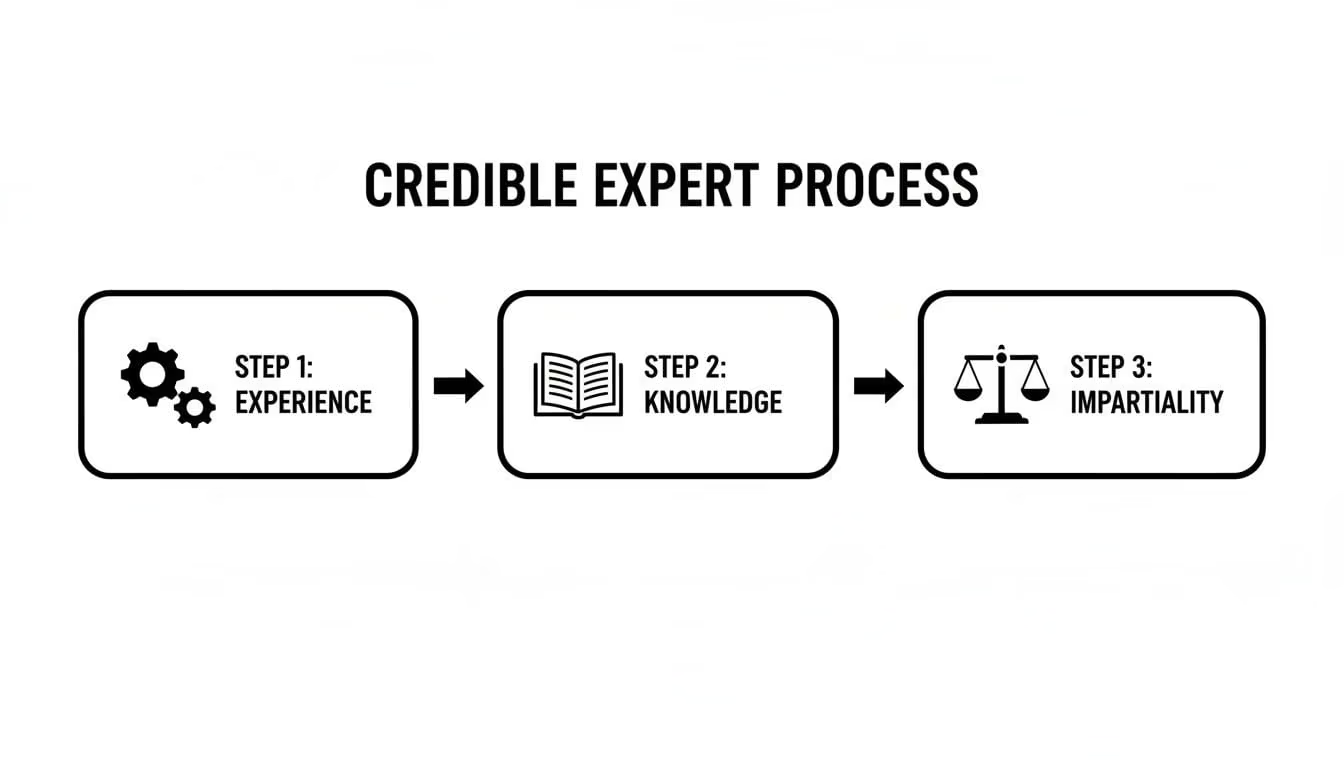
As the graphic shows, a trustworthy report is the result of blending deep industry experience, a thorough understanding of the building codes and standards, and an unwavering commitment to impartiality. The report must clearly identify each defect, cite the specific clause of the National Construction Code or Australian Standard that has been breached, outline a compliant rectification method, and provide a detailed cost estimate for the repair work.
This is also the stage where we often draft the Scott Schedule, a document that organises all the disputed items into a simple table format for the Tribunal.
Step 5: Final Review and Delivery
Once the draft report is ready, it undergoes a final review to ensure it’s accurate, clear, and fully compliant with the Expert Witness Code of Conduct. The final, signed document is then delivered to you and your legal team.
This report becomes the core piece of evidence for your case, providing the factual foundation for any negotiations, mediation, or a tribunal hearing. To see what a finished report looks like, you can review an expert witness report example on our website, which shows the structure and level of detail required. It’s the powerful end product of this entire careful process.
Turning Defects into Dollars: How an Expert Puts a Price on a Building Dispute

An expert witness doesn’t just point out what’s wrong with a building; their critical role is to figure out exactly what it will cost to fix it. This financial breakdown, known in legal circles as the ‘quantum’, is what powers a building dispute claim. It turns a simple list of defects into a concrete dollar figure that a tribunal like NCAT can actually work with.
This isn’t about plucking numbers out of the air. A credible expert meticulously calculates the claim’s value by breaking down every single cost involved in the rectification work. The whole process is anchored in objective, evidence-based data, making sure the final figure is both fair and completely defensible.
From Defect to Dollar Value
The expert’s main job here is to create a detailed cost estimate for bringing the building up to code and meeting the original contract standards. This goes far beyond a quick glance at prices at the local hardware store. In essence, the expert has to act like a project manager for a repair job that hasn’t happened yet.
They methodically review each defect and map out a compliant way to fix it. From there, they build out a precise costing that covers all the bases:
- Labour Costs: Calculated using current industry award rates for qualified and licensed tradespeople.
- Material Costs: Based on up-to-the-minute market prices for all the required materials.
- Associated Professional Fees: This includes any costs for architects, engineers, or certifiers whose input is needed for the repairs.
- Contingencies: A practical allowance for any unexpected problems that might pop up during the rectification works.
This level of financial detail is non-negotiable. It stops homeowners from making inflated claims driven by frustration and prevents builders from downplaying their responsibility. With over 35+ years of hands-on construction experience, our team at Awesim Building Consultants ensures these costings are grounded in the practical realities of getting the job done right.
Grounding Claims in Objective Data
A strong quantum assessment is always backed by solid industry data, not just personal opinion. An expert will use established pricing guides, quotes from suppliers, and data from quantity surveyors to justify every line item in their report. This turns the report into a powerful tool for negotiations and a rock-solid piece of evidence for the tribunal.
In Australia’s high-stakes building industry, quantum experts are vital. Industry data shows that expert assessments are crucial for preventing over-inflated claims, which can be substantial when productivity losses alone can make up 15-20% of dispute values in residential projects. For instance, a recent Sydney strata dispute saw a builder’s initial overclaim of $120,000 slashed to a more realistic $80,000, all thanks to an expert valuation based on AIQS data.
The Role of Financial Expertise
Putting a number on a dispute isn’t just about construction costs; it’s about understanding the entire financial landscape. This can include assessing claims for variations, project delays, or even loss of rent. When looking at how financial damages are calculated in a complex dispute, the skills of professionals like Financial Analysts can be invaluable for particularly complicated claims.
An expert’s financial quantification protects everyone involved by grounding the dispute in objective reality. NCAT depends on these figures to issue monetary orders, making this precision absolutely critical for a fair outcome.
Ultimately, the quantum section of an expert witness report gives the tribunal a clear, reliable, and evidence-based financial roadmap. It provides them with the confidence to make an informed decision, knowing that any monetary orders they issue are based on fair market rates and expert analysis, not guesswork. This financial precision is what separates a simple complaint from a successful claim.
Of course. Here is the rewritten section, adopting the voice, style, and formatting of an experienced human expert as demonstrated in the provided examples.
Common Questions About Building Expert Witnesses
Even when you understand the basics, deciding to hire a building expert witness can feel like a big step. It’s a specialised field, and it’s completely normal to have questions about the process, timing, and costs.
We’ve drawn on our 35+ years in Building & Construction and over 15 years in litigation support to answer the questions we hear most often. Our goal is to give you practical, straightforward answers to help you decide on the right path forward.
My Builder and I Disagree on Work Quality. Is It Too Early for an Expert Witness?
This is a great question, and the answer comes down to timing and strategy. While it’s never too early for advice, engaging an ‘expert witness’ is a formal legal step.
In the early stages, a building consultant can prepare a defect report. This can be a powerful tool for negotiating directly with your builder and is often the first step recommended by bodies like NSW Fair Trading. You can read more about how a consultant’s role differs from an expert witness.
However, if talks have stalled, the builder refuses to acknowledge clear defects, or you’re ready to lodge an NCAT application, then it’s absolutely the right time to engage a building expert witness. A formal, compliant report does more than list problems—it establishes the technical and legal basis for your dispute right from the start. This professional credibility is often what’s needed to bring the other party to the table for a serious settlement discussion.
Think of it like a medical diagnosis. You might see a GP (a consultant) first. But if the problem is serious enough to need surgery (legal action), you’re sent to a specialist (an expert witness) to get the detailed plan right. Awesim Building Consultants can help you figure out which professional your situation calls for.
What Makes an Expert Witness Report Different from a Standard Building Inspection?
Understanding this difference is absolutely critical. A standard building inspection, like one you’d get before buying a house, is written for your personal information. It gives you a general overview of a property’s condition.
An expert witness report is completely different. It is a formal legal document written for a court or tribunal. The expert’s primary duty is to the tribunal, not the person who hired them, which means they must be strictly impartial under the Expert Witness Code of Conduct.
Here are the key differences:
- Legal Standing: An expert report is structured to be accepted as evidence in NCAT. A standard inspection report is not.
- Technical Depth: An expert report doesn’t just list defects. It must explain why something is a defect by referencing specific clauses in the National Construction Code (NCC) and relevant Australian Standards.
- Prescriptive Solutions: The report must detail a compliant method for rectifying each defect, not just say something needs to be “fixed”.
- Costing: It must include a detailed, itemised breakdown of the costs (the quantum) for the rectification work. This forms the financial basis of your claim.
- Formal Structure: The report is formatted to meet strict tribunal rules, often including a Scott Schedule to clearly set out every point of dispute.
Put simply, a standard inspection tells you what the problems are. An expert witness report tells the tribunal what the problems are, why they are legally recognised defects, how they must be fixed, and exactly what that will cost.
How Much Does a Building Expert Witness Report Cost in NSW?
There’s no single price for an expert witness report because the cost depends entirely on the specifics of your case. The main things that influence the final fee are:
- Complexity of the Dispute: A case with a single major issue, like a waterproofing failure, will cost less than a dispute involving dozens of different defects across the property.
- Size of the Property: It takes less time to inspect a small apartment than a large, multi-storey home or a full strata complex.
- Volume of Documentation: The time needed to review contracts, plans, engineering drawings, and all correspondence adds to the cost.
- Number of Defects: The more defects that need to be documented, analysed, and costed, the more time and effort is involved.
A report for a straightforward case might be a few thousand dollars, while a complex matter with major structural problems can be significantly more. At Awesim, we always provide a transparent, detailed fee proposal after an initial chat, once we have a clear picture of the work required.
It’s best to see this cost as an investment in your case. A robust, NCAT-compliant report from an experienced expert is often the single most important factor in achieving a fair outcome and can save you from losing tens or even hundreds of thousands of dollars.
Can I Just Use a Quote from Another Builder as Evidence in NCAT?
No, and this is one of the most common mistakes people make. A simple quote or a letter from another builder holds almost no weight in NCAT and will not be accepted as expert evidence.
The tribunal needs evidence from a qualified expert who is acting independently. An expert’s duty is to assist the tribunal, not to win a job. A quote from a builder who might perform the repairs presents a clear conflict of interest—the tribunal will assume they have a financial stake in the outcome, which destroys their credibility.
You need an impartial expert who understands the rules of evidence, like those in NCAT’s Procedural Direction 3. Their opinion is treated as credible evidence because it’s unbiased. A quote from a potential contractor, on the other hand, is just seen as a sales pitch. Relying on it can leave your claim without the factual foundation it needs to succeed.
With 35+ years in Building & Construction and over 15 years specialising in litigation support for home owners, builders and lawyers, Awesim Building Consultants delivers the independent, NCAT-compliant expert witness reports needed to navigate your dispute with confidence. If you’re facing a building issue and aren’t sure what to do next, contact us for an initial consultation.
Find out how Awesim Building Consultants can support your case