
Which Variations in Construction Commonly End in Claims
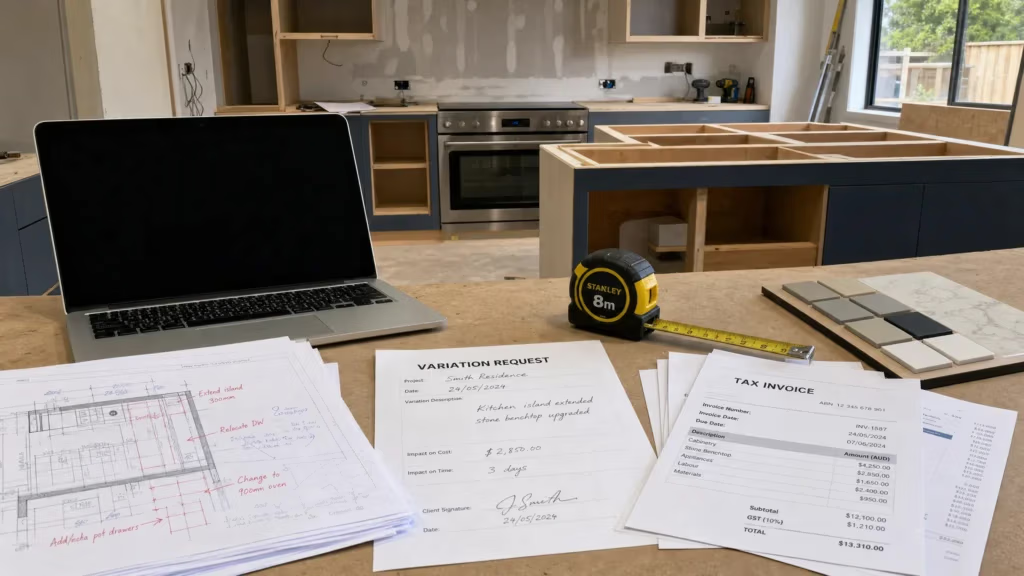
Variations are part of almost every building project. A client changes a kitchen layout, an engineer requests extra structural steel, a supplier discontinues a specified product, or demolition reveals something nobody could see at tender stage. None of that is unusual.
The problem starts when the parties disagree about whether the work was authorised, whether it is really outside the original scope, how much it is worth, or whether it delayed the project. That is when ordinary variations in construction can become formal claims in NSW Fair Trading, NCAT, arbitration, or court proceedings.
For homeowners, variation claims can feel like surprise charges. For builders, they can represent real labour, materials and time that were never priced into the contract. For lawyers, they often become evidence-heavy disputes about entitlement, valuation and delay.
Below are the variation types most likely to end in claims, why they go wrong, and what evidence usually matters.
What is a variation in construction?
A variation is a change to the agreed scope of work under a building contract. It may add work, omit work, alter the quality or specification of work, change the timing or sequence of work, or require a different method of construction.
Common examples include:
- Changing fixtures, finishes, joinery, tiles or appliances after the contract is signed.
- Moving walls, doors, windows, wet areas or services.
- Adding structural work required by an engineer or certifier.
- Replacing specified materials because they are unavailable.
- Performing extra excavation, drainage or remedial work after hidden site conditions are discovered.
In NSW residential building work, variations should be handled carefully. The Home Building Act 1989 (NSW), section 7E sets out requirements for variations in many home building contracts, including important rules about writing, signatures, price changes and completion date impacts. NSW Fair Trading also provides guidance on home building contracts, including the importance of written contract documents.
The exact legal position depends on the contract, the facts and the claim being made, so parties should obtain legal advice where a dispute has already crystallised. From a practical evidence perspective, however, the same pattern appears repeatedly: the more informal the variation process, the more likely the matter becomes disputed.
Quick guide: variations most likely to become claims
| Variation type | Why it commonly becomes disputed | Evidence that usually matters |
|---|---|---|
| Owner-requested upgrades | Parties disagree whether the request was approved or what it should cost | Signed variation forms, emails, selections schedules, quotes |
| Verbal site instructions | The builder says the owner or superintendent directed the work, but there is no clear record | Site diaries, SMS messages, meeting notes, witness evidence |
| Latent conditions | Hidden issues increase cost, but the owner argues they were foreseeable or included | Photos, geotechnical reports, demolition records, contract exclusions |
| Design omissions | Drawings or specifications are incomplete or inconsistent | Tender documents, plans, RFIs, architect or engineer instructions |
| Prime cost and provisional sum adjustments | Allowances are exceeded and the final cost surprises the owner | Contract allowances, invoices, supplier quotes, selection records |
| Compliance changes | Certifier, engineer or authority requires extra work | Directions, certificates, engineering revisions, NCC-related documents |
| Material substitutions | Product availability, cost or quality changes cause disagreement | Original specification, supplier notices, approval records, invoices |
| Delay and acceleration | A variation affects time, but no extension of time was agreed | Updated programs, notices, site diaries, labour records |
| Omissions and credits | Work is removed, but parties disagree on the credit | Original pricing, scope breakdowns, alternative quotes |
| Remedial work labelled as a variation | Builder treats rectification as extra work, owner says it is defect correction | Defect reports, photos, expert opinion, contract scope |
1. Owner-requested changes to layout, finishes or scope
Owner-requested changes are the classic source of variation claims. A homeowner may decide to upgrade tiles, move a doorway, change cabinetry, add electrical points, or alter bathroom fittings after the contract has already been priced.
These claims often start amicably. The owner asks, “Can we just add this?” The builder agrees to keep the project moving. The price is discussed loosely, or not at all. Weeks later, the owner receives a variation invoice and disputes the amount.
The key issues are usually whether the work was truly additional, whether the owner authorised it, and whether the builder’s claimed amount is reasonable. If the contract required a written variation before work commenced, but the parties proceeded informally, the dispute becomes more complex.
For builders, the safest approach is to provide a written description, price impact and time impact before starting the varied work. For owners, the safest approach is to avoid approving changes without seeing the cost and understanding whether the completion date will move.
2. Verbal instructions and “do it while you’re here” work
Many variation claims arise from conversations on site. A builder may say an owner instructed extra work during a walkthrough. The owner may say they were only discussing options, not approving a chargeable variation.
This is particularly common on renovations, where decisions are made quickly and the work area is constantly changing. It can involve small items, such as extra painting or patching, but the total claim can become significant if dozens of informal instructions accumulate.
Verbal variation claims are difficult because each side may have a different recollection of the conversation. NCAT and courts generally prefer contemporaneous documents over memory. A short email or text message sent immediately after the discussion can be powerful evidence, especially if it states what was requested, what it will cost, and whether extra time is needed.
A practical rule for all parties is simple: if it changes the scope, record it before the work is done. Even a short written confirmation is better than relying on memory months later.
3. Latent conditions and hidden site problems
Latent conditions are conditions that were not reasonably apparent before work commenced. Examples include unexpected rock, asbestos, contaminated soil, inadequate existing footings, undocumented services, termite damage, water ingress, or concealed structural defects.
These variations commonly become claims because the cost can be substantial and the cause is often disputed. The builder may argue that the condition was hidden and outside the contract price. The owner may argue that the builder should have allowed for it, inspected more carefully, or warned about the risk.
The contract wording is critical. Some contracts place specific risk on the owner for latent conditions. Others require the builder to give notice within a certain period. If those procedures are not followed, entitlement may be contested even if the physical condition was real.
Evidence should show when the condition was discovered, where it was located, why it was not apparent earlier, what extra work was required, and how the claimed amount was calculated. Photos taken before covering up the issue are often essential.
This is also where independent evidence can help. A consultant can inspect, review documents, and assess whether the claimed work appears to be additional, necessary and reasonably costed.
4. Incomplete drawings, specification gaps and design inconsistencies
Design-related variations are common in both new builds and renovations. The drawings may show one thing, the specification may say another, or a required detail may be missing entirely. The builder then seeks a variation when the issue is clarified during construction.
Typical examples include missing waterproofing details, unclear structural connections, unspecified window performance, incomplete electrical layouts, or joinery details that were not sufficiently documented at tender stage.
These claims often turn on what was included in the original contract. If the tender documents clearly required the outcome, the builder may struggle to argue it is extra merely because the detail was inconvenient. If the documents were genuinely incomplete and the builder could not reasonably price the missing work, a variation claim may be stronger.
For lawyers and claims consultants, the document trail is usually decisive. The sequence matters: tender drawings, contract drawings, specifications, RFIs, revised drawings, site instructions, quotes and invoices all help establish whether the work was in scope or additional.
5. Prime cost items and provisional sums
Prime cost items and provisional sums are not always “variations” in the strict sense, but they frequently lead to variation-style claims.
A prime cost item is typically an allowance for a supply item not finally selected at contract stage, such as tiles, tapware or appliances. A provisional sum is typically an allowance for work where the final cost cannot be accurately determined when the contract is signed, such as excavation or landscaping.
Disputes arise when the allowance is too low, the owner selects more expensive items, or the final work costs much more than expected. The owner may believe the contract price covered the item in full. The builder may claim the difference between the allowance and actual cost, plus any margin permitted by the contract.
The best evidence is usually straightforward: the contract allowance, the selection record, supplier invoices, subcontractor invoices, and any agreed margin. Problems arise when selections are made informally or the allowance was unrealistic from the outset.
6. Material substitutions and product availability changes
Supply issues can lead to claims when specified products become unavailable, delayed, discontinued, or significantly more expensive. A builder may propose an alternative product to keep the project moving. The owner may later object that the substitute is lower quality, visually different, or not what they paid for.
The dispute may involve cost, quality or both. If the substitute is cheaper, the owner may seek a credit. If it is more expensive, the builder may claim a variation. If the substitute changes performance or appearance, the dispute may become a defect or non-compliance issue as well.
The original specification is the starting point. Any proposed substitution should be described clearly, including brand, model, performance rating, colour, finish and warranty where relevant. Approval should be documented before installation, not after the product is fixed in place.
7. Compliance, certifier and engineering changes
Some variations arise because a certifier, engineer, council, utility provider or other authority requires changes during the project. Examples include additional fire separation, structural upgrades, stormwater changes, balustrade amendments, accessibility requirements, or energy efficiency measures.
These claims can be contentious because neither party may feel responsible. The builder may say the change was mandatory and outside the original scope. The owner may say the builder should have known the requirements and priced the work properly.
The answer depends on the contract, the role of the designer, the state of the approvals, and whether the requirement was reasonably foreseeable. If the builder contracted to deliver a compliant result, a compliance-related change may not automatically be extra. If the owner supplied incomplete or changing design documents, the builder may have a stronger basis for a claim.
Clear evidence is essential. Keep the certifier’s direction, engineering revision, approval condition, marked-up drawing, and any written explanation of why the change was required.
8. Delay, acceleration and resequencing caused by variations
Variations do not only affect cost. They can also affect time. A small design change may delay procurement. A structural change may stop other trades. A late selection may require resequencing. If the builder then claims additional preliminaries, supervision costs, acceleration costs or an extension of time, the variation dispute becomes a delay dispute as well.
Delay-related variation claims are often weak when they rely only on broad statements such as “the changes delayed us by four weeks.” Stronger claims connect the variation to the program. They show what activity was affected, when the instruction was received, when materials were ordered, which trades were delayed, and how the critical path moved.
For owners, the key question is whether the claimed delay was actually caused by the variation or by other project issues. For builders, the key is to give notices on time and maintain program records.
If you are already in a dispute, Awesim’s guide to building disputes in NSW explains how evidence, expert reports and issue-by-issue analysis can help narrow the matters in dispute.
9. Omitted work and disputed credits
Not all variations add cost. Some remove work from the contract. For example, an owner may decide to supply their own appliances, delete landscaping, reduce joinery, or remove a portion of painting from the builder’s scope.
These omissions commonly become claims because owners often expect a full retail credit, while builders may calculate the credit based on the original contract allowance, subcontractor pricing, margins, overheads, or work already performed.
The dispute becomes sharper when the contract is a lump sum and does not show detailed line-item pricing. In that case, parties may need to reconstruct a reasonable credit by looking at the original scope, market pricing, subcontract quotes and the builder’s cost breakdown, if available.
A fair omission assessment should consider what work was actually removed, whether any related work remained, whether materials had already been ordered, and whether the builder incurred costs before the omission.
10. Remedial work described as a variation
One of the most contentious categories is remedial work that the builder claims as a variation. The builder may argue the work was caused by existing site conditions, owner changes, design defects, or another trade. The owner may argue the work was necessary only because the builder’s original work was defective.
For example, re-waterproofing, re-tiling, re-framing, patching, drainage corrections or repainting may be claimed as extra work. If the underlying cause is defective workmanship, the owner may resist payment and seek rectification instead. If the underlying cause is a genuine change in scope or a hidden condition, the builder may be entitled to payment.
This type of claim often requires technical evidence. Photos, inspection notes, test results and expert opinion can help identify whether the work was remedial, additional, or a mix of both.
Why variation claims become difficult to prove
Most variation claims involve two separate questions.
First, is there entitlement? This means asking whether the claimant has a contractual, statutory or other legal basis to recover payment or time. It may involve the contract variation clause, written approval requirements, notice provisions, authority of the person giving instructions, and any exceptions that apply.
Second, what is the proper valuation? Even if the work was additional, the amount claimed still needs to be supported. A claim may fail or be reduced if it is based on estimates, rounded figures, unsupported margins or missing subcontractor invoices.
Where no valid written variation exists, a party may still try to argue other bases of recovery, such as quantum meruit in appropriate circumstances. That is a complex legal issue and should be considered with a solicitor. From an expert evidence perspective, the practical question is often whether the work was performed, whether it was outside the contract scope, and what a reasonable value for that work would be.
For matters in NCAT, the NCAT home building jurisdiction commonly deals with disputes about residential building work, including defective work, incomplete work and payment claims. Variation disputes often form part of those broader proceedings.
Evidence that helps resolve variation disputes
The strongest variation claims are usually built from contemporaneous records. The weakest claims are usually reconstructed after the relationship has broken down.
| Evidence type | Why it helps |
|---|---|
| Signed variation document | Shows approval, scope, price and time impact |
| Email or SMS confirmation | Helps prove what was requested and when |
| Updated plans or marked-up drawings | Shows the technical change from the original scope |
| Photos and videos | Proves site conditions, progress and work performed |
| Supplier and subcontractor invoices | Supports the cost claimed |
| Site diaries and timesheets | Supports labour and delay components |
| Program updates | Helps connect variations to extensions of time |
| Payment claims and schedules | Shows how the claim was presented and responded to |
| Expert report | Assists with scope, defect causation, reasonableness and valuation |
| Scott Schedule | Organises disputed items into a clear issue-by-issue format |
A Scott Schedule is particularly useful where there are many variation items. It allows each item to be listed with the claimant’s position, respondent’s position, amount claimed, amount admitted, and expert comments. This can make settlement discussions more productive and hearing preparation more focused.
How homeowners, builders and lawyers can reduce variation disputes
Homeowners can reduce risk by asking for written variation details before approving changes. That should include the description of the work, the price, whether the builder’s margin is included, and whether the completion date changes. If the work seems necessary because of a defect or hidden condition, ask for photos and an explanation before agreeing to pay.
Builders can reduce risk by following the contract procedure every time, even for small changes. A consistent process protects cash flow and avoids arguments later. If a client gives a verbal instruction, confirm it in writing immediately. If urgent work is required to prevent damage or danger, keep clear records explaining why it could not wait.
Lawyers and solicitors can reduce the scope of dispute by separating entitlement, causation and quantum. A variation claim may be weak on authorisation but strong on evidence of work performed. Another may be authorised but overvalued. Separating those issues early helps determine what expert evidence is actually needed.
Good construction project administration is also preventative evidence. For a broader look at project controls, records and communication, see Awesim’s guide on what construction project management covers in NSW.
When expert evidence is useful in a variation claim
Expert evidence is useful when the dispute is not just legal, but technical or valuation-based. This commonly occurs where the parties disagree about whether the work was outside the original scope, whether the claimed work was necessary, whether the claimed cost is reasonable, or whether the variation overlaps with alleged defects.
An independent building consultant can assist by reviewing the contract documents, inspecting completed or disputed work, comparing the original scope against the varied work, assessing defect allegations, and preparing an expert report suitable for NCAT or court use where required.
For complex payment disputes, a quantum meruit report may also be relevant where the issue is the reasonable value of work performed rather than a straightforward contract price. For multi-item disputes, a Scott Schedule can help organise the claim so each variation, defect or credit is assessed separately.
Awesim Building Consultants provides independent building dispute support across New South Wales, including expert witness reports, Scott Schedules, quantum meruit reports, NCAT dispute reports and building defect assessments.
Frequently Asked Questions
What variations in construction most commonly lead to claims? The most common problem areas are owner-requested upgrades, verbal site instructions, latent conditions, design omissions, provisional sum adjustments, compliance changes, material substitutions, delay-related variations, omitted work credits and remedial work disputed as a variation.
Does a construction variation need to be in writing in NSW? In many NSW home building contracts, variations should be documented in writing with key details such as scope, price impact and time impact. The Home Building Act contains specific requirements and exceptions, so parties should check their contract and obtain legal advice if a dispute exists.
Can a builder claim a variation if the owner only gave verbal approval? It depends on the contract, the legislation and the evidence. A verbal approval can create serious proof problems. Emails, text messages, site diaries, photos and evidence of the owner’s conduct may become important, but written approval before work starts is far safer.
Can an owner refuse to pay a variation invoice? An owner may dispute a variation invoice if the work was not authorised, was already included in the contract, was defective, or is overvalued. The owner should explain the reasons in writing and keep supporting evidence rather than simply ignoring the claim.
How does a Scott Schedule help with variation disputes? A Scott Schedule breaks the dispute into individual items. For each variation, it can record the amount claimed, the response, the evidence relied on and the expert’s opinion. This is useful in NCAT and court matters because it makes complex disputes easier to understand.
Need help assessing a disputed variation claim?
Variation disputes are rarely solved by looking at one invoice in isolation. The contract, drawings, site records, photos, approvals, costs and technical necessity all need to be considered together.
If you are a homeowner, builder or solicitor dealing with disputed variations in construction, Awesim can assist with independent building dispute reports, expert witness evidence, Scott Schedules and quantum meruit assessments across NSW.
Visit Awesim Building Consultants to discuss the documents and evidence needed for your matter.

Related Posts

Water Damage in Homes: How to Track Down the Source
Water damage in a home rarely announces itself at the source. A stain on the ceiling, a musty smell in
Read More »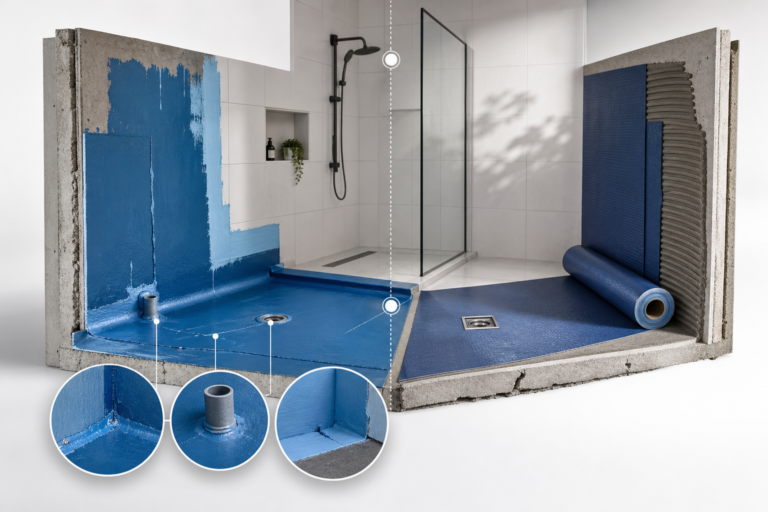
Waterproofing Membrane Types: Which Fails Most in NSW Bathrooms
Waterproofing failure is the single most common serious defect found in NSW apartments, and the type of membrane used, along
Read More »
Building Certifier NSW: Role, Limits, and When You Need More
A building certifier in NSW is a registered professional who issues construction certificates, conducts critical stage inspections, and grants occupation
Read More »