
Awesim Building Consultant Provides Litigation Support
You usually reach for litigation support at the point a building matter stops being a repair issue and becomes an evidence issue. The owner has photos, the builder has a different version of events, the solicitor needs something admissible, and everyone is tired of broad allegations that don’t answer the core question: what exactly is wrong, why is it wrong, and how do you prove it properly?
That’s where the phrase Awesim Building Consultant provides litigation support matters in practical terms. It isn’t about producing a glossy report after a quick walk-through. It’s about turning site conditions, documents, measurements, defect observations, and compliance references into material that can stand up in NCAT or court. If that link between field evidence and legal procedure is weak, the case usually drifts. If it’s strong, the dispute becomes narrower, clearer, and easier to test.
Navigating Building Disputes with Expert Litigation Support
A typical file arrives after the positions have already hardened. The owner has a phone full of photos. The builder has a different explanation for each item. The solicitor has pleadings or draft claims taking shape, but no technical document that turns allegation into proof.
At that point, the dispute is no longer about who sounds more convincing.
It is about whether the defects can be identified, isolated, and explained in a form NCAT or a court can test. That requires more than building knowledge on its own. It also requires an understanding of how evidence is read, challenged, and weighed in a legal process. This gap between site reality and procedure is where many matters weaken. Poor documentation blurs the issues. Careful technical analysis narrows them.
When the dispute needs more than complaint correspondence
A complaint letter can put pressure on the other side. It rarely resolves a technical dispute where causation, scope, quality, and rectification cost are all contested.
What usually shifts the matter is a properly structured expert process. The site inspection has to answer the pleaded issues. The photographs have to match locations. The opinion has to show the reasoning path from observed condition to defect finding, then from defect finding to rectification method. If that chain is missing, the report may still read well but have limited value once the other side starts asking precise questions.
From a practical dispute-resolution perspective, early translation of site conditions into admissible evidence saves time and cost later. It also helps separate defective work from maintenance issues, incomplete work, design limitations, and damage caused by later trades.
Awesim Building Consultants refers to its long building background and more than 15 years of litigation support experience across New South Wales, including regional matters. That sort of experience matters because dispute work is rarely about identifying a defect in isolation. The harder task is explaining it in a way that fits the procedural requirements of the forum and survives scrutiny from the opposing side.
What helps a case, and what usually weakens it
Some steps improve the quality of the evidence from the start:
- Focused instructions: The expert needs the actual issues in dispute, the relevant contract and drawings, and the intended forum.
- Site-based investigation: Measurements, access, sequencing, and workmanship detail often decide the argument.
- Controlled document flow: Legal teams run more efficiently when instructions, records, and updates are handled consistently. For firms improving intake and coordination, this guide to optimizing legal office communication is a useful operational reference.
- Opinions tied to standards and facts: A conclusion carries weight when the reader can see exactly how it was reached.
Other habits create avoidable problems:
- Bringing in the expert late: Conditions change, temporary repairs happen, and access becomes harder.
- Sending an unfocused brief: Hundreds of pages of emails do not replace a clear statement of the disputed items.
- Using the expert as an advocate: Tribunals and courts expect independence. Once that is lost, the report becomes harder to rely on.
For homeowners, builders, and solicitors, the practical question is simple. Can the evidence show what failed, where it failed, why it matters, and what it will reasonably take to fix? If the answer is yes, the dispute becomes easier to run and harder for the other side to blur.
Understanding Awesim’s Role in Litigation Support
A solicitor is handed 600 pages of emails, progress photos, invoices, and competing allegations two weeks before directions. A homeowner wants to know why the bathroom still leaks after three repair attempts. A builder says the cracking is cosmetic and outside scope. In each of those situations, litigation support means turning a construction problem into evidence that can survive scrutiny.
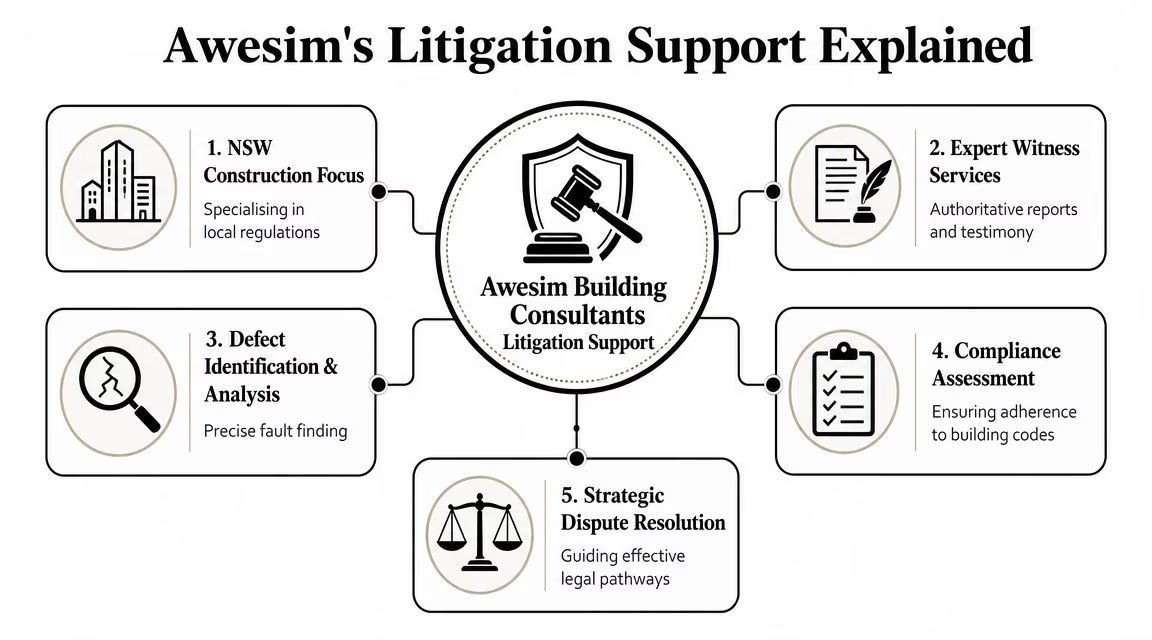
Litigation support connects site conditions to the legal test
The primary job is not to produce another defect list. It is to identify the disputed item, inspect it properly, match it against the contract and the applicable standard, and explain causation and rectification in a form NCAT or a court can use.
That is where building experience matters.
A consultant who has spent years on sites knows what can and cannot be concluded from a hairline crack, a failed membrane, incomplete flashing, slab movement, or out-of-plumb framing. Just as important, that field knowledge has to be translated into disciplined evidence. If the report does not show the reasoning, the opinion is harder to rely on, even if the technical conclusion is sound.
Awesim’s role sits in that gap between construction reality and legal procedure. Its work typically involves inspecting the property, testing the allegations against the built work, reviewing the project documents, and preparing material that is suitable for formal dispute resolution. Clients considering why to use Awesim Building Consultants for an expert witness report are usually trying to solve that exact problem.
What the role looks like in practice
In building disputes, three parts of the work tend to carry the file.
Forensic site investigation
The inspection is directed by the issues in dispute, not by a general checklist. Locations are identified carefully. Measurements, levels, moisture patterns, junction details, sequencing, and workmanship are recorded so the evidence can be traced back to a specific complaint.Procedure-aware expert opinion
The opinion has to do more than say something is defective. It needs to explain what requirement applies, how the observed work departs from that requirement, whether causation can be identified on the available evidence, and what a reasonable rectification path looks like.Issue-by-issue dispute support
Where there are many allegations, the technical analysis has to be organised so each item can be answered cleanly. That makes it easier for solicitors to run the matter and harder for the opposing side to hide weak points inside a long narrative.
Why this role is different from ordinary consulting
General consulting often ends once the defect is identified. Litigation support starts there.
The consultant must assume the opinion will be challenged by an opposing expert, tested against the documents, and read by a decision-maker who was not present on site. That changes how inspections are conducted, how photographs are marked, how assumptions are stated, and how limitations are disclosed.
A short report with clear reasoning usually does more work than a long report full of conclusion without analysis.
Clients often underestimate that trade-off. They focus on volume of material when value lies in selectivity and structure. A tribunal does not need every complaint ever made on the project. It needs the defects in issue, the supporting facts, the relevant compliance point, and a rectification opinion that is technically defensible.
That is Awesim’s practical role in litigation support. Reduce noise, isolate the key construction issues, and present them in a form the legal process can use.
The Anatomy of a Compelling Expert Witness Report
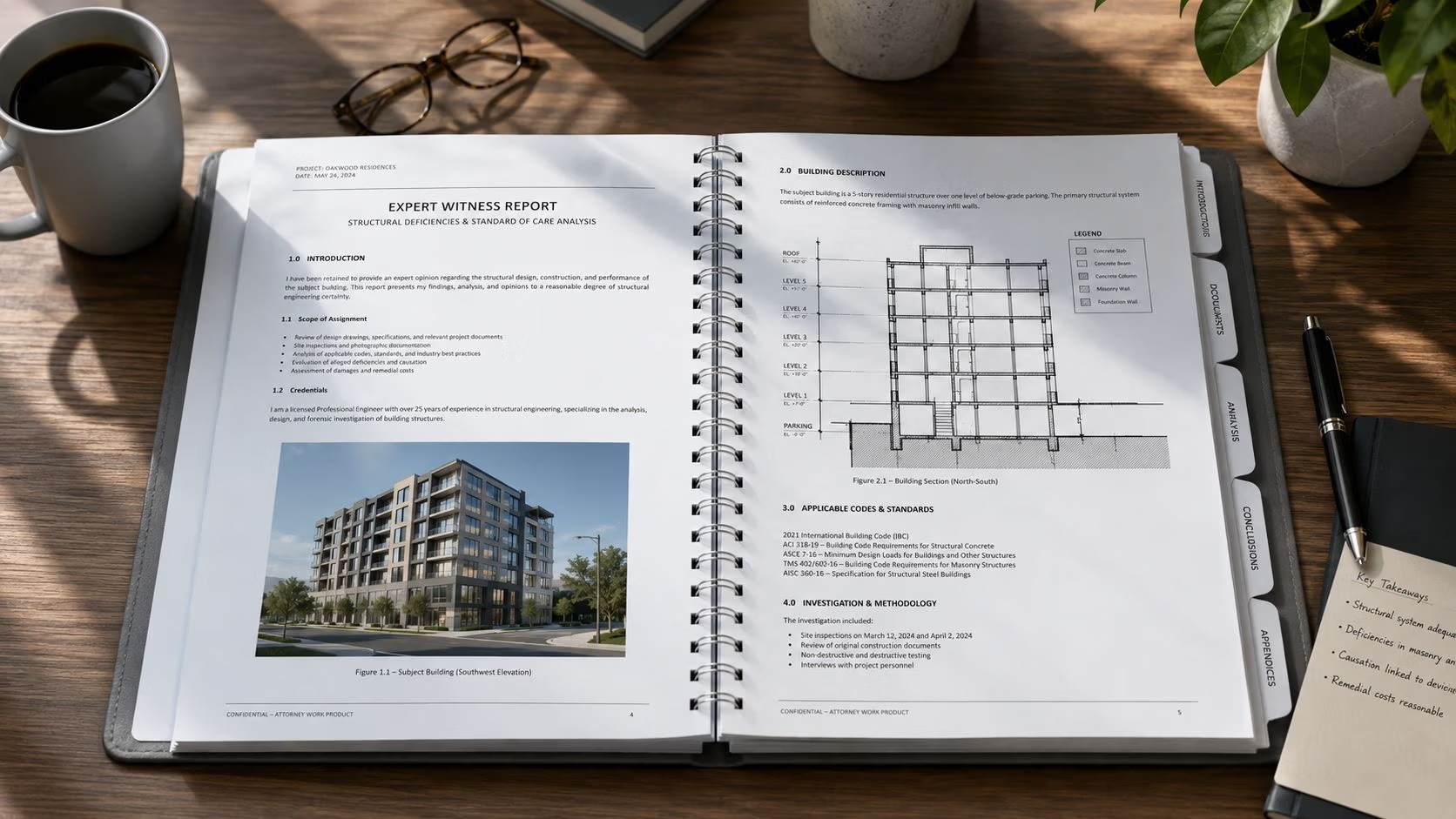
A useful expert witness report does more than list defects. It builds a disciplined argument from evidence. Every section should help answer one of the questions that decision-makers care about: what was inspected, what was found, why it matters, and what follows from it.
Awesim Building Consultants was established in 1996, giving it nearly 30 years of operational history as of 2026, and is described as preparing expert witness reports and NCAT-compliant documentation for defective-building claims, which matters because format and procedural alignment are often just as important as technical accuracy in formal proceedings (Awesim company profile and history).
What belongs in the report
A report that carries weight usually includes the following components:
Instructions and scope
The report should identify who engaged the expert, what questions were asked, and what parts of the property or works were inspected.Documents reviewed
Plans, contracts, variations, correspondence, prior reports, and photographs matter because defects don’t exist in a vacuum.Site observations
This is the factual core. It should be location-specific and supported by photographs, measurements, and direct observations.Defect analysis
In this phase, the report moves beyond description. The expert explains whether the item is defective, incomplete, non-compliant, damaged, or outside the original allegation.Causation and rectification methodology
A proper report doesn’t stop at “this is defective”. It should address why the issue arose and what type of rectification would be required.
What makes a report persuasive
Persuasive doesn’t mean aggressive. It means traceable.
If an opinion says waterproofing is defective, the reader should be able to follow the chain from allegation, to inspection point, to photo evidence, to compliance reference, to conclusion. That’s what gives a report durability under scrutiny.
A report is also stronger when it avoids two common failures:
| Failure | Why it weakens the case |
|---|---|
| Broad conclusions | They don’t help the tribunal isolate disputed items |
| Advocacy language | It can undermine independence and credibility |
For a closer look at how that sort of document is used in practice, Awesim outlines its approach in this page on expert witness reports for building disputes.
A short explainer is useful here before getting into the procedural side:
The report has to survive challenge
A report that looks fine to a client can still fail in a hearing if it isn’t objective, well-scoped, or properly reasoned. Lawyers usually need a document that can be used strategically before hearing and defended if the matter runs further.
That means the report should be written with challenge in mind. Opposing parties may contest the observations, the standards relied on, the stated cause, or the proposed rectification pathway. Good expert work anticipates that. It doesn’t exaggerate. It doesn’t drift into argument. It stays with the evidence.
A credible expert report doesn’t try to win every point. It makes the defensible points clearly and leaves the weak ones out.
How a Scott Schedule Streamlines Complex Disputes
A common pattern in building disputes is easy to spot. The owner says there are defects everywhere. The builder says the complaints are vague, exaggerated, or caused by maintenance, movement, or later trades. By the time the matter reaches NCAT or court, everyone is arguing about everything at once.
A Scott Schedule fixes that by forcing the dispute into individual issues that can be assessed properly. It works as an item-by-item table of allegations, responses, and expert opinion. That sounds procedural, but its primary value is practical. It stops separate defects from being rolled into one broad complaint, and it lets each item stand or fall on its own evidence.
That distinction matters on site and in a hearing. A leaking shower, slab cracking, and poor window installation involve different causes, different standards, and different rectification paths. If they are grouped together, the legal case gets harder to run and the technical analysis gets weaker.
Why the format matters
In dispute work, clarity saves time and exposes weak points early. A properly prepared Scott Schedule shows the exact location, the alleged defect, the response, and the expert view for each item. Solicitors can identify what is admitted, what is denied, and what needs proof. Homeowners can see whether a complaint is being answered. Builders can respond to specific allegations instead of defending a generalised list.
The tribunal benefits too. Members do not need to extract the key issues from long email chains, marked-up photos, and broad accusations in witness statements. The schedule puts the live issues in one place and in a sequence that can be tested.
Instead of saying “the tiling is defective throughout”, the schedule asks narrower questions:
- Which area is affected?
- What defect is alleged?
- What standard or contractual requirement is said to be breached?
- What is the respondent’s answer?
- What does the site evidence support?
- What rectification, if any, follows from that finding?
A simplified Scott Schedule example
| Item | Location | Claimant’s Allegation of Defect | Respondent’s Response |
|---|---|---|---|
| 1 | Ensuite shower | Waterproofing failure has caused leaking and damage | Leak denied, says issue caused by maintenance |
| 2 | Living room window | Water ingress around frame due to poor installation | Says sealant failure occurred after handover |
| 3 | Rear slab edge | Cracking indicates defective construction | Says cracking is minor and within tolerance |
This structure does more than organise paperwork. It connects construction facts to legal procedure.
That is the gap many parties miss. A defect only becomes persuasive evidence when it is described precisely, tied to a location, tested against the relevant standard or contract requirement, and answered in a form the tribunal can use. Field experience matters here because the schedule is only as good as the observations behind it. If the item description is loose, the expert cannot analyse it cleanly. If the alleged defect confuses symptom and cause, the case drifts off course.
Where it helps most
Scott Schedules are particularly useful where:
- Multiple defects are in dispute, especially across different trades or stages of work.
- The parties are talking past each other, with denials that do not match the actual allegations.
- Causation is contested, such as whether damage arose from defective work, maintenance, design, movement, or later interference.
- The matter is heading toward directions or hearing, and the legal team needs a format that can be followed item by item.
Awesim sets out its approach to preparing Scott Schedules for NSW building disputes, including how the document is used in practice.
The reference to NCAT Procedural Direction 3 matters for the same reason. A schedule is not administrative filler. It shapes the issues the parties answer, the evidence the expert addresses, and the path the hearing follows. If it is drafted too broadly, separate issues get blurred. If it is drafted too narrowly, the actual complaint can disappear inside bad wording.
A good Scott Schedule makes the dispute easier to decide because each item can be proved, challenged, accepted, or rejected on its own footing.
Your Engagement Process with Awesim Building Consultants
Most clients want to know what happens after the first phone call. That’s fair. Litigation support feels unfamiliar if you haven’t been through it before, and even solicitors want clarity on scope, timing, and document flow because that’s what keeps the file under control.
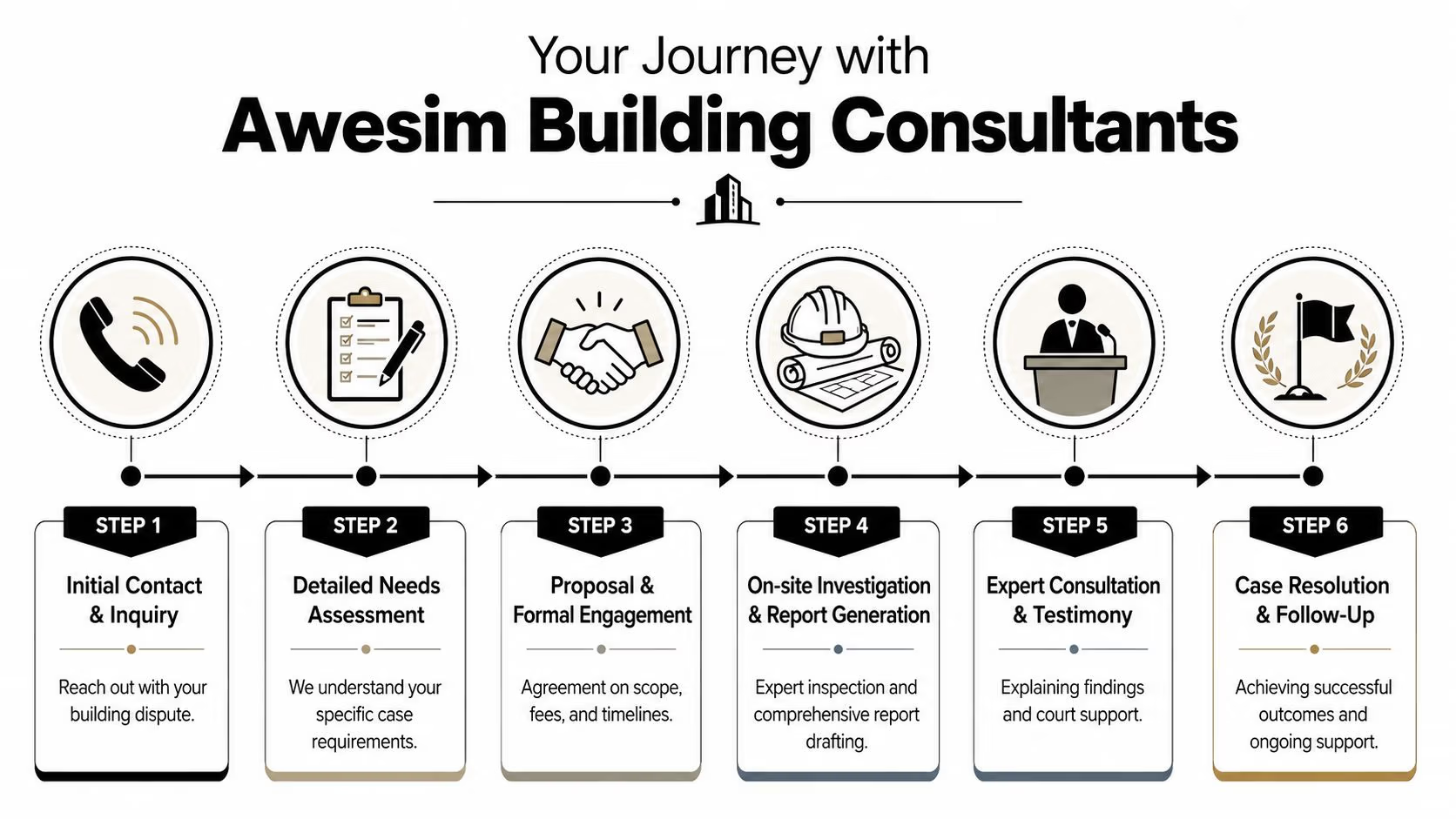
The engagement usually follows a clear sequence
The process is usually straightforward when the brief is clear.
Initial contact
The first step is a confidential discussion about the dispute, the property, and where the matter currently sits. Some matters arrive before proceedings. Others arrive after directions have already been made.Formal instruction
If a solicitor is involved, the brief should identify the questions that need answering. If a homeowner or builder is instructing directly, the consultant will still need the issues framed properly.Document review and site investigation
Plans, contracts, photographs, correspondence, and prior reports are reviewed, then tested against what is visible on site.
What clients should have ready
The better the file at the start, the cleaner the report at the end.
A useful brief usually includes:
- Contract documents: Building contract, specifications, approved plans, and variations.
- Chronology: Key dates, practical completion issues, notices, and complaint history.
- Photos and video: Especially material taken before temporary repairs or further deterioration.
- Communications: Emails, texts, and letters that show what was reported and when.
What not to expect
Clients sometimes expect instant conclusions at inspection. That’s not how proper litigation support works.
The site visit is one part of the process. The opinion comes after review, cross-checking, and drafting. In some matters, the underlying issue isn’t what appears on first glance. It’s what the documents show about scope, sequence, responsibility, or whether a claimed defect is a workmanship issue, a design issue, or a maintenance issue.
There’s also no one standard timeframe or fee model that fits every dispute, so it’s better to discuss scope and likely steps directly rather than rely on generic assumptions. Straight advice early is better than a cheap report that has to be replaced later.
Partnering with Awesim for a Stronger Case
A hearing date is approaching, the photos look persuasive, and everyone is confident until the first hard question lands. What standard applied here. What work was in the original scope. What can be opened up, tested, and costed at this site. Cases often weaken at that point, not because the defect is minor, but because the evidence has not been shaped to answer the questions a tribunal or court will ask.
That is where a good working relationship with the consultant matters. Litigation support is not just an inspection and a report. It is the process of turning site conditions, contract documents, sequencing issues, and repair constraints into evidence that can survive scrutiny. The stronger matters are usually the ones where the technical work and the legal strategy are aligned early.
For solicitors, that means briefing to the disputed issues and the decision-maker’s task. The consultant should know whether the report is aimed at early settlement, an NCAT timetable, or court proceedings with tighter procedural expectations. The questions should be framed around defect, cause, compliance, scope of rectification, and responsibility. A focused brief saves time and usually produces a cleaner opinion because less effort is spent sorting noise from material facts.
For homeowners and builders, the practical contribution is different but just as important. A clear timeline, consistent photo record, and organised contract material often make the difference between a report that is persuasive and one that stays too general. If parts of the work have been patched, opened, or partly repaired, that history needs to be identified properly. Otherwise, the consultant may be assessing a changed condition rather than the original failure.
Awesim Building Consultants provides site investigations, expert witness reports, and Scott Schedules for NSW matters. The value in that engagement is straightforward. The consultant needs to understand how building work is done on site, and how that reality has to be expressed in a form that suits pleadings, evidence, and cross-examination.
Regional matters need particular care. A report prepared on metro assumptions can misstate rectification methodology, access requirements, trade availability, and likely cost allowances once the property is outside the Sydney market. In regional NSW, logistics can affect both liability analysis and quantum. A sound report should reflect what the repair will involve in practice, not just what appears tidy in theory.
If access constraints and supply limits are ignored, the report can read well and still miss the practical realities of the job.
That is often the gap between a document that looks professional and one that effectively helps win the point in dispute.
Frequently Asked Questions About Building Litigation Support
Do I need litigation support if I already have photos and quotes
Usually, yes, if the dispute is moving toward NCAT or court. Photos show condition. Quotes show someone’s proposed repair scope. Neither document, on its own, usually provides an independent technical opinion that links defect, cause, compliance, and rectification in a structured way.
Is the expert there to support my side
Not in the advocacy sense. A proper expert’s value comes from independence. If the consultant repeats a client’s position, the report loses weight quickly. Good litigation support helps your case by being clear, reasoned, and supportable.
What if the other side disagrees with every defect item
That’s common. It doesn’t make the process unworkable. It usually means the evidence needs to be better organised and each issue needs to be tested separately. That’s where line-by-line reporting and schedules are useful.
Can a homeowner engage directly, or does it need to come from a solicitor
Either can happen. A solicitor-led brief is often cleaner because the disputed issues are framed more tightly, but homeowners and builders can also engage directly. The key is that the instructions and documents need to be organised from the start.
What should I do before the consultant attends site
Have the key material ready and avoid altering the site unnecessarily before inspection. Temporary repairs, patching, repainting, or removal of failed elements can change the available evidence. If urgent mitigation is unavoidable, record the condition carefully first.
Is litigation support only for Sydney disputes
No. Building disputes arise across NSW, and regional matters often need even more care because access, sequencing, and local rectification assumptions can differ materially from metro matters.
If you’re dealing with a building dispute and need clear, tribunal-ready technical evidence, contact Awesim Building Consultants for a confidential discussion. Email admin@awesim.com.au or call 1800 293 746.
Related Posts
Water Damage in Homes: How to Track Down the Source
Water damage in a home rarely announces itself at the source. A stain on the ceiling, a musty smell in
Read More »
Waterproofing Membrane Types: Which Fails Most in NSW Bathrooms
Waterproofing failure is the single most common serious defect found in NSW apartments, and the type of membrane used, along
Read More »
Building Certifier NSW: Role, Limits, and When You Need More
A building certifier in NSW is a registered professional who issues construction certificates, conducts critical stage inspections, and grants occupation
Read More »