
Building Dispute About Concrete: A NSW Guide (2026)
You walk out to the new driveway and see a web of cracks that wasn’t there last month. Or the slab in your extension starts dusting underfoot, leaving a fine powder where you expected a hard-wearing finish. For some owners, it’s a garage floor that always seems damp. For builders, it’s the phone call you knew might come. For solicitors, it’s a brief that starts with photos and frustration, but very little usable evidence.
That’s usually how a building dispute about concrete starts in NSW. Not with a hearing date or a polished legal argument, but with uncertainty. Is it cosmetic, structural, poor workmanship, bad curing, site movement, or a design problem no one picked up before the pour?
These matters can drag on if they’re handled badly at the start. The 2022 Global Construction Disputes Report by Arcadis found the average time to resolve disputes reached 16.7 months, and poorly drafted or unsubstantiated claims were the top cause, as noted in this summary of the Arcadis findings. That lines up with what happens on the ground. Weak documentation turns a technical issue into a long argument.
After decades in building and construction, and many years supporting disputes across Sydney, regional centres and rural NSW, one lesson keeps repeating. Concrete cases are won or lost on method. Not volume. Not outrage. Not who speaks first.
The Sinking Feeling of a Concrete Problem
A concrete problem rarely looks serious on day one.
A crack in a slab might be dismissed as shrinkage. A flaking edge on a balcony might be patched. Rust staining on a soffit might be called “just cosmetic” until the concrete starts sounding hollow. By the time owners, builders, or strata managers realise there’s a live dispute, positions have hardened and key evidence has often been lost.
What people usually get wrong first
The first mistake is assuming the visible defect tells the whole story.
It doesn’t. A crack can come from movement, poor jointing, bad curing, reinforcement placement, subgrade issues, or a design oversight. Spalling might be tied to moisture ingress, low cover to reinforcement, chloride exposure, or plain old neglected maintenance. Surface dusting can point to finishing problems, excess water, weak surface laitance, or improper curing.
The second mistake is acting too quickly in the wrong direction. Owners often want a builder to “just fix it”. Builders often want to patch and move on. Lawyers sometimes receive a matter before the technical groundwork has been done. That’s where claims become vague, emotional, and difficult to prove.
Concrete disputes become expensive when people argue about symptoms instead of proving the cause.
Why concrete issues have significant consequences
Concrete is everywhere in residential and mixed-use building work. Driveways, slabs, footings, suspended decks, balconies, retaining elements, paths, pool surrounds. If the concrete is defective, it can affect waterproofing, finishes, structural performance, serviceability, and resale concerns all at once.
That’s why early inspection matters. If you’re already seeing spalling or rust marks, it’s worth understanding related issues such as fixing concrete cancer before anyone starts grinding, patching, or painting over the evidence.
A practical approach keeps everyone honest. The right photos, the right samples, the right standards, and the right tribunal documents can turn a stressful dispute into something much more manageable.
Is It a Defect or Just Concrete Being Concrete
Not every crack means the work is defective.
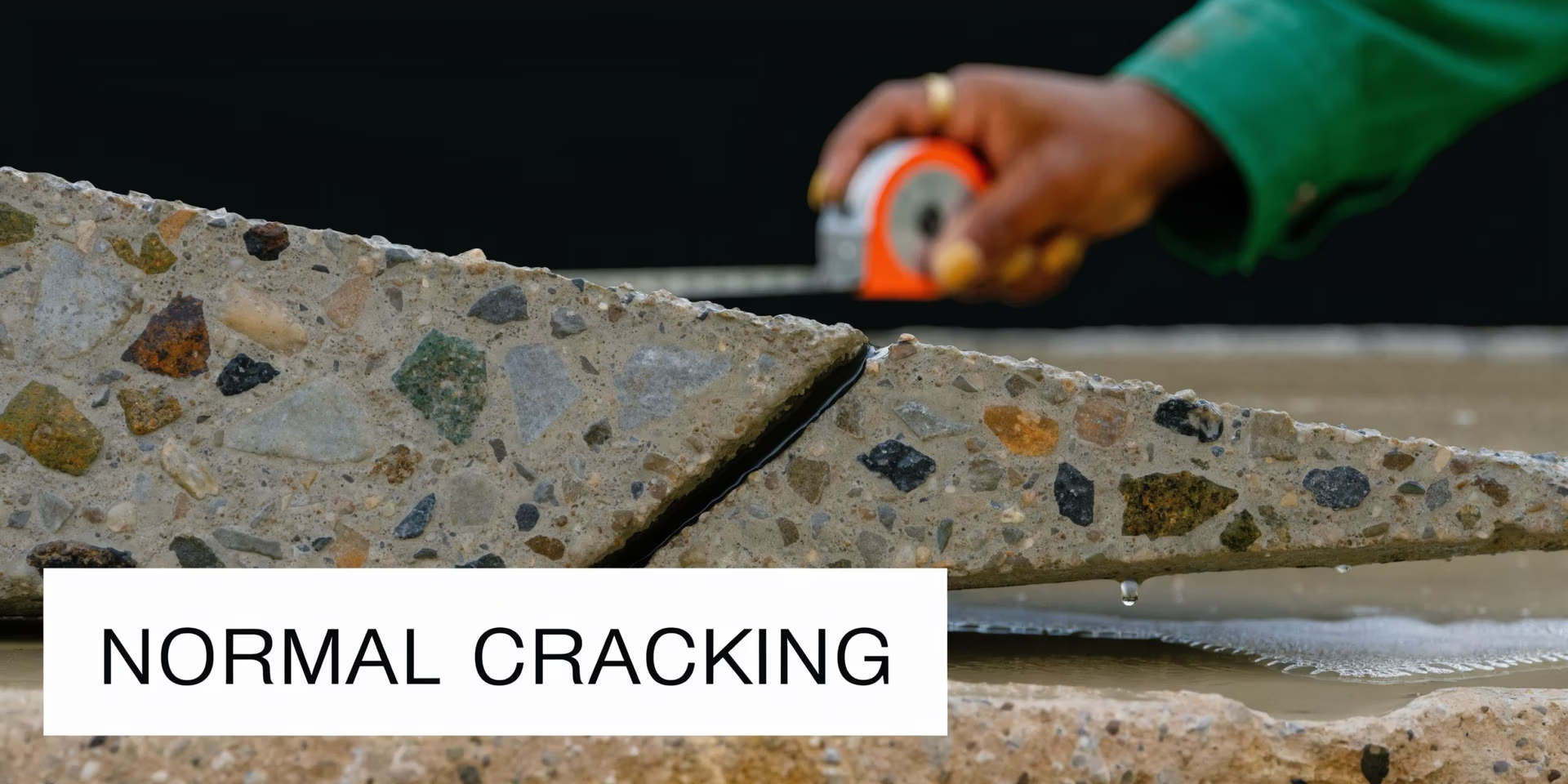
Concrete shrinks as it cures. It moves with temperature. It responds to loading, restraint, moisture, and the ground beneath it. Some hairline cracking is part of normal behaviour. The hard part is knowing when that normal behaviour has crossed into non-compliance or damage that needs a formal response.
The defects that commonly trigger a dispute
Some issues are obvious enough that they usually justify closer investigation:
- Wide or progressive cracking: Cracks that are opening, offset, or tracking through finishes need more than a glance.
- Spalling: Concrete breaking away and exposing or threatening reinforcement usually points to a deeper durability problem.
- Honeycombing: Voids and poorly compacted concrete can affect appearance, cover, and long-term performance.
- Dusting or weak surfaces: A slab that powders under normal use can be a finishing or curing issue.
- Uneven levels or ponding: If a slab, balcony, or external surface doesn’t drain properly, the dispute often expands beyond concrete into waterproofing and compliance.
Some of these are cosmetic. Some are structural. Many sit in the middle, where the key question is whether the work meets contract requirements, the National Construction Code framework, and the relevant Australian Standards.
The cause often starts earlier than the pour
A lot of concrete disputes are framed as workmanship cases, but the origin can be upstream.
Globally, design-related issues are a leading cause of construction disputes, with incorrect design affecting 21.5% of projects and incomplete design affecting 19.8%, according to Construction Briefing’s report on dispute causes. In practice, that means the defect you can see today may have started with missing details, poor setout, unclear specifications, or reinforcement not properly resolved on paper.
That’s especially relevant for everyday residential work, including common concrete structures like driveways, where owners often assume the issue must be in the finishing alone. In reality, subgrade preparation, drainage falls, reinforcement support, joint layout, and curing can all be part of the story.
A simple first check you can do yourself
Before anyone starts repairing, look at the defect in a structured way.
| What you can observe | What it may suggest |
|---|---|
| Fine, random hairline cracks only | Normal shrinkage, or early curing stress |
| Cracks with height difference across the line | Movement, settlement, or structural concern |
| Rust staining or hollow sound | Reinforcement corrosion or delamination |
| Surface powdering | Weak top layer, overwatering, or poor finishing |
| Voids at edges or corners | Placement or compaction problems |
This isn’t a substitute for expert evidence. It does help you decide whether the issue is likely minor maintenance, a rectification matter, or the start of a building dispute about concrete that needs formal documentation.
Practical rule: If the defect is growing, affecting waterproofing or safety, or appears linked to reinforcement or movement, don’t rely on visual assumptions alone.
Building Your Case Before You Make the Call
Before you call the builder, the insurer, Fair Trading, or a solicitor, gather your own record.
That record doesn’t need to be technical. It does need to be organised. In many disputes, the first useful breakthrough comes from a homeowner or site manager who kept clean photos, saved messages, and built a timeline that makes sense.
Start with what the site can show you
Take clear, dated photos and short videos.
Include a tape measure, ruler, coin, or marker for scale. Photograph the defect close-up and then from further back so its location is obvious. If there’s water ponding, film it. If the slab sounds different in one area, note the exact spot. If cracking appears to be changing, repeat the photos from the same angle over time.
Don’t annotate your originals. Keep the unedited files.
Build a factual timeline
A strong timeline often matters more than people realise.
Use plain language and keep it chronological. If you need a starting point, a good property inspection report template can help you structure observations without turning them into argument.
Include things like:
- Contract and scope: What concrete work was included, where, and under what drawings or specifications.
- Pour and weather details: The date of the pour, who attended, and anything unusual you remember about placement, finishing, rain, heat, or delays.
- When the issue first appeared: Not “it’s always been bad”, but the earliest date you can support.
- What happened next: Calls, emails, inspections, patch attempts, and any promises made.
Gather the documents people forget
Most concrete disputes weaken because key paperwork is missing.
Look for:
- Plans and engineering details
- Specifications and inclusions
- Variations and invoices
- Email and text message chains
- Progress photos
- Pour records, batch tickets, or delivery dockets if you have them
- Any previous inspection reports
If you want a simple prompt list while you collect material, this house inspection checklist is a useful way to make sure obvious items aren’t missed.
Your initial record is the bedrock of the dispute. If the facts are organised early, the technical expert can move faster to identify the root cause.
Keep emotion out of the file
That doesn’t mean the situation isn’t stressful. It usually is.
It means your notes should separate facts from conclusions. “Crack appeared near garage door opening after heavy rain” is useful. “Builder has no idea what he’s doing” is not. A tribunal or expert can work with dates, dimensions, drawings and photos. They can’t do much with anger on its own.
Engaging an Expert for NCAT-Compliant Evidence
A concrete dispute usually turns at the point where photos stop answering the core question.
The slab is cracking, the driveway is flaking, or the balcony soffit is showing rust marks. By then, the argument is no longer about what can be seen. It is about cause, standard, and remedy. NCAT will want evidence that connects the condition to a specific failure in workmanship, design, materials, detailing, or compliance. In practice, that means getting an expert involved early enough to inspect the concrete before patching, grinding, coating, or demolition changes the evidence.

What a proper concrete investigation includes
A useful report does more than say the concrete looks poor.
It should identify the element in dispute, record the defect with dimensions and locations, test the likely cause where needed, and compare the findings against the contract documents and the applicable standards. In NSW concrete matters, that often includes AS 3600, project drawings, engineering details, and the tolerances or finish requirements called up in the specification.
The testing program depends on the failure mechanism being investigated. Common methods include:
- Rebound hammer testing: A screening tool for surface hardness variation across suspect areas.
- Ultrasonic pulse velocity: Useful for checking internal consistency and detecting voids or anomalies.
- Cover meter checks: Relevant where reinforcement cover may be too low and durability is in issue.
- Core sampling: Appropriate where compressive strength, depth of deterioration, or material quality must be confirmed directly.
- Petrographic analysis: Sometimes needed to identify the mechanism behind unusual deterioration or suspect constituents.
Over-testing can waste money. Under-testing can leave a hole in the case. The right approach is targeted evidence that answers the disputed technical question.
Why visual inspection often falls short at NCAT
Some defects are obvious. Their cause is not.
A wide crack might be shrinkage, slab movement, poor joint detailing, inadequate reinforcement, subgrade problems, or water-related distress from somewhere else in the structure. Surface dusting might come from poor finishing, weak near-surface concrete, curing failure, or a later treatment issue. Without testing and document review, the report can become an opinion piece, and NCAT gives limited weight to opinions that are not tied to objective findings.
The tribunal generally wants clear answers to five points:
| Question NCAT cares about | What the evidence must show |
|---|---|
| What is the defect? | Precise description, location, and extent |
| Why did it happen? | A defensible cause based on inspection, records, and testing |
| What standard was breached? | AS 3600, plans, specifications, NCC requirements, or contract terms |
| What should be done? | A rectification scope matched to the actual failure |
| What will it cost? | A reasoned basis for the amount claimed |
That is also where NCAT Procedural Direction 3 starts to matter in a practical sense. An expert report that cannot be broken down into discrete defect items, with a clear breach and a clear remedy, is hard to use later in a Scott Schedule. I have seen technically sound inspections lose force because the findings were written as a narrative instead of evidence that can be itemised and answered point by point.
The standards and the procedure have to line up
Concrete disputes get noisy fast. Owners, builders, subcontractors, engineers, and certifiers can all have a different view of the same defect.
What carries weight is a report that measures the condition against the right benchmark and presents the findings in a form NCAT can use. That means the expert needs two skill sets. First, site knowledge. Second, an understanding of how the evidence will be tested in the tribunal process, especially if the matter proceeds under Procedural Direction 3 and the defects must be set out in a disciplined schedule.
The strongest reports I see do four things well. They identify each defect separately. They explain the probable cause without guesswork. They nominate the breached standard or document. They set out a rectification method that is proportionate to the problem.
If proceedings are likely, a properly structured building expert witness report for NCAT gives the tribunal something it can work with, rather than a general complaint dressed up as expert evidence.
A concrete report should show the defect, the cause, the breached requirement, and the rectification path in a way that can be lifted directly into the tribunal process.
What usually helps, and what burns time and money
The investigation should fit the dispute.
A moisture-affected suspended slab needs a different approach from a driveway with map cracking or a coastal balcony with spalling and corrosion. Good experts choose methods that answer the live issues. They do not order every available test in the hope that one result will support the case.
What usually helps:
- Targeted inspection before repairs disturb the evidence
- Testing matched to the suspected failure mechanism
- Direct reference to drawings, specifications, and Australian Standards
- Photos keyed to exact defect locations
- Rectification options scaled to the seriousness of the defect
- Findings written so each issue can later sit cleanly in a Scott Schedule
What often wastes time:
- Reports based only on visual impressions
- Broad statements about poor workmanship without identifying the technical breach
- Repair attempts carried out before the condition is documented
- Experts who understand defects but do not understand NCAT procedure
- Reports that combine several complaints into one vague allegation
That last point matters more than parties expect. If the evidence cannot be separated into clear defect items, the case becomes harder to prove, harder to answer, and harder for NCAT to resolve.
How a Scott Schedule Wins Your Dispute
A concrete dispute often stalls at the same point. Everyone has photos, emails, a report, and strong views, but no one has separated the actual defect items in a way NCAT can deal with efficiently.
That is the job of a Scott Schedule.
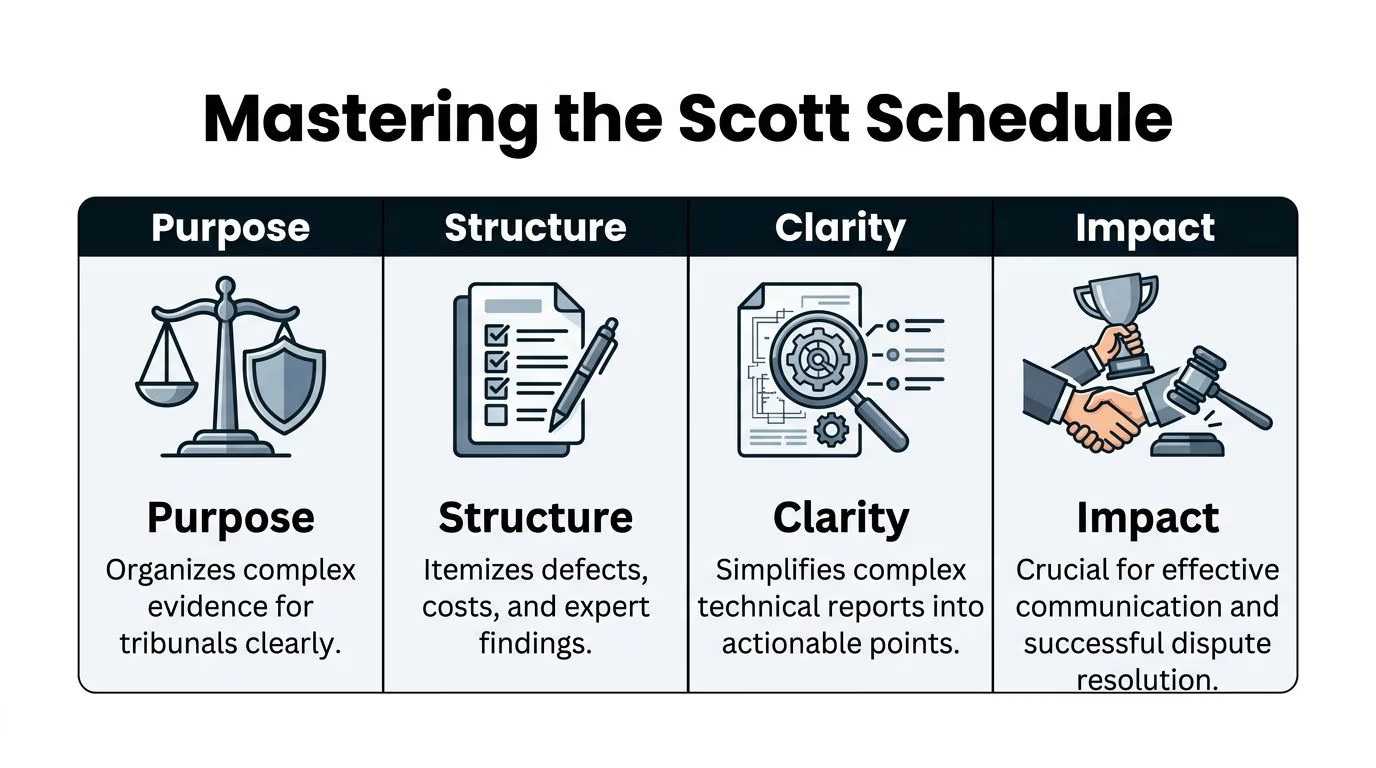
Under NCAT Procedural Direction 3, the schedule turns a messy concrete dispute into a defect-by-defect matrix. Each item stands on its own. The owner states the complaint, the supporting material, the standard or contractual requirement said to be breached, the proposed rectification, and the amount claimed. The builder then answers that exact item. The tribunal can see where the key issues are within minutes.
What goes into a good Scott Schedule
A useful Scott Schedule is usually a table with one alleged defect per row. That discipline matters in concrete matters because a single area can involve different issues. Cracking, surface tolerance, ponding, corrosion risk, finish defects, and strength concerns should not be bundled together as one complaint.
Typical columns include:
- Defect item number
- Location
- Description of the alleged defect
- Reference to the supporting evidence
- Applicable standard, plan, or contractual requirement
- Proposed rectification
- Claimed cost
- Respondent’s reply
- Expert or tribunal comments, where applicable
In practice, I look for one row to answer five questions clearly. Where is the defect. What exactly is wrong. What requirement has allegedly been breached. What evidence supports that position. What rectification is said to fix it.
If one row cannot answer those questions, it is usually carrying too much.
Why this format changes outcomes
A well-drafted Scott Schedule does more than organise paperwork. It exposes the fundamental dispute.
That matters in concrete cases because parties often argue at cross-purposes. An owner may complain about visible cracking. The builder may answer by saying the slab is structurally adequate. Both points can be true, but they are different issues. The schedule forces the complaint to be stated precisely, whether the allegation is aesthetic non-conformity, serviceability failure, structural inadequacy, water ingress risk, or departure from the drawings.
That precision affects settlement and hearing preparation. Builders can make a considered admission on one item and resist another. Owners can drop weak points before spending money proving them. Lawyers can brief experts on the live issues rather than sending over a folder of mixed grievances and asking for a general opinion.
In NSW residential building disputes, that is often where cases are won. Not by having the longest report, but by presenting each defect in a form the other side must answer and the tribunal can decide.
A Scott Schedule gives NCAT something it can work with. A list of separate, answerable defect items.
What a weak schedule looks like
Poor schedules are usually too broad or too vague.
They say “driveway defective throughout” or “garage slab non-compliant” and leave everyone to guess what is really being alleged. They mix defect description, causation, rectification scope, expert opinion, legal submission, and frustration into one cell. That usually leads to evasive responses, unnecessary conferences, and extra expert costs.
A stronger schedule breaks the dispute into measurable items:
| Weak item | Better item |
|---|---|
| Driveway failed | Crack at western bay exceeds acceptable tolerance and associated surface settlement evident at joint |
| Balcony concrete poor | Spalling at northern edge with reinforcement exposure and moisture-related deterioration |
| Garage floor wrong | Surface dusting and low abrasion resistance observed across defined areas of slab |
That difference looks minor on paper. On site and in NCAT, it changes everything. A builder can inspect the exact location. An engineer can assess the right failure mechanism. A quantity surveyor or remedial contractor can price the right repair scope.
Why local context matters
Concrete disputes in NSW are rarely just about the concrete.
In Sydney, I often see overlap between slab work, waterproofing, falls, balustrade fixings, and sequencing by multiple trades. In regional matters, site movement, drainage, curing conditions, and access to testing can play a bigger part. The Scott Schedule should reflect that context. If the issue is ponding on a balcony, the row should not read like a generic cracking complaint. If the issue is driveway settlement over reactive soil, the schedule should identify that mechanism and the affected area clearly.
Generic templates are a starting point only. The schedule needs to fit the project, the defect, and the evidence available. That is the practical side of Procedural Direction 3 that many legal guides miss, and it is where 35 years on concrete and building sites makes a real difference. A schedule that matches the actual failure mechanism is far more useful than one that merely looks formal.
Your Roadmap Through Fair Trading and NCAT
Most NSW residential building disputes don’t start in a hearing room. They start with an attempt to resolve the issue through NSW Fair Trading.
That early stage matters. If you arrive with a coherent timeline, clear defect photos, and technical material that identifies the likely breach, you’re already in a much stronger position than someone relying on broad complaints.
Step one through Fair Trading
Fair Trading is often the first formal stop for home building disputes in NSW.
The process is usually more productive when parties bring:
- A concise defect list: Not every frustration, just the actual disputed items.
- Photo evidence: Dated and clearly located.
- Contract documents: Plans, specifications, variations and communications.
- A realistic outcome sought: Rectification, further investigation, or a defined monetary claim.
This stage isn’t the place for sprawling technical argument. It is the place to show that your position is organised and supported.
When the matter moves to NCAT
If the issue doesn’t resolve, the next step may be an NCAT application.
Weak preparation at this stage starts to hurt. NCAT statistics reveal that 40% of concrete-related claims fail before the main hearing because they lack a compliant expert witness report tying the visible defect to a specific breach of the building code or Australian Standards, according to Wolcott Rivers Gates’ summary of the dispute issue.
That single point explains why some apparently strong cases collapse. The owner can show the defect. They can’t prove the breach.
Directions matter more than people expect
Once NCAT is involved, directions hearings and timetables become critical.
Missing dates, lodging incomplete evidence, or serving material late can damage a case that might otherwise have settled or succeeded. The tribunal expects parties to narrow issues, exchange evidence properly, and present their case in a usable form.
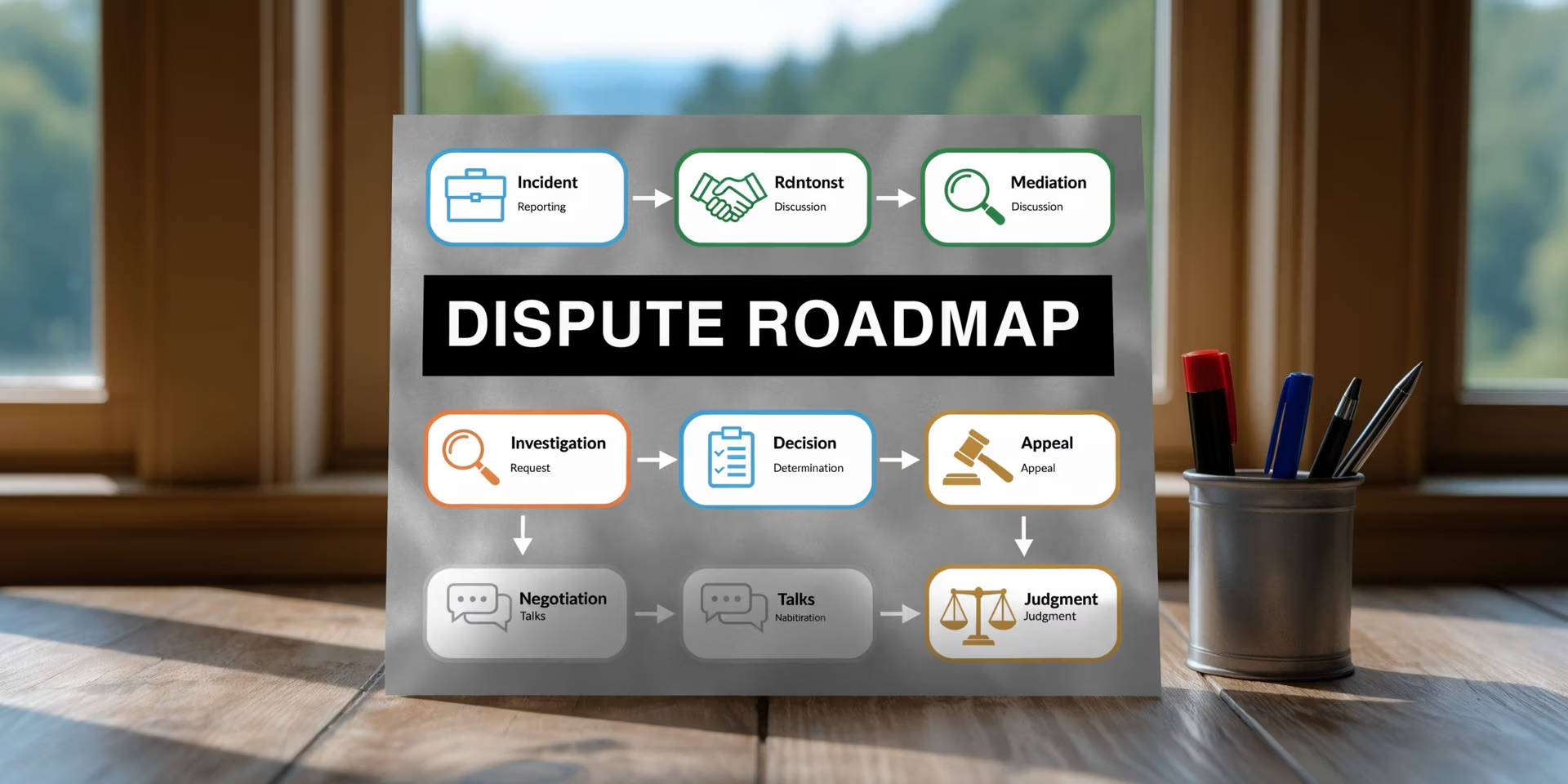
A practical sequence often looks like this:
- Lodge the application with the core documents
- Comply with directions for evidence and expert material
- Prepare or refine the Scott Schedule
- Exchange expert reports and responses
- Attend conciliation, mediation, or hearing as directed
A short explainer can also help some clients understand the general tribunal flow before they attend:
What usually helps at hearing
By the time the matter reaches hearing, the best cases are usually the simplest to follow.
They don’t try to prove everything at once. They identify each defect, the supporting evidence, the standard breached, and the remedy sought. If the expert report and Scott Schedule line up, the tribunal can move through the issues methodically.
What tends to help most:
- Consistency between photos, report, and schedule
- Testing that answers the disputed question
- Costs tied to actual rectification scope
- Witnesses who stick to facts within their role
What tends to hurt:
- New allegations raised late
- Repairs that altered the evidence before inspection
- Reports that state conclusions without technical basis
- Parties who treat NCAT like an informal chat rather than a formal process
Building a Strong Resolution
A concrete dispute is stressful because it sits at the intersection of money, workmanship, time, and trust.
The way through it isn’t guesswork. It’s a disciplined record, a proper technical assessment, and a claim structure that NCAT can use. If you correctly identify the defect, document it early, support it with compliant expert evidence, and present it in a well-prepared Scott Schedule, the dispute becomes much easier to manage.
That applies whether you’re a homeowner dealing with a cracked slab, a builder responding to allegations about workmanship, or a solicitor preparing a case for tribunal. The facts still need to be proved. The standard still needs to be identified. The remedy still needs to match the failure.
After 35+ years in building and construction, and more than 15 years providing litigation support, the pattern is consistent. The disputes that resolve well are usually the ones built on objective evidence from the start. The ones that drift are usually driven by assumptions, incomplete records, and reports that never quite connect the defect to the breach.
If the concrete issue on your project is becoming a formal dispute, treat it as a technical problem first and a legal problem second. That’s usually the fastest path to a sound outcome.
If you need practical help with a building dispute about concrete in NSW, Awesim Building Consultants provides independent inspections, expert witness reporting, and NCAT-compliant documentation for homeowners, builders, lawyers, and strata clients.

Related Posts

Water Damage in Homes: How to Track Down the Source
Water damage in a home rarely announces itself at the source. A stain on the ceiling, a musty smell in
Read More »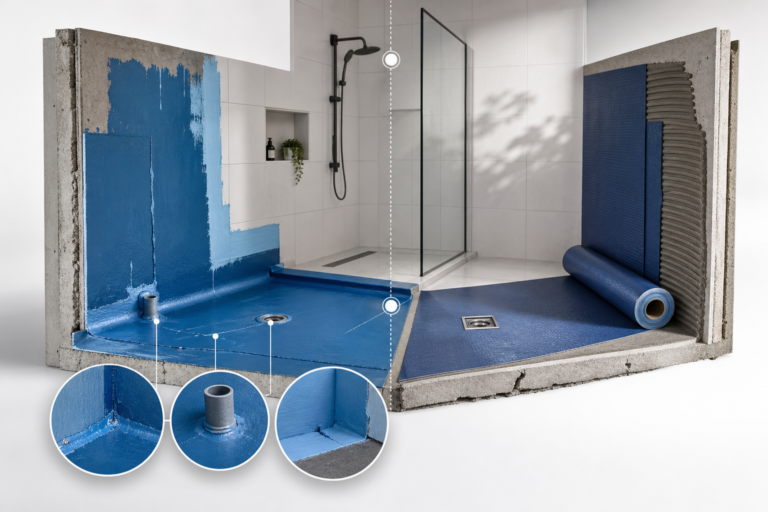
Waterproofing Membrane Types: Which Fails Most in NSW Bathrooms
Waterproofing failure is the single most common serious defect found in NSW apartments, and the type of membrane used, along
Read More »
Building Certifier NSW: Role, Limits, and When You Need More
A building certifier in NSW is a registered professional who issues construction certificates, conducts critical stage inspections, and grants occupation
Read More »