
Scott Schedule Form: A Complete NCAT Guide [2026]
The build is finished, the invoices are paid, and you are still looking at cracked tiles, leaking showers, uneven brickwork, or doors that do not close properly. The builder says the work is fine. You say it is not. Emails go back and forth, tempers rise, and someone mentions NCAT.
That is usually the point where the scott schedule form stops sounding like legal jargon and starts becoming useful.
In practice, a Scott Schedule is not mysterious. It is a working document that turns a messy building argument into a list of specific items. One row for one issue. What is the defect. Where is it. What standard or report supports it. What work is said to be required. What does it cost. Then the other side has to answer that exact item, not dodge it with general statements.
For homeowners, that structure is often a relief. For builders, it can be just as important because it prevents broad accusations from floating around without detail. For lawyers and tribunal members, it creates order. For experts, it is the format that lets technical evidence be tested properly.
After many years assisting with NSW building disputes, one pattern repeats. Cases become harder, slower, and more expensive when the defect issues are left in narrative form. Long complaints, long replies, long reports. Very little clarity. A properly prepared Scott Schedule cuts through that. It gives the Tribunal a row by row path to follow.
If you are dealing with multiple defects under the Home Building Act 1989 in NSW, this document is not an optional extra in any practical sense. It is the framework that carries the dispute.
Your Guide to the Scott Schedule Form
A lot of people first meet the scott schedule form when their dispute has already gone too far.
The bathroom leaks into the room below. The builder blames maintenance. The owner blames defective waterproofing. Someone has photos. Someone has invoices. There may be an expert report, or there may only be a bundle of emails and frustration. By then, the core problem is not only the defect itself. The problem is that nobody is talking about the same issue in the same way.
That is where the form earns its place.
A Scott Schedule is a table built for construction disputes. Each row deals with a single item. Instead of arguing about “the whole bathroom”, the form breaks the dispute into precise parts such as shower recess falls, membrane continuity, tile cracking, grout failure, or moisture damage to adjacent finishes.
What the form does
At its simplest, the scott schedule form asks both sides to deal with the same questions:
- What is the defect
- Where is it located
- What evidence supports the allegation or denial
- What rectification is proposed
- What cost is claimed
That sounds basic, but it changes the quality of the case. General complaints become itemised allegations. General denials become itemised responses. The Tribunal can then decide each issue on the evidence.
Why homeowners and builders both need it
Homeowners often assume the form exists to help claimants only. It does not.
A builder can use the same structure to admit some items, dispute others, and explain why a claimed method or cost is excessive. If an alleged defect is a variation issue, maintenance issue, or damage caused after handover, the schedule is where that distinction should be made clearly.
Practical tip: If a defect cannot be described in one disciplined row with evidence and a remedy, it is usually not ready to be argued.
What a good schedule feels like
A good schedule reads like a site inspection turned into a decision tool. It is factual, measured, and restrained. It avoids emotion. It avoids speeches. It avoids phrases like “everything is defective” or “the workmanship is hopeless”.
Instead, it says what matters. For example, waterproofing not compliant with the relevant standard. Brickwork out of tolerance. Door frame not plumb. Missing articulation joint. Incomplete drainage connection. Each one stands or falls on its own evidence.
That is why the form matters so much in NCAT. It does not merely record the dispute. It organises it into something the Tribunal can decide.
Why NCAT Mandates the Scott Schedule
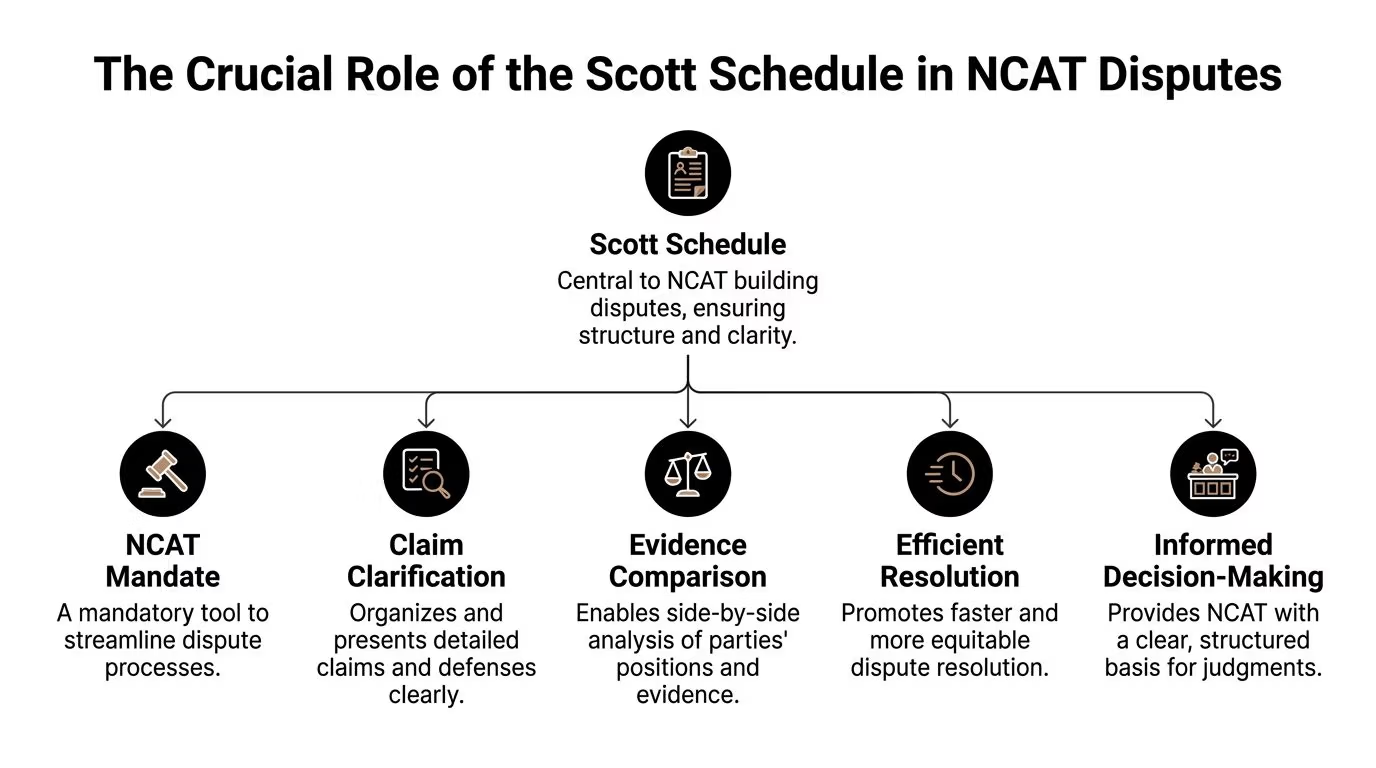
NCAT does not require Scott Schedules out of habit. It requires them because home building disputes are rarely about one neat issue. They usually involve a collection of complaints across workmanship, compliance, scope, and cost. Without a structured document, the case quickly becomes difficult to manage.
In New South Wales, NCAT frequently mandates Scott Schedules in home building disputes under the Home Building Act 1989 (NSW), and Procedural Direction 3 updated for 2026 explicitly requires their use. The same source notes that structured documents like Scott Schedules can reduce hearing times by up to 30% in defect cases and contribute to settlements in 40% of scheduled matters before a final hearing in this discussion of Scott Schedules in NSW construction disputes.
The Tribunal needs a decision-ready document
A tribunal member does not inspect your site. They decide the dispute from the evidence presented. If the evidence arrives as scattered emails, unnumbered photos, competing narratives, and broad complaints, the hearing becomes slow and unfocused.
A Scott Schedule fixes that by forcing the dispute into comparable positions. One row. One issue. One claimant position. One respondent position. If experts confer, their areas of agreement and disagreement can also be captured in the same working document.
That is why the schedule often becomes the centre of the case rather than a side document.
It narrows the key issues
Many building disputes start broad and emotional. Once the schedule is prepared, the argument usually shrinks to a smaller set of key disagreements.
For example:
- Some items are admitted: The respondent accepts there is a defect.
- Some items become quantum disputes: The issue is not whether there is a defect, but the correct repair scope or cost.
- Some items disappear: Once properly framed, they are shown to be maintenance, wear and tear, or outside the contract scope.
- Some items need expert judgment: The primary contest becomes technical compliance with standards or tolerances.
This narrowing matters. Hearings run better when everybody is dealing with the same list.
Procedural Direction 3 is about discipline
The practical effect of Procedural Direction 3 is straightforward. NCAT expects a disciplined format, particularly where there are multiple defects. The schedule is not there for decoration. It is part of how evidence is organised and tested.
That has several consequences.
First, vague pleading becomes risky. If you say “poor workmanship throughout”, that may express your frustration, but it does not tell the Tribunal what order to make.
Second, uncosted allegations become weak. A defect without a defensible remedy and cost is often only half a claim.
Third, side-by-side responses matter because they expose the true dispute. If one side claims complete demolition and rebuild while the other side says a localised repair is enough, the schedule lets that contrast be seen instantly.
Key takeaway: NCAT uses the schedule to move the case from accusation to analysis.
It also supports expert conclaves
In matters with expert evidence, the schedule gives experts a common map. They can identify where they agree, where they disagree, and why. That is far more useful than having two long reports speaking past each other.
When done properly, the schedule separates different questions that people often blur together:
| Issue type | What the row should isolate |
|---|---|
| Defect issue | Is there a defect at all |
| Compliance issue | Does the work depart from the contract, code, or relevant standard |
| Scope issue | What work is reasonably required to rectify it |
| Quantum issue | What is the reasonable cost of that work |
That separation is one of the main reasons the format works.
The form has a long pedigree
Scott Schedules did not start in NSW. Their use traces back to UK construction litigation and they were adopted by Australian courts and tribunals because they suit multi-item technical disputes. The format survived because it works. It gives decision-makers a practical way to compare allegations, responses, and expert opinions without getting lost in competing narratives.
For NSW parties, the message is simple. If NCAT directs a Scott Schedule, treat it as a core evidentiary document. The quality of that document will shape how clearly your case is understood.
Anatomy of an NCAT-Compliant Scott Schedule
Many individuals are less worried about the idea of a Scott Schedule than the blank form itself. They open the spreadsheet or table and do not know what belongs in each column.
The good news is that the layout is logical once you understand what each part is doing.
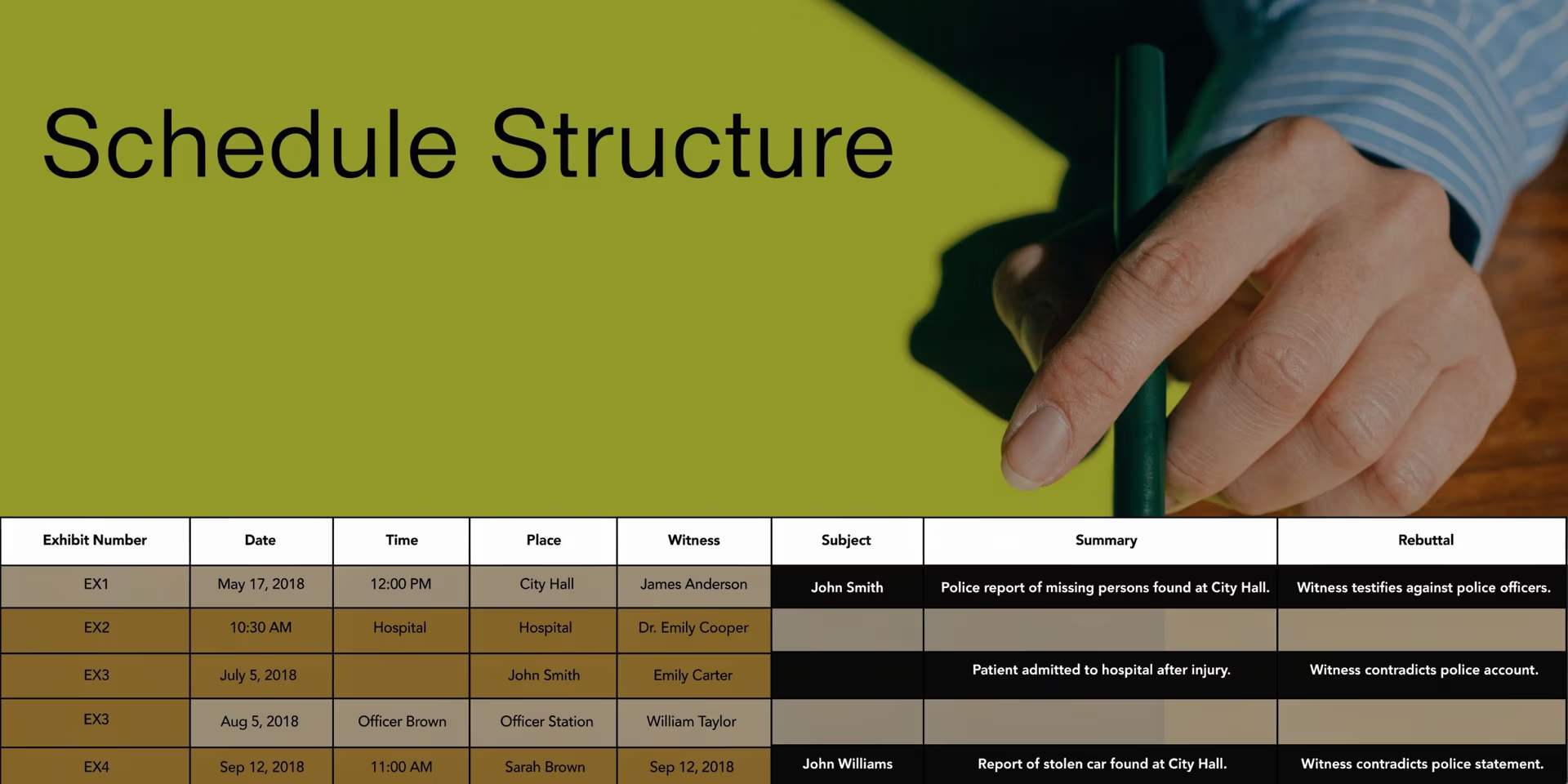
The core claimant columns
Most NCAT-compliant Scott Schedules start with the applicant’s side of the dispute.
Typical columns include:
Item number
Each issue gets its own row and item number. Do not combine multiple defects into one item unless they are one defect with one remedy.Description of defect
This is the factual allegation. It should identify the element, the location, and the problem. “Waterproofing failure to ensuite shower recess causing moisture ingress to adjacent wall finishes and non-compliance identified in expert report with reference to AS 3740” is far more useful than “bathroom defective”.Reference to evidence
This column links the allegation to material such as photos, site notes, expert report sections, plans, contract documents, or relevant standards.Proposed rectification
This states what work is said to be required. It is not a place for drama. It is a place for scope.Claimed cost
This is the amount said to be reasonably required for that rectification work.
The respondent columns
NCAT’s required side-by-side structure means the respondent answers the same item, not a rewritten version of it.
The response side usually includes:
Respondent’s position on defect
Accepted, denied, or partly accepted.Respondent’s reasons
The factual or technical basis for the response. This may refer to evidence, contract scope, site conditions, maintenance, or alternative interpretation of the standard.Alternative rectification scope
If the defect is accepted but the claimed work is excessive, the respondent should state the narrower repair scope said to be appropriate.Respondent’s cost
If there is a quantum dispute, that figure belongs here.
This side-by-side structure is why the form is so effective. It stops each party from drifting into separate arguments.
The expert and joint position columns
After expert conclaves, many schedules include a joint or expert position column. That column records where experts agree and where they do not.
The best version of that column is brief and specific. It does not repeat the whole report. It identifies the point of agreement or the precise technical difference.
Practical tip: If a row becomes too long to read easily, the item is usually overloaded. Split it into separate defects.
Form matters because reading matters
NCAT members often have to work through many items. A cluttered form slows them down. A clear one helps them.
Good schedules tend to share a few habits:
- Short item descriptions
- Consistent terminology
- Measurements where relevant
- Clear references to report pages or annexures
- Separate costs from commentary
If you want a reference point, these step-by-step Scott Schedule examples show how itemised disputes are structured in practice.
Many people also look at broader repositories of other legal document templates to understand formatting discipline, but construction disputes still need NSW-specific drafting and technical content rather than a generic legal table.
A quick visual overview can also help before you start drafting.
What each box should achieve
A useful test is to ask whether each cell helps answer one of three questions:
| Column purpose | What it should do |
|---|---|
| Identify | Pin down the exact defect or response |
| Support | Tie that position to evidence or standards |
| Quantify | State the repair scope and the reasonable cost |
If a cell does none of those things, it is probably filler.
The form is not impressive when it is long. It is effective when every box earns its place.
Completing Your Scott Schedule Step by Step
A common NCAT problem looks like this. A homeowner has photos, a building report, and a genuine waterproofing complaint, but the Scott Schedule is drafted as a general grievance instead of a usable pleading document. Under NCAT Procedural Direction 3 (2026), that is where parties get into trouble. The Tribunal expects each item to be clear enough for the other side to answer and precise enough for the Member to determine without guessing.
Defective waterproofing is a good example because it forces all the moving parts into one row. You need a defect description, a technical basis, a rectification scope, and a cost that matches the scope. If one of those elements is missing, the item usually attracts objections, requests for further particulars, or reduced weight at hearing.
The starting point is always the defect as observed on site. Do not write “bathroom leaks” if the issue is water migration from an ensuite shower recess into the adjoining wall lining. NCAT members read these schedules item by item. If the wording is vague, the response will be vague, and the row stops being useful.
Independent expert input matters here. The discussion in this explanation of Scott Schedule methodology and expert evidence makes the point directly. Expert evidence loses weight when the expert reads like an advocate for a party rather than an independent witness. In practice, that problem often starts in the schedule itself, with loaded wording, overstated scope, or standards references that do not match the report.
Step 1. Define the defect properly
Describe the defect in technical, observable terms. Identify the location. Identify the symptom. Identify what makes it defective.
A stronger entry would say that moisture ingress was observed at the wall adjoining the ensuite shower recess, with elevated moisture readings and failure of the waterproofing system identified in the expert report. That gives the Tribunal something concrete to work with.
If the alleged defect concerns non-compliance, tie that allegation to the report, not to your own interpretation of the standard. The schedule is not the place to argue engineering or waterproofing theory in a long narrative.
Step 2. Link the item to actual evidence
Each row should point the reader to the exact support for that allegation. That usually includes photographs, moisture readings, destructive inspection findings if they exist, and the relevant pages of the expert report.
Under Procedural Direction 3, the practical mistake I see most often is broad cross-referencing. “See expert report” is weak. “See Report of J Smith dated 14 March 2026, section 5.2, pages 18 to 20, photos 11 to 15” is usable. The Tribunal should not have to hunt through annexures to work out what the row is talking about.
Step 3. State the rectification scope with discipline
The rectification column should set out the repair path in plain construction language. Many otherwise good claims lose shape at this point. Parties identify localised failure, then claim for a full bathroom renovation without explaining why complete replacement is required.
The rectification column should set out the repair path in plain construction language. Remove affected finishes. Expose substrate. Rectify the failed waterproofing system. Reinstate tiling and finishes to the affected area. Make good adjacent damage if supported by the evidence. If complete replacement of the bathroom is claimed, the row needs to explain why partial rectification is not feasible.
A sample entry
| Item | Claimant’s Description of Defect | Claimant’s Proposed Rectification | Claimant’s Cost | Respondent’s Position on Defect | Respondent’s Cost |
|---|---|---|---|---|---|
| 1 | Waterproofing failure to ensuite shower recess evidenced by moisture ingress to adjacent wall finishes and non-compliance identified in expert report with reference to AS 3740 | Remove shower floor and affected wall linings as required, expose substrate, install compliant waterproofing system, retile affected area, reinstate finishes, test and make good adjacent damage | Insert supported costing | Accepted in part or denied with stated technical basis and alternative scope | Insert supported counter-costing |
That row only works if it also points to the exact report pages, photographs, and costing material behind it. Without those references, it reads like an assertion.
Step 4. Cost the work that is claimed
Use a costing that matches the rectification scope in the row. If the item is limited to shower rectification, the amount should not include unrelated upgrades, design changes, or work in unaffected areas.
Unsupported allowances are a frequent problem in NCAT. A rounded figure with no quote, no quantity breakdown, and no explanation gives the other side an easy point of attack. A costed scope from a qualified builder, quantity surveyor, or suitably experienced consultant carries far more weight because the Tribunal can see how the number was reached.
Step 5. Separate defect, cause, scope, and quantum
Keep each issue distinct.
A waterproofing row often involves four separate questions:
- Defect: Is there a failure in the waterproofing system?
- Cause: Is the moisture coming from waterproofing, plumbing, condensation, or another source?
- Scope: What work is reasonably required to rectify it?
- Cost: What is the reasonable price for that work?
If those points are all blended into one long accusation, the respondent cannot answer properly and the Member cannot isolate the dispute. That creates delay, directions for amendment, or a hearing where the schedule is given little practical use.
Step 6. Draft the respondent column as if the Tribunal will rely on it
The respondent side needs the same level of care. A denial should identify the basis for the denial. A partial concession should state what is admitted, what is disputed, and why.
For example, a respondent may accept moisture damage but dispute waterproofing failure as the cause. Or accept defective waterproofing but dispute the need to demolish the entire bathroom. Those are different positions and should be set out that way. A bare “denied” is rarely persuasive.
Step 7. Remove advocacy from the wording
Emotional language weakens the row. “Builder has completely botched the bathroom” adds heat but no forensic value.
Use neutral language instead. Describe what was observed, what the expert concluded, what standard or contractual requirement is relied on, and what work is said to be necessary. That approach reads better to the Tribunal and usually improves the quality of the evidence behind it.
Step 8. Cross-check every reference before filing
Before filing, confirm that each item points to:
- The relevant report section and page
- The relevant photo or annexure number
- The technical basis identified by the expert
- The quote, estimate, or costing sheet supporting the amount claimed
This filing check matters under NCAT practice because an incomplete schedule often triggers further directions. In some matters, repeated non-compliance with directions on the Scott Schedule has more serious consequences, including exclusion of defective items or dismissal pressure where the claim remains too unclear to be fairly answered.
Step 9. Test whether each row stands alone
A tribunal member may read row 7 without row 2. Draft on that assumption.
If the meaning of the item only becomes clear after reading a long affidavit, multiple emails, and a narrative chronology, the schedule is not doing its job. Each row should identify the issue, the support, the remedy, and the amount in a form that can be understood quickly.
The practical benchmark is simple. A competent builder, consultant, solicitor, or Member should be able to read the row and know exactly what is alleged and what response is required.
If you are preparing the document from scratch, this NSW-specific Scott Schedule template for NCAT building disputes is a useful reference point for the side-by-side format and level of detail expected. For readers who also deal with structured disclosure outside construction matters, mastering California’s Form FL 142 shows the same underlying discipline. The form works when each entry is specific, supported, and easy to verify.
Final filing check
Read one row aloud and ask:
| Check | Question |
|---|---|
| Precision | Can an independent reader identify the exact defect from this wording? |
| Support | Does the row direct the reader to the actual evidence? |
| Scope | Is the proposed rectification clear and proportionate to the defect alleged? |
| Cost | Does the amount claimed match the stated work and have visible support? |
If any answer is no, revise the row before filing. That extra pass is often the difference between a schedule NCAT can use and a schedule that creates more procedural problems than it solves.
Common Errors That Can Weaken Your Case
A common NCAT scenario goes like this. A homeowner files on time, attaches photos, lists everything that went wrong, and still gets pressed at directions for a clearer Scott Schedule. The problem is usually not the existence of a complaint. The problem is that the schedule does not comply with the way NCAT expects defects to be identified, answered, and costed under Procedural Direction 3.
A weak schedule can narrow your options early. In serious cases, it can lead to orders to refile, costs thrown away on amendments, or parts of the claim being ignored because the issues were never framed properly in the first place.

After years in NCAT matters, the same drafting failures keep appearing. They are avoidable.
Vague complaints instead of pleaded defects
General complaints do not help the Tribunal decide anything.
Phrases such as “the whole job is rubbish”, “poor quality throughout”, or “nothing was done properly” express frustration, but they do not identify the defective work, where it is, what standard is said to be breached, or what rectification is claimed. Under NCAT procedure, each row needs to create a defined issue the respondent can answer line by line.
Use physical, specific wording instead:
- Building element: balcony membrane, bedroom window, garage slab
- Location: rear first-floor balcony, bedroom 3 southern elevation, western side of garage
- Defect description: insufficient fall, water ingress at frame, shrinkage cracking exceeding tolerances
That level of detail does two jobs. It lets the respondent admit, deny, or qualify the item properly. It also helps the Member understand the dispute without hunting through annexures.
Costs that do not match the alleged remedy
A Scott Schedule is weakened quickly when the cost column is guesswork.
One regular mistake is inserting rounded figures with no explanation. Another is lifting a lump sum from a builder’s quote and spreading it across several rows. Procedural Direction 3 pushes parties toward item-by-item clarity. If the repair scope in one column and the amount claimed in the next column do not line up, the row becomes easy to challenge.
The fix is practical. Match each cost to the rectification work for that exact defect. If the item is failed waterproofing in one shower recess, the claim should cover the work needed for that shower recess. If the claim also includes repainting adjacent rooms, replacing joinery, and alternative accommodation, those components need to be identified and justified, not buried inside a single figure.
Too many issues in one row
This is one of the fastest ways to create procedural trouble.
A row that combines cabinetry, tiling, waterproofing, electrical work, and painting defects for an entire floor is not manageable. Different trades mean different standards, different evidence, different rectification methods, and often different experts. The respondent cannot answer it properly, and NCAT cannot determine it cleanly.
Split rows whenever the answer could differ by trade, location, cause, or remedy. If one part may be admitted and another disputed, they belong in separate lines.
Argumentative language inside the schedule
The schedule is not the place for speeches.
Owners sometimes write that the builder was dishonest, reckless, or hopeless. Builders sometimes respond by accusing the owner of interference, exaggeration, or bad faith. That language rarely improves the document. It usually distracts from the defect and invites a point-scoring reply.
Keep the row factual. Save broader conduct submissions for witness statements or submissions, if they are relevant and permitted. A disciplined schedule carries more weight than an angry one.
Mixing up defects, variations, maintenance, and consequential loss
This mistake affects both sides.
Not every complaint belongs in the defect table as defective workmanship. Some items are really scope disputes. Some turn on whether a variation was approved. Some arise from poor maintenance after handover. Some are consequential damage claims that only succeed if the underlying defect is proved first.
That distinction matters in NCAT because Procedural Direction 3 is aimed at narrowing the core issues. If the schedule labels every grievance as a defect, the respondent gets an easy opening to say the whole claim is overstated.
| Issue type | Correct treatment in the schedule |
|---|---|
| Defect | Identify the faulty work, non-compliance, or departure from contract documents |
| Variation dispute | Refer to the contract scope, variation history, and approval evidence |
| Maintenance issue | State the post-handover responsibility and why it is not defective work |
| Consequential damage | Link the damage to the primary defect and separate the repair cost clearly |
Missing references to supporting material
NCAT Members should not have to guess where the proof is.
A row that says “defective waterproofing” without pointing to a photo, expert report, site note, or contract clause forces everyone to search for support. That wastes time and weakens confidence in the schedule. Good schedules direct the reader to the evidence immediately.
For each row, identify the supporting material with enough precision to be useful. Photo number. Report section. Drawing reference. Contract clause. Fair Trading inspection item, if there is one. The goal is simple. A person reading the schedule should be able to move from allegation to proof without reconstructing the file.
Failing to leave room for a proper response
A Scott Schedule works best when it sets up a usable exchange between the parties.
If the applicant drafts an item too broadly, the respondent often answers it just as broadly. Nothing is narrowed. Nothing is admitted. The Tribunal is left with two general positions and a hearing that takes longer than it should.
A better row invites a better answer. The respondent can admit the defect but dispute the scope. Deny the cause but accept the location. Challenge the cost but agree the work needs attention. That is how the schedule does its job under NCAT procedure. It turns a general building dispute into specific issues that can be determined without procedural detours.
The practical test is blunt. If a Member cannot understand the defect, the evidence, the proposed remedy, and the amount claimed from one row, the row is not ready to file.
How Expert Assistance Can Maximise Your Claim
The scott schedule form looks simple because it is a table. The difficulty is not the table. The difficulty is the judgment behind each row.
A qualified consultant or expert helps in three places where self-prepared schedules often struggle.
Technical framing
The first job is identifying the issue correctly.
That means separating workmanship defects from design limitations, maintenance problems, access constraints, contract exclusions, and post-handover damage. It also means linking the item to the right technical basis, whether that is an Australian Standard, the contract documents, the National Construction Code, or accepted construction practice.
Scope and costing discipline
The second job is turning the defect into a defensible remedy.
That is where many claims become inflated or underspecified. The repair scope has to fit the defect, and the cost has to fit the repair scope. If either is out of step, the row becomes easy to challenge.
An expert can also review whether the schedule is internally consistent. If one item assumes a localised repair and another assumes full replacement of the same area, the conflict needs to be fixed before filing.
Tribunal-ready presentation
The third job is making the evidence usable.
That includes clear item descriptions, report cross-references, supporting photos, and a format that works with NCAT’s expectations. Where a separate report is needed, an Expert Witness Report gives the schedule its backbone by setting out the technical observations and reasoning that each row depends on.
In NSW practice, some parties prepare their own draft and then seek review. Others engage a consultant to inspect, report, and prepare the schedule from the start. Awesim Building Consultants is one example of a firm that prepares Scott Schedules and related litigation support material for NSW building disputes.
Key takeaway: Expert assistance does not replace the facts of your case. It organises them into a form NCAT can assess with confidence.
For many disputes, that is the difference between having a complaint and having a case.
Your Scott Schedule Questions Answered
How should I attach photos to a Scott Schedule
Do not paste dozens of random images into the table itself.
Number the photos clearly, group them in an annexure or attachment, and refer to those numbers in the relevant row. Each photo should support a specific item, not sit in a general bundle with no link back to the schedule.
What if the other side leaves their columns blank
Comply with your own obligations first.
If the respondent does not properly complete their side, that may become a procedural issue for NCAT to manage. Keep the document clean, keep your references accurate, and do not fill their column with argument on their behalf.
Can I add new defects later
Sometimes additional issues are discovered, especially after invasive inspection or further damage.
But do not assume you can keep adding rows whenever you like. New items usually need to be raised promptly and in a way that fits any directions already made. If a defect was visible earlier and was omitted without good reason, that can create problems.
Is the schedule used only at the final hearing
No. It is often useful much earlier.
The schedule can shape negotiations, expert discussions, and mediation because it shows where the core disagreement sits. A good schedule often reveals that some items can be resolved without waiting for a final decision.
Do I need a lawyer to prepare it
Not always, but you do need discipline.
Some owners and builders prepare an initial draft themselves, then have a consultant or solicitor review it before filing. That is often a sensible middle path when the dispute involves multiple defects, technical standards, or contested costings.
If you are preparing for NCAT and need the scott schedule form reviewed, costed, or tied back to expert evidence, Awesim Building Consultants provides NSW-focused support for homeowners, builders, and solicitors dealing with building defect disputes.

Related Posts

Water Damage in Homes: How to Track Down the Source
Water damage in a home rarely announces itself at the source. A stain on the ceiling, a musty smell in
Read More »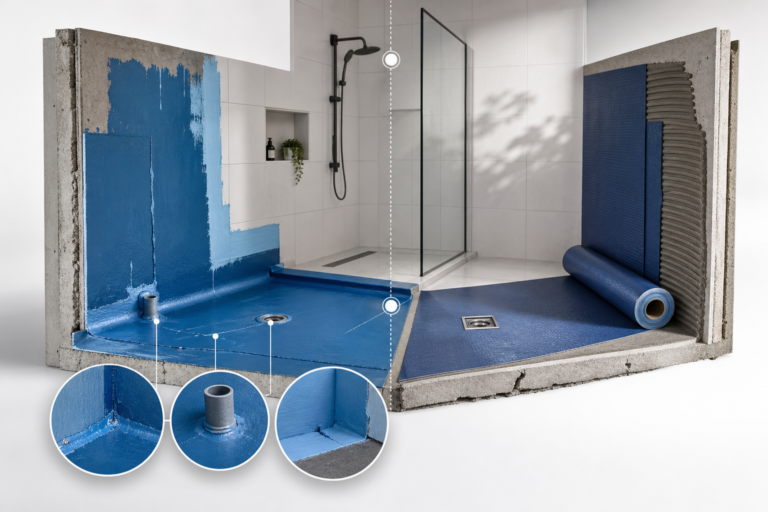
Waterproofing Membrane Types: Which Fails Most in NSW Bathrooms
Waterproofing failure is the single most common serious defect found in NSW apartments, and the type of membrane used, along
Read More »
Building Certifier NSW: Role, Limits, and When You Need More
A building certifier in NSW is a registered professional who issues construction certificates, conducts critical stage inspections, and grants occupation
Read More »