
When a building project goes off the rails, the technical jargon and complex details can quickly become overwhelming for everyone involved. This is exactly when a building dispute expert witness becomes indispensable.
Think of them less as a builder and more as an impartial translator for the legal system, tasked with turning messy construction defects into a clear, factual, and unbiased report. At Awesim Building Consultants, we bring over 35+ years in Building & Construction, with more than 15 years dedicated to providing litigation support to homeowners, builders, and lawyers.
The Role of a Building Dispute Expert Witness
Once a building dispute moves beyond a simple disagreement and into a formal legal process, opinions and “he said, she said” arguments just won’t cut it. You need objective, credible evidence to make your case. That’s precisely what an expert witness delivers.
A Translator for the Tribunal
An expert witness isn’t just any builder; they are a specialist with extensive, hands-on experience in the construction industry. Their duty isn’t to take sides or advocate for the person who hired them. Instead, their overriding duty is to the court or tribunal, like the NSW Civil and Administrative Tribunal (NCAT).
At its core, an expert witness’s job is to interpret the technical issues of a case—like a failure to comply with the National Construction Code or evidence of poor workmanship—and present them in a way that tribunal members, who aren’t building experts, can easily understand.
This role has never been more critical. Building disputes in New South Wales have surged, with NCAT logging over 15,000 home building disputes between 2017 and 2026. Considering that expert witness reports can sway the outcome in over 75% of cases, their value is undeniable. For a deeper look into construction dispute trends, you can explore detailed analysis on expert determination in Australia.
An expert witness performs several vital functions that provide clarity and direction in a dispute. The table below summarises their key responsibilities.
Key Roles of an Expert Witness
| Function | Description & Value |
|---|---|
| Investigation | Conducts a thorough, on-site inspection of alleged defects to uncover the root cause, not just the symptoms. |
| Analysis | Assesses if the work complies with the Building Code of Australia, relevant Australian Standards, and the builder’s statutory warranties. |
| Quantification | Provides clear, costed rectification methods for each identified defect, forming a practical roadmap for resolution. |
| Reporting | Prepares a formal, compliant expert report that can be admitted as evidence in legal proceedings like those at NCAT. |
These functions work together to build a powerful, evidence-based foundation for your case, whether you’re a homeowner, builder, or solicitor.
More Than Just an Opinion
A qualified expert witness doesn’t just offer an opinion; they bring authority and credibility to your case. At Awesim Building Consultants, for instance, our founder brings over 35+ years in building and construction, including more than 15 years focused on litigation support. It’s this blend of practical site knowledge and deep procedural understanding that elevates a standard building report into a powerful piece of evidence. A skilled dispute resolution expert knows how to transform complex technical findings into a clear, persuasive case.
While the context is different, this guide on the role of expert witnesses in proving negligence highlights a similar principle: using specialised knowledge to establish facts in a legal setting. Ultimately, engaging the right expert provides the clarity and credible evidence that homeowners, builders, and solicitors all need to navigate the high stakes of a building dispute.
Decoding Expert Reports and Scott Schedules
When a building dispute heads towards a tribunal, two key documents form the backbone of the case: the Expert Witness Report and the Scott Schedule. Think of them this way: one tells the detailed story of what’s gone wrong, while the other organises all the facts into a clear, structured list for the tribunal to follow.
An Expert Witness Report isn’t just a basic list of defects. It’s a deep, forensic investigation into the building issues, why they happened, and exactly what needs to be done to fix them according to the rules. A qualified building dispute expert prepares this document, cross-referencing everything against Australian Standards, the National Construction Code, and the original building contract.
The Foundational Narrative: Expert Reports
This report becomes the primary piece of evidence submitted to tribunals like NCAT. It has to be completely impartial and based on the expert’s specialised knowledge and experience. For example, it won’t just say “the balcony leaks.” It will diagnose the specific failure in the waterproofing membrane, cite the Australian Standard that wasn’t followed, and lay out the step-by-step process for demolition and rebuilding.
You really can’t overstate how much weight this evidence carries. Expert witness reports are absolutely foundational in NSW building disputes. In fact, NCAT data shows that between 2022 and 2027, a staggering 82% of adjudicated cases relied heavily on expert evidence.
In a 2025 strata dispute involving 120 units, a report from Awesim Building Consultants identified and costed $2.3 million in necessary repairs. This detailed evidence was instrumental in the tribunal’s decision, which ultimately favoured the homeowners. You can discover more insights about the role of these reports at bpic.com.au.
The Dispute Ledger: Scott Schedules
If the Expert Report provides the story, the Scott Schedule is the neatly organised summary. It’s a spreadsheet that lays out the entire dispute for the tribunal, acting as a ‘dispute ledger’ that NCAT requires to keep the proceedings focused and efficient.
A Scott Schedule presents information in clear columns, creating a side-by-side comparison of the issues. This format makes it easy for a tribunal member to see each defect, the claimant’s position, the respondent’s reply, and the expert’s independent assessment of liability and cost.
A typical Scott Schedule is broken down into columns like these:
- Item Number: A unique number for each individual defect.
- Claimant’s Allegation: A short description of the problem claimed by the homeowner or owners corporation.
- Respondent’s Reply: The builder’s official response to the claim.
- Expert’s Opinion: The impartial assessment from the building dispute expert.
- Estimated Rectification Cost: The expert’s professional estimate for the cost of a proper fix.
Both the Expert Report and the Scott Schedule are legally bound by the Expert Witness Code of Conduct. This is crucial, as it ensures the information is credible, admissible in the tribunal, and serves its core purpose: to help the tribunal make a fair decision based on solid evidence. You can learn more about how a Scott Schedule is structured in our detailed guide.
Navigating the NCAT Process with an Expert
Taking a building dispute to the NSW Civil and Administrative Tribunal (NCAT) can feel like stepping into a complex legal maze. But bringing a building dispute expert witness on board is like hiring a specialist guide who knows the map, the rules, and all the tricky turns.
The journey starts the moment an application is lodged. It moves through key stages like conciliation, where you try to find common ground with a mediator, and directions hearings, where the Tribunal sets the timeline for everyone to submit their evidence. An expert is invaluable right from the get-go, as their initial findings can give you a clear-eyed view of the technical issues, which massively helps in negotiations.
Streamlining the Tribunal Journey
An expert’s job is to cut through the complexity of NCAT’s procedural requirements. For example, Procedural Direction 3 is a critical rule that outlines exactly how expert evidence needs to be prepared and presented. A seasoned expert witness knows these rules inside and out, making sure your reports are compliant and admissible from day one.
This procedural know-how is non-negotiable. If you don’t follow NCAT’s directions to the letter, you can face delays, cost penalties, or even have your crucial evidence thrown out. Your expert ensures every document is formatted correctly and submitted on time.
With over 15 years of litigation support experience, our team at Awesim Building Consultants helps homeowners, builders, and lawyers prepare the evidence they need, in the right format, to keep the process moving forward without a hitch.
Understanding Concurrent Evidence or ‘Hot Tubbing’
One of the most distinctive parts of an NCAT hearing is the use of concurrent evidence, informally known as ‘hot tubbing’. This isn’t your typical courtroom drama where experts testify one after the other.
Instead, the experts for both sides are sworn in at the same time. They sit together and discuss the technical points of disagreement directly with each other and the Tribunal member. The goal is to quickly get to the heart of the matter and find out where they agree and disagree. A confident, well-prepared expert who can clearly explain their analysis under direct questioning is absolutely vital here.
The diagram below shows the typical workflow an expert follows to get the core documents ready for this process.
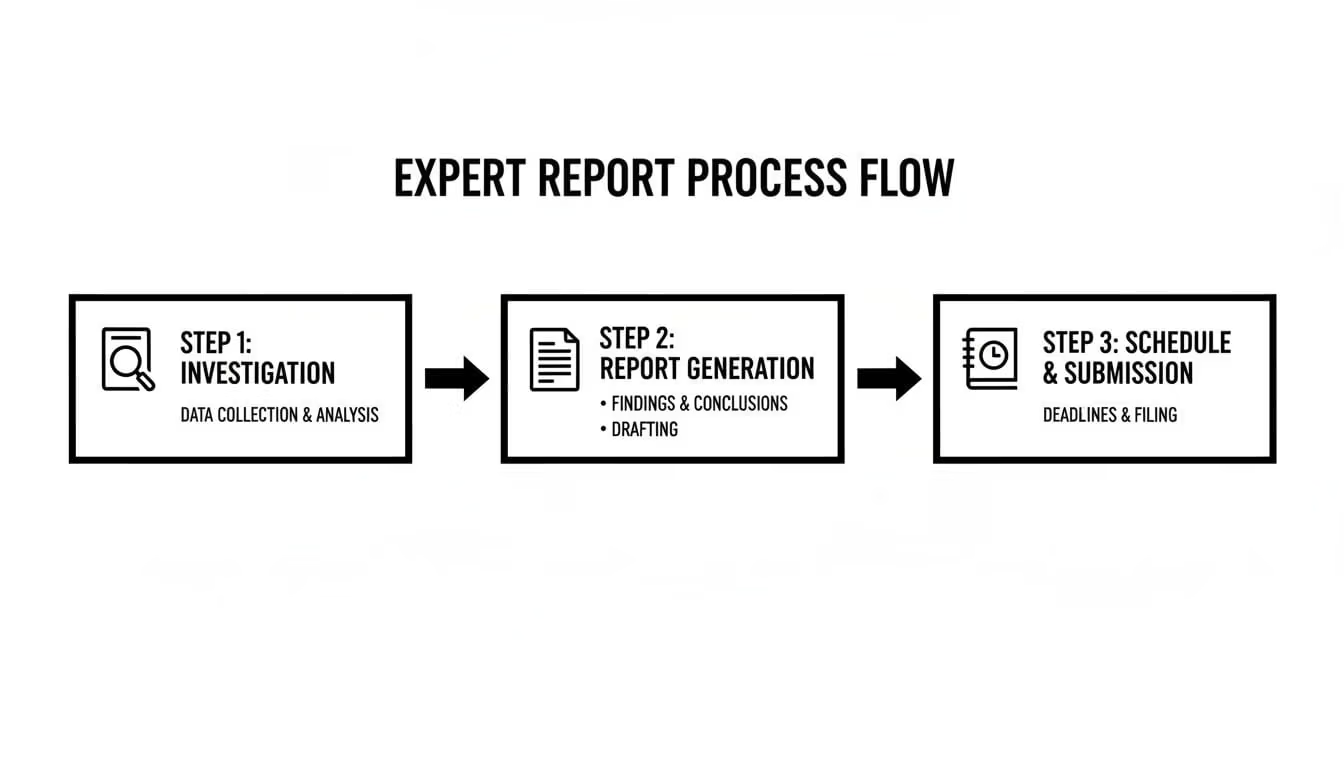
This structured flow—from on-site investigation to the final report and schedules—makes sure the evidence is rock-solid and easy for the Tribunal to follow.
If you’re heading down this path, our guide on how to prepare for an NCAT building dispute offers more practical advice. Getting a building dispute expert witness involved early doesn’t just build a stronger case; it demystifies the entire NCAT process from start to finish.
How to Choose the Right Expert Witness

Choosing a building dispute expert witness isn’t like hiring a general builder for a renovation. It’s more like a serious medical situation. You wouldn’t ask your GP to perform open-heart surgery; you’d find a top cardiac specialist with a proven track record in that specific, complex procedure.
The same principle applies here. Not every building consultant is cut out for the pressures of litigation. Your case needs more than just construction knowledge. It demands an expert who understands the legal battlefield and can translate technical building issues into a credible, defensible opinion for the Tribunal.
Experience Beyond the Building Site
The first thing you should look for is a dual track record. A truly effective expert witness brings two distinct skill sets to the table: deep, hands-on construction experience and specific expertise in litigation support.
This is a crucial distinction. A great builder knows how to put a house together, but a great building dispute expert witness knows how to forensically deconstruct what went wrong, why it went wrong, and how to present those findings in a way that withstands intense legal scrutiny. That’s a skill honed over many years in the trenches.
At Awesim Building Consultants, our founder embodies this blend. With over 35+ years in the building and construction industry and more than 15 years providing dedicated litigation support, we bring a rare combination of practical site experience and procedural know-how to every case.
A Checklist for Selecting Your Expert
When you’re vetting a potential expert, whether for a case in Sydney or regional NSW, you need to be thorough. The person you choose will have a direct and powerful impact on the strength of your evidence.
A top-tier dispute resolution expert is an absolute must for navigating these complex issues, and knowing what to look for is the critical first step. You can read about what makes a great dispute resolution expert in our detailed guide to learn more.
Use this checklist to guide your decision:
- Credentials and Qualifications: Do they hold the right licences and accreditations? More importantly, can they show you specific training and a history of acting as an expert witness and writing compliant legal reports?
- Report Quality: Don’t be afraid to ask for sanitised examples of past reports. A strong report is clear, logical, evidence-based, and strictly compliant with the Expert Witness Code of Conduct and NCAT’s procedural rules.
- Communication Skills: Can the expert explain complex building defects in plain English? This is vital not just for the report, but for their performance in the Tribunal, especially during concurrent evidence sessions (often called ‘hot tubbing’).
- Impartiality: An expert’s primary duty is to the Tribunal, not the person paying them. Look for someone with a reputation for objectivity and independence. Their credibility—and by extension, your case—depends on it.
Understanding the Costs of an Expert Witness
Let’s talk about the elephant in the room: the cost. When you’re already facing a stressful building dispute, the last thing you want is another unpredictable expense. It’s a perfectly valid concern, and I believe in complete transparency from the get-go.
There’s no one-size-fits-all price for a building dispute expert witness. The final cost is tied directly to the complexity of your specific case. Think about it—a dispute over a single leaking shower is going to require far less investigation than one involving multiple structural defects across an entire apartment block. The time needed for site inspections, document reviews, and compiling a robust, compliant report all shape the final figure.
This is exactly why a detailed fee proposal isn’t just helpful; it’s essential.
What to Expect in a Fee Proposal
A professional and transparent fee proposal, like the ones we provide at Awesim Building Consultants, should leave no room for guesswork. It’s not just a final number; it’s a clear scope of work that breaks down exactly what you’re paying for.
Before you commit, you should have a clear understanding of the services included. Here’s what a typical proposal covers:
Typical Inclusions in an Expert Witness Fee Proposal
| Service Component | Description | Why It’s Important |
|---|---|---|
| Initial Document Review | The expert assesses all relevant paperwork: contracts, plans, variation documents, council approvals, and email correspondence. | This provides the foundational context of the dispute and helps the expert understand the history and contractual obligations before even setting foot on site. |
| Site Inspection | The physical on-site examination of the property to investigate and document each alleged defect. | This is where the expert gathers firsthand evidence, taking detailed notes and photographs. The time allocated will depend on the number and nature of the defects. |
| Report Preparation | The hours dedicated to drafting the Expert Witness Report and, if required, the Scott Schedule. This is often the most time-intensive part. | A compliant, well-structured report is your most powerful tool. It must meticulously detail findings, reference building codes, and stand up to scrutiny in NCAT. |
| Disbursements | Any out-of-pocket costs associated with the case, such as travel, professional photography, or fees for specialised testing (e.g., moisture readings, structural analysis). | These are necessary additional costs that are itemised separately so you can see exactly where your money is going. |
Having this breakdown allows you to manage your budget effectively and ensures there are no hidden surprises down the line.
Why It’s an Investment, Not Just a Cost
It’s easy to view the expert’s fee as just another bill to pay, but it’s far more strategic than that.
A well-prepared, robust expert report is an investment in the outcome of your dispute. It’s the evidence that can strengthen your negotiating power, prove your case to the tribunal, and ultimately deliver a significant return.
A clear, evidence-based report can save you thousands in the long run. It can help you reach a faster settlement, avoid drawn-out legal battles, secure a favourable ruling, or successfully defend against exaggerated or baseless claims. With over 15 years of litigation support experience, we’ve seen firsthand how a strong report can completely change the direction of a case. For more advice, see our guide on how to prepare for an NCAT building dispute.
The process of selecting the right building expert is crucial, and similar principles apply when you are choosing the right public adjuster firms to handle an insurance claim. In both scenarios, investing in the right expertise and advocacy from the start is what often determines your success.
Your Checklist for Engaging an Expert
Bringing a building dispute expert witness on board is a major step. Getting your ducks in a row beforehand can be the difference between a smooth, focused investigation and a drawn-out, frustrating process.
To help you get started on the right foot, we’ve put together a few simple checklists for each party in a dispute. Think of this as your game plan. An expert is only as good as the information you give them, so proper preparation allows them to build a complete picture and deliver a truly robust assessment.
Whether you’re a homeowner fighting for a fair outcome, a builder defending your reputation, or a solicitor mapping out a case strategy, this is your starting point.
For Homeowners
As the homeowner, your main job is to create a clear, chronological story of what went wrong. Your expert needs to see the project through your eyes, with the documents to back it all up.
- Gather All Contracts and Plans: First things first, find the original building contract. You’ll also need any approved variations, architectural drawings, and project specifications.
- Compile Communication Records: Pull together every email, text message, and letter you have with the builder. Creating a timeline of who said what, and when, is incredibly important for establishing the facts.
- Collect Photographic and Video Evidence: Round up every photo and video you have of the defects. If you took any during the build, even better. Date-stamped images are pure gold.
- List Your Concerns: Sit down and write a detailed list of every single defect. For each one, note its exact location and when you first spotted the problem.
For Builders
If you’re the builder, your preparation is all about showing your work met the required professional standards and what was agreed in the contract. A well-organised file lets you respond to claims clearly and gives your expert the context they need.
- Assemble Project Documentation: Get your copies of the contract, plans, and especially any signed variation orders. Don’t forget records of material orders or agreements with your subcontractors.
- Organise Your Communication Log: Put together all your correspondence with the homeowner, the architect, and any key trades. This helps build a clear timeline of decisions and project milestones.
- Provide Progress Photos: Any photos you took during construction can be vital. They are often the only way to prove the condition of work before it was covered up by the next stage.
- Document External Factors: Make a note of anything that happened that was outside your control. Think of things like severe weather events, delays caused by the client, or unexpected pre-existing conditions on the site.
For Solicitors
For solicitors, the game is about precision. Your focus is on crafting a legally sound instruction that frames the exact questions the expert needs to answer to build a watertight case.
- Draft a Clear Letter of Instruction: This is the most critical document. It must clearly state the expert’s role and the precise scope of their investigation, ensuring it fully complies with the Expert Witness Code of Conduct.
- Define the Key Questions: Don’t be vague. Formulate specific, pointed questions for the expert to address regarding the alleged defects, compliance with Australian Standards, and the root cause of the issues.
- Provide a Consolidated Brief: Hand over all relevant documents from both sides in a single, organised, and indexed brief. This makes the expert’s review process far more efficient and thorough.
At Awesim Building Consultants, our 35+ years in construction and over 15 years in litigation support have taught us one thing: preparation is everything. Following these simple checklists will give you the confidence to engage an expert and lay a solid foundation for your case.
Frequently Asked Questions
When you’re facing a building dispute, questions come up thick and fast. Here are straight-to-the-point answers to some of the most common queries we hear, designed to give you the clarity you need to move forward.
How Early Should I Engage an Expert Witness?
The short answer? As soon as you suspect a dispute is unavoidable, and ideally before you even file an application with NCAT.
Getting a building dispute expert witness involved early means they can assess the defects while the evidence is fresh and undisturbed. This often results in a stronger, more robust initial report, which can be a game-changer. In many cases, a comprehensive early report can bring the other party to the negotiating table, potentially resolving the issue without the need for a full tribunal hearing—saving you significant time, stress, and money.
What Is the Difference Between a Building Inspector and an Expert Witness?
A building inspector’s job is typically to identify defects for things like pre-purchase or handover reports. Their reports are purely for your information.
An expert witness, on the other hand, operates within a legal framework. Their expertise goes much deeper. They are trained to pinpoint the root cause of defects, specify compliant methods for rectification, accurately cost those repairs, and present all findings in a formal report that complies with the Expert Witness Code of Conduct. Crucially, their primary duty is to the tribunal, not the person who hires them, ensuring their opinion is impartial and objective.
Can I Use a Standard Builder’s Quote as Evidence?
No, a standard quote from a builder won’t cut it as expert evidence in NCAT. It’s simply not admissible.
For a report to be considered by the tribunal, it must be prepared by a qualified, independent expert witness. The report has to follow strict procedural rules, clearly outline the expert’s reasoning, and prove that their opinions are grounded in their specialised knowledge. Preparing these litigation-compliant reports, including a detailed Scott Schedule, is exactly what our team at Awesim Building Consultants does.
Do You Service Areas Outside of Sydney?
Yes, absolutely. While our head office is in Sydney, our founder’s career was built on projects in both major cities and regional centres.
We are proud to offer our expert witness and building consultancy services across all of New South Wales, including the New England region and other rural areas. Our 35+ years of building experience means we bring a deep understanding of construction practices specific to your property’s location, whether it’s in the city or the country.
With over 15 years of dedicated litigation support, Awesim Building Consultants has the firsthand experience to guide you through the complexities of your building dispute. For expert advice you can rely on, contact us today.