
Domestic Building Disputes in NSW: Your 2026 Guide

A building dispute usually starts with something small. A crack that shouldn’t be there. A waterproofing issue that keeps getting worse. A variation that was “approved” in a phone call but never written up properly. Then the emails get sharper, the invoices get disputed, and both sides start talking about Fair Trading, experts, and NCAT.
By the time individuals seek assistance, the core problem isn’t just the defect or the delay. It’s that the evidence is scattered. Photos are mixed in with family pictures. Key texts are missing. The contract set isn’t complete. The claim is real, but the file is weak.
That’s where domestic building disputes are often won or lost in NSW. Not on who feels more wronged. On who can show, clearly and methodically, what happened, when it happened, what standard applied, what it will take to fix, and what documents support each point.
The Unspoken Stress of a Building Project Gone Wrong
The hardest part for many owners and builders is that a domestic building dispute rarely looks serious at first. A homeowner thinks the builder will come back next week and fix the tiling. A builder thinks the owner will calm down once the next stage is complete. Instead, the job drifts. Trust goes. Positions harden.
By then, people are usually carrying two disputes at once. There’s the practical dispute about workmanship, delays, incomplete items, access, payment, or variations. Then there’s the paperwork dispute. Nobody agrees on what was said, what was approved, what was supplied, or what the actual defect list is.
Why stress gets worse when the file is disorganised
Many guides tell people to document defects, keep photos, and save communications. That advice is right, but it stops too early. As noted in this discussion of packaging evidence for tribunal use, many public resources don’t show people how to turn raw material into an NCAT-ready case file or Scott Schedule before positions harden. In NSW, that gap matters because domestic building disputes often turn on technical proof, not general dissatisfaction.
That distinction matters in practice. A folder full of photos is not yet evidence in a usable form. A long email chain is not yet a chronology. A complaint that says “poor workmanship throughout” is not yet a claim the Tribunal can assess.
Practical rule: The earlier you organise your evidence by issue, location, date, contract clause, and rectification item, the easier it is to negotiate well and, if needed, present a coherent case at NCAT.
What experienced practitioners look for first
After decades in building and years supporting litigation matters, the same pattern keeps appearing. The stronger file is usually the one that does four things early:
- Pins down the scope with the signed contract, plans, specifications, and variations.
- Separates defects from preferences so the dispute stays about compliance, workmanship, incomplete work, and contractual obligations.
- Builds a chronology that shows when concerns were raised and how the other side responded.
- Quantifies the claim so the matter isn’t just a list of complaints without a measurable outcome.
If you’re in this position now, the immediate task isn’t to write the angriest letter. It’s to build a file that another person, with no prior knowledge of the project, can read and understand without guesswork.
Defining Domestic Building Disputes in NSW
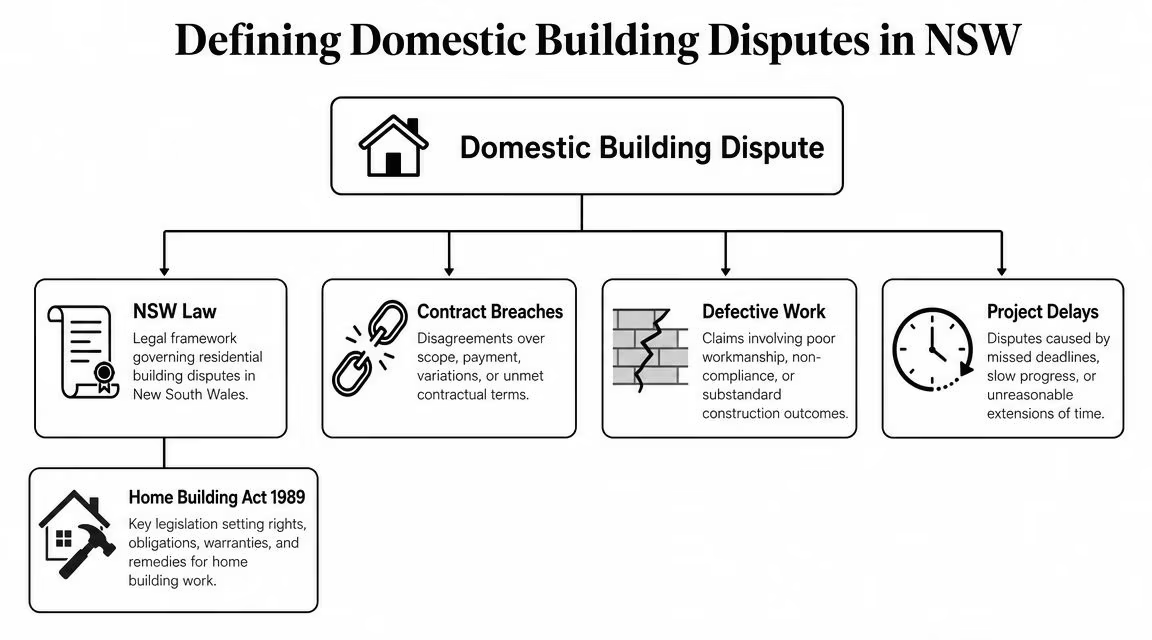
A domestic building dispute in NSW is usually a disagreement arising out of residential building work. In practical terms, that means a dispute about what was promised, what was built, what standard applies, what remains incomplete, or what money is still claimed by one side or the other.
Most disputes sit in a few recurring categories. The labels matter less than the substance. Can the issue be tied to the contract, the plans, the specifications, the approved variations, the timing obligations, or the workmanship standard required?
The disputes that show up most often
Some matters are straightforward. A room wasn’t painted, a balustrade wasn’t installed, or a vanity was omitted. Others are more technical, such as slab movement, waterproofing failures, framing non-compliance, or drainage that doesn’t perform properly.
The most common dispute areas usually include:
- Defective work such as cracking, water ingress, poor finishes, non-compliant installations, or departures from plans and specifications.
- Incomplete work where items are not finished or not supplied.
- Variations and scope creep where one side says the work was extra and the other says it was included.
- Payment disputes over progress claims, withheld payments, set-offs, or alleged overcharging.
- Delays where the completion period blows out and the records don’t clearly explain why.
Australian research on low-rise residential construction has linked building defects and disputes to a broader pattern of noncompliant work, not just isolated mistakes, in peer-reviewed work on residential noncomplianceLA.1943-4170.0000433?e=sreeharsha.gavini%40aurecongroup.com&l=108160_HTML&u=117062830&mid=7001827&jb=120). For NSW parties, that reinforces a practical point. A dispute about a defect is often really a dispute about compliance, documentation, and proof.
Where NSW Fair Trading and NCAT fit
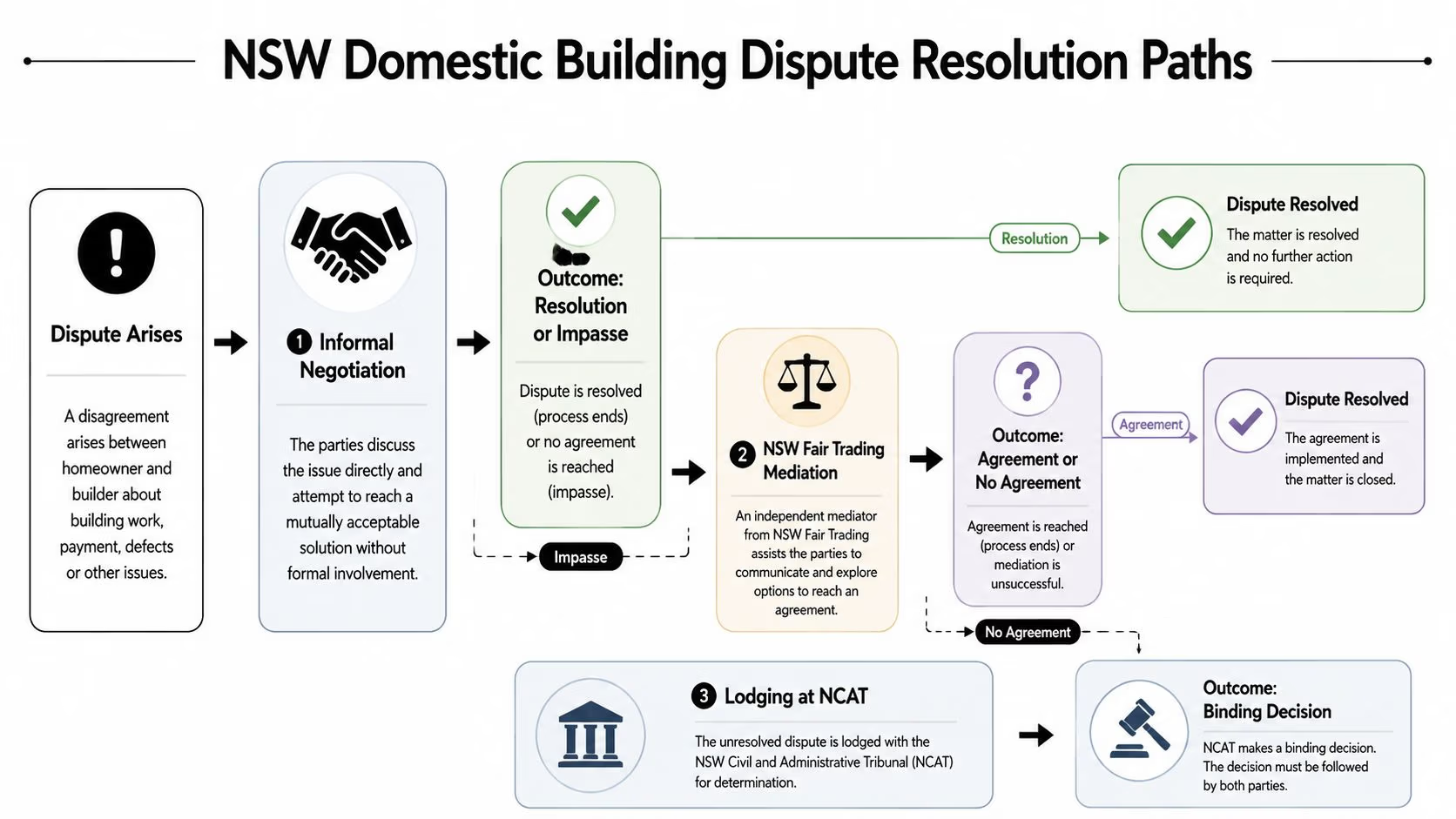
In NSW, people often move through three practical layers. First, they try to resolve the matter directly. If that fails, Fair Trading may become involved. If the dispute still can’t be resolved, NCAT is often the forum where evidence is tested and orders are made.
That sequence matters because each stage rewards clarity. If the claim isn’t properly framed early, the same weakness follows the file into mediation and then into Tribunal proceedings.
A domestic building dispute isn’t defined by how upset the parties are. It’s defined by whether the facts can be tied to a legal and technical basis that another decision-maker can follow.
A plain-English way to think about it
If you strip away the legal language, most NSW domestic building disputes come down to four questions:
| Question | Why it matters |
|---|---|
| What work was actually required? | This sets the benchmark for scope and contractual responsibility. |
| What work was actually done? | This identifies defects, omissions, and departures from approved documents. |
| What evidence proves the difference? | This is what persuades Fair Trading, experts, and NCAT. |
| What outcome is sought? | Rectification, payment, access, time, or a quantified claim needs to be stated clearly. |
If those four questions can’t be answered cleanly, the case usually needs work before it goes anywhere formal.
Your Essential Evidence and Documentation Toolkit
The first week usually decides whether a domestic building dispute becomes manageable or expensive. I see the same pattern repeatedly. A party has genuine concerns, but the file is thin where it matters. There are plenty of messages, plenty of frustration, and very little that proves scope, sequence, notice, breach, and cost in a form NCAT can follow.
A useful case file does one job well. It lets another person, who was never on site, understand what was agreed, what was built, what went wrong, when the issue was raised, and what it will take to fix. If those links are missing, the other side gets room to argue about memory, context, and responsibility.
What to gather first
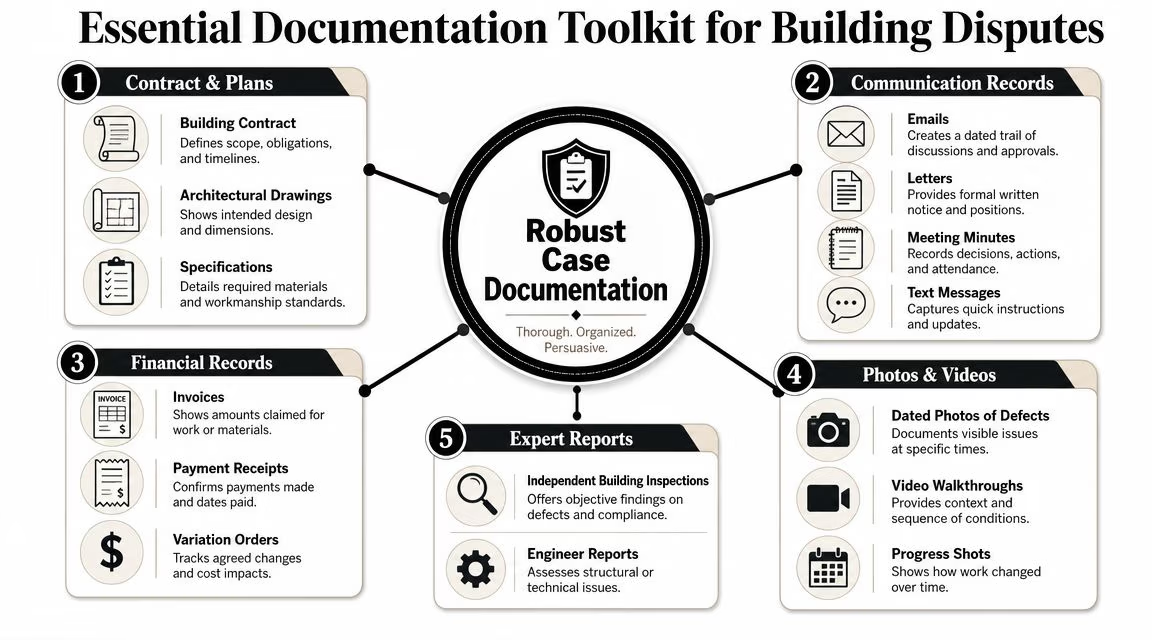
Start with the documents that set the benchmark for the work.
- Contract set including the signed contract, plans, specifications, engineering details, approvals, and any approved changes.
- Variation records showing the proposed change, price, who approved it, when it was approved, and whether it affected time.
- Communication file with emails, texts, letters, site instructions, meeting notes, and any notices about defects, delay, access, or payment.
- Financial records including invoices, progress claims, receipts, bank records, and quotations for rectification, completion, or alternative accommodation if relevant.
- Visual evidence made up of dated photos and videos. Take overview shots first so the location is obvious, then close shots so the condition is clear.
Good triage is practical, not complicated. Sort material by issue and then by date. If the project involves bathrooms, external drainage, brickwork, joinery, and delay, keep those issues separate from day one. That saves hours later and makes it much easier to brief an expert or prepare a Tribunal bundle.
Keep a simple chronology as you go. Date, event, document, significance. One line per event is enough. In many matters, the chronology becomes the spine of the case.
What turns documents into a persuasive claim
NCAT is persuaded by particulars. A complaint such as “poor workmanship throughout” usually goes nowhere unless it is broken into identified items, tied to the contract documents or an applicable standard, and supported by photos, inspection notes, and a proper rectification opinion.
Two documents usually do the heavy lifting.
First, the Expert Witness Report. A good report identifies each defect or incomplete item, states where it is, records what was observed, links that condition to the relevant contract requirement, approved document, code, or standard, and explains the rectification method. If causation is contested, the report also needs to explain the likely cause in plain terms. Vague criticism rarely survives scrutiny.
Second, the Scott Schedule. This is the document that forces discipline into the case. Each disputed item is listed separately, with location, description, contractual or technical basis, party response, and often the estimated rectification cost. A well-prepared schedule narrows arguments quickly because it stops the dispute drifting into general complaint. For a clearer explanation of structure and use, this NSW guide to Scott Schedules sets out how the document is used in building disputes.
For larger files, document control matters as much as technical opinion. If reports, annexures, photos, and invoices are not numbered consistently, hearing preparation becomes slower than it needs to be. This guide for legal and publishing pros is a practical reference on organising numbered documents.
Here is a short explainer before the next point:
What weakens a file
Weak files tend to fail for predictable reasons:
- Global complaints with no itemisation, no room reference, and no measurable description of the problem.
- No contract linkage between the allegation and the actual scope, drawings, specifications, or approved variations.
- Undated or context-free photos that show damage but not location, sequence, or scale.
- No notice trail showing when the issue was raised, to whom, and what response followed.
- Costings without diagnosis where a repair quote is produced before the defect is properly identified and explained.
- Mixed issues in one bundle so delay, payment, waterproofing, and incomplete works are all argued at once.
The trade-off is simple. A quick, emotional file feels satisfying to prepare, but it is difficult to run. A disciplined file takes more effort early, but it gives solicitors, experts, Fair Trading, and NCAT something they can work with.
One practical option for owners, builders, and solicitors is using a consultant who prepares inspections, expert reports, and Scott Schedules for dispute use, such as Awesim Building Consultants. The benefit is not volume. The benefit is a file where each issue can be traced from contract requirement, to site condition, to evidence, to rectification scope, to cost.
The Three Paths to Resolution in NSW
Not every dispute belongs in NCAT straight away. Some matters settle early because the parties exchange a proper defect list, identify the actual scope gap, and agree on a path to rectify. Others need a neutral process because direct communication has broken down. A smaller group only moves when the Tribunal imposes directions and deadlines.
The practical choice is rarely about pride. It’s about whether the evidence is mature enough, whether the other side is engaging, and whether a negotiated outcome is still realistic.
Path one through Path three
Informal negotiation works best when the issues are identifiable and both sides still want the project outcome more than the fight. This path is often underused because parties negotiate with opinions instead of evidence. A focused list of disputed items, with photos, dates, and a proposed fix, gives negotiation a chance.
NSW Fair Trading mediation or intervention becomes useful when direct discussions stall. It introduces structure and can narrow issues, particularly where the parties need a forum to discuss defects, access, timing, and responsibility. It won’t rescue a vague claim file. If the evidence is thin, the process can become a circular discussion.
NCAT is the right path when agreement isn’t possible, the issues need formal determination, or one party won’t engage meaningfully. At that point, the dispute has to be framed item by item.
Across Australia, there’s a broader move toward structured dispute resolution rather than immediate court escalation. In Victoria, the dedicated DBDRV service resolved 7,484 domestic building disputes from April 2017 to October 2023, showing how often a state-based pathway can deal with these matters before or instead of conventional litigation, as reported by the Victorian Auditor-General on domestic building dispute resolution.
Comparison of dispute resolution paths
| Method | Formality | Typical Cost | Binding Outcome? |
|---|---|---|---|
| Informal negotiation | Low | Usually lower than formal processes, but depends on expert involvement and document preparation | No, unless recorded in an enforceable agreement |
| NSW Fair Trading mediation | Moderate | More structured, with preparation costs if reports or schedules are needed | Not usually binding unless the parties reach and record agreement |
| NCAT application | High | Filing costs, preparation costs, expert fees, and possibly legal costs depending on the matter | Yes, orders can be binding |
How to decide which path makes sense
A few practical tests help:
- Choose negotiation if the issues are still capable of being isolated and the other side is responding.
- Choose Fair Trading involvement if communication has stalled but there is still some chance of a practical compromise.
- Choose NCAT if the dispute is entrenched, the file is developed enough to support formal allegations, or urgent procedural control is needed.
The wrong time to push ADR is when nobody has defined the defects, the cause, or the scope of rectification. Without that groundwork, negotiation becomes bargaining in the dark.
A Practical Guide to the NCAT Process
A homeowner usually reaches NCAT after months of emails, site meetings, promises to return, and arguments about what was or was not included. By that point, patience is gone. What decides the matter is rarely who sounds more upset. It is who can prove each point in an orderly way.
NCAT is a tribunal process, not a complaints counter. The Member needs a file that can be followed from the contract to the site condition, then to the remedy sought. In practice, the strongest cases are built before the first directions hearing. Early triage matters. Separate defect claims from delay claims, payment claims, access issues, and variation disputes. If those categories are mixed together, the case becomes harder to run and easier to attack.
The application itself needs precision. Name the correct parties. Use the correct site address. State the orders sought in terms NCAT can make, whether that is rectification, payment, release of retention, access, or another defined outcome. Allegations should match the evidence already available, not the evidence you hope to gather later.
What happens after filing
Once the application is lodged, the case shifts quickly into procedure. NCAT may make directions for replies, witness statements, expert reports, a Scott Schedule, and the hearing bundle. Deadlines matter because they shape what material is before the Tribunal and when the other side gets to answer it.
This is the point where weak preparation shows. A defect list without dates, photographs without captions, and emails with no chronology are difficult to use under pressure. A better approach is to build each issue as a self-contained proof item. For every allegation, identify the contractual basis, the site evidence, the date it was raised, the response, and the cost or scope of rectification. Where causation is disputed, contemporaneous records usually carry more weight than hindsight explanations.
What parties usually get wrong
After many years dealing with domestic building disputes, the same problems appear again and again:
- Applications that are too broad, with complaints grouped together instead of itemised.
- Evidence gathered too late, after works have changed or the condition has deteriorated.
- Annexures that are badly organised, so the Tribunal cannot trace the supporting document quickly.
- Expert reports that identify a symptom but do not tie it to the contract, the standard breached, the cause, or the rectification method.
- Claims for money without a clear calculation, especially where variation, delay, and defect costs are blended together.
A Scott Schedule often fixes much of this confusion because it forces each issue into a numbered format. The applicant sets out the complaint, location, contractual or technical basis, and the remedy sought. The respondent answers item by item. That structure does not win the case by itself, but it makes weak points visible early and helps the stronger points stand up.
If you need a procedural overview while preparing an active matter, this guide to NCAT building disputes in NSW explains the Tribunal pathway in practical terms.
A working NCAT preparation sequence
A file that performs well at NCAT is usually prepared in this order:
- Define the remedy sought. Be specific about whether you want rectification, money, access, release of payment, or a combination.
- Split the dispute into separate issues. Keep defects, incomplete works, delays, variations, and payment disputes in different categories.
- Match each issue to proof. Attach the contract clause, drawing, specification, photograph, email, invoice, diary note, and expert opinion that supports that item.
- Prepare the chronology. A short, dated sequence often exposes the dispute faster than pages of argument.
- Build the Scott Schedule or issue matrix. Make it easy for the Member to move from allegation to response to evidence.
- Check consistency across the file. The application, witness evidence, expert material, and annexures should all describe the same problem and the same remedy.
A simple test helps. If a stranger could pick up your bundle and understand what happened, what standard was breached, and what order you want, the file is in workable shape for NCAT.
Understanding the Realistic Costs and Timelines
People usually ask two questions first. How much will this cost, and how long will it take? The honest answer is that both depend heavily on how early the evidence is organised and whether the parties narrow the issues before the matter becomes procedural.
The visible costs are only part of the picture. Filing fees matter, but they’re rarely the full story. A dispute can also involve consultant inspections, expert report preparation, legal advice, document management, hearing preparation, and the cost of time spent gathering records and responding to directions.
Where costs usually arise
Costs tend to build in layers rather than all at once.
- Early-stage costs may include inspections, reviewing the contract set, preparing a defect list, or obtaining technical advice.
- Mid-stage costs often come from mediation preparation, further reports, chronology work, and assembling annexures.
- Formal-stage costs can include Tribunal preparation, updates to expert material, Scott Schedule work, and compliance with procedural directions.
A weak file often becomes more expensive than a strong one. Not because the issues are bigger, but because everybody spends more time working out what should have been organised at the start.
Why timelines blow out
Time is usually lost in three places. First, parties spend too long arguing before identifying the exact issues. Second, records are incomplete, so experts and advisers have to reconstruct the job after the fact. Third, one or both parties miss procedural opportunities to narrow the dispute early.
That’s why realistic planning matters. Some matters resolve quickly when the evidence is clear and the defects are properly identified. Others continue for much longer because the dispute is really about scope, causation, delay, and competing technical opinions.
A useful rule is to budget for the process, not just the application. If you can’t yet say what documents are missing, what expert input is needed, and which issues require determination, you probably don’t yet have a realistic cost or timeline.
Your Actionable Dispute Resolution Checklist
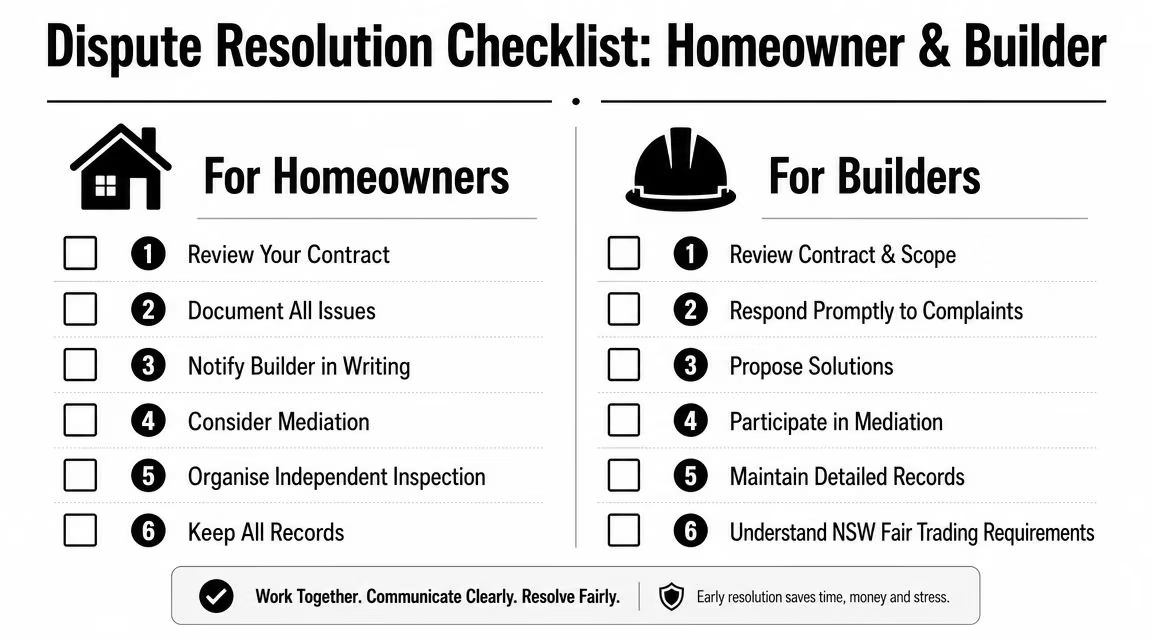
A domestic building dispute becomes manageable once the work is broken into actions. Owners and builders don’t need more noise. They need a practical sequence that preserves their position and improves the quality of any later negotiation, mediation, or NCAT filing.
The two checklists below are built around what usually matters in real NSW disputes. They’re not about posturing. They’re about producing a usable file.
For homeowners
- Review the signed contract set and make sure you have the plans, specifications, engineering details, and any written variations.
- Document each issue separately with dated photos, clear location notes, and a short description of the problem.
- Notify the builder in writing and keep the communication factual. Identify the item, location, date noticed, and what response you seek.
- Keep payment records together so progress claims, receipts, and disputed amounts can be tracked against the work.
- Arrange an independent inspection when needed if the dispute involves technical defects, compliance questions, or rectification scope.
- Prepare an itemised list rather than a general complaint. If the matter escalates, this becomes the basis for a stronger schedule and application.
- Don’t alter key evidence areas too quickly unless urgent safety or damage mitigation requires it.
For builders
- Check the scope first before responding. Many arguments start with a mismatch between assumptions and the written contract.
- Respond promptly in writing to defect complaints, access issues, and variation disagreements.
- Keep site records current including attendance, instructions, delays, weather impacts where relevant, delivery issues, and photographs.
- Separate legitimate defects from owner preference items so the response is technical and contractual, not defensive.
- Propose a rectification path where appropriate with dates, access requirements, and the precise work to be carried out.
- Preserve the variation trail including quotations, approvals, and time consequences.
- Prepare for Fair Trading or NCAT early by organising the file before positions become fixed.
The common lesson for both sides
The best time to build a dispute file is before you think you need one. Once the matter turns formal, every missing document becomes a problem someone has to explain.
Awesim’s background is practical building work first, then dispute support. With 35+ years in Building & Construction and over 15+ years providing litigation support to homeowners, builders and lawyers, value is in site investigations, Expert Witness Reports, and Scott Schedules that help turn an argument into a structured case.
If you’re dealing with domestic building disputes in NSW and need evidence that will stand up at Fair Trading or NCAT, contact Awesim Building Consultants. Email admin@awesim.com.au or call 1800 293 746 to discuss a site investigation, Expert Witness Report, or Scott Schedule.

Related Posts

Water Damage in Homes: How to Track Down the Source
Water damage in a home rarely announces itself at the source. A stain on the ceiling, a musty smell in
Read More »
Waterproofing Membrane Types: Which Fails Most in NSW Bathrooms
Waterproofing failure is the single most common serious defect found in NSW apartments, and the type of membrane used, along
Read More »
Building Certifier NSW: Role, Limits, and When You Need More
A building certifier in NSW is a registered professional who issues construction certificates, conducts critical stage inspections, and grants occupation
Read More »