
Winning Your NSW Expert Witness Building Dispute
Finding yourself in the middle of a building dispute is a stressful, often overwhelming experience. An expert witness in a building dispute cuts through the noise. They are an independent specialist whose job is to provide a clear, objective, and evidence-based opinion to a court or tribunal like NCAT, translating complex construction problems into a report that makes sense.
Bringing one on board early isn’t just an expense; it’s a strategic move toward a fair and timely resolution. With 35+ years in the building and construction industry, and over 15 years providing litigation support to homeowners, builders, and lawyers, Awesim Building Consultants understands this process inside and out.
Your Guide to Navigating a Building Dispute

Whether you’re a homeowner who’s just discovered defects in your new build or a builder defending the quality of your work, it can feel like a high-stakes battle. The way forward often gets lost in a fog of technical jargon and confusing legal steps.
This is exactly where an expert witness brings crucial clarity.
Think of them as an impartial translator for the legal system. Their role isn’t to pick a side. It’s to objectively measure the building work against the National Construction Code (NCC), relevant Australian Standards, and accepted industry practices. They turn complex building science into a logical, evidence-backed report a tribunal member or judge can actually understand and rely on.
The Rising Stakes in Construction Conflicts
The money involved in building disputes has shot up. In 2022, the average value of a construction dispute in Australia surged to AU$33 million—a massive 22% increase in just two years.
These numbers aren’t just statistics; they show why a properly prepared expert report is no longer a ‘nice-to-have’ but a necessity for protecting your interests in NSW. You can dig deeper into the rising tide of construction disputes to see the full picture.
This tough environment makes getting proper professional guidance more critical than ever. With over 35+ years in building and construction and more than 15 years providing litigation support, we at Awesim Building Consultants have the seasoned expertise you need. We’ve seen it all, and our deep experience ensures your case is built on a foundation of solid, defensible evidence.
An expert witness report is a strategic investment in a fair outcome. It provides the objective proof needed to back up a claim or defend your work, often becoming the very cornerstone of a successful case.
Where an Expert Adds Critical Value
Engaging an expert isn’t just a last-ditch effort for a court hearing. In fact, getting them involved at different stages can completely change the direction of a dispute, often leading to a faster and much less expensive outcome.
The table below breaks down when an expert can make the biggest difference.
When an Expert Witness Adds Value in a Building Dispute
| Dispute Stage | Expert Witness Contribution |
|---|---|
| Early Negotiation | Provides an initial, unbiased report that establishes the technical facts, often giving both parties a reality check and opening the door to a settlement before things escalate. |
| Formal Proceedings (NCAT/Court) | The expert report becomes the core piece of evidence, defining the defects, identifying their cause, and detailing the cost of rectification. |
| Expert Conclave | Sits down with the other side’s expert to compare findings, narrow down the points of disagreement, and save everyone significant time and legal costs. |
As you can see, their input is valuable long before you ever step foot in a tribunal. Understanding the different facets of building and construction disputes is the first step, and having an expert witness in your corner is your most powerful tool in the process.
Understanding an NCAT-Compliant Expert Report

When you’re tangled in an expert witness building dispute, the report you submit is the single most important piece of evidence you’ll have. Let’s be clear: this is not just a builder’s opinion or a detailed quote. It’s a formal, structured document crafted to meet the strict standards of the NSW Civil and Administrative Tribunal (NCAT).
A simple letter from a builder, no matter how experienced, just won’t cut it. NCAT has a specific set of rules for how evidence must be presented, and an expert report needs to tick every box to hold up under legal scrutiny. It must be objective, meticulously researched, and built entirely on verifiable facts.
The Foundation of an Admissible Report
For any report to even be considered by NCAT, it needs a rock-solid foundation of evidence and compliance. It’s not enough to simply say, “this is defective.” The report must prove why it’s defective by referencing the exact building codes, standards, and rules that have been breached.
Its sole purpose is to help the Tribunal understand the technical side of the dispute. It’s not a marketing document for your side of the story; it’s an impartial source of truth.
A robust, NCAT-compliant report will always include:
- Pinpoint Defect Identification: Every single alleged defect is clearly described, numbered, and backed up with high-quality photographs.
- Links to Codes and Standards: The expert must connect each defect to a specific clause in the National Construction Code (NCC), an Australian Standard (like AS 1684 for timber framing), or the manufacturer’s own installation guide.
- Root Cause Analysis: A true expert digs deeper to explain the “why.” Was it shoddy workmanship, a design error, or the wrong materials being used?
- A Detailed Rectification Method: The report must provide a practical, step-by-step methodology for fixing each defect correctly.
- Transparent Costings: Finally, it needs a realistic, itemised breakdown of the costs to carry out the proposed rectification work.
The most critical rule governing an expert witness is the Expert Witness Code of Conduct. This code makes it crystal clear: the expert’s primary duty is to the Tribunal, not to the person paying their invoice. This impartiality is the bedrock of credibility.
The Expert’s Overriding Duty to the Tribunal
The Expert Witness Code of Conduct isn’t just a guideline; it’s a set of binding rules for any expert providing evidence in NSW. It ensures the expert remains independent and provides unbiased opinions that help the Tribunal make a fair, informed decision. Any expert who acts like a “hired gun” for their client will be spotted a mile away, and their evidence will likely be dismissed or given very little weight.
This is where our 15+ years of litigation support at Awesim Building Consultants really comes into play. We know our reputation—and the strength of your case—hinges on our unwavering objectivity. We construct every report to be a standalone document of fact, ready to withstand the most intense cross-examination.
If you’re interested in what these documents look like, you can get a clearer picture by reviewing an expert witness report template for Australia.
Understanding these non-negotiable elements is key. It helps you see what a persuasive and admissible report looks like. Your goal isn’t to find someone to simply agree with you; it’s to engage a true expert who can present the facts with indisputable clarity and authority.
What Makes an Expert Report Truly Persuasive
Not all expert reports are created equal. In a building dispute, some reports barely make a ripple, while others become the bedrock of a successful case. With our 35+ years in the building game, we’ve seen countless reports come and go, and we know exactly what separates the flimsy from the formidable.
A persuasive report doesn’t just list what’s wrong; it builds a watertight case with irrefutable evidence. It’s the difference between a vague claim like “the deck is wrong” and a precise, factual finding: “the deck bearers fail to meet the span tables in Australian Standard AS 1684.2, creating a demonstrable safety risk.”
That level of detail isn’t just a nice-to-have. It’s the absolute minimum for a report to withstand the intense scrutiny of legal proceedings. It’s about transforming a complex construction issue into a clear, logical story that a tribunal member can easily follow.
From Simple Claim to Compelling Evidence
A report that truly convinces a tribunal is a fortress of facts. There’s simply no room for guesswork or ambiguity. It needs to paint such a clear picture that the tribunal can see the problem without ever stepping foot on site.
To get there, your expert needs to deliver on a few key things:
- High-Resolution, Annotated Photos: Crystal-clear images of every single defect are a must. They should be marked up with arrows, circles, and notes pointing directly to the specific problem or breach of standards.
- Clear Diagrams and Illustrations: When you’re dealing with something complex like a waterproofing failure or a structural issue, a simple diagram often explains the problem far better than a thousand words ever could.
- A Transparent Breakdown of Rectification Costs: A vague, ballpark figure won’t cut it. A robust report provides a detailed, itemised schedule of costs for fixing the issues, broken down into labour, materials, and any other necessary expenses.
The power of a well-prepared report can’t be overstated. We’ve seen it time and again in Australian legal cases. In one notable instance, a properly prepared valuation and expert report led to a compensation payout that was 40% higher than the initial offer. It’s a stark reminder of the immense value of quality evidence. You can see how this works in practice in these real expert witness case studies.
Introducing the Scott Schedule a Crucial Tool
In NSW disputes, another document is becoming absolutely critical: the Scott Schedule. This is a specialised table designed to bring order to the chaos of a building dispute.
A Scott Schedule is a document used in legal proceedings, particularly building disputes, to list the alleged defects or claims in a structured way. It allows each party to state their position on each item, and for the expert (and ultimately the tribunal) to comment and make a determination.
Think of it as a scorecard for the dispute. It forces both the homeowner and the builder to respond directly to every single point of disagreement, item by item. This layout helps the tribunal instantly see where the parties agree, where they don’t, and the evidence behind each position.
From 2026, NCAT’s Procedural Direction 3 is set to make Scott Schedules a formal requirement in many building disputes. This means your expert must be completely fluent in preparing them. With over 15 years of litigation support under our belts, our team at Awesim Building Consultants is already producing detailed Scott Schedules that meet and exceed tribunal standards.
Understanding these components—from annotated photos to the structured logic of a Scott Schedule—helps you see what you’re really paying for. When you engage an expert, you aren’t just buying an opinion. You’re investing in the clear, authoritative evidence needed to secure a fair outcome. For a deeper look into how these disputes are managed, you might find our overview of building and construction disputes helpful.
How to Choose the Right Expert Witness
Picking your expert witness is easily the most important call you’ll make in a building dispute. This isn’t just about ticking a box or finding someone with a fancy-looking resume. It’s about finding the right person for your specific problem. Think of it less like hiring a general practitioner and more like finding a specialist surgeon who’s done this exact operation a hundred times.
A slick website and a long list of degrees are a good start, but they don’t tell you the whole story. The real value in an expert comes from a powerful mix: deep, hands-on experience on the tools, combined with a proven track record in the world of litigation. This ensures they can spot a defect and confidently defend their findings when the pressure is on.
You need to look past the surface to find someone who brings genuine authority from both the building site and the tribunal room. This means finding a professional who can point to a history of successful outcomes in places like the NSW Civil and Administrative Tribunal (NCAT).
Experience That Matters Most
When you’re sizing up a potential expert, there are two kinds of experience that are simply non-negotiable: decades of practical building work and specific, battle-tested litigation support. Our founder, for instance, has over 35+ years of hands-on building and construction experience under his belt, which is backed up by more than 15 years focused solely on litigation support.
Why is this dual expertise so vital? A builder who has never written an NCAT-compliant report will likely stumble over the strict formatting and rules of evidence. On the flip side, an academic with no real-world site experience might come up with a solution that looks great on paper but is completely impractical or wildly expensive to actually build.
The best expert witness is fluent in two languages: the language of the Australian Standards and the language of evidence required by a court or tribunal.
This idea of vetting for deep, relevant experience isn’t unique to expert witnesses. The principles are the same when choosing a custom home builder, where you’re also looking for a solid reputation, specific skills, and a portfolio of proven work.
Before you hire anyone, it’s a good idea to create a simple checklist to keep your evaluation on track.
Expert Witness Vetting Checklist
Use this table to compare potential experts and make sure you’re covering all your bases.
| Criteria | Why It Matters | Red Flag to Watch For |
|---|---|---|
| NCAT-Specific Experience | The Tribunal has its own rules and procedures. You need someone who knows the playbook inside and out. | Vague answers about “court experience” without mentioning NCAT specifically. |
| Hands-On Building Background | An expert must understand how buildings are actually put together to identify where things went wrong. | A career spent entirely in an office or classroom with no significant time on a construction site. |
| Cross-Examination Experience | Having a report is one thing; defending it under questioning is another. This proves their credibility and composure. | No experience giving evidence or an unwillingness to discuss past cross-examinations. |
| Formal Qualifications & CPD | Shows a commitment to the profession and ensures they are up-to-date with the latest codes, standards, and laws. | Outdated qualifications or no evidence of ongoing professional development (CPD). |
| Independence & Objectivity | Their primary duty is to the Tribunal, not to you. This impartiality is what gives their evidence weight. | An expert who sounds more like a “hired gun” promising you a win, rather than an objective assessor. |
By systematically running through these points, you can avoid getting caught up in a sales pitch and focus on the substance of what each candidate offers.
Actionable Questions to Ask Every Potential Expert
To get a real sense of an expert’s credibility, you need to ask sharp, direct questions that cut through the fluff. Your goal is to test their specific familiarity with the NCAT process. Here’s a list of questions you should be asking:
- How many NCAT-compliant expert reports have you personally written in the last 12 months? This quickly sorts the specialists from the dabblers.
- Can you walk me through your process for putting together a Scott Schedule? Their response will instantly show you how well they know NCAT’s procedural nuts and bolts.
- Have you given evidence and been cross-examined at an NCAT hearing before? An expert who has come through cross-examination intact is a proven, reliable asset.
- What are your formal qualifications, and what ongoing training do you do? This confirms they are serious about staying current in a field where codes and standards constantly evolve.
These questions shift the conversation from marketing claims to hard evidence of their expertise. Getting this choice right is often the single biggest factor in reaching a positive outcome. If you’re interested in how we put this into practice, you can see more about our work as a dispute resolution expert.
Using this structured approach, you can confidently interview and choose an expert who not only has the right credentials on paper but also has the poise and credibility to deliver the robust evidence your case depends on.
The Expert Witness Process Step by Step
So, you’ve chosen an expert. The big question now is, what actually happens next? It’s easy to feel like you’re entering a legal maze when dealing with an expert witness building dispute, but the process is surprisingly logical. Knowing the road ahead takes the guesswork out of it and puts you back in the driver’s seat.
Having spent over 15 years providing litigation support, we’ve walked clients through this journey time and time again. It’s a process with clear phases, from the first site visit to, if needed, the final hearing. Let’s break down what to expect at each stage.
Before we dive into the formal process, the first steps are always about finding the right person for the job. This diagram simplifies that initial selection phase.
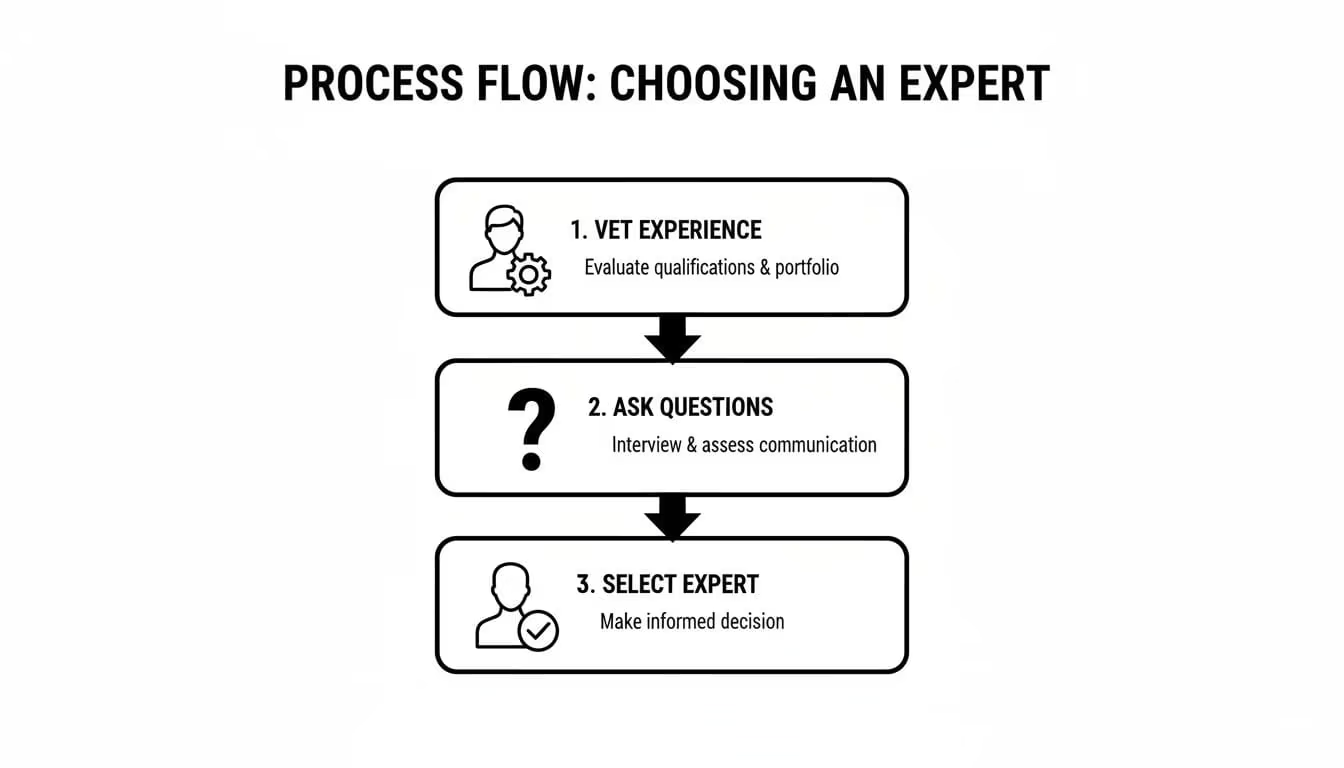
Vetting experience, asking the right questions, and making a confident choice are your foundation. Once you’ve done that and formally engaged your expert, the structured path toward resolving your dispute begins.
Stage 1: The Initial Consultation and Engagement
It all starts with an initial chat. This is where you or your solicitor will sit down with the expert and lay out the history of the dispute. You’ll hand over all the key documents—things like the building contract, approved plans, and any emails or letters you’ve exchanged.
From there, the expert will draw up a clear fee proposal and an engagement agreement. This document spells out exactly what they’ll be doing. Once you sign on the dotted line, the relationship is formalised, and the real work can begin.
Stage 2: On-Site Inspection and Evidence Gathering
This is where the theory ends and the practical work begins. Your expert will visit the property to conduct a painstaking inspection, documenting every single defect you’ve raised. This is no quick walkthrough; it’s far more rigorous than a standard pre-purchase inspection.
During this critical phase, the expert will:
- Take hundreds of high-resolution photographs to capture every detail.
- Use precise tools to measure dimensions, levels, and tolerances.
- Cross-reference everything they find on-site against the approved building plans and the relevant Australian Standards.
With our 35+ years of hands-on building experience, we know precisely what signals a defect versus what’s just shoddy work. The goal here is to gather objective, factual evidence that will form the unshakeable foundation of the report.
Stage 3: Report Drafting and Review
Back in the office, the expert gets to work analysing all the evidence and drafting the report. This is a meticulous task, where each defect is methodically linked back to a specific breach of the National Construction Code, an Australian Standard, or the contract itself.
They’ll also outline a clear, step-by-step rectification method and calculate the costs involved. Before it’s finalised, you and your legal team get to review the draft to check it for factual accuracy and ensure all your concerns have been properly captured. For a closer look at what goes into these documents, our page on NCAT Reports is a great resource.
The expert conclave is a vital, cost-saving step. It’s a structured meeting where experts for both sides confer to identify areas of agreement and disagreement, significantly narrowing the issues that need to be argued at a hearing.
Stage 4: The Expert Conclave
Before you ever get to a final hearing, NCAT will almost always direct the experts for both sides to meet. This meeting is called an expert conclave. The point isn’t to have a fight; it’s to find common ground.
The experts work together to produce a joint report. This document clearly lists what they agree on (e.g., “Item 5 is a defect”) and, just as importantly, what they disagree on (e.g., “The cause and cost to fix Item 5”). This is massively helpful for the Tribunal as it cuts down the issues in dispute, which can dramatically shorten the hearing. A well-prepared Scott Schedule provides the perfect framework for this exercise.
Stage 5: Giving Evidence at the Hearing
If your dispute doesn’t settle and proceeds to a final hearing, your expert’s job isn’t over. They will be called to give evidence in person at NCAT.
After being sworn in, they will formally adopt their report as their evidence. Then comes the real test: cross-examination by the other side’s lawyer. This is where a truly experienced expert shines. They remain calm, stick to the facts, and explain their professional opinion with clarity and conviction, giving the Tribunal member the confidence they need to make a decision.
Common Misconceptions That Can Hurt Your Case
When you’re heading into a building dispute, what you think you know can sometimes be your biggest liability. There are a few common myths floating around that, if you buy into them, can lead to some serious missteps, wasted money, and a much weaker position at the tribunal.
Having spent over 15 years providing litigation support here at Awesim Building Consultants, we’ve seen these exact misconceptions trip people up time and time again. Let’s clear the air so you can avoid the same costly mistakes.
Myth 1: “My Builder’s Mate Can Write the Report”
This one is a real trap. While your builder’s friend might be brilliant on the tools, an expert report for NCAT has to be completely and utterly independent. It’s not just a suggestion; it’s a core requirement of the Expert Witness Code of Conduct. The expert’s first duty is to the tribunal, not to the person paying the bill.
If you submit a report written by someone with a personal or professional link to you, it will almost certainly be flagged as biased. NCAT will give it very little weight—or might just throw it out altogether. That leaves you right back where you started, but with less time and money. True, accredited independence isn’t just a bonus; it’s essential.
Myth 2: “The Expert Witness Is on My Side”
It’s completely understandable to want an expert who will go to bat for you, but that’s fundamentally not what they’re there for. An expert witness isn’t a “hired gun” or an extension of your legal team. Their role is to be an impartial officer of the court, providing objective facts and analysis to help the tribunal make sense of the technical details.
An expert’s credibility—and the weight their opinion carries—is tied directly to their unwavering objectivity. The moment an expert starts acting like an advocate for your side instead of the facts, their credibility evaporates under cross-examination.
That impartiality is actually your biggest strength. A report from a truly independent expert, like the ones we have at Awesim Building Consultants, carries authority precisely because it’s built on solid evidence, not on allegiance.
Myth 3: “A Cheap Report Is Good Enough”
I get it, the temptation to save a few dollars is strong. But honestly, a “cheap” expert report is often the worst investment you can make in a dispute. A flimsy, poorly researched, or non-compliant report will be torn to shreds by the other side’s legal team and their expert.
Think of it like this: a cheap report is like pouring a dodgy slab for a new house. It’s guaranteed to crack under pressure, and it might just bring your whole case down with it. Any money you save upfront will be quickly swallowed by the cost of losing, or having to pay another expert to do the job properly from scratch. A robust, defensible report isn’t an expense; it’s a strategic investment in getting the right outcome. You can see how we approach this in our guide to dispute resolution.
Your Expert Witness Questions Answered
When you’re staring down the barrel of a building dispute, a lot of questions come up. We get it. Here are some straight answers to the most common queries we hear from homeowners, builders, and lawyers across NSW.
How Much Does an Expert Witness Report Cost in NSW?
The cost really depends on how tangled the issue is. For a straightforward defect, you might be looking at a report starting from around $1,500. But for complex cases with multiple defects or major structural issues, the cost can easily go north of $5,000.
At Awesim Building Consultants, we’re all about transparency. We’ll have a chat to understand your situation first, then give you a clear, fixed-fee proposal. You’ll know exactly what you’re up for before we even start.
When Should I Engage an Expert Witness?
The simple answer is: as soon as possible. Bringing in an expert early, before things get legal, can completely change the game. A clear, objective report is often all it takes to get both parties talking sense and avoid a costly trip to NCAT.
If things have already progressed to legal action, you need to engage an expert immediately. The tribunal sets firm deadlines for evidence, and you need to give your expert enough time to do a proper, thorough investigation and write a report that will stand up to scrutiny.
Can I Use an Expert Report for Negotiation Outside of NCAT?
Absolutely. In fact, it’s one of the most powerful tools you have. An expert report lays out the facts in black and white, providing an objective, evidence-based view of the problem. It’s perfect for mediation or informal settlement talks.
An expert report isn’t just for a hearing; it’s a reality check. Often, a clear report from a credible expert is enough to break a deadlock and pave the way for a fair settlement without the need for a formal tribunal hearing.
What Happens if the Other Party Also Has an Expert?
This is completely normal and expected. It’s rare for only one side to have an expert in a building dispute. When both sides have one, NCAT will usually direct them to meet in what’s called a “conclave.”
In the conclave, the experts discuss their findings to identify what they agree on and, just as importantly, where they disagree. They then produce a joint report for the tribunal. This process is incredibly useful because it cuts through the noise and narrows down the exact issues in dispute. It’s also exactly why you need a credible, experienced expert who can clearly articulate and defend their position.
With over 35+ years in building and construction and more than 15 years providing litigation support, Awesim Building Consultants has the deep, practical expertise to guide you through your building dispute with clarity and confidence. If you need an independent, NCAT-compliant expert report, contact us for a consultation. Learn more at https://www.awesim.com.au.
Related Posts

NCAT Consumer Division: Steps From Lodgement to Hearing
Most people who end up at the NCAT Consumer and Commercial Division do not arrive there by choice. They arrive
Read More »
Statutory Warranty NSW: What Builders Must Fix and for How Long
Statutory warranty NSW obligations exist precisely for the moment a builder stops returning calls. A crack appears in the render.
Read More »
Home Building Act NSW: Key Clauses Every Owner Should Know
The Home Building Act 1989 (NSW) sets the rules for residential building work in New South Wales. It requires licensed
Read More »